关税调整

Search documents
长江有色:30日锡价暴跌 全线抛售看跌浓厚现货谨慎询盘
Xin Lang Cai Jing· 2025-12-30 09:20
Core Viewpoint - The tin market is experiencing significant price declines due to a combination of macroeconomic uncertainties, geopolitical tensions, and changes in supply and demand dynamics [2][3]. Market Performance - The Shanghai tin contract 2602 saw a substantial drop, opening at 334,200 CNY/ton, reaching a high of 336,740 CNY/ton, and a low of 316,730 CNY/ton, ultimately closing at 326,330 CNY/ton, down 16,010 CNY, or 4.68% [1]. - The trading volume for the main contract was 441,256 lots, with open interest decreasing by 6,392 lots from the previous day [1]. Supply Dynamics - Supply is showing signs of recovery, with increased imports from the Democratic Republic of Congo and improved exports from Myanmar and Indonesia, despite ongoing geopolitical risks [3]. - Domestic and international social inventories are accumulating, indicating a loosening of the previously tight supply-demand balance [3]. Demand Dynamics - High tin prices are suppressing downstream profits, leading industries such as solder to adopt low inventory strategies, resulting in weak market transactions [3]. - Traditional consumer electronics are entering a low season, while demand from emerging sectors like AI servers and new energy is not sufficient to offset the overall cyclical decline in demand [3]. Short-term Price Outlook - The cautious macro sentiment is expected to guide the tin market towards further price declines in the short term, as profit-taking by bulls contributes to downward pressure [4].
国务院:后天起这些仪器进口关税有调整
仪器信息网· 2025-12-30 09:02
Core Viewpoint - The article discusses the "2026 Tariff Adjustment Plan" released by the State Council Tariff Commission, which will be implemented starting January 1, 2026, focusing on tariff reductions for various instruments related to measurement, medical, and industrial testing categories [1][20]. Group 1: Core Instrument Categories - Measurement/Metrology Instruments include items such as coordinate measuring machines, programmable logic controllers (PLC), and gas flow valves specifically for semiconductor/integrated circuit manufacturing [1][2]. - Medical Instruments and Components cover devices like medical linear accelerators, digital X-ray imaging systems, and diagnostic kits for various diseases [8]. - Industrial Testing/Processing Instruments are also included, although specific examples are not detailed in the provided text [3]. Group 2: Tariff Adjustments - The adjustment plan includes a reduction in tariffs for 935 items, excluding tariff quota goods, with specific reductions for key components and advanced materials [9][10]. - Tariffs on medical products such as artificial blood vessels and certain diagnostic kits will also be lowered, enhancing the affordability of these essential items [12]. - The plan aims to stimulate domestic consumption by reducing import costs, with an expected increase in import volumes by 15-20% for related categories due to lower tariffs [6]. Group 3: Special Tariff Rates - The plan continues to provide zero-tariff treatment for 100% of products from 43 least developed countries, maintaining preferential tariff rates for certain imports from ASEAN member countries and other trade partners [19][18]. - The agreement includes further tariff reductions based on existing free trade agreements with countries like New Zealand, Peru, and Australia, among others [17].


博时市场点评12月30日:两市继续分化,沪指收盘微跌
Xin Lang Cai Jing· 2025-12-30 08:29
Market Overview - The Shanghai Composite Index closed slightly down, while the Shenzhen Component and ChiNext Index recorded gains, with total trading volume increasing to 2.16 trillion yuan [1][5] - The market anticipates two interest rate cuts totaling 50 basis points by the Federal Reserve next year, influenced by political factors such as the U.S. midterm elections and the appointment of a new Fed chair [1][8] - China's export scale and trade surplus have reached historical highs this year, indicating resilience in export structure and direction, with expectations for continued strong performance in exports next year amid improving Sino-U.S. trade relations [1][8] Digital Currency Developments - The People's Bank of China has introduced a digital yuan action plan, with a new framework set to launch on January 1, 2026, transitioning from a cash-based to a deposit currency model [2][9] - This upgrade is expected to create a win-win situation for businesses and individuals, providing interest income and a wider range of financial products, while also incentivizing commercial banks [2][9] Tariff Adjustments - The State Council's tariff adjustment plan for 2026 will implement lower temporary import tariffs on 935 items starting January 1, 2026, aimed at enhancing the linkage between domestic and international markets [2][10] - The plan focuses on high-quality development and open markets, reducing tariffs on key components and advanced materials, and dynamically adjusting tariff structures to support industrial development [10] Agricultural Policy - The Central Rural Work Conference emphasized the importance of agricultural modernization and set key tasks for 2026, including enhancing grain production and improving agricultural policies to stabilize prices and increase farmers' income [4][11] - The conference aims to strengthen agricultural technology and equipment, which could lead to long-term investment opportunities in the agricultural sector and stimulate county-level consumption [4][11] Market Performance - On December 30, the A-share market showed mixed results, with the Shanghai Composite Index at 3965.12 points (down 0.004%), Shenzhen Component at 13604.07 points (up 0.49%), and ChiNext Index at 3242.90 points (up 0.63%) [5][12] - The oil and petrochemical, automotive, and non-ferrous metals sectors saw the highest gains, while retail, real estate, and public utilities experienced the largest declines [5][13] Capital Tracking - The market's trading volume reached 21,617.04 billion yuan, showing an increase from the previous trading day, with the margin financing balance also rising to 25,517.34 billion yuan [6][14]
成交破两万亿,沪指九连阳
Hua Tai Qi Huo· 2025-12-30 05:41
Report Summary 1. Report Industry Investment Rating No information provided. 2. Core Viewpoints - In the pre - holiday market, the scale of ETFs shows a continuous expansion trend, while the stock positions decline. The two effects offset each other, and the market is expected to mainly experience oscillatory recovery before the holiday [2]. 3. Summary by Relevant Catalogs Market Analysis - **Macro**: The State Council Tariff Commission will implement the "2026 Tariff Adjustment Plan" on January 1, 2026. Next year, China will apply temporary import tariff rates lower than the most - favored - nation tariff rates to 935 commodities. The total number of tariff items will increase to 8,972. Overseas, US President Trump said he will announce the nominee for Federal Reserve Chairman at an appropriate time, criticized Fed Chairman Powell and the Fed's building renovation, and is considering suing Powell for incompetence [1]. - **Spot Market**: A - share indices closed with mixed results. The Shanghai Composite Index had a nine - day winning streak, rising 0.04% to close at 3,965.28 points, while the ChiNext Index fell 0.66%. Most sector indices declined, with the petroleum and petrochemical, national defense and military industry, and banking sectors leading the gains, and the non - ferrous metals, public utilities, and power equipment sectors leading the losses. The trading volume of the Shanghai and Shenzhen stock markets exceeded 2 trillion yuan. Overseas, the three major US stock indices all closed down, with the Dow Jones Industrial Average falling 0.51% to 48,461.93 points [1]. - **Futures Market**: In terms of basis, the basis of stock index futures declined. In terms of trading volume and open interest, both the trading volume and open interest of stock index futures decreased [1]. Macro Economic Charts - Charts include the relationship between the US dollar index and A - share trends, the US Treasury yield and A - share trends, the RMB exchange rate and A - share trends, and the US Treasury yield and A - share style trends [6][7] Spot Market Tracking Charts - **Stock Index Performance**: On December 29, 2025, the Shanghai Composite Index rose 0.04% to 3,965.28, the Shenzhen Component Index fell 0.49% to 13,537.10, the ChiNext Index fell 0.66% to 3,222.61, the CSI 300 Index fell 0.38% to 4,639.37, the SSE 50 Index fell 0.35% to 3,034.63, the CSI 500 Index fell 0.38% to 7,430.61, and the CSI 1000 Index fell 0.15% to 7,594.16 [13]. - **Other Indicators**: Charts show the trading volume of the Shanghai and Shenzhen stock markets and the margin trading balance [14]. Futures Market Tracking Charts - **Trading Volume and Open Interest**: The trading volume and open interest of IF, IH, IC, and IM contracts all decreased. For example, the trading volume of IF was 96,159 (down 22,687), and the open interest was 275,855 (down 12,050) [15]. - **Basis**: The basis of stock index futures showed different changes. For example, the current - month contract basis of IF was - 8.57 (down 8.33) [40]. - **Inter - delivery Spread**: The inter - delivery spreads of different contracts also changed. For example, the spread between the next - month and current - month contracts of IF was - 10.00, with a change of + 5.00 [44].
股指期货:成交破两万亿,沪指九连阳
Xin Lang Cai Jing· 2025-12-30 02:36
热点栏目 自选股 数据中心 行情中心 资金流向 模拟交易 客户端 来源:华泰期货 作者: 汪雅航 市场分析 关注中美关系。宏观方面,国务院关税税则委员会发布《2026年关税调整方案》,将自2026年1月1日起 实施。根据方案,为增强国内国际两个市场两种资源的联动效应,扩大优质商品供给,明年我国将对 935项商品实施低于最惠国税率的进口暂定税率。优化关税税目及本国子目注释,税则税目总数增加至 8972个。海外方面,美国总统特朗普表示,将在适当的时机宣布美联储主席人选,时间很充裕;批评美 联储主席鲍威尔及美联储翻修大楼的做法;正考虑起诉鲍威尔,指控他无法胜任工作。 沪指收红。现货市场,A股三大指数收盘涨跌不一,沪指九连阳,当日涨0.04%收于3965.28点,创业板 指跌0.66%。行业方面,板块指数跌多涨少,石油石化、国防军工、银行行业涨幅居前,有色金属、公 用事业、电力设备行业跌幅居前。当日沪深两市成交额突破2万亿元。海外方面,美国三大股指全线收 跌,道指跌0.51%报48461.93点 期指减仓。期货市场,基差方面,股指期货基差回落。成交持仓方面,股指期货成交量和持仓量同步下 降。 策略 节前市场中,ETF ...

铂:资金离场开启回撤,铂:跟随铂金撤步
Guo Tai Jun An Qi Huo· 2025-12-30 02:07
商 品 研 究 2025 年 12 月 30 日 铂:资金离场开启回撤 钯: 跟随铂金撤步 刘雨萱 投资咨询从业资格号:Z0020476 liuyuxuan023982@gtjas.com 【基本面跟踪】 产 业 服 务 研 究 所 期货研究 【宏观及行业新闻】(资料来源:金十数据) 铂钯基本面数据 | | | 昨日收盘价 | | 涨幅 | | | --- | --- | --- | --- | --- | --- | | | 铂金期货2606 | 634. 35 | | -10.06% | | | | 金交所铂金 | 637. 15 | | -3.78% | | | | 纽约铂主连(前日) | 2138. 90 | | -14.92% | | | | 伦敦现货铂金(前日) | 2102. 50 | | -14. 52% | | | | 锂金期货2606 | 494. 10 | | -4. 18% | | | | 人民币现货纪金 | 489.00 | | 13.99% | | | 价格 | 纽约锂主连(前日) | 1.695.50 | | -17.71% | | | | 伦敦现货锂金(前日) | 1.621. ...
解读·935项,暂定税率!数据本身即亮点 为国际社会注入稳定预期
Yang Shi Wang· 2025-12-30 01:57
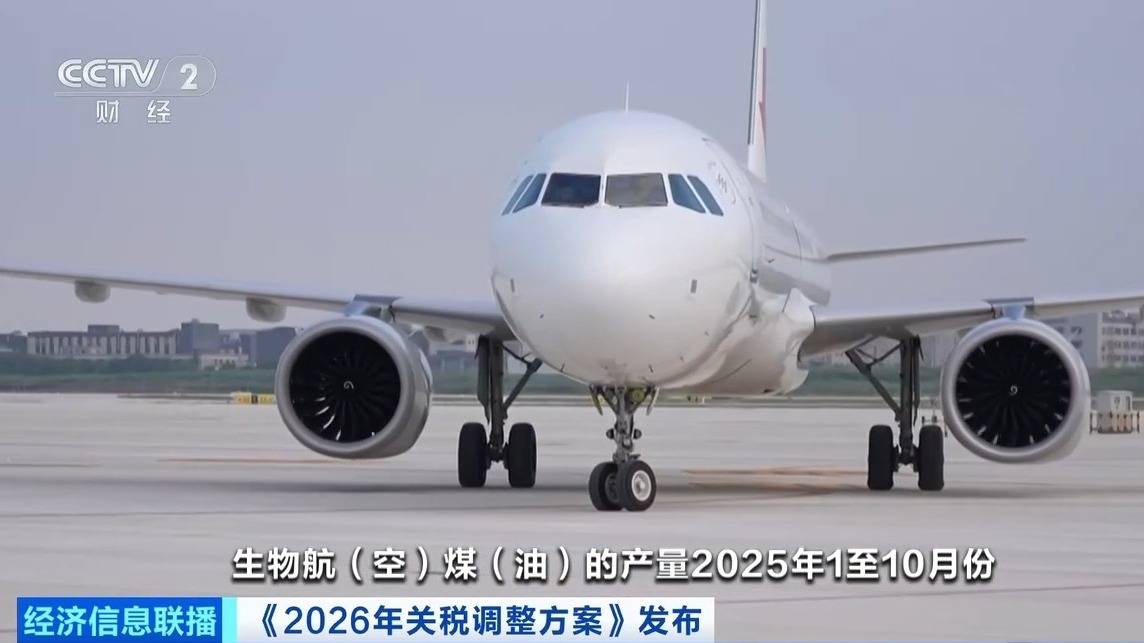
Group 1 - The Chinese government will implement a temporary import tariff lower than the most-favored-nation rate on 935 items starting January 1, 2026, to enhance the linkage between domestic and international markets and expand the supply of quality goods [4][14] - The adjustment aims to promote high-level technological self-reliance and the construction of a modern industrial system by reducing import tariffs on key components and advanced materials [6] - The plan includes lowering import tariffs on medical products such as artificial blood vessels and diagnostic kits for certain infectious diseases to improve public health and reduce economic burdens on patients [8][16] Group 2 - The adjustment will also involve the cancellation of temporary import tariffs on micro motors, printing machines, and sulfur, restoring the most-favored-nation rate based on domestic industrial development and supply-demand changes [8] - The total number of tariff items will reach 8,972, with new categories added for smart bionic robots, bio-jet fuel, and other emerging products, supporting the development of the circular economy and forest economy [10][22] - Experts indicate that the tariff adjustments focus on cultivating new growth drivers and green transformation, which will enhance the competitiveness of the industrial chain [16][17] Group 3 - The adjustment of tariffs on bio-jet fuel, which saw a fourfold increase in production from January to October 2025 compared to 2024, highlights the potential for green low-carbon transformation in the petrochemical industry [19] - The inclusion of smart bionic robots and clean robots in the tariff schedule will help industries and companies accurately grasp trade data and assess overseas market trends [22] - Targeted adjustments to tariffs on urgently needed equipment and intermediate products will support the development of relevant industries by reducing costs [24]
国泰君安期货商品研究晨报-20251230
Guo Tai Jun An Qi Huo· 2025-12-30 01:34
Report Industry Investment Ratings No relevant content provided. Core Views of the Report The report provides investment outlooks and trend analyses for various commodities in the futures market, including precious metals, base metals, energy, chemicals, agricultural products, etc. It assesses the market conditions, supply - demand relationships, and price trends of each commodity, and gives corresponding trading suggestions and risk warnings [2][4]. Summary by Related Catalogs Precious Metals - **Gold**: Inflation is moderately declining. Gold prices are affected by factors such as inflation and macro - news. The trend strength is 0 [2][5]. - **Silver**: It is in a high - level adjustment. The price shows a downward trend, and the trend strength is 0 [2][5]. - **Platinum**: Capital outflows lead to a retracement. The price drops significantly, and the trend strength is - 1 [2][29]. - **Palladium**: It follows platinum's retracement. The price also shows a decline, and the trend strength is - 1 [2][29]. Base Metals - **Copper**: Capital liquidation causes price corrections. The price experiences a decline, and the trend strength is - 1 [2][12]. - **Zinc**: It is in a range - bound oscillation. The price fluctuates within a certain range, and the trend strength is 0 [2][15]. - **Lead**: The decrease in LME inventory limits price declines. The price shows a slight decline, and the trend strength is 0 [2][19]. - **Tin**: Supply is disrupted again. The price drops, and the trend strength is 1 [2][22]. - **Aluminum**: It follows copper. The price movement is related to copper, and the trend strength is 0 [2][26]. - **Alumina**: It is in a sideways oscillation. The price remains relatively stable, and the trend strength is 0 [2][26]. - **Cast Aluminum Alloy**: It shows a slight decline. The price drops slightly, and the trend strength is 0 [2][26]. - **Nickel**: There is a game between capital and industrial forces, and attention should be paid to the emergence of structural opportunities. The price shows certain fluctuations, and the trend strength is 0 [2][33]. - **Stainless Steel**: The fundamentals restrict elasticity, but attention should be paid to Indonesian policy risks. The price is relatively stable, and the trend strength is 0 [2][33]. Energy and Chemicals - **Crude Oil - related (implied in some products)**: Affects the prices of downstream products such as fuel oil and chemicals. For example, the price of fuel oil may be affected by crude oil price fluctuations [126]. - **Fuel Oil**: Night - session fluctuations increase, and it may maintain strength in the short term. The price shows certain fluctuations, and the trend strength is 0 [2][126]. - **Low - Sulfur Fuel Oil**: It is in a strong - side oscillation, and the spot high - low sulfur spread in the outer market is temporarily stable. The price shows a certain upward trend, and the trend strength is 0 [2][126]. - **PTA**: It is in a high - level oscillation market. The supply increases, and the demand is relatively stable. It is recommended to pay attention to position management before the holiday, and the trend strength is 0 [2][64][69]. - **MEG**: The upside space is limited, and there is still pressure in the medium term. The port inventory accumulates, and the trend is weak. The trend strength is 0 [2][64][70]. - **LPG**: The short - term supply is tight, and attention should be paid to the realization of downward drivers. The price shows certain fluctuations, and the trend strength is 0 [2][113]. - **Propylene**: The spot supply - demand tightens, and there is an expectation of a stop - falling rebound. The price shows a certain upward trend, and the trend strength is 0 [2][114]. - **PVC**: It is in a weak - side oscillation. The market has a high - production and high - inventory structure, and the rebound space is limited. The trend strength is 0 [2][122]. Agricultural Products - **Soybean - related (Soybean, Soybean Meal, Soybean Oil)**: - **Soybean Meal**: Overnight US soybeans closed down, and Dalian soybean meal may follow the adjustment. The price shows a decline, and the trend strength is - 1 [2][159][160]. - **Soybean Oil**: The US soybean drive is not significant, and it is mainly operated within a range. The price shows certain fluctuations, and the trend strength is 0 [2][154]. - **Soybean**: It is in an oscillation. The price is relatively stable, and the trend strength is 0 [2][161]. - **Corn**: Attention should be paid to the spot market. The price shows a certain upward trend, and the trend strength is 0 [2][163]. - **Sugar**: It is in a range - bound arrangement. The price fluctuates within a certain range, and the trend strength is 0 [2][167]. - **Cotton**: The area expectation is undetermined, and the futures price corrects. The price shows a decline, and the trend strength is 0 [2][172]. - **Eggs**: They are in a short - term oscillation. The price shows certain fluctuations, and the trend strength is 0 [2][178]. - **Hogs**: Contradictions continue to accumulate, and they are strong in the short term. The price shows an upward trend, and the trend strength is 0 [2][181]. - **Peanuts**: Attention should be paid to oil mill acquisitions. The price shows certain fluctuations, and the trend strength is 0 [2][187]. - **Palm Oil**: It has a short - term rhythm rebound, but the height is limited. The price shows a certain upward trend, and the trend strength is 0 [2][154]. Others - **Iron Ore**: It is in a high - level repetition. The price shows certain fluctuations, and the trend strength is - 1 [2][45]. - **Rebar**: Macroeconomic support and industrial suppression coexist, and steel prices maintain a range - bound oscillation. The price is relatively stable, and the trend strength is 0 [2][47]. - **Hot - Rolled Coil**: Similar to rebar, with macroeconomic support and industrial suppression, and steel prices maintain a range - bound oscillation. The price is relatively stable, and the trend strength is 0 [2][47]. - **Silicon Iron**: Market information disrupts, and it has a wide - range oscillation. The price shows large fluctuations, and the trend strength is 0 [2][51]. - **Manganese Silicon**: Market information disrupts, and it has a wide - range oscillation. The price shows large fluctuations, and the trend strength is 0 [2][51]. - **Coke**: The fourth - round price cut starts, and it oscillates repeatedly. The price shows certain fluctuations, and the trend strength is 0 [2][56]. - **Coking Coal**: Year - end production cuts disrupt, and it oscillates repeatedly. The price shows certain fluctuations, and the trend strength is 0 [2][56]. - **Log**: It is in a low - level oscillation. The price is relatively stable, and the trend strength is 0 [2][60]. - **Styrene**: It is in a short - term oscillation. The price shows certain fluctuations, and the trend strength is 0 [2][107]. - **Caustic Soda**: Attention should be paid to the delivery pressure in January. The price shows certain fluctuations, and the trend strength is - 1 [2][83]. - **Paper Pulp**: It is in a weak - side oscillation. The price shows a decline, and the trend strength is - 1 [2][89]. - **Glass**: The original sheet price is stable. The price is relatively stable, and the trend strength is 0 [2][96]. - **Methanol**: It oscillates with support. The price shows certain fluctuations, and the trend strength is 0 [2][99]. - **Urea**: It runs in a short - term oscillation. The price shows certain fluctuations, and the trend strength is 0 [2][103]. - **Short - Fiber**: It is in a high - level oscillation. The price shows certain fluctuations, and the trend strength is 0 [2][143]. - **Bottle Chip**: It is in a high - level oscillation. The price shows certain fluctuations, and the trend strength is 0 [2][143]. - **Offset Printing Paper**: It is advisable to wait and see. The price is relatively stable, and the trend strength is 0 [2][146]. - **Pure Benzene**: It is in a short - term oscillation mainly. The price shows certain fluctuations, and the trend strength is 0 [2][151]. - **Container Freight Index (European Line)**: Attention should be paid to the cabin - opening guidance. The price shows certain fluctuations, and the trend strength is 0 [2][128].
牛市早报|贵金属重挫,2026年关税调整方案公布
Xin Lang Cai Jing· 2025-12-30 00:26
Market Data - As of December 29, the Shanghai Composite Index rose by 0.04% to 3965.28 points, while the Shenzhen Component Index fell by 0.49% to 13537.1 points and the ChiNext Index decreased by 0.66% to 3222.61 points [1] - In the U.S. market, all three major indices closed lower, with the Dow Jones down by 0.51%, the Nasdaq down by 0.5%, and the S&P 500 down by 0.35% [1] - International oil prices increased, with light crude oil futures for February 2026 rising by $1.34 to $58.08 per barrel (up 2.36%) and Brent crude oil futures for February rising by $1.30 to $61.94 per barrel (up 2.14%) [1] Economic News - The State Council Tariff Commission announced a tariff adjustment plan effective January 1, 2026, which includes a temporary import tariff rate lower than the most-favored-nation rate for 935 items to enhance the linkage between domestic and international markets [2] - From January to November 2025, state-owned enterprises in China reported a total operating revenue of 7,562.576 billion yuan, a year-on-year increase of 1.0%, while total profits decreased by 3.1% to 371.945 billion yuan [2] - The asset-liability ratio of state-owned enterprises was reported at 65.2% as of the end of November, an increase of 0.3 percentage points year-on-year [2] Regulatory Developments - The State Administration for Market Regulation has set key tasks for 2026, focusing on fair competition governance, breaking administrative monopolies, and enhancing the quality of business entities [3] - The Ministry of Finance and the State Taxation Administration announced new tax deduction rules for advertising and business promotion expenses, effective from January 1, 2026, allowing certain companies to deduct up to 30% of their annual sales revenue [3] - A new regulation on food entrusted production management will take effect on December 1, 2026, aimed at clarifying responsibilities and preventing food safety risks [4] Corporate Developments - The restructuring plan for 38 companies under Suning Electric Group has been approved, with total debts amounting to 238.73 billion yuan, including 18.807 billion yuan of confirmed debts [6] - Airbus secured a significant order from domestic airlines for 55 A320 series aircraft, with a catalog price exceeding $8.2 billion, to be delivered between 2028 and 2032 [6]
明年起我国调整部分商品关税,将带来哪些影响?
Sou Hu Cai Jing· 2025-12-30 00:24
Group 1 - The State Council's Tariff Policy Adjustment Plan for 2026 will adjust import tariff rates and categories for certain goods starting January 1, 2026, impacting key components, advanced materials, energy resources, and intelligent bionic robots [1] - The adjustment in tariffs for bio-aviation kerosene shows a significant increase in production, with a fourfold growth from January to October 2025 compared to 2024, indicating the petrochemical industry's potential for green and low-carbon transformation [3] - The addition of tariff categories for intelligent bionic robots and cleaning robots will help the industry and companies accurately grasp trade data and assess overseas market trends [5] Group 2 - Targeted adjustments to tariffs on urgently needed equipment and intermediate products, including important recyclable raw materials, will support the development of relevant industries by reducing costs [7]