
投资于人

Search documents
2025年12月经济数据点评:总量趋稳,结构有亮点
Changjiang Securities· 2026-01-20 09:10
1. Report Industry Investment Rating - No relevant content provided. 2. Core Views of the Report - In 2025, the annual economic growth rate reached the target of 5%. Consumption and exports' contribution to GDP growth increased, while investment's contribution declined. Looking ahead to 2026, the real GDP growth rate is expected to be around 4.8%, showing a "first down then up" trend due to the high base effect. [2][7] - The bond market's pricing of the fundamentals may still exhibit an asymmetry of "being insensitive to positive news and sensitive to negative news." The view of a weak and volatile long - term bond market in the near term is maintained, and the recovery window may come later in the first quarter. [2][7] 3. Summary by Related Catalogs 3.1 2025 Economic Data Overview - The Q4 real GDP in 2025 was 4.5% year - on - year, meeting expectations, and the annual cumulative year - on - year growth rate successfully achieved the target of 5%. In December 2025, the year - on - year growth rate of industrial added value above designated size rose by 0.4 pct to 5.2%, higher than the expected 4.9%; the year - on - year growth rate of social retail sales dropped by 0.4 pct to 0.9%, lower than the expected 1.5%; the cumulative year - on - year growth rate of fixed asset investment dropped by 1.2 pct to - 3.8%, worse than the expected - 2.4%. [4] 3.2 Economic Growth Drivers - Consumption and exports' contribution to GDP growth increased to 2.6% and 1.64% respectively, while investment's contribution declined to 0.77%. There was still price pressure. The Q4 real GDP growth rate was 4.5% year - on - year, down 0.3 pct from Q3, and it declined quarter by quarter throughout the year, reaching the lowest level since 2023. The price level improved quarter by quarter, with the GDP deflator's year - on - year growth rate dropping to around - 0.67%, and the nominal GDP growth rate was 3.8% year - on - year, showing marginal improvement but remaining at a low level. [7] 3.3 Industrial Sector - In December, the industrial added value was 5.2% year - on - year, 0.4 pct higher than the previous value, and 0.49% month - on - month. The year - on - year growth rate of export delivery value turned positive to 3.2%. The service industry production index was 5% year - on - year, 0.8 pct faster than the previous month. By sector, the mining industry was a major drag, with its year - on - year growth rate dropping by 0.9 pct to 5.4%, while the manufacturing industry's year - on - year growth rate increased by 1.1 pct to 5.7%. High - end manufacturing maintained a high growth rate, with the year - on - year growth rates of pharmaceutical manufacturing, special equipment manufacturing, and computer and communication equipment manufacturing accelerating by 4.6, 3.4, and 2.6 pct respectively. The output of high - tech products such as industrial robots and integrated circuits maintained a high month - on - month growth rate. In 2025, the added value of high - tech manufacturing increased by 9.4% compared to the previous year, contributing 26.1% to the growth rate of industrial added value above designated size. [7] 3.4 Investment Sector - The decline in fixed asset investment widened. Real estate investment continued to decline due to the drag of housing prices, and infrastructure and manufacturing investment weakened overall against the backdrop of enterprises' concentrated debt repayment, debt reduction, and "anti - involution." In December, the month - on - month growth rate of fixed asset investment dropped to - 15.0%, and the month - on - month decline of private investment was about - 17.2%. Real estate investment's month - on - month decline widened to - 37.5%, the sales area decreased by 16.6% year - on - year, and the sales volume decreased by 24.2% year - on - year. The prices of commercial residential buildings in 70 large and medium - sized cities generally decreased month - on - month, and the year - on - year decline widened. The insufficient funds of real estate enterprises still restricted construction starts and completions, but the new construction area stabilized, and the cumulative year - on - year decline narrowed. Infrastructure investment continued to decline, with the month - on - month growth rate of broad - based infrastructure investment at - 15.9%, and the "crowding - out effect" of debt reduction may still have had an impact. In 2025, the cumulative year - on - year growth rate of manufacturing investment was 0.6%, but in December, the month - on - month growth rate was - 10.5%, indicating that enterprises were cautious about investment against the "anti - involution" background. The capacity utilization rate of the manufacturing industry increased from 74.1% in Q1 to 75.2% in Q4. [7] 3.5 Consumption Sector - The growth rate of social retail sales declined, and residents' income and expenditure continued to slow down. In December, the year - on - year growth rate of social retail sales dropped to 0.9%, the lowest since March 2023. The off - season effect was evident, with commodity retail (0.7%) and catering (2.2%) remaining at low levels, and the year - on - year growth rate of catering above designated size at - 1.1%. The effect of the "trade - in" subsidy may have weakened, and consumption of household appliances (- 18.7%), furniture (- 2.2%), and automobiles (- 5.0%) remained under pressure. However, the retail sales of communication equipment (20.9%) maintained a high growth rate. In Q4, the real cumulative year - on - year growth rate of residents' per capita disposable income dropped by 0.2 pct to 5%, and the year - on - year growth rate of consumption expenditure dropped by 0.3 pct to 4.4%. [7] 3.6 Outlook for 2026 - The real GDP growth rate is expected to be around 4.8% in 2026, showing a "first down then up" trend due to the high base effect. On the investment side, the Central Economic Work Conference in December last year proposed to "stabilize and reverse the decline of investment." This year, the investment growth rate is expected to stop falling and stabilize with the support of the concept of "investing in people" and "two important" projects. On the production and demand side, the transformation of old and new driving forces is accelerating, and service consumption, high - end manufacturing, and exports may maintain their resilience. [2][7]
2025年国家“账本”140万亿!居民的“钱袋子”鼓了多少?
Xin Jing Bao· 2026-01-20 06:01
Group 1 - The core viewpoint of the article highlights the steady growth of disposable income for residents in 2025, which aligns with GDP growth, indicating a positive economic outlook for consumer confidence and spending [2][3][4] - The per capita disposable income for residents reached 43,377 yuan, with a nominal increase of 5% and a real increase of 5% after adjusting for price factors, reflecting a robust economic environment [2][3] - The growth in disposable income is supported by stable increases in wage income, operating net income, and transfer net income, which are crucial for enhancing consumer spending [4][6] Group 2 - Rural residents experienced a faster income growth rate than urban residents, with rural per capita disposable income increasing by 5.8% nominally and 6.0% in real terms, marking the eighth consecutive year of higher growth in rural income [4][6] - The national per capita consumption expenditure reached 29,476 yuan, with a nominal increase of 4.4% and a real increase of 4.4%, indicating a steady rise in consumer spending [4][5] - The Engel coefficient, which measures the proportion of food expenditure in total consumption, was 29.3%, showing a slight decrease of 0.5 percentage points from the previous year, suggesting an improvement in living standards [5][6] Group 3 - The concept of "investing in people" is emphasized as a key strategy for future economic growth, focusing on education, skills, health, and social security to enhance productivity and economic quality [6][7] - The average years of education for the labor force aged 16-59 increased to 11.3 years, reflecting the government's commitment to improving human capital as part of its economic strategy [6][7] - The shift towards a consumption-driven economy is highlighted, with a need for higher income growth rates to boost consumer confidence and bridge the gap between economic data and public perception [7][8]

(经济观察)中国经济2025年向新向优 为“十五五”开局聚力
Zhong Guo Xin Wen Wang· 2026-01-19 13:54
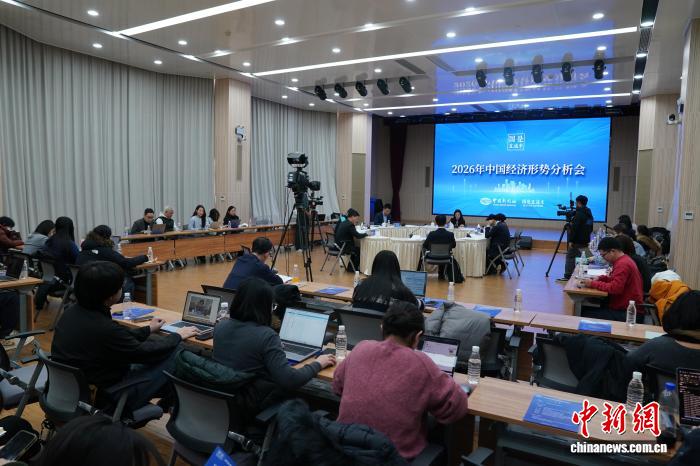
中新社北京1月19日电 题:中国经济2025年向新向优 为"十五五"开局聚力 中新社记者 陈康亮 中国经济2025年"成绩单"19日出炉:国内生产总值(GDP)同比增长5%,总量迈上140万亿元(人民币,下 同)新台阶。 在当天中新社国是直通车举行的"2026年中国经济形势分析会"上,与会专家认为,中国经济2025年顶压 前行、向新向优,圆满实现预期目标,为"十五五"开好局、起好步奠定坚实基础。 1月19日,中新社国是直通车在北京举行"2026年中国经济形势分析会"。 汪俐辰 摄 "这是一份沉甸甸的成绩单。"中国国际经济交流中心学术委员会副主任陈文玲在会上说,中国经济2025 年遭遇大国竞争加剧、国际格局重塑、贸易摩擦升温等多重压力,但仍顶压前行,实现预期经济目标, 并持续向新向优,可谓不容易、不平凡,"和全球一些大国比起来也不一般"。 中国银行研究院副院长周景彤认为,在中国经济2025年向新向优的过程中,新质生产力发挥重要作用, 并取得多项重大进展:产业结构向新向优更加凸显,出口商品竞争力优势持续强化,重点领域投资的支 撑作用愈发突出,新兴消费引领带动作用进一步显现。 针对备受关注的房地产领域,清华大学房地 ...
2025年中国经济复盘:5%的成绩与发力方向
Yuekai Securities· 2026-01-19 11:45
Economic Performance - In 2025, China's GDP growth reached 5%, with the total economic volume surpassing 140 trillion yuan for the first time[1] - Exports grew by 5.5%, supported by diversification into ASEAN and African markets, offsetting declines in exports to the US[2] - The Shanghai Composite Index rose by 18.4%, with the ChiNext Index and STAR 50 Index increasing by 49.6% and 35.9% respectively[3] Economic Challenges - Real estate investment fell by 17.2%, a larger decline than the previous year's 10.6%[4] - Retail sales growth for the year was 3.7%, lower than the 5% growth in the first half of 2025[5] - The GDP deflator was negative at -1%, indicating nominal GDP growth of only 4% compared to a real growth of 5%[6] Policy Outlook - In 2026, proactive fiscal policies and monetary easing are expected to support economic growth, aiming for a strong start in Q1[7] - The government plans to allocate 625 billion yuan for consumer goods replacement programs and 2.95 trillion yuan for infrastructure projects[8] - Emphasis on increasing residents' income and investing in human capital as key strategies to boost domestic demand[9]
政前方观察丨投资青年就是投资未来,贵州这么干
Sou Hu Cai Jing· 2026-01-19 11:31
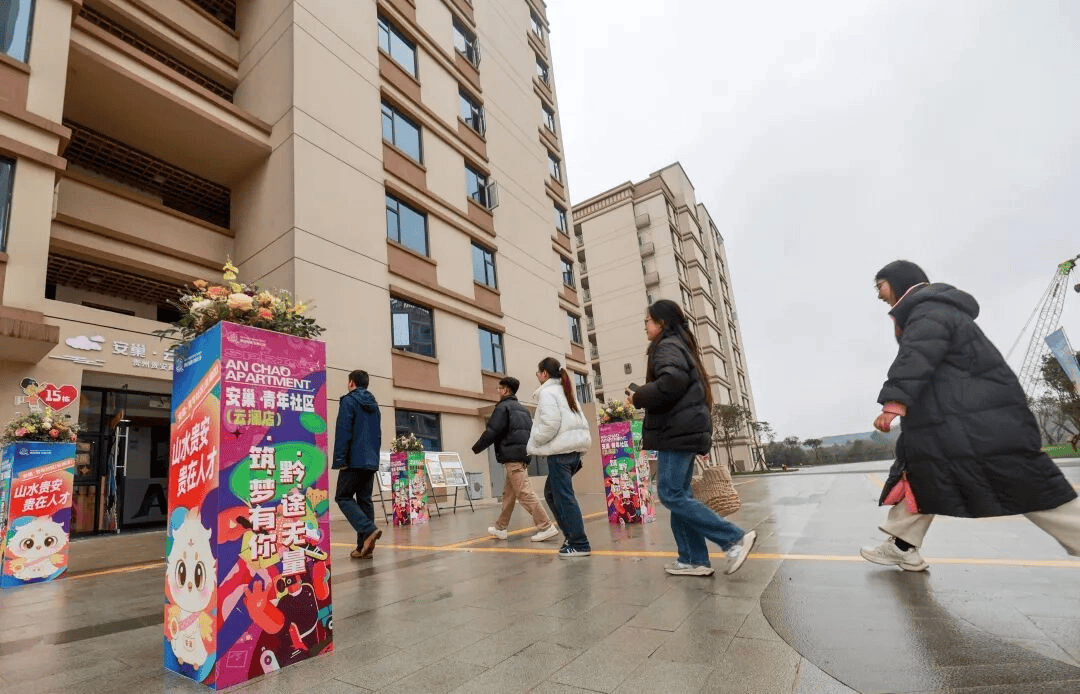
求职青年走进人才公寓。(图/袁福洪) 十年树木,百年树人。大家固然知道每名青年都是一支潜力股,但投资青年使其成长成才,除了培育时间上要足够耐心,培育实践中也要讲究方式方法。 最近几年,"投资于人"热度逐年升高,这一理念倡导将更多资金资源投入到人的能力提升、健康维护、职业发展和潜力开发中。 要这样投资,青年朋友们可就不困了。毕竟,能力提升、职业发展、潜力开发,哪一个不是和我们青年息息相关。 然而,投资不仅要看潜力,也要看回报率。 日前,对《贵州省中长期青年发展规划(2019—2025年)》(下称《规划》)的总结评估显示,《规划》目标任务已如期完成,贵州青年发展总体向好。 贵州有1155万青年,并在全国率先建设"青年友好型成长型省份"。《规划》实施7年来,贵州对青年友好,青年在贵州成长。 循着《规划》总结评估给出的答卷,如果用投资的眼光瞧一瞧,这场"双向奔赴"背后,回报率怎么样? 上小红书,集齐30个赞,免费续住7天——这是贵阳市青年驿站给来筑找工作、考试、创业的青年朋友送上的一份见面礼。 告别成百上千元的住宿成本和找房租房的烦琐,青年驿站不仅是个单纯的落脚点,还是个被政策服务、技能培训、求职信息环绕的服务区,鼓 ...
张影:“投资于人”释放长期消费潜力
Zhong Guo Xin Wen Wang· 2026-01-19 08:52
Core Viewpoint - Investment in human capital, such as education, employment, healthcare, and social security, is essential for unleashing long-term consumption potential and breaking the cycle of "involution" in the economy [1][3]. Economic Data Summary - The National Bureau of Statistics reported that in 2025, the Consumer Price Index (CPI) remained stable compared to the previous year, while the per capita disposable income reached 43,377 yuan, reflecting a nominal growth of 5.0% [3][4]. - Urban residents' per capita disposable income grew by 4.3%, while rural residents saw a higher growth rate of 5.8%, indicating a policy focus on narrowing income disparities and optimizing income distribution [3][4]. Consumption Insights - Rural retail sales of consumer goods are approximately one-sixth of urban retail sales, highlighting the need to enhance consumption among low- and middle-income groups to stimulate economic growth [3][4]. - One challenge in boosting consumption is the low proportion of labor income in initial distribution, making it crucial to increase labor compensation [4]. - The intergenerational support burden on the working population complicates consumption, as they must cover not only their expenses but also those of family members [4]. - The lack of consumption scenarios and willingness is another significant challenge, with high-quality supply being key to driving consumer demand [4]. - Service consumption has a higher potential ceiling compared to goods consumption, and fostering habitual long-term consumption is vital for transitioning the economy from investment and trade reliance to consumption-driven growth [4].

以“投资于物”和“投资于人”紧密结合赋能人才高质量发展
Sou Hu Cai Jing· 2026-01-19 04:55
Core Viewpoint - China's economic development is transitioning from high-speed growth to high-quality development, emphasizing the integration of investment in physical and human capital as a key strategy for enhancing development momentum and expanding domestic demand [1] Group 1: Investment in Physical Capital - Investment in physical capital has expanded beyond traditional tangible assets to include new infrastructure such as AI computing centers and quantum communication networks, becoming essential for the development of strategic emerging industries [2] - The role of physical investment has evolved from merely supporting economic growth to providing a platform for talent innovation, with a shift from government-led to a more diversified investment approach involving market operations and social capital [2][3] - The marginal returns of physical capital are decreasing, making human capital and innovation the key drivers of high-quality development, necessitating a balance between physical and human capital investments [3] Group 2: Investment in Human Capital - Investment in human capital has transformed from basic livelihood support to strategic capital investment, encompassing a comprehensive support system from birth to old age, focusing on lifelong learning and overall human development [2] - Policies related to human capital investment have evolved from simple financial subsidies to creating a talent ecosystem that promotes collaboration among education, technology, and talent [2][3] - The integration of investment in human capital is crucial for enhancing the quality of life and expanding domestic demand, creating a virtuous cycle of human capital accumulation [4] Group 3: Synergy Between Physical and Human Capital - The close integration of investment in physical and human capital is essential for achieving high-quality development, as both elements are interdependent and support each other in fostering new productive forces [3][4] - A comprehensive talent development system is needed, focusing on attracting, nurturing, utilizing, and retaining talent through a lifecycle approach that combines physical and human capital investments [9] - The collaboration between physical and human capital is vital for fostering a robust talent pool that can drive technological independence and innovation [4][7] Group 4: Challenges and Future Directions - There are challenges in shifting from a long-standing focus on physical investment to prioritizing human capital, requiring reforms in performance evaluation systems to emphasize long-term benefits [5][6] - Economic disparities between developed and underdeveloped regions pose challenges for balanced talent investment, necessitating regional collaboration to address talent retention and investment issues [6] - The future of investment strategies will focus on a more holistic approach to human development, extending beyond traditional economic metrics to include well-being, social cohesion, and cultural sustainability [6][12]
2025年社零同比增长3.7%,政策加码下消费动能将持续释放
Xin Lang Cai Jing· 2026-01-19 03:36
Core Viewpoint - The data from the National Bureau of Statistics indicates a slowdown in retail sales growth, with a focus on boosting domestic consumption in response to external uncertainties and the impact of high tariffs on global trade [1][4][5] Group 1: Retail Sales Data - In December 2025, the total retail sales of consumer goods reached 39,398 billion yuan, showing a year-on-year growth of 0.7%, a decrease of 0.3 percentage points from November [1][4] - For the entire year of 2025, the retail sales of consumer goods grew by 3.7%, slightly down by 0.3 percentage points compared to the first eleven months [1][4] Group 2: Domestic Consumption Strategy - The central economic work conference for 2026 emphasizes the importance of domestic demand, with a focus on building a strong domestic market as the primary task [5] - The "National Subsidy" policy is set to play a crucial role in stimulating domestic consumption, with a new round of policies officially launched on December 30, 2025 [5] Group 3: Fiscal Measures and Consumer Support - Fiscal spending to promote consumption is expected to increase from 300 billion yuan in the previous year to 500 billion yuan in 2026, expanding the scope from durable goods to general consumer goods and services [2][5] - The People's Bank of China will utilize 500 billion yuan in loans to support service consumption and elderly care, addressing the current high demand for services like tourism, education, and healthcare [2][5] Group 4: Supply and Demand Challenges - There are significant supply gaps in high-quality products and services, particularly in areas like housing, transportation, and cultural entertainment, which restrict consumer choices and willingness to spend [6] - Recommendations include accelerating the transformation of traditional industries towards higher quality and more personalized services, as well as innovating consumption scenarios to stimulate market activity [3][6] Group 5: Policy Focus on Human Investment - The emphasis on "investing in people" is expected to enhance consumer capacity, with potential increases in birth and early education subsidies, as well as adjustments to basic pensions, particularly for rural residents [2][5] - The integration of service consumption with "investing in people" is anticipated to be a key focus, with policies likely to support skill training and elderly care services [3][6]
政观吉林丨“投资于人”这步棋,藏着吉林全面振兴的深层密码
Sou Hu Cai Jing· 2026-01-19 00:41
2026年初,吉林省委经济工作会议上,"投资于物突出产业升级,投资于人突出民生补短"的表述,被醒 目写入新一年全省八大重点任务之首。 这场开年"第一会"为"十五五"开局定调:物质投资与人力投资如同驱动振兴的双轮,唯有同频共振,方 能行稳致远。 将"投资于人"置于全省八大重点任务之首,这步棋不仅是经济策略的精妙调整,更解锁了黑土地振兴的 人才密码——当政策红利精准滴灌到每个个体的成长轨迹中,一个地区发展便有了最坚实的底气与活 力。 从宏观导向到地方深耕,"投资于人"正成为吉林全面振兴的核心引擎。 2025年上半年,吉林全省GDP增长5.7%,多项主要指标增速跑赢全国,这份"强基固本、聚势蓄能、提 质焕新"的成绩单,印证了战略转向的深远意义。 谋势布局:三维发力绘就育人蓝图 吉林省的"投资于人"战略,在全周期保障、产业型技能、民生化导向三个维度精准铺展,让发展成果真 正可感可及。 强化产业导向技能投资,让人才成长与产业升级同频共振。2026年八大重点任务中,"因地制宜发展新 质生产力"明确要求"突出产业需求和应用导向,深化有组织聚力攻坚,一体推进教育科技人才发展", 让技能培训不再是"空对空",而是精准对接市场需 ...

潜心补短板 着力优结构
Xin Lang Cai Jing· 2026-01-18 17:24
Group 1 - The core viewpoint emphasizes the importance of investment as both current demand and future supply, with a focus on expanding effective investment to stabilize growth and enhance domestic demand [1] - The "Two Major" construction projects, which include significant water conservancy projects, are highlighted, with a total investment of approximately 134.07 billion yuan aimed at irrigating 1.85 million acres and providing stable water sources for about 230,000 people [2] - The National Development and Reform Commission (NDRC) plans to allocate around 295 billion yuan for the "Two Major" construction projects in 2026, accelerating the pace of fund disbursement and utilization [2] Group 2 - Various regions are integrating project construction with supporting reforms to ensure the sustainability and effectiveness of the "Two Major" construction initiatives, particularly in urban wastewater management [3] - The role of private investment in stabilizing growth and employment is underscored, with government investment funds being utilized to stimulate private sector participation, including the establishment of over 600 sub-funds to support emerging industries [4] - Recent government meetings have proposed measures to create a favorable investment environment for private capital, including loan interest subsidies and risk-sharing mechanisms for private enterprise bonds [5] Group 3 - The focus on improving investment in human capital is evident, with projects like urban renewal in Guangzhou aimed at enhancing living conditions and consumer environments [7] - Investment in human capital is seen as essential for driving high-quality economic development, with various initiatives targeting healthcare, elderly care, and childcare services to meet public needs [7][8] - The integration of investment in both physical infrastructure and human resources is crucial for generating new supply and stimulating demand, thereby enhancing the internal dynamics of the domestic economy [8]