汇率波动

Search documents
日本利率升至30年新高,日本加息背后如何影响全球股市?
Sou Hu Cai Jing· 2025-12-21 23:05
Group 1 - The Bank of Japan has raised its policy interest rate from 0.5% to 0.75%, marking the highest level in nearly 30 years, which aligns with market expectations but has significant global implications [2] - The widening interest rate differential between the US and Japan has accelerated capital outflows, with the current target range for the US federal funds rate at 3.5% to 3.75%, while Japan's rate remains significantly lower [3] - The capital outflow and the persistent high interest rate differential are impacting the Japanese yen's value, leading to concerns about the stability of Japan's financial system and the potential need for further rate adjustments to stabilize the yen [4] Group 2 - Japan's debt-to-GDP ratio exceeds 260%, and the recent rate hike will increase the debt burden, putting pressure on Japan's fiscal situation [5] - The Federal Reserve's monetary policy has a more significant global influence compared to the Bank of Japan, and any future rate cuts by the Fed could narrow the interest rate differential, providing more operational space for Japan's monetary policy [6] - If the Fed does not cut rates in 2026, the Bank of Japan may be forced to continue raising rates, which could exacerbate the negative impacts of Japan's high debt levels [5][6]


加息和口头警告均失效!日元崩跌,警惕圣诞惊魂!
Jin Shi Shu Ju· 2025-12-19 15:07
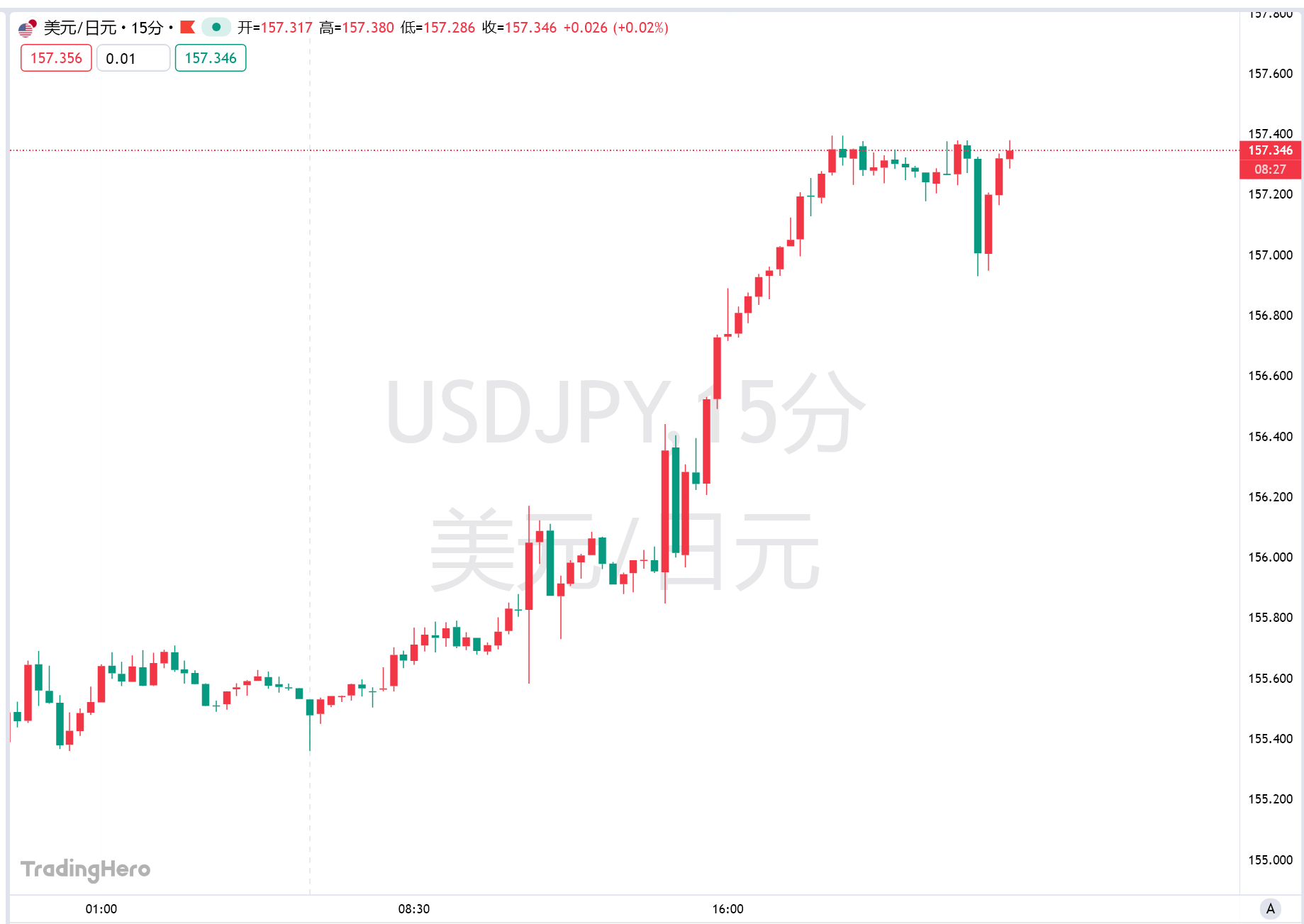
Core Viewpoint - The Japanese yen is experiencing accelerated depreciation, with traders pushing it towards levels that may trigger official intervention, following the Bank of Japan's interest rate hike without clear guidance on future rate paths [1][3]. Group 1: Currency Movements - The USD/JPY exchange rate is trading above the 157 mark, potentially marking the largest single-day increase since early October and reaching its highest level in nearly a month [1]. - The EUR/JPY exchange rate hit a record high, increasing by 1.2% during the day [1]. Group 2: Government and Central Bank Responses - Japanese Finance Minister Shunichi Suzuki indicated that Tokyo will take appropriate measures to address any excessive volatility in the foreign exchange market, acknowledging significant one-sided fluctuations within short time frames [3]. - The Bank of Japan raised its policy interest rate from 0.5% to 0.75%, a move that had been anticipated by policymakers, yet traders sold off the yen following the announcement [3]. - Bank of Japan Governor Kazuo Ueda remained vague about the timing and pace of future rate hikes, leading to further depreciation of the yen [3]. Group 3: Market Outlook and Risks - Since the yen/USD exchange rate surpassed the 155 mark in November, traders have begun to consider the possibility of official intervention in the currency market [4]. - The last time Japanese authorities intervened was in July 2024, when the USD/JPY rate reached 161.96, the highest level since the mid-1980s [4]. - With the upcoming Christmas holiday likely leading to thinner market trading, the volatility of the yen may increase, raising the risk of intervention becoming a more realistic possibility [4].
3%高息难抵汇损,降息通道下的美元存款不再是“香饽饽”
Sou Hu Cai Jing· 2025-12-19 09:35
Core Viewpoint - The article discusses the impact of the Federal Reserve's interest rate cuts on the USD deposit rates in China, highlighting the increasing risk of currency fluctuations as the RMB appreciates against the USD, which could erode the returns on USD deposits [1][5]. Group 1: Federal Reserve's Monetary Policy - The Federal Reserve continued its accommodative monetary policy in 2025, implementing three interest rate cuts, with the final rate set between 3.50% and 3.75% [2][5]. - The voting results for the rate cuts showed significant division, with a 9-3 vote, marking the first dissenting votes since 2019 [2]. Group 2: Domestic USD Deposit Rates - Most domestic banks have seen USD deposit rates fall below 3%, with some banks offering rates in the low 2% range, while a few still provide rates above 3% [1][2]. - High-yield products are becoming scarce, and the current high rates may be temporary, reflecting a lag in pricing adjustments relative to the Fed's rate cuts [3][5]. Group 3: Currency Exchange Rate Impact - The appreciation of the RMB against the USD has exceeded 3.4% since 2025, with the onshore RMB reaching a peak of 7.0455, which could significantly impact the returns on USD assets [5][6]. - The article emphasizes that as the Fed continues to lower rates, the influence of exchange rate fluctuations on investment returns will increase [5][6]. Group 4: Investment Strategies - Investors are advised to shift their focus from chasing interest rate differentials to managing currency exchange risks, especially for those without genuine USD needs [6][7]. - Different strategies are recommended for various types of investors, with a focus on maintaining a balanced asset allocation and considering short-term products to mitigate risks [6][7].
新亚电子:2025年上半年,公司外销业务占公司总营收约为13%
Zheng Quan Ri Bao Wang· 2025-12-18 12:13
Core Viewpoint - The company maintains a stable overall capacity utilization rate and is closely monitoring exchange rate fluctuations to mitigate potential negative impacts on its revenue from foreign sales [1] Group 1: Company Performance - The overall capacity utilization rate of the company remains stable [1] - In the first half of 2025, foreign sales are expected to account for approximately 13% of the company's total revenue, primarily settled in USD and EUR [1] Group 2: Risk Management - The company is actively monitoring exchange rate trends and related policies to optimize currency conversion and avoid negative impacts from exchange rate volatility [1]

绩后大跌!关税冲击增长,勃肯(BIRK.US)新财年营收与盈利指引均不及预期
Zhi Tong Cai Jing· 2025-12-18 11:48
Core Viewpoint - BIRK's sales and profits have increased due to strong demand for its expensive sandals and clogs, but the company forecasts a slowdown in growth for the upcoming year [1] Group 1: Financial Performance - For the three months ending in September, BIRK reported a revenue growth of 20% to €526 million ($616 million), slightly above analysts' expectations [1] - The company anticipates a maximum sales growth of 15% for fiscal year 2026, potentially reaching €2.35 billion, which is slightly below expectations [1] - Adjusted earnings for 2026 may exceed €700 million, while analysts' average expectation is approximately €758 million [1][2] Group 2: Strategic Initiatives - CEO Oliver Reichert aims to attract investors with a robust growth strategy, ensuring consumer demand for BIRK shoes exceeds production capacity, allowing for higher average selling prices [1] - BIRK plans to invest between €110 million and €130 million in capital expenditures for 2026, an increase from €85 million the previous year [2] - The company intends to repurchase $200 million in stock during fiscal year 2026, depending on market conditions [2] Group 3: Market Challenges - The company faces challenges from U.S. tariffs and currency fluctuations, which are expected to continue impacting performance in 2026 [1][2] - BIRK's gross margin is projected to decline to between 57% and 57.5%, lower than the average expectation of 59.8%, due to adverse effects from exchange rate fluctuations and increased tariffs [2] - BIRK's stock price has dropped approximately 18% this year, with a pre-market decline of 11.64% following the earnings announcement [3]

新亚电子:2025年上半年公司外销业务占总营收约为13%
Mei Ri Jing Ji Xin Wen· 2025-12-18 10:51
(记者 张明双) 每经AI快讯,有投资者在投资者互动平台提问:董秘好!请问公司目前产能利用率多少?境外产能是 否满产?公司出口产品受汇率波动影响对利润的影响多大?采用了什么样的对策? 新亚电子(605277.SH)12月18日在投资者互动平台表示,公司整体产能利用率保持在稳定水平。2025 年上半年,公司外销业务占总营收约为13%,且主要以美元、欧元来结算,整体相对稳定。公司密切关 注汇率变化走势及相关政策,择优结汇,规避汇率波动带来的负面影响。 ...
每日机构分析:12月18日
Sou Hu Cai Jing· 2025-12-18 10:41
Group 1 - ANZ forecasts Malaysia's GDP to grow by 4.5% in 2026, driven by strong domestic demand, AI-driven electronic exports, and prudent fiscal policies focusing on tax reform and spending restraint, with the ringgit expected to strengthen to 4.00 against the USD by year-end [1] - Maybank Securities predicts the Philippine peso may weaken in the second half of 2026 due to a stronger USD and ongoing domestic negative factors, including corruption scandals affecting government spending and foreign investment confidence, potentially leading to an additional 50 basis points rate cut by the central bank [1] - LPL Financial's chief economist suggests that current inflation above target is temporary, with demand cooling in the coming months expected to ease price pressures, providing relief for the market [1] Group 2 - Bank of America notes that tariffs are raising goods inflation while healthcare factors may lead to a slowdown in services inflation, potentially prompting the Federal Reserve to maintain rates in January [2] - Bank of America highlights India as a leading AI consumer market due to low data costs and a large young population, although local startups face increased competition from international giants [2] - Yuanta Bank's economist emphasizes that relying solely on non-core measures will not curb the depreciation of the Korean won, urging authorities to take substantial actions to stabilize the currency [2] Group 3 - Zerohedge reports that large withdrawals from JPMorgan are disrupting liquidity across the U.S., reminiscent of the 2019 repo market crisis, prompting the Federal Reserve to consider "light QE" measures [3] - State Street indicates that the recent weakness of the USD is primarily due to U.S. investors significantly reducing their overseas investment currency hedging, rather than foreign capital increasing U.S. asset holdings [3]
韩国央行行长称韩元走软会导致通胀和不平等危机
Xin Lang Cai Jing· 2025-12-17 07:18
Core Viewpoint - The current exchange rate of the Korean won against the US dollar is not a traditional financial crisis, but it can be considered a crisis due to its significant impact on inflation and social inequality [1][3]. Group 1: Economic Impact - The Bank of Korea Governor Lee Chang-yong stated that the imbalance in foreign exchange supply and demand is the main reason for the weakening of the won [1][3]. - The current exchange rate level is unsatisfactory, especially considering concerns about the polarization of economic growth [1][3]. Group 2: Foreign Investment and Market Stability - Korean investors are heavily investing overseas, while foreign investors have been selling Korean stocks following recent price increases, causing the won to hover below 1450 won per dollar [1][3]. - The Korean government has committed to taking appropriate measures to ensure market stability, including extending the foreign exchange swap agreement with the National Pension Service (NPS) for one year [1][3]. Group 3: NPS and Currency Hedging - Lee emphasized that the NPS should not be overly transparent regarding the timing of initiating or suspending currency hedging, suggesting it is time to manage overseas investments while considering their macroeconomic spillover effects [2][4]. - A four-party consultative body has been formed, including the Ministry of Finance, the Bank of Korea, the NPS, and the Ministry of Welfare, to design a new framework that aligns NPS investment returns with market stability [2][4]. - The NPS has indicated it will adopt a more flexible approach to strategic currency hedging rather than being overly transparent, which is seen as a significant advancement [2][4].
日本汽车工会警告:央行本周加息若致日元急升,将危及明年“春斗”涨薪
智通财经网· 2025-12-17 07:10
Core Viewpoint - The Japanese automotive industry is concerned that a potential interest rate hike by the Bank of Japan could impact companies' ability to raise wages in the next fiscal year, particularly if it leads to significant yen appreciation, which may affect exporter confidence [1][2]. Group 1: Wage Negotiations and Economic Impact - The automotive union plans to seek a minimum monthly wage increase of 12,000 yen (approximately $77.50), which represents a stronger stance compared to last year's increase of 9,520 yen or 3.58%, the highest since 1996 [2][3]. - The union's focus will also be on narrowing the wage gap between large and small companies, as smaller firms saw an average wage increase of 8,688 yen, significantly lower than the 12,831 yen increase for larger firms [2][3]. - The union leader expressed that the upcoming wage negotiations could be influenced by the government's tax policies, particularly if large companies are excluded from tax incentives aimed at supporting wage increases [3][4]. Group 2: Economic Conditions and Policy Responses - The Bank of Japan is expected to raise the policy interest rate to 0.75%, the highest level in 30 years, with economists predicting a gradual tightening of policy every six months, potentially reaching a terminal rate of 1.25% [1][2]. - The impact of U.S. tariffs on automotive manufacturers is significant, with an estimated total impact of 2.5 trillion yen for the fiscal year ending in March, leading to a nearly 20% reduction in car prices in North America earlier this year [3]. - The Japanese government has introduced a substantial economic package, including approximately 980 billion yen aimed at promoting wage growth, particularly for small and medium-sized enterprises [3].
中国A股:为何资本不流入A股?分析太精辟,股民必读
Sou Hu Cai Jing· 2025-12-16 22:28
Group 1 - The core issue is the lack of foreign capital inflow into the A-share market despite low valuations and supportive policies, leading to confusion among investors [1] - External factors such as interest rate differentials and exchange rate fluctuations are causing foreign investors to adopt a "wait-and-see" approach, with the average exchange rate of RMB expected to be 7.1217 per USD in 2024, reflecting a 1.1% depreciation [3] - The narrowing of the interest rate differential and the net inflow of 30.2 billion RMB into the bond market indicate that long-term capital is beginning to position itself in China [3] Group 2 - Market confidence is crucial, with the real profitability of listed companies being a key concern; in 2024, 739 cases of securities violations were investigated, impacting investor trust [4] - Economic indicators show a GDP growth of 5.0% in 2024, but slow recovery in consumption and investment raises concerns about corporate earnings, despite growth in high-tech manufacturing sectors [4] - Foreign capital is increasingly selective, with over 16 billion USD flowing out from active overseas funds since 2023, while passive funds continue to enter, aligning with regulatory efforts to attract long-term capital [5] Group 3 - The market ecosystem is improving, with 1,225.53 billion RMB raised through IPOs in 2025, and a focus on supporting technology innovation; the delisting mechanism is also being refined [6] - The valuation of the A-share market is approximately 18.68 times, which is considered attractive given the stable economic growth of around 5% [7] - Institutional investors like BlackRock and Morgan Stanley have identified Chinese stocks as "overweight" or "high allocation," indicating a recognition of potential opportunities [7] Group 4 - Investors should focus on sectors favored by long-term capital, such as high-tech manufacturing and high-dividend leaders, rather than lamenting the absence of foreign capital [8]