经济不确定性

Search documents
珍酒李渡发盈警,预期中期股东应占净利润下降23%至24%
Zhi Tong Cai Jing· 2025-08-05 14:20
Group 1 - The company anticipates revenue for the six months ending June 30, 2025, to be approximately RMB 2.4 billion to RMB 2.55 billion, representing a year-on-year decline of 38.3% to 41.9% compared to RMB 4.13 billion for the six months ending June 30, 2024 [1] - The expected net profit attributable to shareholders for the same period is projected to decrease by 23% to 24% [1] - The adjusted net profit (non-IFRS measure) is expected to decline by 39% to 40% for the six months ending June 30, 2025 [1] Group 2 - The decline in revenue and profit is attributed to economic uncertainty and recent policies that have led to reduced consumption of liquor, particularly in business and social dining and gifting occasions [1] - The relatively high revenue and adjusted net profit figures for the six months ending June 30, 2024, also impact the year-on-year comparisons [1]
海港企业上半年股东应占集团亏损1.99亿港元
Ge Long Hui· 2025-08-05 07:02
Group 1: Company Performance - The company reported a basic net loss of HKD 86 million for the first half of 2025, compared to a profit of HKD 74 million in the same period last year, primarily due to an increase in impairment provisions for development properties to HKD 211 million [1] - The group's revenue increased by 5% to HKD 654 million, while operating profit decreased by 40% to HKD 125 million, mainly attributed to development properties [1] - The basic loss per share was HKD 0.28 [1] Group 2: Revenue Breakdown - Hotel revenue rose by 1% to HKD 426 million, with operating losses reduced by 33% to HKD 29 million [1] - Revenue from Hong Kong increased by 4% to HKD 383 million, with operating losses narrowing by 69% to HKD 11 million, mainly due to an increase in occupancy rates [1] - Mainland revenue fell by 17% to HKD 43 million, with operating losses widening to HKD 18 million [1] Group 3: Investment Property and Development - Investment property revenue decreased by 22% to HKD 96 million, with operating profit down 23% to HKD 85 million, primarily affected by a decline in retail rental income [1] - Development property revenue increased to HKD 58 million, but the profit was minimal, resulting in an operating loss of HKD 1 million [1] Group 4: Market Conditions - The local consumption in Hong Kong remains weak, reflecting ongoing economic uncertainties, with residents favoring nearby regions with competitive prices for travel [2] - Encouraging signs of recovery are emerging, with inbound tourist arrivals to Hong Kong increasing by 12% year-on-year [2] - Retail sales in Hong Kong ended a long-term decline in May, growing by 2.4% compared to last year, which could further boost local consumption if the trend continues [2]

海港企业(00051.HK)上半年股东应占集团亏损1.99亿港元
Ge Long Hui· 2025-08-05 04:23
Group 1: Company Performance - The company reported a basic net loss of HKD 86 million for the first half of 2025, compared to a profit of HKD 74 million in the same period last year, primarily due to an increase in impairment provisions for development properties to HKD 211 million [1] - The group's revenue increased by 5% to HKD 654 million, while operating profit decreased by 40% to HKD 125 million, mainly attributed to development properties [1] - The basic loss per share was HKD 0.28 [1] Group 2: Revenue Breakdown - Hotel revenue rose by 1% to HKD 426 million, with operating losses reduced by 33% to HKD 29 million [1] - Revenue from Hong Kong increased by 4% to HKD 383 million, with operating losses narrowing by 69% to HKD 11 million, mainly due to an increase in occupancy rates [1] - Mainland revenue fell by 17% to HKD 43 million, with operating losses widening to HKD 18 million [1] Group 3: Investment Property and Development - Investment property revenue decreased by 22% to HKD 96 million, with operating profit down by 23% to HKD 85 million, primarily affected by a decline in retail rental income [1] - Development property revenue increased to HKD 58 million, but the profit was minimal, resulting in an operating loss of HKD 1 million [1] Group 4: Market Conditions - The local consumption in Hong Kong remains weak, reflecting ongoing economic uncertainties, with residents favoring nearby regions with competitive prices for travel [2] - Encouraging signs of recovery are emerging, with inbound tourist arrivals to Hong Kong increasing by 12% year-on-year [2] - Retail sales in Hong Kong ended a long-term decline in May, growing by 2.4% compared to last year, which could further boost local consumption if the trend continues [2] Group 5: Challenges in Mainland China - The hotel industry in mainland China continues to face challenges due to weak economic growth and low consumer spending [2] - Intense competition among regional attractions is further exacerbating operational pressures on domestic hotel enterprises [2]
宏观经济周报-20250804
工银国际· 2025-08-04 06:13
Economic Indicators - The ICHI Composite Economic Index indicates a continued recovery in the Chinese economy, with the consumption index showing a narrowing contraction, reflecting stable domestic demand and improving consumer confidence[1] - The investment index is in the expansion zone, driven by policy support for infrastructure and manufacturing investments, providing strong support for economic recovery[1] - The production index shows mild expansion, indicating a moderate recovery in production activities with strong supply-side resilience[1] Service and Manufacturing Sector - The service sector's business activity index stands at 50.0%, indicating overall stability, with tourism and public services maintaining expansion due to summer holidays[2] - The manufacturing PMI has dropped to 49.3%, remaining in contraction territory, primarily due to seasonal factors and external uncertainties[2] - The new orders index for manufacturing fell to 49.4%, and new export orders dropped to 47.1%, indicating weakened domestic and external demand[2] Global Economic Context - In Q2 2025, the US GDP grew at an annualized rate of 3%, exceeding market expectations of 2.6%, rebounding from a -0.5% growth in Q1[5] - The US net exports contributed 5 percentage points to GDP growth, while consumer spending increased by 1.4%[5] - The Bank of Japan maintained its benchmark interest rate at 0.5% and raised inflation forecasts for the next two fiscal years, with core CPI expected to reach 2.7% in FY2025[6]
二季度全球黄金需求总量(含场外交易)仍同比增长3%至1249吨
Sou Hu Cai Jing· 2025-08-02 06:46
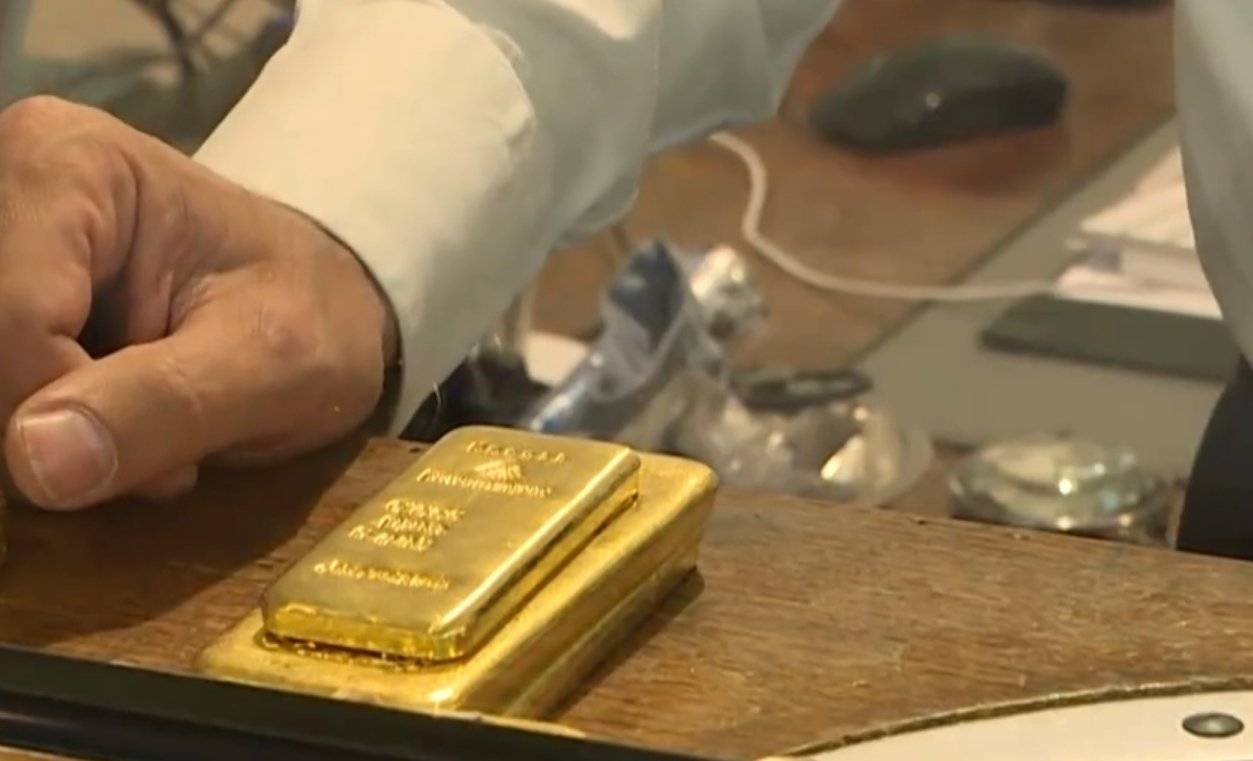
Core Insights - Global gold demand increased by 3% year-on-year to 1249 tons in Q2 2025, with a value surge of 45% to $132 billion, marking a historical high [1] - The growth was primarily driven by investment demand, central bank purchases, regional market differentiation, and structural changes in consumption trends [2] Investment Demand: Core Growth Engine - Gold ETFs and similar products were the main drivers of demand growth, with a net inflow of 170 tons in Q2 2025, contrasting with slight outflows in the same period of 2024 [3] - Cumulative inflows for the first half of the year reached 397 tons, the highest since 2020, reflecting institutional investors' hedging against geopolitical risks and economic uncertainties [3] - In China, gold ETF inflows amounted to 464 billion RMB (approximately $65 billion), with holdings increasing to 200 tons and assets under management (AUM) surging 116% year-on-year to 152.5 billion RMB [3] - Demand for gold bars and coins grew by 11% year-on-year to 307 tons, with Chinese investors leading globally with a demand of 115 tons, a 44% increase year-on-year [3] Central Bank Purchases: Long-term Support - Global central banks net purchased 166 tons of gold in Q2 2025, remaining at historically high levels, 41% above the average from 2010-2021 [6] - A survey indicated that 95% of central banks expect to continue increasing gold holdings in the next 12 months, highlighting a trend towards de-dollarization [6] - The People's Bank of China added 6 tons in Q2, totaling 19 tons for the first half of the year, with official reserves reaching 2299 tons, accounting for 6.7% of foreign reserves [6] Consumption Demand: Structural Changes - Global gold jewelry demand fell by 14% year-on-year to 341 tons, nearing 2020 pandemic lows, with China's demand dropping 20% year-on-year to 69 tons, the weakest Q2 since 2007 [7] - Despite the decline, high-end jewelry demand remained resilient, while the mass market shifted towards lighter, more innovative designs, leading to a 21% increase in consumption value to $36 billion [7] - India's demand decreased by 17% year-on-year, although pre-wedding season purchases and trade-in policies mitigated some of the decline [8] Price and Supply: Market Balance Amid High Prices - The average gold price in Q2 reached $3280.35 per ounce, a 40% increase year-on-year, marking a historical high [12] - In China, the average physical gold price surpassed 1000 RMB per gram, with retail prices fluctuating between 984-1018 RMB per gram [13] - Gold mine production increased by 3% year-on-year to 909 tons, a record high for the quarter, while recycled gold supply grew by only 4%, indicating a reluctance among holders to sell [14] - Overall, gold prices rose by 26% in the first half of the year, outperforming most mainstream assets [15] Regional Market: Differentiation and Resilience - The Chinese market exhibited strong investment but weak consumption, with total retail gold demand reaching 245 tons, a 28% increase year-on-year, despite weak jewelry demand [16] - In India, demand for gold bars and coins rose to 46 tons, but jewelry consumption fell by 17% due to price-sensitive consumers reducing purchases [17] - European demand doubled due to post-energy crisis risk aversion, while U.S. demand for bars and coins fell to 9 tons due to a high-interest rate environment [17] - The growth in gold demand underscores its dual value as a safe-haven asset and a long-term allocation tool [17] Future Outlook - Geopolitical developments, monetary policy trajectories, and changes in consumer behavior will be key variables influencing the gold market [19]

【环球财经】美国非农就业数据遭巨幅下修 重塑美联储9月降息预期
Xin Hua Cai Jing· 2025-08-01 14:31
Group 1 - The core point of the article highlights the impact of weak employment data on the Federal Reserve's monetary policy, increasing the pressure for a rate cut in September [1][4]. - The July non-farm payroll data showed a significant slowdown in job growth, with only 73,000 jobs added, far below the expected 110,000 [2]. - The revisions of previous months' employment data revealed a total downward adjustment of 258,000 jobs for May and June combined, indicating a deteriorating labor market [2][3]. Group 2 - The unemployment rate slightly increased from 4.1% in June to 4.2% in July, while the labor participation rate is declining, suggesting a weakening labor market [2][3]. - Economic uncertainties, including tariff policies and immigration restrictions, are contributing to the slowdown in job creation and hiring [3]. - Analysts are closely monitoring upcoming economic data, including CPI reports, to assess the likelihood of a rate cut by the Federal Reserve in September [5].
【美国就业增长急剧降温】8月1日讯,据外媒报道,过去三个月,美国就业增长急剧降温,进一步证明在普遍的经济不确定性下,劳动力市场正在转入低速档。美国劳工统计局周五发布的报告显示,7月份非农就业岗位增加7.3万个,而前两个月的就业岗位下调了近26万个。失业率小幅上升至4.2%。这些数据发出了更强烈的信号,表明劳动力市场不仅仅是放缓。就业增长不仅显著降温,失业率上升,而且失业的美国人找工作也变得更加困难,工资增长也基本停滞。这给已经出现的消费者和企业支出放缓带来了进一步的风险。
news flash· 2025-08-01 12:45
Core Viewpoint - The U.S. job growth has sharply cooled over the past three months, indicating a slowdown in the labor market amid economic uncertainty [1] Employment Data Summary - In July, non-farm payrolls increased by 73,000, while the previous two months' job gains were revised down by nearly 260,000 [1] - The unemployment rate slightly rose to 4.2% [1] Labor Market Conditions - The data suggests that the labor market is not only slowing down but also that it is becoming more difficult for unemployed Americans to find jobs [1] - Wage growth has essentially stagnated, adding further risk to already slowing consumer and business spending [1]
世界黄金协会:央行Q2购金量创三年最低 ETF接棒支撑黄金需求
智通财经网· 2025-07-31 13:43
Core Insights - Global gold demand continues to grow strongly against a backdrop of record-high prices, with total demand in Q2 increasing by 3% year-on-year to 1249 tons, and value soaring by 45% to a record $132 billion [1] Group 1: Global Gold Demand - In Q2, gold ETF inflows in China reached 464 billion RMB (approximately $65 billion, 61 tons), marking the strongest quarterly performance ever [1][3] - Global gold ETF demand has significantly increased for the second consecutive quarter, becoming a key driver of overall demand [1] - Investment in gold bars and coins has also surged, driven by rising prices and gold's safe-haven attributes [1] Group 2: Central Bank Purchases - Central banks globally slowed their gold purchases in Q2, with a total of 166 tons added to official reserves, the lowest level since 2022, but still 41% higher than the quarterly average from 2010 to 2021 [1][2] - Despite the slowdown, central bank gold purchases remain at significant levels due to ongoing economic and geopolitical uncertainties, with expectations of continued buying in the next 12 months [2] Group 3: Chinese Market Dynamics - The Chinese market led the ETF inflow trend, with total inflows for the first half of the year reaching 631 billion RMB (approximately $88 billion) [3] - The total assets under management for Chinese gold ETFs doubled, achieving a growth rate of 116% to reach 152.5 billion RMB (approximately $21.3 billion) by the end of June [3] Group 4: Price Trends and Market Impact - The average LBMA gold price reached a record of $3280.35 per ounce in Q2, reflecting a 40% year-on-year increase and a 15% quarter-on-quarter increase [4] - Despite record prices, recycling activities remain low, with Indian consumers increasingly opting for old-for-new exchanges or using gold as collateral for loans [4] Group 5: Investment and Inventory Changes - Off-market investments and inventory changes contributed an additional 170 tons to demand in Q2, indicating healthy levels of institutional investment and sustained interest from high-net-worth individuals [5]
世界黄金协会:央行Q2购金量创三年最低,ETF接棒支撑黄金需求
Hua Er Jie Jian Wen· 2025-07-31 08:08
全球黄金需求在价格屡创新高的背景下持续强劲增长。 世界黄金协会周四发布的季度报告显示,二季度全球黄金总需求同比增长3%至1249吨,价值跃升45% 至创纪录的1320亿美元。 二季度中国市场黄金ETF流入464亿元人民币,创下有史以来最强劲的季度表现。这一表现主要由全球 贸易政策不确定性、地缘政治动荡以及金价上涨推动,投资者大举涌入这一避险资产。 全球黄金ETF需求连续第二个季度大幅增长,成为推动整体需求的重要因素。金条和金币投资者也加入 其中,被上涨的价格和黄金的避险属性所吸引。 全球央行在第二季放缓购金步伐,购买量创2022年以来的最低水平。尽管如此,世界黄金协会认为,地 缘政治和经济的不确定性,会促使央行继续购金。 世界黄金协会高级市场策略师John Reade表示:"要真正看空黄金,你必须认为主要地缘政治领导人会 突然变得理智和合作。但世界对我来说似乎过于两极分化了。" 央行购金步伐放缓但仍处高位 世界黄金协会表示,各国央行在二季度继续购买黄金,为全球官方黄金储备增加166吨,但速度较以往 有所放缓。该组织表示,购买量处于2022年以来的最低水平,但仍比2010年至2021年的季度平均水平高 出41% ...
美联储继续按兵不动,但32年来首现两名理事投反对票,鲍威尔淡化9月降息预期
华尔街见闻· 2025-07-30 23:31
Core Viewpoint - The Federal Reserve has decided to pause interest rate cuts as expected by the market [1][10]. Group 1: Federal Reserve's Decision - The FOMC members, including Powell, supported maintaining the current interest rates, while Waller and Bowman advocated for a 25 basis point cut [2][9]. - The statement removed the phrase indicating that economic uncertainty had diminished and reiterated that uncertainty remains high, changing the description of economic growth from "steady expansion" to "moderate growth in the first half of the year" [3][18][20]. - The decision to pause interest rates marks the fifth consecutive meeting without action, following three rate cuts totaling 100 basis points since last September [10][22]. Group 2: Internal Disagreements - This meeting revealed the largest internal disagreement among Fed officials since the rate cut cycle began, with two officials voting against the decision to maintain rates [4][15]. - The dissenting votes from Waller and Bowman highlight a fracture in consensus regarding the impact of tariffs on the economy [4][17]. - Economists view the statement as more dovish than expected, increasing the likelihood of a rate cut in September [5][12]. Group 3: Economic Outlook - The Fed's statement emphasized that economic uncertainty remains high and noted a slowdown in economic growth during the first half of the year [18][20]. - The labor market appears robust, but inflation remains above target, which traders interpreted as unfavorable for immediate rate cuts [13][24]. - The Fed plans to continue reducing its holdings of U.S. Treasuries and mortgage-backed securities, with a slower pace of balance sheet reduction [21][22].