
结构性降息

Search documents
解码央行发布会:八项措施落地,全面降准降息还有多远?
Hua Er Jie Jian Wen· 2026-01-16 00:37
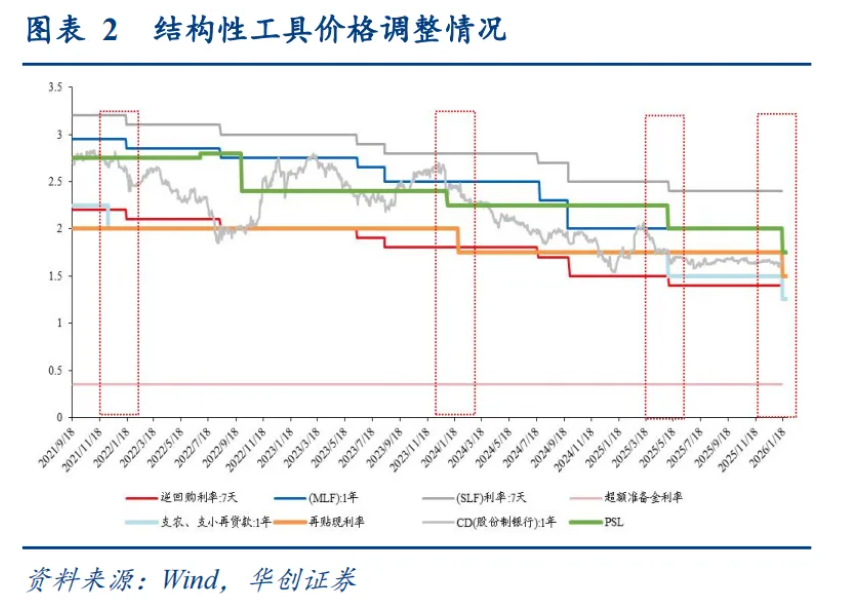
Core Viewpoint - The People's Bank of China (PBOC) has introduced a set of structural monetary policy measures, including a 0.25 percentage point reduction in various structural monetary policy tool rates, signaling a targeted approach to enhance liquidity without a broad interest rate cut [1][2][5]. Group 1: Structural Monetary Policy Measures - The PBOC announced a reduction in the one-year relending rate from 1.5% to 1.25%, and the rediscount rate from 1.75% to 1.5% [2]. - The total balance of structural monetary policy tools was approximately 5.4 trillion yuan as of Q3 2025, with the rate cut expected to save banks around 13.5 billion yuan [8]. - The measures aim to support domestic demand, technological innovation, and small and medium-sized enterprises [12]. Group 2: Specific Policy Tools - The PBOC will increase the relending quota for agricultural and small enterprise support by 500 billion yuan, with a dedicated quota of 1 trillion yuan for private enterprises [16]. - The relending quota for technological innovation and transformation will be increased by 400 billion yuan, totaling 1.2 trillion yuan [16]. - The minimum down payment ratio for commercial property loans will be lowered to 30% to support the commercial real estate market [18]. Group 3: Future Monetary Policy Outlook - The PBOC indicated that there is still room for further reductions in reserve requirement ratios and interest rates, with a potential 50 basis point cut in the first quarter of 2026 [19][20]. - Constraints on interest rate cuts are easing, with improvements in exchange rates and net interest margins noted [21]. - The PBOC aims to guide overnight rates to operate near policy rate levels, indicating a shift in monetary policy management [24][26]. Group 4: Market Implications - The structural easing is expected to positively impact various asset classes, with a potential "spring rally" in the stock market anticipated due to the release of monetary signals [29]. - The bond market is expected to remain stable, with 10-year government bond yields projected to stay between 1.6% and 1.9% [30]. - The Chinese yuan is forecasted to appreciate moderately, with expectations of reaching around 6.9 by the end of 2026 [30].

中金:从结构性降息理解宏观政策路径
Xin Lang Cai Jing· 2026-01-15 23:49
Core Viewpoint - The People's Bank of China (PBOC) announced a 0.25 percentage point reduction in various structural monetary policy tool rates, along with five additional measures to adjust the types, coverage, and increase the quotas of structural monetary policy support tools. The direct impact on asset prices is considered limited, with the focus on the execution of these policies in the future [1][12]. Group 1: Structural Monetary Policy Adjustments - The recent "structural interest rate cut" is primarily structural and does not imply an immediate traditional interest rate cut. The PBOC emphasized that the recent changes in China's price levels are positive, and the coordination effects of macro policies are strengthening [2][15]. - The total amount of structural monetary policy tools was reported at 5.9 trillion yuan in Q1 2025, a decrease of 400 billion yuan compared to Q4 2024. The balance of the pledged supplementary loan (PSL) has been declining, with a balance of 1.02 trillion yuan in December 2025, down 1.34 trillion yuan from the previous year [3][16]. Group 2: Focus Areas of Structural Policies - The announced policies focus on five key areas, including expanding support for consumption and pension loans in the pension finance sector, increasing the loan quota for technological innovation and technological transformation from 800 billion yuan to 1.2 trillion yuan, and enhancing support for green finance [4][17]. - In the realm of inclusive finance, there is a particular emphasis on supporting private enterprises, with a dedicated re-loan for private enterprises set at 1 trillion yuan, focusing on small and medium-sized private enterprises [4][17]. Group 3: Economic Context and Future Outlook - The policy adjustments reflect a macroeconomic environment characterized by stable external demand, with the PBOC indicating potential room for further cuts in reserve requirements and interest rates if total demand faces downward pressure [5][18]. - The PBOC has addressed concerns regarding government bond issuance, stating that it will flexibly conduct government bond trading operations to maintain liquidity and create a suitable monetary environment for smooth government bond issuance [6][18].
中金:从结构性降息理解宏观政策路径
中金点睛· 2026-01-15 23:45
Core Viewpoint - The central bank's recent structural interest rate cut of 0.25 percentage points reflects a focus on maintaining moderate monetary policy while emphasizing structural adjustments, aligning with the emphasis on "quality and efficiency" from the Central Economic Work Conference [1][2]. Group 1: Monetary Policy Adjustments - The recent "structural interest rate cut" is primarily structural and does not imply an immediate traditional interest rate cut [2]. - The central bank's structural monetary policy tools have seen a significant decrease, with the total amount dropping to 5.9 trillion yuan in Q1 2025, down 400 billion yuan from Q4 2024 [3]. - The central bank has indicated that it will flexibly conduct government bond trading operations to maintain liquidity and create a favorable environment for government bond issuance [5]. Group 2: Focus Areas of Structural Policies - The structural monetary policy tools are increasingly focused on supporting sectors such as technology innovation, green development, and the service industry, with specific measures like increasing the technology innovation loan quota from 800 billion yuan to 1.2 trillion yuan [4]. - A new loan program specifically for private enterprises has been established with a quota of 1 trillion yuan, emphasizing support for small and medium-sized private enterprises [4]. - The policy adjustments reflect a shift towards prioritizing "quality and efficiency" rather than merely focusing on total volume, as seen in recent fiscal policies and local government meetings [4]. Group 3: Economic Context and Outlook - The backdrop for these policy adjustments is a relatively stable total demand, particularly external demand, with exports showing a year-on-year increase of 6.6% in December 2025 [5]. - The central bank has indicated that there is still room for further easing if total demand faces downward pressure, suggesting a proactive stance in monetary policy [5]. - The central bank's ability to maintain stable government bond yields is acknowledged, although the structural capital constraints on banks' ability to absorb long-term government bonds remain a concern [5].

兼评12月金融数据:结构性降息助力开门红
Changjiang Securities· 2026-01-15 23:30
Financial Data Overview - In December 2025, the social financing (社融) growth rate fell to 8.3%, primarily influenced by government debt constraints[3] - New social financing in December amounted to 2.2 trillion RMB, with a year-on-year decrease of 0.6 trillion RMB[8] - The M2 money supply growth rate rebounded significantly to 8.5%, indicating ample liquidity in the market[3] Loan Dynamics - Corporate medium and long-term loans saw a year-on-year increase, likely due to the impact of policy financial tools[3] - In December, new corporate medium and long-term loans ended a five-month streak of year-on-year declines, reflecting improved lending conditions[3] Monetary Policy Actions - The People's Bank of China (PBOC) introduced a series of structural monetary policy measures on January 15, 2026, aimed at supporting economic growth in Q1[3] - Key measures included a structural interest rate cut of 0.25 percentage points on various lending tools and an increase in the quota for agricultural and small business loans by 500 billion RMB[3] Economic Outlook - Despite the structural interest rate cut, the probability of a broad-based reserve requirement ratio (RRR) or interest rate cut in the short term has decreased, although there remains a necessity for such actions throughout the year[3] - The report highlights the need for lower financing costs to stimulate investment and consumption, especially in high-quality development sectors[3] Risks and Considerations - Potential risks include weaker-than-expected economic recovery, uncertainties surrounding U.S. Federal Reserve interest rate decisions, and possible discrepancies in central bank data reporting[9]
再贷款利率、再贴现利率1月19日起下调
Sou Hu Cai Jing· 2026-01-15 23:10
能否拿到更便宜的资金,取决于银行的资金投向。 科技创新和技术改造再贷款、服务消费与养老再贷款、普惠小微贷款支持工具、碳减排支持工具……近 年来,结构性货币政策工具箱不断"上新",实现对金融"五篇大文章"的全覆盖,并支持了房地产、资本 市场等重点领域。 专家介绍,中国人民银行的结构性货币政策工具,主要是引导金融机构加大对重大战略、重点领域和薄 弱环节的支持力度。这些领域,初期社会资金进入意愿比较低,需要央行资金先期进入、发挥引导作 用。 结构性"降息"来了 再贷款利率、再贴现利率1月19日起下调 中国人民银行1月15日宣布,自2026年1月19日起,下调再贷款、再贴现利率0.25个百分点。这意味着, 银行从中国人民银行"借钱"将更便宜,有助于提升重点领域信贷投放的积极性,进一步助力经济结构转 型优化。 这种结构性"降息"与全面降息有很大区别,不是通过下调政策利率带动贷款市场报价利率(LPR)下 行。再贷款是央行对银行的贷款,不是央行直接向企业发放贷款。下调再贷款、再贴现利率后,拿到更 低成本资金的银行,或以更低利率向小微企业、科技创新、绿色转型等重点领域发放贷款,降低实体经 济综合融资成本。 记者了解到,下调后 ...
再贷款利率19日起 下调0.25个百分点
Xin Lang Cai Jing· 2026-01-15 17:23
Core Viewpoint - The People's Bank of China announced a 0.25 percentage point reduction in the re-lending and re-discount rates effective January 19, 2026, aimed at enhancing credit supply in key sectors and supporting economic structural transformation [1][2]. Group 1: Interest Rate Adjustments - The reduction in re-lending and re-discount rates will lower borrowing costs for banks, encouraging them to lend at lower rates to small and micro enterprises, technological innovation, and green transformation sectors [2][3]. - After the adjustment, the re-lending rates for 3-month, 6-month, and 1-year terms will be 0.95%, 1.15%, and 1.25% respectively, with the re-discount rate set at 1.5% [2]. Group 2: Structural Monetary Policy Tools - The central bank's structural monetary policy tools aim to guide financial institutions to increase support for major strategies, key sectors, and weak links, particularly where initial social funding willingness is low [3]. - The introduction of new structural monetary policy tools has covered various financial areas, including real estate and capital markets, enhancing support for targeted sectors [3]. Group 3: Future Monetary Policy Space - The People's Bank of China indicated that there is still room for further reductions in reserve requirements and interest rates, with the current average statutory deposit reserve ratio at 6.3% [4]. - The stability of the RMB exchange rate and the ongoing interest rate cuts in the US provide a favorable environment for potential rate reductions in China [4]. Group 4: Loan and Deposit Growth - In 2025, the total increase in RMB loans was 16.27 trillion yuan, with corporate loans accounting for 15.47 trillion yuan, and household loans increasing by 441.7 billion yuan [5]. - RMB deposits rose by 26.41 trillion yuan in 2025, with household deposits increasing by 14.64 trillion yuan [6]. Group 5: Money Supply and Financing Scale - As of December 2025, the broad money supply (M2) was 340.29 trillion yuan, reflecting an 8.5% year-on-year growth, while the narrow money supply (M1) was 115.51 trillion yuan, growing by 3.8% [7]. - The total social financing scale increased by 35.6 trillion yuan in 2025, surpassing the previous year's growth by 3.34 trillion yuan [7]. Group 6: Policy Measures for Economic Support - The People's Bank of China announced eight policy measures to enhance credit supply in key areas, including a 0.25 percentage point reduction in various structural monetary policy tool rates [8]. - Specific measures include increasing the re-lending quota for small and micro enterprises by 500 billion yuan and expanding the quota for technological innovation and transformation loans from 800 billion yuan to 1.2 trillion yuan [8][9]. - The central bank will also lower the minimum down payment ratio for commercial property loans to 30% and encourage financial institutions to improve foreign exchange risk management services [10].
资产配置日报:牛市,仍是共识-20260115
HUAXI Securities· 2026-01-15 15:33
往后看,"量顶"之后通常是涨势放缓,但牛市并不会就此终结,而更可能形成健康的慢牛。同时,题材参 与难度增大,当前更适合回归业绩,关注具备业绩保障的高景气主线。今日 Wind 预增指数上涨 1.35%,而业绩预 亏指数则下跌 2.88%,反映出业绩增长带来的安全边际受到青睐。 港股做多共识弱于 A股,博弈反弹需要耐心。尽管港股在开年后基本处于反弹趋势之中,但其行情时常波 动,市场情绪仍相对谨慎。南向资金在 1 月 8 日之后再度净流出,同样显示出资金的保守态度。原因来看,隔夜 美股表现不佳、A股情绪降温和携程反垄断立案调查或是影响因素。往后看,若要在做多共识夯实之前博弈反 弹,需要提高对波动的耐受程度,降低短线操作频率,等待人气的回归;同时关注指数是否继续得到均线支撑, 或反映了反弹趋势是否仍然较强。 证券研究报告|宏观点评报告 [Table_Date] 2026 年 01 月 15 日 [Table_Title] 资产配置日报: 牛市,仍是共识 1 月 15 日,权益市场以震荡为主,先调整后回升。万得全 A下跌 0.16%,全天成交额 2.94 万亿元,较昨日 (1 月 14 日)缩量 1.05 万亿元。港股 ...
央行再出政策组合拳:结构性工具“降价增量扩容”,降准降息可期
2 1 Shi Ji Jing Ji Bao Dao· 2026-01-15 13:47
Core Viewpoint - The People's Bank of China (PBOC) is implementing a series of monetary policy measures to support high-quality economic development and stabilize growth, including structural interest rate cuts and targeted loans for private enterprises [1][2]. Group 1: Monetary Policy Measures - The PBOC will introduce eight policy measures, including a 0.25 percentage point reduction in the interest rates of various structural monetary policy tools, bringing the one-year re-lending rate down from 1.5% to 1.25% [2]. - The measures also include increasing the quotas for agricultural and small business re-lending, and establishing a separate re-lending program for private enterprises with a quota of 1 trillion yuan [3][4]. - Additional policies aim to enhance support for technology innovation, carbon reduction, and consumer services, while lowering the minimum down payment ratio for commercial property loans to 30% [2][3]. Group 2: Support for Private Enterprises - The newly established re-lending program for private enterprises will focus on supporting small and medium-sized private companies, with a total quota of 1 trillion yuan, which includes 500 billion yuan from existing funds and an additional 500 billion yuan [3][4]. - The PBOC aims to improve financing accessibility for medium-sized private enterprises, which have been relatively underserved compared to larger firms [3]. Group 3: Economic Outlook and Stability - The PBOC indicates that there is still room for further cuts in reserve requirement ratios and interest rates, with the current average reserve requirement ratio at 6.3% [6]. - The central bank emphasizes the importance of maintaining a stable currency and low financing costs to support economic recovery and growth [10]. - Recent data shows a positive trend in consumer prices, with the CPI rising by 0.8% year-on-year in December 2025, indicating a recovery in the price level [8].
结构性降息来了!央行:引导金融机构支持中小微企业等领域,今年降准降息还有一定空间
Sou Hu Cai Jing· 2026-01-15 13:13
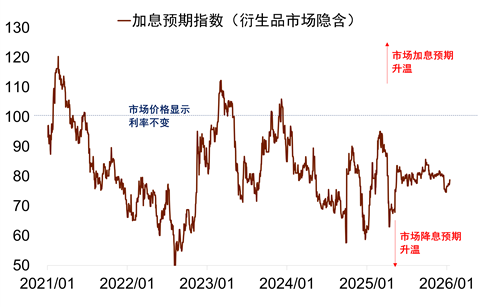
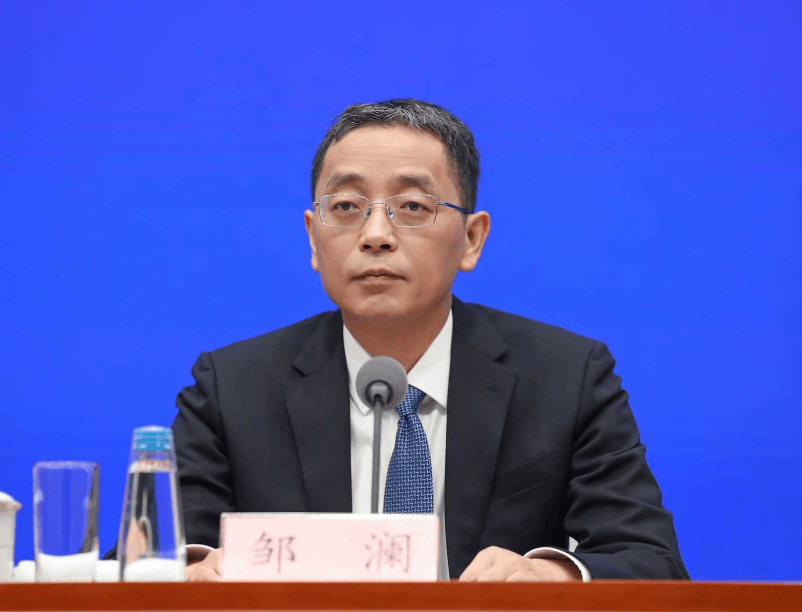
邹澜表示,中央经济工作会议已经明确,2026年要继续实施适度宽松的货币政策。谈及降准降息,邹澜提到,从 今年看还有一定的空间。 王青称:"综合2026年经济金融形势,我们判断在先行下调各类结构性货币政策工具利率0.25个百分点后,年内央 行有可能下调政策利率20-30个基点。"不过王青还提到,"十五五"期间央行致力于构建科学稳健的货币政策体 系。这意味着2026年货币政策不会大放大收,会坚持不搞大水漫灌,避免给将来留下隐患。由此,可以排除2026 年大幅度降息,以及实施大规模数量型宽松的可能。 截图自央行官网 在会上,中国人民银行货币政策司司长谢光启也提到,下阶段中国人民银行将进一步拓展服务消费与养老再贷款 的支持领域,同时适时把健康产业纳入服务消费与养老再贷款的支持领域。继续引导金融机构结合消费场景创新 产品和服务,重点支持住宿餐饮、文旅体育娱乐、养老托育、家政服务等与民生关联度很高的行业。 东方金诚首席宏观分析师王青告诉红星资本局,此次降息,将引导金融资源更多支持科技创新、制造业转型升 级、绿色发展、小微企业,以及促消费、稳外贸等国民经济重点领域和薄弱环节。今年央行将优化用好各类结构 性货币政策工具,总体 ...
银行股年内跌幅居首,结构性降息有何影响?
Di Yi Cai Jing· 2026-01-15 12:28
开年以来,A股市场整体表现回暖,但银行板块却未能延续此前涨势,走势明显偏弱。Wind数据显示, 截至1月15日收盘,银行指数(WI.882115)年内下跌3.36%,在31个申万一级行业中跌幅居首,而同期 沪深300指数上涨2.62%。在市场普遍看好2026年股市行情的背景下,银行股为何阶段性承压,后续又 将如何演绎,成为机构关注的焦点。 回顾2025年,银行板块整体表现亮眼。数据显示,MSCI中国银行指数全年上涨27%,其中A股银行板块 全年上涨13.1%。瑞银大中华金融行业研究主管颜湄之对记者表示,2025年银行板块的良好表现,主要 由资金面与基本面共同驱动。 结构性降息落地:负债端成本改善,对银行股影响偏中性 央行称,本次下调各类结构性货币政策工具利率0.25个百分点,各类再贷款一年期利率由1.5%降至 1.25%,其他期限档次利率同步调整。不同于全面降息,此次政策主要通过结构性工具传导,对银行体 系的影响路径更具针对性。 多位市场分析人士指出,结构性货币政策工具利率下调,主要作用于银行负债端,有助于降低银行从央 行获取中长期资金的成本,并未直接压低存贷款基准利率或LPR,对银行净息差的直接冲击相对有限 ...