全球化

Search documents
佳禾智能: 关于变更募集资金用途的公告
Zheng Quan Zhi Xing· 2025-08-13 16:23
Summary of Key Points Core Viewpoint The company, Jiahe Intelligent Technology Co., Ltd., is changing the use of raised funds from its convertible bond issuance to acquire all partnership interests in beyerdynamic GmbH & Co. KG, a well-known high-end audio equipment manufacturer, due to the current macroeconomic environment and market uncertainties affecting its original investment projects. Group 1: Fundraising and Investment Projects - The company raised a total of RMB 1,004 million through the issuance of 10,040,000 convertible bonds, with a net amount of RMB 993.91 million after deducting issuance costs [1][4][6] - The original investment projects included the production of 5 million bone conduction headphones, 9 million smartwatches, and 4.5 million smart glasses, which were initially planned to be operational by January 10, 2026 [4][9] - Due to changes in the macroeconomic environment and uncertainties in international trade, the company has postponed the operational date of these projects to January 10, 2028 [4][9] Group 2: Change in Fund Usage - The company plans to use RMB 70.4 million of the uninvested raised funds and its interest income to acquire all partnership interests in beyerdynamic GmbH & Co. KG [6][8] - The acquisition is expected to enhance the company's market competitiveness in the high-end audio sector and align with its strategic goals of high-end manufacturing and brand operation [12][14] Group 3: Financial Impact and Projections - The acquisition is projected to generate RMB 892 million in revenue for the company in 2026, with a gross margin exceeding 50% and a net margin over 10% [12][31] - The transaction is anticipated to significantly improve the company's financial metrics compared to the original investment projects, which had lower expected profitability [12][31] Group 4: Strategic Rationale - The acquisition of beyerdynamic is seen as a strategic move to accelerate the company's transition towards high-end, branded products, enhancing its global market presence [13][30] - The integration of beyerdynamic's established brand and technology is expected to complement the company's existing product lines and manufacturing capabilities, fostering innovation and market expansion [15][32][33]
佳禾智能: 招商证券股份有限公司关于佳禾智能科技股份有限公司变更募集资金用途的核查意见
Zheng Quan Zhi Xing· 2025-08-13 16:23
Summary of Key Points Core Viewpoint The company intends to change the use of funds raised from the issuance of convertible bonds in 2024 to acquire all limited partnership interests in beyerdynamic GmbH & Co. KG, a well-known high-end audio equipment manufacturer, instead of investing in previously planned projects. Group 1: Fundraising and Usage - The company plans to issue 10,040,000 convertible bonds at a face value of 100 yuan each, raising a total of 1,004,000,000 yuan, with a net amount of 993,911,555.61 yuan after deducting issuance costs [2][5]. - The original fundraising was intended for projects including the production of 5 million bone conduction headphones, 9 million smartwatches, and 4.5 million smart glasses, along with supplementary working capital [2][5]. - As of the date of the review, the total investment amount for the projects was 117,388.40 million yuan, with 99,391.16 million yuan already invested [4][5]. Group 2: Change of Fund Usage - The company proposes to use 70,400.00 million yuan of the uninvested funds and their interest income for the acquisition of beyerdynamic GmbH & Co. KG [6][7]. - The change in project implementation is due to the complex macroeconomic environment and the need to maximize shareholder value [10][27]. - The acquisition is expected to generate significant revenue, with projections indicating 892 million yuan in revenue for 2026 and a gross margin exceeding 50% [10][27]. Group 3: Strategic Rationale - The acquisition aligns with the company's long-term strategic goals of enhancing high-end manufacturing and brand operation, facilitating a dual growth trajectory [11][26]. - The company aims to leverage beyerdynamic's established market position and technological expertise to enhance its competitive edge in the high-end audio sector [12][28]. - The transaction is seen as a critical step towards achieving a more diversified product and technology portfolio, thereby accelerating global market expansion [29][30]. Group 4: Financial Assessment - The valuation of beyerdynamic GmbH & Co. KG was assessed at 88,800.00 million yuan, with a significant increase in value compared to the company's book equity [22][23]. - The initial purchase price for the acquisition is set at 12,200.00 million euros, with adjustments based on the final financial conditions at the time of closing [24][30]. - The company plans to fund the acquisition through the reallocation of raised funds, with any shortfall covered by self-raised or self-owned funds [30][31].

左手锐步右手MUSINSA?安踏多品牌布局为何“绯闻”不停
3 6 Ke· 2025-08-13 11:19
Core Viewpoint - Anta's potential acquisitions of Reebok and MUSINSA reflect its strategic intent to enhance its brand portfolio and market presence, following its previous successful acquisitions like FILA and Jack Wolfskin [1][8][12]. Group 1: Anta's Acquisition Strategy - Anta has accelerated its resource allocation after ending its 16-year partnership with the Chinese Olympic Committee, becoming a partner for the National Games and acquiring Jack Wolfskin [1][8]. - The company has a history of acquiring brands to fill gaps in its product offerings, as seen with its acquisition of FILA, which helped establish a high-end brand presence [8][12]. - Anta's revenue exceeded 70 billion yuan, making further acquisitions seem logical for its growth strategy [1][2]. Group 2: Rumors of Reebok Acquisition - Rumors about Anta acquiring Reebok have circulated since Adidas planned to divest the brand, but Authentic Brands Group (ABG) ultimately acquired Reebok for approximately $2.5 billion [2][4]. - ABG has denied any plans to sell Reebok to Anta, emphasizing its commitment to the brand and its growth targets, including a goal of reaching $10 billion in global retail sales by 2027 [4][10]. - The potential acquisition of Reebok could help Anta strengthen its offerings in fitness, women's basketball, and golf, areas where it currently lacks high-end products [10][11]. Group 3: Collaboration with MUSINSA - The partnership with MUSINSA is structured as a joint venture with MUSINSA holding 60% and Anta 40%, indicating that Anta is currently in an investment phase rather than a full acquisition [7][11]. - MUSINSA's strong design capabilities could complement Anta's offerings, particularly in the fashion segment, which is currently underrepresented in Anta's brand matrix [11][12]. - Future collaborations between Anta and MUSINSA could leverage successful models seen in other brand partnerships, potentially enhancing Anta's appeal in the fashion-oriented sportswear market [11][12]. Group 4: Global Expansion and Future Acquisitions - Anta's strategy of acquiring brands is aimed at enhancing its market presence and product line, especially in emerging sports segments [12][14]. - The company must navigate challenges such as brand and product overlap, which could lead to internal competition and management pressures [14]. - Anta's future acquisitions should focus on strategic synergies rather than mere scale, ensuring that it builds a robust brand portfolio while maintaining innovation and operational capabilities [12][14].


观点指数:文旅集团营收平均规模为16.07 营收平均增速-11.53%
Cai Jing Wang· 2025-08-13 02:44
Core Insights - The current cultural tourism industry is undergoing significant structural adjustments, with a noticeable divergence across different sectors [1] - Online Travel Agency (OTA) businesses are maintaining growth due to their digital advantages, while traditional cultural tourism enterprises are experiencing a slowdown [1] - The average revenue scale for cultural tourism groups is 16.07 billion, with an average revenue growth rate of -11.53% and an average net profit margin of -0.4%, indicating challenges in adapting to changing consumer demands [1] - Local cultural tourism entities face even greater difficulties, with an average revenue scale of only 1.04 billion, an average revenue growth rate of -19%, and an average net profit margin of -42.0% [1] - The strong performance of OTA platforms is attributed to their innovative model of "ecological synergy + globalization + supply chain innovation," which allows them to effectively match supply and demand [1] Industry Trends - The essence of industry divergence is the varying speed of model iteration, with traditional cultural tourism enterprises needing to accelerate their transition from "resource dependence" to "product innovation + operational efficiency + ecological synergy" [2] - Companies are encouraged to leverage online platforms for traffic resources, develop differentiated IP through local cultural engagement, or introduce digital tools to optimize their operational systems [2] - Adapting to changes in consumer demand towards "personalization, globalization, and experiential" offerings is crucial for overcoming current challenges [2]
春风动力不断完善产品矩阵
Zheng Quan Ri Bao Zhi Sheng· 2025-08-12 16:40
Core Insights - Zhejiang Chunfeng Power Co., Ltd. reported a significant increase in revenue and profit for the first half of 2025, with operating income reaching 9.855 billion yuan, a year-on-year growth of 30.9%, and net profit attributable to shareholders at 1.002 billion yuan, up 41.35% [1] - The company is focusing on a strategy of globalization, electrification, and intelligence, driving product innovation, market expansion, and industrial upgrades [1] - Chunfeng's all-terrain vehicle segment achieved sales of 101,800 units, generating revenue of 4.731 billion yuan, a growth of 33.95%, with exports accounting for 74.05% of the industry, solidifying its leading position in the export market [1] Business Segments - In the motorcycle segment, Chunfeng achieved sales of 150,300 units and revenue of 3.346 billion yuan, reflecting a modest growth of 3.03% [2] - The electric two-wheeler segment saw explosive growth, with sales of 250,500 units and revenue of 872 million yuan, marking an impressive increase of 652.06% [2] - The success of the electric two-wheeler segment is attributed to technological iterations and product innovations that meet consumer demands for performance, quality, and intelligence [2] Strategic Developments - Chunfeng has initiated a project to establish a production base with an annual capacity of 3 million motorcycles, electric vehicles, and core components, with a total investment of 3.5 billion yuan [2] - This production base will enhance the company's global manufacturing capabilities, optimizing resource allocation and collaboration across its facilities in Mexico, Thailand, and various locations in China [2]

中美贸易战胜负几乎已定,人民日报向世界宣布喜报,特朗普钦点继任者
Sou Hu Cai Jing· 2025-08-12 15:03
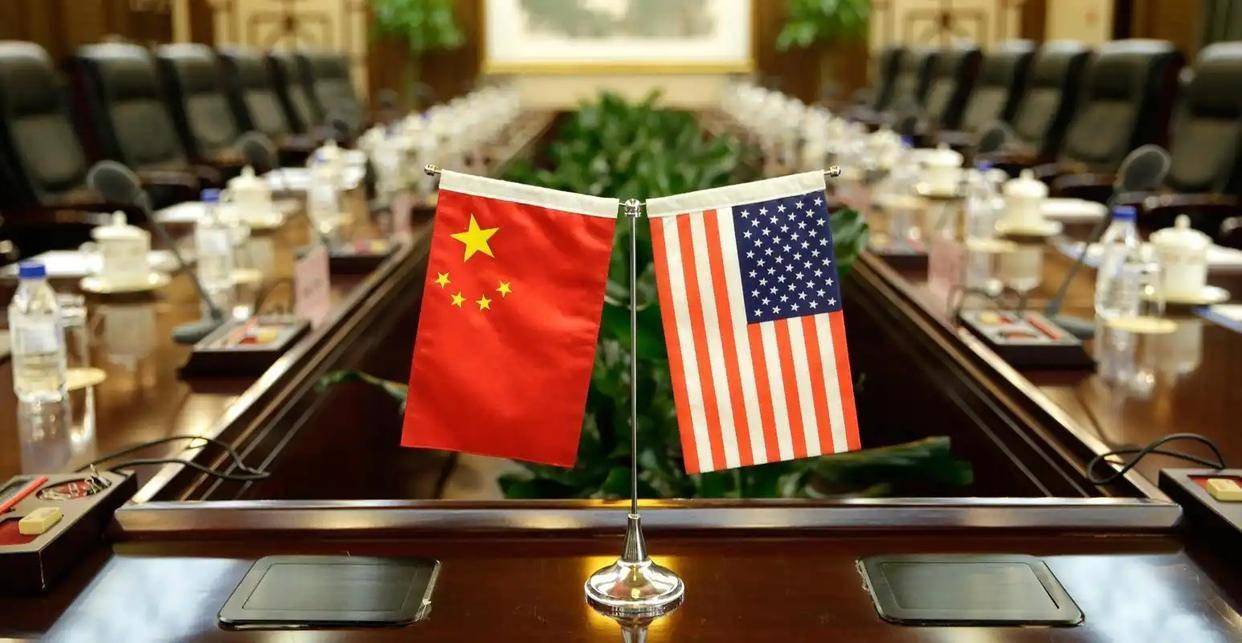
Group 1 - China's economy grew by 5.3% in the first half of the year, while the US GDP growth was only 1.25%, highlighting a significant disparity in economic performance [1][3][5] - The International Monetary Fund's data indicates that China's manufacturing and consumption are stable, contrasting with the US's slowing consumer spending and investment [3][5] - The Chinese market is described as the fastest-growing increment area globally, reflecting confidence in its economic trajectory [3][5] Group 2 - The US's tariff policy, which has led to an average tariff rate of 18.3%, has resulted in increased costs for American households, with an additional annual burden of $2,400 [5][7][10] - The tariffs are seen as a modern version of harmful economic policies, ultimately transferring costs to consumers and leading to inflationary pressures [7][10][11] - The US's trade surplus with China stands at $586 billion, overshadowing the $50 billion in tariff revenue, indicating a misalignment in trade benefits [5][9] Group 3 - The US's trade protectionism has prompted countries to seek new partnerships, diminishing its influence in global trade [15][17] - China's strategic response to the trade war includes diversifying its export markets and reducing reliance on the US, which has shown positive results in trade data [17][21] - Historical parallels are drawn between current US policies and past protectionist measures that led to economic downturns, suggesting a potential repeat of history [19][21] Group 4 - The "Belt and Road" initiative by China is gaining traction, contrasting with the US's approach, and is seen as a model of cooperative economic development [21][23] - The article emphasizes that cooperation and win-win strategies are essential for sustainable economic growth, while confrontation leads to mutual losses [21][23]
【环球财经】英国经济学家:美关税政策是对本国消费者变相征税
Xin Hua She· 2025-08-12 13:43
新华财经北京8月12日电英国经济学家、伦敦经济与商业政策署前署长约翰·罗斯(中文名:罗思义)日 前接受新华社记者专访时表示,美国政府的关税政策将美国从全球化大势中孤立出来,造成的恶果将由 美国消费者承受。 罗思义说,美国滥施关税,分裂了全球经贸体系,将自己排除在全球化进程之外。美国占全球贸易的比 重本就有限,"如果其他国家团结起来,美国的贸易保护政策就不可能得逞"。 罗思义认为,特朗普政府的关税政策很难实现迫使企业赴美建厂的目的,因为美国制造业现状不佳,产 出水平不见起色。 "真正关键的是美国民众的反应。"罗思义说,"特朗普政府正试图颠覆二战以来美国一直推行的全球化 政策,这是一个重大的问题,美国民众会认同这种做法吗?还是会意识到这会让他们的生活更糟进而用 选票反对?问题的最终结果将取决于政治领域,美国中期选举对特朗普政府将是一场大考。"(记者: 高文成;视频:王沛) (文章来源:新华社) 罗思义说,对美国国内而言,关税的直接后果是推高物价,这对美国消费者是一种变相征税。绝大多数 行业和消费者都会因生产或生活成本上升而受损。民调显示,多数美国民众认为关税"有害",因为他们 切实感受到生活成本增加。 他还说,关 ...
三大业务协同发力 春风动力上半年净利增长41.35%
Zhong Zheng Wang· 2025-08-12 11:01
Core Viewpoint - Zhejiang Chunfeng Power Co., Ltd. reported strong financial performance in the first half of 2025, with total revenue of 9.855 billion yuan, a year-on-year increase of 30.90%, and a net profit attributable to shareholders of 1.002 billion yuan, up 41.35% year-on-year, driven by its "globalization, electrification, and intelligence" strategy [1] Business Performance - The all-terrain vehicle segment led the industry with sales of 101,800 units and revenue of 4.731 billion yuan, reflecting a year-on-year growth of 33.95% [2] - The motorcycle business achieved sales of 150,300 units and revenue of 3.346 billion yuan, with domestic sales of 79,100 units generating 1.697 billion yuan, a 17.35% increase year-on-year [2] - The electric two-wheeler segment saw explosive growth, with sales reaching 250,500 units and revenue of 872 million yuan, a staggering increase of 652.06% year-on-year [3] Product Innovation and R&D - The company maintained a "technology-driven" approach, increasing R&D investment to 549 million yuan, which accounted for 5.57% of total revenue, a 19.86% year-on-year increase [4] - New product launches included various models in the four-wheeler and two-wheeler segments, enhancing market share and sales [4] - The company added 28 invention patents, 101 utility model patents, and 24 design patents during the reporting period, totaling 1,812 effective patents [4] Brand Development and Global Strategy - The company enhanced brand connection through global product launches and training events, leveraging new media for comprehensive brand outreach [5] - It optimized its global supply chain with efficient coordination among domestic production bases and strengthened supply capabilities in overseas markets like Mexico and Thailand [5] - The company aims to integrate capacity expansion with lean production techniques to improve efficiency and reduce costs, laying a solid foundation for becoming a "world-class power sports brand" [5]
集团高管下场增持,长安汽车迎“强援”
Huan Qiu Lao Hu Cai Jing· 2025-08-12 07:52
Group 1 - Changan Automobile announced a plan for its executives and board members to increase their holdings in the company's A-shares, with a total investment of no less than 5.7 million yuan over the next six months [1] - This is the first instance of a central enterprise group’s executives collectively increasing their holdings in a subsidiary listed company, breaking the previous norm of only listed company executives participating [2] - The company aims to launch 35 new intelligent electric vehicle products over the next three years, with a focus on new energy, intelligence, and globalization as its strategic priorities [2][3] Group 2 - Changan Automobile's cumulative sales from January to July 2025 reached approximately 1.566 million units, representing a year-on-year increase of 4.1%, with overseas sales totaling about 349,000 units [2] - The company reported a significant increase in new energy vehicle sales, with a total of 531,700 units sold year-to-date, marking a year-on-year growth of 52.34% [2] - Changan Automobile's parent company, China Changan Automobile Group, achieved a total revenue of 146.9 billion yuan in the first half of the year, with production and sales reaching a near eight-year high of 1.355 million units [2]

特朗普撑不住了,深夜喊话中国,想让中方不计前嫌,帮美国一个忙
Sou Hu Cai Jing· 2025-08-12 05:00
Core Viewpoint - The U.S. soybean industry is facing a crisis due to tariffs imposed by the Trump administration, leading to a significant loss of market share to Brazil, which has become the primary supplier to China [5][12][21] Group 1: Impact of Tariffs - Following the U.S. imposition of a 10% tariff on China in March 2025, China retaliated with a 10% tariff on U.S. soybeans, resulting in a total tariff rate of 13% [5] - The cost of U.S. soybeans increased by $45 per ton, causing a loss of price competitiveness against Brazilian soybeans, which are priced 20-30% lower [5][12] - U.S. soybean exports to China are projected to drop to 14 million tons in 2025, only one-third of the peak level in 2017 [7] Group 2: Political Ramifications - The agricultural states, traditionally Republican strongholds, are experiencing discontent among farmers due to the tariff policies, with only 38% of farmers in soybean-producing areas indicating continued support for the Republican Party [8] - Trump's urgency to secure soybean orders is driven by the upcoming 2026 midterm elections, as dissatisfaction among farmers could jeopardize his political support [8][11] Group 3: Market Dynamics - Brazil's soybean exports to China are expected to reach 34.5 million tons in the first half of 2025, a year-on-year increase of 18%, indicating a stable supply chain [12] - China is reducing its dependence on U.S. soybeans by adjusting feed formulations, which has led to a 15% decrease in soybean meal usage, equating to a reduction of 15 million tons in import demand [12] - Domestic soybean production in China is projected to increase by 8% in 2025, further mitigating reliance on imports [12] Group 4: Strategic Responses - The U.S. is facing a trade deficit of $295.4 billion, and the ongoing tariff war could result in a permanent loss of the Chinese market for U.S. soybeans [11] - China's response to U.S. trade policies includes diversifying soybean imports and leveraging its position in rare earth exports to pressure U.S. industries [19] - The trade conflict highlights a fundamental clash between two development models, with China strategically navigating external pressures while the U.S. remains entrenched in unilateralism [21]