资产配置

Search documents
34.9万元/平方米!瑞慈医疗刷新年内上海顶豪成交单价纪录
2 1 Shi Ji Jing Ji Bao Dao· 2025-11-12 10:52
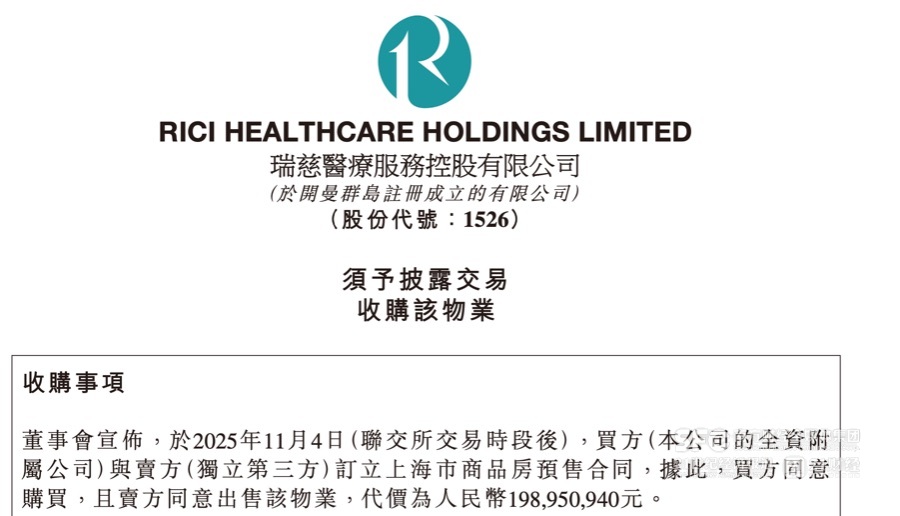
Core Viewpoint - 瑞慈医疗 has made a significant investment by purchasing a luxury villa in Shanghai for approximately 199 million RMB, which is a strategic move to enhance its asset portfolio amidst challenges in its core medical business [1][4]. Group 1: Investment Details - The property acquired is a villa located at Longqi Road, covering an area of approximately 570.06 square meters, with a transaction price of about 34.9 million RMB per square meter, surpassing the average recorded price of 29.8 million RMB per square meter [3][12]. - 瑞慈医疗 has paid an initial deposit of 30 million RMB, with the remaining 169 million RMB due by November 30 [3]. - This investment represents over 13.67% of 瑞慈医疗's market capitalization, which is approximately 1.56 billion RMB [4]. Group 2: Financial Context - As of June 30, 2025, 瑞慈医疗 reported cash and cash equivalents of about 1.03 billion RMB, indicating that the villa purchase significantly impacts its cash reserves [3]. - The company’s asset-liability ratio stands at 46.2%, slightly down from 46.4% at the end of 2024, while the scale of mortgaged assets has nearly doubled within six months [8][9]. - The acquisition is seen as a long-term investment opportunity, potentially providing reasonable returns due to the property's location in a core commercial area of Shanghai [4]. Group 3: Market Position and Challenges - 瑞慈医疗 is currently experiencing a revenue decline, with a 7% year-on-year decrease in revenue to 1.145 billion RMB in the first half of 2025, attributed to external competitive pressures [8]. - The company’s net profit for the same period fell by 34.18% to 55.94 million RMB, despite an increase in gross margin from 32.2% to 35.6% [8]. - The decision to invest in prime real estate reflects a strategy to diversify and maintain cash flow amid pressures from medical insurance cost control and market competition [9].

资产配置新逻辑?从固收 + 到港股科技,两大核心赛道干货速递
Zhong Guo Ji Jin Bao· 2025-11-12 04:36
Group 1 - The core initiative is the "Guangdong-Hong Kong-Macao Greater Bay Area Investment Open Class," aimed at enhancing financial literacy and investment opportunities for residents [1][3] - The 2025 capital market is expected to present structural opportunities, with a recovering domestic economy and stable corporate earnings, while the Hong Kong stock market shows strong performance [1][3] - The "Fixed Income +" strategy is highlighted as a key investment choice for balancing safety and returns in the current market environment [1] Group 2 - The "Fixed Income +" investment strategy is characterized by its defensive and offensive capabilities, making it a more stable investment option [4] - The strategy requires a broad perspective on asset allocation, covering both bonds and stocks, necessitating detailed research and investment decisions across various sectors [5][6] - Macro analysis is emphasized as a crucial framework for guiding asset comparisons and selections, with industry research providing a mid-level perspective [6] Group 3 - Key macro judgments since 2021 include significant insights into energy-related investments and manufacturing investment trends, impacting overall investment strategies [8][9] - The energy supply-demand mismatch has led to power shortages, prompting a focus on energy-related investment opportunities [9] - The shift from real estate to manufacturing investment has influenced corporate profitability and economic structure, with manufacturing investment compensating for the decline in real estate investment [9][10] Group 4 - The bond market is transitioning to a pro-cyclical asset characteristic, with manufacturing investment changes serving as a leading indicator for price movements [11] - The stock market is expected to adjust from a "barbell" investment strategy to a focus on sustainable dividends and growth potential in small-cap stocks [12] - The Hong Kong stock market is witnessing a growing number of technology companies, with the Hang Seng Technology Index becoming a significant benchmark [13][14] Group 5 - The Hang Seng Technology Index has shown strong historical performance, significantly outperforming the CSI 300 Index, indicating the importance of the tech sector in China's economic development [18] - The overall outlook for the Hong Kong stock market remains cautiously optimistic, with low valuations providing support for potential upward movement [19][20] - The influx of overseas capital and the increasing recognition of Hong Kong stocks by mainland investors are contributing to market strength [21][22] Group 6 - Investment strategies in the Hong Kong market focus on high dividend yields and high growth potential, particularly in technology stocks [22] - The Hang Seng Technology Index is currently undervalued compared to historical averages, presenting an attractive investment opportunity [22][23] - The index's growth potential is supported by strong earnings forecasts for its constituent companies, indicating a favorable outlook for future performance [22][23]

资产配置新逻辑?从固收 + 到港股科技,两大核心赛道干货速递
中国基金报· 2025-11-12 04:31
Core Viewpoint - The article emphasizes the launch of the "Guangdong-Hong Kong-Macao Greater Bay Area Investment Open Class" to enhance financial literacy and investment opportunities for residents, while addressing the structural opportunities in the capital market for 2025 [1][3]. Market Overview - The capital market in 2025 is expected to present structural opportunities, with a gradual recovery in the domestic economy and stabilization in corporate profits. The manufacturing investment is shifting from "overall increase" to "structural optimization" [1]. - The Hong Kong stock market has shown strong performance, with the Hang Seng Index ranking among the top global markets in the first three quarters of 2025, and the Hang Seng Technology Index demonstrating significant growth potential [1]. Investment Strategies - The "Fixed Income +" strategy is highlighted as a stable investment choice, balancing safety and returns in the current market environment. This strategy encompasses a broader range of assets, including both bonds and stocks, requiring a comprehensive understanding of different asset classes [6][8]. - The investment approach combines top-down macro analysis with bottom-up research, focusing on the importance of macroeconomic factors in driving asset price movements [9]. Key Macro Judgments - Two significant macro judgments have been made since 2021: the energy sector's dynamics and the outlook for manufacturing investment from 2023 to 2024. The energy supply-demand mismatch has led to power shortages, prompting investments in energy-related opportunities [11][12]. - The shift from real estate to manufacturing investment has impacted corporate profitability, with manufacturing investment compensating for the decline in real estate investment [12][13]. Market Outlook and Asset Allocation - The A-share market is likely entering a profit recovery phase, driven by supply-side adjustments rather than demand expansion. This differs from previous profit recovery cycles [16][17]. - For bonds, the focus should be on price movements influenced by manufacturing investment trends, while for stocks, the investment strategy may shift from a "barbell" approach to a focus on sustainable dividends and growth potential [17][18]. Hong Kong Stock Market Insights - The Hong Kong stock market is experiencing a resurgence, with a notable increase in technology stocks since 2018, leading to the establishment of the Hang Seng Technology Index [20][22]. - The Hang Seng Technology Index has shown a cumulative return of 115% since its inception, outperforming the CSI 300 Index, indicating the strong growth potential of the technology sector [27]. Future Expectations - The outlook for the Hong Kong stock market remains cautiously optimistic, with low valuations providing support for future growth. The market has regained its status as a leading capital market globally, with significant IPO activity [29][30]. - The investment strategies in the Hong Kong market are expected to focus on high dividend and high growth stocks, particularly within the Hang Seng Technology Index, which represents a unique opportunity for investors [33][34].

金价企稳向上,后市怎么看?
Mei Ri Jing Ji Xin Wen· 2025-11-12 01:45
Group 1 - Gold prices have stabilized and are on an upward trend after a recent adjustment, supported by unsustainable high debt levels in major economies, strategic allocations by long-term investors, declining real interest rates, and increasing global risk events [1] - Ray Dalio, founder of Bridgewater, suggests that when debt exceeds repayment capacity, central banks often create significant amounts of money and credit, leading to high inflation and gold prices, advocating for gold as a fundamental currency [1] - UBS reports that gold's core positions are becoming more resilient, with central banks increasing gold purchases to diversify reserves and reduce reliance on the US dollar, alongside retail investors buying gold through ETFs, potentially driving prices higher [1] Group 2 - Recent gold price declines were attributed to profit-taking after a surge and unexpected easing of geopolitical tensions, but the recent rise in both gold and US stocks suggests that the previous correction was sufficient [2] - Despite the easing of significant risks like a US government shutdown, the frequency of geopolitical risk events remains high, which could continue to catalyze upward movement in gold prices [2] - Investors interested in gold exposure can consider gold ETFs (518800) or gold stock ETFs (517400) for potential opportunities [2]
中信证券:建议增配国内股票和商品 煤炭、光伏、通信、农林牧渔等行业具有较好的配置价值
Zhi Tong Cai Jing· 2025-11-12 00:57
Group 1: Major Asset Allocation Insights - The report suggests increasing allocation to domestic stocks and commodities, with a focus on large-cap stocks and a balanced growth-value approach [1][2] - The macro factor adjustment model indicates a weight increase for domestic stocks and commodities to 20.8% and 9.3% respectively, with the Hang Seng Index weight raised by approximately 7.3% [2] - As of October 2025, the latest macro factor adjustment signals indicate the following asset weightings: government bonds (20.9%), energy and chemicals (16.0%), metals (14.0%), Hang Seng Index (13.5%), CSI 300 (12.7%), CSI 1000 (12.3%), gold (5.4%), and S&P 500 (5.2%) [2] Group 2: Stock Style Allocation Insights - The macroeconomic indicators show a mixed outlook, with a decrease in the PMI new orders index and an improvement in the year-on-year industrial added value, suggesting a favorable environment for value and large-cap styles [2] - Liquidity indicators, such as the M1-M2 scissors difference and SHIBOR rates, support a positive outlook for large-cap styles [2] - The market indicators suggest a preference for large-cap styles, with a balanced approach to growth and value styles recommended for November 2025 [2] Group 3: Stock Industry Allocation Insights - The multi-dimensional industry ETF rotation model identifies high-value industries such as coal, photovoltaics, telecommunications, and agriculture with strong configuration value [3] - As of October, the stock industry rotation strategy indicates high configuration value for coal, photovoltaics, telecommunications, and agriculture, recommending equal-weight allocation to these sectors [3] - The macro factor adjustment asset allocation, stock style rotation, and stock industry configuration strategies have all achieved positive absolute returns year-to-date [3][4]

国信证券2026年度策略会金融工程分论坛|邀请函
量化藏经阁· 2025-11-12 00:08
Core Viewpoint - The article discusses the upcoming Guosen Securities 2026 Investment Strategy Conference, highlighting the focus on financial engineering and risk management strategies in the context of new economic cycles and paradigms [1][2]. Group 1: Conference Details - The conference will take place from November 20 to November 21, 2025, at the Shangri-La Hotel in Futian, Shenzhen, China [1]. - The event will feature various sessions, including discussions on multi-strategy enhanced portfolios and comprehensive risk models [2]. Group 2: Key Presentations - Zhang Yu will present on "Multi-strategy Enhanced Portfolios from an Enlightenment Perspective" [2]. - Zhang Xinwei will discuss "Comprehensive Risk Model Strategies" [2]. - Hu Zhichao will introduce a unified improvement framework for selection gene factors from a latent risk perspective [2]. Group 3: Panel Discussion - A roundtable forum titled "Seeking Insights for 2026" will be held, featuring prominent figures from various fund management companies [3]. - Participants include executives from Huaxia Fund, Haitong Fund, and Southern Fund, among others, discussing the role and opportunities of ETFs in asset allocation [3][4]. Group 4: Expert Profiles - Xu Wen, Deputy General Manager of Huatai-PB Fund, has over 24 years of experience in securities and fund management, with significant expertise in ETF management [4]. - Liu Bin, Chief Investment Officer at Harvest Fund, has 19 years of experience in fund management, focusing on quantitative investment strategies [7]. - Yang Chao from Tianhong Fund specializes in quantitative investment, managing over 7 billion in index-enhanced products [9].


房价跌回十年前,对我们这代普通人有什么启示?建议了解下
Sou Hu Cai Jing· 2025-11-11 20:02
Core Insights - The article discusses the significant decline in real estate prices, suggesting that the era of "only rising prices" has ended, prompting a reevaluation of wealth perception and investment strategies [1][9] Group 1: Market Dynamics - The decline in housing prices signifies a shift in the real estate market, breaking the long-held belief that property values only increase [1] - The article emphasizes that no asset is immune to price corrections, highlighting the importance of understanding market cycles and avoiding the misconception that past trends will continue indefinitely [1][9] Group 2: Financial Awareness - The article warns about the dangers of high leverage, particularly for those who purchased properties at peak prices, leading to financial strain as property values decrease while mortgage payments remain unchanged [3] - It stresses the need for diversified asset allocation beyond real estate, including financial investments and personal development, to enhance resilience against market fluctuations [3] Group 3: Personal Value and Investment - The narrative encourages individuals to reassess their life choices, emphasizing that housing should not dictate personal decisions such as career or relationship choices [5] - It advocates for investing in personal growth and skills rather than solely focusing on real estate as a measure of success, suggesting that true value comes from one's ability to create and adapt [5][9] Group 4: Practical Recommendations - For first-time homebuyers, the article suggests a more selective approach to purchasing homes, taking advantage of current market conditions to find better value [7] - Investors are advised to abandon the notion of quick profits from real estate, focusing instead on long-term holding and rental income as sustainable strategies [7] - It highlights the importance of building "anti-fragile" capabilities, such as enhancing professional skills and maintaining healthy cash flow, to navigate economic uncertainties [7]

没时间研究基金?让专业“基金严选官”石婧为你代劳
Sou Hu Cai Jing· 2025-11-11 16:38
Core Insights - The article highlights the career journey of Shi Jing, who has successfully navigated multiple cycles in China's asset management industry, showcasing her expertise in quantitative strategies and risk management [1][2][3] Group 1: Career Development - Shi Jing began her career in 2007 during a bull market, working in product development at a joint venture fund company, where she learned to identify effective strategies for excess returns using quantitative thinking [7][9] - Transitioning to a leading insurance asset management firm, she experienced the evolution of the fund industry from a "star" model to a team-based approach, witnessing significant market events and adapting her strategies accordingly [2][11] - Her role as the Director of Multi-Asset Research at China Universal Asset Management involves using hundreds of factor indicators to assess market funds and construct diversified FOF products [2][19] Group 2: Investment Philosophy - Shi Jing emphasizes the importance of building a systematic approach to investment, drawing from her early experiences with overseas institutions, which shaped her understanding of product design and risk control [10][12] - She believes that the key to successful investment lies in understanding the unique styles of fund managers and adapting to market conditions, rather than relying solely on star managers [13][14] - The investment landscape has shifted towards a focus on risk management and the ability to navigate high volatility, particularly highlighted by the market fluctuations in 2015 [15][17] Group 3: FOF Product Development - Shi Jing's involvement in the establishment of FOF products reflects a strategic focus on stability and risk management, prioritizing diversified and balanced investment approaches [19][20] - The FOF team at China Universal Asset Management utilizes advanced quantitative tools for comprehensive market tracking and risk assessment, enhancing their investment decision-making capabilities [22][24] - The team is expanding its research capabilities and product offerings, including a new FOF product aimed at conservative investors, which incorporates a broader range of asset classes [26][27]

软银回应为何清仓英伟达
财联社· 2025-11-11 14:16
Group 1 - SoftBank disclosed a complete liquidation of its Nvidia shares, generating $5.83 billion, and reduced its stake in T-Mobile for $9.17 billion [1] - The CFO of SoftBank, Yoshimasa Goto, stated that the large investment in OpenAI necessitated the sale of stocks to raise funds, with an additional investment of $22.5 billion planned following OpenAI's restructuring [2] - SoftBank's investment gains from April to September amounted to 3.92 trillion yen, with 2.15 trillion yen attributed to the increase in OpenAI's valuation [2] Group 2 - Goto refrained from commenting on whether the decision to liquidate Nvidia was based on valuation judgments, emphasizing that asset allocation adjustments are a part of an investment company's nature [3]



2015年买的基金,现在赚到钱了吗?
Sou Hu Cai Jing· 2025-11-11 12:50
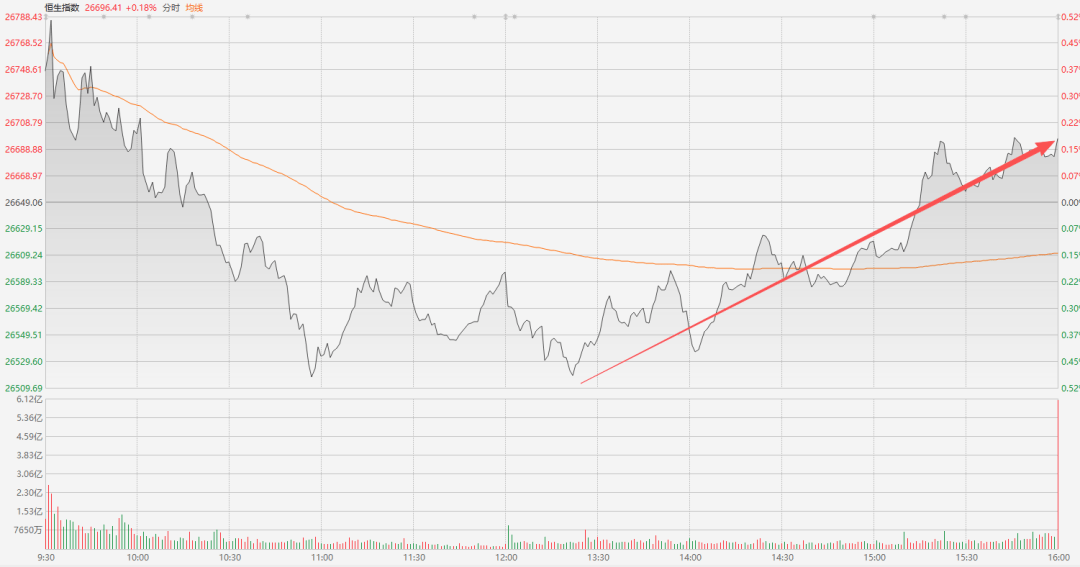
Core Viewpoint - The article emphasizes the importance of asset allocation and long-term investment strategies for achieving financial freedom, suggesting that individuals should invest a significant portion of their income in the stock market over time to build wealth. Group 1: Market Trends - Asian stock markets are experiencing fluctuations, with Hong Kong showing upward movement despite other markets being volatile [1] - The Hang Seng Index has recently rebounded after a period of underperformance, indicating a search for undervalued assets by investors [3] Group 2: Investment Strategy - A hypothetical scenario illustrates that starting to invest 20% of an annual salary of 200,000 with a 2% annual salary increase and an 8% annual return can lead to significant wealth accumulation by age 50 [4][5] - By age 50, the stock asset returns can surpass annual income, providing a sense of financial freedom and the possibility of early retirement [7] - Increasing the investment portion to 60% of the salary can lead to even greater returns, with stock assets potentially reaching 35 million by retirement age [12] Group 3: Historical Returns - Historical data suggests that global stock markets have provided an average annual return of around 8% over the past 200 years, with some periods showing even higher returns [13] - Specific data from 2015 indicates that funds established at market highs have still yielded reasonable returns over a decade, reinforcing the idea that long-term investment can mitigate the effects of market timing [14][16] Group 4: Investment Guidelines - The article concludes that to achieve relative financial freedom, individuals should consistently invest 20% to 60% of their income and maintain a long-term holding strategy, avoiding high market entry points [13][16]