
服务消费

Search documents
当前我国消费发展的特点、问题分析和政策思考 | 宏观经济
清华金融评论· 2025-05-29 10:16
Core Viewpoint - The current consumption market in China is showing enhanced vitality and heat, but there are still constraints to sustained improvement. Future policies should better coordinate the relationship between benefiting people's livelihoods and promoting consumption, supply innovation and demand upgrading, as well as current and long-term considerations to effectively expand consumption [1]. Group 1: Consumption Characteristics - The characteristics of consumption in China are marked by rapid growth, new products, new business formats, and new scenarios [2]. - Consumption is maintaining a moderate growth trend, with significant vitality in the market. Key features include rapid growth in service consumption, the emergence of new products and business models, and the rise of consumption in county areas [3]. Group 2: Service Consumption Growth - Service consumption is experiencing good growth, driven by policies that promote service consumption and the expansion of consumption scenarios. The focus is shifting from separate development of categories like dining and tourism to integrated and multi-faceted development [4]. - In 2024, China's service retail sales are expected to grow by 6.2% year-on-year, outpacing the growth of goods retail sales by 3 percentage points. Per capita spending on services is projected to increase by 7.4%, accounting for 46.1% of total per capita consumption expenditure, up 0.9 percentage points from the previous year [4]. Group 3: New Products and Business Models - New technologies such as big data, cloud computing, and artificial intelligence are accelerating consumption innovation, leading to rapid development of new products, business formats, and scenarios. The smart home market is expected to reach 780 billion yuan in 2024, with smartphone shipments projected at approximately 286 million units, a year-on-year increase of 5.6% [6]. - Online retail is also thriving, with a 6.5% growth in physical goods online retail expected in 2024, outpacing the overall retail growth by 3 percentage points. Live streaming and instant retail sales are showing strong growth, with sales increasing by 19.1% and 13.8% respectively in the first three quarters of 2024 [6]. Group 4: County-Level Consumption - Since 2023, consumption in county areas, particularly in lower-tier cities and rural regions, has become more active. The coverage of county-level tourist attractions has increased significantly, with a rise from 73% in 2012 to 93% in 2023 [7]. - Travel orders from lower-tier cities are expected to grow by nearly 20% in 2024, with outbound travel ticket purchases from residents in third-tier cities and below accounting for over 30% of the total, more than doubling from the previous year [7]. Group 5: New Consumer Groups - The influx of residents from Hong Kong and Macau into mainland cities is creating new consumption dynamics. In 2024, the number of Hong Kong residents traveling north is expected to reach 81.91 million, with total spending exceeding 55.7 billion yuan, both up over 50% from the previous year [8]. - The optimization of visa-free policies has led to a significant increase in inbound tourism, with the number of eligible individuals rising by 113.5% year-on-year in 2024. The diversity of tourist sources and the appeal of lesser-known destinations are also increasing [8].

金融业促进服务消费怎么做,这些是关键→
Jin Rong Shi Bao· 2025-05-29 03:41
Group 1 - The core viewpoint emphasizes the necessity for China to accelerate its transition to a consumption-driven growth model, particularly in the context of external market pressures and the need to boost domestic demand [1] - Service consumption is identified as a key area for expanding domestic demand, with its share of total household consumption steadily increasing [1] - The People's Bank of China has established a 500 billion yuan service consumption and elderly care relending program to encourage financial support for key service sectors [1] Group 2 - There is a significant gap between China's service consumption levels and those of developed economies, indicating substantial future growth potential [1][2] - High-quality supply shortages, particularly in sectors like home services, elderly care, and health, are major constraints on service consumption growth [2] - The need for improved standards and regulations in service consumption is highlighted, along with the importance of developing strong service brands [2] Group 3 - China's financial support for service consumption is robust, with a well-established multi-tiered consumer finance system that includes banks and consumer finance companies [3] - Financial institutions are innovating diverse consumer credit products to stimulate market activity, particularly in sectors like tourism and dining [3] - The financial sector is encouraged to enhance credit support for service consumption to facilitate consumption upgrades and economic circulation [3][4] Group 4 - There is a need for financial institutions to improve residents' participation in financial markets and diversify their asset allocation [5] - Financial literacy and the development of digital, inclusive financial products are essential for enhancing the quality of financial services available to residents [5] - A focus on creating a financial product and service system that aligns with consumer demand is necessary to foster a mutually beneficial relationship between consumption and finance [5] Group 5 - Financial institutions should tailor their services to the characteristics of different service consumption sectors and enhance their overall service capabilities [6] - The integration of financial services into consumption scenarios is crucial for improving customer acquisition and retention [6]
通过再分配提振消费、促进经济增长
Bei Jing Shang Bao· 2025-05-28 14:46
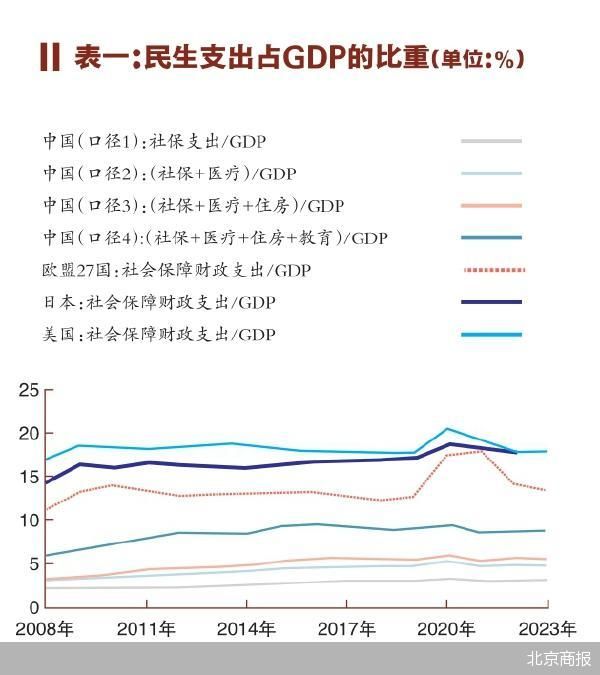
Core Viewpoint - The article emphasizes the importance of income distribution structure in relation to consumption promotion and economic growth, suggesting that improving the redistribution mechanism can stimulate internal consumption and drive economic growth [1][2]. Economic Growth and Income Distribution - The relationship between macro income distribution structure and economic growth is a long-standing research theme, where the distribution of income among enterprises, government, and households influences consumption and investment, thereby affecting economic growth [4]. - A reasonable income structure that covers different income levels can create a diversified consumer market, promoting economic optimization and upgrading [4]. Current State of Income Distribution in China - China's household disposable income as a percentage of GDP is significantly lower than that of major economies, with 60.8% in 2022 compared to Japan (70.3%), Germany (69.5%), and the US (84.9%) [5][6]. - The proportion of disposable income has been persistently lower than the initial distribution since 2000, indicating an unreasonable redistribution mechanism [7]. Policy Recommendations - Policies should focus on increasing transfer payments to households, optimizing government spending structure, and enhancing tax reforms to stimulate consumption [3][11]. - Short-term transfer payments are essential for boosting consumption demand, especially in underdeveloped regions [9][10]. - Long-term improvements in the transfer payment system are necessary to address regional economic imbalances and enhance disposable income [12]. Consumption Structure and Government Spending - The article advocates for increasing government spending in the livelihood sector to shift economic demand towards consumption, particularly in services [16][17]. - The current fiscal expenditure structure favors construction over services, necessitating a reallocation to enhance market supply and related investments [17][18]. Tax Reforms and Pension System - Tax reforms should address structural contradictions in the economy and enhance consumer capacity, including raising the personal income tax threshold and lowering rates for middle and low-income groups [19][11]. - Increasing tax incentives for personal pension accounts can improve the overall pension replacement rate, thereby enhancing current consumption tendencies [20]. Fiscal Policy and Debt Management - There is significant room for increasing government debt and deficit levels, with a current debt ratio of 65.7%, allowing for potential fiscal expansion to support consumption [22][23]. - The article suggests that issuing special government bonds can help bridge funding gaps while balancing consumption and investment needs [25][26].
宏观观察2025年第22期(总第594期):从国际对比看中国服务消费的发展潜力与空间*
Zhong Guo Yin Hang· 2025-05-27 06:23
Group 1: Current State of Service Consumption in China - In 2023, service consumption accounted for 45.2% of total consumption in China, significantly lower than the US (67.5%), Japan (56.2%), and Germany (50.5%) [6] - China's per capita service consumption was approximately $2,317 in 2023, only 6% of the US level and about 20% of other major economies [8] - The total service consumption in China was about $3.3 trillion in 2023, which is only 26% of the US service consumption [7] Group 2: Factors Affecting Service Consumption Growth - Cultural factors lead to a lower average consumption tendency in China, with residents preferring savings over immediate consumption [25] - The quality of service supply in China is still developing, affecting consumer confidence and willingness to spend [28] - Urban-rural disparities result in lower overall service consumption, with urban residents spending 7-8 percentage points more on service consumption than rural residents [29] Group 3: Future Growth Potential and Recommendations - The Chinese government aims to promote service consumption growth in areas like catering, home services, and cultural entertainment, with a focus on sustainable development [33] - The health industry in China is projected to exceed $9 trillion by 2024, indicating significant growth potential in health-related services [48] - Financial services need to expand their coverage to support service consumption, with a focus on innovative and personalized financial products [56]
从国际对比看中国服务消费的发展潜力与空间
Zhong Guo Yin Hang· 2025-05-27 06:18
Group 1: Current State of Service Consumption in China - In 2023, service consumption accounted for 45.2% of total consumption in China, significantly lower than the US (67.5%), Japan (56.2%), and Germany (50.5%) [6] - China's per capita service consumption was approximately $2,317 in 2023, only 6% of the US level and about 20% of other major economies [8] - The total service consumption in China was about $3.3 trillion in 2023, which is only 26% of the US service consumption [7] Group 2: Factors Affecting Service Consumption Growth - Cultural factors lead to lower consumption willingness in China, with a higher emphasis on saving compared to developed economies [25] - The quality of service supply in China is still developing, affecting consumer confidence and willingness to spend [28] - Urban-rural disparities result in lower overall service consumption, with urban residents spending 7-8 percentage points more on service consumption than rural residents [29] Group 3: Future Growth Potential and Recommendations - The Chinese government aims to promote service consumption growth in areas like catering, home services, and cultural entertainment, with a focus on sustainable development [33] - The health industry in China is projected to exceed $9 trillion by 2024, indicating significant growth potential in health-related services [48] - The sports industry is expected to grow rapidly, with an average annual growth rate of over 13% from 2025 to 2030 [47]
为服务消费提供更多金融支持
Jing Ji Ri Bao· 2025-05-24 22:19
Core Viewpoint - The current global economic adjustment necessitates a shift in China's growth model towards domestic demand, with a focus on enhancing service consumption as a key driver of economic activity [1] Group 1: Financial Support for Service Consumption - The People's Bank of China has announced the establishment of 500 billion yuan in loans for service consumption and elderly care, aimed at encouraging financial institutions to increase support for key areas in service consumption and the elderly industry [1] - China's financial support for service consumption is well-established, with a multi-tiered consumer finance service system involving banks, consumer finance companies, and auto finance companies, providing crucial support for stable market development [1] - Financial institutions are innovating diverse consumer credit products and service models around specific consumption scenarios, such as trade-in programs and winter sports, effectively stimulating market vitality [1] Group 2: Challenges in Consumer Credit Market - The consumer credit market faces challenges, including underutilization of credit demand among certain groups, standardization and homogenization of credit products, high service costs, and difficulties in risk management [1][2] - Structural contradictions in the consumption sector remain prominent, with gaps in personalized and high-quality supply in areas such as cultural tourism, elderly care, and healthcare, as well as inadequate infrastructure and logistics in county-level service consumption [1] Group 3: Recommendations for Financial Product Development - There is a need to construct a financial product and service system that aligns with consumer demand, expanding high-quality financial supply in the consumption sector to create a mutually empowering and deeply integrated development model between consumption and finance [2] - Monetary policy should implement a moderately loose stance, utilizing structural monetary policy tools to guide financial institutions in meeting diverse funding needs across various sectors [2] - Financial regulatory bodies should develop guiding documents to enhance consumer finance services, focusing on high-quality supply in key service consumption areas and increasing financial support for infrastructure and trade circulation systems [2] Group 4: Optimizing Credit Products and Services - Financial institutions should optimize credit products and services around key scenarios, strategies, and target demographics, ensuring risk control and cost coverage while enhancing consumer credit support [3] - The integration of digital finance can facilitate the embedding of credit services into various consumption scenarios, allowing consumers to meet immediate consumption needs through more convenient and flexible payment methods [3]
商务部:4月商品消费增速加快
Zhong Guo Zheng Quan Bao· 2025-05-23 21:14
Group 1 - The core viewpoint is that China's consumption market is showing stable growth, driven by effective policies and promotional activities [1][2] - In April, retail sales of goods increased by 5.1% year-on-year, with a 0.5 percentage point acceleration compared to the first quarter [2] - The "old for new" consumption policy has significantly boosted sales, particularly in home appliances, cultural office supplies, furniture, and communication equipment, with respective year-on-year growth rates of 38.8%, 33.5%, 26.9%, and 19.9% [2] Group 2 - The digital product subsidy policy has led to a notable increase in sales, with 48.8 million consumers purchasing 51.48 million digital products, generating sales of 143.26 billion yuan [1] - From January to April, retail sales of communication equipment increased by 25.4% year-on-year, ranking first among 16 categories of consumer goods [1] - The sales of new energy passenger vehicles surged by 33.9% in April, achieving a penetration rate of 51.5% [2] Group 3 - Online consumption is steadily growing, with online retail sales increasing by 7.7% year-on-year, and physical goods online retail sales growing by 5.8%, accounting for 24.3% of total retail sales [2] - E-commerce is enhancing domestic circulation and international cooperation, with significant contributions to improving consumption quality [2][3] - The integration of industrial e-commerce is facilitating foreign trade and domestic sales, with over 3,100 foreign trade enterprises participating in online activities, generating over 1.1 billion yuan in sales [3]
消费回暖下的金融科技答卷:四巨头一季度业绩向好
Jing Ji Guan Cha Bao· 2025-05-23 11:50
Economic Overview - The first quarter economic data from China indicates a positive signal, with a notable recovery in the consumer market, laying a solid foundation for the annual economic performance [1] - The total retail sales of consumer goods reached 12.4671 trillion yuan, a year-on-year increase of 4.6%, accelerating by 1.1 percentage points compared to the previous year [1] - In March, retail sales grew by 5.9% year-on-year, an acceleration of 1.9 percentage points compared to January-February, with a month-on-month growth of 0.58% [1] Financial Technology Companies Performance - Four Chinese financial technology companies focusing on consumer credit—Xiaoying Technology, Xinyi Technology, Lexin, and Qifu Technology—reported strong growth in their first-quarter financial results, reflecting the role of consumer finance in boosting consumption [1][2] - Xiaoying Technology reported a revenue of 1.938 billion yuan and a total loan facilitation of 35.149 billion yuan in the first quarter of fiscal year 2025, with a loan balance of 58.403 billion yuan [2][3] - Xinyi Technology achieved a revenue of 3.481 billion yuan and a net profit of 738 million yuan, with a total transaction amount of 52.1 billion yuan, marking a year-on-year growth of 7.9% [3][4] - Lexin's first-quarter revenue reached 3.1 billion yuan, with a non-GAAP EBIT of 580 million yuan, showing a significant year-on-year increase of 104.7% [4] - Qifu Technology reported a net income of 4.691 billion yuan, a year-on-year increase of 12.94%, with a total loan facilitation of 88.883 billion yuan, reflecting a growth of 15.8% [5] Market Trends and Future Outlook - The performance of financial technology companies is attributed to the recovery of the consumer market and the significant role of consumer credit in stimulating consumption [6] - Despite the positive first-quarter data, uncertainties remain regarding the sustainability and strength of the consumption recovery, with underlying issues such as income growth and consumer confidence needing further attention [6][7] - Recent government policies aimed at stabilizing the real estate market and expanding domestic demand have shown initial effectiveness, contributing to the overall economic stabilization [2][6] - The focus on service consumption as a key area for future economic stimulus reflects the government's commitment to enhancing consumer spending [6][7]




商务部:1-4月智能机器人、智能家居系统增长87.6%和16%
news flash· 2025-05-23 02:50
Core Insights - The online retail sales in China grew by 7.7% from January to April, indicating a positive trend in consumer spending [1] - The 7th Double Goods Shopping Festival focused on enhancing consumption through new supply of quality brands and benefiting people's livelihoods [1] - Digital consumption is accelerating, with online sales of digital products increasing by 8.4%, particularly in smart robots and smart home systems, which saw growth rates of 87.6% and 16% respectively [1] Retail Sector Performance - The trade-in program for old products is gaining traction, with online sales of 15 categories of home appliances and digital products rising by 11.5%, and specifically, the sales of three categories of expanded digital products, including mobile phones, increased by 18.5% [1] Service Consumption Growth - Service consumption is leading the growth, driven by policy initiatives, supply optimization, and holiday economic factors, with monitored online service consumption growing by 12.1% [1] - Online entertainment and online travel sectors experienced significant growth, with increases of 31.9% and 25.4% respectively [1]

“消费第一城”再发力,上海锚定提振消费新引擎
Di Yi Cai Jing· 2025-05-22 13:35
Core Insights - Shanghai's per capita GDP has exceeded $30,000 in 2024, indicating strong potential for service consumption growth as the service consumption ratio is still below 50% [1][7] - The Shanghai government has launched a comprehensive "Consumption Promotion Action Plan" to enhance consumer spending and support economic development [1][4] - Shanghai maintains its position as China's "Consumption First City," with the highest retail sales and disposable income per capita in the country [2] Group 1: Economic and Consumption Trends - The "Consumption Promotion Action Plan" emphasizes six key actions, including increasing residents' income, enhancing consumption capacity, and upgrading service consumption [1][4] - Shanghai's retail sales and disposable income have consistently ranked first in the nation for 11 years, showcasing its status as a leading consumer market [2] - The shift from goods consumption to service consumption is accelerating, with service consumption expected to become dominant as GDP per capita rises [7][9] Group 2: Income and Welfare Initiatives - The plan prioritizes income and welfare improvements, focusing on employment stability and social security enhancements to support consumer confidence [3][4] - Specific measures include implementing job support plans, promoting skills training, and enhancing social welfare systems to address the needs of the aging population [5][4] Group 3: Service Consumption and New Consumption Models - The action plan outlines initiatives to boost service consumption, including developing cultural and tourism sectors, and enhancing the quality of life services [8][9] - New consumption models such as digital entertainment, health consumption, and night economy are being promoted to align with modern consumer trends [9][10] Group 4: Major Consumption Updates - The plan includes strategies for updating major consumer goods, such as automobiles and home appliances, through trade-in and subsidy programs [12][11] - Shanghai aims to innovate in real estate development to meet housing demands, focusing on safety, comfort, and sustainability [13][11] Group 5: Future Directions and Internationalization - The plan highlights the need for Shanghai to enhance its international influence and consumer market integration, aiming for a more globalized consumption landscape [10][14] - The city is encouraged to leverage its unique advantages to reform and optimize the consumption ecosystem, promoting high-quality economic development [14]