全球化

Search documents
全球化逆风,菜鸟翅膀反而硬了?
虎嗅APP· 2025-08-08 09:43
Core Insights - The article emphasizes the strategic shift of Cainiao towards globalization and marketization, with over 50% of its business now coming from global operations, marking the transition to a 3.0 era focused on these priorities [5][11][12]. Group 1: Globalization Strategy - Cainiao has established a cross-border logistics network that connects six countries in the Gulf region, enabling delivery within three days, making it the first global logistics company to achieve this [5][6]. - The company recognizes that while China's express delivery industry has thrived, replicating this success in overseas markets presents unique challenges due to varying customer acquisition methods and higher quality expectations [6][7]. - The increasing complexity of building a global logistics network is highlighted, with unique labor policies and geographic factors in each country adding to the challenges [7][9]. Group 2: Market Dynamics - The current market environment is pushing sellers and platforms to consolidate their business with leading service providers, as they seek reliability amid rapid changes [9]. - Cainiao's transition from primarily serving Alibaba to a more market-oriented approach allows for competitive service offerings to various clients, enhancing flexibility in service selection [12][13]. Group 3: Business Growth and Trends - E-commerce remains the dominant segment in Cainiao's global business, but there is a notable increase in B2B demand, particularly in sectors like auto parts and fast-moving consumer goods [13][22]. - The logistics cost for cross-border shipping typically accounts for 20%-40% of the total transaction value, reflecting the longer supply chain and significant impact on pricing [20]. Group 4: Operational Efficiency - Cainiao has improved delivery times significantly, with 5-day and 10-day delivery options now dominating its product offerings, indicating a market trend towards faster logistics solutions [16][28]. - The company is investing in technology, including AI and automation, to enhance operational efficiency and compliance, which is crucial for optimizing cross-border logistics [17][36][38]. Group 5: Challenges and Future Outlook - The article discusses the long-term challenges of balancing substantial investments in global logistics infrastructure with short-term operational efficiency and cost management [30][24]. - Cainiao is focusing on key markets such as Europe and Southeast Asia, employing differentiated strategies based on local market conditions and competitive dynamics [35][33].


连续两周加仓 百亿级私募带头冲锋
Zhong Guo Zheng Quan Bao· 2025-08-08 07:18
在经历4月上旬的减仓后,股票私募机构对当前市场逐渐形成共识,仓位指数在75%上方逐渐稳定 下来。值得注意的是,百亿级私募仓位指数连续两周上涨,并且时隔五周后再次突破80%大关。此外, 私募机构也在通过定增等方式,积极参与A股市场投资。展望后市,机构普遍认为,中国资产重估叙事 逻辑在继续加强,以科技创新突破为代表的新经济领域已经展现出蓬勃生机。 百亿级私募积极加仓 排排网最新数据显示,股票私募最新仓位指数稳定在75.16%,连续六周坚守在75%上方。在经历4 月上旬的减仓后,私募机构对当前市场逐渐形成共识,"按兵不动"成为主流策略。 从股票私募仓位分布来看,数据显示,56.18%的股票私募处于满仓水平,24.10%的股票私募处于 中等仓位水平,12.64%的股票私募处于低仓位水平,另有7.08%的股票私募处于空仓水平。 不同规模股票私募仓位差异较大,仓位由高到底依次是百亿级私募、50亿-100亿元级、0-5亿元 级、5亿-10亿元级、10亿-20亿元级和20亿-50亿元级私募。其中,百亿级私募带头冲锋,仓位指数连续 两周上涨,并且时隔五周后再次突破80%大关,较两周前增加4.09个百分点。 从百亿级私募仓位分布 ...
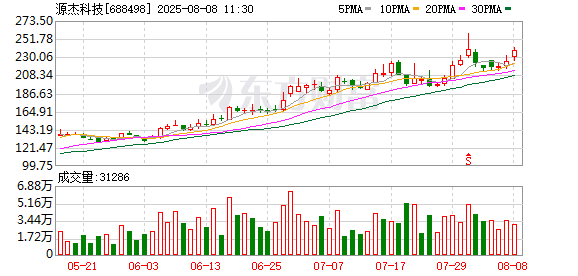
源杰科技程硕:光通信产业链各环节,中国公司占比已超“半壁江山”
Zhong Guo Jing Ying Bao· 2025-08-08 04:41
Core Viewpoint - The article discusses the growth and development of Yuanjie Technology in the optical chip sector, highlighting its transition from a startup to a leading domestic supplier, driven by market demand, technological advancements, and strategic positioning in both domestic and global markets [2][3][4]. Group 1: Company Development - Yuanjie Technology was established in 2013 and has focused on the optical chip field, adopting an IDM model that integrates various production processes [2]. - The company has successfully transitioned from primarily serving the telecommunications market to becoming a leading supplier in both the telecommunications and data communication markets [3]. - Yuanjie Technology's product range includes optical chips for 2.5G, 10G, 25G, 50G, and 100G applications, as well as CW light sources and automotive lidar light sources [2]. Group 2: Market Opportunities - The company benefits from China's largest single market for optical chips, with domestic companies capturing a significant share of the telecommunications market [4]. - The demand for optical chips in data centers has been increasing, providing opportunities for domestic companies to grow and compete globally [4][5]. - The global imbalance in supply and demand for optical chips, particularly in high-end markets driven by AI data centers, presents further opportunities for Chinese manufacturers to expand internationally [5]. Group 3: Competitive Strategy - Yuanjie Technology emphasizes the importance of long-term commitment to research and development in the rapidly evolving optical chip market [6]. - The company is increasing its investment in high-speed and high-power optical chips, as well as optimizing production processes to enhance efficiency and reduce costs [7]. - The company aims to leverage its global presence and partnerships with top-tier clients to stay ahead in technology trends and market demands [9]. Group 4: Global Integration - The article highlights the progress made by Chinese manufacturers in overcoming the "bottleneck" issues in the optical chip sector, with Chinese firms now occupying over half of the top positions in the global optical module market [8]. - Yuanjie Technology is focusing on globalizing its customer base and production capacity to mitigate risks and enhance its competitive edge [9]. - The company plans to deepen its global strategy to secure a more significant role in the international optical chip industry [9].

美的集团董事长方洪波:以丹纳赫为镜,锻造企业韧性
首席商业评论· 2025-08-08 04:10
Core Viewpoint - The article discusses the challenges faced by Chinese enterprises in a highly competitive environment characterized by homogenization, price wars, and rising costs, emphasizing the need for a systematic methodology to navigate these challenges and achieve sustainable growth [2]. Group 1: Challenges in the Business Environment - The business landscape in 2025 is marked by unprecedented restructuring, with common anxieties among enterprises regarding profit erosion and growth stagnation [2]. - Cost reduction and efficiency enhancement have shifted from strategic choices to survival necessities for companies [2]. Group 2: The Danaher Model - The book "The Danaher Model" dissects the success strategies of Danaher, known as the "king of acquisitions," highlighting the Danaher Business System (DBS) as a key driver of its success [2]. - Danaher’s approach to acquisitions has evolved from merely capturing undervalued assets to using acquisitions as a means for industrial upgrading [7]. Group 3: Midea Group's Implementation - Midea Group began learning from international advanced enterprises, specifically the Toyota Production System, but initially saw limited success [4]. - After engaging with Danaher, Midea developed its own Midea Business System (MBS), focusing on lean talent development and factory transformation [4][5]. - By 2018, Midea's domestic factories completed their lean transformation, leading to an average efficiency improvement of approximately 15% annually [5]. Group 4: Globalization and Future Strategies - Danaher’s globalization strategy combines internal and external growth, emphasizing the importance of localizing research and development [8]. - Midea has established 17 R&D centers and 22 manufacturing bases globally, aiming to create a "second home market" [8]. - The future competition will hinge on both lean management capabilities and the integration of advanced digital technologies [7]. Group 5: Lessons for Chinese Enterprises - The book serves as a high-density management tool, addressing key questions about mergers and acquisitions, the evolution of lean management, and balancing localization with integration in globalization [10]. - Danaher’s journey from a $1 million loan for its first acquisition to a market value exceeding $200 billion illustrates the importance of adhering to fundamental principles such as process reliance and efficiency [10].



对话菜鸟高级副总裁熊伟:菜鸟3.0时代的打法
Hua Er Jie Jian Wen· 2025-08-07 13:48
Core Insights - The article discusses the strategic transformation of Cainiao, emphasizing its focus on globalization and technology in response to the booming cross-border e-commerce market [3][4][5]. Group 1: Strategic Focus - Cainiao has undergone organizational changes and strategic focus towards globalization and technology since the second half of last year [3]. - The company has shifted its logistics solutions to e-commerce platforms like Taobao and AliExpress, allowing it to concentrate on foundational logistics network services and market-oriented growth [3][4]. - The year 2023 marks the beginning of Cainiao's 3.0 era, emphasizing globalization, technology, and market orientation [3][4]. Group 2: Globalization and Market Position - Cainiao's globalization efforts have resulted in over half of its overall business coming from international operations, with external business surpassing that from Alibaba Group [4][5]. - The company has established over 40 overseas warehouses and a cross-border network covering more than 200 countries and regions, with localized express operations in nine countries [5]. - Cainiao aims to deepen its leadership in the global e-commerce logistics supply chain, leveraging its early and extensive globalization strategy compared to domestic peers [6][5]. Group 3: Market Dynamics and Challenges - The demand for foundational global logistics networks has increased despite rapid external changes, with many external merchants showing enthusiasm for collaboration with Cainiao [5][6]. - The company is positioned to help merchants navigate challenges posed by U.S. tariffs and changes in cross-border e-commerce regulations, which may favor overseas warehouses and local operations [8]. - Cainiao is enhancing its cross-border logistics network efficiency to offer faster and lower-cost products, catering to diverse merchant needs [9]. Group 4: Future Vision - Cainiao is working towards its vision of achieving "global delivery within 72 hours" by increasing investments in its overseas network and enhancing its logistics infrastructure [9].

东方证券:首予鱼跃医疗“买入”评级,目标价48.24元
Sou Hu Cai Jing· 2025-08-07 08:13
Core Viewpoint - Yuyue Medical is a leading company in the home medical device sector with a broad layout across four key areas: respiratory oxygen, blood glucose and POCT, home health monitoring, and clinical devices and rehabilitation [1] Group 1: Business Overview - The company's core business encompasses four major fields: respiratory oxygen, blood glucose and POCT, home health monitoring, and clinical devices and rehabilitation [1] - The company is actively developing AI smart wearable medical devices, leveraging its technological accumulation in the medical field to establish a comprehensive "monitoring-warning-intervention" pipeline [1] Group 2: Strategic Partnerships - In early 2025, the company signed a strategic cooperation agreement with Inogen, a US-based respiratory oxygen business with extensive sales channels in Europe and America, aiming for complementary advantages and collaborative win-win outcomes [1] Group 3: Market Position and Growth Potential - The company's business is gradually returning to a normalized and sustainable development track post-pandemic, positioning itself as a domestic leader in home medical devices [1] - The company is pursuing both organic growth and external expansion, continuously enriching its product line and expanding its distribution channels, indicating significant long-term growth potential [1] Group 4: Valuation and Investment Rating - Based on comparable companies' average valuation for 2025, the company is assigned a 24x PE ratio, corresponding to a target price of 48.24 yuan, with an initial "buy" rating [1]


研报掘金丨东方证券:首予鱼跃医疗“买入”评级,目标价48.24元
Ge Long Hui A P P· 2025-08-07 08:08
Core Viewpoint - Yuyue Medical is a leading player in the home medical device sector with a broad layout, focusing on four main areas: respiratory oxygen, blood glucose and POCT, home health monitoring (such as electronic blood pressure monitors), and clinical devices and rehabilitation [1] Group 1: Business Overview - The company's core business encompasses four major fields: respiratory oxygen, blood glucose and POCT, home health monitoring, and clinical devices and rehabilitation [1] - The company is actively developing AI smart wearable medical devices, leveraging its technological accumulation in the medical field to establish a comprehensive "monitoring-warning-intervention" pipeline [1] Group 2: Strategic Partnerships - In early 2025, the company signed a strategic cooperation agreement with Inogen, a US-based respiratory oxygen business with extensive sales channels in Europe and America, aiming for complementary advantages and collaborative win-win outcomes [1] Group 3: Market Position and Growth Potential - The company's business is gradually returning to a normalized and sustainable development track post-pandemic, positioning itself as a domestic leader in home medical devices [1] - The company is pursuing both organic growth and external expansion, continuously enriching its product line and expanding its channels, indicating significant long-term growth potential [1] Group 4: Valuation and Investment Rating - Based on comparable companies' average valuation for 2025, the company is assigned a 24 times PE ratio, corresponding to a target price of 48.24 yuan, with an initial "buy" rating [1]
小菜园(00999):2025年上半年业绩预告点评:多措并举优化运营效率,带动业绩增长
Changjiang Securities· 2025-08-06 23:30
Investment Rating - The report maintains a "Buy" rating for the company [2][8]. Core Insights - The company expects a net profit of 360-380 million yuan for the first half of 2025, representing a year-on-year growth of 28.57%-35.71% [2][6]. - The company is focusing on three core directions: globalization, digitalization, and sustainability, which are expected to accelerate its growth [2][9]. - The brand "菜手" is anticipated to become the company's second-largest brand, aligning with current consumer trends in the restaurant industry [2][9]. - The company is well-positioned to capture growth opportunities due to its standardized management, complete supply chain, and superior single-store model [2][9]. - Projected net profits for 2025-2027 are 701 million, 845 million, and 1.021 billion yuan, with corresponding price-to-earnings ratios of 15.51, 12.86, and 10.65 times [2][9]. Summary by Sections Event Description - The company forecasts a net profit of 360-380 million yuan for the first half of 2025, with a year-on-year increase of 28.57%-35.71% [6]. Event Commentary - The net profit growth is attributed to improved operational efficiency, strict cost control, and refined management practices [9]. - The company has implemented a standardized operational management system across various functions, enhancing its operational capabilities through information technology [9]. - Recent initiatives include the launch of a high-speed train branding campaign and the renovation of its first store in Hong Kong, marking significant steps in its brand expansion strategy [9].
百济神州半年报:扭亏为盈,泽布替尼突破百亿“关卡”
2 1 Shi Ji Jing Ji Bao Dao· 2025-08-06 13:16
21世纪经济报道记者季媛媛 8月6日,百济神州(纳斯达克代码:ONC;香港联交所代码:06160.HK;上交所代码:688235.SH)公 布2025年第二季度美股业绩报告以及A股半年度主要财务数据公告。2025年上半年,百济神州实现营业 总收入175.18亿元,同比增长46.0%。产品收入达173.60亿元,同比增长45.8%。 值得关注的是,报告期内,公司营业利润达7.99亿元,归属于母公司所有者的净利润达4.5亿元,较去年 同期均实现扭亏为盈。这也是百济神州今年以来首次在营业利润和归母净利润上实现全面盈利。公告显 示,此次实现盈利主要由于产品收入的大幅增长,同时费用管理推动了经营效率的提升。 基于此,百济神州更新收入指引,预计2025年全年营收将从人民币352亿元至381亿元之间,调整为人民 币358亿元至381亿元之间。此外,毛利率更新为80%至90%的中高位区间。现金流方面,经营活动产生 的现金流量扣除购建固定资产等资本性支出后的净额预计全年为正。 "经营活动现金流净额转正的全年预期,意味着公司初步具备自我造血能力。"有券商医药行业分析师对 21世纪经济报道记者指出,持续投入十余年后,百济神州首次在 ...

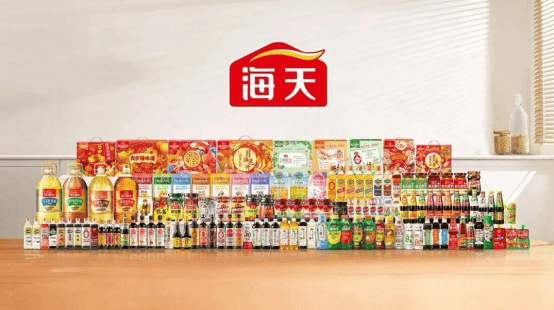
海天酱油港股IPO引资本热捧,“新经济”与“老字号”融合的标杆
Sou Hu Cai Jing· 2025-08-06 08:43
Group 1 - The core viewpoint of the article highlights the successful IPO of Haitian Flavor Industry, raising over 10.1 billion HKD, marking it as the top consumer IPO in Hong Kong for the year [1] - The IPO attracted significant interest from top-tier institutional investors, with a total subscription of nearly 4.7 billion HKD, accounting for 50% of the offering size, indicating strong confidence in the long-term value of the Chinese condiment industry [1][3] - The global ambition of Haitian Flavor Industry is emphasized, as the company aims to expand from the "Chinese kitchen" to becoming a standard on the "world dining table" [3] Group 2 - The domestic soy sauce market in China is reaching a saturation point, with per capita consumption decreasing from 7.28 kg in 2015 to 4.86 kg in 2023, and industry growth slowing from 16% in 2019 to an expected 1% in 2024 [3] - The global condiment market is projected to reach 2.9 trillion CNY by 2028, with Southeast Asia and Latin America experiencing growth rates exceeding 8%, presenting significant opportunities for Haitian Flavor Industry [3] - The company plans to allocate 15% of the raised funds to establish local sales offices and a localized supply chain, focusing on expanding overseas distribution channels in Southeast Asia and Europe [4]