
稳定币

Search documents
美股突发!全线收跌
Shang Hai Zheng Quan Bao· 2025-08-06 00:52
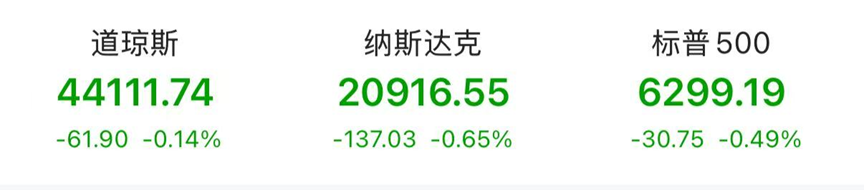
美东时间周二,美股三大指数全线收跌。截至收盘,道琼斯指数跌0.14%,报44111.74点;标普500指数跌0.49%,报 6299.19点;纳斯达克综合指数跌0.65%,报20916.55点。 美国供应管理协会(ISM)公布的数据显示,美国7月服务业PMI录得50.1,低于市场预期的51.5和前值50.8,这意味着服务 业在该月几乎陷入增长停滞。 因不满美国总统特朗普对巴西加征的高额关税,巴西总统卢拉表示,巴西政府发布的一项决议已授权外交部将美方行为诉 至世贸组织争端解决机制,以应对美国的关税上调。 美国三大股指集体收跌 美东时间周二,美股三大指数全线收跌。截至收盘,道琼斯指数跌0.14%,报44111.74点;标普500指数跌0.49%,报 6299.19点;纳斯达克综合指数跌0.65%,报20916.55点。 热门科技股多数下跌,微软、Meta、博通均跌超1%,英伟达跌近1%。谷歌C跌0.22%,苹果跌0.21%,特斯拉跌0.17%。 分项指标中,新订单指数降至50.3,就业指标从47.2降至46.4。此外,衡量材料和服务支付价格的指标攀升至69.9,为2022 年10月以来最高。 分析称,这份数据描绘 ...

央行等七部门发文!强化金融支持新型工业化|南财早新闻
2 1 Shi Ji Jing Ji Bao Dao· 2025-08-05 23:45
Group 1: Education Policy - The State Council issued an opinion to gradually implement free preschool education, starting from the autumn semester of 2025, exempting public kindergarten tuition fees for the last year of preschool education, excluding meal, accommodation, and miscellaneous fees [2] Group 2: Financial Support for Industry - Seven departments, including the central bank, released guidelines to support the new industrialization, aiming for a mature financial system for high-end, intelligent, and green manufacturing by 2027 [2] - The State Council proposed personal consumption loan interest subsidies and service industry loan interest subsidies, with major banks expressing support for these policies [2] Group 3: Health and Environment - The Health Commission and 16 departments launched a plan to improve health through environmental actions, targeting significant environmental health issues and promoting green development by 2030 [3] Group 4: Market Performance - A-share market showed a strong performance with the Shanghai Composite Index rising 0.96% to 3617.6 points, reaching a new high for the year, and the Shenzhen Component Index increasing by 0.59% [4] - The Hong Kong Hang Seng Index rose 0.68% to 24902.53 points, with significant net buying from southbound funds [4] Group 5: Company Developments - Hema X membership stores will be completely shut down, focusing on Hema Fresh and Hema NB for future development [5] - Haiguang Information reported a revenue of 5.464 billion yuan, a year-on-year increase of 45.21%, and a net profit of 1.201 billion yuan, up 40.78% [6] - Muyuan Foods sold 6.355 million pigs in July, a year-on-year change of 13.02%, with an average selling price of 14.30 yuan/kg, down 21.86% [6] Group 6: Stock Market Reactions - After the completion of a review, the stock price of Weiye New Materials surged by 20% to 110.48 yuan/share, marking its first entry into the hundred-yuan stock category [7]


美财政部加码短期国债发行 稳定币需求成新兴买盘力量
Zhi Tong Cai Jing· 2025-08-05 22:30
Group 1 - The U.S. Treasury Department plans to auction $100 billion in four-week Treasury bills, marking a historic high in issuance, reflecting a preference for short-term financing to meet rising federal spending needs [1] - The issuance of four-week Treasury bills will increase by $5 billion from the previous auction, while the issuance of eight-week and seventeen-week Treasury bills will remain unchanged at $85 billion and $65 billion, respectively [1] - The demand for short-term Treasury securities remains strong, with yields exceeding 4%, leading to significant inflows into short-term Treasury ETFs, which saw $16.7 billion in inflows in Q2, doubling from the same period last year [1] Group 2 - The increase in Treasury bill issuance aims to meet current financing needs and rebuild cash buffers previously depleted due to debt ceiling issues, with expectations of continued marginal growth in Treasury supply [2] - The Treasury Secretary has no intention of expanding long-term debt issuance in the near term due to high federal fund rates making long-term debt issuance unattractive [2] - Market interest in long-term Treasury bonds remains uncertain, with recent auctions showing mixed responses, and expectations for increased long-term debt issuance being pushed back [2] Group 3 - Bank of America predicts that gold prices may rise further, potentially surpassing $4,000 per ounce, as concerns over U.S. debt levels grow and investors question the dollar's status as a reserve currency [3] - The report highlights that if fiscal deficits remain high alongside market volatility, more funds may flow into gold, with central banks gradually reducing their holdings of dollars and U.S. Treasuries while increasing gold reserves [3] - The World Gold Council's survey indicates that most central banks intend to continue increasing gold allocations in the next 12 months, reducing reliance on dollar assets, suggesting gold is becoming a new safe haven amid rising U.S. debt supply and fiscal sustainability concerns [3]
Visa扩展稳定币结算能力
Guo Ji Jin Rong Bao· 2025-08-05 12:47
Core Insights - Visa is expanding its stablecoin settlement capabilities by integrating digital assets and blockchain technology, enhancing its role in the global payment system [1] Group 1: Expansion of Stablecoin Offerings - Visa has partnered with fintech company Paxos to launch two new USD-backed stablecoins: Global Dollar (USDG) and PayPal Dollar (PYUSD), both pegged 1:1 to the US dollar, aimed at providing efficient and secure solutions for cross-border payments [2] - The introduction of stablecoins addresses traditional cross-border payment issues such as slow speed, high costs, and complex procedures, enabling real-time settlement and lower transaction fees through blockchain technology [2] Group 2: Blockchain Compatibility Enhancements - To improve system compatibility, Visa has added support for Stellar and Avalanche blockchains, in addition to existing support for Ethereum and Solana, enhancing the flexibility and scalability of its network [3] - Stellar focuses on cross-border payments, offering low-cost and fast transaction methods, while Avalanche provides high transaction throughput and low latency, making it suitable for financial applications [3] Group 3: Global Strategic Initiatives - Visa's expansion includes not only USD-backed stablecoins but also Euro-backed stablecoins, collaborating with Circle to integrate the Euro stablecoin (EURC) into its settlement platform, providing users with more options and lower transaction costs for cross-border payments [4] - Visa is developing a multi-currency and multi-chain infrastructure to meet global partner needs, emphasizing the importance of trust, scalability, and interoperability for stablecoins to transform global currency circulation [4] - The company is also expanding its stablecoin-linked card offerings, which combine stablecoins with traditional card functionalities for global consumption and payments, aiming to provide users with convenient payment options across multiple blockchain wallets [4] Group 4: Industry Perspective - The transition of payment intermediaries like Visa from traditional payment systems to stablecoin operations is seen as a natural evolution, driven by the inherent advantages of stablecoins such as speed and low costs [5] - However, the transition poses challenges for large payment intermediaries, requiring a balance between traditional and stablecoin operations, along with addressing technical challenges and identifying new use cases [5]

医药巨头联手区块链,聪明钱早已抢跑
Sou Hu Cai Jing· 2025-08-05 12:00
Group 1 - Han Yu Pharmaceutical announced a strategic partnership with KuCoin to advance the first pilot project in mainland China for RWA tokenization based on "future revenue rights of innovative drug research and development" [2] - The combination of pharmaceuticals and blockchain has created significant market interest, but there are concerns about the "running ahead" phenomenon unique to the A-share market [2][3] - Historical observations indicate that seemingly sudden positive news often has prior indications in trading data, suggesting that institutional funds may have already positioned themselves before the announcement [2] Group 2 - The A-share market tends to "buy expectations" rather than "buy facts," leading to a situation where good news often serves as an opportunity for smart money to realize profits [3] - Examples from the stablecoin concept show that while the Shanghai Composite Index rose nearly 500 points from April to July 2025, individual stocks within the digital currency theme exhibited vastly different performances, indicating selective institutional positioning [3][5] - The trading behavior of stocks like "Cuiwei Co." shows that institutional activity can be detected before a market trend becomes apparent, highlighting the advantage of professional investors who utilize quantitative tools to capture fund movements [5] Group 3 - The trading data of "Dongsoft Group" reveals a lack of institutional activity initially, with only brief participation later, explaining the stark performance differences among stocks in the same sector [6][8] - "Runhe Software" initially showed active institutional participation but lacked sustainability, leading to weak stock performance, while "Zhongke Jiangnan" gained momentum after the index surpassed 3600 points [10][12] - The analysis of trading data emphasizes the importance of understanding whether institutional funds have already entered the market before news releases, as this is crucial for investment success [13]

股指日报:资金情绪有所降温,8月有回踩预期-20250805
Xin Da Qi Huo· 2025-08-05 09:03
1. Report Industry Investment Rating - The investment rating for the industry is "Oscillation" [1] 2. Core Viewpoints of the Report - After the popularity of major financial concepts such as stablecoins ebbed, the market mainly engaged in thematic speculation around "anti - involution" and the Yaxia Hydropower Station in July. There were signs of increasing divergence in funds regarding the cyclical style at the end of the month, and the market was in a relatively strong oscillatory state [3] - In August, there are limited expected macro - level positives. Domestically, after the tone - setting of the Political Bureau meeting, there are no obvious over - expected clues in the short term, and the policy is mainly about implementation. Overseas, Sino - US trade negotiations are ongoing, and issues like the change of the Fed Chairman will indirectly affect foreign investors' willingness to participate in the A - share market [3] - Investors are advised to prepare for defense in August. In the first half of the month, there may be a phased pull - back in stock indices due to strengthened technical pressure. In a six - month perspective, the four major indices are expected to approach the 2023 highs, with small - cap indices like CSI 500 and CSI 1000 performing better in a liquidity - easing cycle [3] 3. Summary by Relevant Catalogs 3.1 Macro Stock Market Information - The central bank, the financial regulatory administration, and the CSRC plan to further clarify the specific requirements for risk - based customer due diligence of financial institutions. For remittances of over RMB 5,000 or foreign currency equivalent to $1,000, the identity of the remitter should be verified [5] - Beijing has introduced 16 measures to promote the development of future industries, focusing on areas such as urban transportation and medical health, and exploring the opening of application demonstration scenarios [5] 3.2 Stock Index盘面回顾 (Stock Index Market Review) - In the previous trading day, the A - share market opened lower and closed higher. Among the four major indices, the Shanghai 50 rose 0.55%, the CSI 300 rose 0.39%, the CSI 500 rose 0.78%, and the CSI 1000 rose 1.04%. The precious metals (+3.84%) and aerospace and military industries (+3.59%) led the gains, while the education (-0.72%) and automobile (-0.66%) sectors lagged. There were more than 3,800 rising stocks and 70 daily limit stocks, indicating a good profit - making effect [5] - The daily and weekly lines maintained an upward trend, indicating short - term market strength, while the monthly line remained in an oscillatory state [5] - The trading volume of the A - share market dropped to around 1.5 trillion yuan, and the trading enthusiasm declined marginally [5] 3.3 Core Logic Summary - After the decline of major financial concepts, the market had new themes in July, and there were signs of divergence in the cyclical style. In August, with limited macro - level positives, investors should be defensive, especially in the first half of the month. In the medium - term, small - cap indices are expected to perform better [3] 3.4 Operation Suggestions - In futures operations, it is recommended to switch to a defensive state temporarily, choose to wait and see or conduct short - term long positions intraday. Buying on dips is a good opportunity, and IH - IM can be pre - arranged on the left side [4] - In options operations, the implied volatility of stock index options has decreased. During the narrow - range oscillation period, the cost - effectiveness of participating in options is not high, and it is recommended to wait for a second wave of rising volatility [4]
华塑控股(000509.SZ):未开展稳定币相关业务
Ge Long Hui· 2025-08-05 06:43
格隆汇8月5日丨华塑控股(000509.SZ)在互动平台表示,公司通过全资子公司湖北碳索空间科技有限公 司开展甲烷等温室气体的监测和排放治理相关业务,并通过已落地的自有碳治理业务项目推进CCER的 开发和交易,截至目前公司减排项目暂未实现碳市场交易。公司未开展稳定币相关业务。 ...

ZY 8月十大金股
2025-08-05 03:19
Summary of Conference Call Notes Company and Industry Overview - **Industry**: Financial Technology, Semiconductor, Chemical, Military, Agriculture, and New Consumption - **Key Companies**: Tianyang Technology, Wentai Technology, Wanhu Chemical, Gaode Hongai, Muyuan Co., Ltd., Chuan Yi Co., Ltd., Lao Pu Gold, Li Gao Video, and Long Sheng. Key Points and Arguments Tianyang Technology - **Market Position**: Leading in card solutions, with financial services accounting for about one-third and fintech solutions for two-thirds of revenue [2] - **Revenue**: Total revenue for 2024 is projected at 1.76 billion, down 8% year-on-year, with net profit at 78 million, also showing a decline [2] - **Growth Opportunities**: Key business areas like corporate credit are expected to grow over the next three years [2][4] Wentai Technology - **Business Segments**: Divided into product integration and semiconductor businesses, with the latter showing revenue growth in the first half of the year [5][6] - **Market Trends**: The semiconductor segment's revenue is expected to grow, particularly in automotive applications, which account for over 60% of revenue [6][7] - **Future Projections**: Expected revenue decline in product integration but significant profit growth in semiconductors projected for 2025-2027 [8] Wanhu Chemical - **Market Dynamics**: TDI prices are expected to rise due to supply shortages caused by maintenance and accidents at production facilities [9][10] - **Price Trends**: Domestic TDI prices increased by 32% recently, indicating strong demand and supply constraints [10][11] - **Industry Outlook**: Anticipated simultaneous price increases for TDI and MDI, benefiting leading companies like Wanhu [11] Gaode Hongai - **Business Expansion**: Transitioning from a supplier to a comprehensive weapon system provider, with significant contracts signed recently [12][13] - **Financial Performance**: Expected rapid growth in revenue and profit due to increased orders and successful project deliveries [14] Muyuan Co., Ltd. - **Market Position**: Positioned well in the agricultural sector with a focus on cost advantages and stable profit margins [15][19] - **Price Stability**: Government policies are expected to stabilize pork prices, reducing downward pressure on prices [17][18] - **Future Projections**: Anticipated price increases for pork in the coming year, benefiting the company's profitability [18][20] Chuan Yi Co., Ltd. - **Industry Position**: A leading automation instrument company with significant growth potential in domestic and international markets [24][25] - **Market Trends**: Expected growth in demand due to infrastructure projects and a low industry base [24] Lao Pu Gold - **Financial Performance**: Significant revenue growth projected for the first half of the year, with expectations for continued strong performance [27][28] - **Market Outlook**: Anticipated strong demand and expansion in new store openings contributing to revenue growth [28] Li Gao Video - **Market Dynamics**: Stable performance in the supply chain, with growth in revenue and profit despite market pressures [30] - **Product Innovation**: Introduction of new products in response to regulatory changes, enhancing market competitiveness [30][31] Long Sheng - **Cost Management**: Decrease in raw material costs, particularly oil, is expected to improve profit margins [32][33] - **Market Conditions**: Positive outlook due to government policies aimed at stabilizing the economy and improving PPI [34][35] Additional Important Insights - **Overall Market Trends**: The conference highlighted a general trend of companies adapting to market changes and government policies, with a focus on innovation and cost management across various sectors. - **Investment Recommendations**: Analysts recommended several companies as "golden stocks" based on their market positions, growth potential, and financial performance. This summary encapsulates the key insights and projections discussed during the conference call, providing a comprehensive overview of the companies and industries involved.





一周内 两起新药RWA革命正在颠覆创新药行业 为什么是现在?
智通财经网· 2025-08-05 02:46
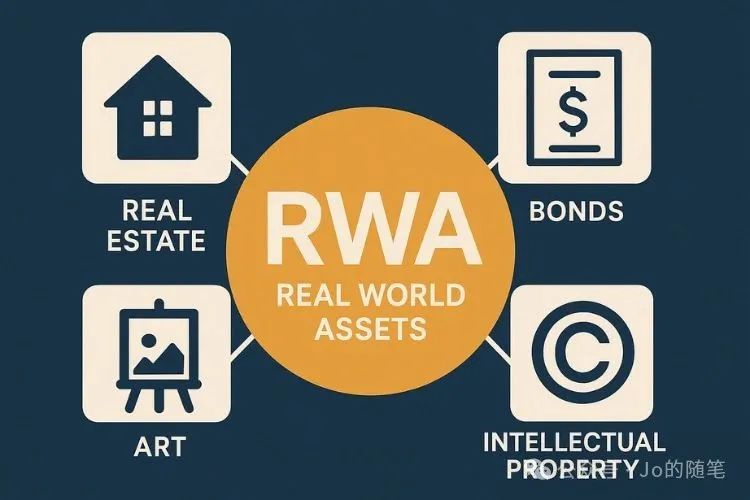
Core Insights - The emergence of RWA (Real World Assets) is revolutionizing the innovative pharmaceutical industry, shifting from "license-out" to "asset optionization" for global expansion [1] - Two companies, Huajian Medical and Hanyu Pharmaceutical, have recently launched RWA projects that unlock liquidity in the pharmaceutical sector, indicating a paradigm shift in how Chinese innovative drugs can access global markets [1] Group 1: RWA and Market Dynamics - RWA utilizes blockchain technology to tokenize real-world assets, enabling on-chain transactions and enhancing liquidity in traditionally illiquid markets [2] - The RWA market is projected to reach $4.5 trillion by 2030, with significant contributions from the pharmaceutical sector, which is expected to see rapid growth in asset tokenization [4] - The current tokenization of only 0.1% of medical assets presents a vast growth opportunity, with the potential for the medical asset share in the RWA market to exceed 20% by 2030 [11] Group 2: RWA vs Traditional Finance - RWA offers higher liquidity compared to traditional finance, allowing for real-time global trading of tokens, while traditional financing methods often involve lengthy cycles [5] - The entry barrier for investors is significantly lowered in RWA, allowing retail investors to participate with minimum investments, contrasting with the high capital requirements of traditional financing [5] - RWA provides greater transparency through immutable on-chain records, unlike traditional finance which relies on audit reports [5] Group 3: Challenges and Solutions - Traditional licensing models face issues such as valuation discounts and long cycles, which RWA aims to address by allowing for the tokenization of future revenue streams [6][7] - RWA can diversify risk by enabling retail investors to share in the funding of drug development, thus reducing the financial burden on single institutions [7] - The recent regulatory developments, such as the implementation of the "Stablecoin Regulation" in Hong Kong, create a conducive environment for RWA projects in the pharmaceutical sector [10] Group 4: Future Outlook - The successful implementation of RWA could release trillions in dormant assets from over 3,000 clinical pipelines in China, transforming the global positioning of Chinese pharmaceutical companies [23] - The collaboration between pharmaceutical companies and blockchain platforms is expected to redefine the relationship between capital, research, and market dynamics, moving towards a new era of global pricing power for Chinese drugs [23]
中原期货晨会纪要-20250805
Zhong Yuan Qi Huo· 2025-08-05 01:06
Research Report Summary 1. Industry Investment Rating No industry investment rating is provided in the report. 2. Core Viewpoints - The overall market shows a complex situation with different trends in various sectors. In the agricultural products sector, most products are in a state of weak supply - demand balance or facing certain pressure. In the energy - chemical sector, prices are affected by factors such as production, demand, and international market conditions. The industrial metal sector is influenced by supply - demand relationships, macro - economic data, and policy factors. The financial market is affected by macro - economic data, policy expectations, and international market trends [6][9][14]. 3. Summary by Category 3.1 Chemicals - **Price Changes**: On August 5, 2025, compared with August 4, most chemical products' prices decreased. For example, the price of coking coal dropped from 1,141.00 to 1,126.00, a decrease of 15.0 with a decline rate of 1.315%. The price of asphalt decreased from 3,573.00 to 3,549.00, a decrease of 24.0 with a decline rate of 0.672%. Only natural rubber and 20 - number rubber prices increased slightly [6]. 3.2 Agricultural Products - **Price Changes**: Some agricultural products' prices increased, such as yellow soybean No.1, which rose from 4,117.00 to 4,133.00, an increase of 16.0 with an increase rate of 0.389%. However, some products' prices decreased, like white sugar, which dropped from 5,718.00 to 5,709.00, a decrease of 9.0 with a decline rate of 0.157% [6]. - **Market Analysis** - **Peanuts**: The peanut market price is basically stable, with a pattern of weak supply and demand. It is expected to have a strong - side shock but still maintain a downward trend [14]. - **Oils and Fats**: The total trading volume of oils and fats decreased by 57% compared with the previous trading day. The market lacks driving forces and is expected to have a weak - side shock [14]. - **Sugar**: The sugar futures showed a downward - shock trend. The Brazilian sugar production is about to enter the supply peak, and the domestic market needs to be vigilant against the pressure of processed sugar arrival in August [14]. - **Corn**: The corn futures weakened. The wheat substitution effect is prominent, and the import supply pressure increases. It is expected to have a weak - side shock [14]. - **Pigs**: The supply pressure of pigs still exists, and the demand improvement is not obvious. The market is expected to maintain an interval shock [15]. - **Eggs**: The egg spot market has differences between the north and the south. After the correction, the spot is expected to have limited further decline. The 08 - contract futures should avoid long positions and try short positions [15]. - **Cotton**: The ICE cotton continued to decline, and the Zhengzhou cotton rebounded slightly. The domestic cotton spot market has a weak foundation, and short - term long positions should be cautious [17]. 3.3 Macro - economic News - **Policy and Regulation**: The central bank, financial regulatory authorities, and the CSRC plan to further clarify the specific requirements for customer due diligence of financial institutions. Beijing has introduced 16 measures to promote the development of future industries, and Hainan has proposed 20 measures to develop future industries [9][10]. - **Economic Data**: In the first half of the year, China's service import and export volume was 38872.6 billion yuan, a year - on - year increase of 8%. It is expected that the new social financing in July will increase year - on - year. The preliminary estimate of the wholesale sales volume of new energy passenger vehicles in July is 118 million, a year - on - year increase of 25% [9][10]. - **International News**: Trump said he would significantly increase tariffs on India. The EU will suspend the implementation of tariff counter - measures against the US for six months. The probability of a US interest rate cut in September is high [10][11][24]. 3.4 Industrial Metals - **Copper and Aluminum**: The copper price continued to be under pressure, and the aluminum price is expected to continue the high - level adjustment due to factors such as supply increase and consumption off - season [21]. - **Alumina**: The alumina market is in an oversupply pattern, and the futures price is in a high - level adjustment, being vigilant against the impact of macro - emotions [21]. - **Steel Products**: The spot market of steel products has limited demand in the off - season. The prices of rebar and hot - rolled coils are affected by macro - emotions and raw material prices, and they are in a weak - side shock to find the bottom [21]. - **Ferroalloys**: The supply of ferrosilicon and ferromanganese continues to increase, and the demand is weak. The market is affected by macro - policy expectations, and it is recommended to adopt a range - shock strategy [22]. - **Lithium Carbonate**: The lithium carbonate market is under high - supply pressure. It is recommended to wait and see. If it effectively stands above 70,000 yuan, a small - position long position can be tried [23]. 3.5 Options and Finance - **Stock Index Futures and Options**: On August 4, the A - share market showed different trends. The trend investors can pay attention to the strength - weakness arbitrage opportunities among varieties, and the volatility investors can sell wide - straddle options to short volatility. The short - term adjustment of the stock index does not need to be worried, and the medium - term upward trend remains unchanged [23][24].