能源转型

Search documents
《2025中国光伏建设进展报告》发布,中国光伏产业成为全球能源转型的重要驱动力
Mei Ri Jing Ji Xin Wen· 2025-12-01 01:54
Core Insights - The photovoltaic industry in China has achieved significant growth over the past decade, becoming a key driver of global energy transition [1] - The "2025 China Photovoltaic Construction Progress Report" highlights major achievements and innovations in the sector, emphasizing the shift towards sustainable development [1] - The industry is experiencing a transition from low-price competition to sustainable growth due to supportive policies and technological advancements [1] Industry Overview - The photovoltaic ETF Huaxia (515370) tracks the CSI Photovoltaic Industry Index, encompassing upstream, midstream, and downstream companies in the photovoltaic supply chain [2] - The report indicates that N-type monocrystalline silicon technology is expected to capture over 96.9% market share, marking a departure from the P-type era [1] - The photovoltaic installed capacity is witnessing exponential growth, with policies aiding in optimizing the competitive landscape and restoring profitability [1]

全球能源转型下我国水电发展新趋势
Qi Huo Ri Bao· 2025-12-01 01:53
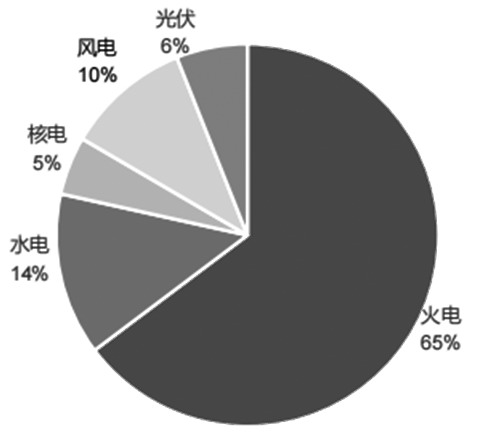
Core Viewpoint - The energy development direction in China is shifting towards clean, low-carbon, safe, and efficient systems, with a significant transformation in the power supply structure from fossil fuels to non-fossil energy sources [1][27]. Group 1: Current Status of Hydropower Development - Hydropower plays a crucial role in China's energy structure, with an expected generation of 1,274.25 billion kWh in 2024, accounting for 13.53% of total power generation [2]. - From January to October 2025, hydropower generation reached 1,131.12 billion kWh, slightly increasing its share to 14.03% [2]. - As of October 2025, the total installed capacity of hydropower is 440 million kW, representing 11.83% of the total power generation capacity in China [4]. Group 2: Installed Capacity and Growth Trends - The total installed power generation capacity in China reached 3,752 million kW by October 2025, a year-on-year increase of 17.45% [4]. - Hydropower's installed capacity growth has slowed, primarily due to the saturation of high-quality hydropower resources and the longer construction cycles compared to wind and solar power [6]. - As of October 2025, conventional hydropower installed capacity is 380 million kW, with a 70.11% development rate of technically exploitable capacity [8]. Group 3: Economic Advantages of Hydropower - Hydropower is recognized for its flexibility and reliability, with a rapid startup time of 1-2 minutes from a standby state to full load [9]. - The average cost of hydropower generation is between 0.1 to 0.3 yuan per kWh, which is competitive compared to other energy sources [16]. - The average on-grid price for hydropower is transitioning from planned pricing to market-based pricing, currently at 0.3 yuan per kWh, which is lower than coal power [16][22]. Group 4: Future Projections and Policy Directions - By 2030, the total installed capacity of conventional hydropower is projected to reach 420 million kW, with an average annual growth rate of 2.02% from 2025 to 2030 [23]. - The demand for flexible adjustment resources in the power system will increase as the share of renewable energy rises, positioning hydropower as a stabilizing force in the energy mix [27]. - The development of pumped storage hydropower is expected to double by 2030, reaching 120 million kW, further enhancing the role of hydropower in energy regulation [12].

刘汉元:AI 背后的能源支撑 清洁能源成中国经济新引擎
Xin Lang Cai Jing· 2025-12-01 01:39
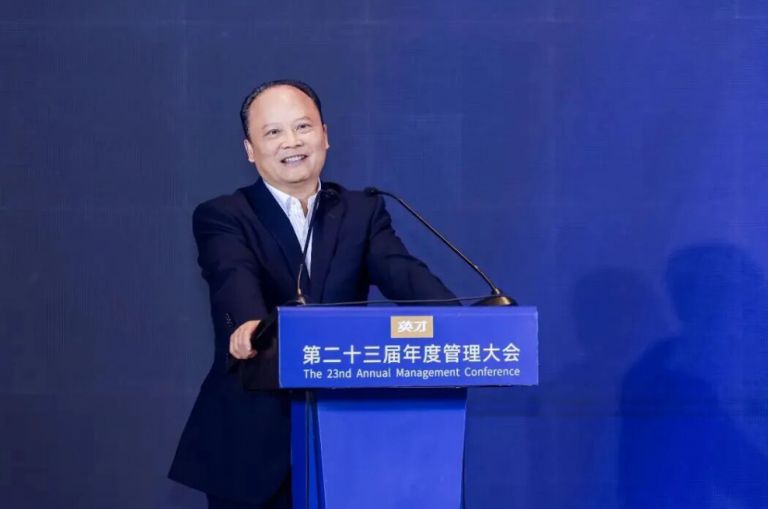
Core Viewpoint - The development of AI is heavily reliant on energy support, and China's energy security is a growing concern due to high foreign dependence and significant foreign exchange expenditures [1][3]. Energy Landscape and Economic Growth - China has become the world's largest energy consumer, with electricity consumption exceeding that of the U.S. by more than double since 2011, and energy increments are closely linked to GDP growth [3][4]. - The high foreign dependence on energy reached 70%-75% in previous years, with energy imports exceeding $470 billion in 2024, making it the largest area of foreign exchange expenditure [3][4]. Transition Pathways - The majority of China's oil consumption (over 70%) is used in transportation, and 1 trillion kilowatt-hours of electricity can replace 500 million tons of oil, which cost over $300 billion in 2024 alone [4]. - The current energy structure, primarily based on coal, is a major source of carbon emissions and faces international environmental pressures [4]. - Clean energy sources, particularly solar and wind power, are identified as the core of the transition, with predictions that by 2050, 50%-80% of China's electricity consumption (30 trillion kilowatt-hours) could be met through clean energy [4]. Economic Opportunities and Global Participation - The transition to renewable energy is expected to create a massive industry cluster worth 10 to 20 trillion RMB annually, comparable to the size of the real estate sector, providing sustained economic growth for the next 10 to 20 years [4]. - The development of the renewable energy sector will also facilitate the internationalization of the RMB, as Chinese products in solar energy, electric vehicles, and energy storage enter the global market, participating in a $200 trillion market for global energy carbon neutrality [5].
华泰期货:为什么是白银?白银出现“挤仓行情”的底层逻辑
Xin Lang Cai Jing· 2025-12-01 01:39
Core Insights - Silver prices have surged significantly in 2023, with London spot gold reaching a peak of $4,294 per ounce on October 20, marking a 62.3% increase since the beginning of the year, while spot silver hit $54 per ounce on October 17, reflecting an 86% increase [1] - The low inventory levels of silver in London have created conditions for a short squeeze, with silver ETFs showing a substantial increase in physical holdings, indicating a financialization of silver that reduces market liquidity [1] - Demand for silver in the photovoltaic sector is expected to reach approximately 195.7 million ounces by 2025, driven by global energy transition and installation expansion [3] Supply and Demand Analysis - The global silver supply is projected to be constrained, with primary silver production decreasing from 26,637 tons in 2024 to 23,681 tons by 2030, while total demand is expected to exceed supply, leading to a supply deficit [4] - Investment demand for physical silver peaked at approximately 338.3 million ounces in 2022 but is expected to decline below 200 million ounces in 2024, with signs of recovery in 2025 [3] - The financial attributes of silver are expected to be supported by a weaker dollar and liquidity easing, which may drive investment towards silver, potentially leading to a decline in the gold-silver ratio towards a range of 50-70 [3]

突发:欧佩克+暂停增产!铜价创历史新高 仍有做多机会?
Qi Huo Ri Bao· 2025-12-01 00:30
早上好,先来看下重要消息。 分析人士:涨势或未终结 金瑞期货铜研究员吴梓杰认为,本轮铜价上涨的核心原因是供应下降。一方面,智利等主要铜生产国今 年产量不及预期,国内精炼铜产量也阶段性回落,废铜和阳极铜等中间品进口处于近年偏低水平,冶炼 加工费长期处于历史低位,甚至一度接近零或负值,这清晰地反映了铜精矿端的供应短缺问题。另一方 面,境内外交易所铜库存整体维持下行态势,上海期货交易所监测的铜库存偏低且近期仍在下降。从需 求端来看,新能源车、光伏风电、电网和数据中心等领域的需求继续增长,市场普遍将这一轮能源转型 视为"长周期、强确定"的需求增量。在此基础上,美元走弱、美联储12月降息预期升温、海外交易所短 暂"停摆"等因素共同放大了价格向上突破的斜率。 欧佩克+同意明年保持产量稳定,8个主要产油国重申明年一季度暂停增产 欧佩克+成员国在昨日的会议上同意维持2026年全集团范围内的石油产量配额不变,并同意建立一个评 估成员国最大石油生产能力的机制。 根据另一份声明,此前于2023年4月和11月宣布额外自愿调整产量的8个欧佩克+成员国,即沙特、俄罗 斯、伊拉克、阿联酋、科威特、哈萨克斯坦、阿尔及利亚和阿曼,于昨日举行了 ...
阿特斯调整美国市场业务 转让供美海外储能工厂等
Zheng Quan Shi Bao Wang· 2025-11-30 23:48
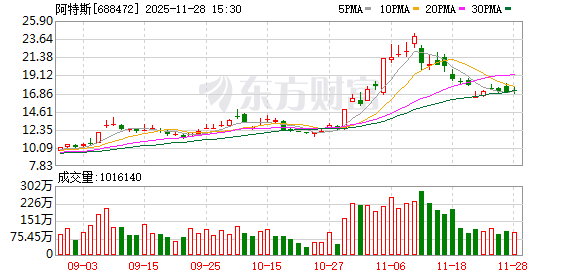
作为全球光伏组件与大型储能头部企业,阿特斯(688472)11月30日晚间公告,拟联合控股股东设立合资 企业重组美国市场业务,运营当地光伏电池/组件与储能业务,以及转让海外储能工厂、光伏切片工厂 以及电池工厂,上市公司将保留部分持续收益权。 阿特斯介绍,美国目前作为全球第二大光伏市场,电力市场机制成熟,且跟光伏协同共生的储能业务因 可以参与多重服务,商业模式清晰,投资回报高,也处于快速爆发期。为实现公司在美国市场业务长期 参与,保障企业正常经营,降低经营风险,公司拟与控股股东Canadian Solar Inc(注册于加拿大的美股 上市公司,以下简称"CSIQ")针对美国市场业务进行调整。 本次股权转让涉及标的评估总价为4.69亿元,故本次股权转让标的75.1%股权对应的交易金额确定为 3.52亿元。 根据公司与CSIQ发展规划,后续CSIQ将专注于美国市场的光伏组件及储能系统的生产、销售与服务, 关注并投入资源在美国本土的公共事业、电力公司及大型工商业项目客户的开发,聚焦满足美国本土能 源转型需求;公司则将专注于全球非美地区的组件、储能产品及系统集成业务,包括欧洲、拉美、亚 洲、中东等地区,强化在全球非美市 ...


突发:欧佩克+暂停增产!铜价创历史新高,仍有做多机会?
Qi Huo Ri Bao· 2025-11-30 23:37
Group 1: OPEC+ Oil Production - OPEC+ members agreed to maintain oil production quotas unchanged for 2026 and established a mechanism to assess members' maximum oil production capacity [1] - Eight major oil-producing countries reaffirmed their decision to pause production increases in the first quarter of 2026 due to seasonal reasons [1] - Geopolitical risk premiums have risen, providing support for oil prices, but a significant decline in geopolitical risk could lead to oversupply and price corrections [1] Group 2: Copper Price Surge - Copper prices reached a historical high, with London copper hitting $11,210.5 per ton, driven by supply shortages and strong demand from sectors like renewable energy [2][3] - Analysts believe that the current market conditions present a significant opportunity for bullish positions in copper, as U.S. arbitrage trading is leading to supply shortages outside the U.S. [2] - The overall decline in copper production from major producers and low processing fees indicate a supply shortage, while demand from sectors such as electric vehicles and data centers continues to grow [3][4] Group 3: Market Outlook for Copper - The copper market is expected to experience high volatility in December, with potential profit-taking by bullish investors and limited room for price corrections due to tight supply and low inventories [5] - The global refined copper supply is projected to remain tight until 2026, with structural demand from energy transition and infrastructure investments likely to sustain high price levels [5] - Key factors to monitor include the recovery pace of mining production, domestic demand conditions, and global monetary policy trends [5]

“锂钠互补”有望促进全球能源转型
Zheng Quan Ri Bao· 2025-11-30 16:06
Core Insights - The combination of lithium and sodium batteries creates a complementary ecosystem that enhances operational efficiency and reduces costs in energy storage systems [1][9] - Sodium batteries are gaining attention due to their lower raw material costs, high safety, and adaptability to extreme environments, positioning them as a promising alternative to lithium batteries [1][2] Industry Developments - Sodium batteries are transitioning from laboratory research to industrial production, with significant milestones expected by 2025, including the mass production of sodium-ion batteries by companies like CATL [2][3] - The number of companies involved in sodium battery production has surged to hundreds, with major lithium battery manufacturers also entering the sodium battery space [3][6] Market Potential - The market for sodium batteries is projected to reach a scale of hundreds of gigawatt-hours by 2028, driven by advancements in technology and supportive policies [3][6] - Sodium batteries are expected to find applications in various sectors, including energy storage for 5G base stations and data centers, due to their cost advantages and performance characteristics [6][7] Technological Advancements - The production of sodium battery materials is ramping up, with companies like Supower and Tianqi Lithium achieving significant milestones in material production [7] - The ongoing development of sodium batteries is supported by government initiatives aimed at enhancing energy storage technologies and addressing resource constraints in the lithium supply chain [8][9] Competitive Landscape - The relationship between lithium and sodium batteries is characterized by mutual complementarity rather than direct competition, allowing both technologies to thrive in their respective niches [9] - Traditional energy giants are also entering the sodium battery market, indicating a broader recognition of its potential [3][6]

阿特斯联合大股东调整美国市场业务 转让供美海外储能、光伏与电池工厂
Zheng Quan Shi Bao Wang· 2025-11-30 13:56
Core Viewpoint - The company, Artis, plans to establish a joint venture with its controlling shareholder, Canadian Solar Inc. (CSIQ), to restructure its operations in the U.S. solar and energy storage market, retaining some ongoing revenue rights from the business [1] Group 1: Joint Venture and Business Restructuring - The joint venture will consist of two companies, M and N, where Artis will hold 24.9% and CSIQ will hold 75.1% [1] - Company M will focus on solar business in the U.S., including the operation of solar cell and module factories, while Company N will handle energy storage, including lithium iron phosphate battery cells and systems [1][2] - The restructuring aims to ensure long-term participation in the U.S. market, mitigate operational risks, and capitalize on the growing demand for solar and storage solutions [1] Group 2: Financial Aspects and Asset Management - The total assessed value for the equity transfer involved in the restructuring is 469 million yuan, with the corresponding transaction amount for the 75.1% stake set at 352 million yuan [2] - The company will provide a guarantee of up to 44.631 billion yuan to support CSIQ in fulfilling performance and financing guarantees [3] - Expected daily related transactions with affiliates for 2026 are projected to be no more than 5.527 billion yuan, a decrease of approximately 40% from 2025, due to business adjustments [3]
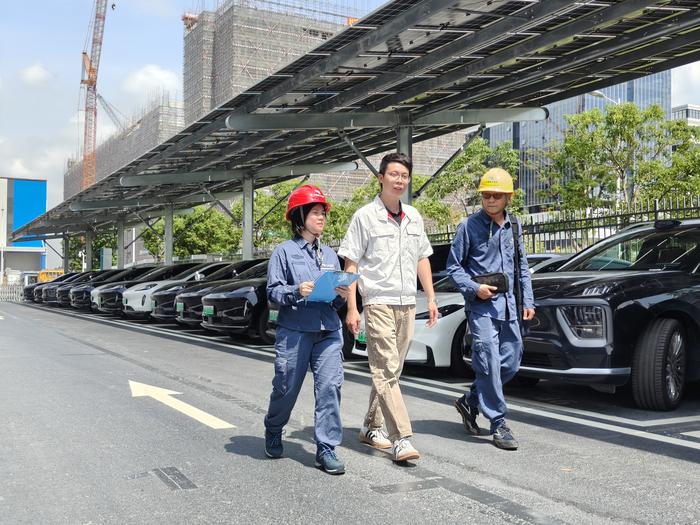
信用广州|车网互动“广州样本”:超大城市能源转型有了新解法 有车主月入2000 新能源车变“赚钱工具”
Zhong Guo Jin Rong Xin Xi Wang· 2025-11-30 12:39
在广州,越来越多的新能源车主发现,自己的车不仅能代步,还能当"移动充电宝"赚钱——夜间用低价 电充电,白天把电卖给电网,一天最多能赚200余元。 自今年3月入选首批车网互动规模化应用试点城市以来,广州亮点频出,诞生了全国首张居民个人V2G 结算单,建成全国最大V2G微网等。"车网互动(V2G)"新模式,正在让广州这座拥有125万辆新能源 车的超大城市,探索出一条车桩网产业共赢的协同发展新生态。 而这背后,正是南方电网积极探索"政企协同、产业共融、市场驱动"车网互动发展路径的生动实践。南 方电网充分发挥央企平台作用,以入选首批车网互动规模化应用试点为契机,持续完善市场机制,推进 电动汽车与电网融合互动,助力新型能源体系和新型电力系统建设,为加快建设现代化产业体系提供支 撑。截至目前,南方电网经营区车网互动电量超1500万千瓦时。 从"开车花钱"到"停车赚钱" 广州车主"晒"收益 "晚上使用家用充电桩充电,每度电成本不到0.3元,白天到园区放电,一度电收益3元,算下来一天最 多能赚200余元!"10月中旬,在国内规模最大的V2G示范项目——广州广汽埃安园区V2G示范站,车主 唐先生看着计量表上跳动的数字,算了笔" ...