关税战

Search documents
特朗普打残美国产业,体面认输,请中方给个台阶,中方就是不理
Sou Hu Cai Jing· 2025-05-04 11:58
Group 1 - The core objective of the tariff war initiated by Trump was to suppress China, but it backfired, damaging the U.S. industries instead [10] - The U.S. reliance on Chinese critical minerals for its clean energy sector was highlighted, showing that tariffs on these minerals harmed American industries [3][5] - The Biden administration's approach to tariffs was more targeted and effective compared to Trump's broad measures, which inadvertently hurt U.S. industries [5][7] Group 2 - The international response to U.S. tariff policies has been one of resistance, with calls for unity against U.S. trade bullying, emphasizing the need to maintain a multilateral trade system [1] - Trump's declining approval ratings and public dissatisfaction with his policies indicate a lack of support for his tariff strategies, which have created uncertainty in global trade [9][10] - The European economy is facing significant threats due to U.S. tariff policies, with officials expressing a desire for negotiations to resolve trade issues [10]

湾财周报|人物 刘强东送外卖;王石代言遇冷;董明珠连任
Sou Hu Cai Jing· 2025-05-04 08:51
Group 1 - The core viewpoint of the article is that China is not afraid of a tariff war and has a richer set of policy tools to respond compared to the United States [2] - China does not wish to initiate a tariff war but will base its responses on its economic needs [2] - The Chinese government has more operational space in both tariff and financial policy areas, which can effectively mitigate the negative impacts of the U.S. tariff war on its economy [2] Group 2 - JD.com's founder Liu Qiangdong personally delivered food, which was confirmed by the company, highlighting the brand's engagement with customers [4] - Wang Shi, founder of Vanke Group, endorsed a high-priced product "Total Executive Bird's Nest," but sales have been disappointing, raising questions about market acceptance of premium health products [4] - Gree Electric's board has elected Dong Mingzhu as chairperson for the 13th board term, while Zhang Wei has been appointed as the new president, indicating a leadership transition [5] Group 3 - Zheng Jiashun will step down as chairman of the nomination committee at New World Development, with his daughter Zheng Zhiwen appointed to the committee, marking a generational leadership change [7] - Wang Youlin, founder of Kangli Elevator, passed away at the age of 62, which may impact the company's future direction and leadership [8]


耶伦站了出来,称美国正被中国“捏着短板”,关税战是自己打自己
Sou Hu Cai Jing· 2025-05-04 06:52
Core Viewpoint - The trade war initiated by the Trump administration against China, aimed at reducing the trade deficit and revitalizing the U.S. economy, is causing significant economic strain and may backfire, as highlighted by former Treasury Secretary Janet Yellen's warnings about the U.S. economy's vulnerabilities [1][3][5]. Economic Impact - The U.S. trade deficit with China reached $400 billion in 2024, prompting the Trump administration to impose high tariffs on Chinese goods to protect domestic industries and increase government revenue [3][5]. - The U.S. GDP contracted by 0.3% in the first quarter of 2025, marking the worst performance since the pandemic recovery began, contradicting the administration's optimistic outlook [5][14]. Supply Chain Vulnerabilities - The U.S. heavily relies on China for critical materials, particularly rare earth elements, which account for over 70% of global supply, essential for high-tech manufacturing [5][9]. - Efforts to reduce dependence on Chinese rare earths have been largely unsuccessful, leading to increased production costs and factory shutdowns in the U.S. [7][9]. Inflation and Production Costs - Tariffs have led to rising costs for American manufacturers, as many imported goods are essential raw materials and components, resulting in higher prices for consumers and reduced production capacity [11][12]. - The increase in import costs is expected to lead to higher consumer prices across various sectors, including groceries, fuel, and electronics, putting additional financial pressure on households [16]. Long-term Economic Concerns - Yellen emphasized that the ongoing trade war could severely hinder the U.S. green energy sector, which relies on affordable imports of lithium, nickel, and cobalt from China [11][12]. - The potential for a long-term decline in U.S. competitiveness in global markets is a significant concern, as companies may struggle to compete with foreign rivals if supply chains are disrupted [16].
股神学不来!巴菲特股东大会到底给了散户哪些实用投资启示?
格隆汇APP· 2025-05-04 05:58
就在昨天,投资界的年度盛会——伯克希尔哈撒韦股东大会在奥马哈盛大召开,北京时间3日周六晚9点进入大会备受关注的股东问答环节。股 神巴菲特再次全程参与,特携其CEO接班人-伯克希尔非保险业务的负责人阿贝尔,以及保险业务负责人贾恩一同亮并共同回答股东提问。 年年巴菲特股东大会年年学,但还是不会。股神的金玉良言多多,也确实能受益颇多,但普通投资人很多条件跟大佬千差万别,不止是投资水 平或投资理念,比如伯克希尔源源不断的资金来源就是让全世界投资人都望尘莫及,同时伯克希尔的优秀团队和丰富投资工具也是绝大多数普 通投资人难以启及的(比如其可以在日本当地发债用来购买日本股票)。这些散户往往都不具备,同时也很难学会和掌握。 那么这届巴菲特股东大会到底带给了普通投资者人哪些实用的市场投资机会启示呢?我们就结合AI统计的本届大会高频词语具体给大家来交流 几点。 首先,我们简单罗列一下AI统计这次股东大会问答环节中超过4次以上的高频词语排序如下: 伯克希尔 - 58次,巴菲特 - 54次,美国 - 32次,投资 - 28次,公司 - 25次,贾因 - 18次,阿贝尔 - 18次,美元 - 17次,保险 - 15 次,市场 - 14 ...
见识到中方的强硬手段后,美方罕见承认犯下大错,中美局势生变?
Sou Hu Cai Jing· 2025-05-04 04:09
Group 1 - The core viewpoint of the articles highlights the significant impact of the trade war initiated by the Trump administration on U.S. agricultural exports, particularly to China, with a notable reduction in soybean and pork imports [1][3][6] - The U.S. Department of Agriculture reported a drastic decrease in Chinese purchases of U.S. pork, with a cancellation of 12,000 tons of orders in one week, marking the largest single-week cancellation since 2020, leading to a 72% drop in total pork exports to China [1] - Additionally, Chinese imports of U.S. soybeans plummeted from 72,800 tons to 1,800 tons, representing a decline of over 97% [1] Group 2 - The articles indicate a shift in the U.S. government's perception of the trade war, with officials acknowledging miscalculations regarding China's response and strength [3][6] - Former U.S. officials have criticized the Trump administration for underestimating China's capabilities and have called for clearer communication channels amid escalating trade tensions [6][8] - The current U.S. administration is described as lacking a unified policy framework towards China, with internal divisions between hardliners and those advocating for constructive cooperation [6][8]
美国诺贝尔奖获得者表示:关税战,美国一定会输
Sou Hu Cai Jing· 2025-05-03 17:54
Core Viewpoint - The ongoing trade war between the U.S. and China is revealing significant structural differences in their economies, with China appearing more prepared and strategic in its responses compared to the U.S. [3][9] Group 1: Market Reactions - Chicago agricultural futures experienced a sharp decline as China sought new partnerships in South America for agricultural products, indicating a swift shift in market dynamics [1] - U.S. agricultural exports to China have seen a continuous decline over two quarters, contrasting with the stability of Chinese exports to the U.S. [5] Group 2: Economic Structure and Strategy - A Nobel laureate has stated that the U.S. is likely to lose the trade war due to the substitutability of U.S. agricultural products compared to the irreplaceable manufacturing goods exported from China [3] - China's responses to U.S. tariffs have been precise and calculated, while U.S. actions appear reactive and disorganized, highlighting a difference in strategic planning [3][9] Group 3: Supply Chain Dynamics - The rebuilding of supply chains is complex and cannot be achieved quickly, as it relies on decades of global collaboration [5] - China's investments in sectors like semiconductors and renewable energy have been consistent, indicating a long-term strategy for supply chain independence [3][5] Group 4: Political and Economic Implications - U.S. internal dissent is growing, particularly among farmers and manufacturing workers who feel let down by unfulfilled promises [7] - The trade war reflects a broader systemic clash between China's coordinated approach and the U.S.'s market-driven model, with implications for long-term resilience [9][12]
中国代表团横穿美国3座城市,唯独没想去见特朗普,释放信号不简单
Sou Hu Cai Jing· 2025-05-03 12:18
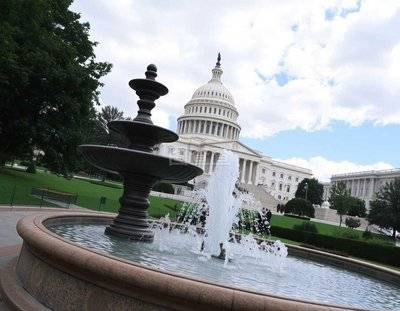
据环球时报报道,近日,外交部发言人郭嘉昆主持例行记者会。有记者就美方表示美中正就关税问题进 行磋商一事提问。对此,郭嘉昆表示,昨天我和商务部的同事已经明确回答了这个问题。中美双方并没 有就关税问题进行磋商或谈判,美方不要混淆视听。 事实真相逐渐浮出水面:中方官员确实到了华盛顿,但他们是专程参加G20多边会议,而非与美方进行 双边谈判。在多边会场上,中美官员或许有过一面之缘,但这与特朗普所谓的"举行会议"相去十万八千 里。这就像是你在公共场合与他人擦肩而过,就宣称自己与对方"密切交流"一样荒谬。这场谎言被如此 干脆利落地拆穿,特朗普政府的脸面何在?而这背后,必然隐藏着美方不为人知的焦虑与慌乱。 美国华盛顿(资料图) 中国人民对外友好协会会长杨万明率团访问美国俄亥俄州克利夫兰市、宾夕法尼亚州匹兹堡市、艾奥瓦 州得梅因市,出席中国国家领导人首次访问艾奥瓦州40周年纪念活动,与有关州市政府、议会、工商 界、基金会、文化艺术机构、大学等各界人士进行广泛交流。各方表示,贸易战、关税战不可持续,没 有出路。中美应做合作伙伴,而不是竞争对手,对话合作是唯一正确选择。在当前中美关系遭遇困难的 情况下,应坚持密切民间友好,加强地 ...
博弈视角看“关税战”:特朗普策略与各经济体不同反应 | 国际
清华金融评论· 2025-05-03 09:47
Core Viewpoint - The article analyzes the implications of Trump's tariff war on the global economy, particularly focusing on the strategies and responses of various economic entities, including China, Canada, and Mexico, as well as the broader international context [2][4]. Group 1: Trump's Psychological Bottom Line - Trump's key demands in the tariff negotiations include a 10% baseline tariff on global imports, protective tariffs on key industries like automobiles, and specific measures targeting China, Canada, and Mexico [5][6][8]. - The 10% baseline tariff is seen as a potential concession point for Trump, aimed at preventing trade loopholes and increasing fiscal revenue [6]. - Protective tariffs on industries such as steel, aluminum, and automobiles are intended to limit competition and protect American jobs, with tariffs already set at 25% for steel and aluminum [7]. Group 2: Trump's Game Strategy - The U.S. holds a strategic advantage in the tariff war due to its position as the largest global demand-side economy, allowing it to dictate terms to other economies [10]. - Trump's unpredictable behavior in tariff announcements serves to increase the decision-making costs for opponents, maintaining strategic flexibility [11]. - The U.S. is shifting from multilateral frameworks like the WTO to bilateral negotiations, using tariffs as leverage to reshape trade relationships [10]. Group 3: China's Response - China has demonstrated a strong and rapid response to U.S. tariffs, indicating both the necessity and capability to counteract U.S. measures [15][16]. - The trade conflict is characterized as a repeated prisoner's dilemma, where mutual cooperation is beneficial, but unilateral concessions would disadvantage China [15]. - China's economic resilience and strategic reforms are expected to mitigate the impacts of the tariff war, with a focus on expanding domestic demand and technological self-sufficiency [18]. Group 4: Responses from Other Economies - Canada has taken a firm stance against U.S. tariffs, leveraging its economic ties with the U.S. to push back effectively, while Mexico has shown a more passive response due to its dependency on the U.S. [22][23]. - Other economies like the EU, Japan, and India have exhibited a tendency to negotiate rather than retaliate, reflecting their reliance on the U.S. and a lack of unified response strategies [25][26]. - The EU's delayed response to U.S. tariffs highlights internal divisions and a lack of cohesive strategy compared to China's swift actions [26].

美国没救了 !特朗普再出狂言,白宫造谣中国将丢失1000万岗位!
Sou Hu Cai Jing· 2025-05-03 04:19
Group 1 - The U.S. Treasury Secretary's claim that China will lose 10 million jobs due to tariffs is criticized as exaggerated and unfounded, with actual calculations suggesting a maximum of 600,000 jobs based on U.S. labor statistics [1][3] - The U.S. manufacturing jobs have significantly decreased from 17.3 million in 2000 to 12.3 million, while productivity has increased by 60%, indicating that automation and offshoring are the real culprits behind job losses, not China [3][5] - The imposition of tariffs has led to increased prices for American consumers, with specific examples showing price hikes of 38% for bicycles and 52% for fans in Walmart, highlighting the immediate impact on the retail sector [5][7] Group 2 - The trade surplus between China and the U.S. reached a record high of $382.9 billion in 2023, demonstrating the resilience of China's export economy despite tariffs [5][7] - The U.S. attempts to decouple technology from China have backfired, as China's semiconductor imports fell by 27% while domestic chip production surged by 40%, indicating a shift in the global supply chain dynamics [7][8] - The narrative of job threats from China is seen as a reflection of U.S. hegemonic anxieties, with the U.S. struggling to balance its financial empire with the need for a robust manufacturing base [7][8]
“义乌最牛老板娘”聂自勤30答:美国客户很重要,但此路不通还有别的路
Mei Ri Jing Ji Xin Wen· 2025-05-03 03:15
每经记者 叶晓丹 每经编辑 张海妮 据央视新闻,4月下旬,有美国CNN记者采访义乌小商品城一商户老板娘聂自勤,面对"对等关税"下如何处理美国客户的退单,她坚定果决的回应在社交媒 体上走红,也因此被网友称为"义乌最牛老板娘"。 高峰期,聂自勤经营的万圣节礼品批发业务一年可达到6000万元体量,其中50%的采购客户来自美国。 "如果美国(客户)不要,那我就给南美客户。"聂自勤接受CNN记者采访当天,恰好有南美客户在店里采购产品,一周时间过去了,之前给聂自勤下订单的 美国客户并没有取消订单,而是选择了观望,等待转机的到来。 4月底,《每日经济新闻》记者从相关进出口协会了解到,国内部分供应商已接到沃尔玛恢复供货的通知,且关税成本由美国客户承担。聂自勤一边等美国 客户的通知,一边也在想办法"主动出击",通过开拓多元市场和加大内销等渠道,来减轻因货物积压带来的影响。 2007年跟随父亲从河南来义乌创业,聂自勤在义乌一待就是18年,14平方米的店铺如今价值千万元。她从做代工起家,高峰期一度拥有上千名员工。国际经 贸的波动,在这一爿小小的批发店铺里,总能给她带来最直接的影响。聂自勤坦言,市场会洗出去一些掉队的人,但这是义乌市 ...