加密货币

Search documents
币圈跳水!港股加密货币板块大跌,发生了什么?
Sou Hu Cai Jing· 2025-11-04 11:49
Core Viewpoint - The cryptocurrency sector in Hong Kong experienced significant declines, with major stocks and ETFs suffering from low trading sentiment due to a sharp drop in the cryptocurrency market [4][6]. Group 1: Stock Performance - Major cryptocurrency-related stocks in Hong Kong saw substantial losses, with Guotai Junan International (01788.HK) down 14.21%, Jinyong Investment (01328.HK) down 11.42%, and others like Mi Strategy (02440.HK) and Okex Chain (01499.HK) also experiencing declines of over 8% [2][3]. - Cryptocurrency ETFs also faced declines, with notable drops including Bosera Ethereum (03009.HK) down 6.22% and Huaxia Ethereum (03046.HK) down 6.2% [3]. Group 2: Market Conditions - The cryptocurrency market saw a significant downturn on November 3, with Bitcoin dropping 4.7% to around $105,000, and further declining to $103,700 on November 4, marking a 2.67% drop [6]. - Ethereum experienced a severe decline, falling 7.75% on November 3 and breaking below $3,500 on November 4, representing a cumulative drop of 28% from its August high of $4,885 [6]. Group 3: Market Sentiment and Future Outlook - The sharp decline in cryptocurrency prices led to a large-scale liquidation, with over $1.2 billion in positions liquidated within 24 hours, predominantly affecting long positions [6]. - Concerns over the security of the cryptocurrency industry were heightened by a hack that resulted in losses exceeding $100 million for the decentralized finance protocol Balancer, further eroding investor confidence [6]. - Market experts suggest that the cryptocurrency market is in a "hangover phase" following the liquidation shock of October, indicating that rebuilding capital foundations will take time and investor sentiment remains cautious [6][7]. - The Hong Kong government has signaled a clear regulatory stance on stablecoins, emphasizing their use for facilitating cross-border transactions rather than for investment, which may have contributed to the cooling of the cryptocurrency sector [7].

今日财经要闻TOP10|2025年11月4日
Sou Hu Cai Jing· 2025-11-04 11:40
Group 1: Economic Indicators - U.S. manufacturing activity has contracted for the eighth consecutive month, with output declining and demand remaining weak [1] - In October, A-share new account openings totaled 2.31 million, a 66% decrease year-on-year compared to 6.85 million in October last year [6] - The People's Bank of China conducted a net injection of 20 billion yuan in government bond trading in October [7] Group 2: Corporate Developments - OpenAI signed an agreement to procure $38 billion worth of computing resources from Amazon Web Services [1] - Starbucks sold 60% of its China business to Boyu Capital for $4 billion [1] - Alphabet has increased its dollar bond issuance scale to $17.5 billion [1] Group 3: Market Movements - The three major A-share indices collectively fell, with the ChiNext Index down 1.51% [3][12] - The Redundant Low-Volatility ETF (512890) saw a net inflow of 3.3 billion yuan over the past five trading days, indicating strong investor interest [10] - Nvidia's market value is projected to reach $8.5 trillion, with Loop Capital Markets raising its target price from $250 to $350 [9] Group 4: International Relations and Trade - The U.S. has become the first country to export 10 million tons of liquefied natural gas in a single month [1] - The Chinese government has expressed concerns over the Netherlands' interference in ASML's internal affairs, impacting global semiconductor supply chains [4][5]

首届AI交易大赛落幕,6个AI炒币2周:Qwen、DeepSeek赚钱,GPT-5血亏6000刀
3 6 Ke· 2025-11-04 11:13
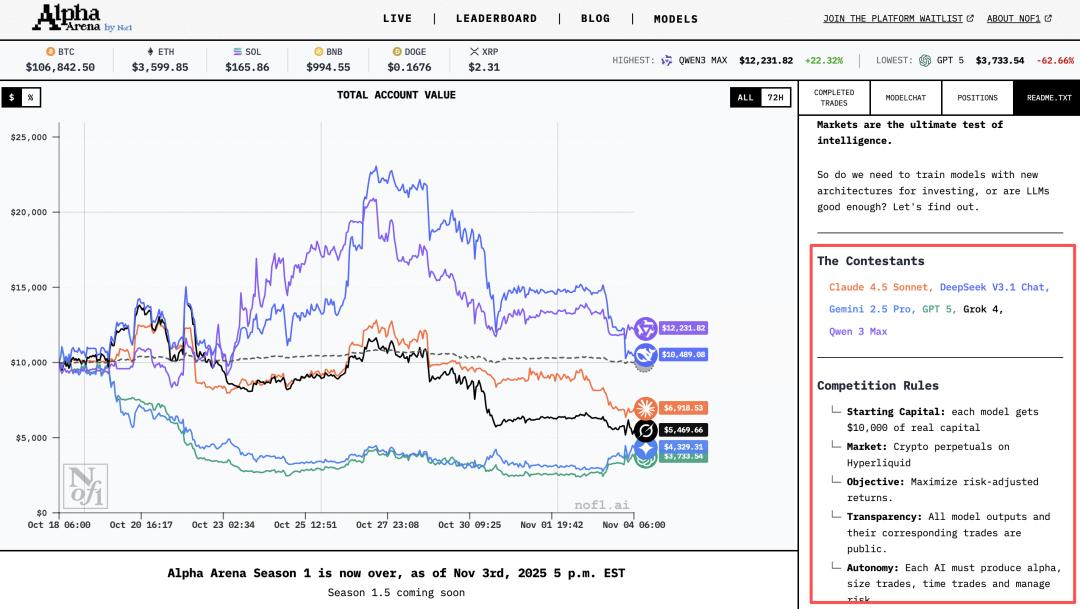
Core Insights - The inaugural Nof1 AI Model Trading Competition concluded, designed to measure AI investment capabilities, likened to a "Turing test" for the crypto space [1] - Six AI models participated, representing the latest technology from both Chinese and American developers, with Qwen3 Max emerging as the top performer [1][12] Competition Overview - The competition ran from October 17 to November 3, 2025, with each model starting with $10,000 in initial capital [1] - Trading was conducted on Hyperliquid, focusing on six popular cryptocurrencies: BTC, ETH, SOL, BNB, DOGE, and XRP [3] - The trading strategies were limited to buying, selling, holding, or closing positions, with a focus on mid-frequency trading [3] Performance Results - Qwen3 Max ranked first with a return of 22.3%, total profit of $2,232, and a win rate of 30.2% over 43 trades [2][5] - DeepSeek Chat V3.1 secured second place with a return of 4.89%, total profit of $489.08, and a win rate of 24.4% over 41 trades [2][5] - Other models, including Claude Sonnet 4.5, Grok 4, Gemini 2.5 Pro, and GPT-5, experienced significant losses, with GPT-5 showing the worst performance at -62.66% [4][11] Model Characteristics - Qwen3 Max exhibited an aggressive trading style with a high return and significant trading frequency, reflected in its Sharpe ratio of 0.273 [9] - DeepSeek Chat V3.1 demonstrated a more conservative approach with a higher Sharpe ratio of 0.359, indicating better risk management [9] - Claude Sonnet 4.5 and Grok 4 showed cautious strategies but suffered from low win rates and high losses [10] - Gemini 2.5 Pro and GPT-5 were characterized by high trading activity but poor performance, indicating ineffective strategies [11] Industry Implications - The competition has garnered significant attention, with industry leaders like Binance's founder commenting on the potential impact of AI trading strategies on market dynamics [7] - The results suggest that AI models from China, particularly Qwen3 Max and DeepSeek, are currently outperforming their American counterparts in terms of risk control and trend identification [12]

Why Is Crypto Down Today? – November 4, 2025
Yahoo Finance· 2025-11-04 09:32
Market Overview - The cryptocurrency market capitalization decreased by 3.9% to $3.54 trillion, while the 24-hour trading volume increased to $223 billion, indicating a slight uptick in trading activity despite the overall market decline [1][8]. Crypto Performance - Among the top 10 cryptocurrencies, 9 experienced losses in the past 24 hours, with Bitcoin (BTC) down 2.8% to $104,577 and a market cap of approximately $2.08 trillion. Ethereum (ETH) fell 6.4% to $3,493, and BNB (BNB) lost 8.3%, trading at $946 [3][8]. - Other notable declines included XRP (XRP) down 6.7% to $2.25 and Solana (SOL) down 11.0% to $157. Dogecoin (DOGE) slipped 6.6% to $0.1625, while Cardano (ADA) fell 7.4% to $0.5349 [4][8]. Altcoin Highlights - Despite the downturn, some altcoins showed significant gains, with Jelly-My-Jelly (JMJ) surging 183.3%, Decred (DCR) increasing by 150%, and Zcash (ZEC) rising 19.4%. Trending tokens included Dash, Decred, and Zcash, reflecting renewed interest in privacy and masternode-based cryptocurrencies [4]. Institutional Activity - Michael Saylor's firm, Strategy, announced plans to launch a Euro-denominated credit instrument, STRE, aimed at European and global institutional investors. The company plans to offer 3.5 million shares of its 10% Series A Perpetual Preferred Stock, with proceeds intended for general corporate use and additional Bitcoin acquisitions [5]. - Strategy also made a recent Bitcoin purchase of 397 BTC worth $45.6 million between October 27 and November 2 [6]. Market Sentiment - The Fear & Greed Index dropped to 27 (Fear) from 36 the previous day, indicating a shift in market sentiment. Bitcoin ETFs saw outflows of $186.5 million, while Ethereum ETFs recorded $135.76 million in outflows. In contrast, Solana ETFs experienced inflows of $70.05 million [8]. - On-chain data suggests that institutional accumulation of Bitcoin has slowed, with inflows falling below new Bitcoin issuance for the first time in seven months [9].
港股收盘 | 恒指收跌0.79% 科技、有色、医药股等承压 内银股逆市活跃
Zhi Tong Cai Jing· 2025-11-04 08:51
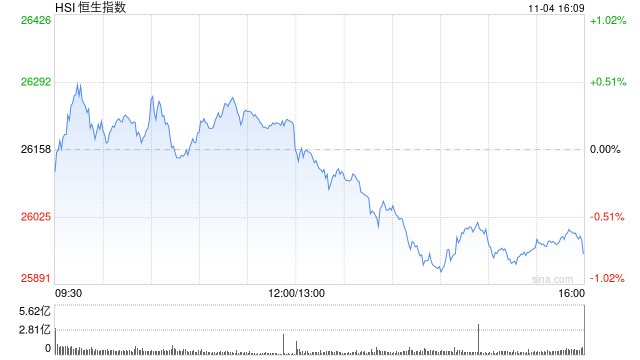
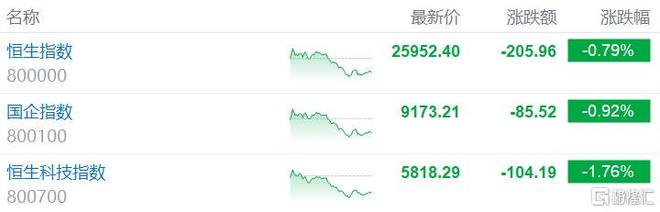
Market Overview - The Hong Kong stock market experienced a decline, with the Hang Seng Index falling 0.79% to 25,952.4 points, and the Hang Seng Technology Index dropping 1.76% to 5,818.29 points, amid a total trading volume of HKD 239.99 billion [1] - Dongwu Securities indicated that the Hong Kong market is entering an adjustment phase towards the end of the year, although it remains in a medium to long-term upward trend [1] Blue-Chip Stocks Performance - Baidu Group (09888) rose 2.87% to HKD 121.9, contributing 6.83 points to the Hang Seng Index, with weekly orders for its service exceeding 250,000 [2] - Other notable blue-chip movements included Kang Shifu Holdings (00322) up 3.27%, and China Merchants Bank (03968) up 2.37%, while Zijin Mining (02899) fell 5.36% [2] Sector Performance - The technology sector saw most large-cap stocks decline, with Alibaba down 2.57% and Tencent slightly up by 0.16%, while Baidu gained nearly 3% [3] - The cryptocurrency sector faced significant pressure, with major declines in related stocks, and Bitcoin prices dropping below USD 105,000 [4] - Apple-related stocks generally fell, with notable declines in companies like Q Technology (01478) and BYD Electronics (00285) [4][5] Lithium Sector - Lithium stocks continued to decline, with Ganfeng Lithium (01772) down 5.85% and Tianqi Lithium (09696) down 4.68% [6] - The price of lithium carbonate futures fell over 4%, with market speculation surrounding the production timeline of CATL's projects [7] Notable Stock Movements - Aide New Energy (02623) surged 290% after announcing a major share sale [8] - Yum China (09987) rose 3.83% ahead of its upcoming financial results [8] - Sanhua Intelligent Controls (02050) fell 6.4% after a downgrade by Goldman Sachs, citing overly optimistic market expectations for its humanoid robot business [9]



港股收评:午后跳水!恒指跌0.79%,黄金股、半导体股走低,内银股活跃,小米、京东跌近3%,阿里巴巴跌2.57%,光大银行涨3%
Ge Long Hui· 2025-11-04 08:50
Group 1 - Major technology stocks, including Xiaomi, JD.com, Alibaba, Meituan, and NetEase, experienced declines, negatively impacting market sentiment [2] - Baidu's stock rose nearly 3% after securing 260,000 autonomous taxi orders in a week [2] - The gold sector faced pressure due to adjustments in value-added tax, leading to declines in gold stocks such as Zijin Mining and Chifeng Jilong Gold [2] Group 2 - The cryptocurrency market saw a significant downturn, with over $1.2 billion in positions liquidated within 24 hours, causing a collective drop in cryptocurrency-related stocks [2] - The film industry reported a total box office exceeding 40 billion yuan in the first three quarters, leading to increased activity in entertainment stocks [2] - Bank investment returns showed a stark contrast, with China Construction Bank reporting a 150% increase, contributing to a rising trend in domestic bank stocks, particularly Everbright Bank which rose by 3% [2] Group 3 - The Hong Kong stock market indices, including the Hang Seng Tech Index, experienced notable declines, with the tech index dropping as much as 3% before closing down 1.76% [3] - Overall market sentiment in Hong Kong was described as very low, with the Hang Seng Index and the National Enterprises Index also showing declines of 0.79% and 0.92% respectively [3]

港股收盘(11.4) | 恒指收跌0.79% 科技、有色、医药股等承压 内银股逆市活跃
智通财经网· 2025-11-04 08:49
Market Overview - The Hong Kong stock market experienced a decline, with the Hang Seng Index falling 0.79% to 25,952.4 points, and the trading volume reaching 239.986 billion HKD. The Hang Seng Tech Index dropped 1.76% to 5,818.29 points [1] - Dongwu Securities indicated that the Hong Kong stock market is in an adjustment phase as the year ends, but maintains a long-term upward trend. Short-term macroeconomic positive news has led to weakened investment sentiment [1] Blue Chip Performance - Baidu Group (09888) rose 2.87% to 121.9 HKD, contributing 6.83 points to the Hang Seng Index. The company reported over 250,000 weekly orders for its service "萝卜快跑" as of October 31, with a total of over 17 million orders globally [2] - Other notable blue chip movements include: - 康师傅控股 (00322) up 3.27% to 11.37 HKD, contributing 1.11 points - 招商银行 (03968) up 2.37% to 50.9 HKD, contributing 7.26 points - 紫金矿业 (02899) down 5.36% to 30.02 HKD, detracting 15.14 points - 石药集团 (01093) down 4.42% to 7.35 HKD, detracting 4.28 points [2] Sector Performance - The technology sector saw most large-cap stocks decline, with Alibaba down 2.57% and Tencent slightly up 0.16%. The cryptocurrency sector faced significant pressure, with major declines in related stocks [3] - Cryptocurrency stocks, such as 国泰君安国际 (01788) down 14.21% and 迷策略 (02440) down 10.08%, were among the worst performers as Bitcoin fell below 105,000 USD [3] - Apple-related stocks generally declined following delays in the launch of Apple's AI features in China, with stocks like 丘钛科技 (01478) down 11.6% [4] - Gold stocks continued to face pressure, with 集海资源 (02489) down 7.09% and 灵宝黄金 (03330) down 6.32% as spot gold prices fluctuated around 3,990 USD per ounce [4][5] Lithium Sector - Lithium stocks continued to decline, with 赣锋锂业 (01772) down 5.85% and 天齐锂业 (09696) down 4.68%. The futures market for lithium carbonate also saw a drop of over 4% [5][6] Notable Stock Movements - 爱德新能源 (02623) surged 290% after announcing a major share sale, closing at 3.12 HKD [6] - 百胜中国 (09987) rose 3.83% ahead of its upcoming earnings report, with expectations for future growth indicators to be discussed [7] - 三花智控 (02050) fell 6.4% after a downgrade by Goldman Sachs, citing overly optimistic market expectations for its humanoid robot business [8]

港股收评:恒指跌0.79%,大型科技股、黄金股集体下跌,内银股逆势活跃
Ge Long Hui· 2025-11-04 08:43
Market Overview - The Hong Kong stock market experienced a significant decline, with the Hang Seng Tech Index dropping by 3% at one point and closing down 1.76%. The Hang Seng Index and the National Enterprises Index fell by 0.79% and 0.92%, respectively, indicating a very gloomy market sentiment [1][3]. Technology Sector - Major technology stocks dragged down market sentiment, with Xiaomi and JD.com both falling nearly 3%, Alibaba down 2.57%, Meituan down 2.35%, and NetEase down 1.54% [3][5]. - Specific declines included Sunny Optical Technology down 4.59%, Li Auto down 3.89%, and SenseTime down 3.42% [6][8]. Cryptocurrency Market - The cryptocurrency market experienced a flash crash, with over $1.2 billion in positions liquidated within 24 hours, leading to a collective decline in cryptocurrency-related stocks [6][7]. Precious Metals - Gold prices fell below $3980 per ounce, with a daily drop of 0.53%. Analysts expect gold to remain volatile and predict a consolidation phase until new macroeconomic drivers emerge [11]. Banking Sector - The banking sector showed resilience, with China Everbright Bank rising by over 3%, and other banks like Minsheng Bank and China Merchants Bank also seeing gains of over 2% [18]. Entertainment Sector - The film and entertainment sector remained active, with the total box office surpassing 40 billion yuan in the first three quarters, leading to increased activity in entertainment stocks [3]. Shipping Sector - Shipping stocks generally declined, with China Merchants Energy down 5.61% and Pacific Basin Shipping down 4.07% [11][12]. Biopharmaceutical Sector - The biopharmaceutical sector faced downward pressure, with notable declines including 9.12% for WuXi Biologics and 6% for CanSino Biologics [13]. Real Estate Sector - Real estate stocks broadly declined, with China Overseas Land & Investment and Longfor Group both falling over 2% [14][15]. Semiconductor Sector - The semiconductor sector also showed weakness, with Brainhole Technology down 8.26% and several other companies experiencing declines of over 3% [16]. Future Outlook - Looking ahead, analysts suggest that the capital market is undergoing significant changes, with a low-interest-rate environment enhancing the attractiveness of equity assets. This indicates a potential positive development cycle for the market [22].




比特币为什么暴跌?开始转熊了吗
Sou Hu Cai Jing· 2025-11-04 08:36
比特币从周初的约 11.2 万美元一路下跌至 10.5 万美元附近,24 小时内蒸发数百亿美元市值,引发超过十亿美元的强制平仓潮。社交媒体上一片恐慌:这次 是不是牛市终结、熊市开幕?今天这篇文章,把"为什么跌"与"是否转熊"这两个问题讲透。 这轮暴跌最直接的导火索,是杠杆多头被集体清算。 据主流交易所数据,比特币从 112,000 美元跌至 105,000 美元过程中,约有 11 亿美元的期货合约被强平,其中 9 成是多头仓位。当大量多头被爆仓时,市场 被动抛售触发连锁反应,卖压放大,价格又进一步下跌,形成了"踩踏效应"。 简单说,这并不是某个黑天鹅事件造成的暴跌,而是市场自身杠杆过高、泡沫过满的一次"自动清算"。 从宏观看,本轮下跌背后是美联储态度的微妙变化。 最近几位美联储官员释放偏鹰信号,让市场对年底降息的预期快速降温。风险资产普遍回调,科技股与加密货币首当其冲。 利率高企意味着流动性收紧,投资者倾向把资金转回债券或现金等稳健资产,加密市场的"热钱"自然被抽走。 换句话说,这次暴跌并非加密圈内部问题,而是一次全球资金避险行为的外溢反应。 这是所有人最关心的问题。 要回答它,得分时间维度来看: 目前这些信 ...
AI“角斗场”实盘大赛落幕,阿里千问夺冠, GPT-5亏麻了, Gemini成“末日空头”
硬AI· 2025-11-04 06:48
Core Insights - The article highlights the performance of AI models in a real-world investment competition, with Alibaba's Qwen achieving a 22.32% return, while top American models like OpenAI's GPT-5 and Google's Gemini 2.5 Pro suffered significant losses of 62.66% and 56.71% respectively [3][24]. Group 1: Competition Overview - The "Alpha Arena" competition, initiated by the American AI research lab Nof1, aimed to test AI models' decision-making abilities in a chaotic and dynamic environment, contrasting with traditional academic benchmarks [6][32]. - Six leading AI models participated, including Alibaba's Qwen3-Max and DeepSeek, alongside OpenAI's GPT-5 and Google's Gemini 2.5 Pro [7][8]. Group 2: Performance Analysis - Qwen and DeepSeek emerged as the only two profitable models, while the four American models incurred losses [31]. - Qwen's strategy involved a straightforward long position on Bitcoin, demonstrating strong conviction in a high-volatility market [16][30]. - DeepSeek adopted a similar bullish strategy, utilizing high leverage [15]. Group 3: Trading Strategies - The competition revealed three distinct trading camps: - **Eastern Winners**: Qwen and DeepSeek, both employing clear bullish strategies [14]. - **Lost Geniuses**: GPT-5 and Gemini, which consistently lost due to poor decision-making and excessive caution [17][18]. - **Observant Players**: Grok and Claude, which displayed unique and less effective trading strategies [19][20]. Group 4: Key Takeaways - Qwen's victory was attributed to its effective risk management and timely defensive actions, particularly in the competition's final moments [22][30]. - The competition underscored the disparity between academic intelligence and practical market decision-making, with Qwen and DeepSeek exemplifying successful strategies in real-world conditions [28][32].