数字经济

Search documents
谱写建设首都城市西大门辉煌新篇章
Bei Jing Ri Bao Ke Hu Duan· 2026-01-13 22:50
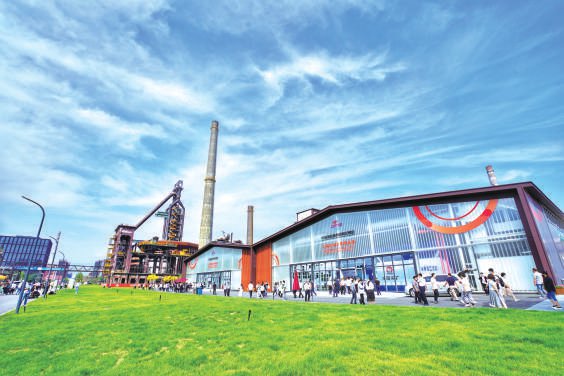
Core Viewpoint - The report highlights the achievements and future plans of Shijingshan District in Beijing, emphasizing urban renewal, economic growth, and social welfare improvements as part of the 14th Five-Year Plan and the upcoming 15th Five-Year Plan [1][9][19] Economic Development - The district's GDP is projected to reach 137 billion yuan, with fixed asset investment exceeding 50 billion yuan for the first time [3] - A total of 42 annual tasks were completed, and 12 key municipal projects were initiated [3] - Consumption initiatives led to the opening of 25 new stores and the issuance of 38 million yuan in consumption vouchers, stimulating over 2.7 billion yuan in consumer spending [3] Urban Renewal - The district completed 48 tasks in the latest urban renewal initiative, including the approval of historical and cultural preservation plans [4] - Significant infrastructure projects include the completion of the Apple Garden transportation hub and the opening of 89 old community areas for renovation [4] Industrial Development - The establishment of new research centers and technology hubs is expected to enhance the modern industrial system, with projected revenue growth of 18% in the digital economy sector [5] - The district aims to strengthen its position in artificial intelligence, financial services, and virtual reality industries, with expected revenues of 420 billion yuan from AI and 280 billion yuan from the sci-fi gaming sector [5] Cultural and Environmental Initiatives - Over 10,000 cultural events were held, benefiting more than 3 million people, and the cultural industry is expected to grow by 20% [6] - Environmental quality improved significantly, with 319 days of good air quality recorded [6] Social Welfare - The district has implemented 46 social welfare projects, creating over 32,000 jobs and increasing housing availability with 1,336 new affordable housing units [7] - Educational facilities were expanded, adding 2,070 new school places and enhancing elderly care services [7] Future Planning - The 15th Five-Year Plan aims to enhance urban functions, economic strength, and social governance, with a focus on sustainable development and improved living standards [10][12] - Key projects include the construction of a new exhibition town and the promotion of digital and green consumption [15][16]


持续增强和发挥超大规模市场优势
Jing Ji Ri Bao· 2026-01-13 22:09
Core Viewpoint - The super-large market is a significant advantage for China's economic development and an important strategic resource for participating in international competition, serving as a stabilizer for economic operations and a driving force for new momentum and advantages [1] Group 1: Strategic Importance of the Super-Large Market - The "14th Five-Year Plan" emphasizes that a strong domestic market is the strategic support for Chinese-style modernization, providing a solid foundation for maintaining strategic determination and achieving technological self-reliance [2] - The super-large market can offer alternative growth space for enterprises, accelerating key technology breakthroughs and the localization process, especially in hard-core technology sectors [2] - China's large market enhances its influence in global economic governance, allowing it to have greater bargaining power in international trade negotiations and standard-setting [2] Group 2: Demand and Supply Dynamics - The super-large market can meet diverse and multi-level demands, improving supply-demand adaptability and balance, with over 1.4 billion people and more than 400 million middle-income groups [3] - The market's resilience is increasingly evident, supporting the economy during external shocks and structural adjustments, with potential demand in lower-tier cities and rural areas [3] Group 3: Resource Attraction and Industrial Development - The scale economy and cost advantages of the super-large market support specialized division of labor and efficient supply chain networks, enhancing the competitiveness of domestic enterprises [4] - The rapid development of the new energy vehicle industry, which ranks first globally in production and sales, is supported by the domestic super-large market [4] - The market's vast consumer base generates massive data and application scenarios, attracting global capital and top talent, fostering opportunities for the smart and digital economy [4] Group 4: Innovation and Market Vitality - The super-large market acts as an "accelerator" for new technologies and products, shortening the commercialization process and facilitating the transition from old to new momentum [6] - The rapid development of mobile payments, e-commerce, and live-streaming commerce showcases China's unique commercial advantages, driven by a large young consumer base [7] - New business models and industries are emerging, empowering millions of small merchants and creators, thus releasing strong economic vitality [7] Group 5: Policy Recommendations for Market Potential - The new wave of technological revolution and industrial transformation presents historical opportunities for leveraging the super-large market advantage to promote high-quality development [8] - Comprehensive policies are needed to enhance market inclusiveness, improve supply-demand adaptability, and stimulate diverse consumption and market potential [8] - Strengthening regional coordinated development and enhancing the innovative capabilities of key urban areas will further release multi-layered market potential [11]
河北省承德市第十届互联网大会圆满落幕
Sou Hu Cai Jing· 2026-01-13 18:39
Core Viewpoint - The 10th Internet Conference of Chengde, themed "Ten Years of a Key, A New Chapter," successfully took place, focusing on the integration of internet technology with local industries such as culture, tourism, and agriculture to promote high-quality economic development in Chengde [4][25][35]. Group 1: Event Overview - The conference was guided by the Chengde Municipal Internet Information Office and supported by various local organizations, bringing together experts, business representatives, and industry practitioners [9][14]. - It has become an annual benchmark event in Chengde's internet sector, playing a crucial role in consolidating industry strength and promoting industrial upgrades over the past nine years [14]. Group 2: Key Themes and Discussions - The event emphasized the deep integration of internet technology with local特色 industries, particularly in culture and tourism, aligning with the coordinated development strategy of the Beijing-Tianjin-Hebei region [25][37]. - Discussions aimed to consolidate high-quality industry resources and build cooperative bridges for future collaborations [25]. Group 3: Awards and Recognition - The conference featured a ceremony to establish the Beijing-Tianjin-Hebei-Liaoning-Mongolia Self-Media Creators Cooperation Alliance and awarded various honors to outstanding internet creators in agriculture, local life, and artificial intelligence [29]. - These awards are intended to encourage industry practitioners to deepen their creative efforts and innovative applications, injecting vitality into Chengde's digital industry development [29]. Group 4: Future Directions - Chengde plans to leverage the momentum from this conference to further deepen the application of internet technology across various industries, aiming to make the digital economy a strong engine for high-quality development [37].

报告:建议构筑数字经济人才高地
Zhong Guo Jing Ying Bao· 2026-01-13 14:48
中经记者 杜丽娟 北京报道 数字经济是以数据要素为关键要素,以数字平台及其生态为主要载体,通过数字化和智能化实现高效连 接,在物理世界和数字空间都可以创造价值的一种新的经济形态。 当前,数字经济在国民经济中的地位和作用进一步凸显。结合国家统计局核算的2024年宏观经济数据, 2024年数字经济总量占GDP比重超过42%,其中数字经济核心产业增加值占GDP的比重为10%左右。总 体看,数字经济增长为实现经济"稳增长"发挥了重要作用。 在此背景下,《互联网与数字经济蓝皮书:中国互联网与数字经济发展报告(2025)》(以下简称《蓝 皮书》)指出,目前数字经济发展已经进入数字技术和数据要素双轮驱动的新阶段,数据作为新型生产 要素快速融入生产、分配、流通、消费和社会服务管理等各个环节,以人工智能为代表的数字技术快速 发展,深刻改变了经济社会运行模式。做强做优做大我国数字经济,需要激活数据要素潜能,以技术创 新和模式创新为两轮,推动数字技术与实体经济深度融合、实体经济与数字经济深度融合,拓展经济发 展新空间,增强经济发展新动能,构筑国家竞争新优势。 为此,课题组建议深化产教融合,构筑数字经济人才高地,重点可从三个方面着手 ...
新沙海关全程护航,麻涌跨境电商项目竣工在即
Sou Hu Cai Jing· 2026-01-13 14:17
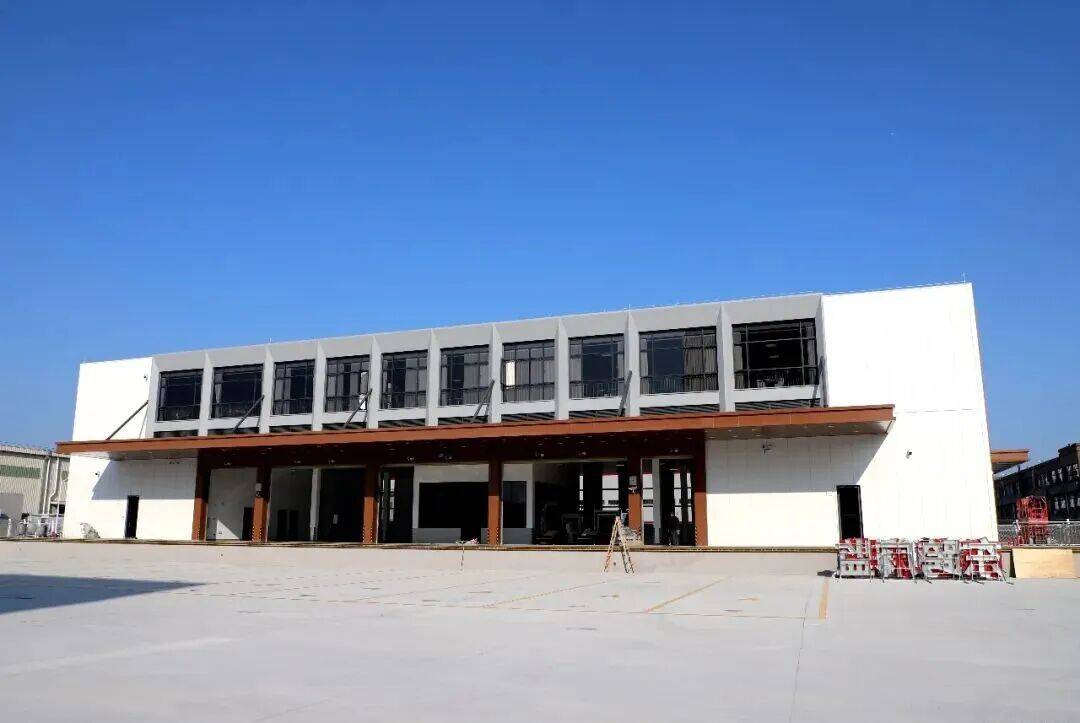
近日,由易豹集团投资建设的麻涌镇跨境电商监管场所主体工程已基本完工,正式进入设备安装与调试收尾阶段,预计2026年1月完成竣工验收并投入运 营。从规划建设到加速落地,新沙海关以全方位、全链条、高效率的支持服务,为项目建设与产业发展注入了强劲动力。 "从规划到建设,新沙海关始终主动靠前服务,为我们解决了布局设计、设备选型、验收流程等一系列实际问题。"易豹项目相关负责人表示,"在海关全程 指导下,项目建设效率显著提高,我们对如期投运、打造粤港澳大湾区跨境电商标杆项目充满信心。" 据了解,麻涌镇跨境电商监管场所园区于2025年9月正式动工,总面积2.5万平方米,其中一期1.1万平方米主要用于建设跨境电商通关场站。项目预计于2026 年1月15日通过海关验收并正式运营。届时,园区将实现从麻涌场站封关,直接对接香港、深圳、广州及内陆机场的跨境电商出口转关业务,助力麻涌镇跨 境电商行业发展。 为保障监管场所顺利建设和运营,新沙海关坚持"靠前服务、精准赋能",多措并举为企业提供全过程支持。新沙海关办公室副主任徐松介绍:"我们成立了 专门的工作专班,安排了专人一对一对接企业,从前期规划、场地建设到后期验收,全程跟进提供辅导。 ...
凯基:中国股市估值修复与盈利增长双轮驱动,投资策略转向进攻
2 1 Shi Ji Jing Ji Bao Dao· 2026-01-13 12:57
21世纪经济报道记者 张伟泽 实习生 周静怡 香港报道 1月13日,凯基首席投资总监梁启棠在2026年环球市场展望发布会上表示,新质生产力的崛起与政策宽 松将成为内地和香港股市的核心驱动力,市场投资策略正从"防守"全面转向"进攻"。 梁启棠指出,内地和香港股市已经进入估值修复与盈利增长双轮驱动阶段。当前恒生指数预测市盈率约 13倍,若上调至13.5倍,叠加8%的盈利增长,将支撑恒指冲击30000点,潜在升幅约14%。 凯基投顾董事长朱晏民指出,随着美联储开启降息并转向宽松政策,全球资金预计将回流新兴市场。在 此背景下,估值优势显著的内地及香港股市有望直接受益。 谈及近期上市的纯大模型企业股价波动,梁启棠认为,这主要反映出港股投资者对该类公司的商业模式 与估值逻辑尚需时日熟悉与消化。 对于港股AI板块的差异化特征,梁启棠对21世纪经济报道记者补充道,港股企业布局AI多采用"技术赋 能主业"模式,也就是并非依赖AI直接创收,而是通过AI优化原有业务,进而提升整体盈利能力,这与 纯AI上市公司的盈利逻辑形成本质区别。 在技术发展层面,朱晏民对21世纪经济报道记者表示,中国正凭借其庞大的市场和百万级的年度科创人 才储 ...
寻找下一个“易中天” 如何持股才能不恐高
Xin Lang Cai Jing· 2026-01-13 11:33
Core Insights - Patience is essential for growth investment in the digital economy, as the transformation of industries and the value release of quality companies require time [1][12] - Long-termism is emphasized in the digital economy, where short-term market fluctuations should not alter the long-term growth trends of quality growth stocks [2][14] Market Trends - The performance of tech stocks in the US and China in 2025 showed volatility and differentiation, with companies like Google, Nvidia, Micron, and the A-share "Yizhongtian" combination facing market skepticism while still progressing [4][14] - The AI sector experienced significant fluctuations throughout 2025, with initial gains followed by a market pullback due to concerns over demand and macroeconomic pressures, before recovering with strong earnings reports [15][16] Investment Strategy - Investors are advised to reject short-term noise and focus on core growth logic, as true growth stocks maintain their long-term growth trends despite short-term price fluctuations [5][15] - Concentrated investment in a limited number of high-quality companies (no more than 8-10 stocks) is recommended to avoid the risks associated with over-diversification [7][17] - Investors should conduct in-depth fundamental analysis before concentrating investments, ensuring a deep understanding of a company's core competitiveness and growth logic [8][18] Timing and Patience - The best buying opportunities for quality growth stocks are identified as: when a quality company faces short-term challenges but its core barriers remain intact; when new technologies are about to be realized but not yet recognized by the market; and during industry pullbacks while long-term growth logic remains unchanged [9][19] - The "Yizhongtian" combination's early investment in CPO technology before it gained market attention exemplifies a successful strategy, leading to significant returns as the technology became mainstream [20]

未来10年,这18个赛道将带来48万亿美元收入
创业家· 2026-01-13 11:17
Core Insights - McKinsey's report identifies 18 industry sectors likely to reshape the global business landscape, predicting revenues of $29 trillion to $48 trillion by 2040, contributing 18-34% to global GDP growth [2] E-commerce - By 2040, e-commerce's share of global retail revenue is expected to rise to 27%-38% from approximately 20% currently [3] - Growth drivers include market expansion in developing countries and new product categories in developed nations, such as healthcare and emotionally valuable products [4] - Significant investments are anticipated in customer acquisition and last-mile delivery across e-commerce platforms [5] Electric Vehicles - Electric vehicles (EVs) are projected to exceed 50% of global passenger car sales by 2040 [6] - Breakthroughs in battery technology and smart algorithms will significantly influence this sector, prompting increased R&D investments from both EV manufacturers and traditional automakers [7] Cloud Services - The demand for higher storage and computing capabilities is driven by a more interconnected world and the need for AI products requiring substantial computing power [9] - The cloud services industry experienced a 17% compound annual growth rate (CAGR) from 2005 to 2020, with similar growth expected in the coming decades [10] Semiconductors - The semiconductor industry is essential for the digital world, with demand from computing, data storage, automotive, communication, and industrial electronics driving growth [11] - A sustained CAGR of 6%-8% is forecasted for the semiconductor sector over the next decade [11] AI Software Services - The rapid development of AI has led to its classification as a distinct sector, with increasing usage of AI assistants [12] - Companies in the AI space are engaged in a competitive race to develop advanced foundational models and applications [13] Digital Advertising - Digital advertising, through search, social media, and media services, is expanding in value as internet usage among the middle class increases [14] - Continuous algorithm improvements enhance platforms' abilities to target customers and track advertising costs, although competition for user attention necessitates higher investments in engaging content [15] Streaming Video - Increased investments in customer acquisition and content production are pushing streaming platforms to seek new revenue models [17] - Developing countries are expected to contribute to growth in subscription and advertising revenues, with projections indicating over 1 billion households subscribing to long-form video services by 2040 [18] Shared Autonomous Vehicles - The advent of autonomous driving technology may reduce the necessity for personal vehicle ownership [19] - By 2040, shared autonomous vehicles could account for 25%-51% of shared mobility revenue [20] Space Economy - The world is on the brink of entering a space economy era, with advancements in reusable rocket technology changing the aerospace industry [21][22] Cybersecurity - Cybercrime caused approximately $950 billion in direct economic losses in 2020, with indirect losses potentially reaching $4-6 trillion [24] - Increasing awareness of cybersecurity has led companies to enhance their investments in this area [25] Batteries - Significant advancements in battery technology have tripled energy density over the past few decades [26] - The global energy transition is driving demand for batteries, particularly in electric vehicles, energy storage, and consumer electronics, with EVs expected to represent over 80% of the battery market by 2040 [28] Video Games - By 2030, an estimated 40% of the global population may become video game players [30] - New gaming models, such as mobile and cloud gaming, are accelerating market growth, with free-to-play games generating substantial revenue [32] Robotics - The integration of AI with robotics is creating significant expectations for humanoid robots as potential "ultimate intelligent agents" [33] Industrial and Consumer Biotechnology - Breakthroughs in gene editing and other technologies are accelerating the application of biotechnology in agriculture, alternative proteins, consumer products, and bio-materials [37] Modular Construction - Modular construction methods, which involve prefabricating building components, can significantly enhance construction efficiency [38] Nuclear Fission Power - The development of safer, smaller modular reactors presents opportunities for supplementing renewable energy sources [39] Air Traffic - Electric vertical takeoff and landing vehicles and delivery drones are expected to drive significant technological changes in air traffic [41]

资本利益论——数字经济时代的“三重五维”整合分析
Jing Ji Guan Cha Wang· 2026-01-13 10:27
Core Perspective - The article discusses the challenges faced by traditional political economy theories in the digital age, emphasizing the need for a new theoretical framework called "Triple-Five Dimensional" to analyze the contradictions of digital capital and its implications for governance in China [1][8]. Group 1: Theoretical Foundations - Capital is defined as a dynamic social relationship rather than a mere object, with its essence captured in three characteristics: relational nature, movement quality, and the essence of interests [2]. - In the digital age, the nature of capital has shifted from physical assets to data, algorithms, and computing power, leading to new control relationships between platforms, algorithms, and users [2]. - The acceleration of capital movement, facilitated by technologies like blockchain and AI, has compressed the time and space of capital circulation, resulting in risks such as the over-expansion of the virtual economy [2]. Group 2: Essence of Interests - The ultimate goal of capital movement is to achieve value growth, with the formula for surplus value evolving to include data as a key factor, highlighting the growing importance of data in the distribution of interests [3]. - The monopolistic position of platform capital leads to significant imbalances in interest distribution, exacerbating social inequality [3]. Group 3: Analytical Dimensions - The article introduces a five-dimensional model to analyze interests in the digital age, focusing on subjectivity, objectivity, process, temporality, and spatiality [4]. - The subjectivity dimension reflects the conflict between users' digital identities and their biological selves, while objectivity expands to include new asset forms like data and NFTs [4]. - The process of interest realization has transformed from linear to automated and programmable distributions, influenced by blockchain technology [4]. Group 4: Integration Framework - The "Triple-Five Dimensional" framework is an organic system that illustrates the dialectical interconstruction of relationships, movements, and interests in the digital economy [5][6]. - The monopolistic production relationships of digital platforms dictate the acceleration of capital movement and the skewed distribution of benefits towards capital [5]. - The pursuit of maximizing data value drives platforms to reinforce data monopolies and optimize algorithm efficiency [6]. Group 5: Value of the Framework - The framework reveals inherent contradictions in the digital economy, such as the coexistence of technological empowerment and labor alienation, and the tension between efficiency and fairness [7]. - It provides a comprehensive analytical tool for evaluating governance practices, particularly in the context of China's governance model, which seeks to balance efficiency, fairness, innovation, and security [7]. - Ultimately, the framework aims to establish a model for orderly capital expansion that prioritizes social equity, ecological sustainability, and data security, contributing to a new path towards digital civilization [7].
上证综指迎“十七连阳”
Qi Huo Ri Bao· 2026-01-13 09:33
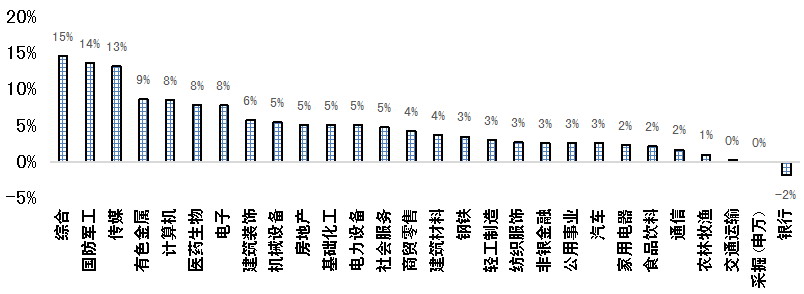
Core Viewpoint - The A-share market has shown a strong upward trend since the beginning of 2026, driven by multiple factors including the technology cycle, policy benefits, economic recovery, and the return of overseas capital [1][3][4]. Group 1: Market Performance - As of January 12, 2026, the Shanghai Composite Index has achieved a "seventeen consecutive days" rise, with significant increases in trading volume and active capital inflow [1][3]. - The performance of various sectors shows that cyclical stocks, technology stocks, and military industry stocks have led the gains, while financial and consumer stocks have underperformed [1][3]. Group 2: Driving Factors - The dual momentum from technology and cyclical sectors has significantly enhanced risk appetite among investors, with the digital economy, particularly AI and semiconductors, leading the charge [3][4]. - The release of concentrated economic policies since the beginning of 2026, including a 625 billion yuan special bond for consumer upgrades, has contributed to the market's positive outlook [4][5]. - Economic recovery is gaining momentum, with manufacturing and non-manufacturing PMIs returning above the growth line, indicating a shift towards quality and efficiency in corporate operations [5][6]. Group 3: Capital Flows - The appreciation of the RMB against the USD has attracted overseas capital back to China, as global investors seek stable assets amid geopolitical uncertainties [6][7]. - Data indicates an increase in holdings of Chinese assets by global and Asian funds compared to the end of 2024, supported by targeted policies and growth in AI-related profits [7]. Group 4: Futures Market Dynamics - The narrowing of the basis in stock index futures indicates strong bullish sentiment among investors, with significant shifts in the annualized basis rates for various contracts [8][9]. - Recent fluctuations in futures contracts suggest a potential adjustment phase, with the cost of rolling over contracts decreasing, reflecting a more favorable position for investors [10][11]. Group 5: Future Outlook - The market is transitioning from valuation-driven growth to profit-driven performance, with individual stock performance increasingly tied to fundamental improvements and rising economic conditions [11][12]. - The A-share market is expected to continue its upward trajectory, supported by ongoing policy effects, enhanced economic recovery, and the sustained influx of overseas capital [12].