消费升级

Search documents
第八届进博会杨浦交易分团集中签约,持续发力国际采购、经贸合作、前沿科技等
Sou Hu Cai Jing· 2025-11-07 09:57
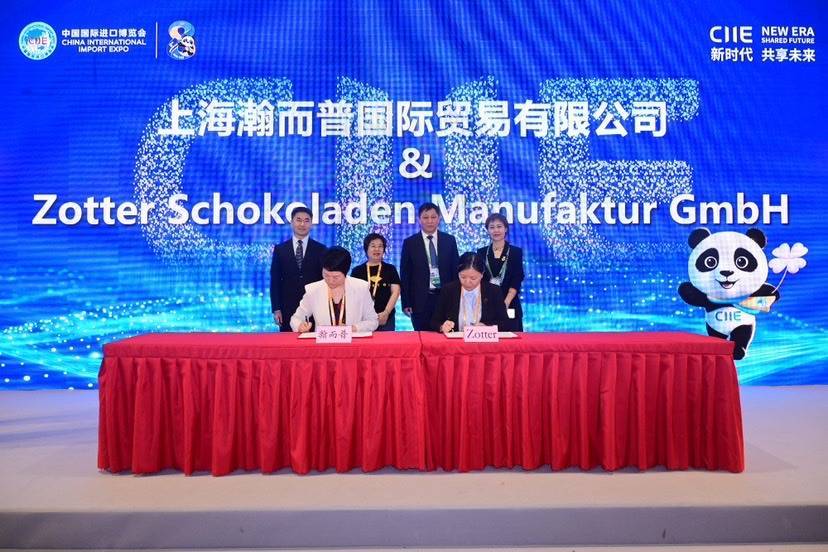
Core Insights - The signing ceremony for the Yangpu trading delegation at the 8th China International Import Expo (CIIE) took place on November 7, showcasing significant international procurement and trade cooperation efforts [1] Group 1: Signing and Procurement Highlights - The signing event included key local enterprises such as Charoen Pokphand Group, Henkel China, and others, with orders spanning various sectors including consumer goods, food, art, new materials, and medical devices [5] - The agricultural and food products sector saw a notable procurement scale, successfully introducing high-quality items like Austrian chocolate and Spanish wine [5] - High-end consumer goods, such as jewelry and art, reflected a trend of market consumption upgrades [5] Group 2: Growth and Strategic Cooperation - The Yangpu trading delegation achieved record-high transaction intentions, with over 5,000 professional attendees, a year-on-year increase of approximately 10%, and a 22% growth in participating enterprises [6] - Strategic cooperation was deepened with agreements signed with Synopsys and Amcor Group, marking a new chapter in collaborative development [6] Group 3: International Exchange and Innovation - The event featured over twenty international exchange activities, including forums and exhibitions, leveraging local platforms to promote collaborative development [7] - The Eastern National Technology Transfer Center showcased nearly 30 overseas innovative entities and their products, facilitating global innovation integration with the Chinese market [9] Group 4: Market Expansion and Resource Attraction - Yangpu district focused on precise investment attraction, targeting key sectors such as consumer goods, service trade, and medical technology, to enhance the spillover effects of the CIIE [8] - The district organized promotional events to highlight its advantages, policies, and business environment, aiming to attract quality international innovation enterprises and talent [8] Group 5: Showcasing Innovation and New Consumption Models - Local platform enterprises displayed numerous technological and model innovations, including Meituan's comprehensive health business and Douyin's cross-border e-commerce initiatives [10][11] - The "Baiyulan Live Room" showcased quality products through live streaming, enhancing consumer engagement and promoting international goods to a broader audience [11]

近一月953公司被调研, 半导体、高端制造成焦点,多股已大涨
2 1 Shi Ji Jing Ji Bao Dao· 2025-11-07 01:48
Core Insights - The article highlights the increasing activity of broker research following the disclosure of third-quarter reports by listed companies, with a notable focus on sectors such as solar energy, semiconductor materials, and consumer electronics [2][5]. Group 1: Broker Research Trends - As of early November, over 35 brokers have conducted research on companies in the solar component supply chain, semiconductor materials, and leading consumer electronics firms [2]. - From October 1 to November 5, a total of 953 listed companies in A-shares received broker research, with 42 companies receiving research from 40 or more brokers [5]. - The most researched companies include Aibo Medical, Huace Testing, and Jinpan Technology, which received 65, 64, and 62 broker inquiries respectively, all categorized under the new productivity label [5]. Group 2: Sector Focus - Brokers are particularly interested in sectors such as semiconductors, industrial automation, and high-end manufacturing, reflecting ongoing market attention to technology-driven industries [2][6]. - Companies like Zhaoyi Innovation and Canadian Solar have also attracted significant broker interest, receiving 55 and 49 inquiries respectively [5]. - The research interest extends to various industries, including medical devices, power equipment, and gaming, indicating a broad focus on high-growth sectors [6]. Group 3: Investment Strategies - Broker investment strategies are concentrated on high-prosperity industries, with a focus on sectors like AI, semiconductor equipment, and consumer electronics [10]. - The research teams from CITIC Securities and CICC suggest that the electronic sector's performance is expected to remain strong, driven by AI and domestic production growth [10][11]. - Recommendations for November include focusing on new economic sectors such as AI software and semiconductor equipment, while traditional sectors like coal and steel are also highlighted [11].






比音勒芬,净利润下滑丨消费参考
2 1 Shi Ji Jing Ji Bao Dao· 2025-11-07 01:45
Group 1 - The core viewpoint of the article highlights that despite a fashion show showcasing its brand, Biyinlefen is experiencing a decline in profits, with a 27.4% drop in net profit for Q3 compared to the previous year [1] - In Q3, Biyinlefen's revenue increased by 3.2% year-on-year to 1.1 billion yuan, while net profit fell to 210 million yuan [1] - For the first three quarters, the company's revenue grew by 6.7% to 3.2 billion yuan, but net profit decreased by 18.7% to 620 million yuan [1] - The increase in sales expenses by 27.8% is attributed to investments in brand rejuvenation, new brand launches, and e-commerce initiatives [1] - Biyinlefen has acquired two international brands, CERRUTI1881 and KENT&CURWEN, which are currently in the investment phase, leading to projected losses for the operating subsidiary [1] - The inventory turnover period increased by 55 days, likely due to new brand incubation and early preparations for e-commerce peak seasons [1] Group 2 - A founder of a leading men's clothing brand noted that domestic high-end brands are gaining opportunities as overseas luxury goods lose their allure, although growth is becoming increasingly challenging [2] - Biyinlefen's willingness to increase market investment indicates the company's optimism about future prospects [2]
大摩闭门会- 达成休战而非条约;日本央行或于 12 月加息;人民币汇率保持稳定
2025-11-07 01:28
Summary of Key Points from Conference Call Records Industry or Company Involved - The records primarily discuss the implications of the US-China trade relations, the monetary policies of the Bank of Japan, and the economic strategies of China and India. Core Points and Arguments US-China Trade Relations - The recent US-China trade agreement reached in South Korea is seen as more constructive than previous expectations, with significant reductions in tariffs related to fentanyl by 50% [2] - The agreement includes a one-year grace period instead of quarterly updates, indicating a more durable arrangement [2] - The framework suggests a strategic stalemate where both countries have mutually destructive leverage, maintaining low bilateral trade levels and high non-tariff barriers in technology and export controls [2] - China will continue to supply rare earths in exchange for US technology inputs, promoting domestic technological advancement [2] China's Economic Strategy - China's latest five-year plan emphasizes technological self-sufficiency and consumption upgrades to overcome supply chain bottlenecks [4] - Specific goals include increasing the consumption share of GDP and enhancing social welfare, such as improving rural pension standards [4] - The plan faces challenges due to severe economic imbalances and entrenched deflation, with expectations of a negative GDP deflator index until 2026 [4] Bank of Japan's Monetary Policy - The Bank of Japan is likely to raise interest rates, with signals from the governor indicating confidence in achieving inflation targets [5] - Political factors may influence the timing of rate hikes, particularly if elections are called [5] - The upcoming meetings in December and January will provide critical data on corporate profits and wage negotiations [5] Currency and Market Dynamics - The US dollar's short-term outlook is uncertain, with potential bearish trends in the medium term due to upcoming policy and political risks [7] - Asian currencies, particularly the Chinese yuan, are expected to remain stable, supported by a trade surplus of approximately $10 billion monthly [8] - The Indian rupee is projected to perform well due to central bank interventions and potential trade agreements, while the Singapore dollar is seen as an attractive financing currency [9] Investment and Economic Outlook - The new investment agreement between the US and South Korea is expected to reduce market uncertainty, with an annual investment cap of $20 billion that aligns with market capacity [18] - This agreement is viewed positively for the Korean won, minimizing potential impacts on its exchange rate [18] - The overall economic environment in Asia remains cautious, with expectations of continued low yields in China and India due to weak domestic demand [11][12] Other Important but Possibly Overlooked Content - The Chinese government has prioritized 17 investment areas, including AI and biotechnology, which will receive increased budget allocations [6] - The competitive advantage of China in rare earth processing is highlighted, with a significant time lag for the US and allies to replicate this capability [14] - The potential impact of the US Supreme Court's decisions on tariffs and trade relations with China remains uncertain, with implications for bilateral tariffs and non-tariff barriers [13]
京东发布冲锋衣白皮书 打造多面料、多场景科学选购指南
Zhong Guo Zhi Liang Xin Wen Wang· 2025-11-06 14:14
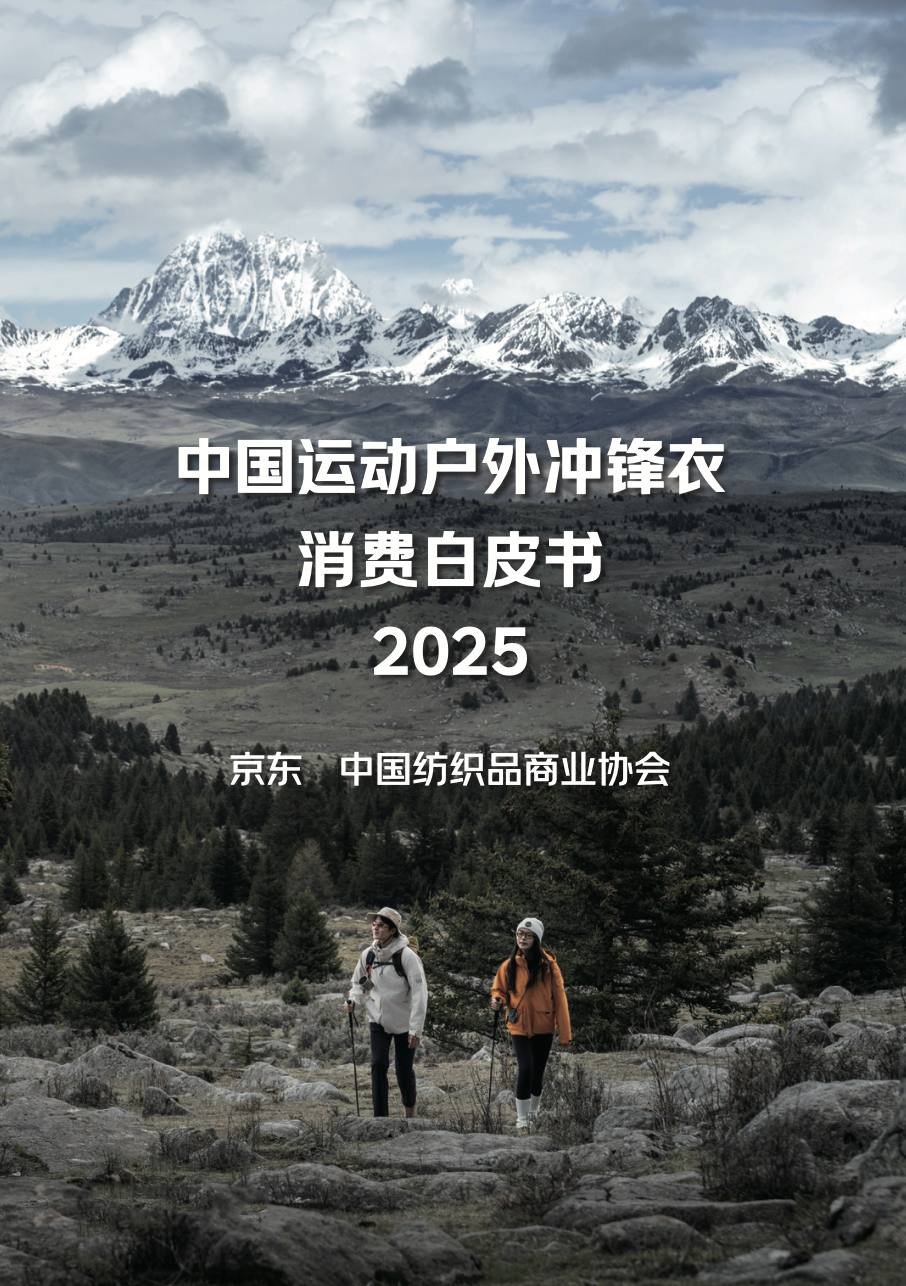
Core Insights - The report indicates that the Chinese outdoor jacket market is expected to reach a scale of 28.7 billion yuan by 2025, with an average annual growth rate of 18.5%, transitioning from rapid growth to a phase of high-quality development [3] - JD.com, in collaboration with the China Textile Commercial Association, has released a white paper to help consumers make informed purchasing decisions regarding outdoor jackets, addressing issues of overpricing and incorrect purchases [1][3] Market Trends - The sales proportion of mid-to-high-end jackets priced over 2,000 yuan on JD.com is 17%, indicating a clear trend of consumption upgrading [5] - Over 60% of consumers choose outdoor jackets for light sports and urban commuting, expanding their use from professional outdoor gear to everyday wear suitable for both urban and rural settings [5] - First-tier cities remain the primary consumers of outdoor jackets, while third and fourth-tier cities are experiencing faster growth rates [5] Consumer Demographics - The consumer profile is becoming more refined, with hardcore outdoor users prioritizing professional performance, urban commuters focusing on functionality and style, and quality-conscious consumers willing to pay a premium for sustainable materials and brand values [7] Purchasing Guidance - The white paper provides a guide for consumers to match outdoor jackets to their needs, distinguishing between "hard shell" jackets, which are waterproof and windproof, and "soft shell" jackets, which emphasize breathability and warmth [8] - Notable products include high-cost performance options like the graphene soft shell jacket and professional outdoor jackets designed for extreme conditions [8][10] Fabric Innovations - International fabrics like GORE-TEX PRO set the standard for extreme conditions, while domestic brands like Anta are gaining traction with high cost-performance and lightweight designs [10] Quality Assurance Initiatives - JD.com has launched the JD Fashion label to ensure high-quality winter apparel, covering key categories such as outdoor jackets and down jackets, aiming to provide consumers with a reliable shopping experience [12]

半年狂揽22亿,清远鸡王冲刺港股IPO
2 1 Shi Ji Jing Ji Bao Dao· 2025-11-06 13:21
Core Viewpoint - Guangdong Tiannong Group Co., Ltd. has submitted its prospectus for an IPO on the Hong Kong Stock Exchange, aiming to expand its operations in the meat and meat products industry, particularly focusing on its core products, Qingyuan chicken and live pigs [1][2]. Group 1: Company Overview - Established in 2003, Tiannong Group initially focused on Qingyuan chicken and has since evolved into a large-scale provider of meat and meat products, developing a comprehensive industry chain [1][4]. - The company has a significant market presence, with its Qingyuan chicken production expected to account for 59.3% of the national market by 2024, making it the largest supplier in China [8]. - Tiannong Group's pig farming business ranks eighth in revenue in Southwest China for 2024, with its per-head profit being the second highest among large-scale farming enterprises [8]. Group 2: Financial Performance - The company's revenue fluctuated significantly from 2022 to 2024, with figures of 3.952 billion, 3.596 billion, and 4.776 billion yuan respectively, and a net profit rebound from a loss of 669 million yuan in 2023 to a profit of 890 million yuan in 2024 [10]. - Revenue contributions from pig products increased from 65.5% in 2022 to 67.1% in 2024, indicating the growing importance of this segment to the company's overall financial health [8]. Group 3: Market Trends and Opportunities - The Qingyuan chicken market is projected to grow at a compound annual growth rate (CAGR) of 11.9% from 2025 to 2029, providing ample growth opportunities for Tiannong Group [8]. - The overall meat product market in China shows potential for growth, with per capita meat consumption at approximately 69.4 kg in 2024, significantly lower than the U.S. figure of 102.0 kg [9]. Group 4: Strategic Initiatives - The IPO proceeds will primarily be used for expanding processing capacity and upgrading technology and information systems, reflecting the company's strategy to enhance its operational capabilities [2][14]. - Tiannong Group is transitioning from a farming enterprise to a high-value food company, increasing its fresh product revenue share from 8.9% in 2022 to 13.0% in the first half of 2025 [14]. - The company has committed over 1.466 billion yuan to support cooperative farmers, promoting a sustainable farming model that aligns with rural revitalization strategies [14].
选择过剩的2025,钱该往哪花?
虎嗅APP· 2025-11-06 12:00
Core Insights - The article emphasizes a shift in consumer behavior towards thoughtful consumption, where spending reflects personal values and lifestyle choices rather than mere impulse or necessity [2][3][41] - The concept of "super consumers" is introduced, highlighting the importance of understanding genuine consumer preferences through in-depth conversations with diverse individuals from various industries [7][8][42] Consumer Behavior Trends - Consumers are increasingly overwhelmed by choices due to the influence of AI algorithms, marketing information, and KOL endorsements, leading to a need for curated lists to guide purchasing decisions [5][6] - The article suggests that spending more does not equate to better decision-making, as consumers struggle to determine what is truly "worth it" [6][41] Product Recommendations - A list of recommended products is provided, showcasing items that enhance quality of life and align with the values of modern consumers [9] - Categories include technology products like the DJI Pocket 3 and the iPad Mini 7, which are praised for their practicality and design [10][14][17] - Lifestyle products such as fresh flowers from Yunnan and unique home decor items are highlighted for their emotional value and ability to enhance living spaces [25][27] Emotional and Practical Value - The article stresses that consumers are now prioritizing emotional satisfaction and practical solutions over mere cost-effectiveness, indicating a shift towards "heart price" rather than "cost performance" [26][18] - The importance of community brands and unique experiences is noted, as consumers seek products that resonate with their individual tastes and lifestyles [29][30] Future Consumption Outlook - The core of consumption in 2025 is identified as a reflection of personal lifestyle choices, with a focus on making informed decisions that lead to a more ideal future [41][42] - The article concludes with an invitation to engage with innovative trends and connect with industry leaders at the 2025 F&M Innovation Festival [43]

商场台球厅,是一门好生意吗?
3 6 Ke· 2025-11-06 08:08
Core Insights - The Chinese billiards market is experiencing significant growth, with a projected market size of 872 billion yuan in 2024, representing a year-on-year increase of 20.5%, and expected to exceed 1.92 trillion yuan by 2030 [2][12] - The industry is witnessing a transformation from traditional street billiard halls to modern, sophisticated venues located in shopping malls, catering to a younger demographic [3][4] Industry Overview - In 2024, nearly 140,000 new billiard-related enterprises are expected to be established in China, with over 47,000 additional registrations anticipated in 2025 [2] - The evolution of billiard halls in China reflects a broader trend of consumption upgrading, transitioning from a low-cost, street-level entertainment to a more professional and upscale experience [3][12] Market Dynamics - The rise of 24-hour self-service billiard halls has been notable, with some brands expanding thousands of locations within a short period [4][10] - The business model of billiard halls has shifted to a multi-revenue structure, including table fees, value-added services, and ancillary businesses [7][8] Consumer Trends - The primary clientele for shopping mall billiard halls consists of young adults aged 18-30, who view these venues as social spaces rather than just places to play [12][13] - There is a growing trend of female participation in billiards, supported by the modern, smoke-free environments of shopping mall venues [13] Business Model and Financials - The revenue structure of shopping mall billiard halls includes table fees (over 50% of revenue), value-added services (20-25%), and emerging businesses like membership and event hosting [7][8] - Rental costs are a critical factor in profitability, with significant variations across different city tiers, impacting the financial viability of billiard halls [8][10] Competitive Landscape - The industry is characterized by a stark divide in profitability, with leading chain brands enjoying better margins due to supply chain efficiencies and brand recognition, while many independent or mid-tier establishments struggle to maintain profitability [10][11] - Successful billiard halls must accurately target their market, with high-end venues in major cities focusing on social experiences, while those in smaller towns prioritize affordability and local customer loyalty [11][12]
上半年入账22.21亿元,“清远鸡王”冲刺港股IPO
2 1 Shi Ji Jing Ji Bao Dao· 2025-11-06 07:05
Core Viewpoint - Guangdong Tian Nong Group Co., Ltd. has submitted its prospectus for an IPO on the Hong Kong Stock Exchange, aiming to expand its operations in the meat and meat products industry, particularly focusing on its core products, Qingyuan chicken and pork [1][2]. Group 1: Company Overview - Established in 2003, Tian Nong Group initially focused on Qingyuan chicken and has since evolved into a major provider of meat and meat products, developing a full industry chain around Qingyuan chicken, pigs, and related products [1][3]. - The company has achieved a leading position in the Qingyuan chicken market, with a projected 59.3% market share in 2024, making it the largest provider in China [5]. - Tian Nong Group's pork business is also performing well, ranking eighth in revenue in Southwest China for 2024, with its single-head pig profit margin being the second highest among large-scale breeding enterprises [5]. Group 2: Financial Performance - The company's revenue for the years 2022 to 2024 was reported as 3.952 billion, 3.596 billion, and 4.776 billion yuan, respectively, with a 3.0% year-on-year growth in the first half of 2025 [6]. - Net profit figures showed a fluctuation, with a profit of 341 million yuan in 2022, a loss of 669 million yuan in 2023, a rebound to 890 million yuan in 2024, and a profit of 127 million yuan in the first half of 2025 [6]. Group 3: Market Trends and Opportunities - The Qingyuan chicken market is expected to grow at a compound annual growth rate (CAGR) of 11.9% from 2025 to 2029, providing ample growth opportunities for Tian Nong Group [5]. - The overall meat product market in China has significant room for growth, with per capita meat consumption in 2024 projected at 69.4 kg, compared to 102.0 kg in the U.S. [6]. Group 4: Business Strategy and Future Plans - The IPO proceeds will primarily be used for expanding processing capacity, upgrading technology and information systems, and enhancing offline dining services [2][8]. - The company is transitioning from a breeding enterprise to a high-value food enterprise, increasing the proportion of fresh products from 8.9% in 2022 to 13.0% in the first half of 2025 [8]. - Tian Nong Group aims to build a diversified consumption ecosystem and develop unique dining projects, such as "Qingyuan Chicken Fresh Cut Hot Pot" [8][9]. Group 5: Social Responsibility and Brand Strength - The company has implemented a "family farm model," paying over 1.466 billion yuan to cooperative farmers from 2022 to the first half of 2025, contributing to rural revitalization [9]. - Tian Nong Group has been designated as the official supplier of chicken products for the 15th National Games in 2025, enhancing the credibility of its brands [9].
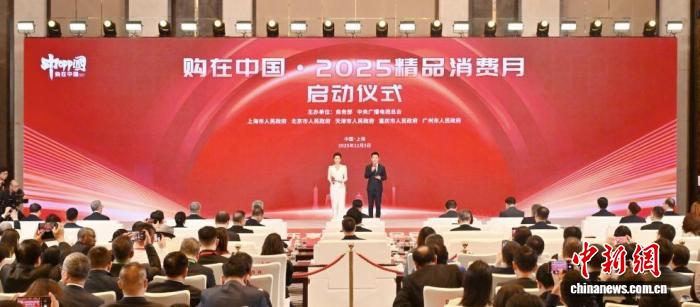
(第八届进博会)2025精品消费月在沪启动
Zhong Guo Xin Wen Wang· 2025-11-06 04:38
Core Points - The "2025 Boutique Consumption Month" was launched in Shanghai, aiming to enhance consumer engagement and promote local consumption activities [1][3] - The event aligns with China's strategic focus on expanding domestic demand and enhancing the interaction between supply and demand [3] - Major Chinese cities are participating, showcasing their key consumer promotion activities and policies [1][3] Group 1 - The event is part of the eighth China International Import Expo, with guest countries promoting their unique products [3][4] - The Ministry of Commerce emphasizes collaboration to inject new vitality into the consumption market, highlighting the theme of "boutique" and international characteristics [3] - Domestic large-scale commercial enterprises are expressing their import procurement needs, facilitating connections with international markets [4] Group 2 - New consumption enterprises are showcasing local brands alongside traditional ones, promoting a blend of innovation and heritage [4] - The event aims to enhance the international influence of "Made in China" and "Created in China" through brand promotion and shared development opportunities [3]