贸易战

Search documents
30%惩罚关税砸向欧洲,中国却静悄悄布局,这次真要“换剧本”?
Sou Hu Cai Jing· 2025-07-15 04:17
Group 1 - The core demand of Trump's tariff war is to exert pressure on trading partners like the EU, Japan, South Korea, and India, pushing them to comply without room for negotiation [1][3] - Starting August 1, Trump announced a 30% tariff on all goods from the EU and Mexico, marking the beginning of a second round of tariff pressure [3] - The automotive industry in Europe is facing significant losses, with the steel and aluminum tariffs costing manufacturers millions of euros daily [3] Group 2 - Brazil is one of the most affected countries, facing a 50% tariff penalty, leading to concerns about potential economic sanctions and trade blockades from the US [5] - The urgency behind increasing tariffs is linked to the need for fiscal revenue, with US tariff income surpassing $100 billion in 2024, which is insufficient compared to the funding needs of Trump's economic plans [7] - The US Treasury market is experiencing instability, with a decline in foreign buyers, prompting Trump to use tariffs as a means to compel other countries to purchase US debt [7] Group 3 - The EU's response to Trump's tariffs has been mixed, with internal disagreements on how to retaliate, reflecting the varying interests of member states [8][9] - Despite threats of countermeasures, the EU is struggling with economic slowdown and lacks a unified approach to address Trump's tariffs [9] - The global trade order is being disrupted, with China leveraging its influence to establish new trade norms, potentially marginalizing the US in future global supply chains [9][11] Group 4 - Trump's tariff policies are fundamentally altering the dollar-based trade system, leading to a reconstruction of global supply chains that may exclude the US [11] - Industries in affected countries are adapting by shifting focus to new markets, such as Italian wine producers looking towards Singapore and South Korean battery manufacturers relocating to Hungary [11] - The urgency for reform within the EU is highlighted by warnings from industry leaders about the need for survival amidst declining competitiveness [11]

默克尔的一句忠告,德国新总理听了进去,将飞往中国谈一笔大生意
Sou Hu Cai Jing· 2025-07-15 04:17
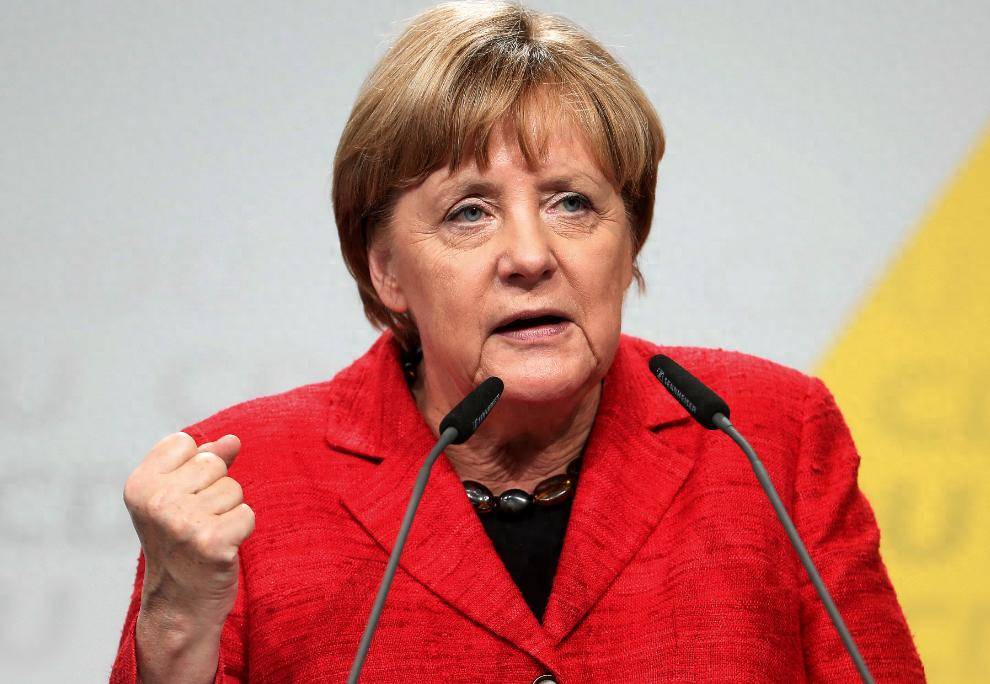
默克尔的一句忠告,德国新总理听了进去,专机即将飞往北京,要跟中方谈一笔大生意? 德国前总理默克尔 面对特朗普的关税威胁,欧盟27国战战兢兢,然而就在这个关键时刻,叱咤政坛十余年的德国前总理默克尔罕见发声,短短一句话就给欧盟打了一针强心 剂。 这也是为什么默克尔要格外强调"美国并不可怕",其实就是想要给欧盟提供反抗霸权的信心。如果因为惧怕美国的报复,就选择放弃抵抗的话,那么欧盟永 远都无法实现真正的战略自主。 对于默克尔的这番话,昔日的竞争对手、如今的德国新总理默茨,似乎是听进去了。 她以自己多年跟美国打交道的经验,送给了欧盟一句忠告——那就是"美国并不可怕,特朗普实际上只是在虚张声势"。 说白了,美国看似做好了打"贸易战"的准备,实际上却是想通过极限施压的策略,做到速战速决、尽快逼迫对方签署关税协定。 一旦对方拒绝屈服,甚至是形成了统一战线,共同反对美国的关税胁迫,那么特朗普这套策略就进行不下去了。 但问题的难点恰恰也在这里,就以欧盟为例,虽然成员国众多,但是太散,难以形成合力,就连德法这两只"欧盟领头羊"之间,也是各有各的盘算,所以内 部分歧很大,容易被美国分而化之。 法国总统马克龙 就在特朗普威胁要对14 ...
特朗普要金砖解体,对11国“宣战”,巴西瞄准美元,替中俄打前阵
Sou Hu Cai Jing· 2025-07-15 03:51
Core Viewpoint - Trump is determined to ignite a new round of global trade wars, specifically targeting countries aligned with BRICS, threatening an additional 10% tariff on them [1][3]. Group 1: Trade War Dynamics - Trump has expressed concerns that BRICS nations are undermining the dollar's status as the world's reserve currency, equating its loss to "losing a world war" [3]. - The U.S. has issued unilateral tariffs ranging from 25% to 40% on 14 countries, with Southeast Asia being heavily impacted, including allies like Japan and South Korea [3]. - The BRICS summit revealed that BRICS GDP, calculated by purchasing power parity, reached $77 trillion, surpassing G7's $57 trillion, indicating a significant shift in global economic power [3][5]. Group 2: Responses from BRICS Nations - Vietnam has capitulated to U.S. pressure, agreeing to lower tariffs to avoid losing access to the American market, which constitutes a significant portion of its GDP [5]. - In contrast, Brazilian President Lula publicly rejected U.S. dominance, stating, "We do not want an emperor," highlighting the resistance among BRICS nations [5]. - A joint statement from BRICS countries criticized unilateral tariffs as violations of WTO rules, signaling a united front against U.S. actions [5][6]. Group 3: Economic Implications - The rise of BRICS is not merely numerical but represents a restructuring of global economic systems, controlling over 44% of global oil production and over 90% of rare earth supply chains [5]. - Lula emphasized the need for alternative currencies beyond the dollar in global trade, suggesting a shift towards a multipolar world order that could isolate the U.S. [6].

邓正红能源软实力:贸易战冲击需求、地缘风险消退与增产预期形成三重原油利空
Sou Hu Cai Jing· 2025-07-15 03:33
Core Viewpoint - The article discusses the impact of Trump's trade war and the Russia-Ukraine ceasefire plan on oil prices, highlighting a downward trend in oil prices due to weakened demand, reduced geopolitical risks, and increased production expectations [1][2][3]. Group 1: Demand Side Analysis - Trump's trade war is expected to suppress global demand for oil, with OPEC lowering its 2025 global daily oil demand growth forecast from 1.45 million barrels to 1.3 million barrels [2]. - The International Energy Agency (IEA) has also reduced its daily demand forecast by 300,000 barrels, indicating a significant erosion of market confidence due to tariff policies [2]. - The imposition of tariffs between the US and China has led to a "quasi-embargo" state in bilateral trade, further weakening oil consumption efficiency [2]. Group 2: Supply Side Analysis - Trump's avoidance of direct sanctions on Russian oil exports reflects a strategic dilemma, as he aims to showcase geopolitical control while avoiding domestic inflation spikes [3]. - The lack of direct sanctions has led to a reduction in geopolitical risk premiums, with traders previously expecting stronger actions against Russian oil exports [3]. - The OPEC alliance is caught in a cycle of increasing production to maintain market share, which exacerbates the downward pressure on oil prices [3]. Group 3: Market Dynamics - The interplay of US unilateral tariff policies and potential EU countermeasures reveals a failure of global cooperation mechanisms, leading to systemic market shocks [3]. - The current market is characterized by a critical phase of "non-material factors versus real fundamentals," with the trade war, reduced geopolitical risks, and production increases creating a trifecta of negative influences on oil prices [3]. - Citigroup predicts that Brent crude oil prices may drop to $60-$65 per barrel in the second half of 2025, reflecting the pressure from the collapse of soft power on pricing [3].

今日观点集锦-20250715
Xin Shi Ji Qi Huo· 2025-07-15 03:14
Report Investment Ratings - No specific investment ratings for each industry are provided in the report Core Views - The data reflects China's economic resilience, market risk aversion eases, and it is recommended to hold long positions in stock index futures; market interest rates are consolidating, treasury bonds are rebounding slightly, and it is recommended to hold long positions in treasury bonds lightly [2] - Under the "anti - involution" situation, the supply of finished steel may shrink; the expectation of old - city renovation and shantytown transformation has led to the entry of long - position funds, and the price increase of coke by mainstream coking plants will be implemented this week, driving the black sector to rise sharply [3] - Trump's latest tariff measures have escalated the trade war, and the resurgence of market risk aversion has boosted the gold price; the expectation of a Fed rate cut in September has decreased, and this week's CPI data should be monitored; gold is expected to maintain high - level fluctuations [4] - The spot price of logs is stable, the expected arrival volume will decrease month - on - month, the supply pressure will ease, and the daily average outbound volume has fallen below 60,000 cubic meters; the fundamentals show a pattern of weak supply and demand, and the impact of log futures delivery on log prices should be noted [5] - The production of natural rubber in domestic and foreign producing areas is increasing steadily, and there is still room for the raw material price to decline; port inventories remain high, and the weak fundamentals cannot support the continuous rise of rubber prices [6] - Due to the large arrival volume of soybeans and high - pressure oil extraction by oil mills, the inventories of three major oils are continuously rising; the supply is abundant and it is the off - season for demand, lacking self - driving force; however, palm oil is oscillating strongly due to the popular export, the rising expectation of biodiesel, and the rebound of international crude oil [7] - US tariff policies continue to pressure oil prices, PX is continuously destocking and fluctuates with oil prices; the supply - demand expectation of PTA is weakening and it will follow cost fluctuations in the short term; the raw materials are differentiated, but the supply - demand of MEQ is weakening, and the upside space of the futures price is restricted [8] - The market supply - demand stalemate is obvious; northern livestock farmers are forced to cut prices for promotion due to the pressure of selling livestock, while the south stabilizes the market by adjusting the supply rhythm; weak consumer demand restricts price increases, and the regional price difference is gradually widening; domestic hog prices are expected to maintain small fluctuations [9] Summary by Industry Stock and Bond - Data reflects China's economic resilience, market risk aversion eases, recommended to hold long positions in stock index futures; market interest rates are consolidating, treasury bonds are rebounding slightly, recommended to hold long positions in treasury bonds lightly [2] Black - Under "anti - involution", finished steel supply may shrink; the expectation of old - city renovation and shantytown transformation has led to long - position funds, and the coke price increase by mainstream coking plants will be implemented this week, driving the black sector to rise sharply [3] Gold - Trump's tariff measures have escalated the trade war, market risk aversion has boosted the gold price; the expectation of a Fed rate cut in September has decreased, and this week's CPI data should be monitored; gold is expected to maintain high - level fluctuations [4] Logs - Spot price is stable, expected arrival volume will decrease month - on - month, supply pressure eases, daily average outbound volume has fallen below 60,000 cubic meters; fundamentals show weak supply and demand, and the impact of log futures delivery on log prices should be noted [5] Rubber - Production in domestic and foreign producing areas is increasing steadily, raw material price has room to decline; port inventories remain high, and weak fundamentals cannot support continuous rise of rubber prices [6] Oils - Due to large soybean arrival and high - pressure oil extraction, inventories of three major oils are rising; supply is abundant and it is the off - season for demand, lacking self - driving force; palm oil is oscillating strongly due to popular export, rising biodiesel expectation, and international crude oil rebound [7] Oil - related Chemicals - US tariff policies pressure oil prices, PX is destocking and fluctuates with oil prices; PTA supply - demand expectation is weakening and follows cost fluctuations in the short term; raw materials are differentiated, but MEQ supply - demand is weakening, and the upside space of the futures price is restricted [8] Livestock - Market supply - demand stalemate is obvious; northern farmers cut prices due to selling pressure, the south stabilizes the market by adjusting supply rhythm; weak consumer demand restricts price increases, regional price difference is widening; domestic hog prices are expected to maintain small fluctuations [9]
五矿期货农产品早报-20250715
Wu Kuang Qi Huo· 2025-07-15 02:03
Report Summary 1. Report Industry Investment Rating There is no information about the report industry investment rating in the provided content. 2. Core Views - The soybean market is affected by multiple factors such as weather, trade policies, and supply - demand conditions. It is expected to have an overall range - bound trend. The domestic soybean meal market is in a situation of low valuation, short - term high supply, and cost support, with a mixed long - short situation [2][5]. - The global soybean import cost is currently stable, but there is a risk of unexpected decline due to potential trade war easing or macro - impacts [3]. - The global soybean or protein supply is still in surplus, while the domestic soybean meal market has cost support due to procurement issues related to Sino - US tariffs [5]. - The EPA policy has increased the annual operating center of the oil market, but there are still negative factors such as high production in Southeast Asian palm oil regions, and the market is expected to be volatile [7][10]. - The domestic sugar market may face increased import pressure in the second half of the year, and the price of Zhengzhou sugar is likely to continue to decline [13]. - The cotton market is expected to be volatile in the short term, with potential negative factors such as the possible issuance of sliding - scale import quotas in July - August [16]. - The egg market has a large supply, and the short - term rebound space is limited. It is advisable to wait for a rebound to short [18]. - The pig market has a certain degree of support in the short term, but there are pressures from supply postponement and hedging in the medium term [21]. 3. Summary by Catalog Soybean/Meal - **Important Information**: On Monday, the US soybean price slightly declined. The good - excellent rate of US soybeans increased by 4% to 70%. The North American weather is good, and the potential impact of the trade war on exports continues to put pressure on US soybeans. However, the valuation of US soybeans is slightly low, and recent sales of old - crop soybeans and biodiesel policies support demand. The domestic soybean meal futures slightly rose on Monday. According to MYSTEEL statistics, last week, the domestic soybean crushing volume was 2.2954 million tons, and this week, it is expected to be 2.3803 million tons. Last week, the soybean meal inventory of oil mills was 886,200 (+64,000) tons, and the port soybean inventory was 8.231 (+0.343) million tons [2]. - **Trading Strategy**: The import cost of foreign soybeans is currently oscillating. The domestic soybean meal market is in a situation where long - short factors are intertwined. It is recommended to try long positions at the lower end of the cost range and pay attention to the crushing margin and supply pressure at the upper end, waiting for progress in Sino - US tariffs and new drivers on the supply side [5]. Fats and Oils - **Important Information**: High - frequency export data shows that Malaysia's palm oil exports from June 1 - 10 are expected to increase by 5.31% - 12%. From July 1 - 10, 2025, Malaysia's palm oil yield per unit increased by 35.43%, the oil extraction rate decreased by 0.02%, and the output increased by 35.28%. India's palm oil imports in June increased by 60% month - on - month, soybean oil imports decreased by 9.8%, and sunflower oil imports increased by 17.8%. The total vegetable oil imports in June were 1.549825 million tons, a 30.6% increase from May. Last week, the total inventory of the three major domestic oils was 2.298 (+0.04) million tons, mainly due to seasonal inventory accumulation of palm oil and soybean oil, and the year - on - year high inventory was due to high rapeseed oil inventory and slow destocking [7]. - **Trading Strategy**: The US biodiesel policy draft has exceeded expectations and supported the center of the oil market. If demand countries maintain normal imports from July - September and palm oil production in the producing areas remains at a neutral level, the inventory in the producing areas may remain stable. There may be an upward expectation in the fourth quarter due to Indonesia's B50 policy. However, the current valuation is relatively high, and the upward space is restricted by factors such as the annual - level production increase expectation, high palm oil production in the producing areas, and the undetermined RVO rules. The market should be viewed as volatile [10]. Sugar - **Important Information**: On Monday, the price of Zhengzhou sugar futures oscillated. The closing price of the September contract of Zhengzhou sugar was 5,817 yuan/ton, a 7 - yuan or 0.12% increase from the previous trading day. In the spot market, the quotes of Guangxi and Yunnan sugar - making groups were stable compared with the previous trading day. According to the latest data from the Brazilian shipping agency Williams, as of the week of July 9, the number of ships waiting to load sugar at Brazilian ports was 90, and the quantity of sugar waiting to be loaded was 3.6855 million tons [12]. - **Trading Strategy**: The domestic sugar market is currently in the best import profit window in the past five years, and the import supply pressure may increase in the second half of the year. Assuming that the external market price does not rebound significantly, the price of Zhengzhou sugar is likely to continue to decline [13]. Cotton - **Important Information**: On Monday, the price of Zhengzhou cotton futures continued to oscillate. The closing price of the September contract of Zhengzhou cotton was 13,875 yuan/ton, a 10 - yuan or 0.07% decrease from the previous trading day. In the spot market, the price of Xinjiang machine - picked cotton (CCIndex 3128B) increased by 40 yuan/ton compared with the previous trading day. As of the week of July 11, the spinning mill's operating rate was 70.4%, a 0.7 - percentage - point decrease from the previous week; the weaving mill's operating rate was 39.3%, a 1.5 - percentage - point decrease from the previous week; the weekly commercial cotton inventory was 2.61 million tons, a 140,000 - ton decrease from the previous week [15]. - **Trading Strategy**: Although the Sino - US trade agreement has not been finalized, the price of Zhengzhou cotton has rebounded to the level before the announcement of US equivalent tariffs, partially reflecting the positive expectation. In the short term, the cotton price is expected to be volatile, waiting for new drivers [16]. Egg - **Spot Information**: The national egg price was mostly stable, with a few increases. The average price in the main production areas rose by 0.01 yuan to 2.75 yuan/jin. The supply was stable, the downstream sales speed was normal, and the inventory in each link was generally small. Today, the egg price is expected to be stable, with a few fluctuations [17]. - **Trading Strategy**: Due to continuous losses, the degree of production capacity clearance is still limited, and the large supply has postponed the seasonal rebound of the spot price. The short - term rebound space is restricted by inventory. Considering the high premium of the futures market and large positions, it is advisable to wait for a rebound to short [18]. Pig - **Spot Information**: Yesterday, the domestic pig price mainly declined. The average price in Henan dropped by 0.08 yuan to 14.65 yuan/kg, and the average price in Sichuan dropped by 0.17 yuan to 13.84 yuan/kg. The slaughter volume may remain stable, and the supply - demand situation is in a stalemate. Today, the pig price may be stable or decline [20]. - **Trading Strategy**: Since late June, the spot price has significantly rebounded, accompanied by a reduction in slaughter volume and weight decline, indicating a seasonal supply reduction in the middle of the year. In the short term, there is support for the market, but in the medium term, there are pressures from supply postponement and hedging [21].
摩根大通:焦点_解放日 2.0_更新关税率
摩根· 2025-07-15 01:58
Investment Rating - The report indicates an expectation that the US effective tariff rate will settle closer to 18% rather than the current 13.4% [1] Core Insights - The new tariff measures are projected to raise the average effective US tariff rate to 16.9%, significantly higher than the 2.3% at the end of 2024, but below the 22.4% in force on April 2 [10] - The report highlights that the effective tariff increases scheduled for August 1 will include a 50% tariff on copper and a potential 200% tariff on pharmaceuticals [5][17] - The ongoing trade tensions and tariff adjustments are expected to have a direct impact on global GDP growth, with a projected drag increasing from 0.5 percentage points to 0.7 percentage points under the new tariff regime [23] Summary by Sections Tariff Rates - The effective US tariff rates are expected to increase significantly, with specific rates such as 50% on copper and reciprocal tariffs on various countries [5][10] - The report outlines that the effective tariff rates for several countries will revert to the April "Liberation Day" levels if no new tariff letters are issued [14] Economic Impact - The report estimates that the direct GDP impact for the US from the new tariffs could be around -0.8 percentage points, with emerging markets in Asia, particularly those excluding China, facing the highest exposure [24][32] - Global GDP growth is projected to expand at a sub-potential rate of 1.8%, with a notable downgrade in expectations since the US election [18] Sector-Specific Insights - The report discusses potential sectoral tariffs on pharmaceuticals, semiconductors, and critical minerals, indicating that these sectors are under active investigation and may face significant tariff increases [15][17] - Exemptions for certain sectors still imply lower effective tariff rates for many countries, but the risk of higher tariffs remains elevated due to ongoing investigations [17]
中美贸易战终于发力!7月14日,今日五大消息搅动全球经贸格局
Sou Hu Cai Jing· 2025-07-15 00:30
Group 1 - The U.S. has announced high tariffs on goods from 14 countries, including Japan and South Korea, with rates ranging from 25% to 40% [1][3] - The tariffs have triggered strong international backlash, with leaders from affected countries condemning the U.S. actions as humiliating and unfair [3][4] - The financial markets reacted negatively, with significant drops in major indices and stock prices of Japanese automakers [6] Group 2 - The "Big Beautiful Bill Act" signed by Trump has led to increased logistics costs for Chinese e-commerce and heightened tax burdens for semiconductor companies [8] - China's export controls on rare earth elements have impacted the U.S. military supply chain, highlighting vulnerabilities in U.S. reliance on Chinese resources [9] - The global trade landscape is shifting, with trade volumes in Asia, Latin America, and the Middle East growing faster than the global average, indicating a move towards a multipolar trade environment [11]


如何应对美国“关税耳光”,欧盟内部意见不一
Huan Qiu Shi Bao· 2025-07-14 22:48
Group 1 - The core issue discussed is the escalation of the trade dispute between the EU and the US, particularly regarding the proposed 30% tariffs on EU imports by President Trump [1][2] - The EU is currently deliberating on how to respond to the US tariffs, with a focus on maintaining unity among member states while considering both negotiation and retaliation strategies [1][2] - EU Commission President Ursula von der Leyen has indicated a preference for negotiation, extending the suspension of retaliatory measures against US tariffs until August 1 [1][3] Group 2 - European Parliament's International Trade Committee Chairman Bernd Lange has expressed skepticism about the EU's approach, advocating for a stronger stance against Trump's tariffs, which he deems unreasonable [2] - French President Emmanuel Macron has emphasized the need for the EU to demonstrate its commitment to defending European interests, suggesting the use of all available tools, including countermeasures [2] - German Vice Chancellor and Finance Minister Lars Klingbeil has stated that if negotiations fail, decisive countermeasures must be prepared to protect European jobs and businesses, although he does not advocate for immediate action [3]
Here's Why Silver ETFs Are Soaring to New Highs
ZACKS· 2025-07-14 16:30
Core Viewpoint - Silver has surged to its highest level since 2011, driven by investor demand as an alternative to gold and concerns over potential U.S. tariffs disrupting global metal supplies, with a year-to-date increase of 35% compared to gold's 28% gain [1] Group 1: Market Dynamics - iShares Silver Trust (SLV) and abrdn Physical Silver Shares ETF (SIVR) have spiked, while silver miner ETFs like Global X Silver Miners ETF (SIL) and ETFMG Prime Junior Silver ETF (SILJ) have reached multi-year highs, indicating leveraged gains in a rising metal market [2] - The renewed threat of trade wars, particularly the announcement of sweeping tariff measures by President Trump, has led to increased physical buying of silver, further accelerating its rally [3] - Geopolitical tensions and uncertainty regarding the Trump administration's trade policies enhance silver's attractiveness as a safe-haven asset during financial and political instability [4] Group 2: Supply and Demand Factors - The silver market is facing a sustained supply deficit for the fifth consecutive year, primarily driven by surging industrial demand from sectors like green energy and electronics [5] - Approximately 50% of silver's total demand comes from industrial applications, with the remaining 30% from jewelry, silverware, coins, and medals [6] - The global push for green energy, increasing demand in 5G technology, and a rebound in global computer shipments are expected to continue boosting silver demand, particularly in solar panels and electric vehicles [7] Group 3: Price Influencers - The spread between London spot prices and September futures in New York remains unusually wide, contributing to bullish momentum in the silver market [8] - The weakness of the U.S. dollar has made dollar-denominated assets like silver more attractive to foreign buyers, further fueling the rally [9]