
AI泡沫

Search documents
一张图表让美股“死多头”倒戈!AI泡沫风险正在飙升?
Jin Shi Shu Ju· 2025-11-04 06:05
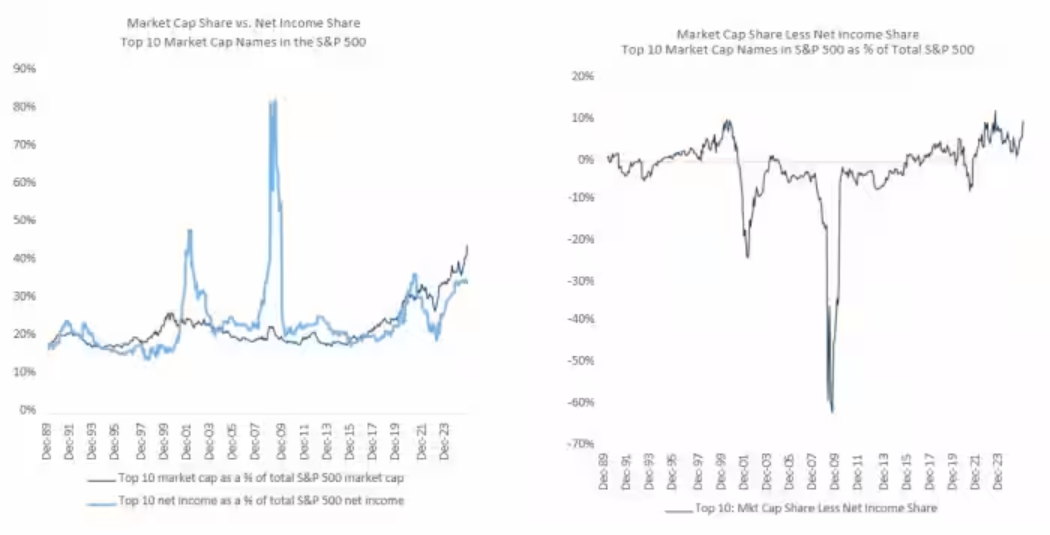
加拿大皇家银行资本市场(RBC Capital Markets)的美国股票策略主管Lori Calvasina曾多次反驳美国股市已进入AI驱动泡沫的说法,但最近,她也有所 倒戈,只因一张图表让她感到紧张。 这张图表比较了标普500指数中市值最高的10只股票的权重与这些公司在总净利润中所占的份额。正如Calvasina指出的,根据RBC使用的数据,这些股票在 指数中的权重最近触及了超过44%的新高,这是至少自1990年以来的最高水平。然而,这些公司在所有指数成员公司总利润中所占的份额却并未完全跟 上。 可以肯定的是,这并非一个全新的趋势。Calvasina表示,至少从2021年起,标普500指数中最大公司的整体权重增长速度就一直快于其盈利份额的增长。 这主要是因为投资者愿意为更强劲的长期盈利增长预期支付溢价,尤其是在2022年底ChatGPT引爆AI投资热潮之后。 然而,在过去几个月中,这一差距扩大的速度有所加剧。根据最新可用数据,截至10月底,标普500指数中最大的10家公司占指数内所有公司总净利润的 34.3%。这使得这些公司的权重与其利润份额之间的差距扩大到9.9个百分点。这与2000年3月时10.3个百 ...


美股2026年度策略 | 高处如何布局?
Sou Hu Cai Jing· 2025-11-04 05:27
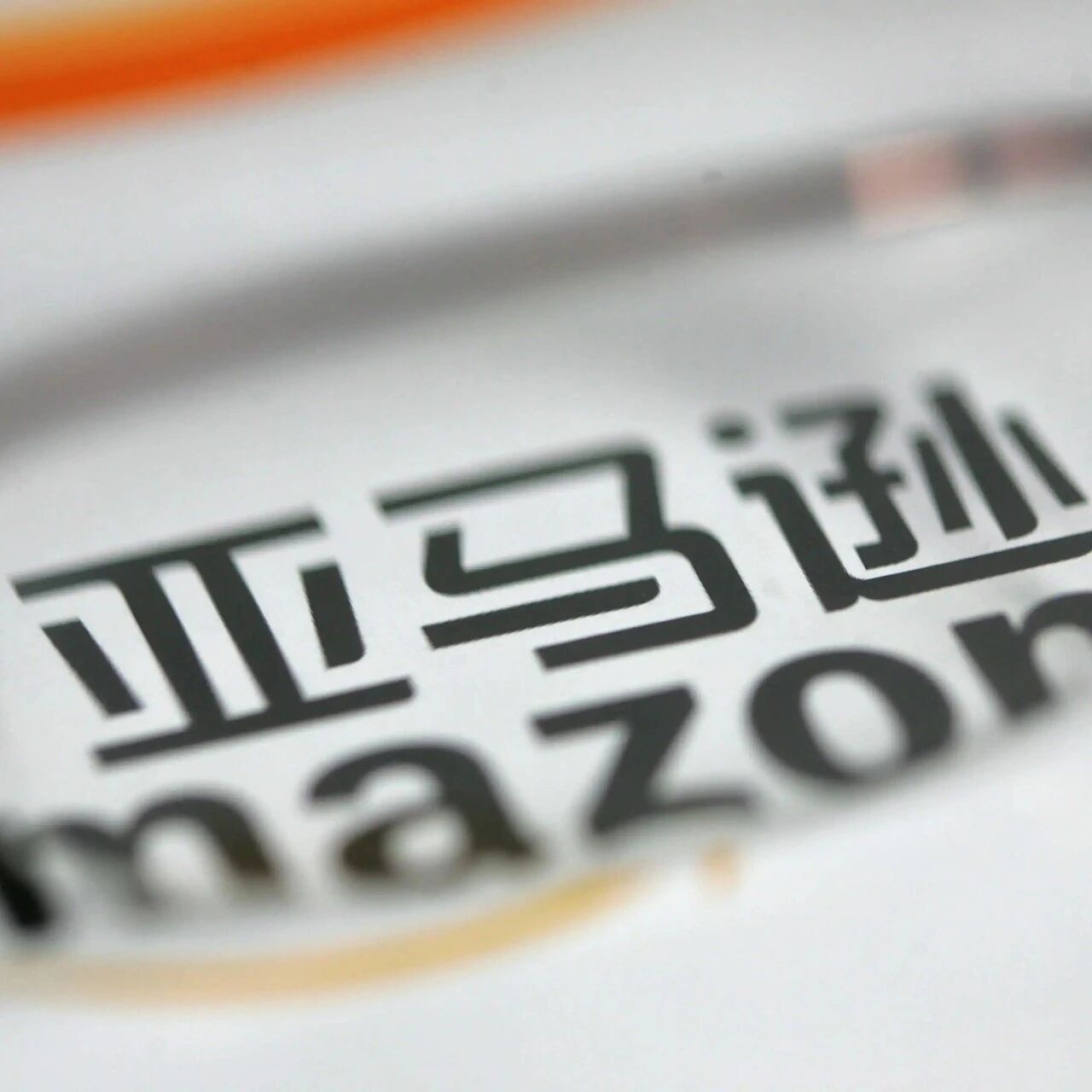
Group 1: Market Overview - The liquidity easing trend is expected to continue until the first half of 2026, with a focus on cyclical economic recovery in the second half of the year [1][5] - The U.S. stock market has experienced a K-shaped divergence, with the MAG7 companies contributing significantly to market capitalization growth [2][6] - As of October 31, 2025, the MAG7 companies accounted for over 30% of the S&P 500's total market capitalization, contributing nearly 50% of the market's expansion since 2023 [6][10] Group 2: Technology Sector Analysis - The current technology market is reminiscent of the late 1990s, with a concentration on high-quality large-cap stocks, raising concerns about potential market bubbles [3][22] - The EPS growth contribution from top tech stocks has been substantial, with MAG7's EPS growth reaching 24.7% [23][34] - Speculative trading has increased, with leverage in the stock market nearing levels seen during the 2020 QE period [34][35] Group 3: Economic Projections - The U.S. economy is expected to maintain a K-shaped divergence, but the driving factors may become more balanced compared to the past [4][57] - Bloomberg forecasts a 13.7% EPS growth for the S&P 500 in 2026, with a slowdown in capital expenditure growth for MAG7 [57][59] - Traditional economic recovery is anticipated to accelerate, supported by reduced trade policy uncertainty and monetary easing [57][63] Group 4: Investment Strategy Recommendations - Investors are advised to focus on profitable leading companies in the tech sector while gradually increasing exposure to cyclical sectors as the year progresses [5][64] - Historical data suggests that cyclical sectors tend to perform well after the end of a rate-cutting cycle, with significant positive returns expected [64][66] - Global diversification is recommended, with particular attention to developed markets like Germany and Switzerland, and emerging markets such as Saudi Arabia, South Korea, and India [65][67]
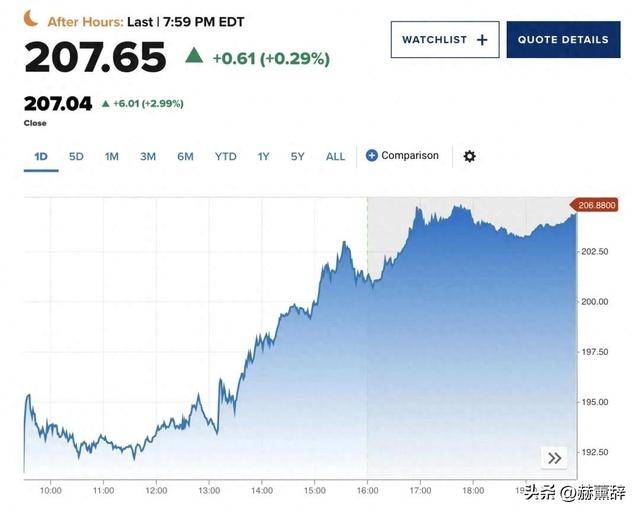
与OpenAI签署380亿美元算力供应协议,亚马逊开盘涨超4%
第一财经· 2025-11-03 16:27
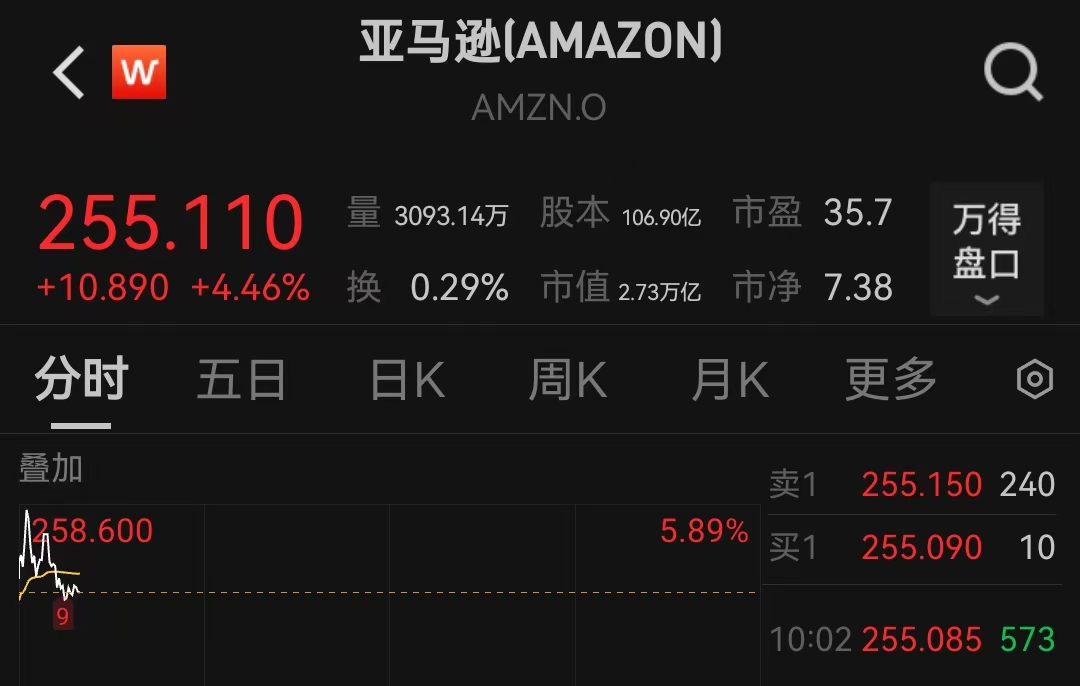
Core Viewpoint - Amazon has announced a long-term strategic partnership with OpenAI, involving a financial commitment of $38 billion, which is expected to enhance AI processing capabilities through AWS infrastructure [3][4]. Group 1: Partnership Details - OpenAI will utilize Amazon EC2 UltraServers, accessing hundreds of thousands of NVIDIA GPUs, with the potential to scale to tens of millions of CPUs [4]. - The partnership's value of $38 billion is projected to grow over the next seven years [4][5]. - OpenAI is expected to start using AWS computing services immediately, with full deployment of computing capabilities anticipated by the end of 2026 [5]. Group 2: Competitive Landscape - OpenAI is focusing on GPU usage for its computational needs, contrasting with Anthropic, which has opted for Amazon's proprietary AI chips [5]. - Recent collaborations between OpenAI and major GPU manufacturers, including NVIDIA and AMD, indicate a trend of significant investments in AI infrastructure [6]. Group 3: Financial Performance - Amazon reported a 12% increase in net sales to $180.2 billion for Q3 2025, with a net profit of $21.2 billion, reflecting a 38.6% year-over-year growth [7]. - AWS has experienced its highest growth rate since 2022, driven by strong demand for AI and core infrastructure [7]. Group 4: Market Sentiment - There is ongoing debate in the market regarding the potential for an AI bubble, with experts suggesting that the return on investment from massive AI expenditures may not be clear for at least a year [7].
美股风险的三组观察指标
一瑜中的· 2025-11-03 16:04
Core Viewpoint - The article discusses the increasing concerns about an AI bubble in the U.S. stock market, contrasting current market conditions with the 2000 dot-com bubble, particularly focusing on valuation, corporate debt, and macro investment trends [2][10]. Group 1: Market Valuation - The current valuation of the S&P 500 index has reached levels comparable to those in 1999-2000, while the absolute and relative valuations of MAG7 are significantly lower than those of the Nasdaq during the same period. As of the end of October, MAG7's PE ratio is approximately 41X, which is 1.4 times that of the S&P 500 index [3][11]. - In 1999-2000, the Nasdaq's PE ratio exceeded 100X, over four times that of the S&P 500. Notable companies today, such as Nvidia (59X), META (23X), Microsoft (37X), and Oracle (59X), have valuations lower than those of companies like Cisco (200X) and Yahoo (666X) back in March 2000 [3][11]. - The equity risk premium (ERP) for the S&P 500 is currently around 4%, compared to less than 1% at the beginning of 2000. A simple estimation using PE ratios suggests an ERP of approximately -0.6% now, versus a low of -2.9% in early 2000 [16]. Group 2: Corporate Debt - The debt-to-asset ratio for the S&P 500 is about 27%, lower than the average of 38% during 1999-2000. The MAG7's debt-to-asset ratio is approximately 17%, the lowest since 2015 [4][19]. - The debt-to-EBITDA ratio for the S&P 500 is around 3.6, compared to an average of 4.7 in 1999-2000. For MAG7, this ratio is about 0.6, also the lowest since 2015 [4][19]. Group 3: Macro Investment and Profits - Private investment in information processing equipment in the U.S. accounts for 2% of nominal GDP as of Q2 this year, which is relatively low compared to 2.8% during the 1999-2000 peak. Software investment is at 2.4%, slightly above the trend from 2004-2019, while it was 1.5% in 1999-2000 [22]. - The EPS of the S&P 500 has not shown significant divergence from U.S. corporate profits, unlike the period from 1998 to 2000, where EPS was inflated due to stock options and other accounting practices [23].

与OpenAI签署380亿美元算力供应协议,亚马逊开盘涨超4%
Di Yi Cai Jing· 2025-11-03 15:49
Core Insights - Amazon announced a strategic partnership with OpenAI valued at $38 billion, which is expected to grow over the next seven years [1][2] - Following the announcement, Amazon's stock rose over 4% in pre-market trading [1] Partnership Details - OpenAI will run its AI workloads on Amazon Web Services (AWS), utilizing Amazon EC2 UltraServers that provide access to hundreds of thousands of NVIDIA GPUs and the ability to scale up to tens of millions of CPUs [2] - AWS is currently building the infrastructure for OpenAI, employing complex architectural designs to enhance AI processing efficiency [2] Deployment Timeline - OpenAI is set to begin using AWS computing services immediately, with all computing capabilities expected to be deployed by the end of 2026, and potential further expansion in 2027 and beyond [3] Competitive Landscape - Amazon did not specify whether OpenAI would use its proprietary AI chips, unlike Anthropic, which has utilized Amazon's Trainium and Inferentia chips [3] - OpenAI has been expanding its partnerships with various computing providers, favoring GPU usage over proprietary ASIC chips [3] Financial Context - NVIDIA announced an investment of up to $100 billion in OpenAI to support the construction of AI data centers with at least 10 gigawatts of capacity [4] - OpenAI's CEO stated that the company’s revenue exceeds $13 billion, indicating confidence in future growth despite significant capital expenditure commitments [4] - Amazon reported a 12% increase in net sales to $180.2 billion for Q3 2025, with a net profit of $21.2 billion, reflecting strong demand for AI and core infrastructure [4] Market Sentiment - There is ongoing debate in the market regarding the potential for an AI bubble, with experts suggesting that the return on investment from massive AI expenditures may not be clear for at least a year [5]
美股风险的三组观察指标:【每周经济观察】海外周报第112期-20251103
Huachuang Securities· 2025-11-03 11:41
Group 1: Market Valuation - The S&P 500 index's valuation has reached levels comparable to those in 1999-2000, while the MAG7's absolute and relative valuations remain significantly lower than the Nasdaq during that period[2] - As of the end of October, the PE ratio of MAG7 is approximately 41X, which is 1.4 times that of the S&P 500; in contrast, the Nasdaq's PE exceeded 100X in 1999-2000, over 4 times that of the S&P 500[2] - Current valuations for companies like Nvidia (59X), META (23X), Microsoft (37X), and Oracle (59X) are lower than those of Cisco (200X), Microsoft (56X), Yahoo (666X), and Sun Micro (123X) in March 2000[2] Group 2: Company Debt - The debt-to-asset ratio for the S&P 500 is approximately 27%, compared to an average of 38% during 1999-2000; the MAG7's ratio is about 17%, the lowest since 2015[3] - The debt-to-EBITDA ratio for the S&P 500 is around 3.6, while the average during 1999-2000 was 4.7; for MAG7, this ratio is approximately 0.6, also the lowest since 2015[3] Group 3: Macro Investment and Profits - Private investment in information processing equipment as a percentage of nominal GDP is 2% as of Q2 this year, lower than the 2.8% peak in 1999-2000[4] - Software private investment accounts for 2.4% of nominal GDP, slightly above the trend from 2004-2019, while it was 1.5% in 1999-2000[4] - Currently, there is no significant divergence between the S&P 500's EPS and U.S. corporate profits, unlike the substantial discrepancies observed from 1998 to 2000[4]
英伟达市值突破5万亿美元,AI浪潮下超级公司影响力激增
Sou Hu Cai Jing· 2025-11-03 11:38
Core Insights - Nvidia has reached a historic milestone with a market capitalization exceeding $5 trillion, surpassing the GDP of Germany and Japan combined for 2024, making it the third-largest economy globally after the US and China [3][4] - The rapid growth of Nvidia's market value, which has increased over tenfold in just three years, is attributed to its dominance in the GPU market and the CUDA ecosystem, providing essential hardware and software support for AI development [4][5] - The AI infrastructure investment is surging, with major tech companies like Microsoft and Amazon expected to spend nearly $400 billion by 2025, a significant portion of which will be directed towards Nvidia's AI chips [5][6] Nvidia's Market Position - Nvidia's market capitalization now equals the combined value of the other nine largest chip companies, solidifying its position as the absolute leader in the semiconductor industry [4] - The company's net profit has also surged over tenfold, indicating a strong correlation between its market value and profitability, suggesting that its stock valuation remains reasonable [4][5] AI Investment Landscape - OpenAI plans to invest over $1.4 trillion in AI infrastructure over the coming years, with $500 billion earmarked for purchasing Nvidia's chips, highlighting the critical role Nvidia plays in the AI ecosystem [5][6] - Despite the massive investments in AI, the direct profitability from AI applications remains low, with OpenAI's revenue for the first half of the year at $4.3 billion against a loss of $13.5 billion [6][7] Historical Context and Comparisons - The current AI investment frenzy draws parallels to the internet bubble of the late 1990s, with significant capital flowing into AI-related ventures, raising concerns about potential market corrections [7][8] - Cisco's historical role as a "picks and shovels" provider during the internet boom mirrors Nvidia's current position in the AI sector, where demand for its products is expected to rise as the market expands [8][9] Financial Strategies and Risks - Tech companies are employing complex financing strategies, including partnerships with private equity firms to fund data center construction, reminiscent of the risky financial practices leading up to the 2008 financial crisis [10][11] - The interconnectedness of AI investments and the potential for widespread financial repercussions if a major player defaults raises concerns about the stability of the current market environment [10][11] Future Outlook - The optimism surrounding OpenAI and other tech giants is bolstered by their increasing capital expenditures, which support Nvidia's stock price growth [7][12] - The balance of power is shifting as super companies like Nvidia gain unprecedented influence, raising questions about regulatory oversight and the implications for market dynamics and public interests [12][15]


全球最大的公司诞生!市值突破35万亿,超过日本、德国GDP
Sou Hu Cai Jing· 2025-11-03 11:09
文|撒胡 编辑|撒胡 根据最近的官方报告显示,全球最大的公司已经诞生,其市值突破5万亿美元!换算成人民币已经超过 了35万亿。 这个数据甚至要超过了一整个国家,比日本全年创造的国民生产总值都高,也超过了制造业强国德国的 GDP,即便将英国、法国、德国这三个国家的股市加起来,都比不过人家。 这个公司究竟是那个?他的崛起对我们来说是好事还是坏事? 不可思议的业绩 但市场从来不只是为现在买单,更是为未来下注,就在市值突破的前一天,10月28日,创始人黄仁勋在 华盛顿的一场发布会上,亲手点燃了市场的下一轮狂热。 他不仅给出了一个令人瞠目结舌的业绩指引——预计未来几个季度收入将达到5000亿美元,还展示了公 司深不见底的技术储备,从量子计算到机器人技术,再到所谓的"AI工厂",英伟达几乎在所有前沿领 域都布下了棋子。 最重磅的,当属那颗计划明年投产的新一代超级芯片,算力高达100PFlops,这个性能指标足以让所有 竞争对手感到绝望,未来的故事已经写好,而且看起来无比诱人。 如果说强悍的盈利是地基,对未来的美好预期是催化剂,那么真正让英伟达无法被撼动的,是它构建的 那个近乎垄断的生态系统。 说实话,英伟达的价值并非空中 ...
崩了个大的
Sou Hu Cai Jing· 2025-11-03 01:45
Group 1 - The market sentiment indicates that approximately 30%-40% of investors are experiencing losses this year, with a recent poll showing 51% reporting losses [1] - The recent volatility in the market has made it challenging to profit without identifying key trends and timing [1] - The white liquor sector has shown a quick recovery despite disappointing quarterly reports, suggesting that the market had already priced in poor performance [1] Group 2 - The white liquor market is currently viewed as having only trading opportunities, lacking a trend-driven medium-term outlook [2] - The performance slowdown of Kweichow Moutai is impacting its ecosystem, with financial attributes weakening and a decline in the collectibles market [2] - Discussions around the consumption of white liquor indicate a shift in consumer behavior, suggesting that the golden era for the sector may have passed [2] Group 3 - The technology, media, and telecommunications (TMT) sector has seen significant price increases, with trading congestion reaching a 20-year high [3] - The TMT sector's rapid growth has raised concerns about sustainability, with a potential for a market correction due to excessive short-term gains [4] - The concentration of major stocks in the U.S. market is at an all-time high, with the top 10 stocks comprising 41.4% of the S&P 500 index [4] Group 4 - The adjustment in the TMT sector could negatively impact the overall market, especially given the high proportion of leveraged positions [5] - The market's ability to manage indices has improved, contributing to long-term investor confidence [6] - The focus is shifting towards ensuring that various sectors contribute to index growth, rather than relying solely on the high-performing technology sector [6]

音频 | 格隆汇11.3盘前要点—港A美股你需要关注的大事都在这
Ge Long Hui A P P· 2025-11-02 23:05
Group 1 - Berkshire Hathaway sold $61 billion in stock in Q3, marking five consecutive quarters without buybacks, totaling $184 billion over three years, leaving $382 billion in cash [1] - The European Union is reportedly considering implementing physical tariffs on key raw material supplies from China [1] - OPEC has decided to increase production by 137,000 barrels per day in December, with a pause in production increases planned for Q1 next year [1] Group 2 - The China Securities Regulatory Commission (CSRC) is seeking public opinion on the draft guidelines for performance benchmarks for publicly raised securities investment funds [2] - The CSRC stated that fund managers whose performance significantly lags behind benchmarks will see a substantial reduction in performance-based compensation [2] - The Ministry of Finance announced that taxpayers selling standard gold outside exchanges must pay value-added tax according to current regulations [2] Group 3 - The new energy vehicle sector saw significant deliveries in October, with Zeekr surpassing 60,000 units, and both Xpeng and Xiaomi exceeding 40,000 units [2] - BYD achieved a record high in October sales, delivering 441,706 vehicles [2] - Macau's gaming revenue in October rose by 15.9%, exceeding expectations [2]