结构性改革

Search documents
X @外汇交易员
外汇交易员· 2025-07-11 06:26
Economic Stimulus Recommendations - Experts suggest the government should implement additional economic stimulus measures of 1 to 15 trillion RMB (approximately $137 billion to $206 billion USD based on current exchange rates) within 12 months [1] - The stimulus aims to boost resident consumption and mitigate the economic damage caused by US tariffs [1] - The report emphasizes the need for stronger counter-cyclical policies to maintain stable growth [1] Structural Reform Proposals - The report suggests expanding the individual income tax base and simplifying the value-added tax (VAT) structure in the long term [1] - The report highlights the importance of managing risks associated with SME lending to enable banks to lend to more productive sectors [1]
国际清算银行报告指出——美加征关税颠覆世界经济软着陆预期
Jing Ji Ri Bao· 2025-07-10 22:02
Group 1 - The comprehensive tariff war initiated by the US government in April has disrupted the expected soft landing of the global economy, leading to increased policy uncertainty and a downward revision of economic growth forecasts [1] - The report highlights that the global economy showed signs of soft landing at the beginning of 2025, with inflation rates nearing target levels and a global growth rate slightly above 3% in 2024, but the sudden tariff war has darkened the global economic outlook [1][2] - The report indicates that the potential growth rate of the real economy has been declining, with high public debt levels and risks in non-bank financial institutions exacerbating global economic risks [2] Group 2 - The report emphasizes that the role of non-bank financial institutions has increased significantly in cross-border financial transactions, raising concerns about liquidity mismatches and potential market panic [3] - Effective economic policies must maintain economic and financial stability while promoting sustainable growth, which requires clear goals and appropriate tools to build and maintain public confidence [3] - To restore the global economy, the report calls for structural reforms, fiscal policies, regulatory policies, and monetary policies to enhance market vitality and ensure debt sustainability [4]
十年国债ETF(511260)昨日净流入超1.0亿,跨季资金宽松支撑利率下行
Sou Hu Cai Jing· 2025-07-10 01:57
Group 1 - The 30-year government bond ETFs, specifically Bosera 30-Year Government Bond Index ETF and Pengyang 30-Year Government Bond ETF, showed strong performance with daily increases of 0.84% and 0.79% respectively on July 8, 2025 [1] - The central bank did not publish the usual government bond trading operations in June 2025, following its first-ever bond trading operation in August 2024, where it net purchased bonds worth 100 billion yuan [1] - The first quarter monetary policy report indicated that the central bank paused government bond purchases due to a supply-demand imbalance in the bond market [1] Group 2 - Global political and economic order is rapidly restructuring in 2025, with the "Trump 2.0" policy becoming a key variable, leading to increased trade barriers and geopolitical conflicts, which heighten global economic uncertainty and slow growth [1] - China is expected to achieve an annual economic growth rate of approximately 5% through structural reforms in response to external shocks [1] - The domestic demand shortage, low price levels, and external uncertainties are providing support for the bond market, but limited room for further fundamental gains is anticipated due to stable economic growth [1] Group 3 - Under the policy framework of "proactive fiscal policy + moderate monetary easing," there is a likelihood of a 10-15 basis point interest rate cut in the fourth quarter, which may drive down the interest rate center [1] - The bond market is expected to maintain volatility, with a higher probability of strengthening in the fourth quarter [1] Group 4 - The 10-Year Government Bond ETF tracks the 10-Year Government Bond Index, which primarily selects fixed-rate government bonds with a remaining term close to 10 years listed on the Shanghai Stock Exchange, reflecting the overall performance of China's long-term government bond market [2] - The index does not involve specific industry or style allocations, and the issuer is typically the Ministry of Finance of China, aimed at providing investors with a benchmark tool for measuring the long-term government bond market [2]
21社论丨用好用足政策空间,发挥内需稳经济作用
2 1 Shi Ji Jing Ji Bao Dao· 2025-07-07 22:41
Economic Overview - China's economy is showing resilience with a stable growth outlook, supported by proactive macro policies and a strong domestic demand [1][2] - Export growth in the first five months of the year was 6.0% in USD terms, surpassing last year's annual growth of 5.8% [1] - The contribution of net exports to GDP growth in Q1 was 38.9%, higher than last year's 30.3% [1] Domestic Demand and Consumption - Domestic consumption is improving, with retail sales growing by 5.0% year-on-year from January to May, compared to 3.5% for the entire previous year [2] - Key consumer sectors such as communication equipment, home appliances, and furniture saw growth rates exceeding 20% due to the "old-for-new" consumption policy [2] - Fixed asset investment also increased by 3.7% year-on-year in the same period, outpacing last year's 3.2% [2] Fiscal and Monetary Policy - Fiscal policy is becoming more proactive, with a record-high deficit ratio and significant expansion in special bonds and long-term special bonds [1][3] - The total fiscal space available for the second half of the year exceeds 7 trillion yuan, with ample room for supporting consumption, investment, and foreign trade [3] - Monetary policy is expected to remain flexible, focusing on the effectiveness of existing policies rather than further easing in the short term [2] Structural Reforms and Future Outlook - Economic pressures are manageable, providing a window for structural reforms, including the promotion of a unified national market and the exit of outdated production capacity [3] - The government aims to transition from a manufacturing powerhouse to a major consumer economy, with new policies such as annual childcare subsidies starting in 2025 [3] - Additional measures to boost consumption, including optimizing vacation systems and improving social security, are being actively implemented [3]
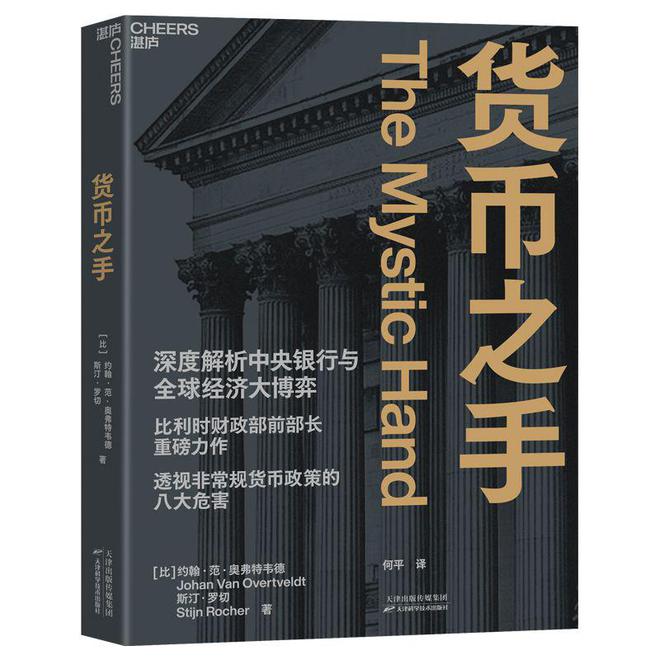
21书评|揭开货币政策迷雾与全球治理的双重面纱
2 1 Shi Ji Jing Ji Bao Dao· 2025-07-04 08:49
Core Insights - The book "The Hand of Money" aims to demystify monetary policy, addressing misconceptions about its functions and limitations [1][3][4] Group 1: Misconceptions about Monetary Policy - There are two prevalent misconceptions among the public regarding monetary policy: one is that it can effectively smooth out economic fluctuations, while the other is the belief in its omnipotence during economic downturns [3][4] - The book emphasizes the importance of understanding the limitations of monetary policy, particularly in times of economic and financial crises, where it may be ineffective [4][5] Group 2: Role of Central Banks - The author highlights the critical role of central banks as lenders of last resort, referencing historical economists who have discussed this function [4][5] - The book illustrates various monetary tools that central banks can employ during crises, such as quantitative easing and negative interest rates, beyond traditional monetary policy [4][6] Group 3: Structural Economic Changes - In China, there is a tendency to focus on short-term demand in monetary policy analysis, neglecting the ongoing structural adjustments in the economy since the reform and opening-up [5][6] - The transition towards a high-quality, innovation-driven economy necessitates a reevaluation of existing monetary policies, as traditional models may no longer apply [5][8] Group 4: Academic Research vs. Policy Practice - There exists a disconnect between academic research and policy practice in the field of monetary policy, with the former often being abstract and the latter more context-specific [6][7] - The book argues for the necessity of integrating academic insights with practical policy-making to address real-world economic challenges effectively [7][8] Group 5: Ethical Considerations in Monetary Policy - The book critiques the ethical implications of monetary policy, particularly regarding wealth distribution and the potential moral hazards faced by policymakers [10][11] - It warns against short-sighted monetary policies that may prioritize immediate economic relief at the expense of long-term stability and structural reforms [10][11]

展望下半年全球经济,汇丰最新发声!
天天基金网· 2025-07-02 06:37
Core Viewpoint - HSBC Global Investment Research indicates that the global economy may face increased downward pressure, with expected growth rates for global goods and services trade exports declining to 1.8% year-on-year by 2025, and global economic growth slowing to 2.5% during the same period [1][2]. Group 1: Global Economic Outlook - The "export rush" effect supported economic growth in non-U.S. major economies, including the EU and China, in the first quarter of the year, exceeding initial market expectations [2]. - Uncertainty surrounding tariff policies and macroeconomic policies, including the Federal Reserve's interest rate decisions, may lead to more downward pressure on the global economy [2]. - HSBC forecasts that global goods and services trade export growth rates will decline to 1.8% in 2025 and 0.6% in 2026, with global economic growth slowing to 2.5% in 2025 and 2.3% in 2026 [2]. Group 2: Inflation and Monetary Policy - U.S. inflation is expected to remain sticky, with projections indicating it will stay significantly above the Federal Reserve's 2% target until the end of 2026 [2]. - As a result, the Federal Reserve may only reduce policy interest rates by a cumulative 75 basis points by the end of 2026 [2]. - The uncertainty in tariff outlooks is causing businesses to delay investment decisions, potentially leading to a series of chain reactions that could further drag down economic growth [2]. Group 3: China's Economic Resilience - Despite the changing international landscape, China's economy remains resilient, with a focus on long-term stability through structural reforms [5]. - Recent structural reforms, such as the removal of household registration restrictions for social insurance and the implementation of the Private Economy Promotion Law, are aimed at long-term policy directions [5]. - The increase in tariffs is expected to have a negative short-term impact on trade, but long-term effects may lead to a new round of industrial chain restructuring and changes in trade and investment flows [5]. Group 4: Global Trade Dynamics - A survey conducted by HSBC revealed that 44% of global enterprises plan to increase trade with China, the highest among targeted markets, followed by Europe (43%) and the U.S. (39%) [7]. - In manufacturing, 40% of surveyed companies are currently or plan to increase production in China over the next two years, second only to Europe (45%) [7]. - Asian enterprises show a higher inclination to increase trade and manufacturing in China, with 54% and 52% respectively, indicating deepening economic ties within the region [7].


瑞银证券孟磊:A股盈利或逐季温和复苏
news flash· 2025-07-01 08:54
Core Viewpoint - UBS Securities analyst Meng Lei believes that A-share earnings may gradually recover quarter by quarter this year, provided the macro environment remains stable [1] Group 1: Market Outlook - After short-term fluctuations, the market is expected to present upward opportunities in the medium to long term [1] - Any incremental fiscal and monetary policies may boost market confidence and drive A-share market valuation increases in the medium term [1] Group 2: Structural Reforms - China is undergoing comprehensive structural reforms that are gradually enhancing investment attractiveness [1] - Key aspects of these reforms include lowering foreign investment access thresholds and invigorating the vitality of private enterprises [1]
欧洲央行决定维持2%的通胀目标
news flash· 2025-07-01 01:23
与会人士围绕货币政策、金融稳定、结构性改革和全球经济趋势等议题展开讨论。(新华社) 根据战略评估,欧洲央行认为,"为应对通胀率长期大幅偏离目标,有必要采取适当有力或持续的货币 政策措施"。拉加德说,结构性变化表明,未来经济环境将持续存在不确定性并更具波动性。 欧洲央行中央银行论坛6月30日在葡萄牙辛特拉开幕。欧洲央行行长拉加德当天在论坛上发布了欧洲央 行最新货币政策战略评估,并决定维持2%的通胀目标。 ...
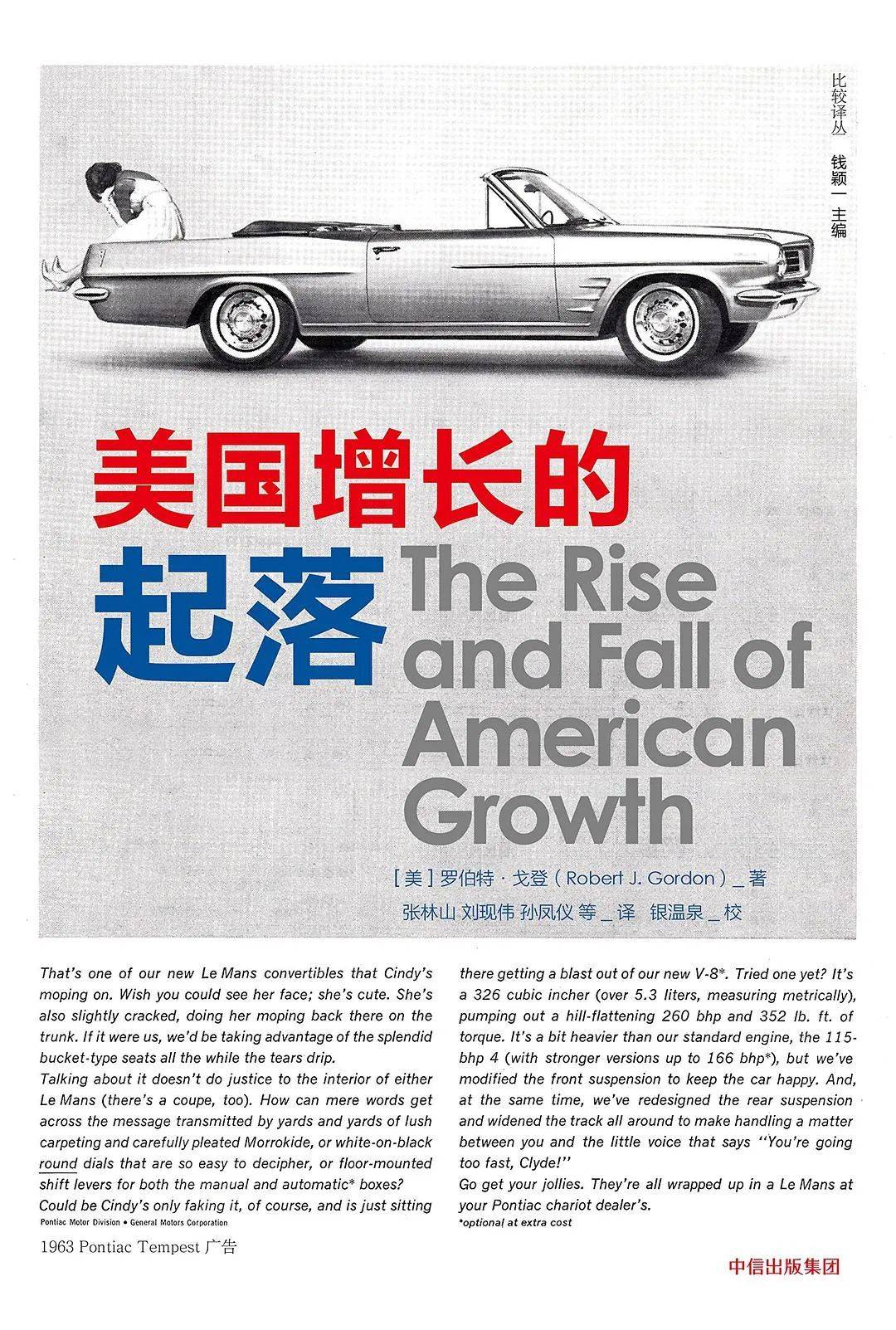
美国经济真正的问题
Hu Xiu· 2025-06-26 05:40
Group 1 - The article discusses the unpredictability of Trump's policies and their impact on the U.S. economy, suggesting that his approach of externalizing internal issues does not address the root problems of the economy [1] - It highlights that the driving force behind the U.S. economy is internal innovation rather than external factors, emphasizing the need for continuous innovation for sustained economic growth [2][5] - The article outlines the historical economic growth cycles in the U.S., noting a significant decline in total factor productivity growth since the 1970s, which has contributed to the erosion of the "American Dream" [5][6] Group 2 - The article explains the "tunnel effect" in social psychology, where economic stagnation exacerbates social tensions, leading to a perception of inequality and frustration among the lower classes [6][11] - It argues that the U.S. economy is currently facing a bottleneck due to over-saturation in the market and the offshoring of manufacturing jobs, which has resulted in a decline in domestic job opportunities [7][8] - The transition from an industrial to a service-based economy has not yielded the same level of technological advancement as previous industrial revolutions, raising questions about the overall impact on economic growth [8][9] Group 3 - The article points out that despite the rise of the internet economy, the overall contribution to productivity growth has been limited, with many innovations not translating into significant economic benefits for the majority [9][10] - It discusses the phenomenon of "jobless growth," where technological advancements do not create proportional job opportunities, particularly for lower-skilled workers [10][11] - The concentration of wealth among a small number of individuals due to globalization and capital-intensive industries has led to increased inequality and reduced opportunities for the average worker [11][12] Group 4 - The article suggests that revitalizing innovation is crucial for economic recovery, proposing policies such as a super tax rate to address inequality and improve public services [12][13] - It critiques Trump's policies as failing to address the deeper structural issues in the economy, arguing that they may hinder long-term growth and innovation [12][13] - The need for structural reforms is emphasized, as avoiding necessary changes could lead to greater long-term costs, particularly for the most vulnerable populations [13]