
现代化产业体系

Search documents
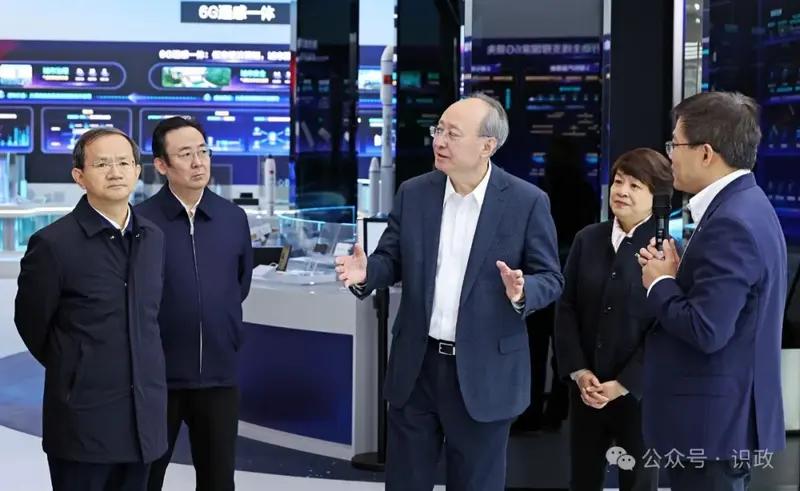
尹力、殷勇到经开区调研,要求在发展新质生产力、培育增长新动能上持续发力
Xin Jing Bao· 2025-10-29 23:50
Group 1 - The core message emphasizes the importance of implementing the spirit of the 20th National Congress, focusing on high-quality development and building a modern industrial system in Beijing [1][6] - The Beijing Economic and Technological Development Zone is encouraged to leverage its resources to create a hub for emerging and future industries, particularly in high-tech sectors [1][5] - The city aims to enhance its innovation ecosystem by fostering leading enterprises in artificial intelligence and other strategic sectors, ensuring a robust support system for startups and high-growth companies [5][6] Group 2 - The 6G technology is identified as a key area for future industrial development, with a call for accelerated establishment of 6G laboratories and focus on core technologies [2][3] - The city is committed to integrating digital technologies into traditional industries to enhance their competitiveness and promote the growth of strategic emerging industries [6][7] - There is a strong emphasis on creating a favorable industrial development environment by improving financial services, optimizing the business ecosystem, and enhancing regional collaboration [7][8]

建设现代化产业体系,巩固壮大实体经济根基(深度观察)
Ren Min Ri Bao· 2025-10-29 22:41
Core Viewpoint - The article discusses the achievements and future directions of China's modernization of its industrial system, emphasizing the transformation and upgrading of traditional industries, the growth of emerging and future industries, and the development of modern service industries and infrastructure. Traditional Industry Transformation - During the "14th Five-Year Plan" period, traditional industries in China have accelerated their transformation towards high-end, intelligent, and green development, with significant improvements in brand reputation and product quality [5][7]. - China Baowu Steel Group has implemented AI in its operations, achieving over 90% accuracy in temperature control during iron production, leading to a fuel saving of 2 kg per ton of iron [4][5]. - The steel industry has seen a 65 units per 10,000 people application density of robots, with 82.9% of enterprises establishing intelligent control centers [7]. Emerging and Future Industries - Emerging and future industries are crucial for economic stability and the development of new productive forces, with China's "three new" economy accounting for over 18% of GDP by 2024 [12][13]. - The country has established a leading position in sectors like new energy, intelligent networking, and quantum technology, with expectations for significant market growth in these areas during the "15th Five-Year Plan" [12][13]. - The development of embodied intelligent robots is highlighted as a key area, with expectations for large-scale applications in various sectors [10][11]. Modern Service Industry - The modern service industry has integrated deeply with advanced manufacturing, with significant growth in sectors like information technology and business services, achieving annual growth rates of 13% and 13.3% respectively from 2020 to 2024 [20][21]. - The production service sector is increasingly supporting the modernization of the manufacturing industry, with a 15.3% share of intermediate inputs in manufacturing in 2023 [20]. Modern Infrastructure Development - The modernization of infrastructure has accelerated, with a comprehensive transportation network exceeding 6 million kilometers and advancements in communication infrastructure [26][27]. - Future efforts will focus on optimizing the infrastructure structure, enhancing connectivity, and ensuring safety and efficiency in development [27][28].

发挥先进制造业的“骨干”作用
Jing Ji Ri Bao· 2025-10-29 22:33
Group 1 - The core viewpoint emphasizes the importance of advanced manufacturing as the backbone of a modern industrial system, which is crucial for enhancing innovation capabilities and optimizing industrial structure [1][4] - Advanced manufacturing is described as the "muscle and bone" of the modern industrial system, highlighting its growing significance despite a decrease in the manufacturing sector's share of the national economy [2][4] - The development potential of advanced manufacturing is immense, driven by technological progress and economic growth, which necessitates higher efficiency and greener production methods [3][5] Group 2 - Advanced manufacturing plays a critical role in ensuring the safety and stability of industrial and supply chains, especially in the context of global competition and technological self-sufficiency [4][6] - Key strategies for enhancing advanced manufacturing include increasing investment in basic research, addressing supply chain bottlenecks, accelerating digital transformation, and deepening international cooperation [5][6] - The need for advanced manufacturing to support the digital economy and provide essential products for various sectors, including AI and internet services, is emphasized [2][3]
建设现代化产业体系 巩固壮大实体经济根基(深度观察)
Ren Min Ri Bao· 2025-10-29 22:16
Traditional Industries - The transformation and upgrading of traditional industries during the "14th Five-Year Plan" period is exemplified by the advancements in Baosteel, where AI is applied to control the temperature of molten iron, achieving a temperature variance of less than 10 degrees Celsius and saving 2 kilograms of fuel per ton of iron produced [1][2]. - China Baowu has established smart factories and completed ultra-low emission transformations in 15 steel bases, which account for over 98% of its production [2]. - The focus for the "15th Five-Year Plan" will be on intelligent, green, and integrated development, with an emphasis on AI innovation to enhance production efficiency and product quality [2][3]. Emerging and Future Industries - The "14th Five-Year Plan" marked a critical phase for the commercialization of embodied intelligent robots, with companies like Juyuan Electronics leading in flexible manufacturing solutions [8][9]. - China has established a leading position in emerging industries such as new energy and quantum technology, with the "three new" economy's value added exceeding 18% of GDP by 2024 [11]. - The "15th Five-Year Plan" is expected to foster a development pattern characterized by technological breakthroughs and deep cross-industry integration, potentially creating several trillion-yuan markets in strategic emerging industries [11][12]. Service Industry - The modern service industry has shown significant growth during the "14th Five-Year Plan," with annual growth rates of 13% in information technology services and 13.3% in leasing and business services [17]. - The integration of modern service industries with advanced manufacturing is crucial for enhancing productivity and quality, with a focus on sectors like design, consulting, and supply chain finance [18]. - The "15th Five-Year Plan" aims to expand and improve the service industry, emphasizing the need for standardization and quality enhancement in sectors such as hospitality and elder care [18]. Modern Infrastructure - The construction of a modern infrastructure system has accelerated, with over 600 million kilometers of comprehensive transportation networks established during the "14th Five-Year Plan" [23]. - The focus for the "15th Five-Year Plan" will be on optimizing and enhancing the efficiency of infrastructure, including the development of a national integrated computing power system and advanced transportation networks [24][25]. - There is a need to address existing shortcomings, such as insufficient regional coordination and the presence of data silos, to ensure a more interconnected and efficient infrastructure system [23][24].


湖北宜昌市经济和信息化局党组书记、局长朱汉洪:立足实际筑牢产业基石
Jing Ji Ri Bao· 2025-10-29 22:14
Core Viewpoint - The relationship between government and market is crucial for building a high-level socialist market economy system, as emphasized by the strategic direction outlined in the 20th National Congress of the Communist Party of China [1] Group 1: Economic Strategy - The current economic resilience of China is attributed to the establishment of a more effective market and a proactive government [1] - The focus is on improving market institutional rules and standards, maintaining a reasonable proportion of the manufacturing industry, and building a modern industrial system centered on advanced manufacturing [1] Group 2: Local Implementation - The economic and information technology department of Yichang will implement the spirit of the 20th National Congress, focusing on "industrial strength and industry-based city" [1] - Efforts will be made to transform and upgrade traditional industries, cultivate and strengthen emerging industries, and strategically plan for future industries [1] - The integration of new-generation information technology will empower new industrialization, with a focus on developing new productive forces tailored to local conditions [1]
城市24小时 | “北方第二城”,要变了?
Mei Ri Jing Ji Xin Wen· 2025-10-29 15:37
Economic Performance - In the first three quarters, Qingdao's GDP reached 1,337.347 billion yuan, with a year-on-year growth of 5.4% [1] - Tianjin's GDP for the same period was 1,341.608 billion yuan, showing a year-on-year increase of 4.7% [1] - Qingdao's primary industry added value was 37.191 billion yuan (up 4.2%), secondary industry was 440.121 billion yuan (up 5.1%), and tertiary industry was 860.035 billion yuan (up 5.6%) [1] - Tianjin's primary industry added value was 16.272 billion yuan (up 2.5%), secondary industry was 453.197 billion yuan (up 3.6%), and tertiary industry was 872.139 billion yuan (up 5.2%) [1] Comparative Analysis - The economic gap between Qingdao and Tianjin has been narrowing, with a difference of approximately 2,300 billion yuan in 2019, reducing to around 1,300 billion yuan by 2024 [2] - By 2025, the GDP increment for Qingdao was 97.437 billion yuan, while Tianjin's was 74.221 billion yuan, leading to a gap of less than 5 billion yuan [3] Strategic Initiatives - Qingdao has been assigned the task of becoming a leading city in economic growth as part of Shandong's three-year action plan for high-quality development [3] - The "14th Five-Year" plan emphasizes building a modern industrial system and maintaining a reasonable proportion of manufacturing to strengthen the economy [5] Challenges and Opportunities - Qingdao's secondary industry growth rate of 5.1% and industrial added value growth of 7.7% are above the national average but below the provincial levels [4] - Tianjin's reliance on traditional heavy industries like petrochemicals and steel is hindering its economic growth, while Ningbo faces external challenges impacting its economy [4]

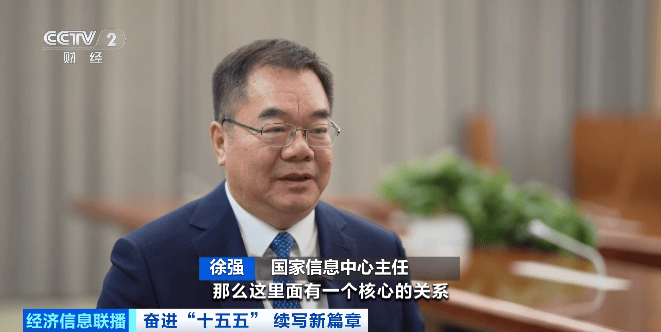
徐强:高质量发展需处理好政府与市场关系
Sou Hu Cai Jing· 2025-10-29 15:20
Core Viewpoint - The article emphasizes the importance of establishing a high-level socialist market economy system in China, focusing on enhancing the momentum for high-quality development through effective government and market relationships [1][3]. Group 1: High-Quality Development - High-quality development requires a balanced relationship between government intervention and market efficiency, particularly during times when market mechanisms fail [3]. - The construction of a modern industrial system is essential for achieving high-quality development, with a focus on intelligent, green, and integrated development as key guiding principles for future industrial growth [5][8]. Group 2: Future Industrial Development - The future direction of China's industrial development will prioritize intelligent, green, and integrated approaches, with intelligent development leveraging artificial intelligence to enhance various industries [8]. - Different regions in China will need to identify their unique advantages, such as talent, application scenarios, or computing power, to effectively implement intelligent strategies [10]. Group 3: Technological Innovation - The next five years should focus on accumulating original technological innovations, which are crucial for achieving self-reliance in technology and maintaining a competitive edge in high-end sectors [12][14]. - Emphasizing original technology and innovation will be vital for occupying the technological high ground and leading future industrial development, particularly in core technology breakthroughs [14].
“十五五”产业趋势三大关键定调:巩固传统优势 决胜新兴未来
2 1 Shi Ji Jing Ji Bao Dao· 2025-10-29 14:51
Core Viewpoint - The article emphasizes the importance of building a modern industrial system and strengthening the foundation of the real economy as a strategic task in China's 15th Five-Year Plan, highlighting four key tasks: optimizing traditional industries, nurturing emerging and future industries, promoting high-quality development of the service sector, and constructing a modern infrastructure system [1][2]. Group 1: Traditional Industries - The first key task is to optimize and enhance traditional industries, including mining, metallurgy, chemicals, light industry, textiles, machinery, shipbuilding, and construction, to strengthen their global competitiveness and position in the international division of labor [1][2][3]. - Traditional industries account for about 80% of the added value in China's manufacturing sector, serving as a fundamental support for the modern industrial system and contributing to stable growth, employment, and income [2][3]. - The focus is on upgrading traditional industries through technological transformation, green transition, and brand internationalization, shifting from a "cost advantage" to a "system advantage" in the global division of labor [3][4]. Group 2: Emerging and Future Industries - The plan aims to cultivate and expand emerging industries, with a focus on creating new pillar industries, particularly in areas such as new energy, new materials, aerospace, and the newly added low-altitude economy [5][6]. - The low-altitude economy is highlighted for its potential to activate a trillion-level market space, driven by advancements in technology and broad application scenarios [6][7]. - Future industries will include quantum technology, biomanufacturing, hydrogen and nuclear fusion energy, brain-computer interfaces, embodied intelligence, and sixth-generation mobile communications, which are expected to become new economic growth points [7][8]. Group 3: Service Sector Development - The article discusses the need to promote high-quality development in the service sector, emphasizing the expansion and enhancement of service capabilities, particularly in productive services [9][10]. - The productive service sector currently accounts for about 30% of China's GDP, indicating significant room for growth compared to developed economies [10]. - The plan includes constructing a modern infrastructure system, focusing on the development of new-type infrastructure and enhancing connectivity across regions to support economic growth [11][12].
“十五五”产业趋势三大关键定调:巩固传统优势,决胜新兴未来
2 1 Shi Ji Jing Ji Bao Dao· 2025-10-29 14:08
Core Insights - The article discusses the key directives outlined in the "15th Five-Year Plan" for China's economic and social development, emphasizing the importance of modernizing the industrial system and strengthening the real economy as a strategic priority [1][4]. Group 1: Traditional Industries - The plan prioritizes the optimization and enhancement of traditional industries such as mining, metallurgy, chemicals, light industry, textiles, machinery, shipbuilding, and construction, aiming to improve their global competitiveness and position in the international division of labor [1][5]. - Traditional industries account for approximately 80% of the added value in China's manufacturing sector, highlighting their foundational role in economic stability and growth [4]. - The focus on upgrading traditional industries is seen as a response to the ongoing global industrial restructuring, with an emphasis on transitioning from cost advantages to systemic advantages in the global market [5][6]. Group 2: Emerging and Future Industries - The plan aims to cultivate new pillar industries with global competitiveness, particularly in sectors like new energy, new materials, aerospace, and the newly introduced low-altitude economy [8][9]. - The low-altitude economy is expected to unlock a trillion-yuan market, driven by advancements in technology and significant demand across various applications [9][10]. - Future industries such as quantum technology, biomanufacturing, hydrogen energy, and brain-computer interfaces are identified as new economic growth points, with projections indicating substantial market potential in the coming years [10][11]. Group 3: Service Industry Development - The plan emphasizes the need for high-quality development in the service sector, particularly in productive services, which currently account for about 30% of GDP, indicating room for growth compared to developed economies [12][13]. - Initiatives to enhance the integration of modern services with advanced manufacturing and agriculture are expected to create new market opportunities and improve overall economic efficiency [13][14]. - The construction of a modern infrastructure system is also highlighted, with a focus on new types of infrastructure that support the digital economy and enhance connectivity across regions [14].
策略点评报告:\十五五\规划的战略新布局与投资机遇全解析:承前启后的中国现代化之路
Huafu Securities· 2025-10-29 13:20
Group 1 - The "15th Five-Year Plan" period (2026-2030) is positioned as a critical phase for achieving basic socialist modernization, emphasizing the need to consolidate advantages, eliminate bottlenecks, and strengthen weaknesses to gain strategic initiative in international competition [8][9] - The guiding principles of the "15th Five-Year Plan" continue the theoretical framework of the "14th Five-Year Plan" but place greater emphasis on "economic construction as the center," reflecting a strong focus on stabilizing growth in response to changing internal and external environments [10][12] - The development goal system of the "15th Five-Year Plan" has been significantly upgraded, with seven main goals outlined, including a focus on high-quality economic development and increased emphasis on domestic consumption [13][14] Group 2 - The strategic tasks of the "15th Five-Year Plan" show a structural adjustment, with the modern industrial system prioritized over technological innovation, indicating a shift towards balancing technological breakthroughs with industrial applications [17][18] - The "15th Five-Year Plan" outlines three key directions for modern industrial system construction: intelligent, green, and integrated development, with a clearer positioning of the manufacturing sector [18][20] - The plan emphasizes the importance of traditional industries' optimization and upgrading, as well as the cultivation of emerging and future industries, including strategic emerging industries like new energy and advanced materials [20][31] Group 3 - Investment opportunities are identified in four main lines: modern industrial system-driven investments, technology innovation-led emerging sectors, green transformation opportunities, and the silver economy alongside consumption upgrades [2][32][33] - The advanced manufacturing cluster is highlighted as a key investment area, with significant policy support expected for sectors such as aerospace, high-speed rail, and intelligent transportation equipment [27][30] - The "15th Five-Year Plan" emphasizes the importance of expanding domestic demand, with a focus on enhancing consumer spending and investing in human capital, which is expected to drive growth in service consumption and related sectors [22][23][33]