
智能化

Search documents
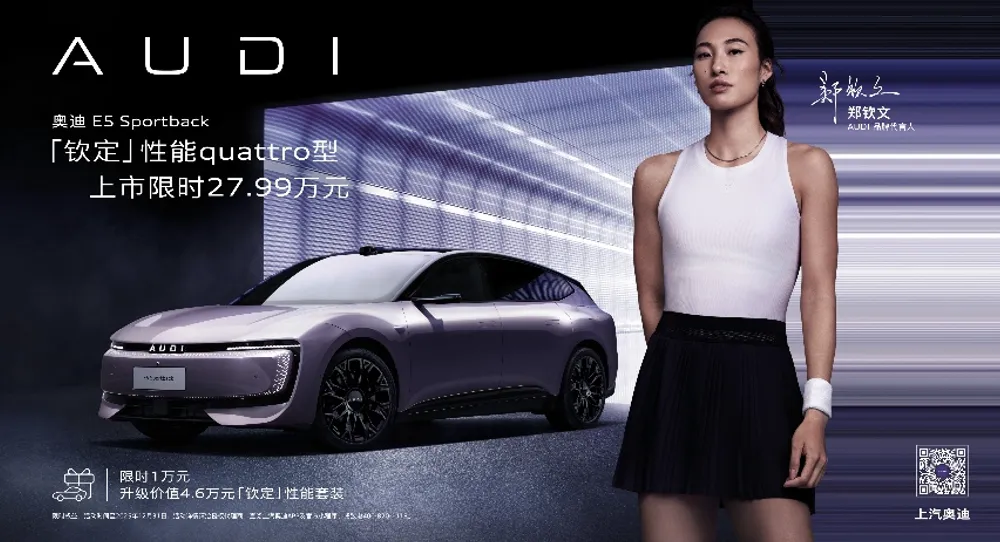
上汽奥迪携全系车型亮相2025广州车展
Cai Jing Wang· 2025-11-24 13:53
Core Insights - SAIC Audi showcased its full range of products at the 23rd Guangzhou International Auto Show, emphasizing its strategic focus on electrification and intelligence in the automotive sector [1][3] Product Launches - The Audi E5 Sportback Quattro model was officially launched with a limited-time price of 279,900 yuan, featuring significant upgrades in handling and luxury configurations [3][4] - The Audi E SUV concept car made its global debut, marking a step forward in the brand's family product system and targeting the luxury electric SUV market [6] Performance and Technology - The Audi E5 Sportback boasts a power output of 579 kW, a maximum range of 773 kilometers, and a rapid charging capability that allows for 380 kilometers of range in just 10 minutes [4] - The vehicle integrates the new AUDI OS operating system and advanced driver assistance technologies tailored for Chinese driving conditions [4][6] Market Strategy - SAIC Audi is expanding its presence in the luxury electric vehicle market while also enhancing the intelligence of its fuel vehicle offerings, such as the A5L Sportback, which features a maximum output of 200 kW and a unique MHEV plus system [7] - The company aims to establish over 240 full-function user centers across more than 100 cities by the end of the year, significantly enhancing its service network and customer experience [8]

智能装备“向新”记:让机器人打“难工”
2 1 Shi Ji Jing Ji Bao Dao· 2025-11-24 11:35
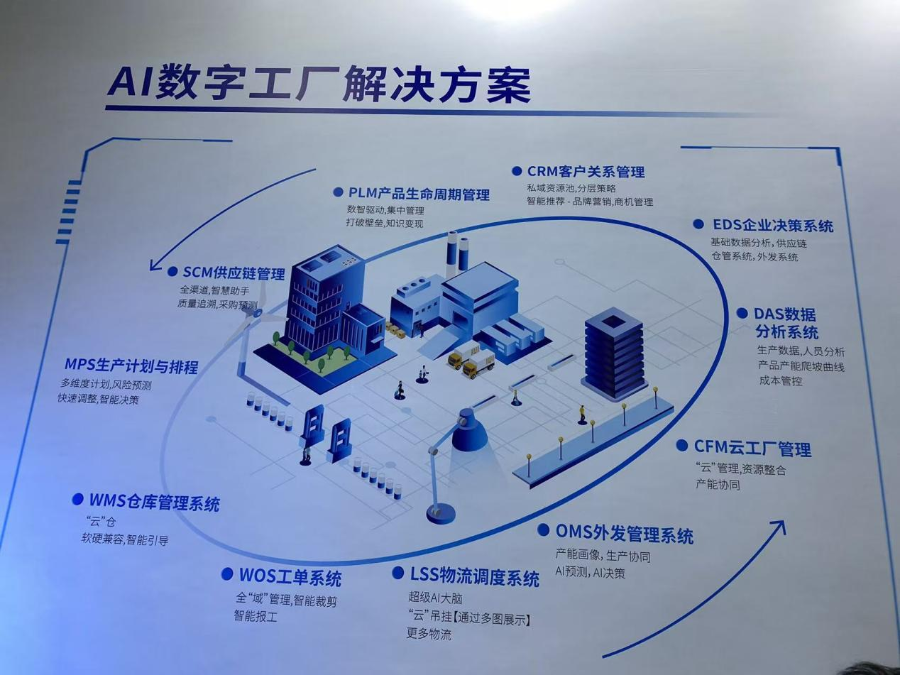
Core Insights - The "Intelligent+" development trend is deeply integrating smart equipment into various industries such as clothing and machinery, facilitating digital transformation in workshops [2][3]. Industry Overview - The 11th Yiwu International Intelligent Equipment Expo showcased 507 leading companies from the global smart equipment industry, presenting over a thousand smart equipment items across various sectors including robotics, smart manufacturing solutions, and advanced material processing [2]. - The expo reflects a shift in the equipment manufacturing industry, where companies are not just selling equipment but are also integrating digital technologies to enhance operational efficiency and safety [2][3]. Technological Advancements - New technologies and products in high-end equipment manufacturing are emerging, with a focus on smart robots, industrial mother machines, and intelligent logistics equipment [3]. - Companies are upgrading their systems to connect directly with Manufacturing Execution Systems (MES), allowing for automated processes and improved production efficiency [3][4]. Smart Manufacturing Solutions - In the clothing industry, a "Digital AI Factory" solution has been developed, enabling automation from design to production, significantly enhancing efficiency [5][6]. - AI software connects machines throughout the production process, allowing for streamlined operations where one supervisor can manage multiple production lines [6]. Robotics and Automation - The industry is increasingly adopting embodied intelligence to address labor-intensive and hazardous tasks, improving both efficiency and worker safety [7]. - Companies like Noli Intelligent Equipment are advancing towards unmanned operations with automated systems that enhance logistics efficiency and safety within factories [9]. Customization and Flexibility - Some companies are offering customizable automation solutions that allow for easy adjustments in packaging and logistics processes, significantly reducing manual labor [10][12]. - The "recipe-based" approach in automation allows for quick changes in production setups, making it easier for factories to adapt to varying product specifications [10].

智能绿色技术引领农机装备高质量发展
Huan Qiu Wang· 2025-11-24 10:13
Core Insights - The Chinese agricultural machinery market is advancing rapidly, driven by government policies and market demand, focusing on modernization and sustainability [1][2][10] Policy Impact - The implementation of the 2025 agricultural machinery scrapping and updating subsidy policy has significantly boosted the market, expanding the types of machinery eligible for subsidies and increasing subsidy amounts [2][3] - The annual value of agricultural machinery updates in China is approximately 300 billion yuan, with a 5% elimination rate leading to around 800,000 small tractors and other machinery being phased out each year [2][3] Market Dynamics - The agricultural machinery market is experiencing a "volume and price increase" trend, with total power exceeding 11 billion kilowatts and a 28% increase in sales of medium and large tractors [3][11] - The "old for new" policy has stimulated demand, with Jiangsu province alone scrapping 110,000 old machines, generating over 15 billion yuan in new purchases [3][11] Technological Advancements - Leading companies are focusing on high-end markets, with innovations such as the CVT continuously variable transmission tractor and lightweight hillside micro-harvesters showing significant sales growth [5][9] - The introduction of smart and green technologies is transforming the industry, with products like AI-powered weeding robots achieving high accuracy in weed identification [9][10] Export Growth - Agricultural machinery exports reached 9.305 billion USD in the first half of 2025, marking a 26.5% increase, with notable growth in markets like Africa and Southeast Asia [10][11] - The export of grain processing and poultry farming machinery also saw a 40% increase, indicating a strong international demand for Chinese agricultural machinery [10] Regional Development - Regional policies have effectively promoted agricultural machinery upgrades, with provinces like Jiangsu and Zhejiang leading in creating industrial clusters and specialized enterprises [2][3] - The mechanization rate in hilly areas has improved significantly, with a 3.5 percentage point increase in comprehensive mechanization rates, showcasing successful local initiatives [13]


山东矿机(002526) - 002526山东矿机投资者关系管理信息20251124
2025-11-24 08:14
Group 1: Company Development and Strategy - The company has successfully entered international markets through professional teams and participation in industry exhibitions, enhancing its global presence [2][3] - The ground intelligent bulk material transportation sector exemplifies the company's "cross-industry but not cross-profession" development strategy, with significant growth in related services [2][3] Group 2: Accounts Receivable Management - The company has adjusted payment methods and established a strict customer credit rating system to manage accounts receivable risks amid declining coal prices and increased competition [3] - Regular risk analysis meetings are held to monitor accounts receivable and implement timely collection strategies [3] Group 3: Market Value Management and Shareholder Returns - The company emphasizes market value management to protect investor rights and enhance investment value, responding to regulatory guidelines with a dedicated market value management system [3][4] - Active shareholder returns are planned, ensuring compliance with profit distribution principles while supporting long-term development [4][5] Group 4: Technological Advancements - The company has a mature R&D team and continues to invest in automation and intelligent technology to reduce costs and enhance production safety for clients [5] - Implementation of industrial IoT models and smart devices aims to improve operational efficiency and safety through data-driven insights [5]

让钢铁“觉醒” 驰骋世界工地
Su Zhou Ri Bao· 2025-11-24 00:44
智能AGV小车穿梭往来,机械臂灵活挥舞,在三一重机昆山产业园,焊接机器人手臂交替起落, 溅起湛蓝色火花,一台台身披"三一红"的挖掘机正沿着数字化产线有序流动。这里,每17分钟就有一台 大型挖掘机下线,等待奔赴海内外矿山、林场与基建工地。 在推动钢铁"觉醒"之外,三一重机还结合市场需求,细化打造20多个不同品类的"挖掘机机器人战 队",其中最小的1.6吨,最大的达400吨;实现"一台起订",微小挖机定制化率高达75%。 在三一重机演示的产品视频中,井下1.6米深的狭窄矿道中,一台小巧的SY35U矿安机正挥舞机械 臂破碎岩石。"矿井作业如'地道战',传统人工开采效率低、风险高。这款1.6吨设备'个子'虽小,却配 置了防爆系统和伸缩油缸,能适应极端工况。"三一重机小型挖机研究院院长席川比喻道,"它就像矿工 身边的'机械战甲'。" 而另一端,重达400吨的"巨无霸"矿用挖掘机约有3层楼高,将于本月底提前完成500小时耐久试 验,已收到多个海外矿业公司意向订单。"下一步,我们将挑战2000小时极限测试。"张松说,这款设备 光挖斗就有22立方米,可以同时站立几十人,一小时便可挖出一个篮球场。 "十五五"规划建议提出,坚持 ...

华菱钢铁“四化”转型前三季赚25亿 投42亿研发打造一批“隐形冠军”产品
Chang Jiang Shang Bao· 2025-11-24 00:35
Core Viewpoint - The steel industry remains under pressure, yet Hualing Steel (000932.SZ) has achieved stable growth in its operating performance despite the challenging market conditions [2][5]. Financial Performance - In the first three quarters of 2025, Hualing Steel reported revenue of approximately 95 billion yuan, a year-on-year decrease of about 15%, while net profit attributable to shareholders exceeded 2.5 billion yuan, marking a year-on-year increase of approximately 42% [2][4]. - The net profit for the third quarter was 762 million yuan, reflecting a year-on-year growth of about 73% but a quarter-on-quarter decline of 35.8% [2][4]. - The company’s revenue for the first three quarters was 302.3 billion yuan, 328.63 billion yuan, and 319.56 billion yuan for Q1, Q2, and Q3 respectively, with year-on-year declines of 18.4%, 15.52%, and 10.53% [4]. Market Conditions - The steel industry has been in a "winter" since 2022, with many companies facing overall losses, while Hualing Steel has managed to avoid losses and maintain profitability [2][8]. - The decline in net profit in Q3 was attributed to rising prices of raw materials such as iron ore and coking coal, coupled with weak downstream demand and steel prices [2][5]. Strategic Initiatives - Hualing Steel is accelerating its transformation towards "high-end, green, intelligent, and service-oriented" production, focusing on R&D and achieving breakthroughs in key technologies [2][10]. - The company has invested nearly 4.2 billion yuan in R&D in the first three quarters of 2025, with significant achievements in patent authorizations and awards [3][11]. Competitive Positioning - Hualing Steel's ability to maintain profitability amidst market fluctuations is attributed to its strategic focus on high-end manufacturing and differentiated product offerings [10][11]. - The company operates five specialized production bases and has a comprehensive range of steel products, allowing for flexible production adjustments based on market demands [10].

快递业价值战取代价格战
Jing Ji Ri Bao· 2025-11-23 21:53
Core Insights - The "Double 11" shopping festival has concluded quietly, but significant changes in the express delivery industry are emerging, including rising prices and new e-commerce business models, which present both opportunities and challenges for the market [1] Price Increase Trends - A price increase in the express delivery sector is ongoing, with 22 provinces raising prices, particularly in regions like Guangdong and Zhejiang, where the minimum price has been set at 1.2 to 1.4 yuan per package [1][2] - The average price of express delivery has dropped to 7.52 yuan per package in the first half of the year, a year-on-year decrease of 7.7%, indicating a long-standing reliance on low prices [2][3] Industry Dynamics - The price war has led to reduced profit margins and declining service quality, resulting in increased consumer complaints about delivery issues [3] - Regulatory bodies are pushing for a return to rational competition and an end to the price war, emphasizing the need for a sustainable industry ecosystem [3] Cost Distribution Challenges - The rise in delivery prices has prompted a reevaluation of cost distribution among e-commerce platforms, merchants, delivery companies, and consumers, which is crucial for the sustainability of the anti-"involution" movement [4][5] - E-commerce platforms are beginning to take on a role in balancing costs, with measures such as reducing shipping insurance costs for merchants [5] Profitability and Innovation - The express delivery industry is shifting from chaotic competition to rational pricing, with a focus on technological innovation and infrastructure investment to enhance efficiency and profitability [6][7] - Major companies like JD Logistics are investing heavily in automation and technology to reduce costs and improve service quality [6][7] Future Outlook - The industry is expected to enter a new phase by 2026, characterized by government guidance and proactive transformation by companies, focusing on technology investment and restructuring profit distribution mechanisms [6][7] - The ultimate goal is to create a sustainable ecosystem where merchant costs are manageable, consumer experiences are enhanced, and company profits are stable, moving away from a reliance on low prices [7]
中产特供「大车」挤满广州车展,接下来还能卷什么?
Xin Lang Cai Jing· 2025-11-23 13:25
Core Insights - The Guangzhou Auto Show showcases the latest products and technologies from various automakers, marking the end of the year and setting trends for the next year [1] - The event featured 1,085 vehicles, with 93 new car launches, and 58% of the vehicles being new energy cars, indicating a significant shift towards electrification [1] - Traditional luxury brands are adapting to market trends by introducing electric models, while the demand for larger vehicles, particularly SUVs, is on the rise [2][4] Industry Trends - The market for new energy passenger vehicles in China saw a 24% year-on-year increase in sales for the first ten months of 2025, with a market penetration rate exceeding 52.9% [1] - The SUV market share reached 50.7% in October 2025, surpassing that of sedans, with a 9.1% year-on-year increase in retail sales for SUVs [4] - The demand for larger vehicles is driven by changing family structures and consumer preferences for space and comfort, particularly among families with multiple children [6][7] Company Strategies - Automakers are increasingly focusing on producing larger vehicles, as evidenced by the significant presence of large SUVs and MPVs at the auto show [4][5] - Companies like BYD and GAC Group are showcasing their ambitions with dedicated exhibition spaces, highlighting their commitment to innovation and market presence [1] - The profitability of larger vehicles is appealing to manufacturers, as they can accommodate more optional features, leading to higher profit margins [8][9] Consumer Behavior - The shift towards larger vehicles is influenced by a change in consumer mindset, where buyers prioritize space and comfort over basic transportation needs [6][7] - The age demographic of consumers purchasing larger vehicles is primarily between 35 and 45 years old, reflecting a trend towards family-oriented purchases [6] - The market is experiencing a "K-shaped" differentiation, where high-net-worth individuals are seeking premium vehicles, while average consumers focus on practicality [7] Future Outlook - The auto industry is facing challenges as the tax exemption for new energy vehicles is set to expire, potentially dampening demand for larger vehicles [11] - Companies must differentiate themselves in an increasingly homogeneous market, with a focus on unique features and technology to attract consumers [10] - The success of larger vehicles is contingent on brand strength, as weaker brands may struggle to gain consumer trust in producing high-quality larger models [11]
2025广州车展丨广汽、比亚迪包馆 新能源车型占比占比高达57.9%
Cai Jing Wang· 2025-11-23 13:12
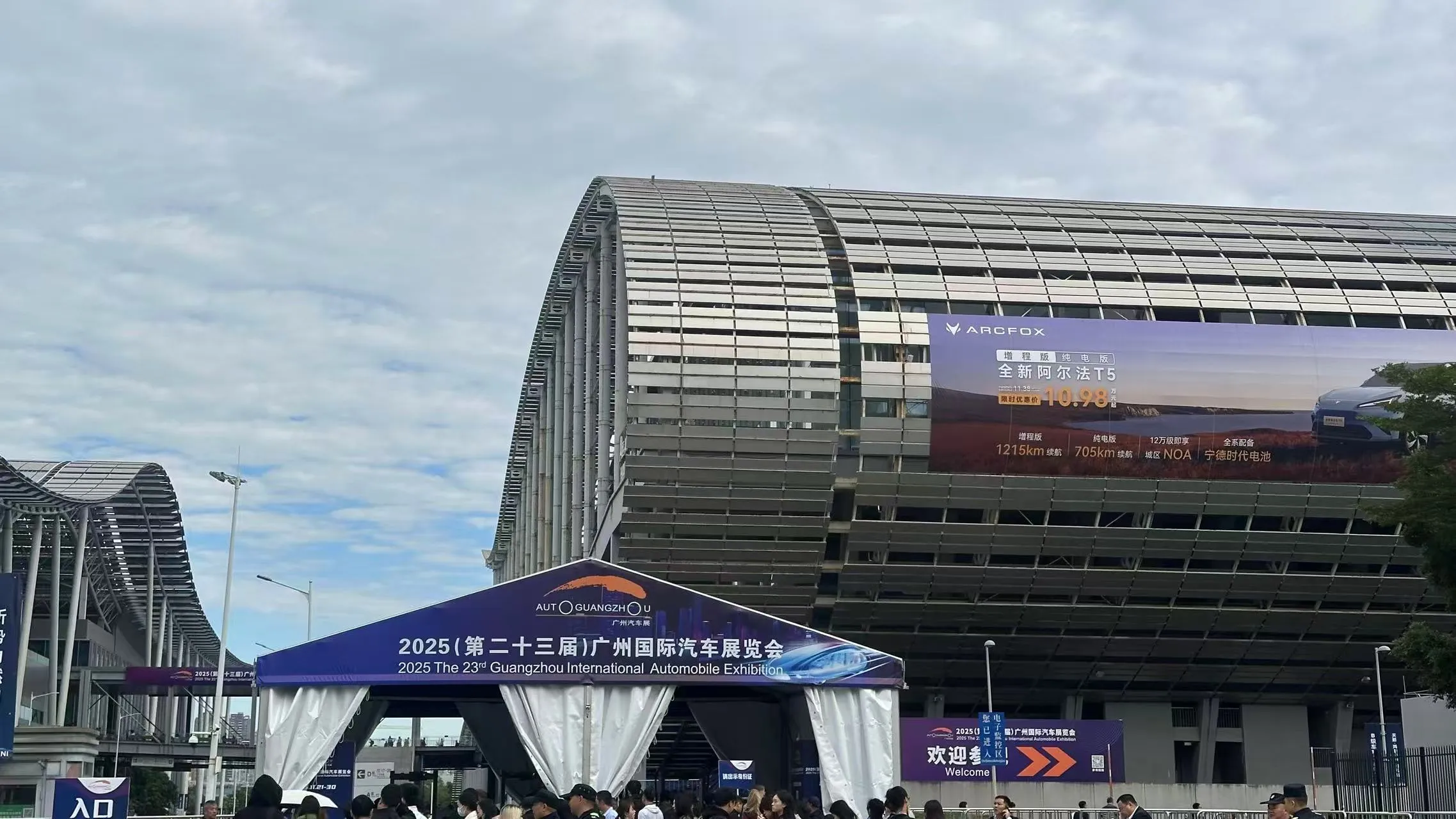
Core Insights - The 23rd Guangzhou International Auto Show, themed "New Technology, New Life," focuses on electrification, intelligence, and connectivity, showcasing a shift from single-function technology to systematic competition [1] - The exhibition covers an area of 220,000 square meters with 1,085 vehicles on display, of which 629 are new energy vehicles, accounting for 57.9% of the total [1][3] - China's automotive production and sales are projected to exceed 31 million units in 2024, with new energy vehicles surpassing 10 million units for the first time [3] Group 1: Major Exhibitors and Innovations - GAC Group and BYD are the two main exhibitors, showcasing their advancements in electric and intelligent vehicles [4][6] - GAC Group introduced its new technology brand "Starry Intelligence" and various intelligent driving systems, highlighting its commitment to electrification and smart technology [4] - BYD presented multiple brands and models, including the first public appearance of the Yangwang U9 Xtreme and the debut of the Tengshi Z sports car, along with its "Megawatt Flash Charge" technology [6][8] Group 2: Market Trends and Challenges - The presence of traditional luxury brands has decreased, with notable absences from brands like Jaguar Land Rover and Rolls Royce, reflecting a broader trend of declining market share for luxury vehicles [9][10] - The market share of traditional luxury brands has dropped to 10.5%, with the German luxury trio's share falling below 40% [9][10] - Financial performance for many luxury brands has declined significantly, with net profits dropping over 30% year-on-year in the first half of 2025, attributed to fierce competition in the Chinese market [10]


合资品牌寻求突破:本土化加速补位 智能电动赛道再争高下
Xin Lang Cai Jing· 2025-11-23 06:53
Group 1 - The core challenge for joint venture brands in China is to achieve breakthroughs in the face of strong competition from domestic brands, particularly in the areas of electrification and intelligence [1] - Volkswagen is leading the charge among joint venture brands in the transition to electric and intelligent vehicles, with plans to launch 21 new energy models in China by 2027, expanding to 31 by 2029 [1][2] - The new energy product series from Volkswagen, ID. ERA, will include multiple pure electric, hybrid, and range-extended products, with the first model being a high-end SUV [2] Group 2 - Buick's new flagship MPV, the Zhijing Shijia, features a pure electric range of 224 km and a comprehensive range of 1320 km, supporting fast charging technology [3] - Ford has introduced the "All-Terrain Camping SUV" with both range-extended and pure electric versions, equipped with advanced perception hardware and optimized for off-road conditions [3] - The retail penetration rate of new energy vehicles among mainstream joint venture brands was only 7% in October, while the overall penetration rate for new energy vehicles in the domestic passenger car market reached 57.2% [3] Group 3 - The shift in consumer preferences in China indicates that consumers are no longer solely attracted to foreign brands but are more focused on intelligent experiences, electric performance, and localized services [4] - The adjustments in product strategies by joint venture brands reflect a deep understanding of the changing consumer demands in the Chinese automotive market [4]