
消费升级

Search documents
长沙这8大商场,突围成“区域王”
3 6 Ke· 2025-10-29 02:39
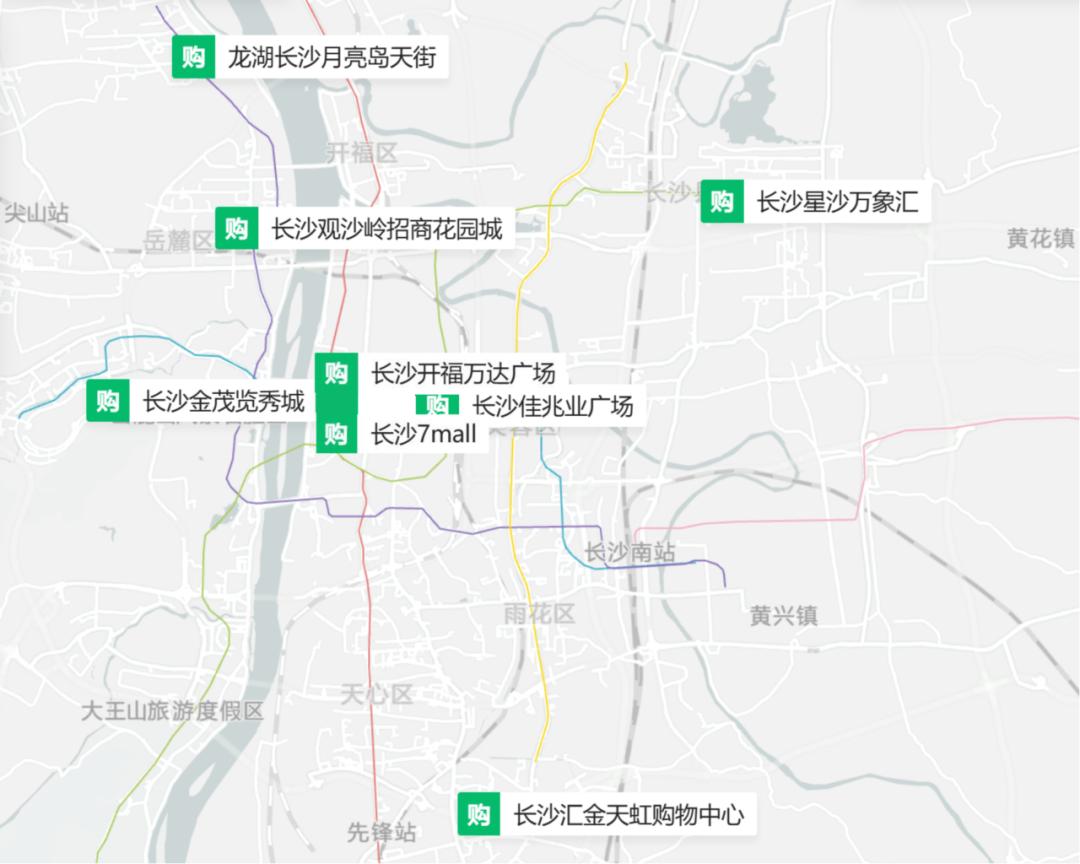
Core Insights - The article discusses the evolving commercial landscape in Changsha, highlighting emerging "potential stars" in the retail sector that are gaining traction despite not yet appearing in the top rankings [1] Group 1: Emerging Commercial Projects - Changsha Jinmao Lanxiu City is positioned as a quality family art and entertainment venue, with a commercial area of 103,000 square meters and located in a rapidly developing area [3][5] - The first REIT in Hunan, based on Changsha Jinmao Lanxiu City, was listed in March 2024, achieving a fund operating income of 47.44 million yuan and a distribution rate of 5.42% in the first half of 2025 [6] - Changsha Xingsha Wanxianghui serves as a flagship project for China Resources, focusing on quality, trend, and family-oriented brands, with over 170 brands including regional first stores [10][13] Group 2: Marketing and Community Engagement - Xingsha Wanxianghui has successfully implemented various marketing strategies, including the first hamburger festival in Changsha and a music festival, significantly increasing foot traffic and sales [14] - The project has also innovated in member services, creating a high-quality service team and community events to enhance customer engagement, resulting in over 670,000 members [15][16] Group 3: Neighborhood and Cultural Integration - Changsha Moon Island Tianjie, opening in December 2024, aims to be a neighborhood lifestyle hub, focusing on high-frequency operations and community engagement [17][19] - The project has adopted a three-step strategy to establish itself as a neighborhood commercial benchmark, emphasizing local cultural integration and community events [20][21] Group 4: Unique Retail Experiences - Changsha Guanshaling招商花园城, opening in November 2024, will feature over 260 brands and a rooftop children's playground, targeting family-oriented consumers [22][25] - The 7mall Food Trend Landmark has become a cultural hub in Central South China, featuring a diverse range of dining and retail options, and has successfully launched several popular brands [27][29] Group 5: Innovative Concepts and Trends - Changsha Jiazhaoye Plaza, opened in December 2022, integrates high-end business and trendy lifestyle experiences, creating a vertical ecosystem that caters to both business and leisure [31][34] - Changsha Huijin Tianhong Shopping Center, set to open in December 2023, focuses on integrating intangible cultural heritage, trendy sports, and subculture, creating a unique shopping experience [40][42]

三季报窗口期 ,消费板块估值修复机遇显现
Mei Ri Jing Ji Xin Wen· 2025-10-29 01:36
Group 1 - The food and beverage sector is receiving continuous capital attention, with valuation recovery logic gradually strengthening during the third quarter report disclosure period [1] - The liquor sector shows characteristics of "bottom improvement + leading stability," with strong performance during the National Day and Mid-Autumn Festival consumption periods, evidenced by a nearly 100% month-on-month increase in terminal sales for Kweichow Moutai since September [1] - The consumer goods segment highlights structural differences, with snacks, beverages, pet food, and health products maintaining high prosperity, while traditional categories like dairy and condiments are in a transitional phase of inventory destocking and demand recovery [1] Group 2 - Cost and policy factors provide dual support, with a continued downward trend in raw material prices, ensuring profitability despite a narrowing decline [1] - The current dynamic PE of the sector is within a reasonable range, with a focus on the cyclical direction of supply clearing and valuation bottoming out, especially as the restaurant industry recovers month-on-month after September [1] - In the medium to long term, innovation in new categories, expansion of new channels, and consumption upgrades will continue to inject investment momentum into the sector [2] Group 3 - Relevant ETFs include Food and Beverage ETF and Consumption 30 ETF [3]
山东药玻(600529):业绩仍有压力,看好长期成长
Shenwan Hongyuan Securities· 2025-10-28 13:42
Investment Rating - The report maintains an "Outperform" rating for the company [1] Core Views - The company is experiencing performance pressure, with a year-on-year revenue decline of 11.1% in the first three quarters, totaling 3.4 billion yuan, and a net profit decline of 24.7%, amounting to 540 million yuan [6] - There is a trend of improving profit margins, with a gross margin of 33.1% in the first three quarters, up by 1.0 percentage points year-on-year, and a significant improvement in the third quarter with a gross margin of 36.4% [6] - The company is expected to benefit from the support of China National Pharmaceutical Group after a change in actual control, which may enhance product sales, channel layout, and product development [6] - Despite short-term pressures, the long-term growth trend in the pharmaceutical glass industry is expected to continue, driven by consumption upgrades and industry upgrades [6] - The profit forecast for 2025-2027 has been slightly adjusted downwards, with expected net profits of 794 million, 917 million, and 1,010 million yuan respectively, reflecting a decrease of 12%, 11%, and 11% from previous estimates [6] Financial Data and Profit Forecast - Total revenue is projected to be 5,197 million yuan in 2025, with a year-on-year growth rate of 1.4% [5] - The expected net profit for 2025 is 794 million yuan, with a year-on-year decline of 15.8% [5] - The earnings per share for 2025 is estimated at 1.20 yuan [5] - The gross margin for 2025 is expected to be 27.9% [5] - The return on equity (ROE) for 2025 is projected at 9.5% [5]

从「所有女生的OFFER」看中国消费市场的微观5年鉴
Sou Hu Cai Jing· 2025-10-28 10:03
Core Insights - The article discusses the transformation of the Chinese consumer market over the past five years, highlighting the shift from price-driven transactions to value-driven engagement, with "All Girls' Offers" serving as a microcosm of this change [1][9]. Group 1: Evolution of Live E-commerce - Live e-commerce has transitioned from explosive growth to a focus on refined engagement, becoming a core engine of the consumer market [2][15]. - As of June 2024, 54.7% of internet users in China engage in live shopping, indicating that this method has become a habitual shopping practice [2][18]. - Leading live streamers, such as Li Jiaqi, have evolved from mere sales channels to trusted agents, with significant engagement metrics, including over 75 billion views on related topics [2][20]. Group 2: Changes in Consumer Participation - The role of consumers has shifted from passive observers to active co-creators, with domestic brands gaining prominence, increasing their participation in "All Girls' Offers" from 40% in the first season to 66% in the fifth season [3][31]. - Young consumers are increasingly drawn to domestic brands due to perceived quality and trust, with 54.9% citing durability and 50.2% citing trust in national brands as key factors [3][32]. Group 3: Upgraded Consumer Demands - Consumer needs have evolved from merely seeking functional products to desiring a combination of functionality, emotional connection, and technological innovation [5][6]. - The demand for emotional value is rising, with 40% of young consumers willing to pay for happiness, indicating a shift towards valuing experiences over mere products [5][6]. Group 4: Content Value Transformation - The core value of live e-commerce has shifted from being a transaction platform to a trust-building environment, with "All Girls' Offers" facilitating deeper connections between brands and consumers [7][26]. - New brands have effectively utilized this trust environment to enhance visibility and sales, with some achieving sales growth of over 1200% through strategic collaborations [8][9]. Group 5: Market Trends and Future Outlook - The consumer market is entering an era where value and trust are paramount, moving away from low-price competition to a focus on meaningful engagement [9][26]. - Brands must adapt by offering robust functionality, emotional resonance, and transparent communication to maintain relevance in this evolving landscape [9][26].

77115亿元!山东前三季度GDP增长5.6%
Qi Lu Wan Bao· 2025-10-28 07:36
Economic Overview - Shandong's GDP for the first three quarters reached 77,115 billion yuan, growing by 5.6% year-on-year, surpassing the national average, indicating strong economic resilience [1] - The primary industry added value was 4,825 billion yuan, growing by 3.9%; the secondary industry added value was 30,150 billion yuan, growing by 5.3%; and the tertiary industry added value was 42,140 billion yuan, growing by 6.1%, becoming the main driver of economic growth [1] Agriculture Sector - The total output value of agriculture, forestry, animal husbandry, and fishery grew by 4.3%, maintaining the same growth rate as the first half of the year [2] - Vegetable production increased by 3.1%, and fruit production grew by 2.6% [2] - Livestock production showed positive trends, with major livestock and poultry products increasing by 4.0%, and pig slaughtering up by 4.4% [2] Industrial Sector - The added value of large-scale industries in Shandong grew by 7.8%, indicating a sustained positive trend in industrial economy [3] - Equipment manufacturing saw a remarkable increase of 12.0%, significantly higher than the overall industrial growth [3] - The automotive industry grew by 17.0%, while the electronics sector increased by 16.6%, showcasing the rapid development of high-end manufacturing [3] Service Sector - The revenue of large-scale service industries grew by 5.4%, with 87.5% of industries experiencing revenue growth [4] - Consumer upgrade sectors performed well, with entertainment growing by 19.4% and business services by 16.9% [4] - Retail sales of consumer goods totaled 30,386.1 billion yuan, growing by 5.6%, with online retail sales increasing by 17.1% [4] Investment Trends - Despite a 3.7% decline in overall fixed asset investment, industrial investment grew by 7.7%, highlighting a shift towards high-quality development [6] - High-end manufacturing investment surged, with general equipment manufacturing up by 29.5% [6] Foreign Trade - Shandong's total import and export value reached 2.62 trillion yuan, growing by 5.5%, with exports at 1.60 trillion yuan and imports at 1.02 trillion yuan [7] - Private enterprises played a crucial role, with their import and export growth at 6.8%, accounting for 75.7% of total trade [7] Social Welfare - The employment situation remained stable, with 1.059 million new urban jobs created, reflecting resilience amid economic pressures [8] - Per capita disposable income reached 33,826 yuan, with urban and rural incomes growing by 4.4% and 5.1% respectively [8]
回归用户价值的前瞻布局,华帝穿越周期的增长密码竟是这个
Zhong Jin Zai Xian· 2025-10-28 07:31
Core Viewpoint - The overall retail sales of home appliances are expected to decline by at least 16.4% year-on-year from September to December, while Vatti's third-quarter financial report shows strong performance with a revenue of 4.158 billion yuan and a gross margin of 43.29% [1][2] Group 1: Industry Trends - The kitchen appliance industry is under pressure with weak market demand, leading to a competitive environment [1] - The trend of consumption upgrading has shifted consumer demand from basic cooking needs to enhanced lifestyle experiences, emphasizing intelligent cooking, healthy dietary management, and aesthetic design [1][2] Group 2: Company Strategy - Vatti has adopted a high-end, intelligent, and youthful strategy to capture the consumption upgrade trend, resulting in stable operational performance [1] - The company has accelerated AI integration, creating a smart experience system that allows users to control devices remotely through an app, enhancing user interaction and convenience [1] Group 3: Product Innovations - Vatti has introduced several health-focused technologies, such as low-oxygen steaming and low-fat baking, achieving a 93% retention rate of anthocyanins in steamed purple sweet potatoes and a 90.9% fat reduction in micro-frying [2] - The launch of the fifth-generation surfing steam washing technology addresses the cleaning challenges of Chinese kitchens, achieving a 99.2% cleaning rate with a one-button operation [2] Group 4: Aesthetic Integration - Vatti's products integrate functionality with aesthetic design, offering a comprehensive kitchen solution that includes a range of appliances seamlessly connecting with cabinetry [2] - The company's focus on user value transformation has allowed it to maintain brand premium and product competitiveness, achieving gross margin growth even in a downturn [2]

茅台价创历史新低,机构高呼“底部机会”!食品饮料ETF天弘(159736)连续9日获资金逆市加仓
Sou Hu Cai Jing· 2025-10-28 06:58
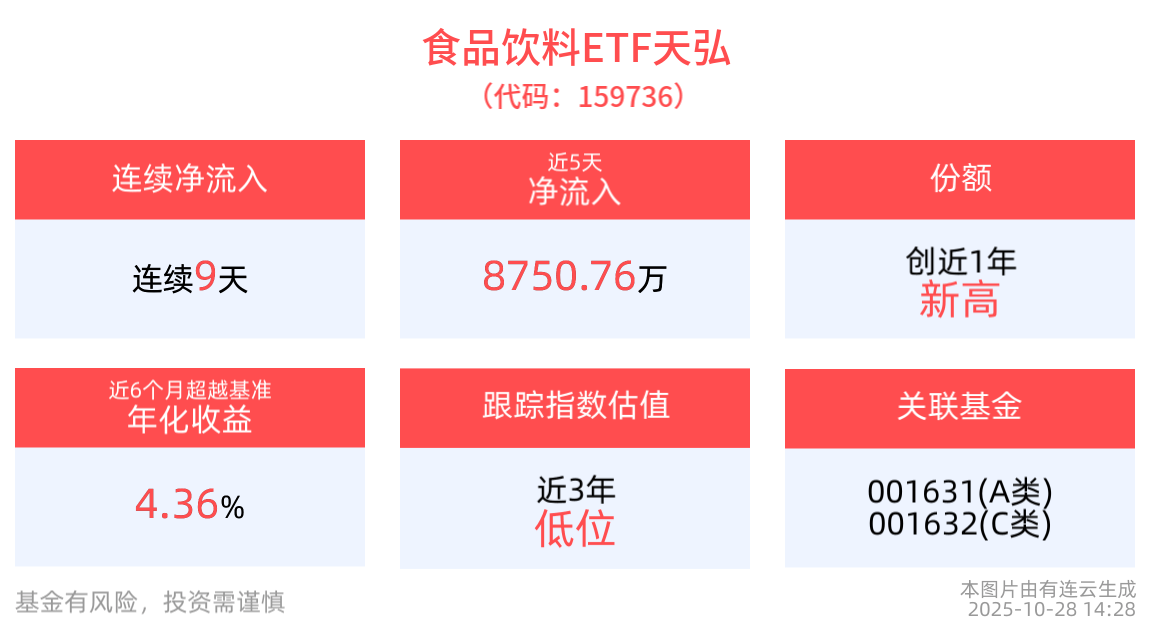
Core Viewpoint - The food and beverage ETF Tianhong (159736) is experiencing significant capital inflow and has reached a new high in share volume, indicating strong investor interest in the sector [3][4]. Fund Performance - As of October 27, the food and beverage ETF Tianhong (159736) has a total share volume of 7.86 billion, marking a one-year high [4]. - The fund has seen a net inflow of 117 million over the past nine days, reflecting robust demand [4]. Market Trends - The wholesale price of Feitian Moutai has dropped below 1,700 yuan per bottle for the first time, signaling a significant adjustment in the domestic liquor market [4][5]. - The current wholesale price for Feitian Moutai is reported at 1,690 yuan, down 25 yuan from the previous day, with a cumulative decline of over 31% from its initial price [4]. Industry Analysis - CITIC Securities expresses optimism about bottom-fishing opportunities in the liquor industry, anticipating that the industry's fundamentals may stabilize by the third quarter of 2025 [6][7]. - Pacific Securities notes that the liquor industry is currently in a phase of supply clearing, with the third quarter expected to accelerate this process [8]. Key Events - A significant personnel change at Moutai Group has been announced, which may impact the company's strategy during this adjustment period [8].

聚焦十五五——总量创辩第114期:资产配置快评
Huachuang Securities· 2025-10-28 04:33
Macro Insights - The "14th Five-Year Plan" emphasized structural adjustments over absolute growth, while the "15th Five-Year Plan" is expected to focus more on clear and positive growth expectations[16] - The emphasis on economic construction, technological self-reliance, and enhancing national security capabilities is highlighted in the recent policy discussions[11] Investment Strategy - The stability of the "15th Five-Year Plan" suggests a shift in equity asset investment from short-term to long-term perspectives, aligning with a 5-10 year investment horizon[16] - The expected EPS growth for equity assets is anticipated to stabilize, driven by a stronger demand for economic growth during the "15th Five-Year Plan" period[16] Sector Focus - The focus on technology is shifting from hardware to software, aiming to seize strategic advantages in the new technological revolution[16] - Consumer demand is expected to lead supply, marking a shift from "supply creates demand" to "demand leads supply" in economic dynamics[16] Market Performance - The total position of equity funds increased to 98.46%, up by 100 bps from the previous week, indicating a bullish sentiment among institutional investors[24] - The average return for equity mixed funds was 3.8%, while stock ETFs averaged a return of 3.73% this week[31] Real Estate Insights - High rental yields may slow the decline in housing prices, but they do not necessarily indicate a price bottom, as seen in lower-tier cities where rental yields are high but prices continue to fall[39] - The relationship between rental income and housing prices is crucial, with rental income being a more significant indicator than rental yield in determining price trends[39]
福瑞达前三季度盈利1.42亿元 化妆品主力品牌保持增长
Zheng Quan Shi Bao Wang· 2025-10-28 04:07
Group 1: Company Performance - For the first three quarters, the company reported revenue of 2.597 billion yuan, a year-on-year decrease of 7.34% [1] - Net profit for the same period was 142 million yuan, down 17.19% year-on-year, indicating short-term pressure on performance [1] - The company's pharmaceutical segment generated revenue of 305 million yuan in the first three quarters [1] Group 2: Business Focus and Developments - The company is focusing on two main sectors: pharmaceuticals and cosmetics, with initial success in adjusting its cosmetics business [1] - The main brand, Yilian, achieved sales revenue of 786 million yuan, a year-on-year increase of 19.50% [1] - The company is actively expanding its domestic raw material brand clients and international raw material markets, with pharmaceutical-grade raw material sales increasing by 107.75% year-on-year [1] Group 3: Strategic Moves - The company announced the transfer of 100% equity in Shandong Lushang Yintai Commercial Management Co., Ltd. for 88.4028 million yuan, aiming to optimize resource allocation and focus on core businesses [2] - The company is committed to continuous investment in R&D, launching the industry's first ideal skin data platform based on skin microbiome research and AI models [1] Group 4: Industry Trends - The beauty industry in China is experiencing dual characteristics of "total pressure and structural optimization," with head brands facing significant differentiation [2] - The high-end cosmetics market is expanding, with consumers increasingly willing to pay for high-quality and high-brand-value products [3] - Digital transformation and technological innovation are seen as key to overcoming market challenges, with companies expected to enhance R&D investment and optimize online channel operations [3]

观览夜幕下的灯火(金台随笔)
Ren Min Ri Bao· 2025-10-27 22:25
Core Insights - The article highlights the growing trend of nighttime tourism and consumption in China, with 60% of urban consumption occurring at night and over 50% of daily sales in large shopping malls happening between 6 PM and 10 PM [1][2] Group 1: Night Economy Development - Nighttime attractions are becoming increasingly popular, with various cities enhancing their nightscapes through cultural and entertainment offerings, such as night markets and light shows [2][3] - The integration of local cultural elements and modern business models is essential for the sustainable development of the night economy, avoiding a one-size-fits-all approach [3][4] Group 2: Consumer Experience - Consumers are seeking emotional satisfaction and unique experiences during nighttime outings, moving beyond mere dining and shopping to enjoying leisure and cultural activities [1][3] - Warm and thoughtful services, such as improved public transport and family-friendly facilities, are crucial for enhancing the nighttime economy and attracting more visitors [3][4] Group 3: Urban Planning and Innovation - Cities are encouraged to strengthen planning and coordination between large commercial areas and smaller streets, creating a vibrant nighttime atmosphere that caters to diverse consumer needs [2][4] - Innovative business models, such as late-night dining and cultural events, are being introduced to meet the evolving demands of consumers [2][3]