关税战

Search documents
关税战、美联储降息、地缘风险等多重因素交织!市场暗流涌动下,黄金如何布局?顺姐正在实时分析,点击观看
news flash· 2025-04-28 07:47
Core Viewpoint - The article discusses the impact of various factors such as trade wars, Federal Reserve interest rate cuts, and geopolitical risks on the gold market, emphasizing the need for real-time analysis of gold order flows [1] Group 1 - Multiple factors including trade wars and interest rate cuts are creating a complex environment for the gold market [1] - The article suggests that there is a need for strategic positioning in gold amidst these market dynamics [1] - Real-time analysis is being conducted to assess the current trends in gold orders [1]
2025二季度生猪及饲料市场展望
Guang Da Qi Huo· 2025-04-28 07:45
1. Report Industry Investment Rating No information provided in the content. 2. Core Views of the Report - The supply of the pig market continues to put pressure on pig prices, but the decline in the first quarter was weaker than expected. The second quarter will continue to focus on supply pressure, and there is a risk of compression in pig prices and breeding profits [3][4]. - Policy support for the corn market is nearing its end, and in the fourth quarter, it will be tested whether downstream consumption can support prices [5]. - In the first quarter of 2025, the global oilseed and fat market first rose and then fell, with the domestic market outperforming the international market. The second quarter will continue to be troubled by trade uncertainties, and attention should be paid to changes in biodiesel policies [7]. 3. Summaries According to the Table of Contents First Part: Factors Affecting the Pig Market in the Second Quarter - Pig prices in the first quarter were stronger than expected, but supply pressure still exists. The terminal demand entered the off - season after the Spring Festival, and pig prices oscillated at a low level [3][4]. - Affected by the change in the mentality of the breeding side, the price of piglets first rose, then fell, and then rose again in the first quarter [3]. - The inventory of breeding sows decreased for two consecutive months. If this trend continues, the supply pressure in the second half of the year will be substantially improved [3]. - In the first quarter, the slaughter weight of pigs first decreased and then increased. The import volume of pork decreased as domestic pig prices were at a low level [3][4]. - The breeding profit of self - breeding and self - raising decreased, while that of purchasing piglets increased. The slaughter opening rate was higher than the same period last year, but it was not driven by the increase in terminal demand [4]. - In the futures market, pig prices stabilized and rebounded in the first quarter. In the second quarter, the supply pressure of increased inventory will continue to affect spot pig prices and long - term trading sentiment [4]. Second Part: Analysis of Factors Affecting the Corn Market - From January to March, the prices of US wheat and corn first rose and then fell. Affected by weather, policy, and other factors, the CBOT grain futures prices declined jointly [5]. - The spot price of domestic corn rose with the futures price. By the end of March, the average domestic corn spot price increased by 163 yuan/ton compared with the beginning of January. After mid - March, due to multiple negative factors, the futures and spot prices of corn fell back [5]. - The 5 - month contract of corn oscillated repeatedly at the 2300 - yuan integer mark, and the market was worried about the lack of upward space in the future. Pay attention to the price performance of the 5 - month corn futures price at the previous support level of 2260 [6]. - The supply of new - season corn is expected to increase, and the inventory in the quarterly report at the end of March decreased by 2.4% compared with the same period. The ratio of US soybeans to corn is at a low level, which is conducive to the expansion of corn planting area [15][29][39]. - Affected by policies and other factors, the import of corn and its substitutes decreased in 2025, which increased the consumption of domestic corn. In the second quarter, the problem of limited supply of imported corn and substitutes will still appear periodically [52]. - In early April, the average price of wheat in the main producing areas decreased. The price of wheat followed the rise of corn in March and continued to oscillate weakly in April. The supply of wheat was relatively abundant, and the downstream demand was weak [55]. - In mid - April, the operating rate of the corn starch industry decreased, and the processing in Shandong was in a state of loss. The contradiction in the starch market was prominent, and the support from the demand side was insufficient [56]. Third Part: Analysis of Factors Affecting the Soybean Meal Market - The global oilseed and fat trade pattern has changed. Brazil supplies soybeans to China, the EU, etc., the US supplies soybeans to other regions, and Canadian rapeseed competes for the US soybean market [105]. - China's pig industry has strong demand for replenishment, which increases the demand for feed. The price is strong in stages, and the supply pressure is postponed [112]. - From January to February 2025, the feed output increased year - on - year, and the consumption of soybean meal also increased [116]. - The inventory of soybeans in China showed an inflection point in April, but the soybean procurement of oil mills from June to September was slow [119]. - The spot basis of soybean meal weakened, and the inter - month spread changed from backwardation to contango [121]. Fourth Part: Outlook for the Future Market - In the second quarter, pay attention to tariffs and weather for the US corn market. The policy support of CGC is nearing its end, and it will be tested whether downstream demand can accept high - priced raw materials [66][68]. - Russia's corn production has decreased, and the toxin content in domestic corn is high. The CBOT corn has emerged from the trough. In the future, Sino - US relations will determine the country of import and the rhythm [70]. - In the first quarter, the price of US corn rebounded to the profit range. The market expects an increase in the sown area of new - season corn, and the area will be confirmed in June [77]. - In the first quarter, the spot price of corn rebounded, and the futures price followed. The basis of the 3 - month and 5 - month contracts returned to normal. In the second quarter, the market will speculate on the sowing and cost changes of new - season grain [84]. - In 2024, the cost of corn planting decreased by 15 - 20%. The market expects the cost of corn planting in the new year to decrease by 100 - 150 yuan/ton [90]. - The by - products of starch rose and fell alternately. In 2024, the spread between starch and corn mainly widened. In 2025, pay attention to starch exports and the substitution of tapioca starch [97]. - In 2024, the supply of corn exceeded demand, and the price declined all the way. In 2025, it remains to be seen whether the strengthening of supply and demand can drive the price to rise continuously [102].
郑永年:应对美国关税战冲击,中国与东盟都应坚持开放政策
2 1 Shi Ji Jing Ji Bao Dao· 2025-04-28 07:44
在美国掀起关税战的背景下,围绕如何稳定东亚区域经济增长,郑永年提出了三点建议: 第一,东盟应保持团结协作。东盟一直是促进亚洲区域稳定发展的重要力量,但当前由于美国所谓"对 等关税",东盟再次面临挑战,因为其中许多经济体的发展都以出口导向为主。如果东盟内部出现分 裂,那么东盟的经济发展将会受到重大影响,也不利于本地区的稳定; 第二,无论是中国还是东盟都应保持开放。东亚经济体都应该采取开放的政策来推动本国的工业化进 程。在此过程中,作为世界第二大经济体,中国在推动该东亚经济繁荣发展中发挥着重要作用,一个开 放的中国市场本身就是一个理想的全球经济发展行动。中国致力于推动高水平开放,坚持多边主义,并 将继续加强其全面战略伙伴关系,推进与东盟关系的发展。有鉴于此,建立"中国—东盟共同市场"将有 利于双方共同推动东亚经济一体化,并且发挥东亚地区的增长潜力。在此方面,中国与东盟有条件继续 深化合作,比如在投资、技术以及供应链方面。 第三,中国和东盟也应为世界多边主义的发展提供更多解决方案,并建立一个公正且包容的国际秩序。 这需要产业界以及学界为推动建立"中国—东盟共同市场"提供更多可行的措施建议。 21世纪经济报道记者洪晓 ...
股指期货策略月报-20250428
Guang Da Qi Huo· 2025-04-28 07:33
Report Industry Investment Rating - Not provided in the document Core Viewpoints - In April, the market rebounded from the bottom. Wind All - A closed down 3.15% monthly, with different performance among various indices. The US tariff war, though temporarily halted, may recur due to its underlying financial issues. Attention should be paid to the growth indicators in the A - share annual and quarterly reports, and the long - term trend of A - shares is mainly affected by the de - leveraging process of various sectors under the debt cycle. Also, capital expenditure and profitability of domestic and foreign demand - related sectors need to be monitored [3][6]. - The equity risk premium is at a relatively high historical level. Short - term funds support the stock market, but market sentiment has cooled significantly, and the momentum of both fund inflows and market sentiment has weakened weekly [3][9][18]. - Sectors with high overseas revenue are more sensitive to tariff policies as most of them are in the development stage with high capital expenditure and low ROE, adopting a thin - profit - high - turnover model [3][20]. Summary by Relevant Catalogs 1. Market Overview - **Index Performance**: In April, Wind All - A closed down 3.15% monthly. Specifically, CSI 1000 fell 4.61%, CSI 500 fell 3.94%, SSE 50 fell 0.63%, and SSE 300 fell 2.58%. Weekly, small - cap indices rebounded more strongly, with CSI 1000 rising 1.85% and SSE 50 falling 0.33% [3][6]. - **Tariff Policy**: The US tariff war, which started on April 2nd, has temporarily ended. However, due to the US's insufficient financial account financing ability and the need to balance the current account deficit, tariff policies may change again in the future [3][6]. - **Financial Reports**: At the end of April, A - shares will fully disclose the 2024 annual reports and 2025 first - quarter reports. The market is more concerned about nominal growth data, and the year - on - year revenue growth rate in the financial reports can provide indirect verification. In the first three quarters of 2024, the cumulative year - on - year revenue growth rate of A - shares in Shanghai and Shenzhen stock markets, excluding the financial sector, was - 1.7% ( - 0.6% in the semi - annual report) [3][6]. 2. Market Indicators - **Interest Rate and Valuation**: At the end of April, the yield of the 10 - year active treasury bond was 1.67%. The dynamic P/E ratio of Wind All - A was 18.22 times, and the equity risk premium was still at a relatively high historical level. The PE_ttm of CSI 1000 was 37.23, and that of SSE 300 was 12.26, with both valuation levels slightly lower than last month [9]. - **Fund Flow**: From April 1st to April 24th, the net subscription of the four major broad - based index ETFs reached 193.6 billion yuan, with a single - day net subscription of 100.3 billion yuan on April 7th, a record high. However, the margin trading balance decreased by 110.5 billion yuan during the same period, indicating a significant cooling of market sentiment. Weekly, both showed weakening momentum [18]. 3. Overseas Revenue Sectors - **Industry Concentration**: Sectors with high overseas revenue are mainly concentrated in three industrial chains: high - end technology manufacturing, new energy vehicle industry chain, and energy and chemical products [20]. - **Sensitivity to Tariffs**: Most sectors with high overseas revenue are in the development and expansion stage, with high capital expenditure ratios (8% - 18% of revenue). Their ROE is lower than the A - share average (around 7.8%), adopting a thin - profit - high - turnover model, making them more sensitive to tariff policies [20]. 4. Policy and Data - **Domestic Policies**: Multiple policies have been introduced, including a 12 - trillion - yuan debt - resolution plan, a mention of "moderately loose monetary policy", a 2025 GDP growth target of 5%, a fiscal deficit rate of 4%, and a fertility reward policy in Hohhot [21]. - **US Tariff Policy**: The US "reciprocal tariff" plan was implemented on April 3rd. As of April 12, 2025, the US tariff rate on Chinese imports increased by 125%. The US also issued a tariff exemption list and a tariff suspension policy for some countries, while China issued a white paper on Sino - US economic and trade relations [21]. - **Economic Data**: In March, China's exports increased by 12.4% year - on - year (in US dollars), and imports decreased by 4.3% year - on - year (in US dollars). In the first quarter of 2025, China's GDP increased by 5.4% year - on - year, and the year - on - year growth rate of social retail sales in March was 5.9%, exceeding the average level of the demand side [21]. 5. Index and Option Performance - **Index Performance**: CSI 1000 fell 4.15% monthly, CSI 500 rose 3.94% monthly, SSE 300 fell 2.58% monthly, and SSE 50 fell 0.63% monthly, with the basis discount annualization showing a widening divergence for all [29][33][36][38]. - **Option Indicators**: Charts of historical volatility, volatility cones,持仓PCR, and 交易PCR for CSI 1000, SSE 300, and SSE 50 options are provided, but no specific analysis of these indicators is given in the text [42][51][58]. - **Trading Slippage**: Charts of IM long - and short - position trading slippage are provided, but no specific analysis is given [66]. 6. Corporate Profitability - **Low - level Profitability**: The profitability of listed companies remains at a relatively low level. In the third quarter of 2024, the revenue and net profit growth rates of the entire market, excluding the financial sector, showed different degrees of decline [77]. - **Financial Indicators of Indices**: The 2024 semi - annual report shows various financial indicators of different indices, including ROE, operating net profit margin, asset turnover, etc., with differences in growth and profitability among different indices [79].
香港3月私人楼价指数四连跌 利嘉阁:料次季难扭跌势
智通财经网· 2025-04-28 06:04
Group 1: Property Price Trends - The private residential price index in Hong Kong for March 2025 is reported at 284.2 points, a decrease of 0.49% from February's 285.6 points, marking a continuous decline for four months and a cumulative drop of 2.50%, reaching the lowest level in over 8.5 years since August 2016 [1] - Compared to the historical peak of 398.1 points in September 2021, property prices have decreased by 28.61% [1] - The first quarter of this year saw a cumulative price drop of 1.73%, with March's decline slightly narrowing to 0.49%, reflecting a slight improvement in market conditions in late February and early March, although prices remain low due to new developments being launched at lower prices [1] Group 2: Future Market Outlook - Looking ahead to April, despite a relatively decent market in late March, the overall sentiment may be hindered by a sharp decline in global and Hong Kong stock markets, potentially leading to a further price drop of around 0.8% in April [1] - There are expectations that a slowdown in the trade war and potential interest rate cuts by the US in May or June could provide some support to the property market, with hopes for a narrowing of price declines in May and stabilization in June [1] - The second quarter is anticipated to see an additional decline of approximately 1.3%, with an overall expected drop of about 3% in property prices for the first half of the year [1] Group 3: Rental Market Trends - The rental index in Hong Kong for March has increased by 0.1% month-on-month, marking a total increase of 0.73% over four consecutive months, reaching a six-month high, indicating a stable upward trend in the rental market [2] - The influx of professionals and a significant number of international students expected to seek rental properties in the second quarter are anticipated to drive the rental index up, with a projected increase of 1.71% for the quarter, outperforming the first quarter [2] - For the first half of the year, rental prices are expected to rise by 2.13% [2]
国证国际港股晨报-20250428
Guosen International· 2025-04-28 05:20
Group 1: Market Overview - The report highlights a significant rebound in global markets, with the Hang Seng Index gaining 585 points or 2.74%, closing at 21,980 points, following a previous increase of 480 points or 2.30% [2] - The U.S. stock market also saw strong gains, with the S&P 500 rising 4.59% and the Nasdaq increasing by 6.7%, attributed to a softening stance on tariffs by President Trump [2] - The Central Political Bureau of the Communist Party of China indicated a more optimistic outlook on the economy, emphasizing the need to stabilize the foundation for economic recovery amidst external shocks [2][3] Group 2: Economic Policies and Focus Areas - The meeting introduced the "Four Stabilities" concept, focusing on stabilizing employment, enterprises, markets, and expectations, signaling a strong commitment to high-quality development in response to external uncertainties [3] - The report emphasizes the importance of enhancing consumer spending and increasing income for low- and middle-income groups, alongside a commitment to maintaining stability in the real estate market [2][3] Group 3: Company Analysis - BYD (1211.HK) - BYD's performance met expectations, with strong export growth contributing to a robust profit matrix [5] - The company is set to launch multiple new models in 2025, including updates to the Haval brand and the Tank series, aimed at enhancing product structure [10] Group 4: Company Analysis - Great Wall Motors (2333.HK) - Great Wall Motors reported a Q1 wholesale volume of 256,800 units, reflecting a year-on-year decline of 6.7% and a quarter-on-quarter decline of 32.3% [7] - The company's Q1 revenue was 40.019 billion yuan, down 6.6% year-on-year and 33.2% quarter-on-quarter, with a net profit of 1.751 billion yuan, a significant year-on-year decrease of 45.7% [8] - The report notes that the company's Q1 gross margin was 17.84%, with sales expenses increasing by 34.6% year-on-year due to accelerated investments in direct sales and new model launches [9] Group 5: Company Analysis - China Xuyang (1907.HK) - The report indicates that China Xuyang's coking and chemical business faced pressure from falling coking prices, with a projected revenue decline of 2.4% for the year [12] - The chemical business, however, showed growth with a 10% increase in revenue, driven by higher sales volumes of caprolactam [13] - The company is expanding its hydrogen energy business, with a significant increase in hydrogen sales, and plans to enhance its position in the fuel cell sector [13]
伊朗港口爆炸影响有限,甲醇偏弱运行
Bao Cheng Qi Huo· 2025-04-28 03:18
x30003 宝城期货研究所 姓名:陈栋 宝城期货投资咨询部 从业资格证号:F0251793 投资咨询证号:Z0001617 电话:0571-87006873 邮箱:chendong@bcqhgs.com 报告日期:2025 年 4 月 28 日 作者声明 本人具有中国期货业协会授 予的期货从业资格证书,期货 投资咨询资格证书,本人承诺 以勤勉的职业态度,独立、客 观地出具本报告。本报告清晰 准确地反映了本人的研究观 点。本人不会因本报告中的具 体推荐意见或观点而直接或 间接接收到任何形式的报酬。 投资咨询业务资格:证监许可【2011】1778 号 甲醇 | 周报 2025 年 4 月 28 日 甲醇周报 专业研究·创造价值 伊朗港口爆炸影响有限 甲醇偏弱运行 核心观点 甲醇:受美国释放积极信号,计划降低关税战的利多消息提振, 宏观因子有所改善。与此同时,甲醇下游需求因子开始发力,在烯烃 盘面利润回归正值,烯烃消费有所增强,叠加港口库存和内陆社库延 续去化节奏,基本面逐渐好转。在偏多因子主导下,本周国内甲醇期 货 2509 合约呈现震荡偏强的走势,当周期价累计涨幅达 1.41%至 2298 元/吨。5-9 月 ...
利空因素消化,橡胶震荡企稳
Bao Cheng Qi Huo· 2025-04-28 03:11
4 正文目录 1 市场回顾 .....................................................................4 1.1 现货价格振荡回升,基差走阔 ............................................... 4 1.2 期价上涨,月差转为升水 ................................................... 4 姓名:陈栋 宝城期货投资咨询部 从业资格证号:F0251793 投资咨询证号:Z0001617 电话:0571-87006873 邮箱:chendong@bcqhgs.com 报告日期:2025 年 4 月 25 日 作者声明 本人具有中国期货业协会授 予的期货从业资格证书,期货 投资咨询资格证书,本人承诺 以勤勉的职业态度,独立、客 观地出具本报告。本报告清晰 准确地反映了本人的研究观 点。本人不会因本报告中的具 体推荐意见或观点而直接或 间接接收到任何形式的报酬。 专业研究·创造价值 2025 年 4 月 28 日 橡胶周报 利空因素消化 橡胶震荡企稳 核心观点 2 ...
“美国优先”变“美国独行”:特朗普百日搅动全球
Jin Shi Shu Ju· 2025-04-27 23:30
Core Points - Trump's unpredictable actions in his second term have led to a significant shift in U.S. foreign relations, distancing allies and creating global instability [1][2] - A recent poll indicates Trump's approval rating has dropped to 39%, the lowest for any U.S. president in their first 100 days, with a majority of Americans concerned about his economic policies [1][5] - Experts warn that the current global order, established post-World War II, is under threat due to Trump's unilateral approach and disregard for multilateral organizations [6][11] Group 1: Domestic Impact - 72% of Americans believe Trump's economic policies could lead to a recession, and 53% feel the economy has worsened since he took office [1] - Trump's actions have been criticized domestically for contributing to a perceived "democratic backslide," including attacks on judges and immigration policies [2] Group 2: International Relations - Trump's "America First" agenda has alienated allies and emboldened adversaries, raising questions about the future of U.S. foreign policy [2][10] - European nations are increasing defense spending and reducing reliance on U.S. military support in response to Trump's policies [4][9] Group 3: Economic Policies - Trump's imposition of tariffs is seen as a disruptive force in global markets, with potential risks of economic slowdown and recession [6][11] - The administration's approach to trade negotiations is characterized by a lack of clarity regarding long-term goals, leading to uncertainty among trading partners [6][10] Group 4: Global Order - The established global order based on free trade and rule of law is being challenged, with Trump's actions viewed as a departure from traditional U.S. leadership [6][11] - Concerns are growing that Trump's foreign policy may lead to a realignment of global alliances, with some countries considering closer ties with China as a counterbalance [10]
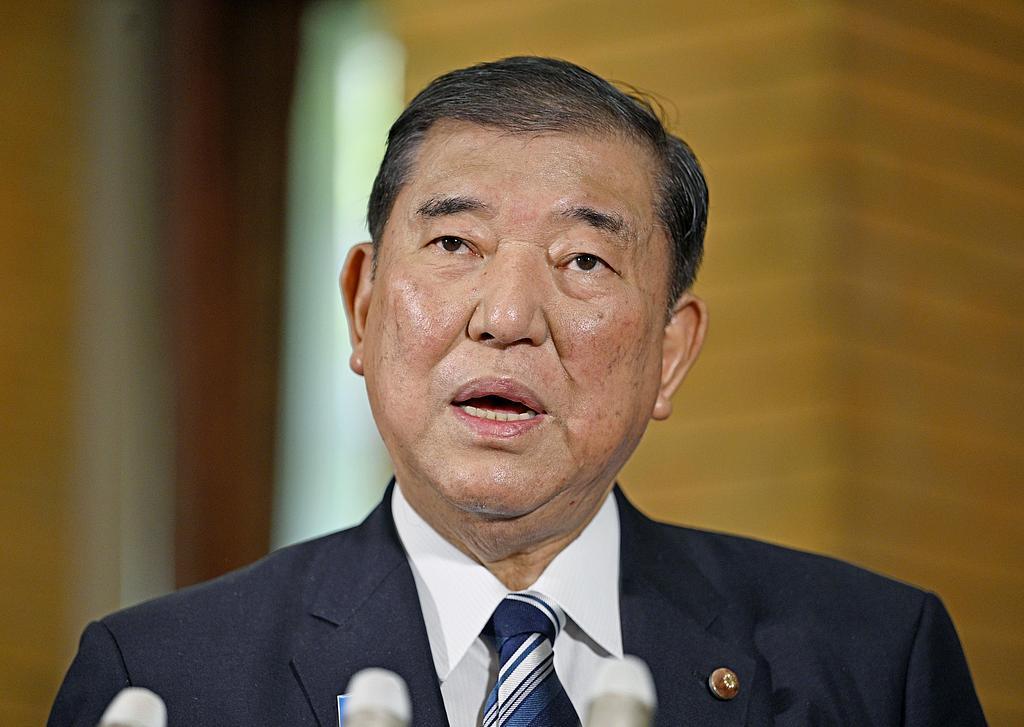
日本首相访越菲,意在“应对中国”?专家:日方举动反映复杂心态
Huan Qiu Shi Bao· 2025-04-27 22:34
【环球时报报道 记者 邢晓婧】日本首相石破茂于4月27日至30日出访越南和菲律宾,计划分别与两国领导人举行会谈,就美国关税政策对世界经 济的影响等议题交换意见。日媒报道称,考虑到中国"不断加强海洋活动",石破茂此访有意强化与相关国家在安全保障领域的合作。 辽宁大学美国与东亚研究院院长吕超27日在接受《环球时报》记者采访时表示,受到美国关税政策影响,日本与美国的谈判进展不顺利,日本国 内有强烈呼声希望尽快改善与中国的关系,在应对美国发动的"关税战"中,无论是对开拓市场,还是抵消经济损失,与中国寻求合作对日本而言 非常重要。 吕超表示,东盟国家近年来经济形势向好,成为新的经济增长点,引起国际社会普遍关注。在美国对全世界实行关税大战的情况下,日本访问东 盟国家,试图与其加强联系、巩固并开拓新的市场,从外交角度而言这种做法无可厚非。他同时表示,"但日本与东盟发展关系不应针对第三方。 日本一边派出执政党要员接连访华,一边又拉拢周边国家'应对中国',一连串的举动反映出日本的复杂心态。" 吕超称,值得注意的是,日美当前虽因关税问题陷入僵持阶段,但就配合美国所谓"印太战略"而言,日本还是和美国站在一边,不排除在菲律宾 继续挑 ...