去美元化

Search documents
黄金跌了价,2026年1月16日,国内黄金新价格、人民币黄金新价格
Sou Hu Cai Jing· 2026-01-24 11:52
Group 1: Domestic and International Gold Prices - On January 16, 2026, international gold prices fell to $4587.91 per ounce, a significant drop compared to the previous trading day, while the domestic gold price adjusted slightly to 1037.00 yuan per gram, down by 0.61 yuan [2] - The domestic retail market maintained high prices, with brand premiums significantly marked up, ranging from 1385 to 1439 yuan per gram in stores like Xinhua Gold and Xingguangda Jewelry [2] Group 2: Precious Metals Sector Price Decline - The precious metals sector experienced a notable correction, particularly in platinum and palladium, with paper platinum prices dropping below 520 yuan per gram, a decline of over 3.8%, and paper palladium prices falling to the range of 394-402 yuan per gram, down approximately 3.5% [3] - Spot silver saw a dramatic drop of 6.45%, closing at $87.17 per ounce, with significant intraday volatility [3] Group 3: Central Bank Gold Purchases Support Long-term Logic - Despite high gold prices, global central bank enthusiasm for gold purchases remains strong, with China's central bank increasing its gold holdings by 86,000 ounces in 2025, raising the value of its gold reserves to approximately $340 billion [3] - Brazil, Finland, and Turkey emerged as major gold purchasers, with official purchases exceeding historical averages [3] Group 4: Structural Changes in Official Reserves - Analysts from Deutsche Bank and State Street noted a long-term shift in official reserve management from government bonds to gold, with gold now accounting for 25.9% of global foreign exchange reserves, surpassing government bonds for the first time [4] - This structural change is expected to support a price floor for gold, with predictions suggesting a potential bottom of $4000 and a likelihood of surpassing $5000 [4] Group 5: Consumption Differentiation and Regional Price Disparities - The recent gold price correction has not triggered panic but has provided an opportunity for wedding-related purchases, with leading gold retailers like Chow Tai Fook and Lao Feng Xiang lowering prices to 1328-1332 yuan per gram, resulting in increased inquiries [4] - Significant regional price disparities exist, with core urban areas like Beijing and Shanghai pricing gold around 1330 yuan per gram, while markets in new first-tier cities like Chengdu and Jiangsu offer prices between 1323-1326 yuan [4] Group 6: Recent Price Trends and Market Outlook - Gold prices have been influenced by multiple factors, including a more than 10% drop in late October 2025 due to profit-taking and a strengthening dollar [6] - The outlook for gold remains supported by geopolitical risks and expectations of a potential weakening dollar, which could lower the holding costs of precious metals [6] - After speculative funds are cleared, the precious metals market is expected to regain upward momentum, with attention on the Federal Reserve's interest rate decisions and global manufacturing recovery impacting industrial metals [6]

黄金白银再创新高,去美元化浪潮下谁是新货币体系的“锚”?|国际
清华金融评论· 2026-01-24 10:12
文/《清华金融评论》 王茅 黄金白银价格 近期 持续大涨的 主要 原因 在于, 地缘政治风险激增叠加美联储降息预期强化 。 地缘冲突引爆避险需求 1月3日爆发的 委内瑞拉事件 。 美国对委内瑞拉发动军事行动 , 抓捕 该国 总统马杜罗,引发全球对美洲政局动荡的担忧。作为全球重要产油国,委内瑞 拉石油出口 大幅下降 , 日出口量从 95万桶骤降至50万桶,加剧能源供应风险,资金涌入黄金 、 白银避险。 1月中旬格陵兰岛争端升级 。 美国宣称将武力夺取格陵兰岛并威胁对欧洲八国(丹麦、法德等)加征关税 , 具体从 2月1日起征10% 关税 , 6月升至 25%,欧盟拟 反制措施 。美欧贸易战与主权冲突叠加,导致全球风险资产 大幅震荡 ,贵金属成为避风港。 尽管特朗普随后发表了关于格陵兰岛的缓和 言论,但这根本没法打消市场的担忧。 中东与亚太局势紧张 。 美军持续增兵中东,伊朗核设施遇袭风险升温;日本解散议会引发债市动荡,韩国面临美国芯片关税威胁, 这些事件 进一步推升 避险情绪。 黄金白银价格 近期 持续大涨的 主要 原因 在于, 地缘政治风险激增叠加 美联储降息预期强化 。去美元化浪潮持续,现有的货币体系正在崩塌 ...

温铁军直言:若不想一直被美国欺负下去,中国应用人民币主动出战
Sou Hu Cai Jing· 2026-01-24 09:56
Core Viewpoint - The essence of the argument is that the international monetary system is structurally imbalanced, and China must promote the internationalization of the Renminbi (RMB) to reduce dependence on the US dollar and enhance its economic sovereignty [3][9]. Group 1: RMB Internationalization - The RMB's "active engagement" aims to break the single currency hegemony and create a more equitable and diversified monetary balance, rather than seeking to replace the dollar as a dominant currency [7][28]. - Since 2009, China has been steadily promoting the cross-border use of the RMB, leveraging its trade advantages while considering the interests of other countries [17][19]. - More than thirty countries, including Argentina, Brazil, Russia, Saudi Arabia, and France, have adopted the RMB for trade settlements with China, which helps mitigate exchange rate risks and reduce reliance on the dollar [19][21]. Group 2: Risks of Dollar Dependence - The dollar has historically dominated international trade settlements, accounting for over 50% of transactions, leading to significant foreign exchange losses for Chinese foreign trade enterprises due to dollar fluctuations [5][24]. - The US dollar's dominance in foreign exchange reserves remains strong, with approximately 60% of global reserves held in dollars, despite a decline from its peak [13][24]. - The US can transfer domestic economic crises to other countries through monetary policies like quantitative easing, which has historically caused liquidity tightening and capital outflows in other nations [15][28]. Group 3: Strategic Measures for RMB - China is enhancing the infrastructure for RMB internationalization through cross-border payment systems, currency swap agreements, and the promotion of digital RMB for cross-border transactions [21][26]. - The promotion of digital RMB is expected to provide a competitive edge in future cross-border digital trade, contributing to the establishment of a multi-currency system [21][26]. - The RMB internationalization process adheres to principles of non-confrontation and mutual benefit, contrasting sharply with the coercive logic of dollar hegemony [28][30]. Group 4: Long-term Outlook - The RMB's internationalization is a long-term endeavor, and it is unlikely to significantly challenge the dollar's core position in the short term due to the dollar's entrenched market depth and trust [24][26]. - Continuous efforts are needed to address the RMB's liquidity and regulatory challenges in offshore markets to achieve comprehensive internationalization [26][30]. - The ongoing global trend of "de-dollarization" presents a unique opportunity for RMB internationalization, which could enhance China's ability to withstand external risks and contribute to a fairer global economic order [30].

继丹麦之后,第二个抛售美债国家出现,出手就是800亿
Sou Hu Cai Jing· 2026-01-24 09:35
Core Viewpoint - The recent collective sell-off of U.S. Treasury bonds by Nordic countries, particularly Denmark and Sweden, signals a significant shift in global investor confidence towards U.S. assets, raising concerns about the sustainability of U.S. fiscal policies and the attractiveness of U.S. debt as a "safe asset" [2][41]. Group 1: Actions of Nordic Pension Funds - Denmark's academic pension fund announced plans to sell $1 billion in U.S. Treasuries by the end of the month, citing poor U.S. fiscal conditions as the reason [5]. - The Danish pension fund PBU is also selling U.S. Treasuries to reduce dependence on the U.S. and avoid potential sanctions from the Trump administration [7]. - Sweden's largest private pension fund, Alekta, has been actively selling U.S. Treasuries since early 2025, reducing its holdings by 700 to 800 billion Swedish Krona, which represents over 70% of its U.S. Treasury investments [10][12]. Group 2: Market Implications - The collective actions of these pension funds indicate a broader trend of Nordic countries withdrawing from U.S. debt, with the Dutch pension fund ABP also reducing its holdings by billions of euros [15]. - This coordinated movement among similar institutions across countries sends a strong market signal, raising questions about the safety of U.S. Treasuries [17]. - The sell-off reflects deep-seated concerns regarding U.S. economic policies, budget deficits, and rising government debt, which have eroded the perceived safety of U.S. bonds [19][21]. Group 3: Structural Changes in Global Finance - The attractiveness of U.S. Treasuries is declining due to increasing risks associated with U.S. fiscal policies and the uncertainty of government actions, which have led to a loss of confidence among long-term investors [25][27]. - The share of the dollar in global reserves has fallen to a 20-year low, indicating a shift in the global financial landscape and a potential move towards a multipolar currency system [27][39]. - The response from U.S. Treasury Secretary Yellen, which downplays the significance of these sell-offs, reflects a misunderstanding of the underlying issues affecting global investor confidence in U.S. assets [31][43].
投资者,悄悄撤出美国资产
凤凰网财经· 2026-01-24 09:07
Group 1 - The article highlights a renewed momentum in asset diversification globally, particularly in emerging markets, as tensions between the US and Europe rise, leading to pressure on the dollar [1][3] - The MSCI Emerging Markets Index has seen a strong start in 2026, with a cumulative increase of 7% this year, while the S&P 500 has only risen by 1% [1] - Latin American stock markets have led the gains, climbing 13% year-to-date, supported by Asian tech stocks [1][3] Group 2 - Record inflows into emerging market funds are pushing the MSCI Emerging Markets Index to new highs, with the Latin America index reaching its highest level since April 2018 [3][4] - The shift in capital from US assets is driven by a desire for diversification and reduced reliance on US Treasuries, as noted by TCW Group's CEO [3] - The iShares Core MSCI Emerging Markets ETF has attracted over $6.5 billion in January alone, potentially marking the largest monthly net inflow since its inception in 2012 [4] Group 3 - Emerging markets are seen as major beneficiaries of global growth, with a bullish outlook as opportunities in developed markets become limited [4] - The total market capitalization of emerging markets is approximately $36 trillion, about half that of the US market, which stands at $73 trillion [4] - Themes of "de-dollarization" and "fiscal extravagance" are re-emerging, which could positively impact emerging market risk premiums [5]
【美元全球外汇储备占比跌破60%】2025年,国际金价年内涨幅超64%,创下自1979年以来年度最大涨幅。今年的世界经济论坛年会,央行增持黄金、去美元化、美联储独立性等自然成为多个分论坛的核心议题。如桥水基金创始人达利欧所说,相比美债等美元资产,黄金正在成为全球央行更看重的储备资产,而央行...
Sou Hu Cai Jing· 2026-01-24 06:04
Core Insights - The global share of the US dollar in foreign exchange reserves has fallen below 60%, marking a multi-decade low [1] - Central banks are increasingly favoring gold as a reserve asset over US dollar-denominated assets, driven by concerns over the credit risk associated with the dollar [1] - A significant 95% of central banks anticipate continuing to purchase gold in the future, indicating a strong trend towards de-dollarization and a shift in demand structure in the global gold market [1] Group 1 - The international gold price has seen an annual increase of over 64% in 2025, the largest annual gain since 1979 [1] - The discussions at the World Economic Forum have centered around central bank gold purchases, de-dollarization, and the independence of the Federal Reserve [1] - Ray Dalio, founder of Bridgewater Associates, highlighted the growing importance of gold as a reserve asset compared to US Treasury bonds and other dollar assets [1]
【财经分析】国际银价缘何破百?
Xin Hua She· 2026-01-24 05:58
Core Viewpoint - The silver prices have surged, breaking the $100 per ounce mark for the first time in history, driven by a combination of supply-demand imbalances and geopolitical tensions [1][4]. Price Surge Analysis - Silver futures on the New York Commodity Exchange reached over $100 per ounce, marking a historic high, with prices increasing from under $30 at the beginning of 2025 to over $80 by December 28, representing a yearly increase of over 175% [1] - The gold-silver ratio has narrowed to about 50, indicating that silver is in a strong position, as historically, this ratio has been maintained between 60 and 70 [1] Supply-Demand Imbalance - The global silver market has experienced a structural shortage for five consecutive years, with supply at 32,100 tons and demand at 35,700 tons in 2025, where industrial silver accounts for 60% of total demand [3] - Silver is essential in high-tech industries, including AI data centers and electric vehicle manufacturing, making it a critical raw material rather than a speculative asset [3] - The supply of silver is primarily a byproduct of mining other metals, making it difficult to quickly increase production to meet demand [3] Geopolitical Impact - The steep rise in silver prices is attributed to heightened geopolitical tensions and the weakening of the US dollar, which have increased global risk aversion [4][5] - The ongoing geopolitical instability, including US tariff escalations and sanctions, has led to a surge in investment in precious metals like silver and gold as safe-haven assets [4][5] - The phenomenon of "de-dollarization" has been observed, with central banks selling US Treasury bonds and increasing gold reserves, contributing to fluctuations in the dollar index and driving up precious metal prices [4] Market Outlook - Analysts predict that if the fundamental supply-demand dynamics and geopolitical tensions remain unchanged, silver prices may continue to experience high volatility [5]
经济热点问答丨国际银价缘何破百
Xin Hua Wang· 2026-01-24 05:04
新华社北京1月24日电 经济热点问答|国际银价缘何破百 新华社记者宿亮 美国纽约商品交易所白银期货价格、伦敦白银现货价格23日双双突破每盎司100美元的关键整数关 口,创历史新高。从2025年初至今,白银价格从跟随国际金价"追涨",到超过金价涨幅实现"领涨",引 发市场关注。国际银价缘何破百?其背后有什么深层次原因? 银价如何飙涨 供给如何失衡 白银广泛应用于高技术新兴产业。根据世界白银协会发布的数据,全球白银市场已经连续五年出 现"结构性短缺",2025年供应量为3.21万吨,而需求量达到3.57万吨,其中工业用银在总需求中的占比 达到60%。这种供求失衡的局面导致伦敦市场白银库存降到10年来低位。 对于不少产业而言,白银并不是一种投机标的,而是一种重要原材料。在人工智能数据中心建设、 电动汽车制造等领域,白银因其导电性和抗氧化性不可或缺。 与此形成鲜明对比的是,白银供给难以在短时间内迅速增加。全球白银产量约七成是开采铜、铅、 锌等有色金属的"副产品",供给刚性强,难以在短时间内提升,供需缺口或将长时间存在。 正因如此,白银成为各国"关键矿产"列表中重要组成部分。有媒体指出,白银日益成为供求严重失 衡的"战 ...
经济热点问答|国际银价缘何破百
Xin Hua She· 2026-01-24 05:00
Core Insights - International silver prices have surpassed $100 per ounce, reaching a historic high, driven by significant market dynamics and geopolitical factors [1] Price Movement - Silver prices have increased dramatically, starting from under $30 per ounce at the beginning of 2025 to over $80 by December 28, marking a yearly increase of over 175% [1] - The price of silver futures on the New York Commodity Exchange exceeded $50 per ounce in October 2025, a level not seen since 1980, with prices doubling within two months [1] Supply and Demand Dynamics - The global silver market has experienced a structural shortage for five consecutive years, with supply at 32,100 tons and demand at 35,700 tons in 2025, where industrial silver accounts for 60% of total demand [1] - Silver's dual role as both a precious metal and an industrial raw material has led to increased demand, particularly in high-tech industries such as AI data centers and electric vehicle manufacturing [1] - The supply of silver is primarily a byproduct of mining copper, lead, and zinc, making it difficult to rapidly increase supply in response to rising demand [1] Geopolitical Influences - Geopolitical tensions and the U.S. imposition of tariffs have heightened market uncertainty, leading to increased demand for safe-haven assets like silver [1] - The phenomenon of "de-dollarization" has been observed, with central banks selling U.S. Treasury bonds and increasing gold reserves, contributing to fluctuations in the dollar index and boosting precious metal prices [1] - Analysts suggest that geopolitical instability and a generally weak dollar are key drivers behind the recent surge in silver prices [1] Market Outlook - If the fundamental supply-demand dynamics and geopolitical tensions remain unchanged, silver prices are expected to continue fluctuating at high levels [1] - The rise in silver prices reflects broader economic instability and the challenges of rebalancing in the global economy [1]
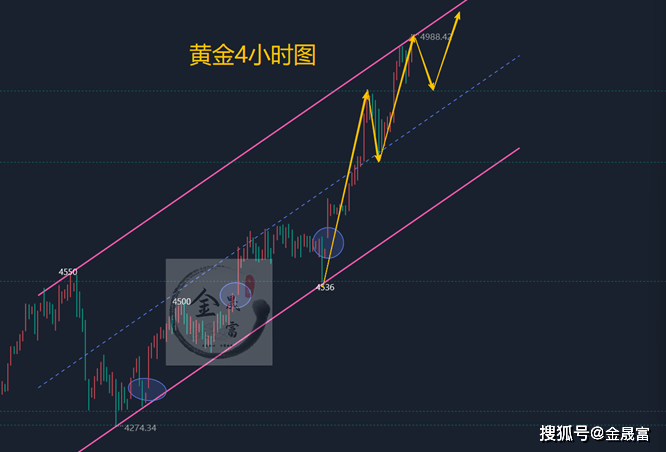
金晟富:1.24黄金迎接5字开头!下周黄金走势分析参考
Sou Hu Cai Jing· 2026-01-24 04:48
Group 1 - The core viewpoint of the articles highlights the unprecedented surge in gold and silver prices, driven by multiple factors including central bank purchases and investor demand for safe-haven assets amid global uncertainties [1][2][3] - Gold prices have recently approached the significant $5000 per ounce mark, with silver breaking above $101 per ounce, marking historical highs [1][2] - The market anticipates that the Federal Reserve will maintain interest rates during its upcoming meeting, with expectations of potential rate cuts in 2026, further enhancing the appeal of non-yielding assets like gold [2][3] Group 2 - The increase in gold prices is attributed to a combination of central bank gold purchases and inflows into gold ETFs as a hedge against global policy risks [2] - The PCE inflation data aligns with market expectations, reinforcing the belief that the Federal Reserve will keep rates unchanged, which supports gold's upward trajectory [2] - The geopolitical landscape, particularly the unpredictability of U.S. policies, continues to influence gold's role as a hedge against uncertainty, with major institutions like Goldman Sachs raising their gold price forecast to $5400 per ounce [2][3] Group 3 - Technical analysis indicates that gold is in a strong upward trend, with significant daily price movements and a potential for further gains if it maintains above key support levels [4][5] - The market is advised to monitor the upcoming FOMC meeting closely, as hawkish or dovish signals from the Fed could lead to substantial price fluctuations in gold [3][4] - Strategies for trading gold include identifying key resistance and support levels, with recommendations for both short and long positions based on market conditions [6][5]