
关税政策

Search documents
特朗普关税开始让美国消费者钱包缩水
Xin Hua Wang· 2025-10-30 08:41
Core Insights - The U.S. Consumer Price Index (CPI) for June showed a year-on-year increase of 2.7%, the largest since February, indicating pressure on American consumers due to tariffs implemented by the Trump administration [1][3] - The core inflation rate, excluding volatile food and energy prices, rose by 2.9% year-on-year, surpassing market expectations [1][3] - The data suggests that the burden of tariffs on imported goods is increasingly being borne by U.S. businesses and consumers, contradicting Trump's claims that his trade policies would not financially impact the public [3][5] Inflation Impact - Significant price increases were noted in household appliances (1.9% month-on-month), furniture (1% month-on-month), and clothing (0.4% month-on-month), reflecting the impact of tariffs on consumer goods [3][5] - Economists warn that the rising inflation rate could signal further price increases if new tariffs are implemented starting August 1, potentially raising the average tariff rate to 21% [5] Federal Reserve Response - The evidence of tariffs affecting prices has led to speculation that the Federal Reserve may not lower interest rates as Trump has repeatedly requested, despite pressure from the White House [7] - Some conservative economists believe the Fed is likely to maintain its current stance, focusing on inflation levels to prevent them from rising to 3% or 4%, which could indicate policy failures [7]

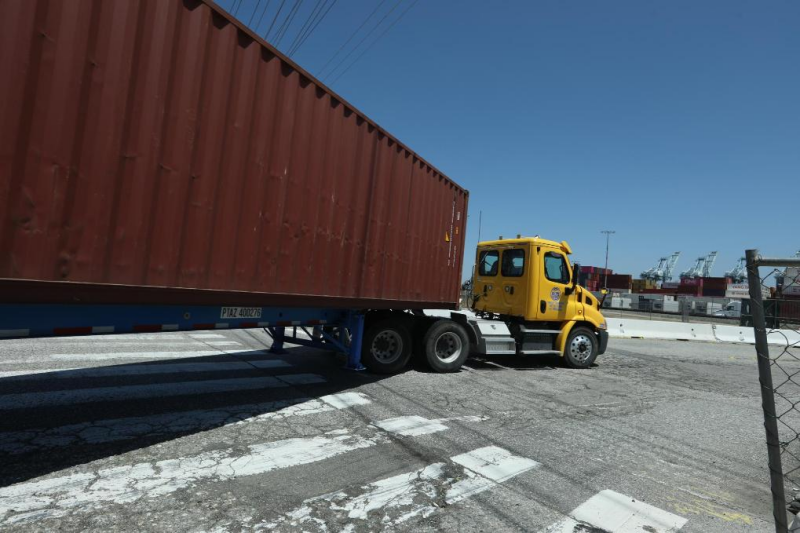
德财长:美关税政策只会两败俱伤 应尽快结束争端
Yang Shi Xin Wen Ke Hu Duan· 2025-10-30 08:41
Core Viewpoint - The trade policies of the Trump administration, particularly the proposed tariffs on EU imports, are viewed as detrimental to both the US and European economies, necessitating urgent negotiations to resolve the trade dispute [1]. Group 1: Economic Impact - German Finance Minister Klambier stated that the tariffs would create losers on both sides, posing a threat to the US economy comparable to that of Europe [1]. - A report from the German Institute for Macroeconomic Policy indicates that the implementation of US tariffs could suppress Germany's economic growth by 2025, with growth in 2026 limited to around 1.2% [1]. - The same report previously projected a 0.2% growth for Germany in the current year and 1.5% for the next year [1]. Group 2: Response Measures - Europe is prepared to implement decisive countermeasures to protect its businesses and employment in response to the US tariffs [1]. - The EU has indicated readiness to impose retaliatory tariffs as a response to the proposed 30% tariffs on EU imports announced by President Trump [1]. Group 3: Inflation and Monetary Policy - The report suggests that US domestic consumer prices will rise due to the tariffs, leading to suppressed consumer spending [1]. - Under inflationary pressure, the US monetary policy may continue to tighten, further hampering economic growth [1].
贸易战“打疼了”自己!美国关税政策已陷入战略困局
Jin Tou Wang· 2025-10-30 07:12
Group 1 - A recent survey indicates that over half of Americans believe the U.S. should cooperate and engage with China, a significant increase from 40% in 2024, marking the first time since 2019 that a majority favors a "friendly" policy towards China [1] - The survey results also show that most Americans oppose increasing tariffs on Chinese imports, reflecting a strategic dilemma in U.S. tariff policy, as the ongoing trade war has resulted in substantial costs for the U.S. despite the previous administration's firm stance on tariffs [1] - Since the return of the Trump administration in January, U.S.-China trade relations have experienced a cycle of collapse, partial recovery, and sharp deterioration across various sectors, leading to unprecedented economic backlash in the U.S. [1] Group 2 - In the solar industry, the U.S. imposed tariffs as high as 250% on Chinese solar panels to protect domestic companies, but this has not resulted in growth for local firms and has instead delayed installation progress by several years [2] - The impact of these tariff policies has contributed to rising inflation in the U.S. and weakened corporate competitiveness, as evidenced by a drop in the consumer confidence index to a six-month low in October [2] - As the survey results are released, a meeting between the U.S. and China is scheduled to take place during the APEC conference in South Korea, suggesting a potential shift towards cooperation amid ongoing inflation and employment market fluctuations in the U.S. [2]
降息!美联储下调利率25个基点,年度收官决议待定
Di Yi Cai Jing· 2025-10-29 23:10
在新闻发布会伊始,美联储主席鲍威尔表示,政府停摆前获取的数据显示,经济活动增长轨迹可能略强 于此前预期,这主要得益于消费支出的强劲表现。 对于政府停摆的影响,鲍威尔认为,其对经济活动的抑制作用将持续存在,但这些影响应会在停摆结束 后逐步消退。美国国会预算办公室(CBO)周三预测,截至本月底,这场持续一个月的政府停摆已导 致美国国内生产总值(GDP)至少减少70亿美元。国会预算办公室主任斯瓦格尔(Phillip Swagel)表 示,若停摆持续,这一经济损失规模还将进一步扩大。 针对就业市场,鲍威尔表示,现有信息均指向劳动力市场正趋于疲软。"尽管9月官方就业数据已延迟发 布,但现有证据表明,当前裁员与招聘活动仍维持在较低水平;同时,在这个活力有所下降、整体略显 疲软的劳动力市场中,家庭对就业机会的感知以及企业对招聘难度的感受均在持续下滑。近几个月来, 就业市场面临的下行风险似乎已有所上升。美联储正密切关注裁员公告。许多公司正在谈论经济分化态 势。低收入消费者正在挣扎,在经济呈现K型复苏这一点上,确实存在某种可能性。" 值得注意的是,本周早些时候,亚马逊宣布将在全公司范围内裁员1.4万人;周三,媒体巨头派拉蒙 ( ...
Metals Focus:预计2026年黄金价格将继续上涨
智通财经网· 2025-10-29 22:45
Group 1 - The core viewpoint of the articles indicates a strong upward trend in precious metal prices, particularly gold, driven by multiple factors including geopolitical uncertainties, concerns over U.S. debt sustainability, and central bank purchases [1][3][4] - As of mid-October 2025, gold prices have increased by 66% year-to-date, reaching a peak of over $4,380 per ounce, with expectations for further increases in 2026 [1][3] - The average gold price for 2026 is projected to be around $4,560 per ounce, representing a 33% increase compared to the previous year [3] Group 2 - Silver prices are expected to be influenced by similar factors as gold, including policy uncertainties and rising demand for safe-haven assets, with short-term supply remaining tight [4][6] - The average silver price for 2026 is anticipated to reach $57 per ounce, with potential to exceed $60 per ounce in the latter half of the year [6] - Platinum prices have risen over 80% year-to-date, with expectations of continued upward momentum due to supply constraints and increased demand [6][9] Group 3 - Palladium has also seen a price increase of over 70% this year, driven by tariff risks and supply adjustments, with a projected average price of $1,340 per ounce for 2026 [9][10] - The supply-demand dynamics for other platinum group metals, such as rhodium and ruthenium, are expected to improve by 2026, with rhodium prices potentially spiking again due to low ground stocks [10][12] - Overall, the precious metals market is characterized by strong investment interest and ongoing central bank purchases, which are expected to support prices in the coming years [3][4][6]

美国参议院通过决议,要求撤销特朗普对巴西征收的50%关税
Sou Hu Cai Jing· 2025-10-29 21:59
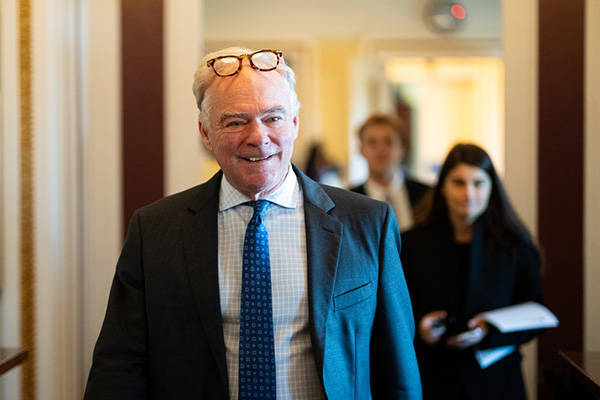
凯恩说:"我总体上反对关税,除非其用途非常明确。我同样反对总统随意编造理由来动用紧急权力, 在不经国会批准的情况下做各种事情。" 美国参议院蒂姆·凯恩IC photo 在这次表决中,共有五名美国共和党参议员投出赞成票,分别是缅因州的苏珊·柯林斯、肯塔基州的米 奇·麦康奈尔、肯塔基州的兰德·保罗、阿拉斯加州的莉萨·穆尔科斯基和北卡罗来纳州的汤姆·蒂利斯。美 联社称,这反映出共和党内部也存在反对特朗普关税政策的声音。 麦康奈尔在一份声明中说:"关税使得在美国建房和购房都变得更加昂贵,贸易战带来的经济损害并非 个例,而是常态。"保罗也批评称:"讨厌某人而征收关税不是什么紧急情况,这是对紧急权力的滥用, 也代表国会放弃了在税收方面的传统职能。" 这项法案由美国弗吉尼亚州民主党籍联邦参议员蒂姆·凯恩提出,要求终止特朗普用来对巴西征收关税 的国家紧急状态。凯恩称,此次表决旨在迫使参议院就"关税造成的经济破坏"展开讨论。 凯恩在投票前表示,考虑到导致关税的"紧急状态"是由巴西起诉该国前总统博索纳罗引发的,他认为特 朗普动用《国际紧急经济权力法》是不恰当的,"这个所谓的紧急情况,完全或部分源自美国以外的地 方,即巴西决定起诉 ...
Kadant(KAI) - 2025 Q3 - Earnings Call Transcript
2025-10-29 16:02
Financial Performance - The company reported Q3 revenue of $272 million, flat compared to the prior year, with record aftermarket parts revenue up 6% to $188.4 million [6][12][17] - Adjusted EBITDA was $58 million with a margin of 21.4%, while GAAP EPS decreased 12% to $2.35 and adjusted EPS decreased 9% to $2.59 [6][17][18] - Cash flow from operations was $47 million and free cash flow was $44 million, demonstrating strong business model resilience [6][18] Business Segment Performance - Flow control segment revenue decreased 3% to $94 million, with aftermarket parts revenue up 5% [7][8] - Industrial processing segment revenue decreased 4% to $106 million, with aftermarket parts revenue at a record $81 million, representing 76% of total revenue [8][9] - Material handling segment revenue increased 11% to a record $70 million, driven by an 18% increase in capital shipments [9][10] Market Conditions - Market demand for capital equipment remains sluggish, but there is increasing activity anticipated in Q4 [5][10] - Capital project orders have been delayed, with many expected to push into 2026 due to administrative processes [23][30] Company Strategy and Industry Competition - The company is focused on enhancing operational efficiencies through initiatives like the 80/20 performance enhancement program [88] - Recent acquisitions, including Clyde Industries, are expected to contribute positively to future revenue and operational capabilities [9][24][88] Management Commentary - Management expressed optimism about future capital orders, despite current delays, and noted that economic headwinds are still a concern [7][30] - The company is monitoring tariff impacts and is actively seeking alternative suppliers to mitigate cost pressures [23][24] Other Important Information - The company increased its full-year revenue guidance to $1.036 billion to $1.046 billion, reflecting the impact of recent acquisitions [24] - SG&A expenses as a percentage of revenue increased to 27.9% in Q3, attributed to various factors including acquisition-related costs [16][17] Q&A Session Summary Question: What is the percentage of aftermarket parts revenue for each segment? - Flow control: 74% current quarter vs. 70% prior year; Industrial processing: 76% vs. 67%; Material handling: 52% vs. 55% [28] Question: Can you clarify the situation with capital bookings being pushed to 2026? - Management indicated that several projects are in late stages but may not be booked until administrative requirements are met [30] Question: How are tariffs affecting capital equipment demand? - Management noted that while conditions have improved, uncertainty remains, impacting customer decision-making [33][34] Question: What is the expected contribution from recent acquisitions? - Clyde Industries and Babini are anticipated to contribute approximately $23 to $25 million in revenue combined for Q4 [57] Question: What is the backlog status? - The company ended Q3 with a backlog of $273 million, with capital orders making up about 60% of that [72]

美联储10月FOMC货币政策会议关注点
Sou Hu Cai Jing· 2025-10-29 14:10
Group 1 - The Federal Reserve's potential announcement regarding interest rate cuts and the influence of newly appointed board member Milan [1] - Discussion on whether the Federal Reserve will end the process of "quantitative tightening" (QT) [1] - Consideration of the Federal Reserve's stance on President Trump's tariff and fiscal policies [1] - Examination of the Federal Reserve's discussions related to the federal government shutdown [1]
玉米淀粉日报-20251029
Yin He Qi Huo· 2025-10-29 12:06
Report Summary 1. Report Industry Investment Rating No relevant information provided. 2. Core Viewpoints of the Report - The US corn market is in a narrow - range oscillation. Although the US - China relationship has eased recently and the price has rebounded, the high production level remains unchanged. The Chinese market has high import profits for foreign corn, and the domestic corn spot still has room to decline in the short term. Corn starch prices are mainly affected by corn prices and downstream stocking, and the short - term spot is expected to decline, with the 01 - contract on the futures market bottom - oscillating [4][6][7]. - The trading strategy suggests that the US corn has support at 400 cents per bushel. For 05 and 01 corn, it is advisable to wait and see. For the spread between 01 corn and starch, one can try to short the spread when it is high. In the options market, a short - term strategy of accumulating puts and calls with rolling operations is recommended [8][9][11]. 3. Summary by Directory 3.1 Data - **Futures Market**: Among corn futures contracts, C2601 closed at 2116, down 7 (- 0.33%); C2605 closed at 2221, down 9 (- 0.41%); C2509 closed at 2253, down 8 (- 0.36%). Among corn starch futures contracts, CS2601 closed at 2427, up 3 (0.12%); CS2605 closed at 2540, down 1 (- 0.04%); CS2509 closed at 2590, down 3 (- 0.12%) [2]. - **Spot and Basis**: Corn spot prices in different regions showed different trends. For example, the price in Qinggang was 1970, unchanged; in Guangdong Port, it was 2250, down 20. Starch spot prices were stable. The basis for corn and starch also varied by region [2]. - **Spreads**: In the corn market, the spread of C01 - C05 was - 105, up 2; in the starch market, the spread of CS01 - CS05 was - 113, up 4. The cross - variety spreads also had corresponding changes [2]. 3.2 Market Judgment - **Corn**: The US corn market is in a narrow - range oscillation. The Chinese market has high import profits for foreign corn. The spot price in the Northeast is falling, while in North China, it has started to stabilize and rebound. The domestic breeding demand is stable, but the corn spot still has room to decline in the short term [4][6]. - **Starch**: The number of trucks arriving at Shandong deep - processing plants has decreased, and the corn spot in Shandong has stabilized. The starch inventory has decreased this week. Due to the significant decline in corn prices, enterprises are making good profits. However, the corn in North China may still decline at the end of October, and the starch spot is expected to follow suit [7]. 3.3 Corn Options The recommended option strategy is a short - term strategy of accumulating puts and calls with rolling operations [11]. 3.4 Related Attachments The attachments include graphs showing the spot prices of corn in different regions, the basis of corn 01 contract, the spreads of corn 1 - 5, the spreads of corn starch 1 - 5, the basis of corn starch 01 contract, and the spreads of corn starch 01 contract [13][15][20].
美关税政策主要针对俄能源、金融和军工领域
Xin Hua Wang· 2025-10-29 08:03
Core Viewpoint - The U.S. tariff policy and the resulting trade war may push the global economy towards recession, as stated by the Russian Foreign Ministry spokesperson Zakharova [1] Group 1: Impact of U.S. Tariff Policy - The impact of U.S. tariff policy on the multilateral trade system largely depends on the responses of other countries [1] - Lowering tariffs only on U.S. products creates an artificial competitive advantage for the U.S., violating World Trade Organization rules [1] - Countries may significantly raise their own tariffs and adopt protective measures to prevent an influx of goods excluded by high U.S. tariffs [1] Group 2: Consequences for Global Trade - The result of these actions will be a restructuring of global industrial and supply chains, leading to changes in global commodity flows [1] - A decrease in international trade volume and an increase in global inflation are anticipated outcomes [1] - Such conditions could potentially lead to a global recession [1] Group 3: Sanctions on Russia - The U.S. has recently intensified sanctions against Russia, particularly targeting the energy sector, which is a cornerstone of the Russian economy [1] - The European Union has officially adopted the 19th round of sanctions against Russia, including 69 new individual sanctions and various economic restrictions, mainly affecting the energy, financial, and military sectors [1] - The new sanctions complicate the restoration of U.S.-Russia relations, as noted by the Russian presidential spokesperson Peskov [1]