
AI泡沫

Search documents
美股前瞻 | 三大股指期货齐涨,台积电(TSM.US)Q3业绩超预期
Zhi Tong Cai Jing· 2025-10-16 12:38
Market Overview - US stock index futures are all up, with Dow futures rising by 0.23%, S&P 500 futures up by 0.35%, and Nasdaq futures increasing by 0.48% [1] - European indices show mixed results, with Germany's DAX down by 0.14%, UK's FTSE 100 down by 0.24%, France's CAC40 up by 0.92%, and the Euro Stoxx 50 up by 0.40% [1] - WTI crude oil prices increased by 0.50% to $58.56 per barrel, while Brent crude rose by 0.71% to $62.35 per barrel [1] Employment Trends - There is a significant increase in job seekers looking for temporary holiday positions, with seasonal job search volume up by 27% year-over-year and 50% compared to 2023 [2] - Despite the high demand from job seekers, the number of seasonal job postings has only increased by 2.7%, indicating a competitive job market for temporary positions [2] Federal Reserve Speculations - Traders are betting on an unconventional rate cut of 50 basis points by the Federal Reserve before the end of the year, with SOFR options trading volume surging [3] - The market anticipates that the Fed's actions may be more aggressive than currently expected by other market observers [3] Banking Sector Insights - Major US banks reported record quarterly earnings driven by trading activity and accounts receivable, partly fueled by the AI boom [4] - However, several Wall Street executives warned of potential AI bubble risks, highlighting concerns over high stock valuations and price-to-earnings ratios [4] Economic Impact of Government Shutdown - A senior US Treasury official indicated that the ongoing federal government shutdown could result in economic losses of up to $15 billion per week, correcting earlier misstatements about daily losses [4] - This situation is seen as a positive catalyst for gold prices, which have surged over 60% this year [4] Company-Specific Developments - TSMC reported Q3 revenue of $33.1 billion, a 40.8% year-over-year increase, and raised its 2025 revenue growth forecast to the mid-30% range, reflecting strong demand for AI components [5] - Charles Schwab's Q3 net new assets reached $134.4 billion, a 48% year-over-year increase, exceeding market expectations [6] - Nestlé's Q3 sales growth was driven by price increases in its candy and coffee products, with organic sales growth of 4.3%, surpassing analyst expectations [7] - United Airlines reported Q3 revenue growth of 2.6% to $15.23 billion, driven by strong demand for premium seating [8] - Hewlett Packard Enterprise's profit and cash flow guidance for the next fiscal year fell short of analyst expectations, reflecting pressure on profit margins due to expensive AI chips [9] - Walmart's partnership with OpenAI is expected to boost its stock price, with analysts predicting it could join the trillion-dollar market cap club [10]


微软英伟达等巨头400亿美元收购数据中心推高AI泡沫
Sou Hu Cai Jing· 2025-10-16 09:39
Group 1 - The core point of the article highlights the ongoing expansion of the AI bubble, exemplified by the acquisition of Aligned Data Centers (ADC) by a consortium led by BlackRock, Microsoft, Nvidia, xAI, and MGX, with a valuation of approximately $40 billion, marking it as the largest data center acquisition to date [2][3] - The consortium, known as AI Infrastructure Partners (AIP), aims to accelerate investments in next-generation AI infrastructure, targeting to mobilize $30 billion in equity from investors, with potential total financing reaching $100 billion, including debt [3][5] - ADC's portfolio includes 50 data centers across North and South America, with a total capacity of 5 GW, which is expected to grow significantly under the new ownership [2][3] Group 2 - The acquisition is part of a series of high-profile transactions in the AI sector, indicating companies' willingness to incur substantial debt to capitalize on the AI boom, despite warnings of a potential bubble [3][4] - Goldman Sachs predicts a 50% increase in data center capacity over the next two years, but also cautions that the current "frenzied atmosphere" surrounding AI investments is leading companies to deploy capital defensively [3][5] - Elon Musk, through xAI, criticized the debt transactions associated with AI investments, suggesting that companies are merely trading promissory notes to further their ambitions without actual capital [4][5]

从AI狂潮赚的“盆满钵满”,华尔街高管也开始警告“AI泡沫”
美股IPO· 2025-10-16 04:17
Core Viewpoint - Major Wall Street executives express concerns about the potential for an AI bubble, drawing parallels to the internet bubble, while also reporting record earnings driven by AI-related market excitement [3][4]. Group 1: Executive Warnings - Goldman Sachs CEO David Solomon suggests that the current situation resembles the internet bubble, warning of the risks associated with massive investments in AI infrastructure that could lead to a divide between successful and failing companies [3][4]. - Citigroup CFO Mark Mason highlights concerns about overvaluation in certain sectors, stating it is hard not to believe that some areas may be experiencing a bubble [4]. - Goldman Sachs COO John Waldron acknowledges the significant bets placed on AI to drive economic growth but cautions that it is too early to determine if an AI bubble exists [4]. Group 2: Record Earnings - Despite the warnings, major banks have reported record earnings for the quarter, with trading activity and revenues reaching new highs, partly attributed to the excitement surrounding AI [3][4]. - Goldman Sachs reported its highest quarterly revenue for the same period in its history, while Citigroup's five major business segments also achieved record revenues [3]. Group 3: AI Deployment and Future Returns - Major banks are actively deploying AI technologies, with Bank of America introducing a virtual financial assistant named Erica and JPMorgan Chase focusing on cost savings through AI [8]. - JPMorgan's co-CEO Troy Rohrbaugh indicates that while the bank is beginning to see some benefits from AI investments, significant returns will take time to materialize [9]. - Morgan Stanley CFO Sharon Yeshaya emphasizes that the potential applications of AI are vast, and the industry has only scratched the surface of what AI can achieve [9].



创纪录业绩难掩担忧!华尔街高管齐声警告AI泡沫风险
智通财经网· 2025-10-16 01:53
Core Insights - Major U.S. banks reported record quarterly earnings driven by trading activity and receivables, partly fueled by the AI boom, but several Wall Street executives warned of potential overexuberance in the AI sector [1][2] Group 1: AI Implementation and Caution - Banks are actively deploying AI technologies in their operations, with examples including Bank of America's virtual financial assistant "Erica" and JPMorgan's cost-saving AI initiatives [1] - Despite optimism about AI's potential, executives like Citigroup's CFO Mark Mason expressed caution regarding high stock valuations and the presence of bubbles in certain sectors [1] - Goldman Sachs CEO David Solomon referenced the internet bubble, highlighting the risks associated with significant investments in AI infrastructure, noting that while some projects may thrive, others may struggle [1] Group 2: Market Sentiment and Comparisons - Investor concerns about a potential AI bubble are rising, as AI stocks have seen significant increases this year, with critics pointing to the cyclical nature of investments in unproven technologies [2] - Goldman Sachs COO John Waldron stated that the U.S. economy is making a substantial bet on AI for growth, but it is still too early to determine if a bubble has formed [2] - Morgan Stanley CFO Sharon Yeshaya emphasized that the technology has numerous applications, indicating that the industry has only begun to scratch the surface of AI's potential [2] - JPMorgan's co-CEO Troy Rohrbaugh noted that while the bank is investing in AI, the returns may not be immediate, suggesting that significant benefits will materialize in the future [2] - Evercore's founder Roger Altman argued that current AI investments differ from the internet bubble era, as today's major investors are large, profitable companies like Meta Platforms and Amazon, although he cautioned against the market's unsustainable rise [2]

从AI狂潮赚的“盆满钵满”,华尔街高管也开始警告“AI泡沫”
Hua Er Jie Jian Wen· 2025-10-16 00:17
尽管AI热潮助推华尔街银行创下交易和投行业务的纪录业绩,但多位大行高管在本周财报电话会议上 对AI行业的过度狂热发出警告。 10月16日,据媒体报道,高盛首席执行官David Solomon在周二的财报电话会议上暗示当前形势与互联 网泡沫存在相似之处,称该行意识到AI基础设施的巨额投资可能会导致"一些企业蓬勃发展而另一些则 走向失败的分化局面"。花旗首席财务官Mark Mason则更为直接地指出,"很难不认为某些板块可能存 在泡沫且估值过高"。 这些表态发生在银行业公布创纪录季度业绩的背景下。本季度交易活动和交易收入均创新高,部分归功 于AI带来的市场兴奋情绪。据见闻文章写道,高盛三季度营收创下公司历史上同期最高纪录,花旗三 季度五大业务板块收入均创纪录。 不过,尽管发出警示,华尔街各大银行仍在积极部署AI技术,从美国银行的虚拟助手Erica到摩根大通 的成本削减项目。高管们普遍认为AI应用仍处于早期阶段,真正的回报需要时间兑现。 他说:"这是一个重大区别,互联网泡沫实际上涉及无数从未具备可持续性的企业。"但他也警告称,市 场不可能"无限期"持续上涨。 银行积极部署AI但强调回报需时日 华尔街高官警告"AI泡 ...
“看,皇帝没穿衣服”!对冲基金经理:万亿美元的AI投入,赚得回来吗?
Hua Er Jie Jian Wen· 2025-10-15 11:29
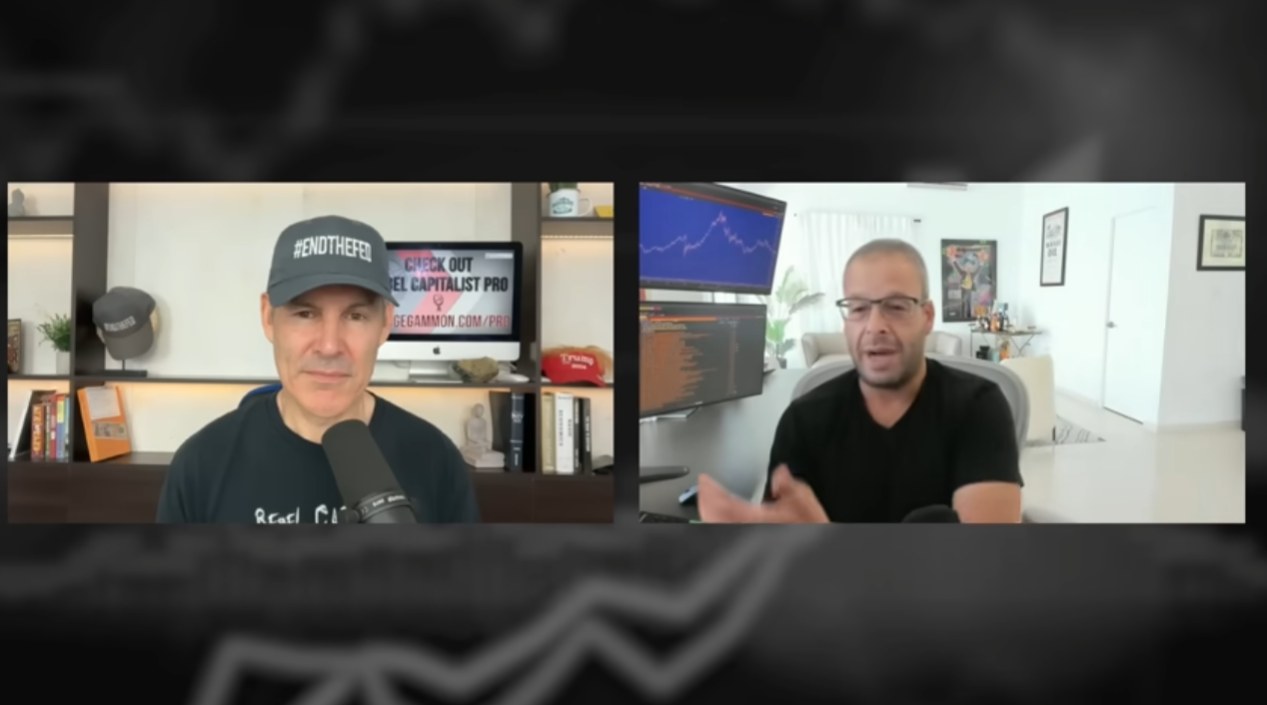
Core Viewpoint - The discussion highlights significant concerns regarding the sustainability and profitability of AI data centers, suggesting that the required investment and revenue projections are unrealistic and may lead to substantial financial losses in the future [1][2][3]. Investment Requirements - AI data center construction is projected to require investments in the range of trillions of dollars over the next 3-5 years, with estimates suggesting that achieving a 10% capital return would necessitate revenues of $1-2 trillion, and for better returns, revenues of $3-4 trillion would be needed [1][4][8]. - Current annual spending on data center construction is around $400 billion, which is significantly lower than the projected needs for profitability [6][9]. Market Dynamics - The AI business model is criticized for its lack of customer loyalty and high substitutability among products like ChatGPT, Gemini, and Claude, leading to intense price competition that could reduce profit margins to just above energy costs [1][2][4][16]. - The potential for a price war is highlighted, where companies may continuously undercut each other, resulting in minimal profit margins [1][4][16]. Historical Comparisons - The current AI investment landscape is likened to the telecom bubble of 2000, where companies created artificial revenue through financing schemes, leading to eventual market collapse [2][22]. - The analogy of railroad construction is used to illustrate the cyclical nature of capital investment in AI, suggesting that many investors may face repeated failures despite ongoing funding [18][19]. Revenue Generation Challenges - The AI industry is currently generating revenues estimated between $15 billion to $20 billion, which is insufficient to cover the projected costs of data center operations, indicating a need for a 30-fold increase in revenue to break even [9][11][13]. - Concerns are raised about the viability of AI applications in generating sustainable income, especially in sectors like healthcare and finance, where free alternatives may dominate the market [11][13][14]. Investor Sentiment - Conversations with industry insiders reveal a consensus that many AI-related assets are overvalued, with significant skepticism about their future profitability [32][33]. - The sentiment among investors is one of caution, with many expressing disbelief in the projected growth and profitability of AI technologies [33][34].
华尔街警报升温!AI交易是否已“过热”?
Jin Shi Shu Ju· 2025-10-15 08:46
"当资产价格处于高位时,回落的空间就更大,"戴蒙说,并补充称,尽管消费者仍在消费、公司仍在赚 钱,但估值与信用利差仍然偏紧。"你会发现很多资产看起来正进入泡沫区间,这并不意味着还没有再 涨20%的空间,但这又增添了一项担忧。" 这种谨慎之际,新的情绪数据显示投资者的乐观情绪正走向极端。 美国银行最新发布的《全球基金经理调查》显示,"AI股权泡沫"首次被列为其历史上的全球首要尾部风 险。 该调查覆盖约200名管理近5000亿美元资产的基金经理,该调查还显示基金经理们的现金水平降至 3.8%,逼近美国银行的3.7%的"卖出"阈值。历史上,低于4%的读数往往对应风险偏好高企,并常出现 在市场周期后段。 这种乐观也体现在机构仓位数据中。DataTrek Research引用道富的"风险偏好指数"指出,大型专业投资 者(即所谓的"大资金")进入四季度时达到了年内最看多的状态,并已连续五个月增配风险资产。 DataTrek联合创始人Nicholas Colas写道,"在没有非常大的冲击情况下,他们短期内不太可能改变看 法。" 华尔街对人工智能交易可能过热的警告声日益高涨。在与AI相关的股票与企业资本开支经历数月的纪 录性 ...
SEMICONWest洞察:AI泡沫争议、台积电美厂与先进封装
HTSC· 2025-10-15 06:54
Investment Rating - The report maintains an "Overweight" rating for the technology sector, specifically recommending "Buy" for TSMC with a target price of 320.00 in local currency [4]. Core Insights - The global semiconductor industry is projected to grow from $631 billion in 2024 to over $1 trillion by 2030, with a CAGR of approximately 8%. AI and High-Performance Computing (HPC) are identified as the main growth drivers [5][28]. - Concerns about a potential AI bubble exist, but industry leaders remain optimistic about AI's growth prospects, supported by strong token usage and the financial health of major tech companies [5][32]. - TSMC's construction of factories in Arizona is progressing well, with a total investment of $165 billion planned for six factories, including advanced packaging facilities. However, local supply chain development is lagging [6][50]. Summary by Sections AI Bubble Concerns - Investors are worried about the potential for an AI bubble similar to the dot-com bubble of 2000, especially after Nvidia's significant investment in OpenAI [5][32]. - Despite these concerns, major semiconductor industry leaders express optimism about AI's growth, with predictions of substantial increases in semiconductor market size driven by AI and HPC applications [5][28]. TSMC's U.S. Factory Progress - TSMC's Arizona factory construction is on track, with the first factory already operational. However, the surrounding supply chain is not yet fully developed, which may impact future growth [6][50]. - The company is expected to maintain strong pricing power due to its unique position in the U.S. market, where it is currently the only provider of advanced process foundry services [6][54]. Semiconductor Equipment Growth - The global wafer fabrication equipment (WFE) capital expenditure is expected to grow by 10% in 2026, driven by strong demand for AI-related advanced process technologies [7][73]. - The report highlights that advanced packaging technology is becoming a key area of investment, with major players like TSMC and Intel focusing on this as a strategic priority [7][72].
OpenAI号称有花不完的钱!AI泡沫似曾相识 发人深思
Xin Lang Ke Ji· 2025-10-15 05:37
Group 1 - OpenAI has significantly influenced stock prices, with multiple companies experiencing substantial gains due to its partnerships and announcements [1][4][10] - Broadcom's stock surged by 10%, reaching a market capitalization of nearly $1.7 trillion, making it the second-largest semiconductor company after Nvidia [2][4] - OpenAI's valuation has surpassed $500 billion, making it the highest-valued startup globally, and its collaborations are seen as catalysts for stock price increases [2][4][10] Group 2 - OpenAI and Broadcom announced a strategic partnership to develop custom 10 GW AI chips, with deployment expected to begin in the second half of 2026 [2][4] - OpenAI's recent partnerships include a $300 billion cloud services deal with Oracle and a strategic investment agreement with Nvidia worth up to $100 billion [5][6][10] - AMD's stock rose by 35% following OpenAI's announcement of a partnership to deploy 6 GW of AMD processors, further illustrating the impact of OpenAI's collaborations on stock prices [7][8] Group 3 - OpenAI's revenue is projected to exceed $127 billion this year, with a significant shift towards enterprise AI infrastructure [16] - Despite impressive revenue growth, OpenAI faces substantial losses, with a projected net loss of $80 billion this year, raising concerns about its financial sustainability [16][19] - OpenAI plans to invest over $115 billion in the next five years for data center construction and other capital expenditures, indicating a high cash burn rate [16][19] Group 4 - Concerns about a potential AI bubble are emerging, with comparisons to the internet bubble of the early 2000s, as many companies are investing heavily without clear profitability [21][22] - Analysts express mixed views on the sustainability of current AI investments, with some believing the fundamentals remain strong while others warn of concentrated market risks [22][23] - The current market environment differs from the past, with top cloud service providers having sufficient operational cash flow to support capital expenditures, unlike the debt-reliant internet companies of the past [23][24]


宏观专题研究报告:四月不重演
SINOLINK SECURITIES· 2025-10-15 05:23
Group 1: Current Trade Dynamics - The likelihood of an escalation in the tariff war is low, as the Trump administration prioritizes reaching a deal rather than unnecessary escalation[1] - The market has developed a "TACO" learning effect, reducing panic compared to the initial trade friction in April[1] - The focus of the current trade friction is on supply chain security, with both sides preparing for negotiations using both incentives and countermeasures[3] Group 2: Recent Developments and Measures - On October 10, Trump announced a 100% tariff on all products from China starting November 1, in response to China's export controls on rare earth minerals[3] - The U.S. Bureau of Industry and Security (BIS) introduced the "50% rule," extending export control restrictions to non-U.S. subsidiaries with 50% or more ownership by listed entities[4] - China retaliated with a "0.1% long-arm jurisdiction" rule, requiring licenses for any product containing even a trace of Chinese rare earth elements[4] Group 3: Economic Indicators and Market Reactions - China's exports grew by 8.3% year-on-year in September, surpassing Bloomberg's median forecast of 6.6%[8] - The correlation between market movements and trade tensions has diminished, with the primary drivers now being U.S. fiscal expansion and expectations of Federal Reserve rate cuts[19] - The U.S. economy's growth in the first half of 2025 was entirely attributed to private investment in information processing and software, which grew at an annualized rate of 28.3%[20] Group 4: Risks and Future Outlook - Risks include potential unexpected escalation of trade tensions, a possible AI bubble burst leading to systemic financial risks, and Trump's emotional decision-making influenced by domestic political pressures[27] - The current market environment suggests a shift towards a pragmatic resolution of trade issues, with a focus on structural agreements rather than further escalation[19]