
人工智能(AI)

Search documents
LME行政总裁张柏廉:时机成熟会考虑增设人民币为结算货币
Shang Hai Zheng Quan Bao· 2025-12-05 19:08
Core Insights - The London Metal Exchange (LME) is focusing on enhancing its services for the Chinese market, which accounts for 30% of its trading volume, and is considering the introduction of the renminbi as a settlement currency in the future [2][3][4] Group 1: Market Strategy and Developments - LME has suspended non-USD denominated metal options trading to modernize its options market, as all actual trades are currently conducted in USD [3][4] - The exchange is actively working to improve the liquidity of its options market by introducing electronic trading and optimizing collateral services for renminbi [3][4] - A roadmap for the development of the options market has been released, aiming to enhance liquidity, transparency, and market participation by introducing electronic trading for monthly contracts by the end of 2026 [4] Group 2: Sustainability Initiatives - LME is exploring pricing mechanisms for "green metals" and has launched a roadmap for sustainable metal premiums, focusing on responsible sourcing and carbon footprint standards [5][6] - The exchange has implemented new regulations requiring aluminum producers to upload carbon emission data to facilitate compliance with the EU's Carbon Border Adjustment Mechanism (CBAM) [6] Group 3: Market Observations and Trends - LME does not predict metal price trends but acknowledges the growing demand for copper in sectors like electric vehicles and AI data centers, which is attracting investor interest [8] - The exchange has noted the successful introduction of physical settlement contracts for lithium by the Guangzhou Futures Exchange, which LME is not currently pursuing due to the unique advantages of the region [8][9]


力挺“自己人”搞改革:“影子联储主席”哈塞特支持贝森特,设地区联储主席居住地要求
Sou Hu Cai Jing· 2025-12-05 18:27
虽然还没真正执掌帅印,但特朗普的首席经济顾问哈塞特已经放出风声,支持"自己人"的立场、要在美 联储内部搞改革。 美东时间5日周五,白宫国家经济委员会主任哈塞特(Kevin Hassett)在媒体采访中支持美国财长贝森 特提出的地区联储主席人选新规,要求候选人必须在所在辖区居住至少三年,这是特朗普政府重塑美联 储的最新举措。 将推动上述新规,并指责美联储存在超越货币政策的"职能蔓延"。周五哈塞特表示,设立地区联储的初 衷就是确保联邦制体系下不同地区的关切能在决策桌上拥有发言权。 贝森特周三暗示美联储理事会完全可以直接表态:如果候选人在该地区未居住满三年,就拒绝批准其提 名。 地区联储主席的任期为五年,每五年需重新确认,目前本届任期将于明年2月到期。哈塞特周五未透 露,是否已与美国总统特朗普讨论过新规可能影响2月的地区联储主席任期批准。 重申降息预期 哈塞特表示,美联储决策者应在下周会议上降息。他说: 哈塞特同时重申,美联储应在下周FOMC会议上继续谨慎降息。他预计2026年将出现经济增长繁荣,生 产率增速可能达到4%。这番表态正值市场高度关注美联储人事变动、哈塞特俨然已成"影子联储主 席"。媒体上周报道称,哈塞 ...
借“户口”清洗美联储?哈塞特力挺新规,更预言AI将造就“黄金经济年”
Jin Shi Shu Ju· 2025-12-05 15:05
Group 1 - The National Economic Council Director Hassett supports Treasury Secretary Mnuchin's call for new residency requirements for regional Federal Reserve chair appointments, emphasizing the need for diverse regional representation in decision-making [1] - Mnuchin plans to push for a rule requiring candidates for regional Fed president positions to have resided in the district for at least three years, marking a significant shift in the Federal Reserve's structure [1] - Hassett, a leading candidate to succeed Fed Chair Powell, has not discussed with President Trump whether he would veto any candidates not meeting the residency requirement [1] Group 2 - Hassett reiterated expectations that the Federal Reserve will lower interest rates in the upcoming meeting, suggesting it is a prudent time for such action [2] - He predicts a prosperous economic growth beginning in early 2026, driven by a rebound from recent federal government shutdown impacts and the results of new factory openings [2] - Hassett forecasts a potential 4% productivity growth next year, driven by advancements in artificial intelligence, which he claims is progressing faster than the internet and computer boom of the 1990s [2] - Historically, the U.S. has not seen 4% productivity growth since 1999, with only six years in the past half-century achieving or exceeding this rate [2] - He anticipates a "golden year" for the economy unless disrupted by unforeseen events, expressing disappointment if growth rates in the first two quarters of next year fall below 3% [2]
午后发力!A股下周怎么走?
Xin Lang Cai Jing· 2025-12-05 14:05
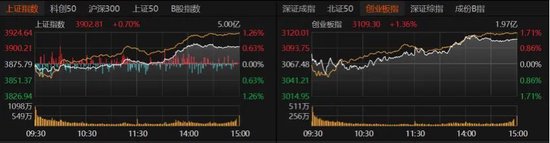
受访人士表示,金融权重股带动A股上涨,市场本身存在技术性反弹需求,但增量资金入场意愿有限, 赚钱效应并不广泛。本周市场震荡,投资者对算力、存力、电力等AI(人工智能)基建类股票重拾信 心。预计A股将维持震荡格局,板块分化轮动,防御与高股息品种更具吸引力。 A股放量上涨 今日,沪指收涨0.7%报3902.81点,创业板指收涨1.36%报3109.3点,深证成指收涨1.08%。沪深300、上 证50、北证50收涨。 量能放大,日成交额增至1.74万亿元,上个交易日成交额为1.56万亿元。杠杆资金热度不减,截至12月4 日,沪深京两融余额增至2.48万亿元。 盘面上,非银行金融、通信设备、输变电设备、电子器件、虚拟机器人大涨,银行、半导体、石油天然 气、Chiplet概念、煤炭、航空机场收跌。 板块收涨居多,31个申万一级行业中,银行板块微跌;非银金融板块午后拉升,大涨3.5%,中银证 券、瑞达期货涨停;有色金属板块涨近3%,精艺股份、宁波韵升、西部材料、闽发铝业涨停。机械设 备、国防军工、电力设备、基础化工、计算机、汽车、通信等板块涨幅均超过1%。 炒股就看金麒麟分析师研报,权威,专业,及时,全面,助您挖掘潜力主 ...




10张图,看彭博对全球2026年经济增长预期
Xin Lang Cai Jing· 2025-12-05 12:56
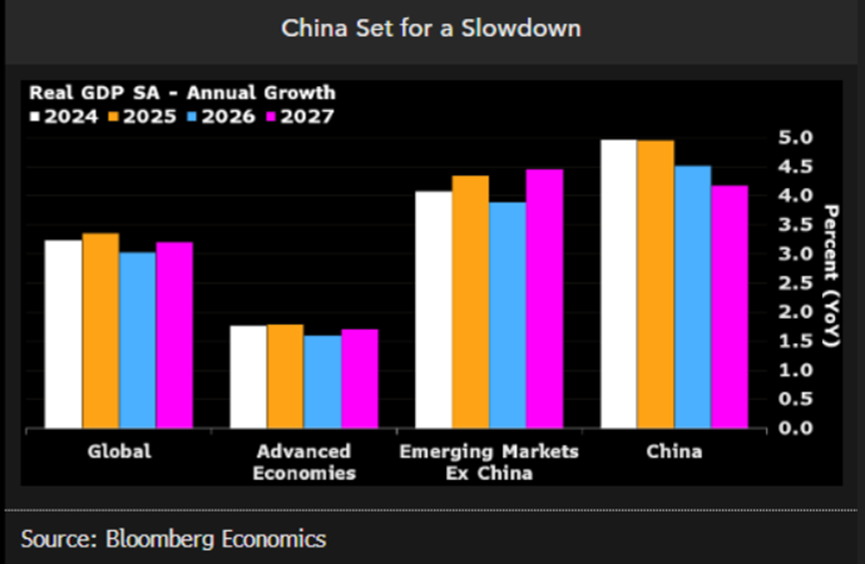
(来源:十五的投资笔记) 1、全球经济2026年预计增长3%。 预计美联储将在 2026 年降息 100 个基点。中国央行将维持适度宽松的政策取向;英国央行也将开启降息。由于通胀已接近 目标,但欧洲央行的宽松周期可能未结束。而日本央行则走向相反方向 —— 不过考虑到政治阻力与增长轨迹的不确定性, 其政策调整会较为谨慎。 4、增长与通胀不会阻碍美联储降息 美国 2026 年 GDP 增速预计将从今年的 1.8% 升至 2.3%,这得益于货币政策宽松,以及大规模资本支出激励、减税、放松 监管带来的红利。随着不确定性消退、新贸易协议有望落地,投资环境将趋于强劲——而 AI 是核心驱动力之一。预计美联 2025 年,尽管全球经济遭遇关税冲击与巨大的政策不确定性,但表现却意外强劲 —— 发达经济体与新兴经济体均展现出 韧性。展望未来,2026 年全球经济增速或将从今年的 3.4% 回落至 3%。中国经济放缓但仍高于全球整体。 2、关税推高美国通胀,拉低其它地区通胀 对美国而言,关税上调正在推高进口成本。对全球其他多数国家来说,经济增长放缓、商品寻求美国以外市场的冲击,大 概率会成为主导因素,进而压低通胀。这很大程度上取 ...
可怕的台积电,市占超过73%
半导体芯闻· 2025-12-05 10:21
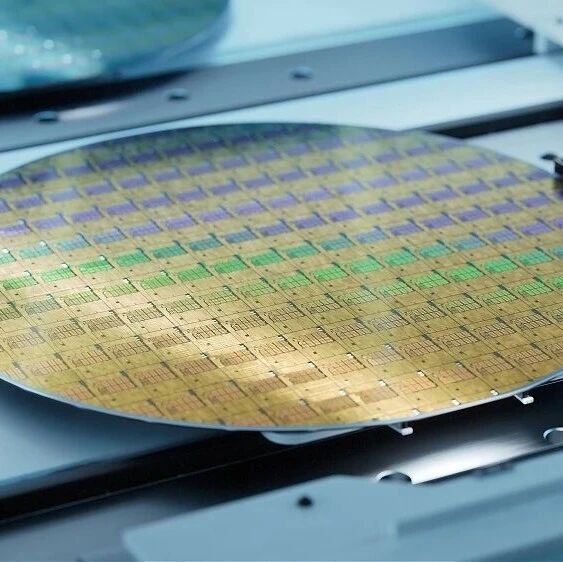
Group 1 - The core viewpoint of the article is that the semiconductor market is expected to grow significantly, driven by major players like TSMC, with a projected growth of 20% in the wafer foundry market next year and TSMC's revenue expected to grow by 22% to 26% [2][3] - The global semiconductor market is anticipated to reach $890 billion by 2026, with a growth rate of 11%, and could challenge the $1 trillion mark by 2028 [2] - The computing market is expected to grow by 18%, making it the largest application area for semiconductors, accounting for 46% of the overall market [2] Group 2 - The traditional wafer foundry and non-memory integrated device manufacturing (IDM) markets are projected to grow by approximately 14% by 2026 [3] - The mature process segment is recovering, with capacity utilization expected to remain above 80% due to strong demand from AI data centers [3] - China's wafer foundry capacity is expected to surpass Taiwan by 2028, driven by domestic policies and resource allocation [3] Group 3 - The IC design market in China is projected to surpass Taiwan by 2025, becoming the leader in the Asia-Pacific region [3] - The global packaging and testing market is expected to grow by 11% by 2026, with advanced packaging capacity increasing by 72% [3] - The semiconductor revenue is expected to grow by 22.5% in 2025 and by 26.3% in 2026, reaching $975 billion [5][6] Group 4 - The Americas region is expected to see the most significant growth in semiconductor revenue, with a projected increase of 34.4% [6] - The demand for logic chips is expected to grow by 37.1% in 2025, making it the largest product category in terms of revenue growth [5] - The third quarter of 2025 saw a significant increase in global chip sales, driven by demand for various semiconductor products [7]

拉美成中国AI基建“后院”:联想、阿里、字节三企割据
Zhi Tong Cai Jing· 2025-12-05 08:57
Group 1 - A group of Chinese internet companies is investing significantly in Latin America, with TikTok announcing a $37.7 billion investment in a data center complex in northeastern Brazil, marking its first major project in the region [1] - Alibaba Cloud is also expanding its presence in Latin America by building a new data center in Brazil and expanding its existing center in Mexico, which began operations earlier this year [1] - Lenovo has established a strong foothold in the Latin American market, leading in PC sales and showing significant growth in server business with a 25% annual growth rate [1] Group 2 - International tech giants like Amazon, Google, and Microsoft are also heavily investing in Latin America, with Google investing $850 million in a new data center in Uruguay and Microsoft investing $2.7 billion in Brazil for cloud and AI infrastructure [2] - The Latin American data center market is expected to nearly double from approximately $5 billion in 2023 to nearly $10 billion by 2029, driven by demand for cloud services and AI [2][3] - The region offers advantages such as cheap and sustainable energy sources, with Chile and Brazil having high percentages of carbon-free energy, which helps reduce operational costs for tech companies [3] Group 3 - Alibaba Cloud is accelerating its expansion in Latin America, focusing on cloud infrastructure and AI applications, with a commitment to invest 380 billion yuan globally from 2025 to 2027, part of which will be allocated to Latin America [4] - Lenovo supports Alibaba Cloud's infrastructure development and collaborates with local IT companies to provide solutions, helping them save costs and expand their cloud services [5] - Lenovo's hybrid AI strategy aims to dominate the personal AI market, with AI PCs expected to account for over 80% of global PC sales by 2028 [6] Group 4 - Lenovo has also supported Chinese companies entering the Latin American market, providing IT infrastructure for companies like BYD and Geely, which require substantial computing power for their operations [7]

华尔街一扫阴霾,美股明年又能实现双位数涨幅?
Jin Shi Shu Ju· 2025-12-05 08:22
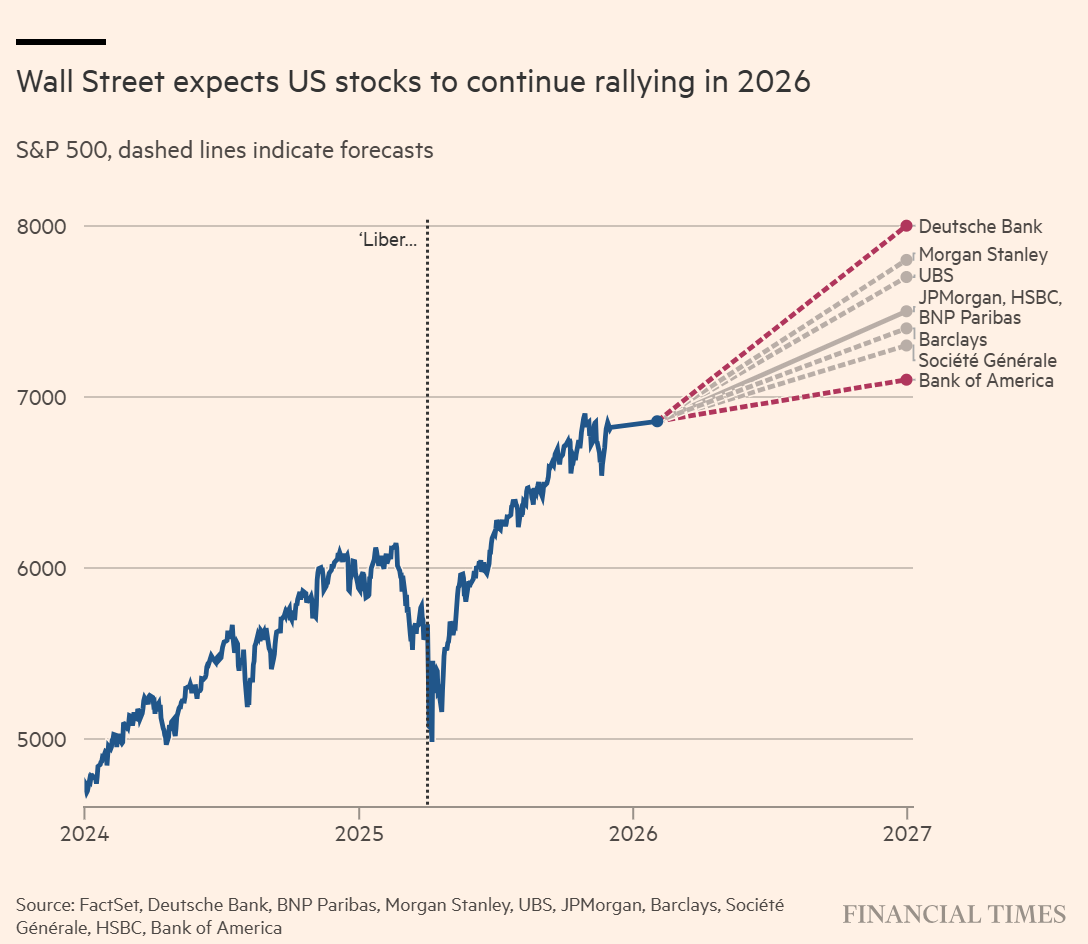
Core Viewpoint - Wall Street banks predict that the U.S. stock market will achieve another year of double-digit growth by 2026, despite recent investor concerns over large tech companies' spending plans and potential AI bubble risks [1][3]. Group 1: S&P 500 Index Predictions - The average forecast from nine major investment banks suggests that the S&P 500 index will rise to over 7500 points by the end of 2026, representing an approximate 10% increase from current levels [1][3]. - The index closed at 6857 points recently, having reached a historical high of 6920 points in October [1][3]. - This growth would mark the seventh year of double-digit increases in the past eight years, although the growth rate is expected to slow compared to the 16.6% increase seen in 2025 and the average growth over the past decade [3]. Group 2: Market Sentiment and Influencing Factors - Analysts believe that the market has moved past the recent pullback caused by AI valuation concerns, supported by President Trump's tax cuts and expectations of interest rate cuts [7]. - Morgan Stanley analysts project the S&P 500 index will reach 7800 points by the end of next year, citing a combination of loose fiscal, monetary, and regulatory policies, along with favorable conditions for AI [7]. - Deutsche Bank forecasts the S&P 500 index will hit 8000 points by 2026, indicating a similar growth rate to 2025, driven by strong corporate earnings growth [8]. Group 3: Broader Market Trends - Outside the U.S., other stock markets are also expected to rise by 2026, though at a slower pace than U.S. markets. The average forecast suggests the European Stoxx 600 index will increase by 6.4% to around 615 points, while Japan's Topix index is expected to rise by 5.6% to approximately 3590 points [9].

“AI教母”李飞飞抨击AI宣传两极化:要么世界末日,要么乌托邦
Feng Huang Wang· 2025-12-05 07:23
除了李飞飞外,其他顶尖计算机科学家也在呼吁对AI及其社会影响力进行更平衡的宣传。 今年7月,谷歌大脑创始人吴恩达表示,他认为通用人工智能(AGI)被高估了。AGI指的是AI系统具备人 类水平的认知能力,并能像人类一样学习和运用知识。各大领先AI公司的高管经常被问及他们认为AGI 何时到来,以及这对人类工作者意味着什么。 "AGI一直被过度炒作,"吴恩达在Y Combinator的演讲中表示,"在很长一段时间内,仍会有许多事情是 人类能做而AI无法做到的。" 李飞飞是在斯坦福大学长期任职的计算机科学教授,以创建ImageNet数据集而闻名。去年,她联合创立 了世界实验室公司,致力于开发能够感知、生成并与三维环境交互的AI模型。 她在斯坦福大学的讲座中表示,这种"极端言论"正充斥着技术讨论,并误导易受影响的人群。 "全世界的人,尤其是硅谷以外的人,需要听到事实,需要知道这项技术到底是什么,"她表示,"然而 这类讨论、这种沟通方式、这种公众教育,还未达到我所期望的效果。" 凤凰网科技讯 北京时间12月5日,据《商业内幕》报道,"AI教母"李飞飞表示,目前关于AI的讨论过于 极端化。 李飞飞在斯坦福大学的一场讲座于周 ...
美股等待审判纸白银拉升走强
Jin Tou Wang· 2025-12-05 07:20
周五(12月5日)亚市午后盘,纸白银走强拉升,涨幅扩大至2.00%,截至发稿,纸白银价格暂报13.239元/ 克,上涨2.27%,目前来看,纸白银走势盘内短线偏上涨。随着本周五这一关键时间节点的临近,华尔 街的目光集体锁定在即将发布的9月个人消费支出(PCE)物价指数上。 小盘股对利率极度敏感,因为它们更依赖债务融资。降息预期的升温直接推动了其反弹。代表小盘股的 罗素2000指数周四上涨0.7%,创下今年第七个收盘纪录。 此外,住房需求直接取决于抵押贷款利率,PCE数据将直接影响该板块是重回高点还是再次跳水。 像英伟达这样的芯片巨头以及VanEck半导体ETF也面临巨大波动。低利率环境有利于大型科技公司继续 举债投资数据中心和芯片;反之,高利率将增加融资成本,抑制AI资本支出。 【最新纸白银行情解析】 日图来看,纸白银价格目前处于趋势线阻力下方震荡调整,多头动力减弱,但仍处于众多均线支撑上 方,看涨前景良好,虽有继续调整和回落风险,但也可视为再度的入场看涨机会,因而,下方关注各均 线支撑,进行低多看涨,白银走势下方关注12.50-12.80支撑;上方关注13.50-14.00阻力。 【要闻速递】 作为美联储最 ...