AI算力

Search documents
哈佛辍学生拿下5亿美元融资:不造GPU,也要“绕开”英伟达
是说芯语· 2026-01-15 23:37
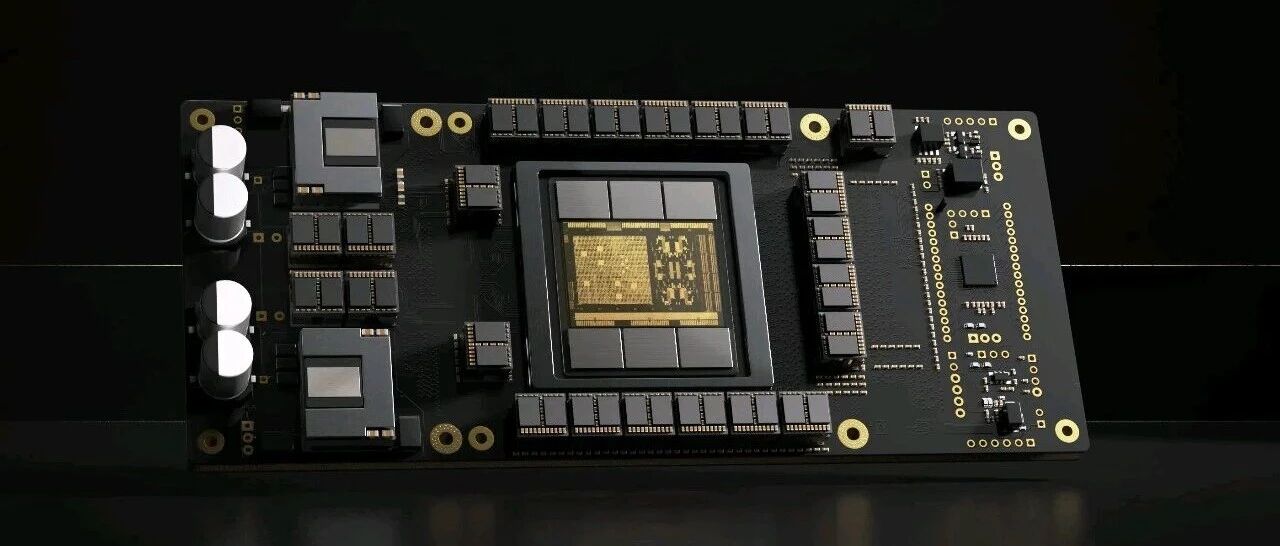
Core Insights - Etched, an AI chip company founded by Harvard dropouts, has raised nearly $500 million in a new funding round, achieving a valuation of $5 billion and total funding close to $1 billion [1][12] - The company aims to optimize the cost-performance ratio of AI computing, specifically focusing on running Transformer models more efficiently rather than competing directly with Nvidia's general-purpose GPUs [1][4] Market Context - Nvidia dominates the GPU market, with projected data center sales exceeding $500 billion by the end of 2026 [3] - Etched's analysis indicates that computational density has only improved by about 15% over the past few years, highlighting a need for more efficient solutions [3] Product Overview - Etched has developed a custom chip named Sohu, designed specifically for Transformer architecture, claiming it to be the "fastest AI chip ever" [3][10] - Under specific testing conditions, Sohu can process over 500,000 tokens per second when running the Llama 70B model, outperforming Nvidia's Blackwell GB200 GPU by an order of magnitude [3][4] Competitive Advantage - A server composed of eight Sohu chips can replace 160 H100 GPUs, offering a more economical, efficient, and environmentally friendly option for enterprises requiring specialized chips [5] - Sohu's design focuses on reducing energy consumption while achieving higher efficiency in running Transformer models, distinguishing it from general-purpose GPUs [5][10] Financial Implications - The cost of training AI models exceeds $1 billion, with inference applications potentially surpassing $10 billion; even a 1% performance improvement can justify a custom chip project costing between $50 million to $100 million [5][7] Future Prospects - Etched's chip is manufactured using TSMC's 4nm process and is integrated with HBM memory and server hardware to support production capabilities [10] - The company has plans to expand its technology beyond text generation to include image and video generation, as well as protein folding simulations [16] Industry Landscape - Other companies, such as Meta and Amazon, are also developing specialized AI chips, but Etched's approach focuses solely on Transformer models, avoiding unnecessary hardware components and software overhead [10][17] - The success of Etched hinges on the continued relevance of Transformer models in the AI landscape; a shift away from this architecture could necessitate a reevaluation of their strategy [18]


海外AI算力需求预期回归
傅里叶的猫· 2026-01-15 15:58
Group 1 - The AI hardware sector has seen a resurgence due to two main factors: Goldman Sachs' strategy meeting indicating a demand of 25 million units for 1.6T optical modules and 70 million units for 800G optical modules by 2026, and TSMC's fourth-quarter earnings report showing a 35% year-over-year profit increase, exceeding expectations and marking the eighth consecutive quarter of profit growth [1][2]. - TSMC's projected capital expenditure for 2026 is between $52 billion and $56 billion, following a total capital expenditure of $40.9 billion in 2025 [1]. - Macquarie's report highlights a constraint in the DRAM industry, stating that new capacity in the next two years can only support approximately 15GW of AI data center construction, which may lead to delays and reshuffling in global AI expansion plans [2]. Group 2 - Major companies provide core suppliers with demand and share guidance for the following year in November-December, allowing suppliers to prepare inventory. Optical modules are essential components for AI computing servers, and changes in their demand can reflect the overall demand for data centers [4]. - The anticipated demand for 800G and 1.6T optical modules is expected to remain strong, particularly for overseas computing needs, which serves as a response to Macquarie's report [4]. - Concerns regarding overseas computing demand for 2026-2027 have been alleviated by recent events, potentially leading to upward revisions in order expectations for liquid cooling manufacturers [5]. Group 3 - Updates in the liquid cooling industry include NV utilizing microchannel cold plate technology, with samples sent to a leading company [7]. - Google is expected to place orders exceeding $1 billion with a mainland liquid cooling leader in 2026, significantly higher than the previous expectation of $500-600 million [13]. - A whitelist for NV liquid cooling-cold plates may include names of certain mainland listed companies by March [13].

连续调整后CPO概念反弹 融资客四季度以来青睐这些股(名单)
Zheng Quan Shi Bao Wang· 2026-01-15 15:22
Group 1 - The CPO concept index rose over 3.4%, with significant gains in stocks such as Yuanjie Technology (+9.09%) and Shijia Photon (+7%) [1] - Nvidia announced that its GB300 AI server will begin large-scale delivery in Q2 2026, indicating a strong demand for AI-related hardware [1] - The demand for 800G optical modules is expected to continue its rapid growth, with a significant increase in the shipment scale of 1.6T modules anticipated [1] Group 2 - CPO concept stocks have shown positive profit trends, with 12 stocks seeing net purchases exceeding 300 million yuan, and Zhongji Xuchuang leading with 6.096 billion yuan [2] - Zhongji Xuchuang is recognized as a global leader in optical modules, benefiting from the surge in AI computing demand and has a strong production capacity for 1.6T products [2] - LightCounting predicts that the global optical module market could exceed $37 billion by 2029, with 1.6T modules expected to enter commercial use in 2025 [1][2] Group 3 - Guangku Technology expects a profit of 169 to 182 million yuan in 2025, representing a year-on-year growth of 152% to 172% [4] - Shengke Communication-U anticipates revenue of 1.136 to 1.18 billion yuan in 2025, with a slight increase in losses [4] - Analysts predict that 12 CPO concept stocks will see continued profit growth in 2025, with several companies expected to achieve significant year-on-year increases in net profit [4] Group 4 - Shijia Photon has established a global market presence for its optical chips and related products, with successful development of components for 1.6T optical modules [5] - Yuanjie Technology and Changguang Huaxin are expected to turn losses into profits [6]


变压器火了!三变、金盘等股票逆市飘红
Xin Lang Cai Jing· 2026-01-15 14:14
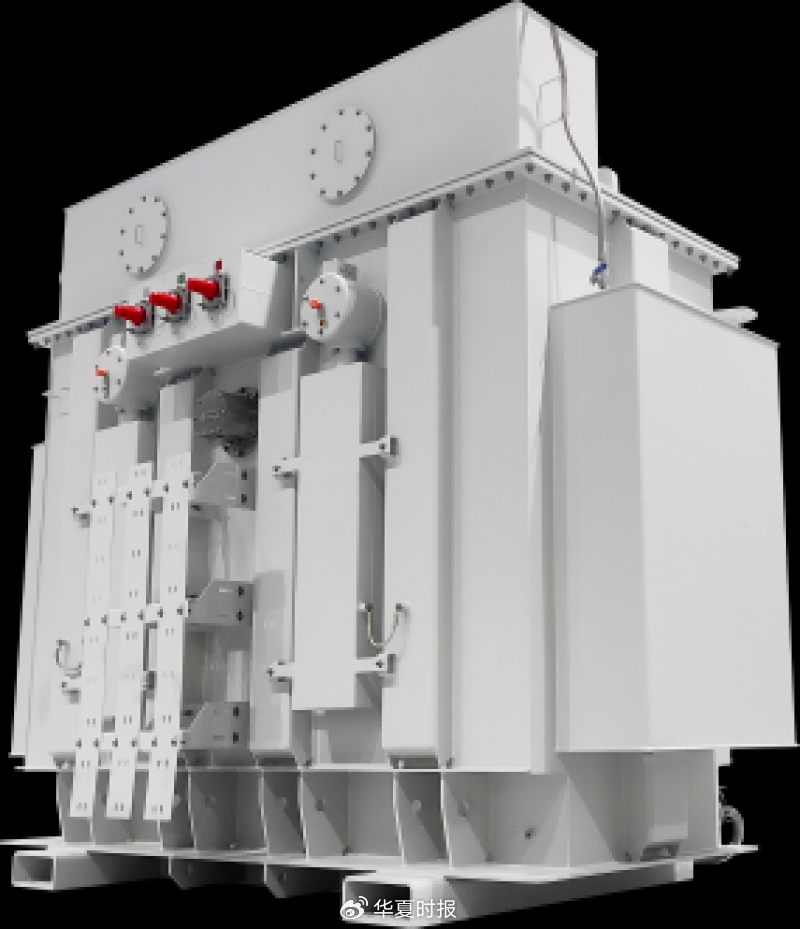
Core Viewpoint - The transformer sector in the A-share market has become active, with notable stock price increases for companies like Sanbian Technology, Jinpan Technology, and Igor, driven by rising domestic and international demand for transformers, particularly in data centers and energy storage [2][3][12]. Market Activity - Sanbian Technology's stock price has seen consecutive limit-ups on January 13, 14, and 15, with a total increase of 59.5% in just half a month, raising its market capitalization from 3.9 billion to 6.221 billion [3][12]. - Jinpan Technology, a leading player in the dry-type transformer industry, has seen its market capitalization reach 44.571 billion after a nearly 10% increase over two days [4][12]. - Igor's stock price reached a historical high of 38.48 yuan per share after a significant increase, with its main products including new energy transformers and industrial control transformers [4][12]. Performance Overview - Jinpan Technology reported a revenue of 5.194 billion with a year-on-year growth of 8.25% and a net profit of 486 million, up 20.27% for the first three quarters of 2025 [4][13]. - TBEA achieved a revenue of 72.918 billion, a 0.84% increase, and a net profit of 5.484 billion, up 27.55% [4][13]. - Jiangsu Huachen, also in the transformer business, reported a revenue of 1.443 billion, a 37.46% increase, and a net profit of 72.2038 million, up 15.41% [4][13]. - In contrast, Sanbian Technology's revenue fell by 16.91% to 1.239 billion, with a net profit decline of 56.71% to 40.155 million [5][13]. - Igor's revenue increased by 17.32% to 3.808 billion, but its net profit decreased by 12.71% to 178 million [5][13]. Market Demand and Trends - The transformer market is experiencing a boom due to increased demand from both domestic and international markets, particularly driven by the upgrade of traditional power grids in Europe and the U.S. and the growth of renewable energy [6][14]. - The global transformer market is expected to see significant structural changes, with demand in the renewable energy sector growing at a rate exceeding the industry average [7][15]. - The demand for transformers in wind and solar power stations is particularly strong, with projections indicating that nearly 40% of new capacity from 2025 to 2030 will be directly related to renewable energy [7][15]. Future Opportunities - The rise of AI and data centers is creating new opportunities for the transformer market, with high-performance transformers becoming essential for energy conversion [8][16]. - The global data center transformer market is projected to grow from 9.2 billion in 2023 to 16.8 billion by 2032, with a compound annual growth rate of 6.92% [8][16]. - Companies are focusing on the application of transformers in data centers and AI computing power, with Igor expanding its product offerings in this area [9][17].




精准击中高位投机股!市场情绪回归平静只用了1天
Mei Ri Jing Ji Xin Wen· 2026-01-15 13:20
Market Overview - The A-share market showed mixed performance with the Shanghai Composite Index down by 0.33%, while the Shenzhen Component and ChiNext Index rose by 0.41% and 0.56% respectively [1] - Market turnover decreased significantly to 2.94 trillion yuan, down over 1 trillion yuan from the previous day [1] - The median change in individual stocks was a decline of 0.36% [1] Sector Performance - There was a stark contrast in sector performance, particularly with commercial aerospace and AI application stocks experiencing significant declines [1] - High speculation stocks in these sectors faced a rapid cooling of market sentiment, with a notable drop in trading volumes [1][2] Regulatory Impact - Recent announcements from the three major exchanges to increase margin requirements and the subsequent heavy selling of key stocks impacted market sentiment [1] - Several stocks reported severe trading anomalies, leading to suspensions and account trading halts, which further affected market emotions [1] Monetary Policy Developments - The central bank announced a reduction in various structural monetary policy tool rates by 0.25 percentage points, lowering the one-year re-lending rate from 1.5% to 1.25% [3] - The loan quota for technological innovation and transformation was increased from 800 billion yuan to 1.2 trillion yuan, along with an additional 500 billion yuan for supporting agriculture and small enterprises [4] Investment Sentiment - Despite the drop in high speculation stocks, funds are still shifting towards technology sectors such as semiconductors, indicating a focus on growth areas rather than dividend stocks [2] - The market is expected to stabilize and potentially reach new highs after a brief period of adjustment, as historical trends suggest [1] Sector-Specific Insights - In the commercial aerospace sector, while there is potential for new highs, the performance of stocks may not reflect this due to current earnings challenges [5] - The AI application sector, despite facing declines, is not as severely impacted as commercial aerospace, with several industry indices recently reaching multi-year highs [5] Future Outlook - The market is closely monitoring the ability of the Shanghai Composite Index to quickly reach new highs; failure to do so may lead to a period of consolidation [2] - There is a potential for a rebound in commercial aerospace and AI application stocks if they stabilize, which could improve overall market sentiment [7]
TPU vs GPU 全面技术对比:谁拥有 AI 算力最优解?
海外独角兽· 2026-01-15 12:06
Core Insights - The article emphasizes that the Total Cost of Ownership (TCO) is highly dependent on the specific use case, suggesting that TPU is preferable for training and latency-insensitive inference, while GPU is better for prefill and latency-sensitive inference scenarios [3][4][5] - The fundamental difference between the 3D Torus and Switch Fabric (NVSwitch/Fat-tree) interconnect systems lies not in speed but in their assumptions about traffic patterns [4][5] - Google's historical TCO advantage established through TPU has been significantly weakened in the v8 generation [6] TCO Analysis - TPU v7 offers a cost advantage of 45-56% in training scenarios, based on the assumption that TPU's Model FLOPs Utilization (MFU) is 5-10 percentage points higher than that of GPUs [4][16] - In inference scenarios, GPUs (GB200/GB300) outperform TPU v7 by approximately 35-50% during the prefill phase due to their FP4 computational advantage [4][18] - The TCO comparison shows that TPU v8's cost efficiency has decreased, with the TCO ratio dropping from 1.52x for GB200/TPUv7 to 1.23x for VR200/TPUv8p [6] Interconnect Architecture - The 3D Torus architecture assumes predictable and orchestrated communication patterns, maintaining high MFU in large-scale training tasks, while Switch Fabric accommodates uncertain traffic patterns [5][38] - TPU Pods utilize a 3D Torus topology for high bandwidth and low latency communication, with a maximum cluster size limited by the number of OCS ports [31][34] Performance Bottlenecks - In training, the bottleneck typically arises from computational power and scale-out communication bandwidth, while in inference, the prefill phase is limited by computational power and the decode phase is constrained by memory bandwidth [12][22] - The performance requirements differ across training and inference scenarios, with TPU needing FP8 and scale-out bandwidth for training, while GPU requires FP4 and scale-up bandwidth for inference [12][13] Software Optimization - TPU's software optimizations aim to mitigate its inherent weaknesses in handling irregular traffic, transforming unpredictable workloads into stable data flows [46][47] - The introduction of SparseCore in TPU is designed to enhance its capability to handle dynamic all-to-all routing, acknowledging the need for communication-computation decoupling similar to NVSwitch [48] Competitive Landscape - Google TPU v8 adopts a dual-supplier strategy to reduce costs, collaborating with Broadcom and MediaTek for different SKUs, which impacts the overall design and production timeline [49][50] - Nvidia's Rubin architecture aggressively enhances performance and TCO for inference, with significant improvements in FP4 computational power and HBM bandwidth, positioning it as a strong competitor against TPU [51][52]


铜价连创新高
Xin Lang Cai Jing· 2026-01-15 11:50
今年以来,铜价连创历史新高,1月14日,伦敦金属交易所期铜一度创出每吨13407美元的历史新高;国 内铜期货也飙升至每吨10万元以上。某加工企业负责人介绍,AI算力需求呈爆发式增长,单个芯片功 耗从几百瓦飙升至几千瓦,对散热和导电性能提出了严苛要求,因此一个机柜的线材和散热器用铜量需 要数百公斤。分析认为,此次铜价快速上涨,既有供需失衡的影响,也有情绪溢价与资金炒作等多重因 素。从供给来看,秘鲁、智利等南美国家的铜储量占全球40%,却受能源紧张等因素影响,铜矿市场供 应持续紧张。从需求来看,AI数据中心、新能源汽车、机器人等新兴领域的用铜需求快速增长,成为 支撑铜价的重要力量。 (央视财经) ...
A股缩量震荡!顺周期起舞,有色ETF华宝、化工ETF逆市创新高!热门赛道遇冷,通用航空ETF华宝跌超3%
Xin Lang Cai Jing· 2026-01-15 11:31
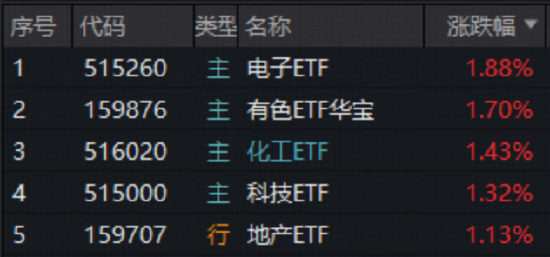
Market Overview - The A-share market experienced fluctuations on January 15, with the Shanghai Composite Index briefly falling below 4100 points before recovering at the close. The Shanghai Composite Index fell by 0.33%, while the Shenzhen Component Index rose by 0.41%, and the ChiNext Index increased by 0.56%. The total trading volume in the Shanghai and Shenzhen markets was 29.388 trillion yuan, a significant decrease of over 1 trillion yuan compared to the previous day [1][20]. Electronic Sector - The electronic sector saw a strong rally in the afternoon, with the electronic ETF (515260) rising by 1.88%. This ETF is heavily weighted in semiconductor and consumer electronics industries, and it recovered its 5-day moving average [3][23]. - The electronic sector attracted a net inflow of 16.862 billion yuan, leading all 31 primary industries in terms of capital inflow [3][23]. - Key stocks in the semiconductor sector, such as Unisoc and Huazhong Microelectronics, saw significant gains, with Unisoc hitting the daily limit of 10% [25][26]. Chemical Sector - The chemical sector also performed well, with the chemical ETF (516020) reaching a peak increase of 2.42% during the day, closing up 1.43%, marking a new three-year high [8][29]. - The basic chemical sector attracted a net inflow of 14.694 billion yuan, the highest among 30 primary industries, and has seen a cumulative net inflow of 254.049 billion yuan over the past 60 days [10][31]. - The chemical ETF has outperformed major indices since the beginning of 2025, with a cumulative increase of 48.29%, significantly higher than the Shanghai Composite Index's 22.7% and the CSI 300 Index's 20.75% [29][30]. AI and Semiconductor Trends - The U.S. government announced a 25% tariff on specific semiconductors, which may enhance domestic substitution sentiment in the market [25][27]. - The demand for AI computing power is expected to drive significant price increases in storage chips, with projections indicating a rise of up to 1800% for certain DDR chips by 2025 [27]. - The trend of "self-controllable" and AI synergy is anticipated to strengthen in the electronics industry, with a focus on domestic computing power and semiconductor equipment [27]. Investment Tools - The electronic ETF (515260) and its linked funds are effective tools for investors looking to gain exposure to core assets in the electronic sector, particularly in AI chips, automotive electronics, and 5G technologies [27]. - The chemical ETF (516020) is also highlighted as a strategic investment vehicle, covering various segments within the chemical industry, including AI computing and robotics [13][29].
涉及英伟达和超威!美国对部分半导体加征关税!紫光国微复牌一字涨停!电子ETF(515260)逆市劲涨1.88%
Xin Lang Cai Jing· 2026-01-15 11:25
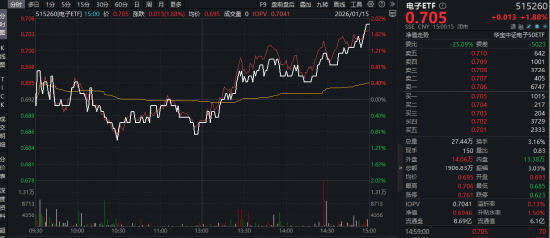
Core Viewpoint - The electronic sector experienced a significant surge, leading the market with a net inflow of 16.862 billion yuan, marking the highest absorption among 31 primary industries in the Shenwan classification [1][9]. Group 1: Macro Factors - On January 14, the U.S. White House announced a 25% tariff on specific semiconductors, including Nvidia's H200 chip and AMD's MI325X AI accelerator chip, which may enhance market sentiment for domestic alternatives [2][10]. Group 2: Industry Trends - The explosive growth in global AI computing power demand has led to a strong market for storage chips, with prices reportedly increasing by 18 times over the past year. Projections indicate that by 2025, prices for DDR4 16Gb chips could rise by 1800%, DDR5 16Gb by 500%, and 512Gb NAND flash by 300% [3][11]. Group 3: Company Developments - On January 14, chip giant Unisoc announced plans for a private placement to acquire Ruineng Semiconductor, aiming to integrate its power semiconductor product matrix and enhance its competitive position in the semiconductor industry [3][11]. Group 4: ETF and Investment Tools - The electronic ETF (515260) saw a price increase of 1.88%, recovering its 5-day moving average, and serves as an efficient tool for investors looking to gain exposure to core assets in the electronic sector, including semiconductors and consumer electronics [1][9][12].

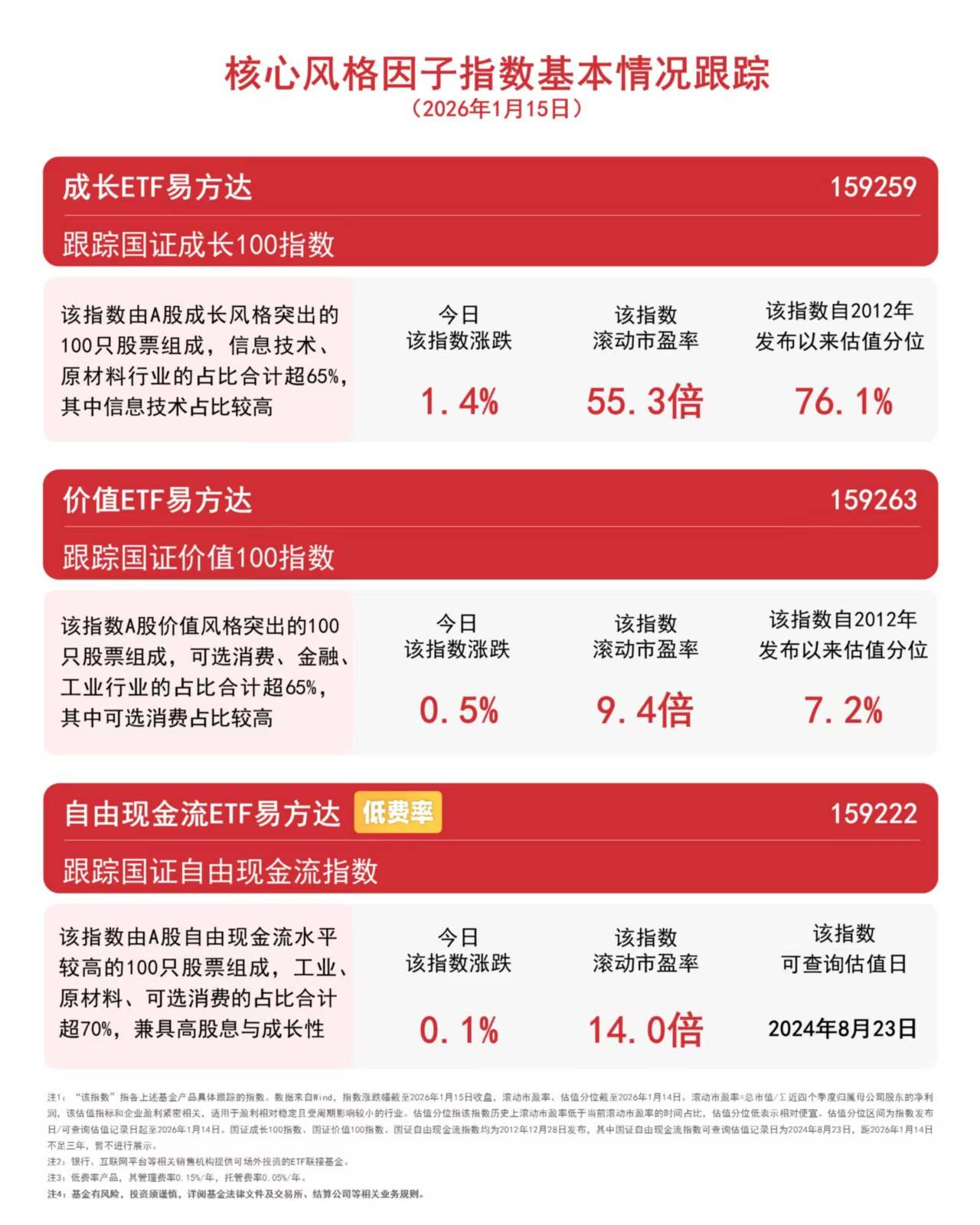
科技成长方向局部活跃,成长ETF易方达(159259)标的指数涨超1%
Sou Hu Cai Jing· 2026-01-15 11:18
Group 1 - The technology growth sector is experiencing localized activity, with notable increases in semiconductor equipment, CPO, and copper-clad laminate concepts [1] - As of market close, the Guozheng Growth 100 Index rose by 1.4%, the Guozheng Value 100 Index increased by 0.5%, and the Guozheng Free Cash Flow Index saw a 0.1% rise, indicating positive market sentiment [1] - The E Fund Growth ETF (159259) recorded a net subscription of 16 million units throughout the day, reflecting strong investor interest in growth-oriented investments [1] Group 2 - The Guozheng Growth 100 Index focuses on A-share stocks with prominent growth styles, aligning closely with the pulse of economic transformation, with over 70% of its weight concentrated in the electronics, communications, and computer sectors [1] - The index strategically positions itself in the core areas of AI computing power, highlighting its structural sharpness [1] - The E Fund Growth ETF (159259) is the only product tracking this index, providing investors with opportunities to capitalize on growth style investment prospects [1]