
供应链韧性

Search documents
【大宗周刊】黄河商品交易市场打造香辛料数智化交易平台!《全球供应链发展与稳定厦门倡议》提出六大核心方向
Qi Huo Ri Bao· 2025-09-21 23:07
Group 1 - The core viewpoint of the article is the launch of the Huanghe Commodity Trading Market's spice digital trading platform in collaboration with the Le Ling seasoning group, marking a new phase of digital and standardized trading in the spice industry in Dezhou City [1][2][3] - The platform integrates blockchain, electronic warehouse management, full fund supervision, and quality safety traceability systems, addressing traditional trade pain points such as high trust costs and low circulation efficiency [2][3] - Since its trial operation, the number of trading merchants on the platform has exceeded 300, with a cumulative transaction amount surpassing 58 million yuan, indicating significant market vitality and development potential [3] Group 2 - The "99 Global Chain Business Festival" organized by Guolian Co., Ltd. achieved a total order amount of 40.279 billion yuan, a year-on-year increase of 19.6% [4][5] - The event featured various promotional activities, enhancing user understanding of the value of B2B e-commerce and industrial internet [4] - Guolian Co., Ltd. is focusing on three growth curves: industrial e-commerce and supply chain services, industrial digitalization, and cross-border industrial belts [5] Group 3 - The 2025 Procurement and Supply Management Conference emphasized the need for a resilient, sustainable global supply chain amid geopolitical tensions and climate challenges [7][8] - The conference gathered over 3,000 guests to discuss core issues such as supply chain trends, innovative practices, and international cooperation [7] - The Chinese Ministry of Commerce is promoting modern supply chain innovation and high-quality development, focusing on policy formulation and industry guidance [10][11]

美的打造海外首个空调“灯塔工厂”
Zheng Quan Ri Bao· 2025-09-21 14:08
Core Insights - Midea Group's air conditioning factory in Thailand has been recognized as a "Lighthouse Factory" by the World Economic Forum, marking it as the first overseas lighthouse factory for Midea and the home appliance industry [2] - Lighthouse factories exemplify the highest level of digitalization and intelligence in global manufacturing, enhancing service agility, transparency, and working capital management through supply chain transformation [2] Group 1 - Midea has implemented 72 digital and AI solutions to address issues such as inflexible cross-border supply chains and slow customer feedback, resulting in a 43% reduction in end-to-end order lead time and a 62% decrease in employee certification time [2] - The factory, located in Thailand's Eastern Economic Corridor, spans the size of 45 standard football fields and is projected to exceed an annual production capacity of 5 million air conditioners by 2025, surpassing the annual demand of many medium-sized countries [2] - The production process is highly efficient, with an air conditioner being assembled every 6 seconds, thanks to precise quality control and intelligent production scheduling [2] Group 2 - The factory employs 97.8% of its workforce from Southeast Asia and collaborates with 691 local suppliers, effectively upgrading the regional industrial chain [3] - Midea has developed a multinational employee training system using AIGC tools tailored for overseas scenarios, providing a reference for other Chinese companies venturing abroad [3] - The factory utilizes a photovoltaic and water storage microgrid system, achieving a 40.2% energy saving per air conditioner and reducing carbon emissions by 68.3%, positioning Midea as a leader in sustainable development [3]


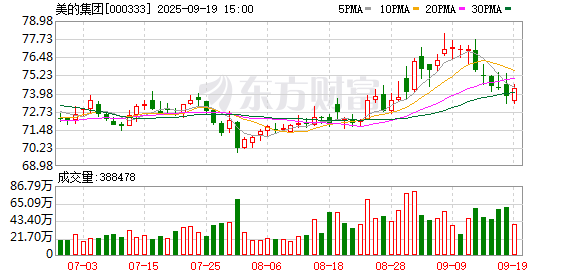
英思特:公司与国际知名消费电子终端品牌客户建立了长期稳定的合作关系
Zheng Quan Ri Bao Zhi Sheng· 2025-09-17 09:42
Core Viewpoint - The company has established long-term and stable relationships with internationally renowned consumer electronics brands, with a significant portion of its revenue coming from its top five clients, indicating a high level of customer concentration [1] Group 1: Customer Relationships - The company has a good track record of cooperation with its major clients, and the breadth and depth of these partnerships are continuously improving [1] - The sales revenue from the top five customers constitutes a large proportion of the company's total revenue, highlighting the risk associated with customer concentration [1] Group 2: Market Risks - Future competition in the consumer electronics market could impact the sales of products if major brands fail to meet consumer demands or make significant strategic errors [1] - A decline in consumer purchasing power could adversely affect the sales volume of end products, which in turn would influence the procurement plans of brand manufacturers and negatively impact the company's performance [1] Group 3: Company Strategy - As a leading manufacturer of rare earth permanent magnet materials in the consumer electronics sector, the company leverages its unique technological advantages and reliable product quality to develop a diverse customer base [1] - The company is actively expanding its product application areas and enhancing the resilience and risk management capabilities of its overall supply chain to mitigate risks associated with customer concentration [1]
波兰关闭边境:中欧班列大动脉遭遇致命梗阻
Sou Hu Cai Jing· 2025-09-17 04:55
Group 1 - Poland's sudden closure of all land borders with Belarus due to security concerns has paralyzed the Malaszewicze hub, which handles 90% of Central European freight traffic, leading to over 300 freight trains being stranded and impacting 10% of trade between China and Europe [2] - The disruption has caused significant supply chain issues, with companies like Volkswagen halting production lines due to chip shortages, resulting in daily losses exceeding 2 million euros [2] - The logistics vacuum created by the blockade is forcing European companies to reassess their supply chain strategies, with Bosch initiating alternative routes despite a 40% increase in transportation costs [4] Group 2 - China is responding to the crisis with a dual strategy, leveraging its dominance in rare earth production to negotiate with Poland while accelerating alternative logistics routes like the China-Kyrgyzstan-Uzbekistan railway [6] - The crisis is prompting Chinese companies to increase local procurement rates and invest in European production facilities, as seen with Haier and BYD, which may reshape the industrial division in Central Europe [9] - The event highlights the vulnerabilities of global supply chains, emphasizing the need for diversified logistics networks and proactive risk management strategies [10] Group 3 - The crisis has revealed internal divisions within the EU regarding security and economic interests, with some Eastern European countries urging intervention to reopen borders, while Western nations express concern over supply chain disruptions [10] - China is advancing its "Digital Silk Road" initiative to enhance supply chain resilience through technology, such as 5G IoT systems for real-time monitoring and improved logistics efficiency [12] - The situation underscores the importance of transforming geopolitical risks into opportunities for innovation and development within the global supply chain framework [12]

中方罕见对美主动重拳出击,这是在向世界释放四个明确信号!
Sou Hu Cai Jing· 2025-09-16 02:09
Group 1 - China has initiated two significant investigations against the US chip industry, focusing on anti-dumping and discrimination practices, marking a shift to a more proactive legal approach [1][3] - The anti-discrimination investigation is based on China's Foreign Trade Law, aiming to systematically review US practices that are deemed discriminatory, indicating a move towards legal accountability rather than emotional responses [3][10] - The anti-dumping investigation targets specific segments of the chip industry, particularly analog and interface chips, which are crucial for various sectors including automotive and consumer electronics, potentially disrupting US supply chains [3][6] Group 2 - China holds a dominant position in the rare earth market, supplying over 70% of US imports, and controls critical processing stages, which could significantly impact US military and technological capabilities [6][10] - The US is attempting to develop its own rare earth projects, but faces challenges in terms of technology, capital, and time, making immediate replacement unlikely [6][10] - China's advancements in its own chip supply chain, such as Yangtze Memory Technologies achieving mass production of 232-layer NAND flash memory, indicate a growing self-sufficiency in mature chip technology [6][10] Group 3 - The pressure from China's actions is expected to first impact US chip companies, leading to increased compliance costs and potential shifts in supply chain strategies [8][10] - US allies, including Japan and Europe, may also face dilemmas due to their reliance on the Chinese market, complicating their positions in the geopolitical landscape [8][10] - The current situation emphasizes the need for global companies to engage in geographical hedging and localize their operations to mitigate risks associated with US-China tensions [8][10]
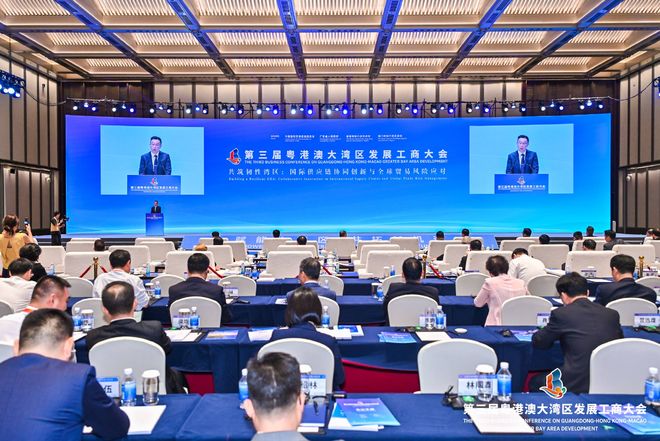
更具韧性的粤港澳大湾区供应链如何打造?这场大会给出答案
Nan Fang Du Shi Bao· 2025-09-15 15:12
Core Insights - The third Guangdong-Hong Kong-Macao Greater Bay Area Development Business Conference opened in Guangzhou on September 15, marking the first time the event has been held in Guangdong, with over 1,200 representatives from 30 countries and regions attending, making it the largest conference to date [1][3] Economic Development - The Greater Bay Area's economic output is projected to exceed $2 trillion by 2024, contributing to 1/9 of China's total economic output while occupying less than 0.6% of the country's land area and 6% of its population [4] - Guangdong continues to attract significant foreign investment in sectors such as electronic information, green petrochemicals, and specialized equipment, maintaining its status as a "safe harbor" for foreign capital [4] - The province's total import and export volume is expected to surpass 9 trillion yuan in 2024, marking 39 consecutive years at the forefront of China's trade [4] Business Opportunities - The conference theme "Empowering the Greater Bay Area, Exploring New Opportunities Together" aligns with the current developmental needs of the region [4] - The Greater Bay Area is seen as a competitive advantage for foreign investment due to its resilience, stability, and agility in operations, as highlighted by the U.S.-China Business Council [6] Collaboration and Innovation - The Greater Bay Area can leverage the advanced rules and standards of Hong Kong and Macau to create a larger market by breaking down internal barriers [5] - The region's strong foundational research and application technology capabilities, particularly in cities like Guangzhou, Shenzhen, and Dongguan, position it well for industrial and supply chain development [5] Support for SMEs - The vibrant small and micro-enterprise sector is crucial for economic growth, with digital payment solutions playing a significant role in their development [8] - Visa's initiatives in Guangdong have trained nearly 30,000 small and micro-enterprises to enhance their financial capabilities and facilitate their international expansion [8] Supply Chain Development - The conference unveiled the "Guangdong-Hong Kong-Macao Greater Bay Area Supply Chain Promotion Report," which outlines the opportunities presented by the supply chain promotion system [9][10] - The report emphasizes the need for enhanced collaboration among industries and suggests four key recommendations, including accelerating smart infrastructure development and creating a more vibrant innovation environment [10] Legal Framework - The "Temporary Arbitration Guidelines for the China (Guangdong) Pilot Free Trade Zone" were also released, providing legal frameworks for resolving disputes through temporary arbitration [10]
金健米业(600127.SH)对金健国贸公司增资9000万元
Ge Long Hui A P P· 2025-09-12 09:30
Core Viewpoint - The company aims to optimize its financial structure and enhance its credit rating and financing capabilities through a capital increase in its subsidiary, Jin Jian International Trade Co., Ltd. This move is intended to improve operational efficiency and strengthen the stability of its supply chain and market competitiveness [1] Group 1: Capital Increase Details - The company will increase its capital in Jin Jian International Trade Co., Ltd. by 90 million yuan, funded from its own resources [1] - Following the capital increase, the registered capital of Jin Jian International Trade Co., Ltd. will rise from 10 million yuan to 100 million yuan [1] - The company will directly hold 99% of Jin Jian International Trade Co., Ltd. and indirectly hold 1% through its wholly-owned subsidiary, Hunan Jin Jian Rice Industry Marketing Co., Ltd., resulting in a total ownership of 100% [1] Group 2: Subsidiary Operations - Jin Jian International Trade Co., Ltd. is a wholly-owned subsidiary that primarily supports the company's core production and processing needs [1] - The subsidiary focuses on procurement and sales activities related to key agricultural products such as oils, rice, and wheat flour [1]

iPhone17,印度制造?
Hu Xiu· 2025-09-10 23:24
Group 1 - The core focus of the 2025 Apple event is not the iPhone 17's updates but the shift in production location from China to India, as indicated by the packaging labels [1][3][4] - The transition from "Made in China" to "Made in India" reflects a complex global manufacturing landscape and signifies a strategic shift in Apple's supply chain [5][6] - Apple's move is part of a broader "de-risking" strategy, reshaping the roles of "Chinese manufacturing" and "Indian manufacturing" in the global value chain [6][7] Group 2 - Over the past two decades, Apple's success has relied on the model of "Designed in California, Made in China," with Chinese factories like Foxconn being crucial to its production [7][8][9] - The shift began around 2017 when Apple started producing iPhone SE models in India to avoid high import tariffs, marking the start of a localization strategy [12][13] - The turning point came around 2019, driven by U.S.-China trade tensions and rising labor costs in China, prompting Apple to diversify its supply chain [14][15][16] Group 3 - Apple's "China +1" strategy accelerated, with India emerging as the primary alternative for manufacturing [17][18] - The production process has evolved from older models to the latest flagship models being produced in India, achieving near-simultaneous production with China [19][20] - The establishment of Tata Group as the first local iPhone manufacturer in India signifies a shift towards nurturing local champions in the manufacturing sector [21][22] Group 4 - Predictions suggest that by 2025, iPhones produced in India could account for 25% of global production, potentially rising to 50% by 2027 [22][23] - India's appeal as a manufacturing hub is bolstered by its demographic advantages, including a young workforce and lower labor costs compared to China [26][30] - The Indian government's "Make in India" initiative and production-linked incentive programs are designed to attract foreign investment and stimulate local manufacturing [35][36][38] Group 5 - Despite its advantages, India's manufacturing sector faces challenges such as inadequate infrastructure, regulatory inefficiencies, and a lack of skilled labor [41][43] - The competition between Chinese and Indian manufacturing is creating a complex landscape, with both countries playing crucial roles in the global supply chain [44][52] - The future may see a dual-center model in the global electronics supply chain, with China focusing on high-end manufacturing and India on large-scale assembly [53][54] Group 6 - The production location label will evolve to reflect a new phase of globalization, indicating a reallocation of resources based on efficiency, cost, safety, and market access [56][57] - The competition and collaboration between China and India will shape the global manufacturing landscape for the next decade [58][59] - The true challenge for China lies in maintaining its irreplaceability in the face of these changes [59][60]


沙特工矿大臣访美,聚焦锂业、航天与供应链韧性
Shang Wu Bu Wang Zhan· 2025-09-10 15:24
Core Insights - Saudi Arabia's Minister of Industry and Mineral Resources, Bandar, visited the U.S. to enhance cooperation in lithium, aerospace, advanced manufacturing, and supply chain resilience [1] - The visit included an inspection of Albemarle's lithium mine, discussions on technology transfer and joint ventures, and meetings with Honeywell regarding industrial automation and smart cities [1] - The objective of the visit is to accelerate the localization of critical minerals and manufacturing, support technology implementation, and align with the Vision 2030 initiative [1] Industry Focus - The emphasis on lithium indicates a strategic move towards securing resources essential for electric vehicle batteries and renewable energy technologies [1] - Collaboration with aerospace and advanced manufacturing sectors highlights Saudi Arabia's intent to diversify its economy beyond oil dependency [1] - Strengthening supply chain resilience is crucial for ensuring stability and efficiency in the face of global disruptions [1] Company Engagement - Engagement with Albemarle suggests potential partnerships in lithium extraction and processing, which could enhance local capabilities [1] - Discussions with Honeywell point towards advancements in industrial automation and smart city initiatives, indicating a focus on technological innovation [1] - The overall strategy reflects a commitment to fostering local industries and attracting foreign investment in key sectors [1]


海外家电涨跌不一,海尔智家两位数增长全面领跑
Jin Tou Wang· 2025-08-29 10:00
Core Insights - The global home appliance market is experiencing significant differentiation due to trade barriers and supply chain restructuring, with varying performance across regions [1] - Haier Smart Home reported a 11.66% growth in overseas revenue for the first half of 2025, successfully expanding its market share in both mainstream and emerging markets [1][3] Group 1: Market Performance - The global home appliance market in the first half of 2025 shows a complex landscape with mainstream markets under pressure and emerging markets exhibiting mixed results [2] - In North America, the major appliance shipment volume decreased by 0.8% due to high interest rates and a sluggish real estate market [2] - The European market is slowly recovering, with a 2% increase in white goods sales in four countries, although the average price dropped by €7.1 [2] - Japan's cold and washing machine sales fell by 1.4% and revenue decreased by 1.3% [2] - Emerging markets like Southeast Asia saw declines of 6%-10%, with specific countries like Thailand and Indonesia down by 7.4% and 6.6% respectively, while the Middle East and Africa markets showed growth [2] Group 2: Company Performance - Haier Smart Home achieved a high growth rate of 11.66% in overseas revenue for the first half of 2025, building on a 5.43% increase in 2024 [3] - In North America, Haier Smart Home managed a 2.4% growth by optimizing product combinations and adjusting production capacity [3] - The company experienced a remarkable 24.07% growth in Europe due to brand positioning upgrades and management reforms [3] - Emerging markets saw significant growth with South Asia at 32.47%, Southeast Asia at 18.29%, and the Middle East and Africa at 65.42% [3] Group 3: Strategic Support - Haier Smart Home's global growth is supported by a diversified and balanced layout across Europe, North America, and emerging markets, enhancing its dynamic collaboration capabilities [4] - The company has established a "China + N" and "localization + regionalization" dual-track supply chain system to improve resilience against global tariff policies and supply chain uncertainties [4] - Haier Smart Home has built 35 industrial parks and 163 manufacturing centers globally, with 61 located overseas, creating a self-circulating system that supports its global operations [4]
