新能源

Search documents
倒计时2天丨任泽平年度预测在即,请拿好新世界的入场券
泽平宏观· 2026-03-24 08:24
Core Viewpoint - The article emphasizes the anticipation and curiosity surrounding AI's transformative impact on the world, as highlighted by the upcoming annual predictions event hosted by Ren Zeping [1][3]. Group 1: Event Overview - The event is invitation-only, with an option for online viewing for those unable to attend in person [2]. - Attendees can expect a four-hour presentation where Ren Zeping will unveil the "Top 10 Annual Predictions for 2026," aiming to distill complex phenomena into underlying logic and identify unseen turning points [3][4]. Group 2: Historical Context and Impact - Ren Zeping's annual predictions have gained significant influence since their inception in 2022, becoming a notable annual event with a massive reach [7][8]. - Previous predictions have included concepts like "New Infrastructure" and "Confidence Bull Market," which have been validated over time, achieving over 10 million views on single platforms and a total online audience exceeding 30 million [8]. Group 3: Key Predictions for 2026 - The predictions will cover various topics, including: - The true drivers behind the "Confidence Bull Market" during a global monetary easing cycle [9]. - The onset of a new decade of upward trends and the implications of AI as a transformative force rather than a mere trend [9]. - The potential for AI to revolutionize productivity and everyday life through advancements like autonomous driving and AI-assisted healthcare [9]. - China's competitive position in the AI race, leveraging its market scale and supply chain advantages [9]. - The ethical considerations surrounding technology and its impact on employment [9]. Group 4: Specific Predictions - The predictions include: - A new cycle characterized by significant technological advancements in AI, renewable energy, and other sectors [15][21]. - A shift in corporate strategies from export to global integration, emphasizing localization [17]. - The emergence of a "post-real estate era" with market stabilization and urbanization trends [24]. - Addressing demographic challenges such as aging populations and low birth rates, focusing on opportunities in the silver economy [26].


IPO点评:瀚天天成
国投证券(香港)· 2026-03-24 08:24
Investment Rating - The report assigns an IPO-specific rating of 4.9 out of 10 for the company, based on operational performance, industry outlook, valuation, and market sentiment [7]. Core Insights - The company is a global leader in the silicon carbide epitaxy industry, focusing on the research, production, and sales of silicon carbide epitaxial wafers, which are used in power device manufacturing for sectors such as electric vehicles, charging infrastructure, renewable energy, and energy storage [1]. - The company is expected to maintain its position as the largest supplier of silicon carbide epitaxial wafers, with a projected market share exceeding 30% in 2024 [1]. - Financial projections indicate a peak in revenue in 2023, followed by a decline in 2024 and 2025 due to industry destocking, price reductions, and weakened downstream demand [1][2]. Company Overview - The company serves 134 clients, including four of the top five global silicon carbide power device manufacturers [1]. - Revenue figures for 2022-2024 are projected at 4.41 billion, 11.4 billion, and 9.74 billion, respectively, with a net profit of 1.28 billion, 1.08 billion, and 1.65 billion for the same years [1]. - The company employs a dual model of epitaxial wafer sales and wafer foundry services, with wafer sales being the primary revenue source [1]. Industry Status and Outlook - The global silicon carbide power device market is expected to reach $2.6 billion in 2024, with a compound annual growth rate (CAGR) of 39.9% from 2024 to 2029, potentially reaching $13.6 billion by 2029 [2]. - The semiconductor industry is currently undergoing an inventory adjustment cycle, which is expected to conclude in the second half of 2026, indicating a cyclical rather than structural downturn [2]. Strengths and Opportunities - The company has significant technical barriers, with its founder being the first IEEE fellow in the silicon carbide field and over 35 years of research experience [3]. - The company has achieved a leading market position, being the first globally to mass-produce 8-inch products and planning to launch 12-inch silicon carbide epitaxial wafers by December 2025 [3]. - The end of the inventory cycle in 2026 is anticipated to lead to a recovery in demand, benefiting from new applications in home appliances, AI computing, and energy storage [3]. Weaknesses and Risks - Revenue is projected to decline by 14.7% in 2024 compared to 2023, with a continued decrease in gross margin expected [4]. - The company has a high customer concentration, with over 60% of revenue coming from its top five clients [4]. - There are risks associated with industry competition and potential prolonged inventory adjustments, which could impact profitability [4]. IPO Information - The IPO is scheduled from March 20 to March 25, 2026, with a share price set at HKD 76.26, and trading is expected to commence on March 30, 2026 [5]. - The company aims to raise approximately HKD 15.6 billion, with 71% allocated to expanding production capacity for silicon carbide epitaxial wafers [10]. Investment Recommendation - The company is positioned as a dominant player in the silicon carbide epitaxy market, with strong technical and customer advantages, and is expected to benefit from trends in renewable energy and domestic semiconductor production [11]. - The IPO price corresponds to a market capitalization of HKD 32.455 billion, with a price-to-sales ratio of approximately 41.2x, suggesting a cautious approach to subscription [11].
2026年地方两会政府工作报告新质生产力布局解读:开局谋新,质领未来
GUOTAI HAITONG SECURITIES· 2026-03-24 08:17
Group 1: Overview of New Quality Productivity - New quality productivity has become the core theme of the "14th Five-Year Plan" for economic development across all regions, forming a gradient and differentiated development pattern[5] - All 31 provinces have included new quality productivity as a core element in their government work reports, indicating systematic promotion from central design to local implementation[5] - The development of new quality productivity shows a clear pattern: eastern coastal regions lead, while central and western provinces follow steadily, and northeastern and traditional resource-based provinces are undergoing transformation[5] Group 2: Investment Insights - The report identifies three main development types: leading, catching-up, and characteristic transformation, with significant differences in technological, digital, and green productivity among these tiers[5] - Key sectors such as new energy, artificial intelligence, and low-altitude economy have achieved regional coverage, with biomedicine and integrated circuits having coverage rates of 96.77% and 77.42% respectively[5] - The positive correlation between regional GDP growth targets and R&D expenditure growth rates has been confirmed, indicating that innovation is a core variable supporting regional economic growth[5] Group 3: Policy Recommendations - Nationally, there is a need to strengthen top-level coordination, eliminate regional collaboration barriers, and implement differentiated support policies[5] - Locally, provinces should adopt precise measures according to their development tiers, with leading provinces focusing on global innovation sources and world-class industrial clusters[5] - Catching-up provinces should concentrate on result transformation and breakthrough in characteristic sectors, while characteristic transformation provinces should solidify traditional industries and develop unique competitive advantages[5]
湖北又一六氟磷酸锂项目开工!
鑫椤锂电· 2026-03-24 07:31
Group 1 - The core viewpoint of the article emphasizes the significant investment and development in the lithium battery supply chain, particularly focusing on the new projects initiated by Yihua Group, which will enhance the production capacity of key materials such as lithium hexafluorophosphate and iron phosphate [1][2][3] - Yihua Group's new project includes six sub-projects with a total investment of 13.6 billion yuan, aiming to produce 1 million tons per year of phosphorus-fluorine new materials and related products [2] - The project will introduce 20 new products, including iron phosphate and lithium hexafluorophosphate, which are essential for applications in aerospace, semiconductor chips, and new energy batteries [2][3] Group 2 - The technical features of the project involve a phosphorus-fluorine-salt-coal-silicon coupling cycle process, which efficiently utilizes by-products from phosphorus chemical production to achieve high-value utilization of fluorine resources [3] - Yihua Group, established in 1977, has grown into a leading comprehensive chemical group in China, with total assets exceeding 60 billion yuan and nearly 20,000 employees [3] - The company operates over 40 production bases across the country and possesses mineral resources totaling 2.7 billion tons, focusing on developing a green chemical industry chain centered on new energy, new materials, and high-end chemicals [3]

每日市场观察-20260324
Caida Securities· 2026-03-24 07:00
Market Performance - On March 23, the Shanghai Composite Index fell by 3.63%, the Shenzhen Component Index dropped by 3.76%, and the ChiNext Index decreased by 3.49%[3] - The trading volume on March 23 reached 2.45 trillion CNY, an increase of approximately 150 billion CNY compared to the previous trading day[1] Sector Analysis - All sectors except for oil and coal experienced declines, with agriculture, commerce, electronics, and textiles showing the largest drops[1] - Over half of the industries saw declines exceeding 4%, with the banking sector also experiencing significant losses[1] Market Sentiment - The market is experiencing heightened panic, influenced by escalating tensions in the Strait of Hormuz, which are affecting global energy markets and economic systems[1] - International oil prices have surpassed 100 USD per barrel, and European natural gas prices have significantly increased[1] Economic Impact - The conflict is causing a ripple effect, leading to rising prices in fertilizers and other agricultural products, which may further increase food production costs[1] - The Chinese government is focusing on developing a diverse clean energy system, including wind, solar, nuclear, and biomass energy during the 14th Five-Year Plan[5] Fund Flow - On March 23, the Shanghai Stock Exchange saw a net outflow of 14.944 billion CNY, while the Shenzhen Stock Exchange had a net inflow of 0.793 billion CNY[4] - The top three sectors for capital inflow were passenger vehicles, packaging and printing, and photovoltaic equipment, while the top outflow sectors included semiconductors, communication equipment, and components[4] Industry Developments - In the first two months of 2026, China's engineering machinery product exports reached 10.686 billion USD, marking a year-on-year increase of 33.4%[10] - The Ministry of Industry and Information Technology is conducting research on the recycling and utilization of used power batteries from new energy vehicles[9]
电话会议纪要(20260322)
CMS· 2026-03-24 06:31
Macro Overview - In January-February 2026, industrial added value increased by 6.3% year-on-year, showing a strong start to the year[1] - Fixed asset investment grew by 1.8% year-on-year, a significant improvement from a 3.8% decline in 2025[3] - Retail sales of consumer goods rose by 2.8% year-on-year, recovering from 0.9% in December 2025[7] Industrial Production - High-tech manufacturing added value surged by 13.1% year-on-year, outperforming overall industrial growth by 6.8 percentage points[2] - Equipment manufacturing increased by 9.3% year-on-year, indicating robust industrial recovery driven by high-tech and export sectors[2] - Exports in January-February grew by 21.8% year-on-year, with electromechanical product exports rising by 24.3%[2] Investment Trends - Infrastructure investment rose by 11.4% year-on-year, supported by fiscal policies and major project initiations[3] - Real estate investment fell by 11.1% year-on-year, with new housing sales area down by 13.5% and sales revenue down by 20.2%[3] - High-tech industry investment maintained a growth rate of 5.1% year-on-year, indicating ongoing support for emerging sectors[3] Consumer Behavior - Service consumption grew by 5.6% year-on-year, significantly outpacing goods consumption growth of 2.5%[7] - Online retail sales increased by 9.2%, with online goods retail up by 10.3%, reflecting a shift towards digital consumption channels[7] - Automotive retail sales declined by 7.3% year-on-year, indicating ongoing challenges in consumer confidence and real estate market impacts[7]

A股进入底部“击球区”,外资看好中国资产确定性
第一财经· 2026-03-24 02:58
Core Viewpoint - Despite recent market volatility, analysts believe that the Chinese stock market is poised for a significant bottom and that the renewable energy sector is likely to emerge as a "mid-term winner" [3][12]. Market Performance - On March 23, the A-share market experienced a significant drop, with the Shanghai Composite Index falling by 3.63% to close at 3813.28 points, and the Shenzhen Component Index down by 3.76% to 13345.51 points [6]. - The decline was attributed to geopolitical tensions leading to rising oil prices, which heightened concerns about "economic stagnation + inflation" [6][11]. Sector Analysis - The coal and oil sectors showed resilience during the market downturn, with companies like Yun Coal Energy and Liaoning Energy hitting the daily limit up, and Shanxi Coking Coal rising by 9.42% [7]. - A total of 305 stocks rose against the trend, with significant contributions from the photovoltaic equipment, power, battery, and coal mining sectors [7]. Energy Structure and Economic Resilience - Analysts emphasize that China's energy structure enhances its economic resilience, with a combination of coal, oil, and non-fossil energy sources providing a stable industrial foundation [9]. - The shift towards renewable energy is seen as crucial for reducing dependence on oil and enhancing energy security, particularly in light of rising global energy prices due to geopolitical risks [4][8]. Investment Outlook - Despite short-term market fluctuations, both domestic and foreign institutions maintain a positive outlook for the A-share market, citing strong economic fundamentals and policy support [11][12]. - The anticipated inflow of global capital into China is expected to provide significant support for the market, alongside a gradual recovery from deflationary pressures [12]. Future Trends - The focus on energy security is likely to drive the growth of the new energy vehicle sector, with expectations that China will accelerate its exports in this area [9][12]. - Analysts suggest that the current geopolitical environment may validate China's supply chain and energy security capabilities, potentially leading to a re-evaluation of its market strength [13].

金属|圆桌会议-地缘影响加剧波动
2026-03-24 01:27
Summary of Key Points from Conference Call Records Industry Overview - **Metals Sector**: The metals sector is experiencing a pullback due to liquidity expectations rather than a fundamental reversal, with interest rate cuts expected to be delayed until 2027. The current phase is seen as a bottoming period for investment [1][2]. Core Insights and Arguments - **Copper, Aluminum, and Tin**: The long-term demand for these metals is driven by AI, grid modernization, and data centers. Supply constraints are due to insufficient capital expenditure, geopolitical quotas, and declining ore grades, leading to a persistent supply-demand gap [1][2]. - **Gold**: Short-term pressures on gold prices are attributed to the Fed's hawkish stance and a shift of risk-averse funds towards cash. However, the long-term upward trend is supported by global central bank gold purchases and ongoing pressures on the US debt system [1][3]. - **Lithium Materials**: Supply disruptions are increasing due to Zimbabwe's quotas and domestic environmental approvals, while strong demand from the power and storage sectors is expected to drive lithium prices up in April [1][5]. - **Electrolytic Aluminum**: Supply reductions due to geopolitical tensions and seasonal demand increases are expected. High dividend-paying companies in this sector, such as China Hongqiao and Yun Aluminum, are seen as defensive and resilient [1][11]. - **Rare Earths**: The growth rate of rare earth quotas has slowed from 20% to around 5%, with stricter controls on gray production. Emerging demands from humanoid robots and other sectors are expected to tighten the supply-demand fundamentals and raise price levels [1][12][14]. Additional Important Insights - **Steel Industry**: There is a structural differentiation in steel demand, with manufacturing steel outpacing construction steel. Although iron ore freight costs have risen by about $5 due to geopolitical tensions, global oversupply is expected to mitigate its impact on steel mill profits [1][17]. - **ETF Behavior**: The behavior of gold ETF investors has significantly amplified market volatility, with a notable increase in gold purchases in 2025. This participation can lead to exaggerated price movements, creating opportunities for investors during irrational downturns [4]. - **Copper Market**: Recent price declines in copper are primarily due to macroeconomic pressures and geopolitical tensions, which have heightened risk aversion among investors [7][8]. - **Tin Market**: Recent price fluctuations in tin are influenced by limited supply growth and increased demand from downstream sectors, leading to significant inventory reductions [9]. - **Tungsten Market**: The tungsten market has shifted from rapid price increases to stabilization, influenced by supply constraints and reduced demand from steel mills [10]. Investment Recommendations - **Metals**: Focus on companies with strong fundamentals and high dividend yields in the aluminum sector, such as Yun Aluminum and China Hongqiao. In the lithium market, consider stocks like Ganfeng Lithium and Salt Lake Resources [1][5][11]. - **Rare Earths**: Invest in leading companies with full industry chain layouts, such as China Northern Rare Earth Group and China Rare Earth Holdings, as the supply-demand fundamentals are expected to tighten [14][16]. - **Steel**: Emphasize investments in manufacturing steel sectors and companies with strong profitability and dividend policies, such as Baosteel and Nanjing Steel [17].
中国电建20260323
2026-03-24 01:27
Summary of the Conference Call for China Electric Power Construction (CEPC) Industry Overview - The conference call primarily discusses the performance and strategic direction of China Electric Power Construction (CEPC) in the energy and construction industry, particularly focusing on renewable energy and infrastructure development. Key Points Overall Business Performance - In 2025, CEPC signed new contracts worth 1.3 trillion yuan, representing a year-over-year increase of 4.9% [2] - The company maintained stable economic indicators despite a challenging construction market, with significant growth in overseas business, which increased by 27% [3] - Operating cash flow reached a new high, and the quality of new orders improved, with 90% being cash projects and over 50% classified as high-quality orders [3] Order Structure and Business Segments - The order structure is divided into four main business areas: Water, Energy, Urban Infrastructure, and Digital [3] - **Water Business**: New contracts worth approximately 110 billion yuan, stable performance [3] - **Energy Business**: New orders exceeded 850 billion yuan, accounting for nearly 64% of total orders. Hydropower orders grew over 40% to nearly 200 billion yuan, while wind power orders increased by nearly 38% to over 270 billion yuan. However, solar power orders fell by about 40% to around 160 billion yuan due to consumption issues [3][4] - **Urban Infrastructure**: Focused on improving project quality and cautious investment in projects requiring upfront capital [5] - **Digital Business**: Rapid growth with nearly 50 billion yuan in new digital orders [5] Strategic Emerging Industries - CEPC's strategic emerging industries accounted for over 40% of revenue, ranking seventh among central enterprises [5] - The company is investing 14 billion yuan to build a self-owned computing power center in four phases, with the first phase involving 3 billion yuan [2][9] International Business Development - Overseas business accounted for over 20% of new contracts, with a focus on hydropower and mineral EPC projects in Asia and Africa [2][10] - The company has a competitive advantage in large and medium-sized hydropower construction globally, with significant growth potential in the international market [10] Power Operation and Future Plans - CEPC's power operation capacity reached 30 GW, with expectations to maintain the average annual new capacity during the 14th and 15th Five-Year Plans [2][7] - The company plans to invest in over 20 pumped storage power stations, with a total capacity of nearly 30 million kilowatts, to support the energy transition [6] Digitalization and Computing Power Synergy - CEPC is well-positioned in the "computing power synergy" sector, leveraging its green energy resources to support data centers and meet carbon emission requirements [6][7] - The company is actively researching and promoting digital business, including virtual power plants and load aggregation [9] Dividend and Market Management - The dividend ratio remains stable, with potential for increase as renewable energy operations expand and capital expenditure pressures ease [2][11] - The company has previously engaged in market management measures and will consider buybacks or additional share purchases if stock prices deviate significantly [11] Conclusion - CEPC is strategically positioned to capitalize on growth in renewable energy and digitalization, with a strong focus on international expansion and maintaining high-quality project execution. The company is navigating challenges in the solar sector while leveraging its strengths in hydropower and wind energy.

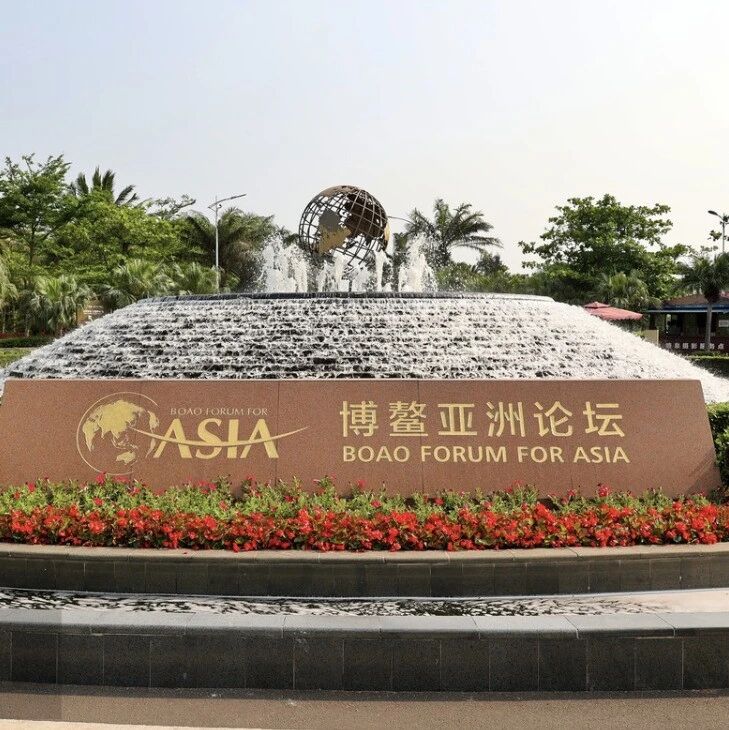
博鳌亚洲论坛迎来25岁 亚洲合作纽带凝聚发展共识
证券时报· 2026-03-24 00:00
Core Viewpoint - The Boao Forum for Asia 2026 Annual Conference is set to take place from March 24 to 27, focusing on the theme "Shaping a Shared Future: New Situations, New Opportunities, New Cooperation" to address global development issues and foster collaboration [1][2]. Group 1: Conference Overview - The 2026 Annual Conference marks the 25th anniversary of the Boao Forum and is the first annual meeting held after the full closure of the Hainan Free Trade Port [1]. - The forum will feature nearly 50 sub-forums, roundtable discussions, and dialogues, concentrating on topics such as global economic governance, green transformation, technological innovation, and regional integration [1]. Group 2: Global Context - The world is at a critical crossroads, facing challenges such as unilateralism, protectionism, geopolitical tensions, and climate crises, which have severely impacted global order and multilateral systems [2]. - Open regionalism in Asia is effectively countering protectionism, with economic integration and regional cooperation advancing despite global challenges [2]. Group 3: Economic Insights - Economic globalization is an irreversible trend, and principles of fairness, openness, and cooperation are essential for providing stability in a turbulent world [3]. - China's economy is progressing steadily, and the country is committed to sharing development opportunities with Asia and the world, further opening its doors to global collaboration [3].