
汽车电动化转型

Search documents
裁员计划逼近 10 万,海外车企集中 “瘦身”
晚点LatePost· 2025-05-28 14:41
Core Viewpoint - The global automotive industry is facing significant challenges, including a slowdown in electrification trends, shrinking demand, intensified market competition, and unstable international trade environments, leading to widespread layoffs among major overseas automotive brands and suppliers [3][9]. Group 1: Layoff Trends - Major overseas automotive companies and suppliers have announced layoffs totaling nearly 100,000 employees across key markets such as China, North America, Europe, and Japan [4]. - Volkswagen is planning to lay off approximately 35,000 employees by 2030, with 7,000 already laid off, aiming to save €1.5 billion annually in labor costs [5][6]. - Other companies like Ford, Mercedes-Benz, and Nissan are also implementing significant layoffs, with Ford cutting 4,000 jobs in Europe and Nissan planning to reduce its workforce by 20,000 over two years [5][7]. Group 2: Reasons for Layoffs - The layoffs are primarily driven by the need for cost reduction, increased competition, and the impact of tariffs and trade changes, particularly in the U.S. market [5][8]. - Companies are restructuring to improve efficiency and adapt to changing market conditions, with many citing the need to streamline operations and reduce redundancy [6][9]. Group 3: Market Dynamics - The automotive industry is undergoing a deep adjustment phase, with traditional automakers facing pressure from rising Chinese brands that continue to expand despite the overall market contraction [9]. - The shift towards electrification has led to high investments, but profitability pressures are forcing companies to reassess their workforce and operational strategies [9].


裁员的风吹到北欧,沃尔沃全球裁3000人,先从白领下手
3 6 Ke· 2025-05-27 10:38
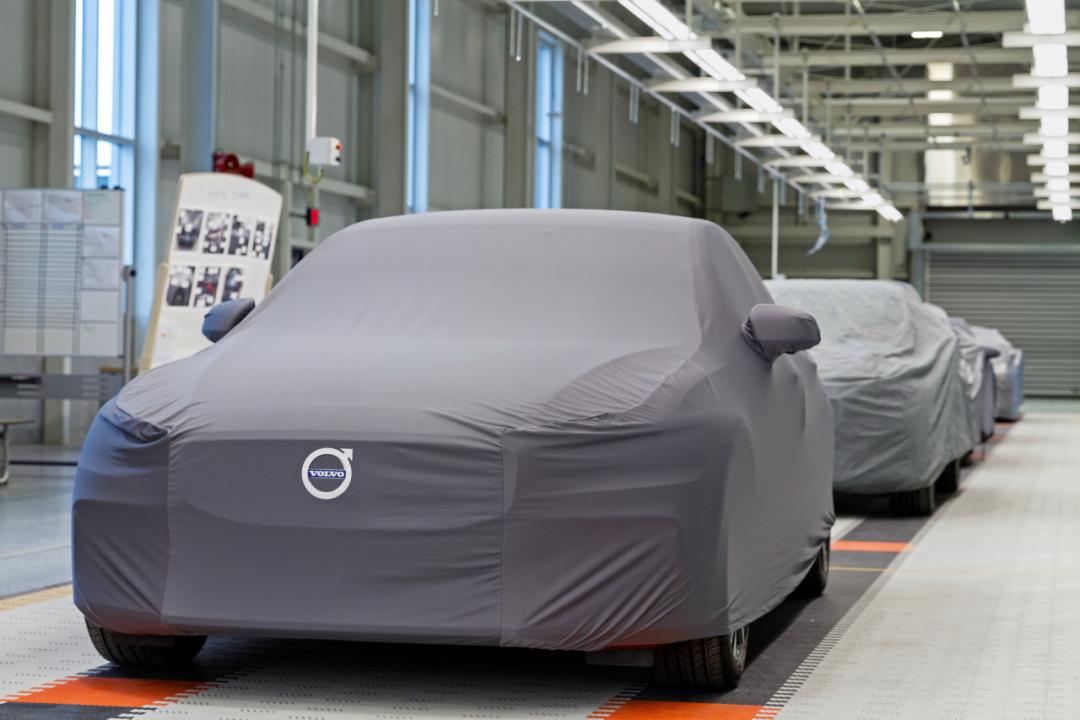
Core Viewpoint - Volvo Cars has announced a global layoff of 3,000 employees due to shrinking profits and rising costs, indicating a need for strategic adjustments to improve financial health [2][3][5]. Group 1: Layoff Details - The layoffs will primarily affect administrative positions, with 1,200 Swedish employees and 1,000 consultants included, representing 15% of Volvo's white-collar workforce [3]. - The restructuring is expected to incur a one-time cost of up to 1.5 billion Swedish Krona (approximately 150 million RMB), translating to an average severance of up to 500,000 Swedish Krona (about 370,000 RMB) per employee [5]. - This layoff plan follows a previously announced cost-cutting initiative aimed at saving 18 billion Swedish Krona (approximately 1.35 billion RMB) by 2026 [5][7]. Group 2: Financial Performance - In Q1 2025, Volvo's profit was approximately 1.9 billion Swedish Krona (about 1.4 billion RMB), a significant drop from 4.7 billion Swedish Krona in the same period last year [2][11]. - The company's revenue for Q1 2025 was 82.9 billion Swedish Krona, down 11.7% from 93.9 billion Swedish Krona year-on-year [9][11]. - The EBIT margin fell from 5% to 2.3%, reflecting the challenges faced in the current market environment [10][11]. Group 3: Market Challenges - Volvo's CEO Hakan Samuelsson highlighted unprecedented market headwinds, including declining sales, increased competition in the electric vehicle sector, and pressure on pricing due to new tariffs [11]. - The company has withdrawn its financial guidance for 2025 and 2026 due to the impact of tariff policy changes [11]. - Despite aggressive electrification efforts, Volvo is struggling with declining sales in both traditional fuel vehicles and electric models, with total sales down 6% year-on-year in Q1 2025 [15][17]. Group 4: Electrification Strategy - Volvo aims to become the world's first pure electric luxury brand by 2030, with plans for electric models to account for 90% to 100% of sales [12][13]. - In Q1 2025, electric vehicles made up 43% of total sales, but the overall sales volume still declined [15]. - The shift towards electrification has led to increased R&D expenditures, reaching 5 billion RMB in 2024, which has contributed to the decline in profit margins [15].
业绩下滑、降本、裁员,解析跨国零部件企业2025年一季报
Hua Xia Shi Bao· 2025-05-26 01:05
Core Insights - Several multinational automotive parts manufacturers reported their Q1 2025 financial results, revealing a mixed performance with some companies recovering from a downturn while others continued to face revenue and profit declines [2][3] Group 1: Companies with Positive Performance - Faurecia reported a consolidated revenue of €6.702 billion, a year-on-year increase of 2.6% (2.1% at constant exchange rates), with significant growth in its automotive electronics and seating divisions [3] - Hyundai Mobis achieved sales of 14.752 trillion KRW, a 6.4% increase year-on-year, with operating profit rising by 43.1% to 776.7 billion KRW and net profit increasing by 19.6% to 1.317 trillion KRW [3] - Continental's Q1 sales were €9.7 billion, a slight decrease of 0.8% year-on-year, but adjusted operating profit rose to €639 million, with a significant improvement in net profit from a loss of €530 million to €68 million [3] - Bosch Group's Q1 sales grew by 4% year-on-year, and the company aims for a natural growth of 1% to 3% in sales for 2025 despite facing high upfront investments and structural adjustments [3] Group 2: Companies with Mixed Results - Aptiv's Q1 net revenue decreased by 1.6% to $4.825 billion, but it exceeded analyst expectations; operating profit increased by 7% to $448 million, with a net loss of $11 million attributed to increased tax expenses [4] - Magna's Q1 revenue fell by 8% to $10.069 billion, yet it surpassed market expectations, with net profit rising from $9 million to $146 million; the company raised its full-year revenue forecast to $40 billion to $41.6 billion [4] Group 3: Companies Facing Declines - Lear Corporation reported Q1 revenue of $5.56 billion, a 7% decline year-on-year, with net profit dropping by 26% to $80 million, leading the company to withdraw its 2025 financial forecast [5] - BorgWarner's Q1 net revenue decreased by 2% to $3.515 billion, with net profit down by 26% to $157 million; the company is scaling back its electric vehicle charging business and integrating its battery division [5] Group 4: Impact of Tariffs and Market Conditions - The U.S. imposed a 25% tariff on key automotive parts starting May 3, 2025, adding pressure on global manufacturers [6] - Companies like Lear and Valeo are passing tariff costs onto customers, with Valeo confirming that most customers agreed to prepay the new tariff costs [6] - Many companies are focusing on cost reduction and improving free cash flow in response to rising costs and trade barriers [6][7] Group 5: Localization Strategies - In response to fierce competition from local suppliers, multinational automotive parts companies are deepening their presence in the Chinese market [8] - Continental Group has split its automotive division into Aumovio to enhance decision-making autonomy in China; Aptiv is establishing a self-controlled IP and supply chain in China [8] - Faurecia is forming joint ventures in China and expanding its manufacturing capabilities to support market entry in regions like Hungary and Turkey [8]
汽车之家关注榜月报2025.04期
汽车之家· 2025-05-20 01:20
Investment Rating - The report does not explicitly provide an investment rating for the automotive industry Core Insights - The 2025 Shanghai Auto Show showcased a record 1,366 vehicles and 163 global debuts, with over 70% being new energy vehicles, indicating a significant shift towards electrification in the domestic automotive industry [2] - The report highlights the increasing consumer interest in various vehicle categories, with notable models like the Audi A6L, BMW 3 Series, and Wuling Hongguang Mini EV leading the attention rankings [2][4] - The competitive landscape is evolving, with traditional fuel vehicles facing challenges from both joint ventures and domestic brands adopting advanced technologies and pricing strategies [4][5] Summary by Category Sedan Segment - The top three sedans in consumer attention for April 2025 are Audi A6L, BMW 3 Series, and BMW 5 Series, driven by brand heritage and product innovation [4][5] - The report notes a shift in market dynamics due to aggressive pricing strategies from joint ventures and advancements in autonomous driving technologies from domestic brands [4] SUV Segment - The leading SUVs in consumer attention are Audi Q5L, Wuling M8, and Tesla Model Y, reflecting a competitive environment fueled by technological advancements and consumer demand for smart features [20][21] - The Wuling M8 has gained significant traction, achieving over 44,000 pre-orders within 72 hours of its launch, showcasing the market's acceptance of high-tech offerings [21] MPV Segment - The top three MPVs are Buick GL8, Toyota Sienna, and Buick GL8 New Energy, with the market driven by family-oriented features and smart technology [35][36] - The introduction of the high mountain series by Weipai and the upgraded Ideal MEGA model indicates a trend towards intelligent and versatile family vehicles [36][37] New Energy Vehicles - The leading new energy vehicles are Wuling M8, Tesla Model Y, and Xiaomi SU7, with the market experiencing a surge in interest due to innovative features and competitive pricing [50][51] - The report highlights the launch of the Changan Qiyuan Q07 and Lynk & Co 900, which are positioned to attract consumers with their advanced technology and competitive pricing [51][52]
日本三大车商4月在华新车销量出炉:丰田销量增20.8%,本田暴跌40.8%【附新能源汽车行业市场分析】
Qian Zhan Wang· 2025-05-14 03:28
Group 1: Sales Performance of Japanese Automakers - In April, Toyota's new car sales in China increased by 20.8% year-on-year, reaching 142,800 units, marking three consecutive months of growth, driven by its focus on hybrid and electric vehicles [2] - In contrast, Honda's sales in China fell by 40.8% to 43,689 units, while Nissan's sales decreased by 15.7% to 46,295 units, with Honda experiencing a 15-month consecutive decline and Nissan a 13-month decline [2] - Nissan plans to cut 21,000 jobs, which is 15% of its total workforce, and will close three factories, acknowledging that management errors, particularly in electric vehicle strategy, contributed to its current challenges [2] Group 2: Global Electric Vehicle Market Trends - The global electric vehicle transition is an unstoppable trend, with traditional automakers in Europe, such as Volkswagen and Mercedes-Benz, accelerating their electrification efforts to secure a competitive position [3] - Tesla leads the U.S. market, driving technological advancements in electric vehicles and expanding its global presence, setting a benchmark for the industry [3] - In China, BYD is recognized as a leading electric vehicle manufacturer, with significant advancements in technology and product offerings [5] Group 3: Market Share and Industry Position - In 2022, China's market share of new energy vehicles reached 24.4%, the highest globally, followed by Europe at 17.3%, while India and Japan lag behind [7] - BYD's chairman emphasized that China's new energy vehicle sector is approximately 3 to 5 years ahead globally in terms of technology and product development, advocating for open innovation and international collaboration [9] - The challenges faced by Japanese automakers in the electrification transition serve as a warning for the global automotive industry, highlighting the need for timely strategic adjustments and increased investment in new energy and smart technologies [9]


丰田汽车2025财年净利润预计大跌35%,美国关税政策成拖累因素
Sou Hu Cai Jing· 2025-05-09 02:51
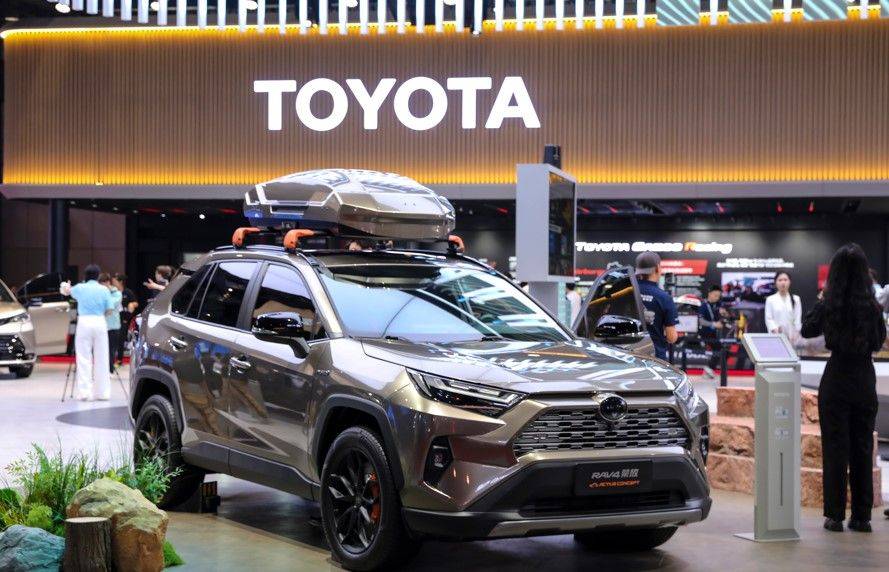
Core Viewpoint - Toyota Motor Corporation anticipates a significant decline in consolidated net profit for the fiscal year 2025, projecting a 34.9% drop to 3.1 trillion yen, primarily due to U.S. tariffs and yen appreciation [1][3]. Financial Forecast - The company expects operating profit to decrease by 21% to 3.8 trillion yen, falling short of analysts' expectations of 4.7 trillion yen [1][3]. - For the fiscal year 2025, Toyota forecasts a revenue increase of only 1% to 48.5 trillion yen, which is significantly below market expectations [4]. Impact of Tariffs and Currency Fluctuations - The 25% tariff imposed by the U.S. government on imported vehicles and parts has already resulted in an operating profit loss of 180 billion yen (approximately $1.25 billion) for April and May 2025 [3]. - The appreciation of the yen against the dollar is expected to reduce profits by 745 billion yen, with each 1 yen increase in value leading to a 50 billion yen decrease in operating profit [3]. Sales and Electric Vehicle Transition - Despite challenges, Toyota projects a 1.2% increase in global sales for fiscal year 2025, reaching 10.4 million units, with electric vehicle sales expected to account for 49.8% of total sales [4]. - The company is accelerating its transition to electric vehicles, although sales growth is insufficient to offset profit declines [4]. Industry Context and Strategy - Toyota's situation reflects broader trade risks facing the global automotive industry, with the U.S. market representing 23% of its global sales [5]. - Unlike other Japanese automakers that have made aggressive adjustments, Toyota plans to optimize its supply chain and increase local production to mitigate tariff risks [5]. Analyst Sentiment - Following the financial forecast, Toyota's stock price fell by 2.3% on the Tokyo Stock Exchange, with analysts suggesting that profit expectations may be further downgraded if U.S. tariffs escalate or the yen continues to appreciate [6].
进入“冰河世纪”的合资品牌,如何在山穷水尽中,找到又一村?
21世纪经济报道· 2025-04-19 07:30
Core Viewpoint - The Chinese automotive market in 2025 is experiencing a significant divide, with domestic brands rising rapidly while joint venture brands struggle to adapt to the changing landscape [2][11]. Group 1: Market Dynamics - Domestic brands captured 63% of the market share in March, indicating their strong growth [2]. - Joint venture brands sold 48,000 vehicles in March, reflecting a 4% year-on-year decline, highlighting their challenges in the current market environment [2]. Group 2: Technological Transformation - The transition from traditional fuel vehicles to new energy vehicles is crucial for determining the market position of car manufacturers [4]. - Joint venture brands are attempting to innovate by developing new technologies, such as Volkswagen's partnership with XPeng to create intelligent driving systems and Toyota's collaboration with Huawei for smart cabins [4][6]. Group 3: Consumer Trust and Safety - Traditional joint venture giants are focusing on safety to rebuild consumer trust, with examples like SAIC Volkswagen's precision manufacturing and FAW Toyota's TNGA architecture emphasizing safety features [6]. - The use of high-strength materials, such as 1700MPa martensitic steel in Changan Ford's models, showcases the commitment to safety [6]. Group 4: User Engagement and Brand Loyalty - Some joint venture brands are shifting focus from hardware to deepening user engagement, as seen in initiatives like Mercedes-Benz's AR vehicle customization and GAC Honda's "Z Generation" marketing events [8][10]. - Changan Ford has built a community of 60,000 "Ford Explorers," engaging them through adventurous activities, which helps transform the brand from a mere product to an emotional connection [8][10]. Group 5: Strategic Adaptation - The automotive industry is facing a complex transition, with companies like Mercedes-Benz and Toyota signaling different strategies, reflecting the lack of a one-size-fits-all roadmap for transformation [11]. - Changan Ford reported a net profit of 2.09 billion yuan in 2024, indicating a successful value strategy and a healthy dealer profitability rate of around 60-70% [11].
6大锂电池企业赴泰布局
起点锂电· 2025-03-14 10:49
全球知名汽车制造大国——泰国,不完全统计已吸引六大锂电池企业入境布局,具体包括宁德 时代、比亚迪、亿纬锂能、国轩高科、蜂巢能源以及欣旺达。 宁德时代方面 ,2023年6月,与泰国国家石油PTT集团子公司Arun Plus达成CTP合作协议,提 供CTP电池包生产线和技术支持。同时,双方将致力于满足当地电动车生产需求,助力泰国成 为东南亚地区的电池生产中心。 比亚迪方面 ,在泰国投资建设了首个海外乘用车工厂,生产的车型主要包括比亚迪海豚/海豹/ 元PLUS(ATTO 3)等,同时该厂实现了整车四大工艺和零部件的生产。其中,配套搭载的电 芯也是在泰国工厂进行生产。 亿纬锂能方面 ,2023年7月,与泰国Energy Absolute签订谅解备忘录,双方拟在泰国共同组建 合资公司,建设至少6GWh年产能的电池生产基地,同时积极合作开拓泰国及东南亚市场的电 动汽车和储能业务。 国轩高科方面 ,2022年与PTT集团旗下Nuovo Plus达成合作,2023年12月,国轩高科泰国工 厂首款电池产品正式下线,成为了首家在泰国实现电池包本土生产的企业。工厂一期电池包规 划产能为每年2GWh,未来根据市场需求计划扩大到每年8 ...





法拉利CEO访韩会见SK On社长
起点锂电· 2025-02-16 06:07
倒计时12天 2025起点锂电圆柱电池技术论坛 暨圆柱电池20强排行榜发布会 活动主题: 聚集新 技术 探索新工艺 活动规模: 500+人 据外媒报道,2月14日,豪华跑车品牌法拉利的首席执行官贝内代托·维尼亚前往韩国SK集团首 尔总部,与动力电池企业SK On株式会社的社长、CEO李锡熙进行会面。 圆柱电池巡访: ☆走进国轩高科 ☆走进利维能 ☆走进诺达智慧 ☆走进中泽科技 ☆走进苏州力神 ☆走进睿恩新能源 ☆走进天鹏电源 ☆走进中比新能 源 ☆走进天能集团 ☆走进新能安 ☆走进浙江锋锂 ☆走进华立源 ☆走进鹏辉能源 ☆走进欣旺达锂威 ☆走进深圳中基 ☆走进博力威 ☆走进恒泰科技 圆柱电池论坛: 行业首届圆柱电池技术论坛定档2025年2月28日,深圳举办! 点击" 阅读原文 "报名参会! 值得一提的是,这是维尼亚时隔将近一年之后,再度访问SK On。这一会面也引发了外界诸多 猜测,业内普遍认为,从行业发展趋势以及两家企业的战略布局来看,双方极有可能就电池业 务合作相关事务进行深入的探讨。据悉,法拉利的首席研发官埃内斯托·拉莎兰德拉也一同参与 了此次访问。 在当前汽车行业向电动化转型的大背景下,两家公司高层的 ...

闭店,撤场,降价......最赚钱豪车品牌为何卖不动了?
商业洞察· 2024-10-31 09:03
作者:风暴眼 王迪 来源: 凤凰网财经(ID:finance_ifeng) 从年初保时捷经销商群起"逼宫",曾经风光无两的德系跨国豪车品牌开始步入在华的"渡劫"时刻。 近日,不仅市场传出保时捷经销商祭出跌破40万的价格,亦有网友向《风暴眼》爆料称,保时捷个别 城市经销商门店关闭及展厅被其他车企品牌替换的现象。调整市场策略及价格,成为经销商们艰难卖 车的选择。 至于保时捷售价再创新低,《风暴眼》咨询了北京、上海、西安、青岛等多个城市的保时捷4S门 店,销售均表示目前存在优惠活动,但是所有车型没有跌破40万大关。 01 " 说闭店就闭店 " ,后续还会关店吗? 作为红极一时的德系豪车品牌,保时捷在燃油车时代大杀四方。小米等国内车企一度是保时捷的拥 趸。但是,面对电动化转型,"被模仿者"似乎进入了瓶颈期。 "尊敬的保时捷车主:我们很遗憾地通知您,由于业务调整,鄂尔多斯保时捷中心即将于10月31日正 式闭店,由此造成的用车不便,我们深表歉意!"当李明收到这条短信,他随后在个人社交平台上感 慨道:"说闭店就闭店"。多位内蒙古保时捷车主告诉《风暴眼》收到了闭店的短信通知。 这并不是保时捷第一次被爆出闭店的消息。今年年初, ...