
自主可控

Search documents
激浊扬清,周观军工行业第154期:大国之翼,东方风来
Changjiang Securities· 2026-01-26 02:35
Investment Rating - The report maintains a "Positive" investment rating for the aerospace and defense industry [4] Core Insights - The domestic commercial aircraft market in China is projected to reach approximately 10 trillion yuan over the next 20 years, with an expected demand of over 400 aircraft per year by 2029 [15][18] - The C919 aircraft family has expanded with the introduction of the C919-600 highland variant, which is designed for high-altitude operations, marking a significant step in China's civil aviation equipment development [14] - The report highlights the trend towards self-sufficiency in domestic commercial aircraft engines, indicating a potential to break the existing monopoly in the market [41] Summary by Sections Section 1: C919 Aircraft Development - The C919-600 highland variant has been publicly unveiled, designed specifically for high-altitude routes, enhancing adaptability for challenging environments [14] - The C919 family now includes basic, extended, and highland variants, with a steady progression towards a comprehensive product matrix [14] Section 2: Market Demand and Projections - The domestic commercial aircraft market is expected to be 2.5 times larger than the current military aircraft market, with a forecasted demand of 9,856 aircraft and a market size of 103.53 billion yuan over the next 20 years [15][17] - By 2029, the demand for new commercial aircraft in China's civil aviation fleet is projected to exceed 400 units annually, with specific annual requirements outlined for the years 2025 to 2029 [18][19] Section 3: Engine Market Dynamics - The global commercial aircraft engine market is anticipated to exceed 13 trillion yuan over the next 20 years, with China's market expected to surpass 2.9 trillion yuan [43][45] - The report indicates a significant mismatch in supply and demand for commercial aircraft engines globally, with a strong push for domestic development of aviation power systems [52][59] Section 4: Commercial Aerospace Developments - Blue Arrow Aerospace's IPO status has changed to "under inquiry," indicating a rapid acceleration in the commercial space sector [71] - The report outlines plans for multiple rocket launches in 2026, with a focus on both near-Earth and deep-space exploration, highlighting the increasing activity in China's commercial space industry [77][86] Section 5: Satellite Manufacturing and Launch Capabilities - The report notes that domestic satellite manufacturing capacity is robust, with several companies capable of producing hundreds of satellites annually, which is expected to drive down costs [99][100] - The establishment of new liquid rocket launch facilities at the Hainan commercial launch site is set to enhance China's capabilities in commercial space launches [108]

电子行业研究:继续看好涨价业绩兑现方向
SINOLINK SECURITIES· 2026-01-25 14:24
Investment Rating - The report maintains a positive outlook on the price increase trends for copper-clad laminates and storage chips, indicating strong sustainability and performance realization from industry chain companies [2][5]. Core Insights - The report highlights the expected significant growth in the performance of companies like Jin'an Guoji, which forecasts a net profit of 280-360 million yuan for 2025, representing a year-on-year increase of 655-871% [2]. - The demand for copper-clad laminates is anticipated to continue rising due to improved market conditions and price recovery, with companies like Jian Tao and Sheng Yi Technology actively increasing prices [2][5]. - The storage chip market is projected to see substantial price increases in 2026, with DRAM contract prices expected to rise by 55-60% and NAND Flash by 33-38% in Q1 2026, leading to a forecasted market size of $551.6 billion in 2026 [2][5]. - The report emphasizes the strong demand for AI applications, which is expected to drive growth in the PCB and core computing hardware sectors, as well as the semiconductor equipment and Apple supply chain [2][5][29]. Summary by Sections Consumer Electronics - The report notes the continuous expansion of C-end application scenarios, particularly in the Apple supply chain and smart glasses, driven by advancements in AI and model optimization [6]. PCB - The report indicates that the demand for copper-clad laminates remains high, with expectations of price increases due to strong demand from automotive and industrial control sectors [7]. Semiconductor Industry - The report highlights a positive outlook for the storage segment, with expectations of price increases driven by demand from cloud service providers and consumer electronics [24][25]. - The semiconductor equipment sector is noted for its robust growth, with significant investments from major manufacturers like Micron and Samsung [26][28]. Key Companies - Jin'an Guoji is expected to see a substantial increase in profits due to its strategic positioning in the copper-clad laminate market [30]. - Northern Huachuang is recognized for its leading technology in semiconductor equipment, covering a wide range of core processes [31]. - Sanhua Group is noted for its advancements in MLCC products and the growth of its SOFC business, driven by AI demand [36].

电子行业周报:继续看好涨价业绩兑现方向-20260125
SINOLINK SECURITIES· 2026-01-25 12:43
Investment Rating - The report maintains a positive outlook on the price increase trends for copper-clad laminates and storage chips, indicating strong sustainability in performance [2][5]. Core Insights - The report highlights the significant growth in the performance of companies within the copper-clad laminate and storage chip sectors, with expectations of continued price increases driven by strong demand, particularly in AI applications [2][5]. - Companies like Jin'an Guoji are projected to see substantial profit increases, with forecasts suggesting a net profit of 280-360 million yuan in 2025, representing a year-on-year growth of 655-871% [2]. - The storage chip market is expected to experience a price surge in Q1 2026, with DRAM contract prices anticipated to increase by 55-60% and NAND Flash by 33-38% [2]. - The overall semiconductor industry is projected to reach $551.6 billion in 2026, a 134% year-on-year increase, with further growth expected in 2027 [2]. Summary by Sections Consumer Electronics - The report emphasizes the ongoing expansion of AI applications in consumer electronics, particularly within the Apple supply chain and smart glasses, which are expected to drive demand for related components [6]. PCB - The report notes a sustained high demand for copper-clad laminates, with price increases expected due to rising demand from automotive and industrial control sectors, alongside AI applications [7]. Components - The report identifies growth opportunities in passive components, particularly in MLCCs and inductors, driven by increased usage in AI mobile devices and laptops [22]. IC Design - The report expresses optimism regarding the storage sector, forecasting a significant price increase for DRAM due to rising demand from cloud service providers and consumer electronics [24][25]. Semiconductor Equipment and Materials - The report discusses the ongoing trend of de-globalization in the semiconductor industry, with a focus on domestic production capabilities and the need for self-sufficiency in semiconductor equipment and materials [26][28]. Key Companies - Companies such as Shenghong Technology and Northern Huachuang are highlighted for their strong market positions and growth potential in the semiconductor and PCB sectors [30][31][36].


创业板首家!储存独角兽大普微IPO注册获批
证券时报· 2026-01-24 11:59
Core Viewpoint - The approval of Dapu Micro's IPO marks a significant step for unprofitable companies on the ChiNext board, reflecting the market's support for innovative enterprises [1][4]. Group 1: Company Overview - Dapu Micro focuses on data center storage scenarios and is one of the few semiconductor storage product providers in China with full-stack self-research capabilities in "main control chips + firmware algorithms + modules" [4]. - The company plans to raise approximately 1.878 billion yuan through its IPO, targeting the development and industrialization of next-generation main control chips and enterprise-level SSDs, as well as the construction of a testing base for mass production [4]. Group 2: Financial Performance - Dapu Micro has achieved revenues of 557 million yuan, 519 million yuan, and 962 million yuan from 2022 to 2024, with a projected revenue of 2.158 billion yuan in 2025, representing a 124% year-on-year growth [5]. - The company has invested 737 million yuan in R&D over the past three years, accounting for 36.15% of its cumulative revenue [5]. Group 3: Market Context - The demand for enterprise-level SSDs is accelerating due to artificial intelligence, with significant growth potential in the Chinese market, although domestic brands currently hold a low market share [5]. - The need for a domestically controlled enterprise-level SSD ecosystem is increasingly urgent, driven by national priorities on data security and self-sufficiency in critical information infrastructure [6]. Group 4: Capital Market Support - The ChiNext board has shown strong support for innovative companies, with nearly 90% of its firms being high-tech and about 70% in strategic emerging industries [6]. - Since the introduction of the unprofitable listing standard in June 2022, there has been positive market feedback, with Dapu Micro being the first to benefit, followed by other companies like Yuexin Semiconductor [6].


免疫StackWarp漏洞 海光C86开启国产算力“体系安全”新纪元
Mei Ri Jing Ji Xin Wen· 2026-01-24 04:19
Core Insights - The StackWarp vulnerability disclosed by Germany's CISPA affects all AMD Zen processors, prompting discussions on balancing security and performance in the computing industry [1][4] - The domestic processor, Haiguang's C86 CPU, has been validated to be immune to the StackWarp vulnerability, highlighting the progress of China's CPU autonomy [3][4] Group 1: Vulnerability Impact - The StackWarp vulnerability (CVE-2025-29943) allows attackers to exploit a design flaw in AMD's SEV-SNP technology, posing significant risks to enterprises relying on cloud security [4] - The official fix requires firmware updates and disabling simultaneous multithreading (SMT), which could drastically reduce computing resources for cloud giants [4][6] Group 2: Domestic Processor Advancements - Haiguang's C86 CPU has achieved native immunity to the StackWarp vulnerability, marking a significant technological divergence from traditional x86 architectures [3][6] - The C86 architecture is built on a foundation of independent technological development, integrating advanced security features from the ground up [6][9] Group 3: Security Features - Haiguang's C86 incorporates three hardware-level security mechanisms: native cryptography, trusted computing, and confidential computing, forming a robust security framework [7][8] - The native cryptography feature allows each CPU to function as a high-performance cryptographic machine, eliminating the need for external security devices [7] - The trusted computing solution enables proactive immunity throughout the computing lifecycle, integrating multiple trusted standards within the CPU [8] Group 4: Strategic Implications - Haiguang's advancements in chip security extend beyond product competition, addressing national digital infrastructure security amid ongoing global tech competition [10][12] - The C86's domestic production capability ensures a stable supply chain for critical computing resources, reducing dependency on foreign technology [10][12] - The development of secure, autonomous chips supports the entire domestic semiconductor ecosystem, enhancing the resilience and competitiveness of China's digital industry [12]


ETF通”再扩容,公募加速“出海
Guo Ji Jin Rong Bao· 2026-01-23 14:33
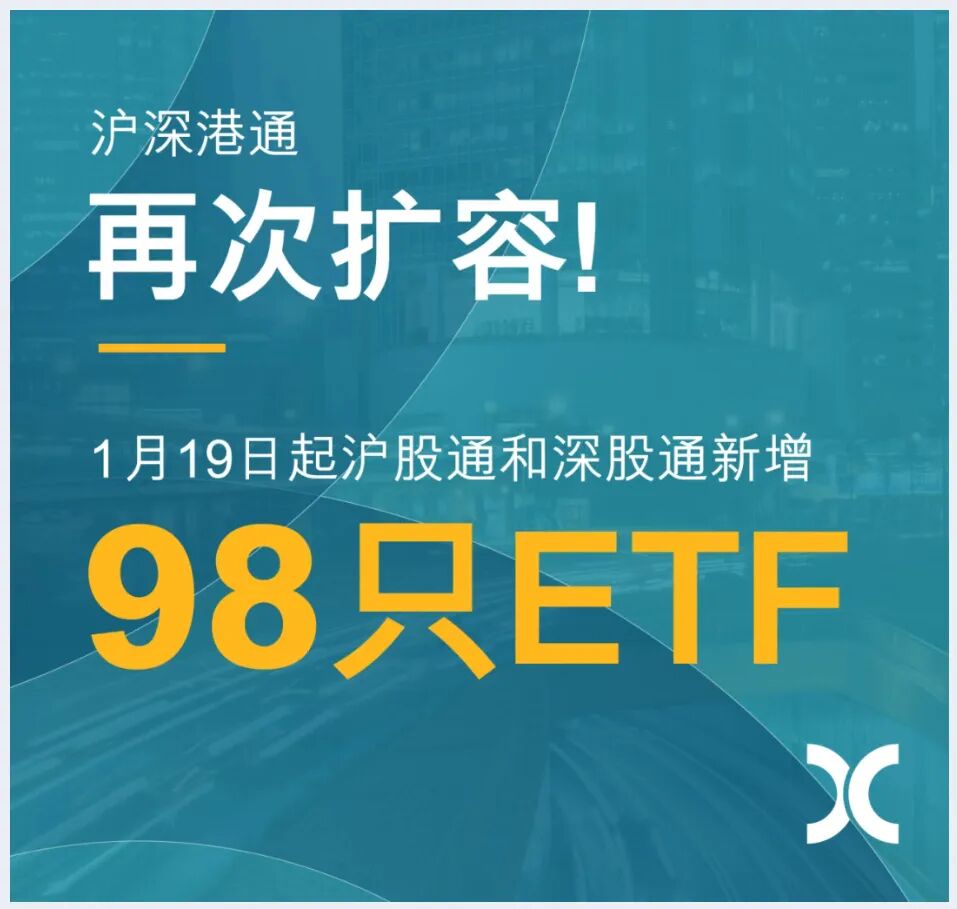
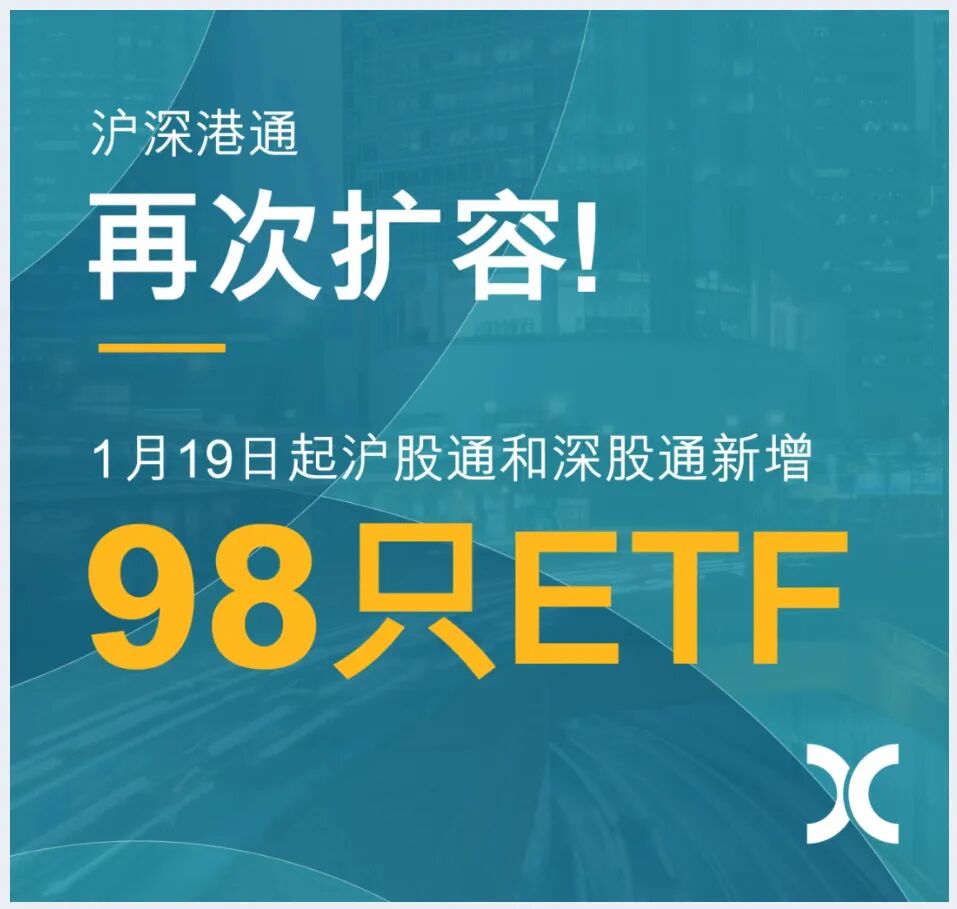
Core Viewpoint - The process of public ETF products "going abroad" is accelerating, with significant expansion in the mutual access ETF products between mainland China and Hong Kong, enhancing overseas investment channels for A-shares [1][3]. Group 1: ETF Expansion Details - As of January 19, 98 new ETF products have been included in the mutual access scheme, increasing the total from 273 to 364, marking a 33.3% growth and the largest single expansion since the mechanism's launch in July 2022 [1][3]. - The newly included ETFs consist of 54 from the Shanghai Stock Exchange and 44 from the Shenzhen Stock Exchange, with 7 ETFs temporarily removed from the scheme [4]. - The new ETFs cover a variety of categories, including broad-based, industry themes, and strategy-based products, with a notable inclusion of 25 ETFs tracking the CSI A500 index and nearly 20 ETFs focused on artificial intelligence or chip-related indices [4]. Group 2: Market Implications - The expansion involves 29 public fund companies, with a focus on leading firms such as Huaxia Fund, which has 14 ETFs included, and E Fund with 10 ETFs [5]. - Analysts suggest that the expansion reflects a shift in foreign investment strategies from broad market purchases to more structured and thematic investments, particularly in technology and high cash flow assets [5][8]. - The inclusion of dividend and cash flow ETFs indicates a strong demand for defensive assets among foreign investors [5]. Group 3: Internationalization of ETFs - The listing of the Southern Asset Management CSI A500 Index ETF on the Singapore Exchange marks the first instance of a CSI A500 ETF "going abroad" under the mutual access mechanism, providing Singaporean investors with efficient access to A-share core companies [7]. - This development is expected to enhance the global influence of A-share ETFs and facilitate the internationalization of Chinese capital markets [7][8]. - The ongoing expansion of the mutual access mechanism is anticipated to attract more long-term capital into the market, particularly in sectors favored by foreign investors [8].
“ETF通”再扩容,公募加速“出海”
Guo Ji Jin Rong Bao· 2026-01-23 14:29
Core Insights - The process of public ETF products "going abroad" is accelerating, with the Hong Kong Stock Exchange announcing an expansion of mutual access ETF products starting January 19, which includes 98 new ETFs [1][3] - The total number of products covered by the "ETF Connect" has increased from 273 to 364, marking a 33.3% growth and the largest single expansion since the mutual access mechanism was launched in July 2022 [3][4] Group 1: Expansion Details - The adjustment is not merely an increase in quantity but significantly enriches the investment options, with the new ETFs covering broad-based, industry themes, and strategy types [4] - The newly included 98 ETFs consist of 54 listed on the Shanghai Stock Exchange and 44 on the Shenzhen Stock Exchange, with a total of 364 products now available for northbound trading [4][5] - Notably, the inclusion of ETFs tracking the CSI 500 index marks a first for the "ETF Connect," with major funds from Huatai-PB, Southern, and Huaxia among those included [5] Group 2: Market Implications - The expansion reflects a shift in foreign investment strategies from "buying the index" to "buying structure," particularly in technology sectors, indicating a growing interest in China's hard technology and self-sufficiency [5][6] - The inclusion of dividend and cash flow ETFs suggests a strong demand from foreign investors for defensive assets with high cash flow returns [5][8] - The acceleration of public products "going abroad" is exemplified by the listing of the Southern CSI 500 Index ETF on the Singapore Exchange, enhancing access for Singaporean investors to A-share core companies [7][8] Group 3: Future Outlook - The ongoing expansion of the "ETF Connect" is expected to continue to grow the scale and investor base of domestic ETFs, potentially attracting significant capital inflows into A-shares [8] - Challenges remain, including differences in funding and trading systems between A-shares and overseas markets, as well as competition from similar products offered by foreign institutions [8]
存储行业深度报告:电子行业:AI驱动叠加自主可控,看好国产存储产业链
金融街证券· 2026-01-23 11:33
Investment Rating - The report maintains an "Outperform" rating for the storage industry [2] Core Insights - The current storage price increase cycle is primarily driven by AI, leading to a structural demand shift in the industry. The demand for high bandwidth and low latency storage is surging due to the rapid growth in AI training and inference, which is expected to continue driving prices upward [4][9] - The supply of storage chips remains tight, with major manufacturers like SanDisk, Samsung, and SK Hynix announcing price increases, indicating a constrained supply environment [4][13] - The domestic storage industry is expected to benefit from the ongoing high demand and the push for self-sufficiency, with companies like Changxin Technology and Yangtze Memory Technologies expanding production capacity [4][54] Summary by Sections AI Demand Explosion Driving Storage Industry "Super Cycle" - The storage demand is shifting from traditional capacity-driven models to performance-driven models, influenced by AI. The expected global data generation volume is projected to reach 393.9ZB by 2028, significantly impacting storage requirements [9] - AI servers are anticipated to see a 20.9% year-on-year increase in shipments in 2026, with their share of total server shipments rising to 17.2% [9][12] Structural Supply Tightness Driving Continued Price Increases - DRAM supply is tightening as major manufacturers prioritize advanced process capacities for high-end server DRAM and HBM, leading to price increases for DDR4 and NAND products [17][21] - NAND demand is expected to grow at a compound annual growth rate (CAGR) of 21% from 2024 to 2030, driven by data center needs, particularly from AI workloads [36][39] Acceleration of Domestic Production, Favoring the Domestic Storage Industry Chain - The domestic storage industry is poised for growth due to the ongoing high demand and the trend towards self-sufficiency. Companies like Changxin Technology are expanding their production capabilities, with plans to increase their monthly output significantly by 2025 [54][55] - The report highlights the importance of the entire storage supply chain, including design, manufacturing, and testing, which are expected to benefit from the current high demand cycle [54][60]

京东“AI”搜索量去年激增超百倍,消费电子ETF(561600)备受关注
Xin Lang Cai Jing· 2026-01-23 05:26
Core Viewpoint - The consumer electronics sector is expected to experience significant growth driven by AI integration, with predictions indicating a substantial increase in AI-related product demand by 2025 [1] Group 1: Market Performance - As of January 23, 2026, the China Securities Consumer Electronics Theme Index (931494) showed mixed performance among its constituent stocks, with Xunwei Communication leading with a 13.58% increase, followed by Lens Technology at 10.55%, and Hehui Optoelectronics at 3.69% [1] - The Consumer Electronics ETF (561600) is currently priced at 1.3 yuan [1] Group 2: AI and Consumer Electronics - JD.com's CEO Xu Ran stated that 2025 will be the "explosion year" for AI consumption, with AI-related search volume on JD's platform expected to increase over 100 times year-on-year [1] - A survey indicated that nearly 50% (46.8%) of respondents believe that products must integrate AI capabilities, making AI features a necessity for consumer products [1] Group 3: Industry Outlook - CITIC Securities forecasts that the synergy between self-control and AI will lead to impressive performance in related sectors by 2025, with a strong focus on domestic computing power and semiconductor equipment [1] - The trend of "self-control and AI computing power" is expected to be a dominant theme in the electronics industry throughout 2026, with particular attention on the potential for a significant turnaround in the consumer electronics sector by Q2 2026 [1] Group 4: Index Composition - The China Securities Consumer Electronics Theme Index (931494) comprises 50 listed companies involved in component production and consumer electronics design and manufacturing, reflecting the overall performance of the sector [2] - As of December 31, 2025, the top ten weighted stocks in the index include Luxshare Precision, Cambricon, and Industrial Fulian, collectively accounting for 54.35% of the index [2]
A股有降温但热情未完全消退,结构性行情特征或将持续
British Securities· 2026-01-23 02:02
Core Views - The A-share market is experiencing a cooling trend, but the enthusiasm for buying has not completely faded, indicating that structural market characteristics will continue to be prominent [2][10] - Focus on structural opportunities, particularly in sectors with strong annual report growth forecasts, while being cautious of external variables such as geopolitical tensions and overseas tariff disputes [2][10] Market Overview - On Thursday, the three major indices of Shanghai and Shenzhen showed a fluctuating upward trend, with military stocks such as aerospace and shipbuilding experiencing significant gains, while insurance stocks adjusted [4][10] - The overall market sentiment remains active with a good profit-making effect, as the total trading volume reached 26,917 billion [5] Sector Analysis Military Industry - Military stocks, including aerospace and shipbuilding, have shown strong performance, with significant gains in previous years, such as a 25.27% increase in the second half of 2020 and a 25.46% increase in the first half of 2025 [6] - The military sector is expected to benefit from stable growth in defense budgets and geopolitical events that may catalyze demand [6] - Key areas for investment include aerospace, flight weapons, defense information technology, and military new materials, with a focus on companies with long-term performance support [6] Commercial Aerospace - The commercial aerospace sector has seen substantial growth, driven by policy support and increasing demand for satellite internet applications [7][8] - The industry is transitioning from technology validation to exploring sustainable business models, with a clear regulatory framework and financing support in place [7][8] - Investment opportunities include short-term focus on satellite internet constellation construction and long-term attention to technological breakthroughs in rocket recovery and satellite applications [8] Market Outlook for 2026 - The macroeconomic environment and monetary policy are crucial variables influencing A-share trends, with expectations of policy resonance from the "14th Five-Year Plan" and the U.S. midterm elections [3][9] - The stock demand is expected to be supported by the profit-making effect and low interest rates, with a continuous influx of medium to long-term funds into the market [3][9] - The supply side may see an increase in IPO issuance and refinancing, while the pace of large shareholder reductions may also increase [3][9]