
AI大模型

Search documents
自动驾驶:万亿赛道的终极博弈,下一个十年谁主沉浮?
格隆汇APP· 2025-09-16 09:21
Core Viewpoint - The next decade will see autonomous driving as a core force reshaping human mobility, with significant competition for a trillion-dollar market among tech giants, traditional automakers, and capital market players [2] Group 1: Technological Evolution - The transition from "assisted driving" to "fully autonomous driving" is a critical turning point, with the race to achieve large-scale commercial deployment of Level 4 (L4) autonomous driving [2][4] - Current mass-produced vehicles are mostly transitioning from Level 2 (L2) to Level 3 (L3), while true "driverless" capabilities (L4/L5) are still limited to specific scenarios [5] - Two main technological paths have emerged: the "pure vision" approach led by Tesla, which relies on cameras and AI algorithms, and the "multi-sensor fusion" approach adopted by companies like Waymo and Huawei, which emphasizes safety through redundancy [6][7] Group 2: Market Opportunities - The autonomous driving ecosystem can be broken down into four layers, each presenting key investment opportunities: 1. Perception Layer: Comprising sensors like cameras and LiDAR, with companies like Hesai and Suoteng Ju Chuang achieving near-international performance levels [7] 2. Decision Layer: Involves chips and algorithms for planning, with NVIDIA's DRIVE Orin being a preferred choice for L4 solutions [8] 3. Execution Layer: Focuses on components that translate decisions into actions, with companies like Bosch and Continental leading in mass production of drive-by-wire systems [10] 4. Support Layer: Encompasses infrastructure like 5G and cloud computing, crucial for real-time vehicle connectivity and data processing [11] Group 3: Investment Landscape - The autonomous driving industry is on the brink of a breakthrough, with significant advancements in AI models enhancing decision-making capabilities [15] - Investment opportunities can be categorized into four segments: 1. Vehicle and solution providers (e.g., Tesla, Waymo) with high potential returns but also high risks [16] 2. Key technology suppliers (e.g., NVIDIA, Horizon Robotics) with more stable business models [16] 3. Infrastructure and service providers (e.g., Baidu Maps, Tencent) with clearer profit models [16] 4. Application and operation service providers focusing on specific commercial scenarios [16] Group 4: Future Outlook - The commercialization of autonomous driving is expected to accelerate, with 2025 potentially being a pivotal year [18] - The industry faces challenges not only in technology but also in societal acceptance, legal frameworks, and business models [18]



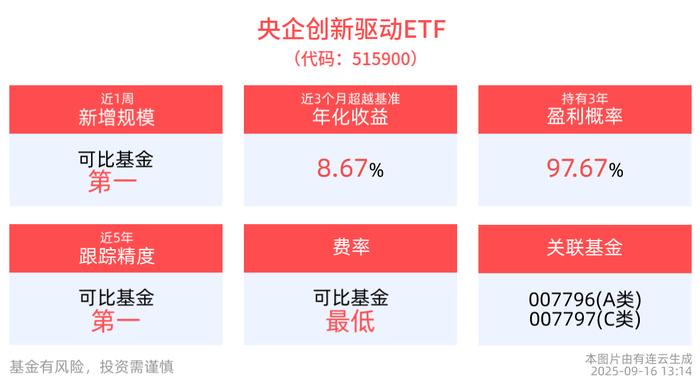
光+AI创造200公里单模光纤新纪录,长飞光纤涨停,央企创新驱动ETF(515900)近1周规模实现显著增长
Xin Lang Cai Jing· 2025-09-16 05:34
Group 1 - The China Central Enterprises Innovation-Driven Index decreased by 0.68% as of September 16, 2025, with mixed performance among constituent stocks [3] - Changfei Fiber led the gains with an increase of 10.01%, while Zhongtung High-tech fell by 4.13% [3] - The Central Enterprises Innovation-Driven ETF (515900) dropped by 0.64%, with the latest price at 1.55 yuan [3] Group 2 - The ETF saw a weekly increase of 0.58%, ranking in the top 25% among comparable funds [3] - The ETF's trading volume was 25.43 million yuan, with a turnover rate of 0.73% [3] - Over the past year, the ETF averaged a daily trading volume of 24.05 million yuan, leading among comparable funds [4] Group 3 - A successful satellite launch was conducted at the Jiuquan Satellite Launch Center, marking a significant achievement in satellite internet technology [3] - A new record for single-mode fiber transmission was achieved at 254.7 Tb/s, showcasing a breakthrough in optical communication technology [4] - This advancement is expected to support the increasing demand for high-speed communication networks driven by the rapid growth of 5G/6G, cloud computing, and AI [4] Group 4 - The Central Enterprises Innovation-Driven Index evaluates 100 representative listed companies based on innovation and profitability [4] - The top ten weighted stocks in the index account for 33.39% of the total index weight, including companies like Hikvision and China Shipbuilding [4]

阿里云CIO首次系统复盘:大模型落地的 RIDE 方法论与 RaaS 实践突破
AI前线· 2025-09-16 04:41
Core Viewpoint - The rapid development of AI large models presents both opportunities and challenges for effective implementation in enterprises, necessitating a systematic approach to overcome organizational and operational hurdles [2][5][9]. Group 1: Organizational Challenges and AI Implementation - Companies face internal discrepancies in AI awareness and capabilities, which complicates the transformation process and the establishment of a culture conducive to AI development [2][8]. - A significant contradiction exists between business departments' expectations of AI capabilities and the actual productivity outcomes delivered by IT departments [8][9]. - The need for substantial investment in AI applications is emphasized, as many enterprises struggle to align technology with business needs effectively [9][10]. Group 2: AI Application Cases - Alibaba Cloud has successfully implemented approximately 28 digital human projects across various scenarios, including document translation, intelligent outbound calling, contract risk review, and employee services [10][13]. - In translation, the use of AI has reduced costs significantly, achieving a translation quality score of 4.6 compared to 4.12 with traditional methods, thus enhancing user experience in overseas markets [15][16]. - Intelligent outbound calling has allowed Alibaba Cloud to scale its customer service capabilities, equating to the service bandwidth of hundreds of human agents [18][19]. - The introduction of digital personnel for contract risk review has streamlined the process, reducing review times from months to real-time risk identification during contract drafting [20][21]. Group 3: RIDE Methodology for AI Integration - The RIDE methodology consists of four key steps: Reorganize, Identify, Define, and Execute, aimed at ensuring successful AI project implementation [28][30]. - Reorganizing involves aligning organizational structures and relationships to better support AI initiatives, while identifying business pain points suitable for AI solutions is crucial [30][42]. - Defining clear operational metrics and product specifications is essential to track the effectiveness of AI applications [47][48]. Group 4: Importance of User Intent and Evaluation - The success of AI applications, particularly in agent models, hinges on understanding user intent and ensuring that the AI meets these needs effectively [64][66]. - Establishing a comprehensive intent space is critical for evaluating AI performance and ensuring that the knowledge base is sufficient to meet user demands [66][70]. - The evaluation of AI performance must consider the absence of standard answers in many tasks, necessitating a focus on qualitative assessments and continuous improvement [72][73].


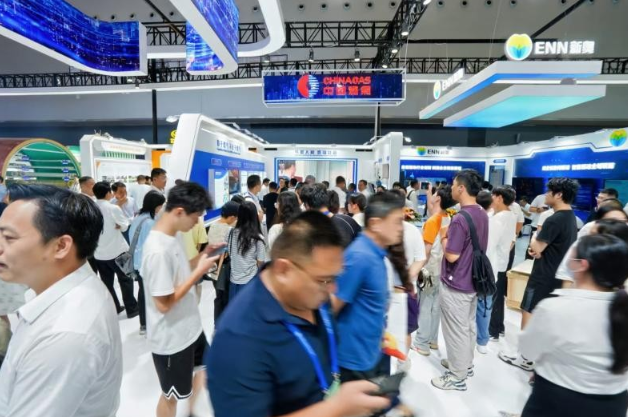
中国燃气亮相中国—东盟建筑科技展 :深耕广西、赋能东南亚能源转型
Zhong Guo Neng Yuan Wang· 2025-09-16 04:24
Group 1 - The China-ASEAN Construction Ministers' Roundtable Conference was held in Guilin, Guangxi, showcasing the theme "Building the Future Together" [1] - China Gas Holdings Limited presented its innovative technologies and service models, highlighting its transformation from a traditional gas supplier to a technology-driven comprehensive energy service provider [1][2] - The company showcased its "Smart Gas City" solution, which integrates AI, IoT, and big data for efficient gas lifecycle management [2] Group 2 - China Gas has transitioned to green secondary energy, with over 100 operational energy storage projects in China, maintaining a leading market share [2] - The company is actively developing biomass energy solutions, providing clean energy options to commercial users, aiding in low-carbon transitions [2] Group 3 - The company launched modern home solutions under its brand Yipinhui, focusing on safety, comfort, and sustainability, aligning with national housing expectations [3][6] - The "Five Constants System" was introduced, ensuring stable indoor conditions and energy efficiency, outperforming traditional systems in both summer and winter [7] Group 4 - Yipinhui set up an outdoor exhibition for its pipeline drinking water technology, aiming to enhance drinking water quality for 20 million users in various cities [8] - The company signed multiple cooperation agreements during the conference, focusing on zero-carbon parks and biomass natural gas projects [9] Group 5 - China Gas has established a strong presence in Guangxi, with nearly 15,000 kilometers of pipeline and over 3 million users, laying a solid foundation for expansion into ASEAN markets [12] - The company aims to leverage its experience in Guangxi to enter emerging markets in Southeast Asia, exploring cross-border energy cooperation [14]

行业点评报告:AI大模型厂商加速导入硬件入口,端侧AI产业链投资机遇可期
KAIYUAN SECURITIES· 2025-09-16 02:34
Investment Rating - The industry investment rating is "Positive" (maintained) [1] Core Insights - The AI model continues to iterate, with edge-side AI becoming a core direction, emphasizing lightweight and efficient models [5][6] - Major global AI models are rapidly iterating through algorithm optimization and data accumulation, enhancing capabilities and optimizing inference effects [5][6] - The collaboration between cloud and edge computing is expected to optimize costs, energy consumption, and performance, shifting the focus of AI processing from the cloud to devices like smartphones and PCs [5][6] Summary by Sections Industry Trends - The importance of terminal hardware entry is highlighted, with major AI model manufacturers accelerating the integration of hardware to facilitate the rapid deployment of various AI functions and applications [6] - Companies like Google, Alibaba, and Apple are actively developing AI hardware and applications, indicating a strong push towards integrating AI technology into consumer devices [6] Technological Developments - AI terminals are evolving with advancements in hardware, energy efficiency, and interaction forms, focusing on enhancing local computing power and user experience [7] - The integration of NPU in SoC is improving local computing capabilities, while storage technology is advancing towards high bandwidth and low latency [7] Investment Opportunities - Beneficial targets for investment include brands like Transsion Holdings, Xiaomi Group, and various component manufacturers such as Lens Technology and Sunyu Optical Technology [8] - The edge-side AI model market is expected to grow rapidly, with projections indicating that by 2025, the AI smartphone market share in China will reach approximately 30% [6][8]
从“智慧驱动”到“温度可感” AI大模型赋能消费金融
Jin Rong Shi Bao· 2025-09-16 02:10
Core Insights - The financial industry is becoming a primary battlefield for AI technology applications, driven by the need for improved service processes and risk control capabilities [1][2] - The Chinese government's recent policy emphasizes the integration of AI across various sectors, including finance, to enhance service delivery and compliance [1] - AI models are transforming credit risk management from rule-based to data-driven and eventually to cognitive-driven approaches, enhancing user profiling and risk assessment [2][3] AI Technology in Financial Services - AI technology is being utilized by consumer finance companies to address the mismatch in financial supply, particularly for underserved groups like young professionals and new blue-collar workers [1] - Ant Group's consumer finance division is exploring AI risk control applications, achieving significant advancements in user data integration and risk assessment strategies [2] - Companies like Zhaolian Consumer Finance and Zhongyuan Consumer Finance are developing proprietary AI models to improve financial scenario handling and risk management efficiency [3] Enhancing Financial Inclusion - AI models are not only about technical efficiency but also about providing warmth in financial services, particularly in rural and underserved areas [4] - The "Fuhui Yang" smart farming project by Mashang Consumer Finance exemplifies how AI can support agricultural development and enhance financial services for farmers [4][5] - The project has positively impacted employment and income for local farmers, demonstrating the potential of AI to drive economic growth in rural communities [5] User-Centric Innovations - Companies are leveraging AI to create more user-friendly financial services, such as optimizing voice interaction for elderly and rural users [5] - The development of intelligent customer service systems aims to lower barriers for service access, ensuring that financial services are more inclusive [5] - AI is being positioned as a tool to deliver personalized financial solutions, enhancing the overall user experience and accessibility of financial services [5]
专访平安产险个人平台研发团队总经理邓校锋:推动AI与各个业务场景深度融合,赋能高质量发展
Mei Ri Jing Ji Xin Wen· 2025-09-15 14:14
Core Insights - The forum themed "Let New Technologies No Longer 'Wait for the Wind': Fintech Supporting the New Triangle Cycle" highlighted the transformative impact of artificial intelligence (AI) on the insurance industry, with a focus on high-quality development through deep integration of AI into various business scenarios [1][2]. Group 1: AI Integration in Insurance - The company is advancing its "AI in All" strategy, aiming for comprehensive intelligence across marketing, service, operations, management, and business processes [2]. - In the auto insurance sector, over 86% of policies are now issued automatically by AI, and approximately 46% of claims are processed through automated inspections, significantly enhancing user experience and reducing operational costs by 1% over the past three years [2]. Group 2: AI Model Development - The company identifies four core elements for AI large models: computing power, data, algorithms, and scenarios, supported by a robust organizational structure and talent development [3]. - A "thousand-card scale computing cluster" has been established to ensure efficient AI model deployment, while a knowledge engineering system has accumulated over a trillion tokens to support model training [3]. Group 3: Digital Financial Services for Tech Companies - As of 2024, there are over 600,000 tech SMEs in China, facing challenges in risk assessment and product pricing for insurance [6]. - The company has developed various tech insurance products, including cybersecurity insurance, to meet the diverse needs of tech firms at different growth stages, providing over 1.9 billion yuan in cybersecurity risk coverage [6]. Group 4: Global Risk Management Services - The launch of the EagleX platform offers comprehensive global risk management services, including risk assessment and disaster warning, to support Chinese enterprises expanding overseas [7]. - The company has already assisted 654 renewable energy companies in their international ventures, helping to mitigate losses exceeding 200 million yuan [7].

华为融海计划:打造合作新范式,共驱金融数智化转型向新而行
Jin Rong Shi Bao· 2025-09-15 12:21
Core Insights - The global financial industry is undergoing a rapid digital transformation, requiring collaboration between financial institutions and technology companies to enhance data application capabilities and innovative solutions [1][3] - Huawei's "Ronghai Plan" was launched at the 2024 Global Connectivity Conference, aiming to drive the digital transformation of the financial sector through a collaborative ecosystem [1][2] Group 1: Trends in the Financial Industry - Customer demands are shifting from standardized services to personalized offerings, necessitating customized financial solutions [3] - Regulatory requirements are becoming more stringent, with increased expectations for compliance and risk management from financial institutions [3] - The pace of technological advancement is accelerating, requiring continuous investment from financial institutions to keep up with new technologies [3] Group 2: Components of the Ronghai Plan - The Ronghai Plan consists of three sub-plans: Solution Precision Building, Smart Innovation, and Partner Global Expansion, aimed at creating a comprehensive ecosystem for digital transformation [4] - The Solution Precision Building plan focuses on developing competitive joint solutions for key scenarios such as distributed core banking and rapid trading in securities [4][5] - The Smart Innovation plan emphasizes the development of AI models and innovative applications in financial scenarios, enhancing efficiency and customer satisfaction [6] Group 3: Global Expansion and Collaboration - The Partner Global Expansion plan aims to facilitate the international deployment of Chinese financial technology solutions, with successful implementations in over 20 countries [7][8] - Huawei's collaborations have led to rapid project completions, such as the Union Digital Bank loan core system in the Philippines, showcasing the speed of Chinese digital finance solutions [7] - The Ronghai Plan promotes a model of "global technology + local adaptation," ensuring that advanced solutions meet regional regulatory requirements [9] Group 4: Future Outlook - Huawei plans to continue expanding its partnerships and technological innovations to support the digital transformation of the global financial industry [11] - The upcoming 2025 Huawei Global Connectivity Conference will feature discussions on accelerating the implementation of intelligent solutions in the financial sector [11]
32.99万元起 预售即爆单的2026款岚图梦想家正式上市
Zheng Quan Shi Bao Wang· 2025-09-15 10:36
Core Insights - The 2026 Lantu Dreamer has been officially launched, featuring two intelligent series, Kunpeng and Qiankun, with five configuration versions and two power modes (PHEV and EV), priced between 329,900 to 439,900 yuan [1] - This model is positioned as a "new era flagship MPV," equipped with advanced technologies such as 800V, 5C ultra-fast charging, a 62.5 kWh large battery, Huawei ADS 4, HarmonyOS Cockpit 5, and intelligent rear-wheel steering, showcasing strong market appeal since its pre-sale at the Chengdu Auto Show [1] - The vehicle addresses the challenges of hybrid technology regarding range and refueling, being the world's first 800V intelligent super hybrid MPV, offering a maximum pure electric range of 350 km and the fastest charging speed in its class, with 20%-80% charging in just 12 minutes [1] Group 1 - The 2026 Lantu Dreamer features the world's first intelligent rear-wheel steering technology in an MPV, allowing a turning radius comparable to compact cars, and includes a "crab mode" for navigating tight spaces [2] - The vehicle combines a front double wishbone and rear five-link suspension with an intelligent magic carpet chassis and electric four-wheel drive, ensuring smooth handling in complex road conditions [2] - The design incorporates Eastern aesthetics with a new "Jinluan Red" dual-tone color and "Yingshanhe" translucent panel, merging luxury with intelligent technology, redefining high-end MPV standards [2] Group 2 - The Qiankun version integrates intelligent ecology with vehicle safety, featuring Huawei ADS 4 with a comprehensive collision avoidance system and a high-strength cage body, achieving C-NCAP five-star safety certification [2] - The Kunpeng version is equipped with the industry-leading automotive-grade 8295P chip and AI large model, supporting a wide range of applications and smoother interactions, along with the Kunpeng Smart Driving 2.0 system [3] - The 2026 Lantu Dreamer is available for immediate delivery, allowing users to enjoy a luxurious travel experience right away [4]
美联储议息会议在即 恒生科技ETF(513130)最新规模超390亿元
Sou Hu Cai Jing· 2025-09-15 06:45
Group 1 - The Hong Kong technology sector is experiencing active performance, with the Hang Seng Technology Index reaching a new intraday high of 6000 points since April this year [1] - There is a strong expectation for a 25 basis point interest rate cut by the Federal Reserve, which is likely to benefit the interest-sensitive Hong Kong technology sector [1] - The Hang Seng Technology ETF (513130) has seen significant trading volume, with daily turnover exceeding 5 billion yuan from September 9 to September 12, and a net inflow of 1.186 billion yuan in September, reaching a historical high of 39.2 billion yuan [1] Group 2 - The Hang Seng Technology ETF closely tracks the Hang Seng Technology Index, which includes 30 leading Hong Kong internet and manufacturing companies, covering various sectors such as internet, media, software, automotive, and chips [2] - There has been a cumulative increase of 93.882 billion Hong Kong dollars in southbound capital since September, with internet companies being a key focus for investment [2] - The current price-to-earnings ratio of the Hang Seng Technology Index is 23.12 times, which is in the lower range of the past five years, indicating potential investment value [2]