
科技创新

Search documents
江苏亮出“十四五”时期高含“金”量金融成绩单多个“全国第一”,彰显高质量发展硬实力
Xin Hua Ri Bao· 2026-01-22 00:00
Core Insights - Jiangsu's financial development during the "14th Five-Year Plan" period has achieved significant milestones, including leading the nation in social financing scale, new loan increments, and the number of listed companies on the Sci-Tech Innovation Board and Beijing Stock Exchange [1][2]. Group 1: Financial Growth and Support for the Real Economy - From 2021 to 2024, Jiangsu's annual social financing increment averaged 3.35 trillion yuan, with a total of 3.09 trillion yuan added from January to November 2025, ranking first in the country and increasing by 446.1 billion yuan year-on-year [2][3]. - By the end of 2025, the total RMB loan balance in Jiangsu is projected to reach 28.25 trillion yuan, with an average annual growth rate of 12.8% from 2021 to 2025, consistently outpacing the nominal GDP growth rate [2][3]. - The balance of technology loans reached 5.2 trillion yuan, benefiting over 148,000 enterprises, while green loans and inclusive small and micro loans also saw significant growth [2][3]. Group 2: Capital Market Development - Jiangsu added 259 new domestic listed companies during the "14th Five-Year Plan," the highest in the nation, bringing the total to 722, with direct financing reaching 6.97 trillion yuan [4][5]. - The issuance of Sci-Tech bonds increased by 183% year-on-year in 2025, with a cumulative total of 70.6 billion yuan issued in the province [5]. - The province's financial ecosystem has been strengthened through various initiatives, including the establishment of a securities service platform and a resource pool for listed companies [5][6]. Group 3: Support for Private Enterprises and Risk Management - Jiangsu has implemented policies to support the growth of private enterprises, including the establishment of 105 financial service points and nearly 300 specialized financial service events [6][7]. - The province's insurance sector has shown resilience, with cumulative compensation reaching 892.9 billion yuan and a financing guarantee balance exceeding 1.16 trillion yuan [7][8]. - Jiangsu has maintained a "zero default" record in the bond market for 35 consecutive months and has established a provincial-level financial work coordination mechanism to enhance regulatory effectiveness [8].
推动湖州从长三角“地理中心”向“科创中心”跃升
Xin Lang Cai Jing· 2026-01-21 23:41
Group 1 - The core viewpoint emphasizes the transformation of Huzhou from a geographical center in the Yangtze River Delta to a technology innovation center, driven by scientific and technological innovation [5][13] - Huzhou's R&D expenditure as a percentage of GDP reached 3.5%, ranking third in the province, with a historical high of 371 million yuan in funding secured [5] - The city has established a "first-use, then-transfer" model for technology commercialization, which has led to the creation of seven innovation pools covering various industries and 823 items included in the pool [6][7] Group 2 - Huzhou has incubated 39 technology companies with a local conversion rate of 97%, and has built concept verification centers to facilitate the initial stages of technology commercialization [7] - The city has accelerated technology investment, signing 31 projects with a total investment of 22.424 billion yuan in 2025, focusing on sectors like semiconductors and optoelectronics [8] - Major projects include a 9 billion yuan micro-cavity electronic paper display project and an 11.75 billion yuan intelligent logistics equipment factory, showcasing significant investment in emerging industries [9] Group 3 - Huzhou's technology financing environment has improved, with a 19.26% year-on-year increase in loans to technology enterprises, totaling 137.8 billion yuan [11] - The city has introduced a technology financial advisor system, serving over 360 technology companies and addressing financing needs of 1.5 billion yuan for 100 companies [12] - Huzhou is fostering a talent flow mechanism through a "multi-track system," enhancing collaboration between universities and enterprises, and has selected 249 "technology vice presidents" to promote talent mobility [12][13]

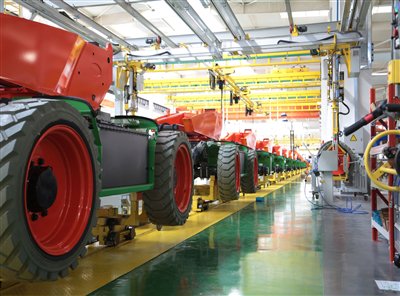
十九城产业新坐标·河南经济新方位丨漯河 龙头驱动 产业焕新 科技引擎催生漯河新“食”力
He Nan Ri Bao· 2026-01-21 23:37
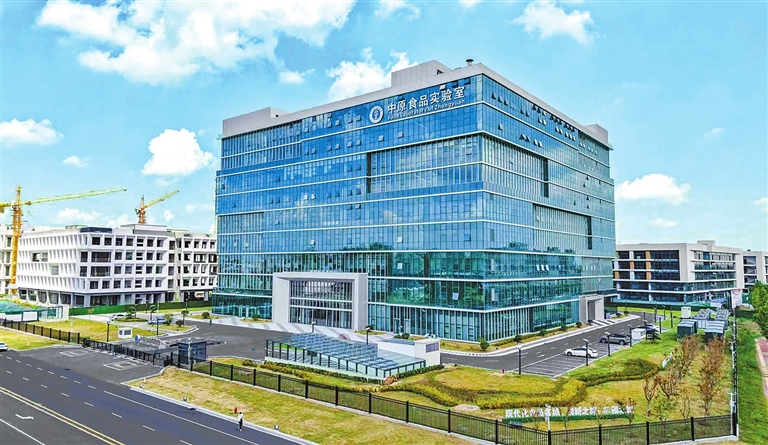
Core Insights - The article highlights the transformation of Changxiang Biological Technology Co., Ltd. from a frozen meat product company to a player in the ready-to-eat food market, driven by innovation and collaboration with the Central Plains Food Laboratory [1][2] - The Central Plains Food Laboratory has established a comprehensive innovation system that supports traditional food enterprises in enhancing their product offerings and addressing market demands [2][4] Group 1: Company Transformation - Changxiang Biological has successfully developed new products, including spicy chicken snacks, within a year, overcoming challenges related to taste and texture [1] - The company aims to create healthy, additive-free products, leveraging the expertise of the Central Plains Food Laboratory [1][2] Group 2: Innovation and Collaboration - The Central Plains Food Laboratory provides a "one-stop" R&D service, assisting over 280 companies with more than 700 technical services and achieving over 40 key technology breakthroughs [2] - The laboratory operates under a collaborative model involving a central lab, six universities, and multiple technology transfer bases, promoting efficient solutions tailored to individual company needs [2] Group 3: Industry Impact - The food industry in Luohe has grown significantly, with the total scale increasing from 200 billion to 250 billion yuan, accounting for a quarter of the province's food industry and 2.5% of the national total [4] - Luohe is positioning itself as a modern food manufacturing hub, integrating technological, industrial, and financial innovations to enhance its competitive edge in the national market [4]

粉中乾坤大 酸辣识河南
He Nan Ri Bao· 2026-01-21 23:37
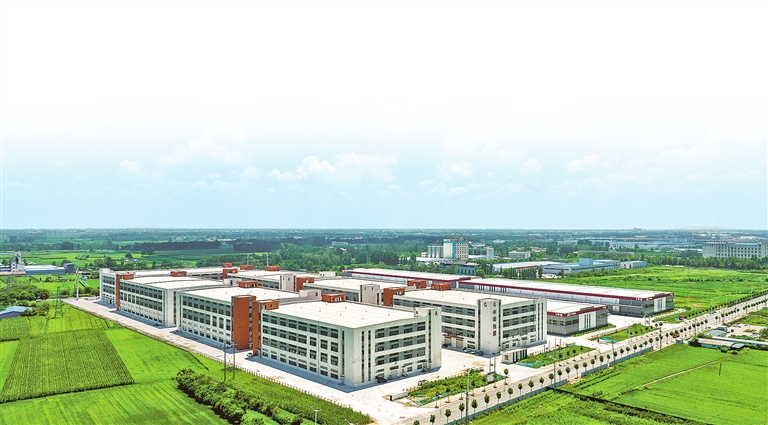
Core Insights - The article highlights the rise of Henan's spicy and sour noodle industry, particularly in Tongxu County, which has become a leader in the national market, supported by local agricultural advantages and innovative practices [4][10]. Agricultural Foundation - The quality of the spicy and sour noodles is rooted in the local sweet potato production, with Henan being a major sweet potato growing region due to its favorable climate and soil conditions [5][6]. - Tongxu County and Xixian County exemplify the successful upgrade of the sweet potato industry, leveraging unique local advantages to ensure high-quality raw materials for noodle production [5][6]. Industry Development - The spicy and sour noodle industry in Henan has transformed from a fragmented market to a clustered leader, driven by government support and industry innovation [10][13]. - In 2022, the Henan Provincial Agricultural and Rural Affairs Department recognized the potential of the spicy and sour noodle industry, promoting Tongxu as the "Capital of Spicy and Sour Noodles" [10][13]. Infrastructure and Innovation - Tongxu County has developed a comprehensive industrial ecosystem, including a 2,730-acre spicy and sour noodle industrial park, a starch industrial park with an annual output of 300,000 tons, and a modern logistics park [11][12]. - Technological innovations, such as automated production lines and zero-additive preservation techniques, are driving the industry's upgrade and enhancing product quality [12]. Economic Impact - The spicy and sour noodle industry has significantly contributed to local economies, with companies like Fuxingtang Starch Co. signing contracts with farmers, leading to increased income and employment opportunities [16][17]. - The industry has created a new job ecosystem, with thousands of "sweet potato brokers" and numerous retail outlets providing employment and income for local residents [17]. Future Prospects - The Henan spicy and sour noodle industry is positioned for further growth, with plans to expand into new markets and enhance technological innovation [18][19]. - The industry aims to establish itself as a national and global brand, showcasing Henan's agricultural advancements and culinary heritage [19].
上海5.67万亿,北京5.2万亿!双城记背后,谁才是真正的赢家?
Sou Hu Cai Jing· 2026-01-21 22:47
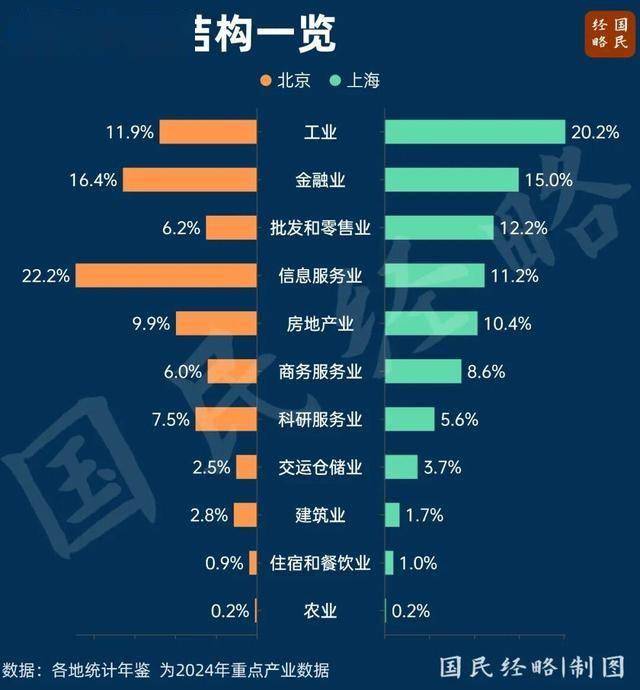
Core Insights - Both Shanghai and Beijing have surpassed the 5 trillion RMB GDP mark, with Shanghai at 5.67 trillion and Beijing at 5.2 trillion, both showing a growth rate of 5.4% [1][3] Group 1: Economic Performance - Shanghai's GDP growth is driven by its strong foundations in finance, technology, and innovation, showcasing a shift from merely being a trade hub to a source of innovation [5][10] - Beijing's GDP growth, despite a strategy of "reduction development," highlights a high-quality economic transformation, focusing on high-tech industries and services [7][8] Group 2: City Characteristics - Shanghai is characterized as a comprehensive international player with strengths in finance, trade, shipping, and technology innovation, aiming to be a global resource allocation hub [10] - Beijing serves as a national political, cultural, and technological innovation center, emphasizing its role in driving national transformation through innovation and creativity [13] Group 3: Future Outlook - The achievement of surpassing 5 trillion RMB is seen as a milestone, but the focus now shifts to translating economic growth into tangible benefits for citizens, such as improved living standards and opportunities [12] - The competition between Shanghai and Beijing is framed not as a rivalry but as a dual force propelling China's economic advancement, with both cities facing the challenge of maintaining quality and innovation in their growth [10][12]
“压舱石”作用愈发凸显 创新动能持续壮大
Xin Lang Cai Jing· 2026-01-21 22:36
Core Viewpoint - The industrial economy in China is showing steady growth, with significant contributions to overall economic performance, and the government is committed to advancing new industrialization by 2025 [1][8]. Group 1: Industrial Growth and Performance - The industrial added value of large-scale enterprises increased by 5.9% year-on-year, with manufacturing value added maintaining the world's top position for 16 consecutive years [1]. - The added value of equipment manufacturing and high-tech manufacturing increased by 9.2% and 9.4% year-on-year, respectively [2]. - The telecommunications business volume grew by 9.1% year-on-year, indicating robust performance in the industrial and information sectors [1]. Group 2: Support for Small and Medium Enterprises - The government is implementing reforms to reduce burdens on enterprises and ensure the implementation of policies that benefit businesses, fostering a supportive environment for development [3]. - A total of 17,600 specialized and innovative "little giant" enterprises have been cultivated, along with over 140,000 specialized and innovative small and medium enterprises [3]. Group 3: Innovation and New Growth Drivers - Significant advancements in technology are highlighted, including breakthroughs in humanoid robots and major equipment like large-diameter shield machines [4]. - The added value of industries such as integrated circuits and electronic materials is projected to grow by 26.7% and 23.9% year-on-year, respectively, by 2025 [5]. - The scale of artificial intelligence computing power in China has reached 1,590 EFLOPS, with applications expanding across key industries [5]. Group 4: Digital Economy and Industrial Upgrading - The integration of the digital economy with the real economy is enhancing industrial transformation, with over 23,000 "5G + industrial internet" projects established [6]. - New business models such as "black light factories" and "smart ports" are emerging as key drivers for upgrading traditional industries [6]. Group 5: Future Industrial Strategy - The government aims to stabilize growth, strengthen innovation, promote integration, optimize governance, and prevent risks as part of the new industrialization strategy [8]. - Focus areas include enhancing the adaptability of consumer goods supply and demand, promoting green and low-carbon transitions, and developing new energy solutions [8].
2025 以实干镌刻新荣光
Xin Lang Cai Jing· 2026-01-21 22:36
Core Viewpoint - The government work report of Harbin City emphasizes the commitment to high-quality revitalization and development by 2025, focusing on industrial upgrades, improved public welfare, and enhanced urban vitality [7]. Group 1: Economic Development - The construction of "three bases, one barrier, and one highland" has made significant progress, with grain production reaching 25.775 billion jin, an increase of 753 million jin [9]. - The added value of large-scale equipment manufacturing increased by 19.6%, and the installed capacity of renewable energy reached 5.338 million kilowatts, accounting for 52.9% of the total installed capacity [9]. - Actual foreign investment grew by 18.1%, and total import and export volume increased by 4.1% [9]. Group 2: Policy Implementation - Major policies such as "two heavies" and "two new" have shown effectiveness, with 581 major construction projects and 56 equipment upgrade projects supported [9]. - Consumer incentives included 3.76 billion yuan in subsidies for replacing old consumer goods and 190 million yuan in consumer vouchers, stimulating consumption by 38.89 billion yuan [9]. - Industrial technology investment increased by 36.3%, and high-tech manufacturing investment grew by 10.8% [9]. Group 3: Tourism and Culture - Harbin successfully hosted events like the Harbin Summer Music Festival and the International Ice and Snow Festival, attracting 200 million tourists and generating a total tourism expenditure of 281.84 billion yuan, representing growth of 12.7% and 21.8% respectively [10]. - The city was awarded the title of "World Ice and Snow Tourism Excellence City" by the United Nations World Tourism Organization [10]. Group 4: Innovation and Industry Upgrade - The acceleration of industrial upgrades is evident with 733 projects underway and an investment of 50.1 billion yuan, with significant growth in aerospace, computer, and automotive engine manufacturing [11]. - The number of technology-based enterprises reached 182, with a loan balance growth of 18.7% [11]. - The employment rate of graduates from local universities is 18.3%, with 38.1% for doctoral graduates [11]. Group 5: Urban Development - High-quality urban construction is progressing, with the completion of major infrastructure projects like the expansion of Taiping International Airport [13]. - The city has implemented 32 road and bridge projects and constructed 26,600 new parking spaces [13]. - Historical and cultural preservation efforts include the restoration of 33 heritage sites and the enhancement of urban green spaces [13]. Group 6: Social Welfare - Urban employment increased by 98,900, with 2,000 affordable housing units under construction [15]. - Public services improved with the addition of 38 vocational education programs and 38,300 new quality school places [15]. - Safety and stability in the social environment were maintained, with a decrease in debt rates and criminal cases [15].

新发展模式支撑中国经济行稳致远
Jing Ji Ri Bao· 2026-01-21 22:25
Core Viewpoint - The article emphasizes the importance of transitioning to an economic development model driven by domestic demand, consumption, and endogenous growth, as a strategic response to changing domestic and international conditions [1][2][3]. Group 1: Importance and Urgency - The need for a new economic development model is underscored by the increasing uncertainties in the international landscape and the internal challenges of insufficient effective demand [2][3]. - The shift towards a domestic demand-driven model is seen as essential for maintaining economic vitality and competitiveness in the face of external risks [2][3]. Group 2: Strategic Response to External Risks - The article highlights the global economic slowdown and rising protectionism, which necessitate a reduced reliance on external demand [3]. - China's large domestic market, with over 1.4 billion people, presents significant potential for internal demand, which can mitigate external uncertainties [3]. Group 3: High-Quality Development - Transitioning to a consumption-driven economy is crucial for high-quality development, moving from factor-driven growth to innovation-driven growth [4]. - The article notes that as China’s GDP per capita surpasses $13,000, the demand structure is evolving, necessitating investments in human capital and services [4]. Group 4: Economic Cycle and Supply-Demand Balance - The article stresses the importance of a dynamic balance between supply and demand, with a focus on addressing the current shortfall in domestic consumption [5]. - A new economic model should facilitate a higher-level dynamic balance where demand drives supply and vice versa [5]. Group 5: Characteristics of Domestic Demand-Driven Growth - The article outlines that a shift to domestic demand is a common trend for large economies, particularly after reaching a certain GDP per capita threshold [6][7]. - From 2013 to 2024, domestic demand is projected to contribute an average of 93.1% to economic growth, highlighting its increasing importance [7]. Group 6: Consumption as a Growth Driver - The article discusses the U-shaped trend of consumption rates in economic development, indicating that as economies mature, consumption becomes a more significant growth driver [8]. - From 2013 to 2024, final consumption expenditure is expected to contribute an average of 55% to economic growth, surpassing the contribution from capital formation [8]. Group 7: Endogenous Growth as a Pathway - The article posits that sustainable economic growth relies on internal dynamics rather than external forces, with innovation playing a key role in this process [9]. - By 2024, R&D investment intensity in China is projected to reach 2.68%, surpassing the EU average, which supports the shift towards endogenous growth [9]. Group 8: Policy Recommendations - The article suggests that effective investment strategies should combine physical and human capital investments to stimulate economic growth [11]. - It emphasizes the need for policies that enhance consumer confidence and spending, alongside structural reforms to support innovation and investment [12][14].
打通从样品到产品进阶路径 ——湖北宜昌持续增加产业体系“含新量”
Jing Ji Ri Bao· 2026-01-21 22:11
Core Viewpoint - The acquisition of proprietary technology for the preparation of photoinitiators used in photoresists by Hubei Xingfu Electronics marks a significant step towards overcoming a critical technological bottleneck in the semiconductor industry, facilitating the transition from laboratory innovations to market applications [1][2][3]. Group 1: Technology Breakthroughs - Hubei Xingfu Electronics acquired the proprietary technology for photoinitiators for 46.27 million yuan, addressing a long-standing dependency on foreign suppliers in the semiconductor manufacturing sector [1][2]. - The project led by Hubei Sanxia Laboratory achieved key performance metrics equivalent to those of foreign manufacturers, with a successful transfer of technology to Hubei Xingfu Electronics [2]. - The laboratory is also working on a black phosphorus project that transforms 800 yuan per ton of phosphorus ore into black phosphorus crystals valued at approximately 5,000 yuan per gram, showcasing significant advancements in material value [3]. Group 2: Innovation Ecosystem - Yichang is building a "tropical rainforest" innovation ecosystem, leveraging leading enterprises to foster a collaborative environment among businesses of various sizes [4][5]. - The establishment of a closed-loop recycling industry park by Bangpu Recycling Technology Co., Ltd. exemplifies the effective clustering of industries, enhancing the overall efficiency of the new energy battery materials sector [4]. - The government plays a crucial role in supporting this ecosystem by facilitating the introduction of key personnel and resources to accelerate technological advancements and industrial growth [5]. Group 3: Industrial Transformation - Traditional industries are undergoing significant transformations, with companies like Xingfa Group investing over 10 billion yuan to enhance their value chains and pivot towards high-tech, green chemical materials [6]. - Yichang is strategically positioning itself in the data economy and computing power sectors, aiming to become a prominent hub for artificial intelligence and related industries [6]. - The city is witnessing a substantial increase in high-tech enterprises, with the number of high-tech companies projected to reach 2,000 and technology-based SMEs to 4,000 by the end of the 14th Five-Year Plan [5][6]. Group 4: Future Development Strategies - Yichang's leadership emphasizes the importance of high-quality development, focusing on enhancing productivity and expanding domestic demand while integrating new technologies into existing industries [7]. - The city aims to achieve seamless integration of technological innovation with industrial upgrades, ensuring a competitive edge in future high-quality development [7].
动力电池“链”就区域产业升级路
Jing Ji Ri Bao· 2026-01-21 22:08
Core Insights - The rapid growth of the new energy industry, particularly in power batteries, is becoming a crucial engine for regional economic transformation [1] - Various regions are leveraging their advantages to promote the development of the new energy industry through industrial chain construction, technological innovation, and ecological empowerment [1] Industry Cluster Development - The rise of industrial clusters relies on precise chain layout and efficient collaboration, enabling resource integration and complementary advantages [1] - In Hunan Province, the lithium battery leader, Hunan Lithium New Materials Co., has become a leading base for the mass production of solid-state electrolyte membranes, attracting over 60 upstream and downstream enterprises to gather in the area [1] - In Sichuan, the production facility of Sichuan Times New Energy Technology Co. has automated processes that contribute to the production of 10% of global power batteries [2] - Jiangxi's Yichun City has seen over 50 lithium battery enterprises collaborating, with breakthroughs in the comprehensive utilization of low-grade lithium mica, achieving a lithium recovery rate of over 80% [2][3] Technological Innovation - Technological innovation is key to high-quality industrial development, with regions establishing innovation platforms and tackling critical technologies [4] - Yichun has partnered with research institutions to develop harmless resource utilization technologies for low-grade lithium mica, resulting in a significant reduction in production costs [4][5] - The successful application of 15 core technologies has positioned Yichun as the largest carbonate lithium production base in China, expected to account for 31.57% of the national output in 2024 [4] Ecological Foundation - Regions are implementing policies, resource guarantees, and green regulations to support industrial development, enhancing the overall business environment [6] - In Hunan, a financing guarantee company has been established to support small and micro enterprises, while a lithium battery industry alliance has been formed to foster closer cooperation among companies [6][7] - Yibin has integrated strict environmental standards into its project development process, ensuring that only projects meeting green development criteria are introduced [7]