贸易保护主义

Search documents
德国汉莎航空一季度亏损超7亿欧元
news flash· 2025-04-29 08:04
智通财经4月29日电,根据德国汉莎航空集团发布的2025年第一季度财报,尽管收入略有增长,但因季 节性疲软与成本压力上升,集团仍存在超过7亿欧元的严重亏损。另外,财报警告称,美国持续推进的 贸易保护主义政策或将对全球航空市场,特别是跨大西洋航线造成外溢性冲击。 德国汉莎航空一季度亏损超7亿欧元 ...

德国汽车工业协会主席称“欢迎中国车企赴德投资”,如何解读?|全球贸易观察
Di Yi Cai Jing· 2025-04-29 04:30
"鼓励德国车企扩大对华投资,欢迎中国车企赴德投资,共同推动汽车产业升级和技术创新。" 据商务部网站消息,4月27日,商务部部长王文涛会见德国汽车工业协会主席穆勒,双方就中德汽车产 业合作、欧盟对华电动汽车反补贴案等议题进行交流。 王文涛表示,中德汽车产业合作基础深厚,德国汽车企业是中国改革开放的见证者、参与者和受益者。 中国对外开放的大门只会越开越大,利用外资的政策没有变也不会变,希望德国汽车企业把握机遇,坚 定投资中国的信心。 穆勒称,汽车产业应坚持全球化,通过开放与合作应对挑战,盲目加征关税无益于全球经济稳定。协会 坚决反对贸易保护主义,期待欧中电动汽车案磋商尽快取得积极进展,妥善化解贸易摩擦,并鼓励德国 车企扩大对华投资,欢迎中国车企赴德投资,共同推动汽车产业升级和技术创新。 德国柏林自由大学现代中国学院客座研究员、对外经济贸易大学区域国别研究院中德经贸研究中心主任 史世伟对第一财经记者表示,穆勒同中国渊源颇深,联系密切,对中国电动汽车发展的路径和过程都有 很深了解,他谈话之中所透露出中德经济中"你中有我,我中有你"的讯息,已经是一个非常高的高度 了,因为"中德汽车产业合作的确会是一个双赢结果"。 "进 ...


从麦金利和里根时代看后续美国政策暨关税专题报告三:特朗普还有哪些牌?
NORTHEAST SECURITIES· 2025-04-28 07:44
Report Industry Investment Rating No relevant content provided. Core Viewpoints of the Report - Trump's governing philosophy and policy proposals echo those of William McKinley and Ronald Reagan, but he faces more severe structural constraints, and his policy logic may evolve to use tariffs as a tactical deterrent, technology breakthrough as a long - term strategic fulcrum, and debt restructuring/monetization to relieve debt pressure, with the continuous collapse of the US dollar's credit seemingly inevitable [4][9][70] - Trade protectionism cannot subvert the fundamental logic of industrial evolution. McKinley and Reagan's successes were due to specific historical conditions, while Trump faces "triple hard constraints" [4][70] Summary According to Relevant Catalogs 1. Historical Repetition? —— Policy Review of McKinley and Reagan 1.1. Trade Barriers in the McKinley Era: High - Tariff Protectionism - After the Civil War, the US pursued trade protectionism. In 1890, the "McKinley Tariff" raised the average import tariff from 38% to 49.5%, which stimulated the rise of the US steel industry but led to retaliatory tariffs on US agricultural products from other countries, causing severe losses to US farmers [10][13][17] 1.2. Reaganomics: Trade Protection and Manufacturing Revitalization - In the 1980s, the US economy was in a "stagflation" quagmire. Reagan's government took a series of trade protection measures to protect relevant industries in the short - term, but failed to reverse the overall trend of manufacturing outflow. The US also implemented tax cuts and deregulation, but the trade deficit increased from $19.4 billion in 1980 to $151.7 billion in 1987 [20][24][36] 2. Can Old Remedies Cure New Ills? —— Challenges and Variations in the Trump Era 2.1. Historical Echo? "Manufacturing Anxiety" Continues for a Century - From McKinley to Trump, the US has faced challenges of declining manufacturing competitiveness and expanding trade deficits, with tariffs and trade restrictions being core policy tools [40] 2.2. Era Variation? Deep Globalization and High Debt - Trump faces more severe challenges. Globalization is more deeply embedded, making trade protection policies more counter - effective. The world is more multi - polar, weakening the effectiveness of unilateral actions. High federal debt compresses the operational space of fiscal policies [42] 3. Is Global Taxation a Poisonous Remedy? —— What Other Cards Does Trump Have in the Future? 3.1. Taxing Externally and Cutting Taxes Internally to Promote Manufacturing Reshoring - Trump's "equivalent tariff" policy has multiple dilemmas. Tariff contributions are limited, and there is a serious shortage of industrial workers. The government may take a combination of strategies such as precise tariff regulation, labor supply supplementation, and technological application promotion [55][57][60] 3.2. Multiple Approaches to Promote Debt Resolution - The Trump government aims to resolve the high - debt problem. There are four main paths: economic growth, debt restructuring, inflation, and debt monetization. However, each path has its own difficulties and potential negative impacts [61][62][66] 4. Historical Cycle or Era Break? —— Possible End - Game of Trump's Policies - Trump may shift to "precise deterrence" in trade policies and has a more complex path for debt resolution. Trade protectionism cannot change the fundamental logic of industrial evolution, and the continuous collapse of the US dollar's credit may be inevitable [69][70]
美LNG,无法遵守特朗普新规!
Sou Hu Cai Jing· 2025-04-28 03:42
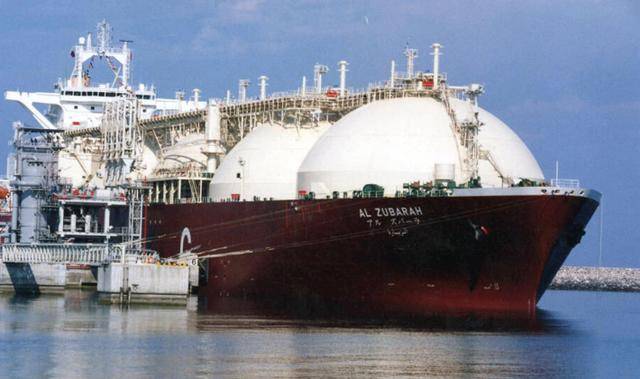
Core Viewpoint - The Trump administration's new "port fee" policy, effective from mid-October, imposes high charges on ships built and operated by China, raising concerns particularly in the liquefied natural gas (LNG) sector, which may undermine the U.S. energy strategy and economic stability [1][3][5]. LNG Industry Impact - The policy sets a fee of $50 per net ton for Chinese shipowners and operators, while other countries using Chinese-built vessels will incur charges of $18 per net ton or $120 per container [3]. - This will lead to increased transportation costs for the U.S. LNG industry, which is already facing challenges in maintaining its competitive edge globally [3][5]. - The American Petroleum Institute (API) has expressed strong opposition, highlighting the lack of sufficient U.S. shipbuilding capacity to meet LNG vessel demand, projecting that even with investment, U.S. shipyards cannot fulfill needs before 2029 [3][5]. Long-term Contract Stability - The new fees may disrupt existing long-term contracts and threaten the U.S.'s leadership in the global LNG market, increasing procurement costs for global buyers and destabilizing supply chains [5][7]. - The policy could exacerbate risks to the U.S. energy strategy, especially as the country has recently become the largest LNG exporter [5][7]. Shipbuilding Capacity Concerns - The requirement for using U.S.-built and flagged vessels for transporting U.S. LNG is deemed unrealistic, as current U.S. shipyards lack the technology and experience to construct LNG vessels in the short term [7]. - Experts believe that it would take decades for U.S. shipyards to meet market demands for LNG vessel construction, indicating a severe misjudgment by the Trump administration regarding the capabilities of the domestic shipbuilding industry [7][8]. Economic Consequences - The "port fee" policy is characterized as a "self-harming" decision that fails to address the underlying issues of the U.S. shipbuilding industry, potentially leading to more severe economic repercussions [8]. - A more open and cooperative role in the global economy is suggested as a more effective approach for long-term domestic economic growth, rather than imposing protective tariffs like the "port fee" [8].
智库要论丨赵忠秀:以开放包容应对保护主义 为全球经济注入确定性
Sou Hu Cai Jing· 2025-04-28 01:37
■赵忠秀 日前召开的中共中央政治局会议指出,统筹国内经济工作和国际经贸斗争,坚定不移办好自己的事,坚定不移扩大高水平对外开放,着力稳就业、稳企 业、稳市场、稳预期,以高质量发展的确定性应对外部环境急剧变化的不确定性。 当前,基于美国最新关税措施的实施,全球贸易紧张局势已显著升级,关税战和贸易战不断升级,严重损害以规则为基础的多边贸易体制和国际经贸秩 序,对全球贸易和产业链、供应链稳定造成了严重扰动,导致国际经贸秩序碎片化加剧。在此背景下,全球贸易增长动能明显不足,贸易不确定性大幅上 升。全球经济面临贸易流动扭曲、供应链梗阻、全球产业链碎片化等重大挑战。加征关税将加剧贸易紧张局势,同时,关税冲击压缩了贸易额,严重削弱 消费者、企业和投资者的信心,推高了市场波动率,对全球经济发展前景造成不利影响。经过多年的实践和发展,中国已经积累了丰富的应对关税冲击的 经验和能力,可以有效将贸易战带来的负面影响降至最低。中国作为全球第二大经济体和最大货物贸易出口国,肩负着维护全球贸易稳定以及承担起稳定 全球经济的重大责任,完全能够以更加主动的战略姿态,统筹国内国际两个大局,积极应对经济全球化分裂与贸易体系受损的风险。 关税博弈冲 ...

钢价逐步企稳反弹
Qi Huo Ri Bao· 2025-04-28 00:38
今年一季度国内经济数据表现超预期,房地产行业多项指标降幅显著收窄,基建与制造业投资增速明显 加快,内需表现出强劲韧性。当前钢价走弱的主要压力来自出口端:2月越南对中国钢材启动反倾销征 税措施,美国也在1—4月期间对中国商品加码关税。尽管关税对出口的后续影响仍存在不确定性,但目 前期货盘面已基本消化相关利空因素。考虑到未来关税方面存在谈判缓和空间,且国内政策有望进一步 加码,预计钢价已触及阶段性低点,短期将开启震荡反弹走势。 2025年1月至4月中旬,钢材价格呈震荡下行态势。这一阶段,铁水产量超出市场预期,但原材料供应整 体较为宽松。焦煤因库存高企,价格持续承压下跌;铁矿石除2月受飓风短暂扰动外,在高供应预期下 价格同样疲软,双重因素使钢材生产成本不断走低。 出口端的冲击同样显著。2月21日,越南宣布对原产于印度和中国的部分热轧钢产品征收临时反倾销 税,最高税率达27.83%。2025年一季度,美国不仅对中国商品加征20%的关税,还针对钢铁和铝进口额 外加征25%关税。进入4月,美国实施所谓"对等关税"政策。在贸易保护主义抬头的背景下,全球经济 前景不明,进一步加剧了钢材价格的下行压力。 4月钢材市场呈现结构性 ...
《搜狐网-琅琊新闻网》 2025全球贸易变局下,Voghion助力中国卖家破局欧洲市场
Sou Hu Cai Jing· 2025-04-28 00:16
Core Insights - The article highlights the challenges faced by traditional foreign trade enterprises in the U.S. due to new tariff policies, prompting Chinese sellers to seek emerging markets for growth. Voghion, a cross-border e-commerce platform focused on Europe, is positioned as a key player for these sellers to navigate global competition [1]. Group 1: Market Performance - Voghion has rapidly gained a foothold in the European market since its establishment in 2021, achieving a top ten ranking in app downloads within a month and surpassing 10,000 daily orders. By 2025, its operations have expanded to over 40 countries, including major markets like the UK, France, and Germany. In 2024, Voghion's app downloads in Europe exceeded 20 million, with over 4 million monthly active users and more than 20,000 cross-border sellers [3][6]. - The platform targets the middle-class demographic in Europe, focusing on a differentiated positioning of "quality and cost-effectiveness," successfully filling the market gap between low-cost fast fashion brands like SHEIN and high-priced standard products from Amazon [3]. Group 2: Competitive Strategy - Voghion leverages technology to enhance platform intelligence, utilizing AI algorithms for personalized user recommendations. For instance, it tailors product suggestions to French consumers' preferences for design and environmental sustainability, significantly increasing click-through rates for relevant categories [6]. - The platform employs a localization strategy, breaking language barriers with smart translation and providing customer service in over ten languages. It has established localized teams in key markets like Germany and France to optimize market penetration and resource integration [6]. Group 3: Support for Sellers - To assist Chinese sellers in overcoming trade barriers and reducing costs, Voghion has introduced a "zero-threshold entry + full-chain empowerment" policy, covering critical aspects from product selection to marketing [8]. - The platform utilizes big data analysis to identify growth opportunities and collaborates with over 40 Chinese industrial hubs to launch a "global small commodity express," prioritizing products with supply chain advantages [8]. - Voghion offers flexible cooperation models, including full and semi-managed options, with no entry fees or rent, catering to businesses of various sizes [9]. Group 4: Future Expansion - Amid rising trade protectionism, Voghion aims to deepen its presence in the European market while building competitive advantages and innovative support models for sellers. Its 2025 globalization strategy includes plans to expand into Southeast Asia and Latin America, promoting the integration of "Chinese manufacturing" into "global branding" [9].

国际观察丨多国媒体和专家批评美国滥施关税
Xin Hua She· 2025-04-27 22:52
"全球贸易战的始作俑者" ——多国媒体和专家批评美国滥施关税 科摩罗主流网络媒体科摩罗新闻网批评美国以"全球贸易警察"自居发起关税战,不仅是蓄意挑 衅,更是犯下战略错误,由此引发的经济紧张局势让世界变得十分脆弱。 克罗地亚经济分析师佩塔尔·武什科维奇表示,美国关税政策可能成为"全球经济衰退的导火索"。 从全球股市剧烈波动可以看出,经济衰退迹象已经显现,所有利益相关方都面临美国带来的风 险。 美国新一届政府上台后,推出一系列规模大、范围广、破坏性强的关税政策,引发国际社会广泛 批评。多国人士及国际舆论指出,美国单方面挑起全球贸易战并将关税工具化、武器化,美方霸 凌胁迫之举逆世界潮流而动,只会害人害己。 将世界经济置于危险境地 如果将一系列最新关税措施相叠加,美国关税税率将攀升至一个多世纪以来最高水平。不少媒体 报道说,美国在历史上屡次挑起贸易战,当前做法更是变本加厉。 彭博社刊文将美国称作"全球贸易战的始作俑者"。文章说,如果所谓"对等关税"全部生效,这将 是美国自1968年以来最大规模的一次加税,而"白宫没有任何后备措施来避免经济衰退"。 斯里兰卡卫报网刊文说,美国继近一个世纪前发动全球贸易战后,如今再次挥舞 ...

“全球经济需要一个运作良好、基于规则的贸易体系”(国际视点)
Ren Min Ri Bao· 2025-04-27 22:11
Group 1 - The article highlights that the U.S. imposition of tariffs is a form of unilateralism, protectionism, and economic bullying, which severely impacts the international economic and trade order, dragging down global economic growth and harming the U.S. economy itself [1] - The IMF's latest World Economic Outlook report has downgraded the global economic growth forecast for 2025 to 2.8%, a reduction of 0.5 percentage points from earlier predictions, primarily due to the U.S. government's announcement of tariffs affecting nearly all trade partners [2][3] - The report indicates that the U.S. economic growth rate is expected to slow to 1.8% in 2025, a decrease of 0.9 percentage points from previous forecasts, marking the largest downgrade among developed economies [2][3] Group 2 - The IMF predicts that global trade growth will decline from 3.8% last year to 1.7% this year, a drop of more than half, due to the negative impacts of tariffs on the complex global supply chain [3] - The IMF also warns that global public debt as a percentage of GDP is expected to exceed 95% this year, rising by 2.8 percentage points, with potential to reach 117% by 2027, the highest level since World War II [3] Group 3 - A coalition of 12 U.S. states has filed a lawsuit against the federal government, claiming that the tariff policy is illegal and disrupts the constitutional order, leading to economic chaos [4] - The lawsuit argues that the tariffs impose significant tax burdens on families and businesses, with warnings from state attorneys general about potential inflation and economic losses if the tariffs continue [4] Group 4 - Recent data from the University of Michigan shows that the one-year inflation expectation in the U.S. has risen to 6.7%, the highest since 1981, indicating that new tariffs may push consumer prices higher while suppressing economic activity [5] - Polls indicate a decline in support for the U.S. government since the introduction of the tariff policy, with only 40% approval and 59% of the public disapproving of the tariff measures [6] Group 5 - Analysts warn that the U.S. tariff policy could undermine the dollar's status as a safe-haven currency, with potential implications for global financial markets [7] - The report from Boston Consulting Group suggests that the tariffs not only increase costs for U.S. businesses and consumers but also signal a shift towards a new era of trade relations, potentially excluding the U.S. from traditional partnerships [7] Group 6 - The uncertainty surrounding trade policies is expected to significantly suppress trade flows, reduce exports, and weaken economic activity, as stated by the chief economist of the WTO [8] - The IMF calls for stable and mutually beneficial trade arrangements to restore order in trade policies, emphasizing the need for a well-functioning, rules-based trade system for the global economy [8]
特朗普关税冲击美国货运量,评级机构下调美国港口展望至“负面”
Di Yi Cai Jing· 2025-04-27 09:06
Group 1 - Moody's predicts a decline in U.S. freight volume between 7% and 12% by 2025, downgrading the outlook for U.S. ports from "stable" to "negative" [1][3] - The World Trade Organization (WTO) forecasts a significant drop in North American exports by 12.6% and imports by 9.6% due to recent tariff and trade policy uncertainties [1] - The CEO of the Port of Long Beach, Mario Cordero, anticipates a 44% decrease in the number of vessels arriving during the week of May 4-10 compared to the same period last year [3] Group 2 - The Los Angeles County Economic Development Corporation reports that the region could lose approximately $500 billion in revenue and threaten 2 million jobs due to U.S. tariff policies [5] - Drewry, a global shipping analysis firm, expects a 1% decline in global container shipping volume, marking only the third occurrence of such a decline since 1979 [6][8] - Shipping expert John McCown predicts that U.S. freight volume growth will be significantly lower in 2025 compared to 2024, with a potential double-digit decline if current tariffs persist [8] Group 3 - Moody's emphasizes that the impact of tariffs will become more pronounced after May, affecting import costs and reducing import volumes [10][11] - The International Monetary Fund (IMF) projects a decrease in U.S. economic growth to 1.8% in 2025, which could further weaken trade volumes [11] - Despite a significant reduction in freight volume, trans-Pacific freight rates have remained stable due to a high number of empty vessels sailing [12]