主权AI

Search documents
小摩:HBM短缺料延续至2027年 AI芯片+主权AI双轮驱动增长
Zhi Tong Cai Jing· 2025-07-07 09:13
Core Viewpoint - The HBM (High Bandwidth Memory) market is expected to experience tight supply and demand until 2027, driven by technological iterations and AI demand, with SK Hynix and Micron leading the market due to their technological and capacity advantages [1][2]. Supply and Demand Trends - HBM supply tightness is projected to persist through 2027, with a gradual easing of oversupply expected in 2026-2027. Channel inventory is anticipated to increase by 1-2 weeks, reaching a healthy level [2]. - The delay in Samsung's HBM certification and the strong demand growth from NVIDIA's Rubin GPU are the main factors contributing to the current supply-demand tension [2]. - HBM4 supply is expected to significantly increase by 2026, accounting for 30% of total bit supply, with HBM4 and HBM4E combined expected to exceed 70% by 2027 [2]. Demand Drivers - HBM bit demand is forecasted to accelerate again in 2027, primarily driven by the Vera Rubin GPU and AMD MI400 [3]. - From 2024 to 2027, the CAGR for bit demand from ASICs, NVIDIA, and AMD is projected to exceed 50%, with NVIDIA expected to dominate demand growth [3]. - Sovereign AI demand is emerging as a key structural driver, with various countries investing heavily in national AI infrastructure to ensure data sovereignty and security [3]. Pricing and Cost Structure - Recent discussions around HBM pricing are influenced by Samsung's aggressive pricing strategy to capture market share in HBM3E and HBM4 [4]. - HBM4 is expected to have a price premium of 30-40% over HBM3E12Hi to compensate for higher costs, with logic chip costs being a significant factor [4]. Market Landscape - SK Hynix is expected to lead the HBM market, while Micron is likely to gain market share due to its capacity expansion efforts in Taiwan and Singapore [5]. - Micron's HBM revenue grew by 50% quarter-over-quarter, with a revenue run rate of $1.5 billion, indicating a stronger revenue-capacity conversion trend compared to Samsung [6]. Industry Impact - HBM is driving the DRAM industry into a five-year upcycle, with HBM expected to account for 19% of DRAM revenue in 2024 and 56% by 2030 [7]. - The average selling price (ASP) of DRAM is projected to grow at a CAGR of 3% from 2025 to 2030, primarily driven by the increasing sales proportion of HBM [7]. - Capital expenditures for HBM are expected to continue growing, as memory manufacturers focus on expanding capacity to meet rising HBM demand [7].

开源证券晨会纪要-20250701
KAIYUAN SECURITIES· 2025-07-01 14:45
| 昨日涨跌幅后五行业 | | --- | 2025 年 07 月 02 日 他 研 究 开源晨会 0702 ——晨会纪要 沪深300 及创业板指数近1年走势 数据来源:聚源 -16% 0% 16% 32% 48% 64% 2024-07 2024-11 2025-03 沪深300 创业板指 昨日涨跌幅前五行业 | 行业名称 | 涨跌幅(%) | | --- | --- | | 综合 | 2.601 | | 医药生物 | 1.804 | | 银行 | 1.535 | | 有色金属 | 1.489 | | 公用事业 | 1.046 | | 数据来源:聚源 | | | 行业名称 | 涨跌幅(%) | | --- | --- | | 计算机 | -1.182 | | 商贸零售 | -0.788 | | 通信 | -0.452 | | 传媒 | -0.376 | | 电力设备 | -0.373 | 数据来源:聚源 吴梦迪(分析师) wumengdi@kysec.cn 证书编号:S0790521070001 观点精粹 总量视角 【宏观经济】"两重"接力支撑 PMI,预计 Q2 GDP 约 5.2%——兼评 6 月 PM ...

OpenAI亲自“点名”:中国智谱AI成全球头号威胁,AI战全面升级!
Sou Hu Cai Jing· 2025-06-29 15:17
Core Insights - OpenAI's report highlights Zhipu AI as a key competitor in the sovereign AI landscape, indicating a shift in global AI power dynamics driven by China's technological sovereignty [1][4][11] - Zhipu AI's strategy includes a hybrid architecture and a comprehensive ecosystem that mirrors OpenAI's approach, focusing on developer APIs, enterprise solutions, and consumer AI applications [3][4] - The report emphasizes Zhipu AI's significant state capital support exceeding $1.4 billion and its collaboration with major players like Huawei, positioning it similarly to OpenAI's relationship with Microsoft [4][9] Group 1 - Zhipu AI is recognized for its "responsible and transparent" AI solutions, which are seen as a direct challenge to the centralized models of American companies [1][7] - The company has developed a "sovereign toolbox" that includes local data storage and partnerships in various countries, enhancing its global reach and compliance with local regulations [7][9] - Zhipu AI's rise is supported by strategic investments from entities like Saudi Arabia's Prosperity7 fund, indicating a shift towards a decentralized AI ecosystem [7][9][14] Group 2 - OpenAI's concerns center around the concept of "sovereign AI," which refers to a nation's ability to control its AI infrastructure and data, contrasting with OpenAI's reliance on centralized cloud services [7][11] - The report serves as a strategic alert to the U.S. government, suggesting that without national-level support, American companies may struggle against state-backed competitors like Zhipu AI [11][12] - Zhipu AI's emergence reflects a broader geopolitical strategy, where technology sovereignty is viewed as a critical competitive advantage in the digital age [14]


一夜涨超1万亿元!英伟达市值重回全球第一,黄仁勋透露重磅信号
21世纪经济报道· 2025-06-26 04:29
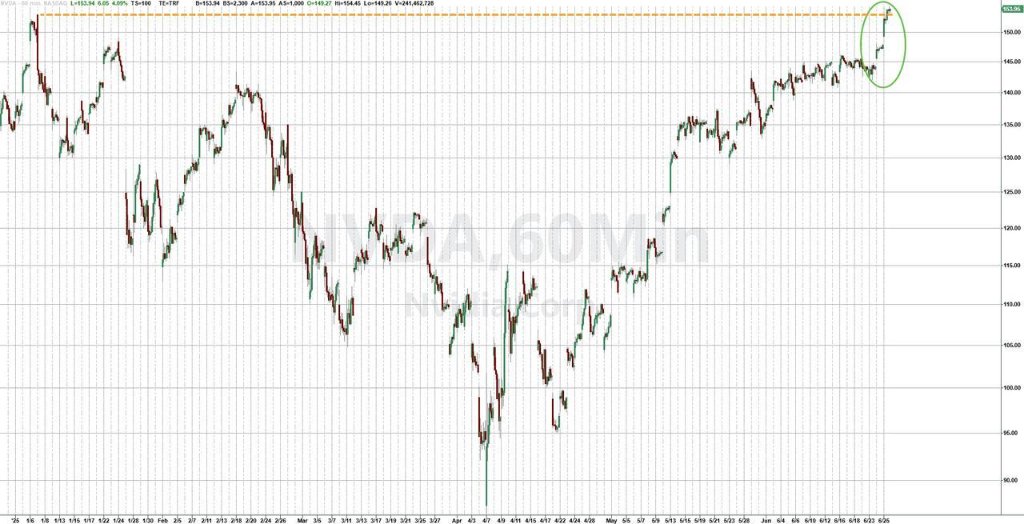
Core Viewpoint - Nvidia's stock surged 4.3% to a record high of $154.31, solidifying its position as the world's most valuable company with a market cap of approximately $3.77 trillion, surpassing Microsoft [1][2] Group 1: Financial Performance - Nvidia's revenue for Q1 of the fiscal year reached $44.06 billion, a 69% year-over-year increase; GAAP net profit was $18.78 billion, up 26%; Non-GAAP diluted earnings per share were $0.81, reflecting a 33% growth [7] Group 2: Strategic Initiatives - Nvidia is entering a "decade-long AI infrastructure construction cycle," with a focus on AI and robotics as major growth opportunities, representing a multi-trillion dollar market [4][6] - The company plans to release new AI chips annually to meet the increasing demand for model inference and training [5] - Nvidia is accelerating its efforts in sovereign AI and large-scale government collaborations to strengthen global infrastructure and mitigate the impact of export controls [7] Group 3: Market Position and Competition - Loop Capital predicts Nvidia's market value could reach $6 trillion, with analyst Ananda Baruah raising the target price from $175 to $250, the highest on Wall Street [3] - Despite facing challenges such as export restrictions to China and increasing competition from companies like AMD, Google, and Amazon, Nvidia maintains a strong position in high-end AI chip performance [9] - Nvidia's transition from a "chip company" to an "AI infrastructure platform provider" is deepening its ecosystem, which includes GPUs, CUDA platforms, software services, and data center support [8] Group 4: Robotics Focus - Nvidia is targeting the robotics sector, emphasizing the arrival of the "era of general-purpose robots," with ambitions extending to various types of robots, including agentic robots, autonomous vehicles, and humanoid robots [6]
英伟达股价历史新高 股东大会传递哪些信号?
2 1 Shi Ji Jing Ji Bao Dao· 2025-06-26 04:24
Core Viewpoint - Nvidia's stock surged 4.3% to a record high of $154.31, with a market capitalization of approximately $3.77 trillion, solidifying its position as the world's most valuable company, surpassing Microsoft [1] Group 1: Financial Performance - For Q1 of the fiscal year 2026, Nvidia reported revenue of $44.06 billion, a year-on-year increase of 69% [3] - GAAP net profit reached $18.78 billion, up 26% year-on-year, while Non-GAAP diluted earnings per share were $0.81, reflecting a 33% increase [3] Group 2: Strategic Initiatives - Nvidia is transitioning to an AI infrastructure company, emphasizing the importance of sovereign AI and accelerating global AI infrastructure deployment [2][3] - The company plans to release new AI chips annually, with preparations for the Blackwell and Vera Rubin series to meet growing model inference and training demands [2] Group 3: Market Position and Competition - Nvidia is positioned at the forefront of the "golden wave" of generative AI adoption, with analysts predicting its market value could reach $6 trillion [1] - Despite facing competition from AMD, Google, and Amazon, Nvidia maintains a stronghold in high-end AI chip performance, although the competitive landscape is intensifying [4] Group 4: Future Outlook - Nvidia's CEO highlighted the beginning of a "decade-long AI infrastructure construction cycle," identifying AI and robotics as significant growth opportunities worth trillions of dollars [1][2] - The company is expanding its global market presence and aims to mitigate the impact of export restrictions by enhancing its AI infrastructure ecosystem [3]

AI龙头归来!股东会当日,英伟达创出新高
Hua Er Jie Jian Wen· 2025-06-26 00:32
Core Insights - Nvidia's stock price surged 4.3% to $154.31, reaching a historic high and reclaiming the title of the world's most valuable company with a market capitalization of $3.77 trillion, surpassing Microsoft [1] - The recovery from earlier losses of $1.4 trillion signifies a complete rebound for the chip giant [1][6] Group 1: Market Dynamics - The stock surge is attributed to optimistic statements from CEO Jensen Huang during Nvidia's annual shareholder meeting, highlighting the potential of AI and robotics, which he claims could create "trillions of dollars in opportunities" [3][4] - There is a growing demand for "sovereign AI," positioning Nvidia at the forefront of a decade-long AI infrastructure buildout [4] Group 2: AI Demand and Financial Performance - Nvidia's stock rebound reflects market recognition of sustained AI demand, with Microsoft reporting a fivefold increase in AI model requests compared to the previous year [5] - CoreWeave, an AI company supported by Nvidia, has seen its stock rise over 300% since its Nasdaq listing in March, indicating strong long-term growth prospects in the AI sector [5] Group 3: Recovery and Future Outlook - Nvidia's market capitalization has rebounded by approximately $1.42 trillion since its low of $94.21 in April, recovering from a 37% decline earlier this year [6] - Analysts from Barclays have raised Nvidia's target price to $200, suggesting a potential market cap of $4.9 trillion, indicating a 38% upside from current levels [7] Group 4: Strategic Initiatives - Nvidia plans to release a new AI chip annually and has signed agreements for sovereign infrastructure with countries like Saudi Arabia and the UAE, showcasing its global ambitions [8]
ASIC大热,英伟达慌吗?
半导体行业观察· 2025-06-23 02:08
Core Viewpoint - Meta is entering the ASIC market to compete with Nvidia, with plans to launch millions of high-performance AI ASIC chips by 2026, potentially challenging Nvidia's long-standing market dominance [1][2]. Group 1: Meta's MTIA Plans - Meta's MTIA project aims to release its first ASIC chip, MTIA T-V1, in Q4 2025, designed by Broadcom with a complex 36-layer PCB and hybrid cooling technology [3][8]. - By mid-2026, the MTIA T-V1.5 will double in chip area and approach Nvidia's GB200 system in computational density [3][8]. - The MTIA T-V2, expected in 2027, will feature larger CoWoS packaging and a high-power (170KW) rack design [3][8]. Group 2: ASIC Market Rise - Nvidia currently holds over 80% of the AI server market, while ASICs account for only 8-11% [7]. - By 2025, Google's TPU shipments are projected to reach 1.5-2 million units, and AWS's Trainium 2 ASICs are expected to be around 1.4-1.5 million units, potentially matching Nvidia's GPU shipments [2][15]. - With Meta and Microsoft set to deploy their ASIC solutions, total ASIC shipments may surpass Nvidia's GPU shipments by 2026 [2][15]. Group 3: Challenges and Risks - Meta's goal of 1-1.5 million ASIC shipments by late 2025 to 2026 may face delays due to wafer allocation limitations, which currently support only 300,000 to 400,000 units [4][15]. - The technical challenges of large CoWoS packaging and system debugging, which can take 6-9 months, add uncertainty to Meta's plans [4][15]. - A simultaneous acceleration in deployment by Meta, AWS, and other cloud service providers could lead to shortages of high-end materials and components, increasing costs [4][15]. Group 4: Nvidia's Advantages - Nvidia is not idle; it has introduced NVLink Fusion technology to strengthen its market position by allowing seamless connections between third-party CPUs or xPUs and its AI GPUs [5][15]. - Nvidia maintains a lead in chip computational density and interconnect technology, making it difficult for ASICs to catch up in the short term [5][15]. - The CUDA ecosystem remains the preferred choice for enterprise AI solutions, presenting a significant barrier for ASICs to overcome [5][15].

电子行业周报:Marvell强调定制计算将引领AI芯片革命,DDR4内存价格罕见暴涨-20250622
Huaxin Securities· 2025-06-22 08:34
Investment Rating - The report maintains a "Buy" rating for several companies, including 德明利 (Demingli), 天孚通信 (Tianfu Communication), 新易盛 (Xinyi Sheng), and 太辰光 (Taicheng Light) [10][22]. Core Insights - Marvell emphasizes that customized computing will lead the AI chip revolution, with a significant increase in the projected total addressable market (TAM) for data centers from $75 billion to $94 billion by 2028, with a compound annual growth rate (CAGR) of 47% for custom XPU chips [5][20]. - DDR4 memory prices have surged nearly 8% in a single day, marking the largest daily increase in nearly a decade, driven by supply constraints and panic buying [8][21]. Summary by Sections Market Performance - The electronic industry saw a 0.95% increase from June 16 to June 20, ranking third among sectors, with a price-to-earnings (P/E) ratio of 49.86 [2][31]. - The semiconductor equipment and printed circuit board segments experienced the highest gains during this period [35]. Company Focus and Earnings Forecast - Marvell has secured 18 custom projects and is in discussions for over 50 more, with potential revenue scaling up to $75 billion [5][20]. - The report suggests focusing on AI computing-related stocks such as 胜宏科技 (Shenghong Technology), 沪电股份 (Hudian Co.), and 深南电路 (Shennan Circuit) [7][20]. DDR4 Memory Market Dynamics - The average price for DDR4 8Gb and 16Gb models increased by 7.8% and 7.9%, respectively, returning to early 2022 levels [8][21]. - The report anticipates that if major manufacturers continue to reduce DDR4 supply, high price volatility may become the new norm [8][21]. Key Companies and Valuation - The report includes a detailed table of key companies with their earnings per share (EPS) and P/E ratios, highlighting companies like 兆易创新 (Zhaoyi Innovation) and 源杰科技 (Yuanjie Technology) with "Buy" ratings [10][22].
上调AI定制芯片市场目标、算力持续增加,英伟达的对手发起挑战
Di Yi Cai Jing· 2025-06-20 10:20
Core Insights - Nvidia maintains a strong position in the AI chip market with a gross margin exceeding 60%, but clients are seeking alternatives to reduce dependency on Nvidia's GPUs [1][5][6] - Major ASIC chip manufacturers like Marvell and Broadcom are ramping up efforts to develop custom AI chips, targeting significant market growth by 2028 [3][4] Group 1: Market Dynamics - AMD has launched the MI350 AI chip series, claiming superior performance compared to Nvidia, indicating increasing competition in the GPU market [1] - Marvell has revised its 2028 data center market size forecast from $75 billion to $94 billion, with a compound annual growth rate (CAGR) of 35% [3] - Marvell's target market for custom AI chips has been increased to $55 billion from $43 billion, reflecting growing demand [3] Group 2: Competitive Landscape - Marvell has secured 18 custom chip projects and is negotiating over 50 more, aiming to increase its market share in custom computing and components from below 5% in 2023 to 20% by 2028 [3] - Broadcom reported AI revenue exceeding $4.4 billion in Q2 of FY2025, with expectations of growth to $5.1 billion in Q3, marking ten consecutive quarters of growth [4] - Cloud providers are increasingly collaborating with ASIC manufacturers to develop their own AI chips, which is causing concern for Nvidia [4][5] Group 3: Technological Developments - Google has significantly advanced its TPU capabilities, with peak performance reaching 4,614 TOPS and plans to scale up to 9,200 chips for parallel processing [5] - Nvidia is responding to competitive pressures by opening its NVLink ecosystem to allow ASICs to run on its platform, aiming to maintain its dominance in AI cloud computing [6] - Nvidia is also promoting "sovereign AI" initiatives globally, including plans to build an industrial AI cloud in Germany with 10,000 Blackwell GPUs [6] Group 4: Industry Growth - Nvidia's growth has been a major driver for the semiconductor IC industry, with a reported revenue growth rate of 125% compared to a maximum of 21% for other top fabless companies [6] - The semiconductor IC industry is expected to grow by approximately 19% in 2025, benefiting from strong demand and preemptive inventory stocking [7]
各国都渴望“主权AI”,结果反而加强了对大国的依赖
财富FORTUNE· 2025-06-19 13:01
Core Viewpoint - The article discusses the paradox of "sovereign AI," highlighting that countries aiming for independence in AI technology are increasingly dependent on major powers for essential components like chips and software [1][2][3]. Group 1: Sovereign AI Investments - The UAE announced a $20 billion investment in OpenAI's "UAE Stargate" project, which aims to create a "sovereign AI" but relies entirely on American technology [1]. - Countries like France and India are also investing heavily in their own AI models, such as France's Mistral and India's BharatGPT, yet they remain dependent on global technology [1][2]. Group 2: AI Infrastructure and Dependencies - The most challenging aspect of AI model development is the model weights, which are updated more frequently than policy cycles, indicating a reliance on foreign infrastructure for AI deployment [2][3]. - France's Mistral model was initially seen as a breakthrough for European sovereign AI but was quickly surpassed by more efficient Chinese open-source models, demonstrating the deep interdependence in technology [2][3]. Group 3: Digital Colonialism - The article argues that a new form of "digital colonialism" is emerging, where countries are structurally bound to major powers through dependencies in AI technology, despite having control over model weights [3][4]. - Countries may run their models locally, but they still rely on American hardware, software, and intermediary technologies, masking the complex web of dependencies [3][4]. Group 4: Strategic Infrastructure Investment - To achieve true autonomy in AI, countries need to invest in local data capabilities, security systems, and open-source technologies rather than just developing large models [4][5]. - The article emphasizes that a vibrant AI industry depends on local tools, standards, and infrastructure, which only the US and China have successfully developed so far [4][5]. Group 5: The Illusion of Sovereign AI - The pursuit of "sovereign AI" reflects a misunderstanding of modern technology's nature, as AI relies on global flows of data, chips, software, and talent [4][5]. - Countries face a choice between spending large sums for a false sense of security or investing in strategic infrastructure to reduce foreign dependency [5].