
绿色转型

Search documents
以责任铸就品牌力量,东风汽车践行央企担当
Zhong Guo Qi Che Bao Wang· 2025-10-22 03:30
Core Viewpoint - Dongfeng Motor Corporation is committed to integrating ESG management into its strategic and operational processes, aiming to establish a sustainable development benchmark and enhance its corporate responsibility brand image [1][2]. Group 1: Responsibility Brand Construction - The concept of "responsibility brand" has gained deeper strategic significance in the new era, with Dongfeng summarizing its core competitiveness as "responsibility + green + innovation" [2]. - Dongfeng's responsibility brand initiative began with the "Run" plan launched in 2012, evolving through various actions to integrate responsibility into its operations [2][5]. - In 2024, Dongfeng ranked 8th among China's top 300 enterprises in social responsibility development index and 6th among state-owned enterprises [5]. Group 2: Green Transformation - Dongfeng has set ambitious goals to achieve carbon peak by 2028 and carbon neutrality by 2050, focusing on energy conservation and emission reduction across its entire lifecycle and supply chain [9]. - The company has 15 units recognized as national green factories, and its Dongfeng Warrior Technology Park has implemented solar panels to reduce carbon emissions by 4,600 tons annually [9][12]. - Dongfeng's self-developed Maher powertrain has an efficiency exceeding 48%, significantly reducing carbon emissions compared to traditional fuel vehicles [12]. Group 3: Product Development and Innovation - Dongfeng has developed a comprehensive lineup of 48 new energy vehicle models, with the Dongfeng Yipai Nano 01 recognized as a "2024 Low Carbon Leader" [15]. - The company emphasizes technological innovation, with breakthroughs in hydrogen fuel cell technology and a focus on lightweight materials to enhance sustainability [12][15]. Group 4: Social Responsibility and Community Engagement - Dongfeng has established a 300-kilometer emergency resource circle to respond to public crises, demonstrating its commitment to social responsibility [24]. - The "Dongfeng Dream Car" competition has generated over 1,000 innovative works and influenced over 20 million university students, contributing to talent development [17][19]. Group 5: International Expansion and Global Responsibility - Dongfeng exports to over 150 countries, with cumulative overseas sales exceeding 1.5 million units, showcasing its global reach [25]. - The company has organized training for 150 international trainees, enhancing local service capabilities and promoting sustainable development [29].


渤海钻探“双轮驱动 管具井控温暖防线前置 泥浆公司节支增效
Zhong Guo Hua Gong Bao· 2025-10-22 02:17
Core Viewpoint - The company is driving cost reduction and efficiency improvement through technological innovation and green transformation, focusing on sustainable practices and advanced equipment to enhance operational effectiveness [1][2][3]. Group 1: Technological Innovation - The company has successfully implemented rainwater harvesting techniques to reduce water sourcing costs, showcasing a commitment to cost-saving measures [1]. - A new "transformable" camp facility has been introduced, reducing transportation costs by over 1 million yuan for international projects due to its compact design [1]. - The installation of an "electronic wireless intelligent display device" in drilling operations has significantly improved data collection efficiency, enhancing operational precision [2]. - The development of a "mechanical turntable oscillation function" has increased drilling efficiency by over 10% by allowing for more precise directional drilling [2]. Group 2: Green Transformation - The company has established a solar power station generating approximately 500,000 kWh annually, contributing to its green energy initiatives [3]. - The implementation of "electricity instead of oil" technology has led to a cumulative electricity usage of 59.35 million kWh this year, resulting in a reduction of 13,100 tons of CO2 emissions [3]. - The company emphasizes the importance of employee-driven innovation, fostering a culture that encourages practical solutions to enhance efficiency and reduce costs [3]. Group 3: Winter Production Preparedness - The company has proactively planned for winter production by implementing insulation measures for equipment to ensure stable operation in low temperatures [4][5]. - A comprehensive winter prevention strategy has been established, focusing on early implementation and precise execution to avoid last-minute actions [4]. - Daily inspections are conducted to ensure the effectiveness of insulation measures, maintaining a 100% equipment integrity rate during winter operations [5]. Group 4: Cost Management in Mud Company - The mud company is focusing on "four precisions, four stricts, and two enhancements" to optimize material cost management and ensure high-quality supply [6]. - A detailed procurement plan has been developed to shift from a product-oriented to a technology-oriented approach, reducing secondary costs [6]. - Strict quality control measures are in place to prevent cost overruns, including rigorous supplier evaluations and environmental compliance checks [7].

“即使美国征收港口费,中国造船厂依然比竞争对手更具优势”
Sou Hu Cai Jing· 2025-10-22 00:40
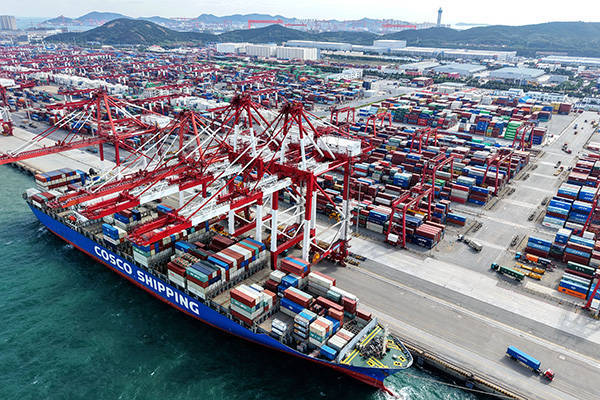
Core Viewpoint - The ongoing port fee dispute between the U.S. and China has significant implications for the global shipping industry, with Chinese shipbuilding maintaining a competitive edge despite increased costs imposed by the U.S. [1][6] Group 1: Shipping Industry Dynamics - The Canadian shipping company Seaspan has expressed confidence in China's shipbuilding industry, having ordered over 170 vessels in the past four years, with 158 built by Chinese shipyards, totaling approximately $20.8 billion [1] - The shipping industry is transitioning towards low-emission fuels such as liquefied natural gas and methanol, with a focus on green methanol produced from renewable energy, which could further enhance China's competitive advantage [1][2] - China is the largest market in the shipping industry, accounting for about 31% of global shipping volume, while the U.S. accounts for only 12% [5] Group 2: Economic Indicators and Projections - The Chinese Ministry of Transport projects a 9.5% year-on-year growth in fixed asset investment in water and land transport for 2024, with cargo throughput expected to reach 1.76 billion tons and container throughput 33 million TEUs, reflecting growth rates of 4.7%, 3.7%, and 7% respectively [5] - From January to August, key shipping metrics in China continued to show growth, with year-on-year increases of 3.8%, 4.4%, and 6.3% [5] - China's shipbuilding industry maintains a leading global market share, with completed shipbuilding volume at 38.53 million deadweight tons, a 6.0% increase year-on-year, and a hand-held order volume of 242.24 million deadweight tons, up 25.3% [5] Group 3: Geopolitical Context - The U.S. has imposed additional port fees on Chinese vessels as part of a broader strategy to counter China's maritime dominance, but this has not significantly deterred shipping companies from ordering vessels from Chinese shipyards [6][7] - The Chinese government has responded with countermeasures, implementing special port fees on U.S. vessels starting October 14, emphasizing its commitment to protect its shipping and shipbuilding industries [6][7]
绿色发展底色更加鲜亮
Shan Xi Ri Bao· 2025-10-21 23:11
Core Insights - The ecological quality index in the Shaanxi section of the Qinling Mountains is expected to reach the highest category "Class I" in 2024, with over 99% of the area classified as good quality [1] - The water quality in the Yangtze River basin in Shaanxi has reached Class II or above, while the main stream of the Yellow River in Shaanxi has maintained Class II water quality for three consecutive years [1] - Shaanxi has firmly committed to an ecological priority and green low-carbon development path since the 14th Five-Year Plan, achieving historic improvements in ecological environment quality [1][2] Systematic Governance - The Yanhe River, an important tributary of the Yellow River, has undergone significant improvements in water quality due to the implementation of the "river chief system" and legal regulations [3] - As of 2024, Yan'an City has completely eliminated inferior V water bodies, achieving a 100% elimination rate of black and odorous water bodies in urban areas [3] - The comprehensive air quality index in Shaanxi has decreased from 4.39 in 2020 to 3.88 in 2024, marking an 11.6% reduction [4] Ecological Restoration - The successful protection of the endangered crested ibis in Shaanxi reflects the effectiveness of ecological restoration efforts, with the population increasing from 7 to over 7,000 [5] - By September 30, 2024, the ecological restoration area in the Qinling Mountains has reached 583,800 acres, with riverbank restoration covering 709 kilometers [5][6] - Shaanxi has constructed and reinforced 3,585 silt dams and implemented comprehensive soil erosion control over 1.72 million square kilometers [6] Green Transformation - The transformation of Wuqi County's Nanguo Village from barren land to a thriving ecological economy showcases the successful integration of ecological governance and industrial development [7] - In Yangxian County, the protection of the crested ibis has led to the development of an organic industry, with the organic industry output value exceeding 5.5 billion yuan in 2024 [8] - Yulin City has explored the integration of carbon trading and specialty industries through afforestation efforts, achieving a total output value of over 12.16 billion yuan in the forestry and grassland industry [9]
“向新逐绿”成制造业走强核心密码
Zheng Quan Ri Bao· 2025-10-21 16:23
Core Insights - The data released by the National Bureau of Statistics indicates significant growth in specific manufacturing sectors, with lithium-ion battery manufacturing, shipbuilding, and electric motor manufacturing increasing by 29.8%, 22.9%, and 17.1% respectively, all surpassing the overall industrial growth rate of 6.2% [1][2] Group 1: Policy and Innovation - The combination of policy support and technological innovation is strengthening the foundation for development, with policies promoting smart and green manufacturing driving production expansion and technological iteration [2] - The high growth in lithium-ion battery manufacturing is attributed to technological breakthroughs in energy density improvement and cost reduction, showcasing the impact of innovation on green technology applications [2] Group 2: Global Green Demand - The global shift towards green technologies is creating robust demand, particularly in the lithium battery sector, where the sales of new energy vehicles reached 11.228 million units, a year-on-year increase of 34.9%, and energy storage battery shipments reached 430 GWh, growing over 30% [4] - China's exports of new energy vehicles reached 1.758 million units from January to September, marking an 89.4% increase, highlighting the competitive edge of Chinese green products in international markets [4] Group 3: Industry Collaboration - The three highlighted industries are not developing in isolation but are creating a synergistic effect within the green industrial chain, with lithium battery technology enabling the electrification of ships and electric motor efficiency improvements aiding battery energy savings [5] - The collaborative model across the lithium battery, shipbuilding, and electric motor sectors is transforming scattered resources into concentrated advantages, facilitating systemic breakthroughs in technology and efficiency [5]
特朗普制裁大棒挥不动了!微妙关头,中欧日印带头,63国投下赞成票,宣告美国霸权正式过时
Sou Hu Cai Jing· 2025-10-21 14:00
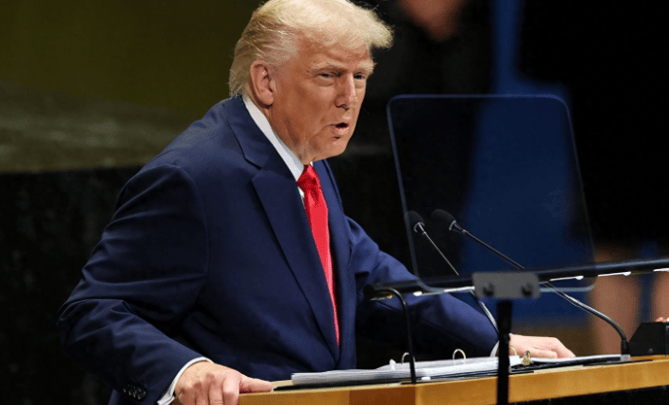
Core Viewpoint - The International Maritime Organization (IMO) is considering a global carbon tax framework for the shipping industry, which would impose penalties on ships exceeding carbon emission standards, marking a significant step towards industry-wide carbon pricing and reduction [1][3]. Summary by Sections Carbon Tax Framework - The carbon tax framework was initially voted on in April, with 63 countries supporting it, including major players like China, the EU, Japan, and India, while 16 countries, primarily oil-dependent nations like Saudi Arabia and Russia, opposed it [3]. - The framework mandates a gradual reduction of carbon emissions starting in 2028, aiming for zero emissions by 2050, with penalties for ships over 5,000 tons that exceed emission limits [3][5]. - Revenue from penalties will be allocated to the "IMO Net Zero Fund" to assist developing countries in technological innovation and infrastructure development for emission reduction [3]. U.S. Response - The U.S. response, particularly from former President Trump, reflects concerns over the potential economic impact on American shipping and oil industries, as the U.S. lacks the technology for mass production of green ships [5][6]. - Trump threatened sanctions against countries supporting the carbon tax framework, including port access restrictions and visa limitations, but these threats are seen as ineffective given the strong support for the framework among other nations [5][7]. Support for the Framework - Countries like China support the framework due to its alignment with their environmental goals and the potential to enhance their position in the global green shipping market [6]. - The EU, Japan, and India also back the framework, with various shipping associations representing a quarter of the global fleet advocating for its adoption [6][7]. Implications of the Framework - If implemented, the framework is expected to accelerate the transition from oil-based fuels to cleaner alternatives like methanol and ammonia in the shipping industry by 2027 [10]. - The framework's eventual approval seems likely, as it has already surpassed the two-thirds majority threshold required by the IMO, despite delays caused by U.S. opposition [8][10].
“风光”无限的背后,一度绿电的“最后一公里”有多难?
2 1 Shi Ji Jing Ji Bao Dao· 2025-10-21 11:48
Core Viewpoint - The trend of transitioning to green energy sources such as solar and wind to replace traditional energy will continue, despite existing challenges in green electricity consumption [1] Group 1: Green Electricity Consumption - The definition of green electricity consumption needs to be clarified, focusing on wind and solar power in the context of China [1] - Currently, most of the new electricity demand is being met by the addition of wind and solar power, but it has not yet reached a stage where it can significantly replace existing fossil fuel generation [1] Group 2: Challenges in Green Electricity Consumption - Two main factors restrict green electricity consumption: system costs and stability issues, and the consumption mechanism [1] - Although the cost of green electricity has decreased, its volatility requires flexible resources from the power system, resulting in higher total costs compared to traditional energy generation [1] - The responsibility for green electricity consumption is assigned to the "consumption side," with the national energy authority delegating responsibilities to provincial governments and ultimately to enterprises, especially high-energy-consuming companies [1] Group 3: Mechanisms to Promote Green Electricity Consumption - Companies can fulfill their consumption responsibilities through physical consumption (direct use of green electricity) or by purchasing "green certificates" [1] - A green certificate trading market has been established to encourage voluntary purchases by individuals [1] - Promoting green electricity consumption requires a combination of encouragement, enforcement, and market mechanisms, with ongoing improvements in related policies and market designs in China [1]
【行业ESG周报】全球妇女峰会在北京成功举办,2024年大气中二氧化碳水平创历史新高-20251021
GUOTAI HAITONG SECURITIES· 2025-10-21 11:14
Investment Rating - The report does not provide a specific investment rating for the industry Core Insights - The report highlights significant developments in ESG policies and initiatives, emphasizing the importance of sustainable practices in various sectors [5][7][10] - The successful hosting of the Global Women's Summit in Beijing underscores China's commitment to gender equality and sustainable development [10][14] - The 2025 Sustainable Global Leaders Conference in Shanghai aims to address global challenges through innovation and sustainable growth [15][17] - The release of the 2025 China Listed Companies Social Responsibility Index indicates a growing emphasis on corporate social responsibility among Chinese firms [18][22] - The World Meteorological Organization reports a record high level of carbon dioxide in the atmosphere for 2024, highlighting urgent climate challenges [23][24] - The UN Environment Programme calls for a significant increase in forest investment to combat climate change and protect vital ecosystems [27][28] Policy Developments - The China Securities Regulatory Commission has revised the Corporate Governance Code to enhance the governance of listed companies, effective from January 1, 2026 [5][6][7] - A joint statement between China and Iceland emphasizes cooperation in geothermal energy and green transformation, addressing climate change collaboratively [8][9] Industry Trends - The Global Women's Summit focused on accelerating women's development and fostering international cooperation for gender equality [10][14] - The 2025 Sustainable Global Leaders Conference will cover over 50 topics related to sustainable development, including energy transition and green finance [15][16] - The 2025 China Listed Companies Social Responsibility Index shows an increase in corporate responsibility scores, with a notable focus on community engagement [18][19][22] International Events - The World Meteorological Organization reported a 3.5 ppm increase in global CO2 levels from 2023 to 2024, the largest increase since 1957 [23][24] - The Global Critical Points Report indicates that the world has reached its first climate tipping point, with significant implications for ecosystems [24][25] - The UN Environment Programme stresses the need for a twofold increase in forest investment by 2030 to ensure sustainable development [27][28] Corporate Developments - The first carbon-neutral smart spinning factory in China has been established, showcasing advancements in sustainable manufacturing [30][31] - Industrial Bank has launched a "Carbon Finance + Green Supply Chain" service to support low-carbon transitions in the supply chain [31][32][33]
全球近五分之一储能项目“带病运行”
Zhong Guo Hua Gong Bao· 2025-10-21 09:38
Group 1 - The report by Accure highlights that 19% of global energy storage projects suffer economic losses due to technical issues and unexpected shutdowns [1] - Common issues include automatic shutdowns to prevent equipment damage, recurring safety alarms, and imbalances at the battery group or module level [1] - Most energy storage projects over-specify system capacity by 15% to 25% to mitigate battery degradation, with smaller projects exceeding 30% to 35% [1][2] Group 2 - Only 83% of projects meet or exceed rated capacity during on-site acceptance testing, with lithium iron phosphate battery systems often showing a state of charge estimation error of ±15%, and some exceeding ±40% [1][2] - The report indicates that over one-third of sampled systems achieve over 88% round-trip efficiency, while some systems fall below 85% [2] - A 1% to 2% efficiency loss can translate into millions of dollars in revenue loss over the lifecycle of the project [2] Group 3 - The report is based on operational data from over 100 grid-scale energy storage systems, covering more than 18 GWh of operational battery storage assets from June 1 to September 1, 2025 [2] - The carbonates and electrolytes market faces supply-demand imbalances and increased competition due to rapid capacity growth and global trade adjustments [3] - The upcoming conference aims to address industry challenges and explore opportunities through technological and product innovations [3][4]
专访索尔海姆:让中国企业绿色投资惠及全球南方丨首席气候官
2 1 Shi Ji Jing Ji Bao Dao· 2025-10-21 08:36
Core Insights - The article discusses the significance of cooperation between China and the EU in global climate governance, especially in light of the upcoming COP30 conference and the challenges posed by funding and technology disparities between developed and developing countries [2][4]. Group 1: Climate Cooperation - China and the EU have committed to seven cooperation directions in global climate governance, aiming to submit their 2035 Nationally Determined Contributions (NDC) before COP30 [2]. - The collaboration between China and Europe is seen as a key driver for global green transformation, with both parties complementing each other rather than competing [4]. Group 2: Economic Opportunities in Green Transition - The green transition is framed as an economic necessity rather than a moral choice, presenting significant business opportunities [3]. - China has successfully reduced the costs of green technologies, making them accessible for developing countries, which can now pursue alternative development paths [3][6]. Group 3: Leadership and Challenges - The unpredictability of U.S. policies creates uncertainty, positioning China and the EU as potential leaders in global climate action [4]. - The EU currently faces leadership challenges, with frequent changes in political leadership and a lack of stability, which hampers its ability to lead in green transition efforts [8]. Group 4: Investment and Infrastructure - China is encouraged to promote its green enterprises to invest abroad, which can facilitate technology transfer and support green development in other countries [10]. - The article highlights the need for a more efficient global funding mechanism to address the climate adaptation funding gap of $215 billion per year for developing countries [10]. Group 5: Renewable Energy and Market Dynamics - China dominates the global electric vehicle market and solar photovoltaic component production, supplying 90% of the world's solar panels [6]. - The competitive landscape in solar energy has led to a significant reduction in costs, benefiting developing countries that adopt solar power [6]. Group 6: ESG and Sustainability - The article emphasizes the importance of ESG (Environmental, Social, and Governance) principles, advocating for a focus on substantive issues rather than bureaucratic compliance that burdens smaller enterprises [13].