
资产配置

Search documents
投顾周刊:银行理财规模增长,“含权”产品受青睐
Wind万得· 2025-10-11 22:33
Group 1 - The scale of bank wealth management has increased, with "rights-containing" products gaining popularity. Currently, there are over 300 mixed and equity wealth management products available in the market. From the beginning of 2025 to now, 259 equity and mixed wealth management products have been issued, with a total scale of 72.7 billion yuan, compared to 217 products and 37.1 billion yuan in the same period last year. Analysts expect that the total scale of wealth management funds allocated to equity products will exceed 100 billion yuan in the second half of the year and throughout 2026 [2][3] - The real estate market in Shenzhen has shown significant recovery one month after the "9·5" policy was implemented. From September 6 to October 6, the number of new residential sales in Shenzhen reached 2,824 units, a year-on-year increase of 23.48%, while second-hand residential sales reached 3,699 units, up 32.63% year-on-year, indicating the gradual effectiveness of the policy [2][3] - China has implemented export controls on rare earths and other items, marking a significant step in its extraterritorial jurisdiction. The Ministry of Commerce announced export controls on relevant rare earth items and technologies, and included 14 foreign entities in an unreliable entity list. Additionally, several announcements were made regarding export controls on superhard materials, certain rare earth equipment, and lithium battery materials [2][3] Group 2 - Nearly 70 new funds are scheduled for issuance in October, with many managed by high-performing fund managers. The main types of new funds include active equity funds, index funds, and rights-containing bond funds, which are expected to bring continuous incremental capital to the equity market [4][5] - Following the National Day and Mid-Autumn Festival, the issuance of new funds has reached a peak, with 23 funds launched on October 9 alone. This marks the final "decisive season" for fund managers in 2025 [4][5] - The Federal Reserve's September meeting minutes indicate a willingness among officials to further cut interest rates this year, although concerns about inflation have made some cautious. Most participants expect inflation to remain high in the short term before gradually returning to 2% [5] - The asset size of U.S. money market funds has reached a record high of 7.39 trillion U.S. dollars [5] Group 3 - In the past week, major global stock markets showed mixed performance, with the Shanghai Composite Index rising slightly by 0.37%, while the Shenzhen Component Index and other indices recorded declines. The Hang Seng Index fell by 3.13% [6][8] - Recent trends in bond yields have shown mixed results, with the 1-year Chinese government bond yield rising slightly to 1.37%, while the 10-year U.S. government bond yield decreased to 4.05% [6][9] - The recent week saw a weak overall performance of the Wind Fund Index, with various fund indices, including equity and mixed funds, experiencing declines [6][10] Group 4 - In the commodity market, gold prices have shown a mixed trend, with COMEX gold rising by 3.24% while oil prices have continued to adjust, with ICE Brent crude oil falling by 3.78% [11][12] - UBS predicts a supply surplus in the global oil market of 1.2 million barrels per day in 2025, expanding to 1.5 million barrels per day in 2026, driven by OPEC+ production increases [18] - Goldman Sachs indicates that major global stock indices remain above key moving averages, with no clear signals of a shift towards risk aversion, suggesting continued buying interest in the market [18] - According to Zhongjin Company, short-term gold price increases may be driven by risk aversion, with expectations for gold prices to potentially exceed 4,500 U.S. dollars per ounce in early 2026 under neutral assumptions [19]


市场黑天鹅频发,普通人如何用两个方法,避开下一个让你血本无归的坑?
雪球· 2025-10-11 13:01
Core Viewpoint - The article emphasizes the effectiveness of timing strategies in the A-share market compared to the U.S. stock market, where a buy-and-hold strategy has proven to be successful over the long term [4]. Group 1: Investment Strategies - Historical data shows that buying the CSI 300 index during undervalued phases results in a 100% chance of achieving positive returns over five years, with a 37.56% probability of achieving an annualized return of 10% or more [5]. - In contrast, buying during overvalued phases guarantees losses over the same period, highlighting the importance of valuation in investment decisions [5]. - For the S&P 500, the data indicates that regardless of the valuation phase, there is a high probability of achieving positive returns, with 98.05% success in undervalued phases and 81.45% in overvalued phases [6]. Group 2: Asset Allocation - The article discusses the complexity of multi-asset allocation strategies, emphasizing the need for a portfolio that can withstand extreme market conditions while achieving long-term investment goals [7]. - It suggests two approaches to improve investment outcomes: increasing the win rate through diversification of uncorrelated assets and engaging in more investment opportunities to approach statistical results [8]. Group 3: Market Indicators - Current market strength indicators show a short-term strength at 52, indicating a mid-range state, while the long-term strength is at 90, suggesting that most stocks are in a long-term upward trend [10]. - The overall market sentiment is described as not overly aggressive, following some recent adjustments, which supports a strategy of stable holding [11].

谁拿住了黄金?“买黄金没有技巧,全靠买得早”
3 6 Ke· 2025-10-11 12:02
Core Viewpoint - The article discusses the rising gold prices and the renewed interest among investors in gold as an asset class, highlighting the significant gains experienced by early investors amid ongoing geopolitical tensions and market volatility [1][12]. Group 1: Gold Price Trends - As of October 8, 2023, international gold prices have increased by over 50% this year, making it one of the best-performing asset classes globally [2][12]. - Gold prices have consistently broken through key levels, reaching historical highs of $4000 per ounce [1][12]. Group 2: Investor Experiences - An investor named Xue Di, who began investing in gold in 2020, has seen substantial returns, with a total investment exceeding 2 million yuan and profits nearing 1.5 million yuan [2][7]. - Another investor, Liu Yun, entered the gold market after discovering gold ETF products, investing heavily as prices rose, and later shifting her strategy from trading to holding physical gold [9][10]. Group 3: Market Dynamics - The World Gold Council attributes the rise in gold prices to geopolitical and economic risks, strong demand for gold ETFs, and consistent central bank purchases [12]. - In China, retail gold investment and consumption reached 518 tons in the first half of 2023, marking a 5% year-on-year increase, with significant inflows into gold ETFs [12]. Group 4: Future Outlook - Goldman Sachs has raised its gold price forecast for December 2026 from $4300 to $4900 per ounce, citing strong demand from central banks and private sectors [13]. - Some analysts warn of potential price corrections due to rapid price increases, with predictions of possible declines to $3525 or $3800 per ounce in the near term [13].
请打开你的对数坐标轴
雪球· 2025-10-11 05:23
↑点击上面图片 加雪球核心交流群 ↑ 风险提示:本文所提到的观点仅代表个人的意见,所涉及标的不作推荐,据此买卖,风险自负。 作者: 张翼轸 做投资,核心是收益率,而不是投资标的绝对价格的变动,也正因此,普通的坐标轴会产生极大误导的。 于是,就有了对数坐标轴,在对数坐标轴上,相同的百分比涨幅,是等距的。从 10 到 100,和从 100 到 1000,在坐标轴上的距离是相等的。 当我们在观察一个标的的长期走势时,这两个坐标轴会带给我们完全不同的直观感受。 举个最经典的例子。在 2006-2007 年的牛市中,在差不多 3500 点前后,不少价值投资者就开始离场了。 来源:雪球 前几天针对中证红利指数做了一个对数回归,很是凸显了红利投资的可爱。 当然也有细心的读者问,这里面对数化起到了什么作用。 突然想到这是个好问题,甚至某种程度上,对数坐标轴会影响一个长期投资者的投资观。所以,在此展开聊聊。 当你打开一个行情软件,无论是电脑上的还是手机上,一般情况下,默认的都是"普通坐标轴"。 什么是普通坐标轴? 其实就是我们正常世界中的坐标轴,类似我们用的直尺,刻度是等距的,从 100 到 200,与 200 到 300,在 ...

股市震荡,存款利率跌破1%,银行理财规模逆势创新高
Ge Long Hui· 2025-10-11 04:53
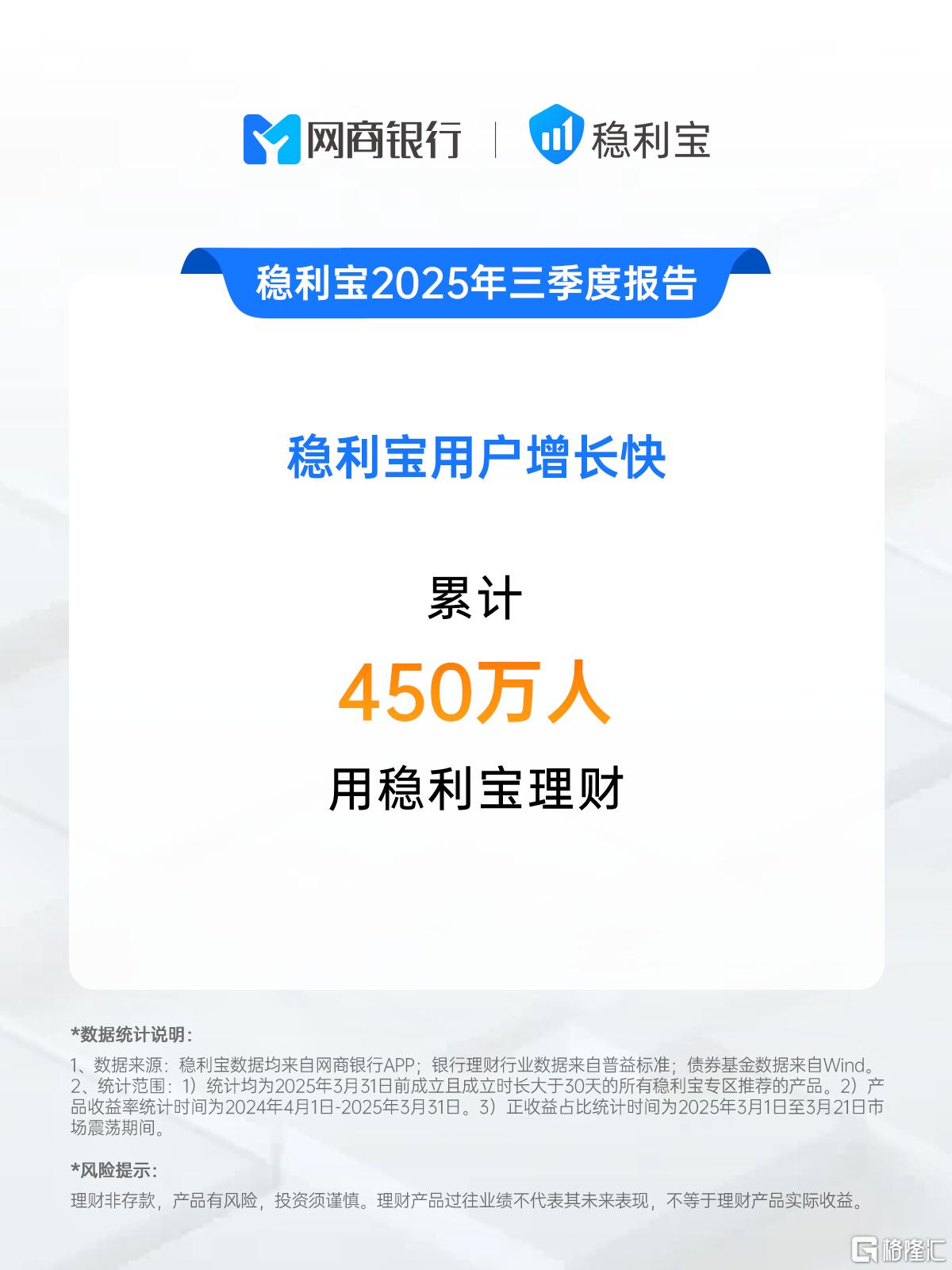
Core Viewpoint - The global capital markets experienced significant volatility, with major U.S. stock indices declining sharply, complicating asset allocation in a low-interest-rate environment. This has led to a transformation in the wealth structure of residents, moving from traditional savings to diversified asset allocation, with bank wealth management products playing a crucial role in this transition [1]. Group 1: Market Trends - The bank wealth management market showed a fluctuating upward trend in scale, reaching 30.95 trillion yuan by the end of August, despite a slight decline to 30.82 trillion yuan by the end of September due to liquidity tightening and product redemptions [1]. - The number of investors in wealth management products has steadily increased, with 136 million investors reported by mid-2025, reflecting a growth rate of 8.37% since the beginning of the year, surpassing the growth rate of traditional savings [2]. Group 2: User Behavior - Users of wealth management platforms are demonstrating increased engagement, with 67% growth in users on the "Stable Profit" platform and a trend towards continuous investment rather than one-time attempts [2]. - Small and micro enterprises are emerging as new forces in the wealth management market, actively managing idle operational funds through various financial products to achieve stable returns while maintaining liquidity [4]. Group 3: Product Performance - The "Stable Profit" platform reported an average annualized return of 2.58%, slightly above the industry average of 2.41%, with all products held for over three months achieving positive returns [4]. - The product structure of the "Stable Profit" platform, which focuses on low to medium-risk assets, aligns with the current market demand for stable investment products [4]. Group 4: Future Outlook - The bank wealth management market is expected to continue expanding in scale and restructuring, with the relative advantage of wealth management products in terms of yield likely to attract ongoing capital inflows [7]. - The focus of competition in the industry is shifting from product supply to service capabilities, suggesting that platforms offering stable returns and flexible redemption options will remain attractive to low-risk investors [7].
DLS MARKETS:金价创新高,危机也如约而至
Sou Hu Cai Jing· 2025-10-11 03:25
Group 1 - Gold prices have surpassed $4,000 per ounce, driven by a weakening US dollar, increased geopolitical tensions, and expectations of interest rate cuts from major economies [1][3] - Central banks are continuously increasing their gold reserves to optimize foreign exchange reserve structures, while retail investors are entering the market through ETFs and physical gold, amplifying the price surge [3] - The average annual gold purchases by global central banks from 2022 to 2024 are expected to exceed 1,000 tons, more than double the average from 2012 to 2021, with China becoming the largest gold buyer [3] Group 2 - Bridgewater Associates founder Ray Dalio recommends that investors allocate about 15% of their assets to gold, which can provide a hedge without significantly dragging down overall investment returns due to gold's non-yielding nature [4] - Concerns have been raised about the sustainability of the current gold price surge, with analysts noting that if gold's correlation with other asset classes increases, its core value may significantly diminish [3] - The 2022 sanctions against Russia revealed vulnerabilities in the "dollar-centric reserve system," prompting more countries to recognize the strategic necessity of reducing dollar dependence and increasing gold holdings [3]
财富的底层逻辑:你赚不到认知以外的钱
Sou Hu Cai Jing· 2025-10-11 03:13
Core Insights - The article emphasizes that wealth accumulation is primarily determined by one's understanding of money rather than just ability or opportunity [1][3][8] - It highlights the difference in mindset between the poor, who focus on saving, and the wealthy, who prioritize asset allocation and long-term thinking [3][6][9] Group 1: Understanding Money - Many individuals struggle financially not due to low income but because of a lack of financial understanding [1] - The article states that true wealth comes from recognizing money as a form of control rather than merely a means to spend [3][4] Group 2: Investment Mindset - The mindset of the wealthy involves a focus on long-term investment strategies rather than quick gains, which often leads to financial loss [3][5][7] - Historical examples illustrate that those who took calculated risks, such as investing in real estate or funds, have seen significant returns over time [3][4] Group 3: Future Opportunities - The article identifies emerging trends such as artificial intelligence and digital economy as key areas for future wealth generation [4][5] - It stresses the importance of early understanding and action in these areas to capitalize on potential financial benefits [5][6]

多重因素驱动贵金属价格走强 后市预期依旧乐观
Zheng Quan Ri Bao· 2025-10-10 16:05
Core Insights - The recent surge in precious metals, particularly gold and silver, is attributed to multiple factors including supply-demand dynamics, market risk aversion, and macroeconomic monetary policies [1][2][4] Group 1: Gold Market Analysis - As of October 10, gold prices reached $3993 per ounce, marking a year-to-date increase of over 50%, with a peak of $4000 per ounce on October 8 [1] - The rise in gold prices is driven by expectations of Federal Reserve interest rate cuts, government shutdowns prompting safe-haven buying, and geopolitical uncertainties [2][4] - The World Gold Council reported that central banks are expected to purchase a total of 415 tons of gold by mid-2025, supporting gold prices [2] Group 2: Silver Market Analysis - Silver prices have shown a stronger performance compared to gold, with a year-to-date increase of 75.4%, reaching $50.67 per ounce [1][3] - The increase in silver prices is attributed to similar investment demand as gold, along with low supply elasticity and a smaller market size, leading to higher price volatility [3] - The iShares silver ETF holdings increased by over 1000 tons since the beginning of the year, indicating strong long-term investment demand for silver [3] Group 3: Future Outlook - Most investment institutions believe there is further upside potential for precious metals, with UBS predicting gold prices could reach $4200 per ounce in the coming months [5] - Under neutral assumptions, gold prices are expected to exceed $4500 per ounce by March 2026, with optimistic scenarios suggesting prices could surpass $4800 per ounce [5] - The ongoing concerns about "stagflation" risks in the U.S. economy and expectations of Federal Reserve rate cuts are expected to continue driving gold prices upward [6]
“傻瓜式”黄金三步走:普通人稳健赚到1000万的唯一路径
Sou Hu Cai Jing· 2025-10-10 14:52
Group 1 - The core idea is that accumulating wealth is a long-term game, and the right methods are essential to reach a goal of 10 million [1] - The first step is to establish a "cash flow moat" to ensure financial stability regardless of market fluctuations [3][4] - A stable cash flow can be achieved through fixed savings, cash flow assets, and a balance between increasing income and controlling expenses [6] Group 2 - The second step emphasizes entering the "long-term compounding track," as relying solely on salary is insufficient for significant wealth accumulation [8] - Compounding allows money to generate more money over time, making long-term investments in index funds a recommended strategy [10] Group 3 - The third step involves learning "asset allocation" to diversify risks and avoid significant losses from market downturns [12][13] - Effective asset allocation includes cash flow assets for stability, growth assets to outpace inflation, and insurance assets to protect against unforeseen events [16] Group 4 - The summarized "foolproof golden three steps" highlight that wealth accumulation is a gradual process requiring patience and consistent execution [18] - The key principles are maintaining a cash flow moat, leveraging long-term compounding, and implementing risk management through asset allocation [20]
市场参与主体资金流向变化研究(三):2025年上半年新动向
Ping An Securities· 2025-10-10 11:12
Equity Market Insights - As of Q2 2025, the national team holds a stock market value of approximately CNY 4.10 trillion and an ETF holding of about CNY 1.30 trillion, indicating a stable increase in equity investment scale[20] - Insurance institutions' equity investments account for 5.21% of the total A-share market value, with a notable increase in bank sector holdings since Q4 2024[2] - Public funds have seen a continuous decline in actively managed equity holdings since mid-2021, while passive products, particularly ETFs, have experienced significant growth[2] Bond Market Dynamics - By the end of Q2 2025, commercial banks remain the largest participants in the bond market, with a bond investment value of approximately CNY 93.46 trillion, reflecting a growth of 3.29% from the previous quarter[17] - Insurance institutions' bond investment scale reached about CNY 17.87 trillion, with a notable increase in long-term interest rate bonds[17] - Foreign capital's bond holdings show a preference for government bonds, with a combined holding of 68.62% in government and policy financial bonds as of Q2 2025[5] ETF Investment Trends - The national team significantly increased its holdings in core broad-based ETFs, with the top seven ETFs accounting for approximately 98.35% of their ETF holdings by market value[42] - In H1 2025, the national team notably increased its positions in the CSI 1000 ETF, CSI 500 ETF, and STAR 50 ETF, with growth rates of 34.83%, 23.41%, and 23.33% respectively[42] - The insurance sector's focus on diversified asset allocation led to the CSI A500 ETF surpassing the CSI 300 ETF as the largest ETF by market value and share in H1 2025[2]