贸易保护主义

Search documents
21深度|美国“股债汇三杀”引爆信用危机,百年金融霸权终迎“落日余晖”?
2 1 Shi Ji Jing Ji Bao Dao· 2025-04-14 13:55
Core Viewpoint - The article discusses the decline of U.S. financial hegemony, highlighting the impact of protectionist policies under President Trump, which have led to a loss of confidence in U.S. assets and a potential shift in the global monetary system [1][2][10]. Group 1: U.S. Financial Hegemony - The U.S. financial hegemony, established over decades, is facing unprecedented challenges due to trade protectionism and geopolitical shifts [6][10]. - The share of the U.S. dollar in global foreign exchange reserves has decreased from over 71% in the early 2000s to below 60% by the end of 2023, indicating a decline in global trust in the dollar [6]. - The U.S. has historically relied on its alliances to maintain the dollar's status, but recent unilateral actions have caused dissatisfaction among allies, prompting them to seek alternatives to the dollar [3][4]. Group 2: Impact of Protectionism - Trump's aggressive tariff policies are undermining the established multilateral trade order, leading other countries to explore alternative currencies for trade settlements [7][8]. - The potential implementation of the "Mar-a-Lago Agreement" could challenge the stability of U.S. Treasury securities and weaken the Federal Reserve's independence, further jeopardizing the dollar's reserve currency status [8][9]. - Countries like China and members of the EU are actively promoting the use of their currencies in international trade, which could diminish the dollar's dominance [7][9]. Group 3: Dollar's Credit Crisis - The current situation is characterized as a credit crisis for the dollar, with rising gold prices and other currencies appreciating against the dollar, reflecting a loss of confidence [5][6]. - The U.S. federal debt is projected to exceed $35 trillion by the end of 2024, with a debt-to-GDP ratio of 125%, raising concerns about the sustainability of the dollar [6]. - The use of the dollar for financial sanctions has made other countries wary of holding dollar-denominated assets, further eroding trust in the currency [6]. Group 4: Future Outlook - Analysts express concern that the current asset sell-off in U.S. markets may be just the beginning, with potential long-term implications for the dollar's status [7][9]. - If the U.S. fails to address its fiscal deficits and continues its current policies, the risk of a significant decline in the dollar's international standing could increase [9][10]. - The article warns that if the dollar's credit continues to deteriorate, U.S. Treasury securities may become problematic, leading to broader financial instability [9].
一季度动力电池出口同比增21.5%
高工锂电· 2025-04-14 10:47
Core Viewpoint - The electric vehicle and lithium battery sectors continue to support steady growth in foreign trade exports from China [3] Group 1: Battery Export Growth - In the first quarter, domestic power battery exports reached 37.8 GWh, a year-on-year increase of 21.5% [2] - In March alone, power battery exports were 13.9 GWh, showing a month-on-month growth of 8.6% and a year-on-year growth of 11.3% [2] - Among battery types, ternary batteries dominate exports, with 23 GWh exported in the first quarter, while lithium iron phosphate batteries accounted for 14.6 GWh [2] Group 2: New Energy Vehicle Export Performance - Domestic exports of new energy passenger vehicles reached 419,000 units in the first quarter, a year-on-year increase of 39.6% [2] - Exports of new energy commercial vehicles totaled 23,000 units, reflecting a year-on-year growth of 230% [2] - Pure electric vehicle exports were 290,000 units, up 16.7% year-on-year, while plug-in hybrid vehicle exports reached 152,000 units, a year-on-year increase of 160% [2] Group 3: Market Environment and Tariff Risks - The recent tariff policy from the Trump administration has raised tariffs on power batteries exported to the U.S. to 73.4% and on new energy vehicles to 147.5% [4] - The global tariff risks have increased due to the U.S. initiating a global tariff war, which may affect the competitiveness of domestic battery manufacturers in the U.S. market [5] - Although the U.S. accounts for a small portion of China's new energy exports, potential retaliatory tariffs could impact exports to Europe and other regions [6] Group 4: EU Agreement and Market Adaptation - A new agreement between the EU and China allows for a minimum price restriction on electric vehicle exports, replacing the previously planned 20%-50% tariffs set to take effect in October 2024 [6] - This agreement aims to maintain the price competitiveness of European automakers while enhancing the profit margins for exporting companies [6] - The ongoing tariff friction highlights the need for Chinese new energy companies to develop a new international awareness in increasingly competitive foreign markets [7]

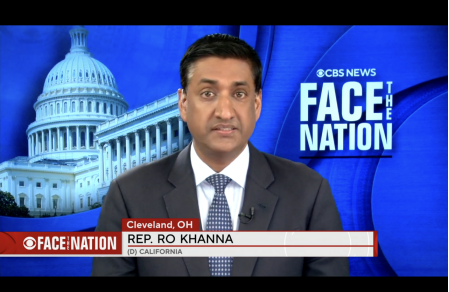
美众议员批特朗普关税政策:无法将制造业带回美国,“他们需要对经济有21世纪的理解”
Huan Qiu Wang· 2025-04-14 08:24
Core Viewpoint - Congressman Ro Khanna criticized President Trump's tariff policies, warning that they will increase prices of electronic products in the U.S. and fail to bring manufacturing jobs back to the country [1][3]. Group 1: Tariff Policies - Khanna referred to Trump's trade protectionism as reminiscent of 19th-century policies, specifically mentioning the McKinley administration's average import tariff rate of 52%, which led to increased prices and heightened global trade tensions [1]. - The Trump administration's recent decision to exclude smartphones and computers from its tariff policy indicates confusion and disorder within the White House regarding its manufacturing revival plans [3]. Group 2: Manufacturing Challenges - Khanna stated that the plan to revitalize domestic manufacturing has failed, emphasizing that tariffs alone cannot achieve the goal of bringing manufacturing, particularly in electronics, back to the U.S. [3]. - Analysts noted that the supply chains for smartphones and laptops are deeply rooted in Asia, making it challenging to relocate manufacturing to the U.S. due to time constraints, policy uncertainty, high costs, and a shortage of skilled labor [3].
逃离的墨西哥华商们
投资界· 2025-04-14 03:26
以下文章来源于真实故事计划 ,作者肖思佳 贸易地震。 作者 | 肖思佳 编辑|罗方丹 来源 | 真实故事计划 (ID: zhenshigushi1) 第二只靴子落地。4月2日起,美国总统特朗普宣布了震撼世界的关税政策,将对中国等 多国额外加征高额关税。并进一步威胁,将中国关税额外增加50%。 从2018年起,特朗普开始以关税为手段对中国展开贸易战,以制衡世界上最大的制造业 国家。从那时起,国内企业开始前往墨西哥、越南等关税"政策洼地"发展业务,以对冲 关税带来的冲击,许多国内的中小商家也跟随大企业的脚步,前往墨西哥开展贸易、经 营,并逐渐落地生根。 真实故事计划 . 每天一个打动人心的原创真实故事。 合作请联系xuanlingmuye。 然而,随着特朗普的再度当选,并重新祭起高关税的大刀威胁墨西哥等周边盟友以及世 界各国,墨西哥对华人商户的态度也逐渐收紧,当地华商群体生存空间被极限压缩。墨 西哥本地媒体报用《在特朗普压力下对中国商品市场进行打击》的标题,关注华商群体 的撤离。 在这一轮以关税讹诈开启的全球化退潮中,墨西哥华商们成为了最早一批受害者。经贸 关系的剧变,以及地缘政治的重构,墨西哥不是第一个对华商挥 ...
美国经济学家:特朗普关税严重损害美国国际信誉
Xin Jing Bao· 2025-04-14 01:30
新京报:特朗普政府的关税政策近期出现戏剧性转向。4月2日,特朗普签署行政令,宣布对全球贸易伙 伴征收额外所谓"对等关税",但在这项政策生效的4月9日却突然暂缓对部分国家的"对等关税"。如何看 待特朗普这一周内的关税政策变化? 沃尔夫: 据我观察,在美国国内,许多人对特朗普的关税政策存在分歧。特朗普的政治基本盘(注: 指支持特朗普的选民)认为,这些变化体现了特朗普精明的政治策略。而其他人则指出,此类政策变化 表明特朗普对美国经济问题,或美国针对全球的关税后果缺乏把握。 此外,很多人并不真正了解这项关税政策及其可能产生的影响,但大多数人不希望再经历几年前那样的 通货膨胀,如果他们认为关税政策会导致消费者价格上涨,就会对此表示反对。 新京报:特朗普自称加征关税的目标之一是为美国创造收入来源。现在是接近还是偏离了他的这一目 标? "我们要输了,我们正生活在一个自欺欺人的国家。"在美国总统特朗普推出所谓"对等关税"之前,美国 知名经济学家理查德·沃尔夫在公开谈及"加征关税对谁有利"的话题时直言,美国对中国加征关税,输 的是美国,但美方却视而不见。 沃尔夫是美国马萨诸塞大学阿默斯特分校经济学名誉教授、纽约新学院客座教授。 ...
一夜暴跌!中国全面反击,美国蒸发超45万亿元,特朗普彻底怒了
Sou Hu Cai Jing· 2025-04-13 09:01
Core Viewpoint - The recent financial turmoil in the US and European stock markets, with a market value loss exceeding 45 trillion yuan, is primarily rooted in the escalating trade conflict between China and the US [1][4]. Group 1: Trade Policies and Economic Impact - Starting February 1, the US imposed additional tariffs on Chinese goods, with rates significantly increasing in early April, aiming to pressure China into unilateral concessions [3]. - China's response included imposing tariffs on a wide range of US imports, from agricultural products to industrial goods, and filing a lawsuit against the US in the WTO to protect its rights [3]. - The US stock market suffered a significant blow, with nearly 6.5 trillion USD (over 47 trillion yuan) in market value evaporating between April 3 and 4, and major indices like the S&P 500 and Nasdaq experiencing declines of 5.97% and 5.82%, respectively [4]. Group 2: Domestic Reactions in the US - There is growing domestic opposition to Trump's tariff policies, with approximately 600,000 people protesting across the US, highlighting rising consumer prices due to tariffs [6]. - Businesses are expressing dissatisfaction with the tariff policies, with some facing potential layoffs or closures due to increased costs [6]. - The US Treasury Secretary has reportedly considered resigning due to frustrations with the tariff calculations [6]. Group 3: Global Trade Dynamics - The US's protectionist measures have drawn global condemnation, with many countries supporting retaliatory actions against the US [8]. - The trade conflict illustrates that there are no winners in a trade war, and continued adherence to flawed trade policies by the US could lead to greater economic losses domestically and hinder global economic recovery [8]. - The international community is urging the US to abandon zero-sum thinking and return to rational dialogue and cooperative strategies to maintain global economic stability [8].
美国保护主义政策给世界经济制造风险(国际论坛)
Ren Min Ri Bao· 2025-04-12 21:41
美方肆意加征关税,引发国际社会的普遍反对。美方做法严重违反世贸组织规则,破坏多边贸易体制, 也不利于自身经济发展。贸易保护主义不仅无助于解决经济问题,反而可能推高通胀压力,并引发更广 泛的贸易摩擦,给世界经济增长带来长期风险。 世界经济的健康发展需要稳定、开放的贸易环境。当前,世界经济复苏仍面临挑战,唯有加强国际合 作、维护全球产供链稳定,才能共同推动世界经济可持续发展。美国应摒弃短视的保护主义思维,回归 国际贸易合作框架,为世界经济稳定增长贡献建设性力量。 (作者为埃及贝尼苏韦夫大学政治学教授) 《 人民日报 》( 2025年04月13日 03 版) (责编:胡永秋、杨光宇) 美国政府以"保护本国产业"为由推出关税措施,但从经济规律来看,贸易壁垒并不能真正保护本国企 业,反而可能加剧国内市场的不稳定性。针对美方此前宣布的钢铝关税,德国基尔世界经济研究所的评 估显示,如果美方关税政策全面落地,将导致欧盟经济在第一年萎缩0.4%,美国经济萎缩0.17%。如果 欧盟采取对等反制措施,美国的经济损失将翻倍。事实一再证明,贸易保护主义并不能提升本国经济的 竞争力,而会人为增加市场成本、破坏全球产供链稳定。 从历史经验 ...
【财闻联播】年度总票房破250亿,哪吒占六成!可复美被质疑添加违禁成分,公司回应
券商中国· 2025-04-12 10:53
Macroeconomic Dynamics - The BRICS countries held their second economic and trade liaison group meeting, emphasizing the need to maintain a multilateral trade system and oppose unilateralism and trade protectionism [2] - The China Post reported that the express delivery volume in China has surpassed 50 billion pieces this year, 18 days ahead of the 2024 timeline [3] Industry Support Initiatives - The Henan Provincial Government announced a subsidy program for home renovation, offering up to 20,000 yuan per household for purchasing smart home products [4] Educational Developments - Beijing's first municipal vocational undergraduate university, Beijing University of Science and Technology, was officially established, offering six vocational undergraduate programs [5] Market Data - The total box office for 2025 has exceeded 25 billion yuan, with "Nezha: The Devil's Child" accounting for 60.8% of the annual box office [8] Financial Institutions - Fund manager Bao Wuke has appointed additional managers for four of his funds, emphasizing a balanced value investment approach with a current asset management scale of 17.783 billion yuan [9] Company Dynamics - Kefu Mei responded to allegations regarding the addition of epidermal growth factor in their products, stating that all products comply with national regulations and have been independently tested [13] - Meituan announced the establishment of an independent instant retail brand, with non-food orders surpassing 18 million [14][15] - Apple stores have maintained consistent pricing for iPhones, while some unauthorized retailers have experienced price fluctuations [17]

关税大棒下,最受伤的车企出现了
商业洞察· 2025-04-12 09:35
以下文章来源于正商参阅 ,作者信瀚 正商参阅 . 原《政商参阅》,做价值的传播者!连续两届获评胡润年度影响力财经自媒体、21世纪经济报道年度传 播力财经自媒体、新浪财经、经济观察报年度影响力财经自媒体、新榜年度社会关注新媒体荣誉奖等。 作者: 信瀚 来源: 正商参阅(ID:zhengshangcanyue) 昔日风雨昔日云,彼时云淡彼时殇。 特朗普的关税大棒刚挥出,尚未吓退"外敌",却先刺痛了自己。 近日,一则重磅消息引爆全球汽车业:拥有 玛莎拉蒂、 Jeep 等 14 个品牌的全球第四大车企 —— Stellantis (斯泰兰蒂斯)突然宣布裁撤 900 名美国工人 ,关闭加拿大和墨西哥两家工 厂,北美生产线陷入瘫痪。 几乎同一时间, 捷豹路虎宣布暂停对美出口一个月,奥迪则扣押 3.7 万辆新车拒绝交付美国经 销商。 最讽刺的是,这场风暴的中心不在海外,而在美国本土消费者和工人的饭碗上。 墨西哥工厂的停工,让美国工人丢了饭碗,欧洲豪车的断供,已让经销商无货可卖,而斯泰兰蒂 斯、捷豹路虎、奥迪们 肯定不会默默承担 25% 的成本,而是将其全部转嫁到价格上。 即便福特、通用等 美国品牌在本土生产,仍有 40% ...


坚决反对关税霸凌!9家大宗商品行业协会,联合发声!
券商中国· 2025-04-12 07:16
Core Viewpoint - The article emphasizes the collective response of Chinese commodity associations against U.S. trade protectionism and the need to maintain stability in the global commodity market and supply chains [1][4]. Group 1: Response to U.S. Tariffs - Nine major commodity associations in China have united to oppose U.S. tariffs, which they claim disrupt global commodity prices and trade order [1]. - The associations call for solidarity among members and industry enterprises to tackle the challenges posed by U.S. trade protectionism [1][3]. Group 2: International Cooperation - The associations advocate for active participation in the formulation of international trade rules to create a fairer system [2]. - They propose the establishment of a commodity pricing system in RMB and a cross-border settlement system in collaboration with international partners [2]. Group 3: Industry Support Initiatives - The associations plan to organize actions such as the "Commodity Market and Supply Chain Protection Initiative" to assist industries in responding to U.S. tariffs [3]. - They emphasize the importance of leveraging China's large market to diversify procurement and sales channels, enhancing international cooperation [4]. Group 4: Domestic Market Engagement - Various Chinese business associations have urged enterprises to engage with foreign trade companies to understand their needs and plan collaborations [5]. - Companies like JD.com, Hema, and Dingdong Maicai have committed to significant domestic procurement efforts to support foreign trade enterprises [5].