
商业航天

Search documents
9个月、涨260%!新兴市场,连涨5周;险资巨头,出手;两大牛股,月内二次停牌核查
Sou Hu Cai Jing· 2026-01-26 00:47
Market Dynamics - The US dollar index fell by 1.6% last week, marking the largest weekly decline since May 2022, which contributed to gold and silver reaching historical highs [1] - The MSCI Emerging Markets Index has risen by 7% this year, outperforming the S&P 500 Index, which only increased by 1% [2] - Major insurance companies in China announced significant equity investment plans, with China Life committing nearly 12.5 billion yuan to various funds [3] - Hong Kong's stock market saw a slight decline, but southbound capital recorded a net inflow of 23.52 billion HKD, with major tech stocks like Xiaomi and Alibaba receiving significant investments [3] Industry Trends - SpaceX aims to achieve a 99% reduction in space access costs through fully reusable rocket technology, potentially lowering costs to below $100 per pound [2] - The commercial space sector in China is accelerating, with multiple platforms and projects being launched to enhance capabilities [2] - The low Earth orbit satellite market is gaining traction, with leading PCB manufacturers entering the field, indicating a positive outlook for the industry [6] - The global humanoid robot market is expected to see explosive growth, with a projected shipment of approximately 18,000 units in 2025, reflecting a 508% year-on-year increase [13] Company Developments - TikTok announced the establishment of a joint venture in the US for data security and algorithm protection, which has been welcomed by the White House [2] - Major foreign asset management firms have focused their investments on Chinese technology sectors, achieving impressive results in the 2025 market [5] - Companies like Tencent and Baidu are launching cash distribution campaigns for the upcoming Spring Festival, indicating a competitive market environment [13] - Didi's new Robotaxi model has been delivered, featuring advanced computing capabilities and set to begin operations in major cities [14]
证券日报:监管部门的一系列举措并非打压热门赛道
Xin Lang Cai Jing· 2026-01-26 00:25
Group 1 - The A-share market has seen accelerated rotation of popular concepts since 2026, with sectors like commercial aerospace, AI applications, and humanoid robots experiencing significant short-term surges [1] - Regulatory authorities have implemented measures such as increasing financing margin ratios and initiating suspensions for stocks with excessive price increases to cool down the market [1] - The targeted regulation of companies like Fenglong Co. aims to address illegal trading behaviors that exploit hot topics and speculative trading, distinguishing between "true value" and "false speculation" [1] Group 2 - The regulatory measures are not intended to suppress popular sectors but to protect quality enterprises that rely on core technologies and have long-term development potential [1] - The goal is to guide market funds from short-term speculative trading back to long-term value investment, thereby maintaining a healthy ecosystem in the capital market [1]
2026答案秀·思想者春晚| 任家栋:商业航天所有卡脖子技术均已攻克,这个行业就要爆发
Guan Cha Zhe Wang· 2026-01-26 00:25
Core Viewpoint - The commercial space industry has transitioned from a state-controlled domain to a rapidly evolving commercial sector, with China positioned as a key player in this global trend [1][2]. Group 1: Current State of Commercial Space - The commercial space industry has reached a significant milestone, with the number of satellites launched annually expected to exceed 4,000 by 2025, compared to just over 1,000 active satellites currently [8]. - The establishment of the Commercial Space Administration by the National Space Administration signifies a major opportunity for the commercial space sector in China [8]. - The industry is moving from a research-focused phase to a commercial phase, as evidenced by the increasing discussions around satellite quantities and pricing at industry events [4][8]. Group 2: China's Position in Commercial Space - China is not merely a follower in the commercial space race but is among the few countries defining the rules, particularly in remote sensing and communication sectors [12]. - The successful launch of the "Hongtu-1" satellite, which utilizes an innovative four-satellite formation for global measurement, highlights China's leadership in SAR remote sensing technology [12]. - In communication, China's advancements in low-orbit broadband satellites have led to the development of satellites with capacities reaching 40 Gbps, showcasing international competitiveness [13]. Group 3: Key Challenges and Technological Breakthroughs - The commercial space industry faces challenges in supply chain expansion and technological innovation, with a focus on transforming space capabilities into societal industrial capabilities [16]. - The industry has seen a significant increase in suppliers, from around 100 in 2018 to over 1,000 by 2025, indicating a robust supply chain development [17]. - Key technological advancements include electric propulsion systems, flexible solar panels, and laser communication technologies, which are essential for the future of low-orbit communication satellites [19][20][21]. Group 4: Future Trends and Projections - By 2025, the total value of commercial contracts is expected to equal the total of the past five years, indicating a significant growth trajectory for the industry [24]. - The commercial space sector in China is anticipated to enter a phase of scale economy, with rapid increases in satellite launches and a shift towards a more competitive landscape [24][25]. - The integration of computing power into satellite technology is expected to create a new paradigm in space communication, enabling direct connections between mobile devices and satellites [25].

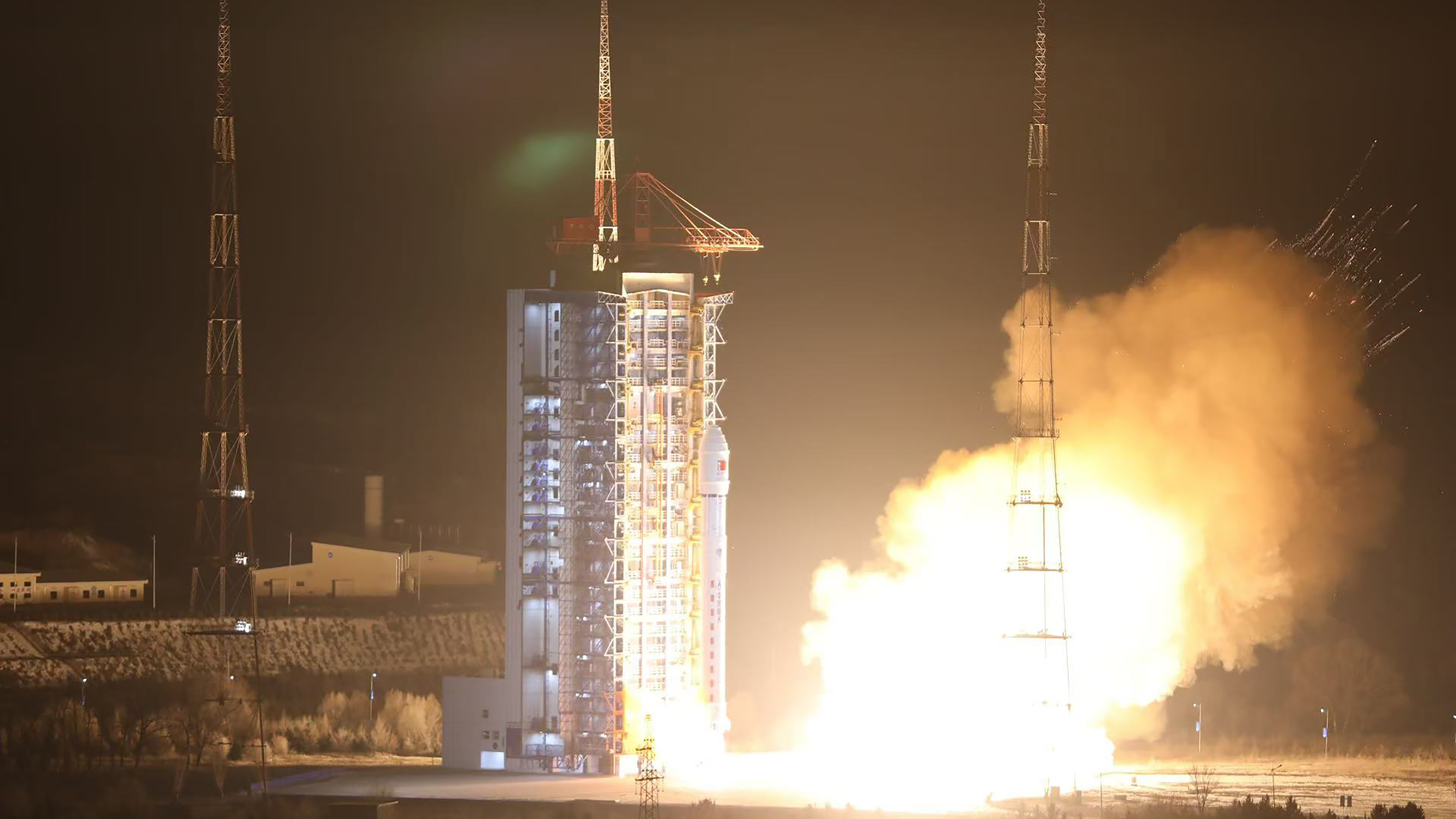
商业航天所有卡脖子技术均已攻克,这个行业就要爆发
Guan Cha Zhe Wang· 2026-01-26 00:18
Core Viewpoint - The commercial space industry has transitioned from a state-controlled domain to a rapidly evolving commercial sector, with China positioned as a significant player in this global trend [1][2]. Industry Development Stage - The commercial space industry has evolved significantly, with a notable shift from experimental systems to industrialization, exemplified by the launch of over 1,000 active satellites globally [5]. - By 2025, it is projected that over 4,000 satellites will be launched in a single year, indicating a robust industrial framework [5]. Key Opportunities and Trends - The establishment of the Commercial Space Administration in China and the mention of commercial space in government reports signal a major opportunity period for the industry [6]. - The integration of satellite communication with terrestrial networks is expected to reshape information systems, marking a significant advancement in the industry [6]. China's Position in Commercial Space - China is not merely a follower but is among the few countries defining the rules in the commercial space sector, particularly in remote sensing and communication [8][9]. - The successful launch of the "Hongtu-1" satellite, which utilizes all-electric propulsion, showcases China's innovative capabilities in the field [8]. Technological Breakthroughs - The industry has made significant strides in supply chain expansion and overcoming key technological challenges, such as electric propulsion and flexible solar panels [12][16]. - The development of laser communication technology and phased array antennas represents critical advancements that enhance satellite communication capabilities [18][19]. Future Outlook - By 2025, the total value of commercial contracts is expected to equal the total of the past five years, indicating a substantial growth trajectory [22]. - The commercial space sector in China is anticipated to enter a phase of scale economy, with rapid increases in satellite launches and a shift towards a more competitive landscape [22][23]. - The integration of computing power into satellite systems is expected to create a new paradigm in satellite communication, enabling direct connections between mobile devices and satellites [23].
盘前必读丨5000美元!国际金价突破历史性关口;北京将实施“人工智能+”行动
Di Yi Cai Jing· 2026-01-26 00:14
Group 1 - The short-term spring market continues, with A-shares maintaining a strong oscillating trend [1][7] - The China Securities Regulatory Commission (CSRC) has approved the registration of new futures and options products, including nickel futures and options, to attract foreign traders [2][4] - The CSRC has issued guidelines for the performance comparison benchmarks of publicly offered securities investment funds, effective from March 1, 2026, emphasizing the importance of stability and internal controls [3] Group 2 - Beijing's government report emphasizes the development of high-tech industries and the promotion of projects in integrated circuits, artificial intelligence, and green energy [5] - SpaceX aims to achieve fully reusable rockets this year, potentially reducing space entry costs significantly [6] - Recent market movements show mixed results for major U.S. indices, with notable fluctuations in technology stocks and precious metals [6]

1月26日早餐 | 腾讯、百度打响春节AI红包大战
Xuan Gu Bao· 2026-01-26 00:00
Core Viewpoint - The overall sentiment in the market remains optimistic, with a focus on performance and thematic investments, indicating a potential continuation of a "slow bull" market trend [3][4][5]. Market Strategy - Various brokerage strategies suggest that the market is seeing structural changes, with increased capital inflow into sectors like real estate, resource products, and price increase chains [3]. - The focus for the upcoming period includes commercial aerospace and AI applications, as well as sectors with high profit elasticity [3]. - The market is supported by a relatively stable RMB exchange rate and a loose liquidity environment, which is expected to sustain high-elasticity assets [3]. Long-term Outlook - A long-term perspective indicates that the current market is still in the mid-stage of a bull market, with ample room for growth compared to previous bull market peaks [4]. - The risk premium for the CSI 300 index is currently at 5.27%, suggesting that there is still significant investment opportunity [4]. Cloud Computing - Amazon Web Services (AWS) has raised its EC2 machine learning capacity block prices by approximately 15%, breaking a long-standing trend of declining cloud service prices [6]. - This price increase is expected to benefit cloud computing and related service providers, indicating a potential valuation restructuring in the sector [6]. Semiconductor Industry - Samsung Electronics has raised NAND flash memory prices by over 100% in Q1 2023, highlighting severe supply-demand imbalances in the semiconductor market [8]. - This price increase is part of a broader trend of rising prices in the storage industry, driven by structural shortages and increased demand from AI technologies [8]. Gene Sequencing and Health - The Nipah virus outbreak in India has prompted health screenings at international airports in Thailand, indicating a heightened focus on health monitoring and potential impacts on the healthcare sector [9]. New Stock Offerings - North Star Life Sciences is set to launch an IPO on the Sci-Tech Innovation Board at a price of 17.52 yuan per share, with a subscription threshold of 90,000 yuan [11]. Company Announcements - Hunan Gold expects a net profit of 1.27 billion to 1.608 billion yuan for 2025, driven by rising sales prices of gold, antimony, and tungsten products [12]. - YJ New Materials plans to acquire 100% of Aokening Qinhuangdao and 95% of Aokening Kunshan, focusing on aluminum plate production [12]. - Xian Dao Intelligent anticipates a net profit of 1.5 billion to 1.8 billion yuan for 2025, reflecting a significant increase in orders due to rising production rates among major battery companies [13]. - Zhongwei Company expects a net profit of 2.08 billion to 2.18 billion yuan for 2025, indicating a growth of approximately 28.74% to 34.93% [14].

中银晨会聚焦-20260126
Bank of China Securities· 2026-01-25 23:30
Group 1: Macro Economic Insights - The report discusses the "Triffin Dilemma" and the decline of the global circulation of the US dollar, highlighting that the US is the primary trade deficit country, contributing significantly to global imbalances [2][6] - It notes that the dollar's global circulation has led to a situation where the US faces a contradiction between its hegemony and the dollar's dominance, potentially threatening its long-term power [6][7] - The report emphasizes the need for China to focus on domestic demand and consumption transformation to reduce reliance on external factors [7] Group 2: Currency and Foreign Exchange Market - In 2025, the US dollar index experienced its largest decline in eight years, dropping over 10% in the first half of the year, marking the biggest drop since 1974 [3][8] - The report indicates that the RMB appreciated against the dollar in 2025, contrasting with previous years of depreciation, and highlights a reversal in the domestic foreign exchange supply-demand relationship [8][9] - It suggests that the RMB's exchange rate may remain stable with potential for fluctuations, influenced by various factors [9] Group 3: Consumer Behavior and Economic Policy - The report identifies a decline in consumer spending willingness, with the marginal propensity to consume (MPC) dropping to 0.61 by the end of 2025, indicating a decrease in consumer confidence [9][10] - It highlights that traditional industries and small to medium enterprises are facing challenges in job absorption, which could further impact consumer spending [10][11] - The "Promoting Consumption" initiative is emphasized as a key strategy for 2026, focusing on increasing residents' income and enhancing consumption capacity [11] Group 4: Industry Performance and Investment Opportunities - The report indicates that the storage industry is entering a new cycle driven by AI and data expansion, with prices expected to continue rising due to tight supply and high demand for new technologies [34][35] - It highlights the high growth potential in the space photovoltaic sector, driven by significant expansions in solar capacity by US companies and increasing satellite deployments [37][41] - The report recommends focusing on companies involved in the storage supply chain and those engaged in space photovoltaic technology, suggesting a strong investment outlook in these areas [36][41]
财信证券晨会纪要-20260126
Caixin Securities· 2026-01-25 23:30
Group 1: Market Overview - The overall market showed mixed performance with the Shanghai Composite Index closing at 4136.16, up by 0.33%, while the Shenzhen Component Index rose by 0.79% to 14439.66 [1][9] - The ChiNext Index increased by 0.63% to 3349.50, and the STAR 50 Index rose by 0.78% to 1553.71, indicating a stronger performance in innovative small and medium enterprises [1][9] - The North Exchange 50 Index saw a significant increase of 3.82%, closing at 1588.66, while the CSI 300 Index fell by 0.45% to 4702.50, reflecting a lag in blue-chip stocks [1][9] Group 2: Company Dynamics - Sobo Protein (603231.SH) is expected to achieve a net profit attributable to shareholders of 178 million to 191 million yuan in 2025, representing a year-on-year growth of 46.89% to 57.62% [30] - Agricultural Development Seed Industry (600313.SH) anticipates a net profit growth of 59.96% to 79.15% in 2025, with expected profits between 75 million to 84 million yuan [31] - Jiangzhong Pharmaceutical (600750.SH) forecasts a net profit of 906 million yuan in 2025, reflecting a year-on-year increase of 14.96% [33] - Shenghong Technology (300476.SZ) plans to acquire 100% equity of the overseas company SPMY for up to 51 million USD, aiming to enhance its production capacity in Southeast Asia [36] - Huatai Securities (601688.SH) intends to increase capital for its wholly-owned subsidiary Huatai International Financial Holdings Limited by up to 9 billion HKD to support overseas business development [37] - Everbright Securities (601788.SH) expects a net profit growth of 21.92% in 2025, with projected revenues of 10.863 billion yuan, up 13.18% year-on-year [39] - Su Nong Commercial Bank (603323.SH) anticipates a revenue growth of 0.41% in 2025, with a net profit of 2.043 billion yuan, up 5.04% [41] - Nanjing Bank (601009.SH) projects a revenue increase of 10.48% in 2025, with a net profit of 21.807 billion yuan, up 8.08% [43] - Huaming Equipment (002270.SZ) reported a net profit increase of 15.29% for 2025, with revenues of 2.425 billion yuan, up 4.43% [45] Group 3: Industry Trends - The China Securities Regulatory Commission (CSRC) has released guidelines for the performance comparison benchmarks of publicly offered securities investment funds, emphasizing the importance of aligning benchmarks with product positioning and investment strategies [27] - The commercial aerospace industry is set to receive a boost with the release of the Jiuquan Commercial Aerospace Industry Development Plan (2026-2035), which aims to establish a national commercial aerospace launch base [19] - Beijing is implementing the "Artificial Intelligence +" initiative to build a national AI application pilot base, focusing on high-tech industries [20] - The CSRC has expanded the range of futures market products, adding 14 new futures and options for domestic specific varieties, enhancing market accessibility [22]
东吴证券晨会纪要2026-01-26-20260126
Soochow Securities· 2026-01-25 23:30
Macro Strategy - The report highlights the investment value of the GF CSI Media ETF (512980.SH), which is closely tracking the CSI Media Index (399971.SZ) and has a management fee of 0.5% per year and a custody fee of 0.1% per year. As of January 16, 2026, the ETF has a circulation scale of 10.759 billion yuan and an annualized return of 29.47% with a volatility ratio of 0.89, indicating reasonable risk control capabilities [1][12] - The underlying index focuses on AI applications, with a significant weight of 31.43% in GEO concept stocks, including key companies like BlueFocus, Yanshan Technology, and Kunlun Wanwei. The top ten weighted stocks account for 51.52% of the index, indicating a high concentration of component stocks [1][12] - The report emphasizes that the current media bull market is driven by AI technology transformation and the assetization of data factors, contrasting with the previous bull market driven by mobile internet traffic. The media sector's valuation is at a historical low, providing a high margin of safety for investors [1][12] Non-Bank Financial Industry - The report indicates that the non-bank financial sector is experiencing an upward trend in market conditions, with public fund holdings in the sector increasing to 2.42% by the end of 2025, up 0.82 percentage points from the previous quarter. However, the sector remains underweight compared to the market [5][16] - The report recommends key stocks such as China Life, Ping An, New China Life, China Pacific Insurance, and CITIC Securities, highlighting their potential to benefit from the improving market environment [5][16] - The average daily trading volume of equity funds reached 34.444 trillion yuan, a year-on-year increase of 155%, indicating a significant improvement in market activity [5][16] Real Estate Industry - The report notes that the real estate market is gradually stabilizing, with a narrowing decline in sales and construction metrics compared to 2024. The total development investment in 2025 was 8.3 trillion yuan, down 17.2% year-on-year, while the new construction area was 5.9 million square meters, down 20.4% [6][18][19] - Sales figures show a cumulative sales area of 8.8 million square meters, down 8.7% year-on-year, with a cumulative sales amount of 8.4 trillion yuan, down 12.6%. The decline in sales is narrowing, particularly in first-tier cities [6][18][19] - Investment recommendations include China Resources Land, China Merchants Shekou, and New City Holdings, with a focus on property management companies like China Resources Mixc Life and Greentown Service [6][18][19] Environmental Industry - The report discusses the growth potential of the waste incineration sector, particularly in Southeast Asia and India, where an estimated 500,000 tons per day of waste incineration capacity is expected, corresponding to an investment scale of approximately 250 billion yuan [7][20] - Companies like Weiming Environmental and Sanfeng Environment are highlighted for their overseas expansion and operational stability, with significant revenue increases driven by high electricity prices and processing fees in international markets [7][20] - The report emphasizes the importance of cost control in overseas projects, with potential for significant profit margins compared to domestic projects, particularly in Indonesia where new projects are expected to yield higher returns [7][20]
商业航天按下“加速键” 卫星主题ETF涨势强劲
Zhong Guo Zheng Quan Bao· 2026-01-25 21:07
Core Insights - The commercial aerospace sector is experiencing a significant surge, transitioning from a "national strategic direction" to "actual commercial implementation," driven by technological advancements and supportive policies [1][3]. Group 1: Market Performance - The satellite-themed ETFs have shown strong performance, with the Guangfa Satellite ETF rising by 26.85% year-to-date as of January 23, ranking sixth among all ETFs [2]. - Other aerospace-related ETFs, including general aviation ETFs, have also performed well, with gains exceeding 15% year-to-date [2]. - Despite an overall trend of capital outflow, certain thematic ETFs, particularly the satellite ETFs, have attracted significant inflows, with the satellite ETF (159206) seeing a net inflow of 7.697 billion yuan [2]. Group 2: Technological and Policy Support - The commercial aerospace sector's growth is supported by a systematic policy framework that encourages participation and outlines a comprehensive support system [3][4]. - Technological innovations, such as reusable rockets and mass satellite manufacturing, are crucial for reducing costs and enabling scalable profitability in the industry [3][4]. - The establishment of a dedicated Commercial Aerospace Department by the National Space Administration and the introduction of a three-year plan are pivotal in facilitating the sector's growth [3]. Group 3: Investment Opportunities - The investment value in the satellite sector is driven by strong policy support, expanding demand scenarios, and technological advancements that lower costs [4]. - The industry is characterized by a three-tier structure: upstream manufacturing (satellites and rockets), midstream service (launch and ground operations), and downstream applications [6]. - Investors are advised to focus on long-term strategies and consider index products to mitigate risks, as the sector is still in its early stages and individual stock risks are high [6].
