自动驾驶

Search documents
2026年科技行业前瞻:AI、自动驾驶、机器人、世界模型、美股...
硅谷101· 2026-01-04 07:25
硅谷101的三小时新年直播来啦,聚焦聊聊2026年大家最关心的几个科技赛道展望~ 视频时间轴: 环节一:AI的2025与2026:技术共识与非共识 主持人:陈茜 嘉宾: Howie Xu(硅谷徐老师),资深硅谷技术高管、财富500强Gen首席AI/创新官 张璐,Fusion Fund创始合伙人 00:00:00 - 00:01:34 2025年AI回顾:哪些趋势超出预期 00:01:35 - 00:04:03 AI发展主线与范式转移:企业AI共识成形 00:04:04 - 00:09:13 DeepSeek启示:中国模型与开源冲击 00:09:14 - 00:15:01 Neolab 2026年前瞻与下一代模型探索 00:15:02 - 00:22:42 Scaling Law未止:数据、算力与系统优化 00:22:43 - 00:32:59 Meta困境:收购Manus与模型战略争议 00:33:00 - 00:38:20 OpenAI上市路:估值挑战与生态竞争 00:38:21 -00:46:09 Anthropic的ToB定位:在AI Coding战场稳扎稳打 00:46:10 - 00:46:03 A ...

突发,小鹏副总裁离职......
自动驾驶之心· 2026-01-04 06:31
Group 1 - The core viewpoint of the article highlights the leadership change at Xiaopeng Motors, with Chen Yonghai resigning and Wang Fengying taking over as president, which is seen as a crucial step for the company's turnaround [2] - Xiaopeng Motors achieved a total delivery of 429,445 vehicles in the year, marking a year-on-year growth of 125.94% and an achievement rate of 122.7%, ranking second among new forces in the industry [2] - Wang Fengying, who has 31 years of experience at Great Wall Motors, joined Xiaopeng in 2023 and is responsible for product, marketing, sales, and supply chain, indicating her significant role in the company's future success [2]


2026年汽车报废更新补贴支持范围有所扩大,小马智行Robotaxi车规规模达1159辆
Xinda Securities· 2026-01-04 05:21
Investment Rating - The industry investment rating is "Positive" [2] Core Insights - In 2026, China will expand the scope of subsidies for scrapping and updating vehicles, which is expected to drive continuous growth in industry sales [3][23] - The Robotaxi fleet of Xiaoma Zhixing has reached 1,159 vehicles, exceeding the original target of 1,000 vehicles for the year [3][23] - The new subsidy policy is projected to benefit over 12 million passenger vehicles in 2026, significantly increasing consumer spending and potentially driving new car sales by nearly 1.5 million units [23][24] Summary by Sections Market Performance - The A-share automotive sector outperformed the market, with a weekly increase of 1.44%, ranking fourth among A-share Shenwan first-level industries [3][9] - The SW passenger vehicle index decreased by 1.64%, while the SW commercial vehicle index increased by 0.39% [3][6] Key Industry News - The 2026 subsidy policy for scrapping old vehicles will include more vehicle types and higher subsidy amounts, with a maximum of 20,000 yuan for scrapping and 15,000 yuan for replacement [23] - Xiaoma Zhixing's Robotaxi fleet has expanded rapidly, with 961 vehicles by September 30, 2025, and 667 of them being the seventh-generation model [23] - Firefly has officially launched in Austria, marking a significant step in its European market expansion [23] - Waymo has begun road testing autonomous taxis in London, aiming to expand its robotaxi services internationally [23] - Xiaomi aims to deliver 550,000 vehicles in 2026, focusing more resources on automotive production [24] Upstream Data Tracking - Key material prices such as steel, aluminum, and lithium carbonate are being monitored, with fluctuations potentially impacting production costs in the automotive sector [25][26][27]
深化“AI+”战略落地:千方科技锚定干线物流自动驾驶
Ren Min Wang· 2026-01-04 03:54
Core Viewpoint - The company is shifting its focus towards the development of autonomous logistics technology, reallocating approximately 9.56 billion yuan from its previous project to enhance its capabilities in this area, aiming to provide scalable unmanned logistics solutions [1][2]. Group 1: Strategic Shift - The company has identified autonomous logistics as a key strategic upgrade, reflecting a broader shift in the industry from large-scale construction to refined operations [2]. - The company plans to transition its business model from project integration to standardized technology products and from system construction to operational services starting in 2024 [2]. - The project will be led by a subsidiary, focusing on autonomous transportation services and SaaS software subscriptions, leveraging the company's existing technological and ecological resources [2]. Group 2: Market and Policy Drivers - The logistics sector, particularly trunk logistics, is crucial as it accounts for 70% of road freight in China, facing challenges such as driver shortages and high labor costs [3]. - Recent advancements in AI and autonomous driving technology, along with supportive government policies, are accelerating the industry's transition towards commercial applications [3][4]. - The market for autonomous logistics is projected to reach a trillion yuan scale, with the company aiming to define industry standards and seize technological opportunities [4]. Group 3: Technological Infrastructure - The company has established a comprehensive technology product system that includes intelligent roadside perception, edge computing, and cloud control platforms [5]. - The subsidiary is focused on overcoming key technical challenges in L4 autonomous driving, developing essential technologies for unmanned logistics solutions [5]. - The company has accumulated over 900 AI algorithms and models, enhancing its ability to optimize complex logistics networks and improve operational efficiency [6]. Group 4: Ecological Advantages - The company possesses unique advantages in integrating road, data, and cargo, facilitating collaboration with provincial transportation groups for testing and operational permits [7]. - The ecological network includes connections to nearly 3,000 logistics companies and 10 million truck drivers, providing a robust entry point for unmanned logistics services [7]. - The company's established logistics service system supports efficient operational capabilities, significantly reducing costs and enhancing operational efficiency [7].

比亚迪跃居EV世界第一,增长在放缓
日经中文网· 2026-01-04 02:39
Core Viewpoint - BYD is set to become the world's largest seller of electric vehicles (EVs) in 2025, with projected sales of 2.25 million units, significantly surpassing Tesla's expected sales of 1.64 million units. However, BYD is experiencing a slowdown in growth, particularly in the domestic market, where competition is intensifying in terms of price and technology [2][4][6]. Group 1: Sales Performance - BYD's EV passenger car sales are expected to grow by 28% year-on-year in 2025, reaching 2.25 million units, while overall new car sales, including plug-in hybrid vehicles (PHVs), are projected to increase by 8% to 4.6 million units [4]. - Since 2021, BYD has seen rapid growth in new car sales, with 2021 sales at 740,000 units, and is expected to surpass Honda and Nissan in 2024. However, the growth rate is noticeably slowing compared to previous years [4][6]. Group 2: Market Challenges - BYD's domestic sales have begun to decline, with a notable drop in September sales, marking the first year-on-year decrease in 18 months. The company has revised its annual sales target down by 10% from 5.5 million to 4.6 million units [6][8]. - Chairman Wang Chuanfu indicated that the slowdown is partly due to a decrease in technological leadership and increasing market homogenization, which aligns with the cyclical nature of product and technology development [6]. Group 3: Competitive Landscape - In terms of pricing, BYD's main model, the low-cost EV "Seagull," faces competition from Geely's "Star Wish" and SAIC-GM-Wuling's "Hongguang MINI," which are priced competitively [7]. - Competitors are also catching up in technology, particularly in the rapidly advancing field of driver assistance systems, with major automakers like Beijing Automotive Group and Changan Automobile receiving government approval for mass production of their EVs equipped with Level 3 autonomous driving capabilities [7]. Group 4: Financial Impact - The company's net profit for the first nine months of 2025 has decreased by 8% year-on-year to 23.3 billion yuan, marking the first profit decline in four years for the same period. Revenue and profit both declined in the third quarter, exacerbated by rising R&D costs outpacing revenue growth [8]. Group 5: Future Outlook - The domestic market environment is expected to become more challenging in 2026, with the full exemption of vehicle purchase tax for EVs set to be halved. The proportion of new energy passenger vehicles in the Chinese market is projected to increase to 50%, but the pace of adoption is expected to slow [9]. - Despite these challenges, Wang Chuanfu remains optimistic about future technology releases and the performance of subsidiaries like "Equation Leopard," which focuses on off-road vehicles. The ability to maintain domestic market leadership while expanding into overseas markets will be crucial for stable growth in 2026 [9].

诺德基金行业研究员许哲文:Robotaxi产业发展进入加速期
Xin Lang Cai Jing· 2026-01-04 02:13
Core Insights - The Robotaxi industry is entering an accelerated development phase due to the maturity of autonomous driving technology and the relaxation of regulations, particularly in major Chinese cities like Beijing, Shanghai, Guangzhou, and Shenzhen [1][9] - Robotaxi, defined as "autonomous driving taxis" utilizing L4/L5 level autonomous systems, is expected to reach a market size of nearly 300 billion yuan by 2025, with long-term potential in the trillions [1][9] Technology - L4 autonomous driving technology is gradually maturing, with leading companies in the U.S. achieving an average mileage of nearly 10,000 miles in road tests, and accident rates significantly lower than human drivers [2][10] Policy - National policies are continuously advancing, with local regulations being refined. The Ministry of Transport issued guidelines for the safe operation of autonomous vehicles in December 2023, outlining requirements for application scenarios, safety measures, and vehicle specifications [3][11] - The government is also accelerating the development of supporting infrastructure for Robotaxi, including the "vehicle-road-cloud" integration initiatives [3][11] Cost - Lower-cost vehicles are expected to be mass-produced and launched by 2026, which is crucial for achieving a positive unit economic model. The cost of complete vehicles may drop to around 150,000 yuan [5][13] - The price of lidar components has significantly decreased, from over 100,000 yuan to the thousand-yuan range, allowing the overall lidar cost for vehicles to potentially fall to around 10,000 yuan [5][13] - The Robotaxi market is anticipated to penetrate rapidly by 2026, with increased vehicle density and reduced costs leading to higher daily order volumes and lower operational costs [6][13]
“数说”2025:10组数据看中国汽车的韧性与潜能
Zhong Guo Qi Che Bao Wang· 2026-01-04 01:40
Core Insights - The year 2025 is pivotal for the automotive industry in China, showcasing resilience and potential despite external challenges such as trade friction and technological bottlenecks [1] Group 1: Market Performance - China's automotive industry achieved three milestones of 30 million vehicles, with FAW-Volkswagen reaching its 30 millionth vehicle on October 30, and Changan Automobile achieving the same on December 10, highlighting the market's vitality [2] - In the first 11 months of the year, China's automotive production and sales exceeded 31 million units, indicating strong market performance [2] Group 2: Vehicle Replacement and Sales - Over 11 months, over 11.2 million vehicles were replaced through trade-in programs, with approximately 60% being new energy vehicles, and the total trade-in market expected to reach 180 billion yuan in 2025 [3] - New energy vehicle sales reached 1.823 million units in November, a year-on-year increase of 20%, with a market share of 53.2%, and the share of new energy passenger vehicles approaching 60% [5] Group 3: Export Growth - In November, China exported 728,000 vehicles, marking a record high and a year-on-year increase of 48.5%, with total exports from January to November reaching 6.343 million units, a growth of 18.7% [4] Group 4: Technological Advancements - The penetration rate of L2-level driving assistance systems reached 64% in the first three quarters, with a significant increase in new car sales featuring these technologies [6][7] - The introduction of megawatt fast charging technology by companies like BYD and Huawei has revolutionized charging capabilities, allowing for rapid charging of electric vehicles [9] Group 5: Infrastructure Development - As of November 2025, China has built 19.32 million charging piles, a 52% year-on-year increase, establishing the largest and most comprehensive charging infrastructure globally [10] Group 6: Market Trends - The heavy-duty truck market has seen eight consecutive months of growth, with November sales reaching 113,000 units, a year-on-year increase of 65.4%, driven by infrastructure investment and strong export performance [12]

研判2025!中国共享出行行业发展背景、产业链、交易规模、竞争格局及未来前景:共享出行交易规模稳步提升,正向智能化、绿色化方向深度演进[图]
Chan Ye Xin Xi Wang· 2026-01-04 01:17
Core Insights - The shared economy model, leveraging internet technology and resource sharing, has rapidly emerged, significantly impacting various sectors including transportation and finance [1] - The shared mobility sector has seen a recovery in transaction volume, reaching 234.5 billion yuan in 2024, a year-on-year increase of 9.07% [1][9] - Future growth is expected as shared mobility integrates with advanced technologies like autonomous driving and electric vehicles, enhancing service intelligence and sustainability [1][9] Shared Mobility Industry Overview - Shared mobility refers to transportation methods where users do not own vehicles but share them, including ride-hailing services and bike-sharing [2] - The industry encompasses various innovative models such as ride-hailing, bike-sharing, and car-sharing services [2] Development Background of Shared Mobility - The shared economy, centered around internet platforms, optimizes resource allocation and enhances efficiency [4] - China's shared economy market size is projected to grow from 19.6 trillion yuan in 2015 to 44.6 trillion yuan in 2024, with a compound annual growth rate of 9.57% [4] Shared Mobility Industry Chain - The industry chain includes hardware suppliers (vehicle manufacturers, battery suppliers) at the upstream, platform operators in the middle, and end-users at the downstream [5] Current State of Shared Mobility - The user base for shared mobility in China has grown from 380 million in 2016 to 710 million in 2024, with a compound annual growth rate of 8.13% [8] - The shared mobility sector is becoming a vital part of urban transportation, driven by urbanization and increasing environmental awareness [8] Competitive Landscape and Key Players - The shared mobility industry features a competitive landscape with major players like Didi Chuxing, Cao Cao Mobility, and others in ride-hailing, while bike-sharing is dominated by companies like Hello Bike and Meituan Bike [9] Future Trends in Shared Mobility - The integration of services and the emergence of Mobility as a Service (MaaS) will enhance user experience and operational efficiency [13] - Technological advancements will improve user experience and operational intelligence, with AI and autonomous driving playing key roles [14] - The green transition in shared mobility will involve collaboration with urban energy systems, enhancing sustainability [15]



智驾的2025:辞旧迎新的一年
自动驾驶之心· 2026-01-04 01:04
Core Viewpoint - The article discusses the evolution of the autonomous driving industry in 2025, highlighting the dual focus on technology proliferation and technical challenges, with traditional automakers pushing for accessibility and new players striving for technological advancements [4][5]. Group 1: Industry Trends - In 2025, traditional automakers like BYD, Geely, and Chery are leading the charge in making autonomous driving technology more accessible by integrating mid-level highway NOA features into vehicles priced over 100,000 yuan [4]. - New entrants and leading autonomous driving suppliers are focused on pushing the limits of technology, adhering to a model of annual technological iteration [4][5]. - The industry is witnessing a bifurcation, with one camp focused on accessibility and the other on technological challenges, particularly in the realm of algorithm development [4]. Group 2: Technological Advancements - The transition from "passive perception" to "active cognition" is marked by the introduction of world models, which represent a significant paradigm shift in autonomous driving technology [5][6]. - 2025 is characterized as a year of significant technological transition, with the widespread adoption of end-to-end systems and the emergence of world models and VLA (Vision-Language-Action) technologies [6][9]. - NIO is highlighted as a pioneer in the world model space, having launched its world model in 2024, transitioning from "perception-driven" to "cognition-driven" systems [5][6]. Group 3: Data Infrastructure and Chip Development - The importance of data infrastructure is emphasized, with companies like NIO benefiting from early investments in data collection and model training capabilities [7][8]. - The year 2025 is noted as a pivotal year for integrated hardware and software solutions, with companies like NIO and XPeng achieving self-developed chip integration [7][8]. - The article warns of the risks associated with outsourced chip development, contrasting it with NIO's genuine self-development efforts, which involve significant technical team investments [8]. Group 4: Regulatory and Market Dynamics - The issuance of L3 licenses is seen as a significant step towards the next phase of autonomous driving, indicating a shift from L2+ mass production to L3 and L4 capabilities [8][9]. - While traditional automakers have secured initial L3 licenses, their capabilities are questioned, suggesting that true advancements will come from new players and those with strong model capabilities [9][10]. - The ultimate value of autonomous driving technology is framed around enhancing driver convenience and significantly reducing traffic accidents, with a focus on safety as a primary goal [9].

超越DriveVLA-W0!DriveLaW:世界模型表征一统生成与规划(华科&小米)
自动驾驶之心· 2026-01-04 01:04
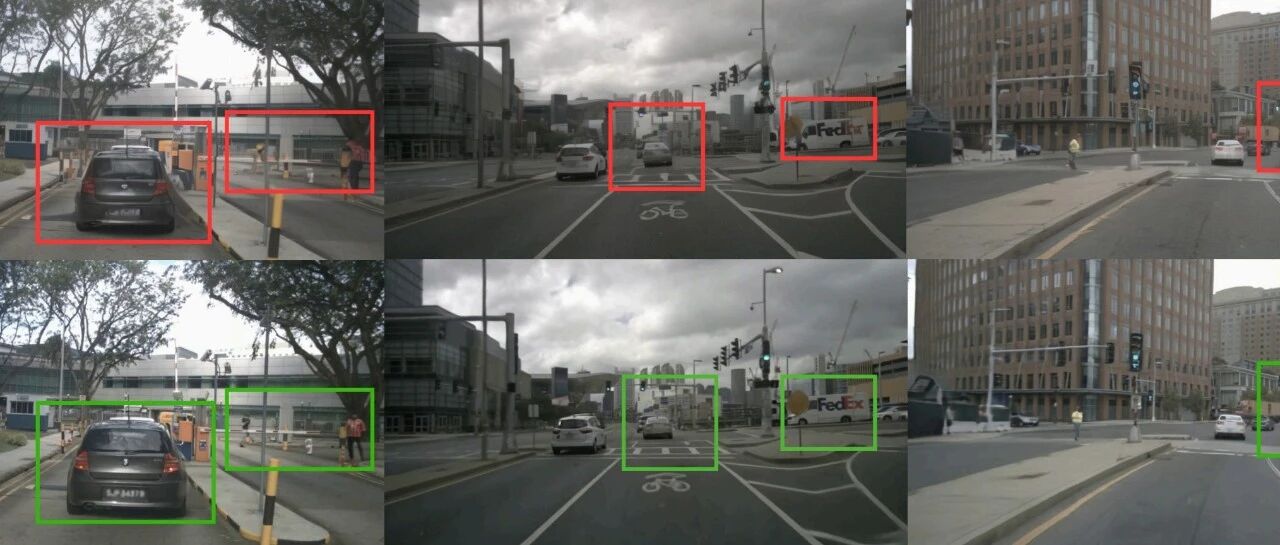
Core Viewpoint - The article discusses the advancements in autonomous driving technology, particularly focusing on the integration of world models to enhance system robustness and generalization in long-tail scenarios. It introduces DriveLaW, a unified world model that combines video generation and trajectory planning to address existing challenges in autonomous driving systems [2][5][43]. Group 1: Advancements in Autonomous Driving - Recent breakthroughs in perception and planning technologies have significantly improved autonomous driving capabilities [2]. - Existing systems still struggle with long-tail scenarios, limiting closed-loop driving performance [2]. - A surge of research is exploring world models to predict future driving scenarios, enhancing system robustness and generalization [2][3]. Group 2: World Model Applications - World models are being applied in various ways, including synthesizing data for rare scenarios, simulating environments for policy learning, and providing future visual predictions as supervisory signals [3]. - Current world models often lack tight coupling with decision-making processes, leading to indirect contributions to planning [3]. Group 3: DriveLaW Overview - DriveLaW is introduced as an end-to-end world model that innovatively shifts from parallel to chain structures in generation and planning [5]. - It leverages latent features from large-scale video generation models to enhance planning capabilities, ensuring consistency between generated visuals and planned trajectories [5][10]. - The model consists of two main components: DriveLaW-Video for video generation and DriveLaW-Act for trajectory planning [10]. Group 4: Performance Metrics - DriveLaW achieved a FID score of 4.6 and an FVD score of 81.3, surpassing previous world model approaches in video generation quality [35]. - In the NAVSIM benchmark, DriveLaW reached a PDMS score of 89.1 without any reinforcement learning fine-tuning, demonstrating its effectiveness in closed-loop planning [36]. Group 5: Training Strategy - A three-stage training strategy is employed to balance high-fidelity video synthesis and stable trajectory generation [34]. - The first stage focuses on learning robust motion patterns at reduced spatial resolutions, while the second stage enhances visual quality at higher resolutions [34]. - The final stage conditions the trajectory planner on the latent features from the video generator, effectively coupling generation and planning [34].