全球化

Search documents
2026:观“物”察变 把握全球经济趋势
Jin Rong Shi Bao· 2026-02-09 01:28
Global Economic Outlook - The World Bank projects a global economic growth rate of 2.6% for 2026, indicating a moderate growth environment with significant challenges [1] - The chief economist of ICBC International emphasizes the importance of returning to a deep observation of "things" to understand structural shifts in the economy amidst a rapidly evolving macro landscape [2] Structural Changes in the Economy - The evolution of "things" is occurring across five dimensions: globalization, industrial chains, value chains, natural resources, and technology [3] - Globalization is undergoing a structural shift, balancing efficiency, safety, and stability due to geopolitical tensions and rising technological barriers [3] - The focus of industrial competition is shifting towards R&D capabilities, manufacturing precision, supply chain collaboration, and organizational capabilities [3] - Value chains are increasingly concentrating on knowledge-intensive segments such as R&D design and data elements, moving from quantity production to value creation [3] - Resource allocation is being reshaped by energy constraints and carbon emission pressures, necessitating more efficient and sustainable growth methods [3] - New technologies, particularly AI, are transforming production functions and the combination of labor, capital, and technology [3] Growth Divergence - Structural differences between developed economies and emerging markets are expected to persist, with developed economies facing challenges like aging populations and limited fiscal space [4] - The IMF forecasts economic growth rates of 1.8% for developed countries and 4.2% for emerging markets in 2026, highlighting the ongoing divergence [4] - Emerging markets are experiencing internal restructuring, with some economies transitioning from rapid expansion to efficiency and quality-driven growth [5] AI's Contribution to Economic Growth - AI is beginning to contribute positively to economic growth, but its macroeconomic effects will take time to materialize through industry diffusion and production restructuring [7] - The OECD estimates that AI could increase annual total factor productivity (TFP) growth by 0.25 to 0.6 percentage points over the next decade, depending on technology adoption and organizational adjustments [7] - The IMF projects a cumulative TFP increase of about 0.7% over the next ten years due to AI, translating to an annual increase of approximately 0.07 percentage points [7] Global Trade and Supply Chain Dynamics - Geopolitical uncertainties are expected to pose significant risks to global trade in 2026, with the IMF predicting a trade growth rate of 2.6%, lower than previous years [9] - The current supply chain adjustments are seen as a self-adaptive process within the global trade system, enhancing stability and predictability despite short-term efficiency losses [10] - The focus on regional trade, nearshoring, and diversified supply sources is expected to create new opportunities for emerging economies and mid-level manufacturing countries [10] Central Bank Policy Divergence - The Federal Reserve is likely to adopt a more accommodative monetary policy in 2026, influenced by structural changes in the labor market and the need for proactive risk management [11] - The European Central Bank's policy will be shaped by inflation dynamics and economic recovery, balancing the need for further easing with growth constraints [12] China's Role in the Global Economy - China is projected to contribute approximately 30% to global economic growth in 2026, acting as a stabilizer and driving force in the global economy [13] - The country is expected to transition from capacity output to standard-setting, influencing global industrial dynamics and promoting a multipolar division of labor [14] - Through initiatives like the Belt and Road Initiative, China aims to reshape global trade dynamics by enhancing connectivity and supporting countries facing technological barriers [14]
三一集团积极拓展中东市场
Zheng Quan Ri Bao· 2026-02-08 16:45
Core Insights - SANY Group successfully secured orders worth several hundred million yuan during the 2026 Heavy Equipment Connect Forum & Expo held in Dammam, Saudi Arabia from February 2 to 4 [1] - The company showcased a full range of equipment and intelligent manufacturing achievements, aligning with local infrastructure and resource development needs [1] Group 1 - The exhibition theme "Create Future Together" highlighted SANY's solutions in mining, commercial concrete construction, road construction, and lifting operations, demonstrating China's technological strength to Saudi clients [1] - The Middle East market shows distinct demand characteristics, driven by Saudi Arabia's Vision 2030, leading to a strong need for large-scale and integrated heavy machinery [1] - The extreme working conditions in the Middle East, such as high temperatures and sandstorms, along with global green transition trends, have raised the bar for equipment durability, high-temperature performance, and low-carbon environmental standards [1] Group 2 - SANY's equipment features advanced core protection and efficient cooling systems, enabling stable operation in high-temperature environments up to 60°C, while incorporating intelligent scheduling and energy-saving technologies [2] - The exhibition served as an effective communication platform, allowing SANY to establish deep connections with local and regional companies, resulting in significant orders and cooperation intentions [2] - The global strategy of SANY Group focuses on "globalization, digitalization, and low-carbon development," supported by digital production capabilities and local service systems, which enhances brand recognition and market adaptability [2] Group 3 - The export of complete sets of equipment has significant economic and strategic implications, including higher added value, promoting the export of related industries, and driving domestic manufacturing upgrades [2] - SANY's approach represents a shift from merely selling products abroad to exporting Chinese manufacturing standards and brand influence, deepening cooperation with Middle Eastern countries [2] - This strategy enhances China's voice in the global equipment manufacturing industry and optimizes foreign trade structure by increasing high-value foreign exchange income [2]

三一集团斩获中东市场数亿元订单
Zheng Quan Ri Bao Wang· 2026-02-08 10:46
Core Insights - SANY Group successfully secured orders worth several hundred million yuan during the 2026 Heavy Equipment Connect Forum & Expo held in Dammam, Saudi Arabia, from February 2 to 4 [1] - The company showcased a full range of heavy machinery and advanced intelligent solutions, aligning with local infrastructure and resource development needs [1][2] - The Middle East market exhibits distinct characteristics, with strong demand for heavy machinery driven by Saudi Arabia's Vision 2030, emphasizing the need for complete equipment solutions [1][2] Group 1 - SANY Group's exhibition theme was "Create Future Together," presenting solutions for mining, commercial concrete construction, road construction, and lifting operations [1] - The company highlighted its technological strengths, including advanced core protection and efficient heat dissipation systems, enabling stable operation in high-temperature environments [2] - The exhibition served as a platform for SANY Group to establish connections with local and regional companies, resulting in significant orders and collaboration intentions [2] Group 2 - The global strategy of SANY Group focuses on globalization, digitalization, and low-carbon development, supported by digital production capabilities and local service systems [2] - The export of complete equipment is economically and strategically significant, enhancing the value-added of exports and promoting the upgrade of domestic manufacturing [2] - SANY Group's approach exemplifies high-quality global development for Chinese equipment manufacturers, enhancing brand recognition and deepening cooperation with Middle Eastern countries [2]
全国40%中欧班列,从新疆边陲小城驶向世界
Zhong Guo Xin Wen Wang· 2026-02-07 00:35
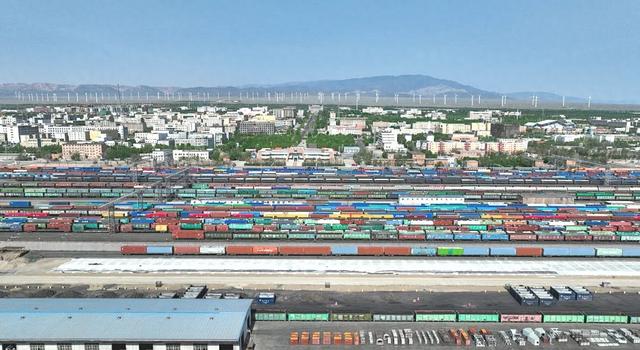
Core Insights - The article highlights the significant growth of the Alashankou port as a crucial hub for China-Europe freight trains, with a projected 8,165 trains passing through in 2025, averaging over 22 trains daily, marking a 6.3% year-on-year increase [1] - The port has become a vital link in the global supply chain, with nearly 40% of China's China-Europe freight trains passing through this small border town, connecting to 21 countries including Germany and Poland [1] Group 1 - The Alashankou port has achieved a historical peak of 30 trains passing through in a single day, symbolizing stability amidst global supply chain challenges [1] - The efficiency of cross-border logistics has improved significantly, with the average time for track changing and heavy loading reduced to just 2 hours, an 18.4% decrease from the previous year and nearly a 70% improvement over the past decade [3] - The port now operates 128 routes for China-Europe freight trains, creating a robust network that connects inland cities in China with European markets, facilitating rapid delivery of goods [5] Group 2 - The Alashankou port serves as a critical gateway for Chinese manufactured goods to reach European consumers, despite being a small town without a coastline [7] - The integration of advanced technology, such as the H986 large-scale inspection system, has enabled "unmanned customs clearance," allowing for efficient processing of thousands of products without delays [5] - The port exemplifies the transformation from historical trade routes to modern logistics, symbolizing a new era of connectivity in the global economy [9]

好书推荐·赠书|《全球化大变局:贸易冲突与秩序重构》
清华金融评论· 2026-02-06 11:37
Core Viewpoint - The article discusses the book "Globalization Changes: Trade Conflicts and Order Reconstruction," which analyzes the current US-China trade war, its historical context, and future implications for global economic relations [3][4]. Summary by Sections Historical Section: The Cycle and Warnings of Global Trade Conflicts - The historical perspective covers the rise and fall of globalization, highlighting the first "golden age" of globalization under British influence and the second under American leadership, leading to the current era of de-globalization marked by Trump's policies [6]. Causes Section: Strategic Logic Behind the US Tariff War - The section outlines the political economy of "America First," emphasizing the return of manufacturing, the rise of populism, and the structural imbalances in globalization that have led to the current trade conflicts [6]. Impact Section: Effects of Reciprocal Tariffs on the Global Economy - This part examines the essence of the US reciprocal tariff policy and its short-term and long-term impacts on the global economy and industrial chain structure, indicating significant disruptions in global financial markets [7]. China Section: Impact of Reciprocal Tariffs on China and Responses - The analysis suggests that the impact of US tariffs on China should not be underestimated, advocating for proactive and rational responses to the challenges posed by increased tariffs and potential investment restrictions [10]. Trend Section: Reconstruction of Globalization Order - The final section discusses the revolutionary restructuring of global supply chains, the deconstruction and reconstruction of international trade orders, and the technological frontiers of the next generation of trade wars [10].

自欺欺人!欧洲衰落怪中国?78岁德拉吉:世界秩序名存实亡
Sou Hu Cai Jing· 2026-02-06 11:31
Group 1 - The article discusses the current challenges faced by Europe, including stagnant economic growth, declining industrial competitiveness, and internal divisions, leading to a more passive global position [1] - Former Italian Prime Minister Draghi attributes Europe's decline to China, claiming that the global order has deteriorated since China's entry into the WTO, which he believes has negatively impacted Western trade [3][10] - The article criticizes Western politicians for shifting blame onto others instead of addressing internal issues, highlighting that Europe's aging population and declining workforce are significant factors in its economic struggles [4][6] Group 2 - The article emphasizes the importance of cooperation in a globalized world, arguing that viewing normal trade relations as threats leads to missed opportunities and exacerbates internal conflicts [7] - It points out that Europe's welfare system is under strain, creating significant fiscal pressure that complicates necessary adjustments [8] - The article argues that the real culprit behind Europe's challenges is not China, but rather the unilateralism of the United States, which disrupts global trade and forces Europe into geopolitical conflicts [13][21] Group 3 - The article highlights that Europe possesses high-end manufacturing capabilities and strong brands, particularly in sectors like automotive, chemicals, and luxury goods, which benefit from trade with China [17] - It notes that Chinese products, known for their cost-effectiveness, help reduce production costs for European companies and lower prices for consumers, thereby improving living standards [19] - The article concludes that Europe must confront its internal issues and focus on rational governance and innovation, rather than framing economic problems as ideological conflicts with China [25][26]

思科全球副总裁黄志明:中国市场对全球企业都非常重要
Zhong Guo Jing Ji Wang· 2026-02-06 04:46
Core Viewpoint - Cisco is committed to deepening its presence in the Chinese market, which is deemed crucial for the company and other global enterprises pursuing globalization [1]. Group 1 - Cisco has been operating in the Chinese market for 32 years [1]. - The company has established research and development centers, technology bases, supply chain centers, and global service centers in China [1]. - Cisco's operations in China not only serve local customers but also empower its global business [1].

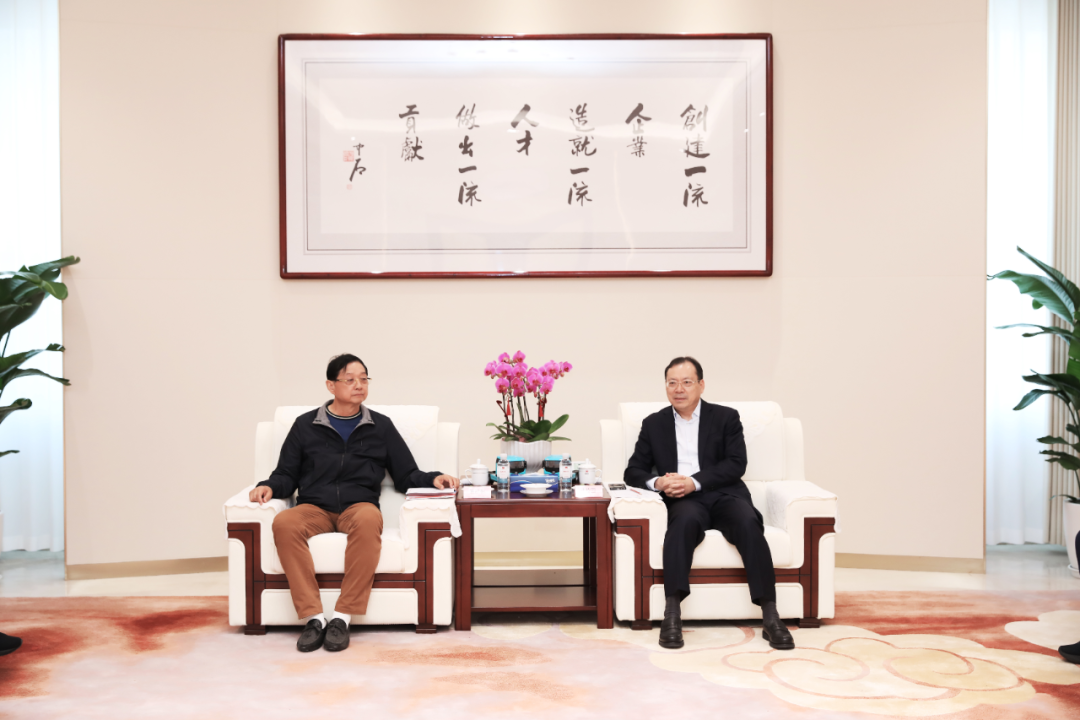
唐修国与澳森特钢曹跃彬会谈:深化协同、共促高质量发展
Xin Lang Cai Jing· 2026-02-05 12:25
Core Insights - The meeting on February 2 involved leaders from SANY Group and Aosen Special Steel Group, focusing on deepening industrial chain collaboration and promoting high-quality development [1][7] - Aosen Special Steel plans to purchase hundreds of SANY electric heavy trucks from June 2024 to December 2025, aiming to establish a leading benchmark for electric heavy trucks in Hebei [3][9] - SANY Group is concentrating on three strategic areas: globalization, digitalization, and low-carbon initiatives, to enhance productivity and drive high-quality development [4][9] Company Collaboration - Aosen Special Steel has successfully transformed from ordinary steel to high-quality special steel, with over 60% of its production now in special steel, and it leads the national market in prestressed steel strand production [4][10] - The collaboration aims to integrate upstream and downstream sectors of the industrial chain, focusing on core areas such as mining and steel machinery [3][9] - SANY Group's brand strength and service capabilities are seen as a solid foundation for the partnership, with both companies looking to empower the construction of a strong energy and manufacturing nation [10] Leadership Engagement - The meeting was attended by key executives from both companies, including SANY Group's Vice Presidents and other senior management [6][12] - SANY Group's Chairman expressed gratitude for the long-term support from Aosen Special Steel and highlighted the importance of their partnership in achieving mutual benefits [4][9]
【重磅深度/奇瑞汽车】深耕出海,多品牌协同拓展增长边界
东吴汽车黄细里团队· 2026-02-05 11:37
Key Points - The core viewpoint of the article emphasizes Chery Automobile's transformation into a global technology-driven automotive enterprise, focusing on both globalization and smart technology [2][14][15]. Group 1: Basic Information - Chery Automobile was established in 1997 and has transitioned from reverse engineering to a technology-driven enterprise, initially entering the mainstream and entry-level passenger car market with models like Fengyun and QQ [14]. - The company has a clear shareholding structure involving state-owned capital, strategic investors, and management, ensuring no direct interference in operations from state capital [14][15]. - Financial data shows improvement driven by the growth of new energy vehicles and exports, with significant revenue increases expected from 2022 to 2024 [19][21]. Group 2: Brand System - Chery has developed a five-brand system to meet diverse market demands, including Chery, Jetour, Exeed, iCAR, and Zhijie, each targeting different customer segments [38]. - The main brand, Chery, focuses on the mainstream market with high cost-performance and various powertrain options, while Jetour emphasizes family-oriented SUVs [41][46]. - Exeed targets the high-end market, iCAR is aimed at younger consumers with personalized electric vehicles, and Zhijie collaborates with Huawei to offer smart electric vehicles [41][57]. Group 3: Export Strategy - Chery's export strategy has evolved from focusing on developing markets to expanding into key markets like Russia and Europe, with a significant presence in Russia as of 2023 [62][66]. - The Tiggo series is central to Chery's product strategy, offering a range of energy types and configurations to adapt to different regional markets [70]. - The company has rapidly expanded its overseas dealer network, increasing from 252 to 1092 dealers between 2022 and 2025, supporting its global sales strategy [78]. Group 4: Technological Foundation - Chery is consolidating its smart technology development by integrating its subsidiaries into a centralized "Chery Intelligent Center" to enhance its R&D capabilities [82][83]. - The company employs a dual-track strategy of self-research and collaboration with leading technology partners like Huawei and Horizon to advance its smart driving technologies [83]. - Chery's vehicle platform structure includes traditional fuel platforms and new energy platforms, allowing for a layered approach based on price and technology paths [84]. Group 5: Profit Forecast and Investment Recommendations - Chery is projected to achieve net profits of 184 billion, 211 billion, and 254 billion yuan from 2025 to 2027, with a strong growth trajectory in new energy and export markets [6][88]. - The company is expected to maintain a higher valuation compared to its peers due to its robust growth in new energy vehicles and stable export position, receiving a "buy" rating for its stock [6][90].

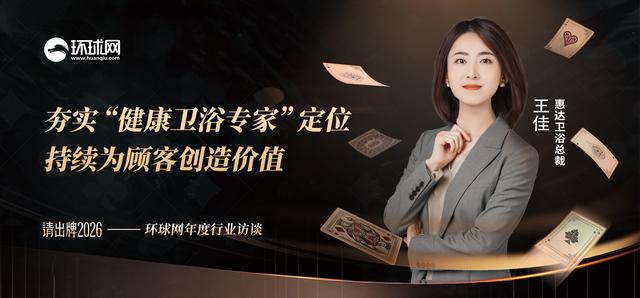
请出牌2026丨惠达卫浴王佳:夯实“健康卫浴专家”定位 持续为顾客创造价值
Huan Qiu Wang· 2026-02-05 10:14
Core Viewpoint - The Chinese home furnishing industry is undergoing significant changes in 2025, with companies needing to adapt their strategies to meet evolving consumer demands for quality and health [1][3] Group 1: Health Technology Focus - The most notable change in 2025 is the shift in consumer decision-making from brand premium and basic functionality to tangible value enhancement, particularly health value [3] - Huida Sanitary Ware has launched the "Deep Shield" series featuring a "full waterway sterilization" system, extending health protection throughout the entire water usage chain [3] - Huida has established itself as the first company in the sanitary ware industry to standardize the "full waterway sterilization" technology, providing a basis for "healthy sanitary ware" [3][5] Group 2: Addressing Market Challenges - In the context of a saturated market, Huida's Deep Shield series has become a core growth engine in the high-end market due to its unique health technology advantages [5] - To tackle the challenges of the renovation market, Huida has introduced the "Quick Installation Magic Box" solution, promising kitchen and bathroom renovations within 2 to 7 days with a ten-year warranty [5][7] - The company is focusing on the elderly care market by developing a complete product ecosystem to address the full range of elderly bathroom needs [7] Group 3: Global Expansion and Standards - Huida is committed to quality as a foundation for global competition, achieving certifications from various international quality systems, including ETL, UPC, CE, and Watermark [7][9] - The company aims to promote global mutual recognition of technology and standards, transitioning from merely exporting products to achieving technical recognition and standard alignment [9] Group 4: Strategic Direction and Innovation - The sanitary ware industry is experiencing structural changes, and future competition will focus on professional depth, technological research, supply chain collaboration, and user experience [10] - Huida is concentrating on the smart toilet segment as a core growth point for the next five to ten years, reinforcing its strategic direction and product foundation [10][11] - The company is transitioning to become a "scene integrator" to meet complex consumer demands for functionality, aesthetics, and emotional connection [11]