
自有品牌

Search documents
吉宏股份半年报:营收净利双增,A+H双资本平台发力
Zheng Quan Shi Bao Wang· 2025-08-20 10:47
Core Viewpoint - The report highlights significant growth in key financial metrics for Jihong Co., following its successful listing on the Hong Kong Stock Exchange, marking it as the first domestic cross-border social e-commerce and fast-moving consumer goods packaging A+H share company [1] Financial Performance - The company achieved a revenue of 3.234 billion yuan, representing a year-on-year increase of 31.79% [1] - The net profit attributable to shareholders reached 118 million yuan, up 63.27% year-on-year [1] - The net profit excluding non-recurring items was 113 million yuan, reflecting a 79.43% increase [1] - Operating cash flow net amount was 183 million yuan, a substantial increase of 377.8% year-on-year [1] Cross-Border E-Commerce Business - The cross-border social e-commerce segment generated revenue of 2.116 billion yuan, a growth of 52.91% year-on-year [2] - The net profit attributable to shareholders from this segment was 55.4 million yuan, marking a 97.67% increase [2] - The company utilizes an AI-driven "goods find people" model for targeted advertising on major social platforms, promoting Chinese industrial products globally [2] - The proprietary "Giikin 3.0" system integrates with various AI models to automate the entire process from product selection to customer service [2] - The business has expanded to over 40 countries and regions, maintaining a leading ROI in advertising [2] Packaging Business - The packaging segment reported revenue of 1.115 billion yuan, with a year-on-year growth of 10.04% [3] - The net profit attributable to shareholders in this segment was 75.7 million yuan, an increase of 34.43% [3] - The company maintains the top market share in domestic paper-based fast-moving consumer goods packaging [3] - The growth in food-grade eco-friendly packaging orders is driven by partnerships with major brands like Luckin Coffee, KFC, and McDonald's [3] - The company operates over 10 large packaging production bases nationwide, all certified under various quality and environmental management systems [3] Future Strategy - Jihong Co. plans to increase investment in AI research and its own brand development to enhance its cross-border e-commerce business [3] - The packaging division aims to focus on sustainability through green, intelligent, and low-carbon initiatives, while expanding its overseas market presence [3] - The company intends to leverage the advantages of Hong Kong's international financial center to deepen global market penetration and enhance brand value [3]

广州若羽臣上半年收入超13亿元 家清品牌绽家增长157%
Nan Fang Du Shi Bao· 2025-08-19 14:50
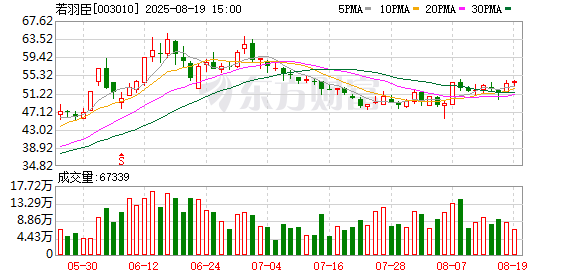
Core Viewpoint - The company, Ruoyuchen, reported significant growth in its 2025 semi-annual financial results, with revenue reaching 1.319 billion yuan, a year-on-year increase of 67.55%, and net profit of 72.63 million yuan, up 85.60% [2][3]. Revenue Breakdown - The self-owned brand business generated 603 million yuan in revenue, a substantial increase of 242.42%, accounting for 45.75% of total revenue [4]. - The brand Zhanjia achieved revenue of 444 million yuan, growing by 157.11%, while the health product brand FineNutri generated 160 million yuan [2][4]. Business Model and Growth Drivers - Ruoyuchen operates as an e-commerce service provider, managing online stores and marketing for brands, evolving from a pure agency model to brand management and self-owned brands [2]. - The brand management segment reported revenue of 335 million yuan, a growth of 52.53%, indicating a new growth curve for the company [7]. Sales Channels and Performance - The sales channel analysis shows that Douyin accounted for the highest sales proportion at 37.24%, with sales amounting to 489 million yuan during the reporting period [6]. - During the 618 shopping festival, the overall GMV for Zhanjia increased by over 160%, with significant growth across multiple platforms [4]. International Expansion Plans - The company plans to issue H-shares and list on the Hong Kong Stock Exchange, aiming to raise funds for product development, brand building, and global expansion [10]. - Ruoyuchen is considering entering the Southeast Asian market, where the cleaning products sector is projected to grow significantly, particularly in laundry products [11]. Legal Disputes - The company faced legal disputes with Mead Johnson and Mentholatum, involving contract and trademark issues, but has taken steps to mitigate potential impacts on its operations [8][9].

广州若羽臣上半年收入超13亿元,家清品牌绽家增长157%
Nan Fang Du Shi Bao· 2025-08-19 14:49
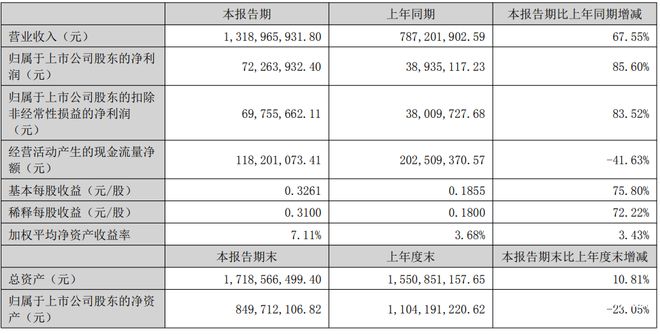
Core Viewpoint - The company, Ruoyuchen, reported significant revenue and profit growth in its 2025 semi-annual report, driven by its own brand business and brand management services [1][3]. Financial Performance - The company achieved operating revenue of 1.319 billion yuan, a year-on-year increase of 67.55% [2]. - Net profit attributable to shareholders was 72.26 million yuan, up 85.60% compared to the previous year [2]. - The self-owned brand business generated 603 million yuan in revenue, a substantial growth of 242.42%, accounting for 45.75% of total revenue [1][3]. Brand Performance - The brand "Zhanjia" generated 444 million yuan in revenue, reflecting a growth of 157.11% [3]. - The health product brand "Feicui" achieved revenue of 160 million yuan, with significant growth during the second quarter [5]. Sales Channels - The highest sales revenue came from Douyin, accounting for 37.24% of total sales, with a reported sales amount of 489 million yuan [6]. - During the 618 shopping festival, the overall GMV for "Zhanjia" increased by over 160%, with significant growth across multiple platforms [3]. Brand Management and Operations - The brand management business generated 335 million yuan, a year-on-year increase of 52.53% [6]. - The company’s agency operation business reported revenue of 380 million yuan, a slight decline of 2.79%, but with improved overall gross profit margins [7]. Legal Disputes - The company faced legal disputes with Mead Johnson and Mentholatum, involving contract and trademark issues, respectively [7][8]. - A court ruling required Mead Johnson to pay Ruoyuchen 18.47 million yuan, while Ruoyuchen was ordered to pay 750,000 yuan for product costs [7][8]. Future Plans - Ruoyuchen plans to issue H-shares and list on the Hong Kong Stock Exchange, aiming to raise funds for product development, brand building, and global expansion [9]. - The company is focusing on expanding into Southeast Asian markets, particularly with its self-owned brand "Zhanjia," which has significant growth potential in the region [10].
爱婴室2025年上半年扣非后净利增长20.65% 自有品牌蓬勃发展
Zheng Quan Shi Bao Wang· 2025-08-19 03:57
Core Insights - The company reported a revenue of 1.835 billion yuan in the first half of 2025, representing a year-on-year growth of 8.31% [1] - The net profit attributable to shareholders was 46.738 million yuan, up 10.17% year-on-year, while the net profit after deducting non-recurring items was 36.966 million yuan, reflecting a growth of 20.65% [1] - The company plans to distribute a cash dividend of 1.30 yuan per 10 shares to all shareholders as part of its profit distribution plan for the 2025 interim period [1] Expansion and Operations - The company operates nearly 500 offline stores, leading the domestic market in the mother and baby specialty retail sector, particularly in cities like Shanghai, Ningbo, and Wuhan [2] - In the first half of 2025, the company accelerated its store expansion, opening 34 new quality mother and baby stores across 22 cities, enhancing its regional brand influence [2] - A new store model was launched in Shanghai, focusing on space optimization, product enhancement, and customer satisfaction, which has improved customer acquisition and operational efficiency [2][3] Product Development and Brand Strategy - The company has enhanced its private label products, achieving over 30% sales contribution from its own brands, including nutritional and health food series [4] - The company has introduced a "one-price" strategy for children's clothing to address consumer pain points related to price complexity and homogeneity [5] - The company announced a new corporate culture brand strategy aimed at becoming a leading mother and baby health brand in China, emphasizing responsibility, quality, professionalism, and innovation [5] Market Trends and Government Policies - The implementation of a national childcare subsidy policy starting January 1, 2025, will provide families with 3,600 yuan per year for each child until the age of three, which is expected to support sustainable growth in the mother and baby industry [5]

胖东来等商超发力自有品牌谋突围
Zheng Quan Ri Bao· 2025-08-18 16:10
Group 1 - The retail industry consensus is to break through with private labels, as seen in various companies like Budonglai and Hema Fresh [1] - Companies like Bubu Gao reported a net profit of 201 million yuan in the first half of the year, turning losses into profits by implementing a private label strategy [1] - Hongqi Chain achieved a net profit of 281 million yuan, a year-on-year increase of 5.33%, by diversifying its product matrix and expanding its private label offerings [1] Group 2 - Baoyuezhong from Baum Consulting emphasized that developing private labels helps retailers form differentiated competitive advantages and transition from price competition to value competition [2] - Zhongbai Holdings introduced over 300 new private label products, while Chongqing Department Store's private label "Baoyuantong" generated 15 million yuan in sales from four stores [2] - Xinhua Department Store is expanding its private label range to reduce costs and improve sales margins through direct sourcing and joint farming [2] Group 3 - The development of private labels is seen as beneficial for the overall growth of the retail industry, enhancing profit margins and supply chain efficiency [2] - However, challenges such as product homogeneity, quality issues, and lack of innovation have emerged, impacting consumer experience and industry health [2] - Baoyuezhong advised that retailers should avoid blindly following trends and instead focus on positioning and developing a systematic approach to private label creation [3]


永辉超市20250818
2025-08-18 15:10
Summary of Conference Call on Yonghui Supermarket Industry Overview - The retail industry is undergoing a transformation during the economic adjustment period, with consumers increasingly focusing on cost-effectiveness. Retailers and distributors are showing higher growth potential compared to traditional food and beverage companies, as evidenced by the annualized returns of Japanese and American retail companies exceeding those of traditional firms during similar economic conditions [2][3]. Key Insights on Yonghui Supermarket - Yonghui Supermarket, as a major Chinese retail chain, is positioned to capitalize on the low online penetration rates in food and beverage sectors. The company aims to enhance its competitive edge through improved operational efficiency, optimized supply chain management, and innovative service models [2][8]. - The shift from deep distribution to large-scale, multi-category distribution in China is driven by declining terminal sales momentum and increasing consumer demand for high-cost performance products. This new distribution model enhances risk resistance by lowering markup rates and improving efficiency [2][7]. Consumer Behavior and Market Dynamics - Despite the rapid growth of e-commerce in China, offline supermarkets still have significant development potential. Online consumption has plateaued at over 30%, with substantial differences in online penetration rates across product categories. For instance, beverages and snacks have online penetration rates below 20%, particularly in lower-tier cities [2][5]. - Instant retail is expected to coexist with traditional supermarkets, primarily catering to convenience needs but often at higher prices. Price-sensitive consumers are likely to prefer large chain supermarkets that offer lower prices and guaranteed quality [2][6]. Yonghui's Strategic Initiatives - Yonghui's new model eliminates entry fees, leading to lower terminal prices and a more competitive product mix tailored to consumer preferences. The emphasis on baked goods and prepared foods aligns with the growing demand for convenience among aging and smaller households in China [4][14]. - The company is expanding its private label offerings to provide lower-priced products, thereby creating a price advantage and broadening its product range [4][17]. Financial Performance and Future Outlook - Yonghui's financial performance is influenced by high headquarters financial costs, projected to be around 1 billion to 1.1 billion yuan in 2024. However, these costs are expected to decrease as cash flow improves and new store openings generate positive cash flow [26]. - The forecast for Yonghui's store profitability indicates potential growth, with expectations of achieving profits of 1.815 billion yuan in 2026 and 2.38 billion yuan in 2027, assuming a stable sales performance across its stores [24][27]. Challenges and Competitive Landscape - The Yonghui model is not easily replicable by other supermarkets due to high capital requirements, scale advantages, and extensive experience in fresh produce management. These factors contribute to Yonghui's competitive edge in the market [22]. - The company faces uncertainties regarding individual store performance and the potential for exceeding expectations, particularly in lower-tier markets where e-commerce penetration is low [27]. Conclusion - Yonghui Supermarket is well-positioned to leverage its strengths in supply chain management and operational efficiency to navigate the current economic landscape. By focusing on enhancing its product offerings and optimizing its business model, Yonghui has the potential to emerge as a strong investment opportunity in the retail sector [28].

自有品牌是“陷阱”?
3 6 Ke· 2025-08-12 08:41
Core Viewpoint - The rise of private labels in retail is seen as a crucial strategy for brick-and-mortar stores to protect themselves against the competition from instant retail and online platforms, with companies like Aldi and Pang Donglai setting benchmarks in the industry through their strong private label development capabilities [1][4]. Group 1: Development of Private Labels - Metro was the first to gain customer trust with its private label in China, launching in 1996 and expanding rapidly by 2010 [2] - Costco and Sam's Club also successfully introduced their private labels in China, leveraging online platforms and strong product offerings to attract consumers [2] - Domestic retailers like Wumart and CR Vanguard have followed suit, creating their own private label brands to compete in the market [3] Group 2: Challenges and Strategies - Many domestic retailers struggle to create impactful private labels due to reliance on suppliers and lack of unique branding strategies, leading to prices that do not reflect the cost advantages of private labels [3][6] - Successful private label strategies, as seen with Aldi and Pang Donglai, involve direct procurement from manufacturers and the ability to set competitive prices, enhancing brand image and market position [4][5] - The development of private labels requires significant investment and a shift in operational strategy, with many retailers needing to adopt a long-term perspective to see returns [6][8] Group 3: Quality Control and Risks - The emphasis on low prices for private labels can compromise product quality, as retailers may cut corners on materials and quality control [7] - Retailers face significant risks if private label products fail to meet quality standards, which can damage their reputation and customer trust [7][11] - The need for a comprehensive quality control system is critical, as evidenced by recent quality issues faced by major retailers like Sam's Club [11] Group 4: Collaboration Between Manufacturers and Retailers - The trend of co-branding between manufacturers and retailers is emerging as a solution to leverage strengths from both sides, allowing for better product quality and competitive pricing [9][10] - Successful co-branding requires alignment on product understanding and quality assurance between both parties [10] Group 5: Future Outlook - The private label market in China is still in its early stages, with many retailers only beginning to explore this avenue [6] - The potential for private labels to transform the retail landscape is significant, but requires careful planning and execution to avoid pitfalls [8][11]
荷兰超市省钱妙招失灵?60%营收靠美国!超市CEO:绝不转嫁消费者
Sou Hu Cai Jing· 2025-08-11 17:49
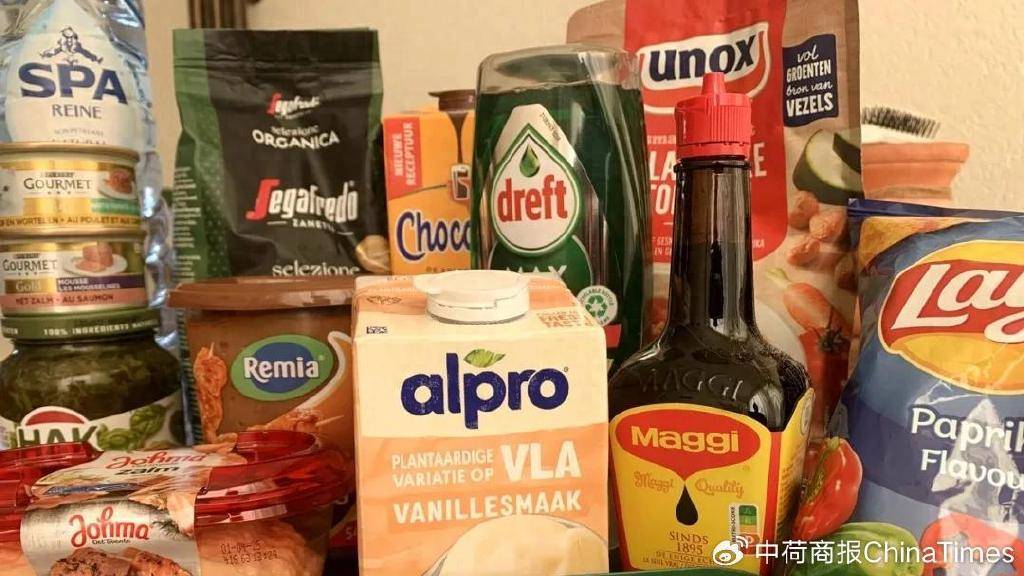
Group 1 - The core viewpoint is that private labels are gaining popularity among consumers in Europe due to dissatisfaction with rising prices of A-brands, providing supermarkets with valuable insights during negotiations with these brands [1][4] - Ahold Delhaize is collaborating with other European supermarket groups for joint purchasing to secure better prices, as significant price discrepancies exist across countries [4] - The growth of private labels is enhancing Ahold Delhaize's negotiating power with A-brands, allowing them to use their own products as comparison materials during negotiations [4] Group 2 - The impact of the trade war between the US and Europe has been minimal for Ahold Delhaize, as the company primarily sources food locally for its supermarkets [6] - However, rising costs of packaging materials, particularly aluminum and steel, are expected to affect the costs of products sold in US supermarkets [6] - The company is exploring smarter solutions to mitigate the impact of rising costs without passing them on to consumers [6]
Assaí Atacadista(ASAI) - 2025 Q2 - Earnings Call Transcript
2025-08-08 15:00
Financial Data and Key Metrics Changes - The company reported revenue of 21 billion reais for the second quarter, with same-store sales lagging behind food inflation, which was around 7% to 7.5% [4] - EBITDA margin pre-IFRS increased by 30 basis points year-over-year to 5.7%, reflecting store maturity and innovation efforts [6] - Free cash flow before interest payments was 2.7 billion reais, with a conversion rate of approximately 90% of EBITDA into cash [7][21] - Net debt decreased by 200 million reais year-over-year, with a leverage ratio dropping to 3.17, down 0.48 from the previous year [9][22] Business Line Data and Key Metrics Changes - The company is focusing on store maturity, particularly for converted stores, which are still in the maturation phase [5][12] - The average sales per store in downtown areas reached approximately 26 million reais, indicating strong performance despite ongoing maturity challenges [11] Market Data and Key Metrics Changes - The company noted a persistent trade-down movement of about 3.5% to 4%, influenced by high interest rates and changing consumer behaviors [4] - The penetration rate across various social classes has improved, with significant engagement from classes A, B, and C [14][16] Company Strategy and Development Direction - The company is focused on expanding its product categories, including private labels, particularly in the Southeast region of Brazil [16][60] - There is an emphasis on enhancing customer experience through new projects and services, aiming to break down the stigma associated with cash-and-carry formats [16][46] - The company is also exploring opportunities in the pharmaceutical sector, pending legal approvals [70] Management's Comments on Operating Environment and Future Outlook - Management expressed optimism about the second half of the year, despite acknowledging the challenges posed by inflation and consumer purchasing power [32][44] - The company is cautious about the trade-down phenomenon, noting that it may not solely be driven by economic factors but also by changing consumer habits [36][38] Other Important Information - The company has implemented various ESG initiatives, including social inclusion programs and sustainability efforts, which have contributed to its brand value [29][30] - The company has been recognized as one of the best places to work in its segment, reflecting its commitment to employee satisfaction and customer service excellence [30] Q&A Session Summary Question: How is the company positioned in the current disinflation scenario? - Management indicated that while there are pressures on consumer purchasing power, they expect some normalization in product categories and are focusing on new projects to drive volume [32][34] Question: What is the reason for the higher tax rate observed? - The higher tax rate is attributed to changes in tax substitution processes due to reforms in certain states, impacting the correlation between net and gross sales [39][40] Question: Can you elaborate on the private label implementation project? - The private label project aims to increase margins and competitiveness, with expectations of launching in the second half of the year [57][60] Question: What is the current status of the drugstore project? - The drugstore project is still under discussion, with potential benefits for the company once approved, leveraging existing infrastructure to enhance competitiveness [70][72] Question: How is the company addressing the challenges in the B2B segment? - Management noted that B2B sales remain stable, with a focus on adjusting payment terms and pricing strategies to maintain competitiveness [48][51]
盒马退场 本土会员店还有市场吗
Mei Ri Shang Bao· 2025-08-05 22:17
Core Insights - The closure of Hema X membership stores indicates challenges faced by local membership store models in China, contrasting with the success of international players like Sam's Club [1][2][4] - Membership stores target middle-class families and high-end consumers, relying on high-frequency and high-ticket purchases to create customer loyalty [2][3] Group 1: Market Performance - Walmart's international business reported Q1 2025 revenue of $29.8 billion, with China contributing $6.7 billion, reflecting a 22.5% year-on-year growth, significantly above the global average [2] - Sam's Club in China has surpassed 5 million members by 2025, generating over 1.3 billion yuan in annual membership revenue [2] Group 2: Supply Chain Management - Successful membership stores like Sam's Club have a robust supply chain management system that encompasses product selection, quality control, logistics, warehousing, and pricing [3] - Sam's Club's product selection process involves optimizing supplier processes and even participating in product design, which is difficult to replicate [4] Group 3: Future Outlook - The exit of Hema X membership stores is seen as a temporary setback for local membership models, with expectations for more domestic companies to enter the market [4] - The future success of local membership stores will depend on refining supply chains and developing proprietary brands, rather than mere imitation of successful models [4]