
资产配置

Search documents
10月香港保险大变动!错过少赚10万美金
Sou Hu Cai Jing· 2025-09-27 03:34
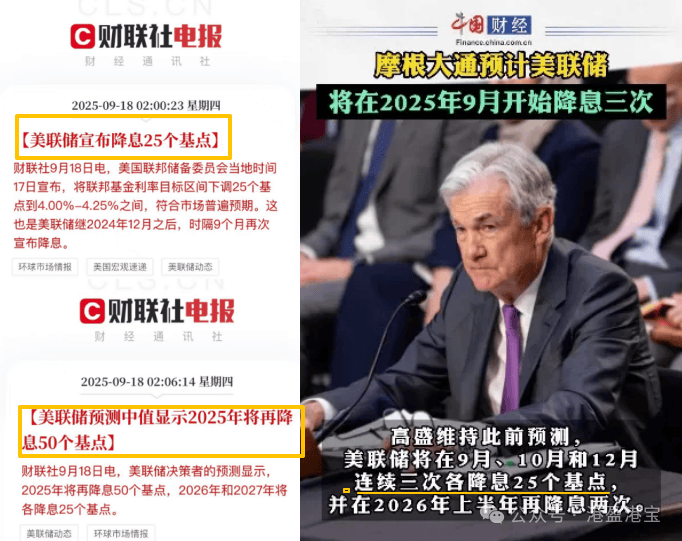
Core Insights - The Federal Reserve's recent interest rate cut is expected to lead to adjustments in Hong Kong's savings insurance products, with potential reductions in guaranteed interest rates and first-year discounts starting in October [3][5][10]. Group 1: Interest Rate Changes - Following the Federal Reserve's decision to cut rates, JPMorgan anticipates two more cuts this year, totaling 50 basis points [3]. - Current guaranteed interest rates of 4.3%-5% may be reduced to below 3% after October, with some insurers likely tightening first-year bonuses and discounts [5][9]. Group 2: Impact on AIA and Other Insurers - AIA is reportedly planning to cancel its prepayment guarantee rate offer after October, which could significantly affect returns for policyholders [5][10]. - For example, a policy with a total premium of $200,000 over five years could see a reduction in total interest earnings from $103,151 (approximately 51.5% of the first-year premium) to a much lower figure if the guarantee is removed [5][8]. Group 3: AIA's Competitive Position - AIA's "Universal Income" savings insurance product is highlighted for its strong performance and reliability, boasting a total asset base of $305.5 billion and a solvency ratio exceeding 250% [10]. - The product offers a long-term return potential of up to 6.5%, making it competitive in the market [11][12]. Group 4: Flexibility and Withdrawal Options - AIA's policies provide flexible withdrawal options that do not affect the remaining capital's growth, catering to various financial needs such as education, retirement, and inheritance [13]. - The policy allows for significant withdrawals while maintaining a growing balance, making it suitable for long-term financial planning [13]. Group 5: Investment Strategy Post-Rate Cut - With the anticipated decline in bank interest rates, it is advised to diversify investments across short, medium, and long-term assets rather than relying solely on bank deposits [14]. - AIA's savings insurance is positioned as a viable alternative, offering high returns, low risk, and liquidity that traditional bank products may not provide [14].


资产价值轮动,豪宅持续火爆,新周期下如何赢取先机?
3 6 Ke· 2025-09-27 02:30
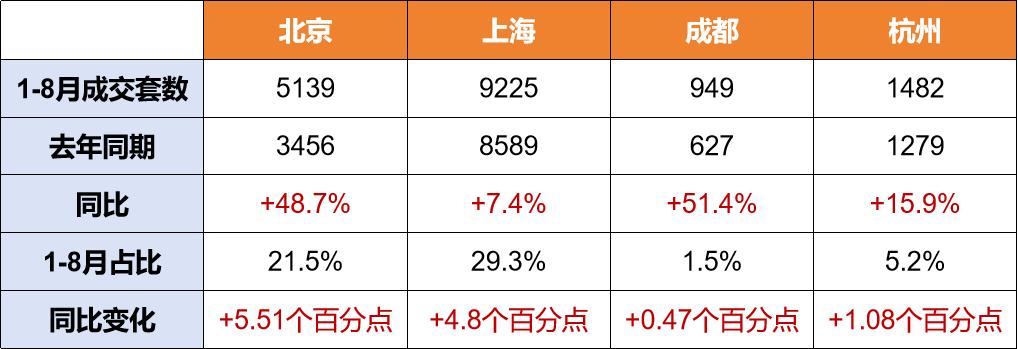
Core Insights - The luxury real estate market in major Chinese cities is experiencing a significant upturn despite the overall real estate market being in a stabilization phase [1][3] - High-net-worth individuals are increasingly viewing luxury properties as a "hard currency" for asset allocation [1] Summary by Sections Luxury Market Performance - From January to August 2023, the number of new homes sold for over 10 million yuan in Beijing, Shanghai, Chengdu, and Hangzhou has increased year-on-year, with Beijing seeing a 48.7% rise, Shanghai 7.4%, Chengdu 51.4%, and Hangzhou 15.9% [2] - The proportion of luxury home sales in total new home transactions has also risen across these cities [2] Market Dynamics - The recent interest rate cut by the Federal Reserve signals the beginning of a new global easing cycle, which is expected to lead to a revaluation of various asset classes, including real estate [3][6] - Historical data shows that during the last Fed easing cycle (2019-2021), luxury home prices in first-tier cities maintained high levels, with prices for new homes over 144 square meters rising consistently [3][4] Foreign Investment and Policy Changes - Recent policy changes by the State Administration of Foreign Exchange have facilitated foreign investment in Chinese real estate, further boosting demand for luxury properties [6] Importance of Location - Location remains a critical factor in the value of luxury real estate, with prime areas showing stronger resilience during market downturns [7] - High-end properties in core locations attract a broad buyer base, including international investors, due to their inherent scarcity and value [7] Guangzhou Market Trends - The high-end residential market in Guangzhou is mirroring the national trend, with a notable increase in transactions for properties priced over 20 million yuan [8][11] - The Zhujiang New Town area in Guangzhou has emerged as a preferred location for high-net-worth individuals, accounting for 38% of the city's luxury home transactions [14] Investment Opportunities - The recent launch of new luxury projects, such as the Kai Xuan New World, has garnered significant attention and sales, indicating strong market demand [20][22] - The combination of "certainty" and "growth potential" in luxury properties makes them attractive investment options for high-net-worth individuals [22] Community and Lifestyle - The "Guangyue International Community" concept is establishing a new model for high-end living and social interaction, enhancing the appeal of luxury properties in Guangzhou [23][26] Conclusion - The current low-interest-rate environment presents an opportune moment for diversifying asset allocations, with luxury real estate in prime locations being a favorable investment target [27]
每日钉一下(美联储降息,大家关心的3个问题)
银行螺丝钉· 2025-09-26 14:00
Core Viewpoint - The article discusses the implications of the Federal Reserve's interest rate cuts on global assets, particularly focusing on the benefits for A-shares and Hong Kong stocks, as well as the potential future trends in U.S. dollar interest rates [5][7][12]. Group 1: Impact of Federal Reserve Rate Cuts - The Federal Reserve's recent rate cut of 25 basis points is seen as a positive development for global assets, with A-shares and Hong Kong stocks benefiting significantly [5][7]. - Historically, the last bull market in Hong Kong stocks occurred during a period of U.S. dollar rate cuts, indicating a correlation between lower rates and rising stock prices [7]. - The positive effects of rate cuts may diminish over time, suggesting that the market's response could be less pronounced with each subsequent cut [7]. Group 2: Market Expectations and Timing - Market movements often reflect expectations of rate cuts before they are officially announced, as seen with the significant rise in A-shares and Hong Kong stocks in anticipation of the September rate cut [8][9]. - The analogy of a child anticipating a birthday gift illustrates how market participants adjust their expectations based on anticipated actions from the Federal Reserve [10]. Group 3: Future Rate Projections - Market expectations indicate that the Federal Reserve may implement additional rate cuts, potentially lowering rates by another 50 basis points [12]. - The long-term trend suggests that U.S. dollar interest rates may eventually return to historical averages of 2%-3%, which could have significant implications for the cost of servicing dollar-denominated debt [12][13]. - A future increase in U.S. dollar interest rates could negatively impact non-dollar assets, as evidenced by the sharp decline in Hong Kong stocks during the last rate hike cycle [13]. Group 4: Investment Strategy - The article emphasizes that interest rates are cyclical and should be viewed as short-term factors influencing market fluctuations, creating opportunities for undervalued purchases and overvalued sales [13].

如何用更小的风险,换取尽量高的投资收益?
雪球· 2025-09-26 13:00
Core Concept - The article emphasizes the importance of understanding the "collaboration" between assets in investment allocation, which is mathematically represented by "correlation" [3][4]. Asset Allocation Principles - Ideal investment portfolios should consist of assets with varying correlations: assets with a correlation close to +1 move together, those with a correlation close to -1 move inversely, and those with a correlation close to 0 operate independently [4]. - The modern portfolio theory proposed by Nobel laureate Harry Markowitz suggests that scientific diversification can significantly reduce risk without sacrificing returns [4]. Mathematical Framework - For perfectly negatively correlated assets (correlation of -1), the allocation ratio should be inversely proportional to their volatility. If two funds have the same volatility, equal allocation is appropriate [5][7]. - If the volatilities differ, the allocation should favor the asset with lower volatility. For example, if Fund A has a volatility of 10% and Fund B has 30%, the optimal allocation would be 75% in Fund A and 25% in Fund B [7]. - For assets with a correlation close to 0, the allocation ratio should be inversely proportional to the square of their volatility. This allows for optimization of the risk-return profile even among uncorrelated assets [10][13]. Investment Insights - Including negatively correlated assets in a portfolio can effectively reduce overall volatility. While perfectly negatively correlated assets are rare, seeking low or negatively correlated assets remains a valid strategy for optimizing investment portfolios [9]. - The article illustrates that even with uncorrelated assets, appropriate weight allocation can enhance the risk-return ratio. For instance, a combination of five uncorrelated assets can reduce volatility significantly compared to individual assets [15]. Addressing Concerns about Returns - The article argues that proper asset allocation does not diminish returns; rather, it can stabilize and enhance them. The key is to select high-performing assets rather than diversifying for the sake of it [17]. - Examples provided include combining U.S. stocks with A-shares, both of which have long-term annualized returns of around 8-10%, resulting in a stable combined return while reducing volatility [17]. Practical Guidelines for Portfolio Construction - Step 1: Diversify across major asset classes such as stocks (high long-term returns, high volatility), bonds (stable returns, low volatility), and commodities (inflation hedge) [21]. - Step 2: Diversify by region and strategy, investing in various markets and styles to mitigate risks [21]. - Step 3: Regularly rebalance the portfolio to maintain the desired asset allocation, selling portions of assets that have appreciated significantly and buying those that have declined [21].

黄金投资市场调查:购买热情不减,普遍预期上涨
Hua Xia Shi Bao· 2025-09-26 12:24
Core Viewpoint - The gold market has recently experienced a volatile pattern, with prices reaching historical highs before retreating slightly, indicating ongoing investor interest despite potential risks [2][3][8]. Group 1: Gold Price Trends - On September 23, spot gold prices peaked at $3,790.97 per ounce, while COMEX gold futures reached $3,824.6 per ounce, both marking historical highs [2][8]. - Following these peaks, gold prices have seen a slight decline but remain within a high range, suggesting a potential for further fluctuations [2][3]. Group 2: Investor Sentiment - Investor enthusiasm for gold remains strong, with reports of customers actively purchasing physical gold, such as 20-gram and 100-gram gold bars [3]. - A Beijing investor reported a 28% return on her gold investment over three years, highlighting the attractive returns associated with gold [4]. - Many investors view gold as a stabilizing asset in their portfolios, with some expressing a long-term commitment to gold investments despite market volatility [6][7]. Group 3: Market Analysis and Predictions - Analysts suggest that while gold prices are currently high, the long-term outlook remains positive due to factors such as the anticipated Federal Reserve interest rate cuts, ongoing global uncertainties, and persistent inflation pressures [7][9]. - Historical trends indicate that gold prices typically rise following the initiation of a rate-cutting cycle, with an average increase of 6% within 60 days [8]. - The demand for gold is expected to continue, driven by geopolitical risks and the potential for increased investment from asset management firms incorporating gold into their portfolios [9][10].

特斯拉助攻“放开讲”上海场热力爆棚:复盘、预测、方法论一次打包
老徐抓AI趋势· 2025-09-26 11:52
Group 1 - The atmosphere of the offline meeting in Shanghai was notably positive, largely attributed to Tesla's strong performance, with one-third of attendees owning a Tesla and the rest expressing admiration [2] - The meeting included a review of key decisions made in the first half of the year, such as the strategic buying of the Nasdaq and Philadelphia Semiconductor in April, the shift in outlook for the A-share market, and the belief in an improving economic cycle in China [2] - Future predictions and judgments were shared, along with an internal research methodology aimed at identifying the next major companies like Amazon, Tesla, Apple, and Nvidia, referred to as "Lao Xu's Business Cycle Model" [2] Group 2 - Investment and asset allocation are crucial for long-term wealth growth, with insights from two financial planners discussing three major asset transfer trends and the current real estate market [3] - Specific asset planning cases were presented, providing practical advice that resonated with attendees [3] - Successfully managing investment and asset allocation can position families to achieve stable asset growth, with the potential to outperform over 90% of the population [5] Group 3 - The company will take a break from offline meetings in October, with plans to announce the November meeting location once confirmed [8]

国内权益资产震荡,资产配置策略整体回调:大类资产配置模型周报第37期-20250926
GUOTAI HAITONG SECURITIES· 2025-09-26 11:29
Group 1 - The report indicates that the overall asset allocation strategy has experienced fluctuations due to domestic equity asset volatility, with various models recording different degrees of decline [1][4][7] - The performance of major asset classes from September 15 to September 19, 2025, shows that the S&P 500, Hang Seng Index, and other indices recorded gains, while convertible bonds and gold experienced declines [7][10] - The domestic asset BL model 1 and model 2 both reported a weekly return of -0.04%, while the global asset BL models had slightly better performance with a return of -0.01% for model 1 and -0.03% for model 2 [15][17] Group 2 - The Black-Litterman (BL) model is highlighted as an improvement over traditional mean-variance models, integrating subjective views with quantitative models to optimize asset allocation [12][13] - The domestic asset risk parity model achieved a return of -0.02% for the week, while the global asset risk parity model recorded a positive return of 0.05% [21][22] - The macro factor-based asset allocation strategy reported a weekly return of -0.1%, with a year-to-date return of 3.25%, indicating its performance amidst changing economic conditions [27][28]
一个单一家办的投资进化论:在不确定中寻找确定性
3 6 Ke· 2025-09-26 07:42
Group 1 - The essence of family office mission is to maintain and enhance long-term purchasing power, focusing on the ability to exchange money for more goods and services in the future [3][28][29] - Risk management emphasizes understanding and prevention rather than mere control, preparing for uncertainties with contingency plans [4][3] - The investment strategy is based on macroeconomic cycles, with a focus on maintaining a stable annual return of over ten percent during economic adjustments [2][10] Group 2 - The company has transitioned from being a "follow-on investor" to an "asset creator," recognizing the need for direct involvement in market understanding and asset management [9][10] - Investment decisions are guided by a combination of macroeconomic conditions and specific industry dynamics, with a focus on sectors in growth phases [14][20] - The investment philosophy includes a "dynamic monopoly dividend portfolio," aiming for long-term stability and risk reduction through diversified asset allocation [24] Group 3 - The company has identified high-value opportunities in the bond market, particularly in local government bonds, which were mispriced due to market conditions [20][21] - The approach to overseas asset allocation is primarily focused on the U.S. market, with a strategic shift towards undervalued Chinese assets [25][26] - The family office industry is characterized by a need for improved professional investment research and decision-making capabilities, particularly in distinguishing between quality general partners [32][34] Group 4 - The family office's mission encompasses both wealth preservation and value creation, with a focus on maintaining purchasing power over time [28][29] - The industry is experiencing a shift towards secondary market investments as many family offices reassess the liquidity and transparency of equity investments [33][34] - Future opportunities in wealth management are driven by the substantial demand for trustworthy asset management, particularly in a post-cycle economic environment [34]

新时代 新基金 新价值——中国公募基金新政引领行业从“重视规模”迈向“价值革命”
Xin Lang Ji Jin· 2025-09-26 02:04
Core Viewpoint - The China public fund industry is undergoing a historic transformation driven by the "New Era, New Fund, New Value" theme, marking a significant shift towards high-quality development and a "value revolution" in the sector [2][9]. Group 1: Operational Perspective - The CSRC's action plan targets the "profit-making" model of the public fund industry, emphasizing a shift to a performance-based management fee structure that ties fund company profits to investor returns [3]. - The traditional commission-based sales model is under pressure, prompting sales institutions to pivot towards value-added services like investment advisory and asset allocation [3]. - The adoption of technology and data analytics is expected to reduce costs and drive competition, leading to a "data and AI-driven" phase in the industry [3]. Group 2: Functional Perspective - The regulatory framework is being restructured to focus on long-term performance, with a significant increase in the weight of three-year returns in assessments, discouraging short-term speculation [4]. - Enhanced performance benchmarks will enforce stricter adherence to investment styles, pushing active equity funds to compete directly with index-enhanced products [4]. - New metrics for assessing investor returns will shift the focus from marketing to client experience, fostering a culture of "responsible investing" [4]. Group 3: Development Perspective - The industry is seeing an expansion of equity funds, with rapid registration processes for ETFs and optimized approval for fixed-income products, creating a positive feedback loop for innovation and capital inflow [5]. - The introduction of derivative tools will allow public funds to engage in more sophisticated strategies, potentially leading to a "hedge fund-like" product offering [6]. - The integration of research platforms and AI technology is expected to shift the focus from individual star managers to systematic investment capabilities [6]. Group 4: Investor Perspective - A new compensation structure will hold fund managers accountable for underperformance, fostering a shared interest between investors and fund managers [7]. - Enhanced transparency measures will provide investors with clearer insights into fund performance, shifting decision-making from rankings to actual investor experiences [7]. - The rise of investment advisory services will transform investors from mere purchasers to active asset allocators, incentivizing long-term holding behaviors [7]. Group 5: Industry Restructuring Perspective - The industry is expected to experience structural differentiation, with larger firms leveraging scale while smaller firms seek niche opportunities, leading to a dual structure of "systemically important firms" and "boutique institutions" [8]. - Mergers and acquisitions are likely to become commonplace as firms lacking core competencies face consolidation, with a shift in valuation logic from "license premium" to "research capability premium" [8]. - The easing of regulations around derivatives and cross-border investments will expose local firms to global asset management giants, making international capabilities a key growth driver [8]. Conclusion - The ongoing reforms in the public fund industry represent a deepening of structural changes in financial supply, with long-term implications for sustainability and investor trust [9].
配置角度看,国债有望受全球资本青睐
Mei Ri Jing Ji Xin Wen· 2025-09-26 01:06
Core Viewpoint - The article discusses the asset allocation strategy from a macroeconomic perspective, highlighting the trend of currency depreciation and its impact on capital flows and asset prices since 2022, with a recent shift towards currency appreciation and potential foreign capital inflow into Chinese bonds [1][2][3] Group 1: Currency Trends and Capital Flows - Since early 2022, there has been a trend of currency depreciation leading to capital outflows from developing countries to developed ones, primarily due to the Federal Reserve's interest rate hikes [1][2] - In July 2023, a shift occurred with the onset of the Federal Reserve's rate cut cycle and stabilization of the domestic economy, resulting in a trend of currency appreciation in China [2][3] Group 2: Investment Opportunities in Bonds - As the Chinese currency transitions from depreciation to appreciation, foreign capital is expected to flow into Chinese bonds, which are becoming increasingly attractive due to their relative stability and the country's fiscal discipline [2][3] - The global debt cycle and rising debt costs in other countries make Chinese government bonds a preferred asset for global capital seeking stability and potential appreciation [3][4] Group 3: Equity Market Outlook - The equity market is anticipated to experience a slow bull market, contrasting with previous rapid bull markets, leading to a more cautious approach to asset allocation [4] - In a slow bull market, investors are likely to rebalance their portfolios between equities and bonds, especially during periods of rapid equity price increases or corrections [4] Group 4: Specific Investment Products - The Ten-Year Government Bond ETF (511260) is highlighted as a valuable investment option, being the only product tracking the Shanghai Stock Exchange's ten-year government bond index, offering transparency and favorable trading conditions [5]