
科技创新

Search documents
华泰资产资深副总经理姜光明:科技和先进制造是2026年市场投资主线
Shang Hai Zheng Quan Bao· 2026-01-18 18:15
Core Viewpoint - The A-share market in 2026 is experiencing significant activity, with insurance funds acting as a stabilizing force and booster in the rising equity market [2][3] Investment Strategy - The company plans to focus on sectors such as AI, semiconductor autonomy, robotics, and new energy, while also considering financial, cyclical, and consumer sectors for investment [3] - The use of ETFs and other investment tools will be leveraged to enhance asset allocation [3] Market Dynamics - The strong performance of the equity market in early 2026 is attributed to three main factors: macroeconomic recovery, policy expectations, and the influx of new capital [3][4] - The macroeconomic environment is improving, with a positive outlook for policies supporting technological innovation and new productive forces [4] Economic Indicators - The manufacturing PMI returned to the expansion zone at 50.1% in December 2025, indicating a recovery in manufacturing activity [4] - High-tech manufacturing PMI reached 52.5%, with production and new order indices also showing positive trends, supporting the stock market's upward movement [4] Liquidity and Capital Inflow - Reasonable liquidity and expected inflow of new capital are contributing to market growth, with potential new capital exceeding 70 billion yuan due to regulatory adjustments [4] - The strengthening of the RMB is enhancing the attractiveness of Chinese assets, with increased participation from ordinary residents through various investment channels [4] Market Outlook - The equity market is expected to experience a steady increase in overall index levels compared to 2025, reflecting a process of core function optimization and market value reassessment [5] - The improvement in corporate earnings, ongoing policy support, and the recognition of Chinese asset value are identified as the three core drivers of market strength [5][6] Corporate Earnings and Policy Support - A turning point in corporate earnings is anticipated, transitioning from valuation recovery to fundamental improvement, supported by favorable policies and the global AI technology cycle [5] - The "14th Five-Year Plan" is expected to drive significant investments in sectors like AI and commercial aerospace, with long-term capital entering the market [5][6] International Perspective - China's manufacturing industry has developed a robust competitive edge, with global recognition of high-quality Chinese assets increasing [6]


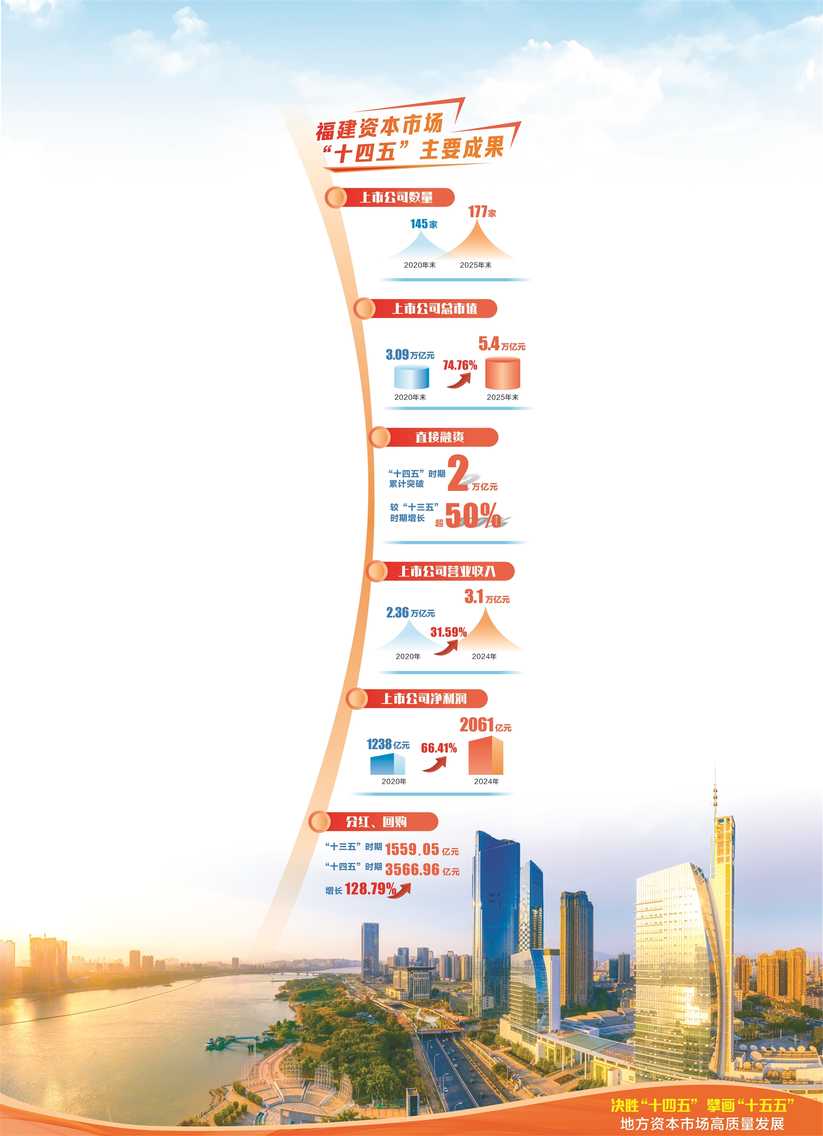
险资看好2026权益市场 掘金“硬科技”投资机会
Shang Hai Zheng Quan Bao· 2026-01-18 18:15
Group 1 - The influx of incremental funds is expected to act as a "catalyst" for market growth, with residents shifting their asset allocation from deposits to other assets due to low long-term deposit rates [1] - There is a noticeable increase in residents' enthusiasm for purchasing insurance, particularly dividend insurance products, which may channel funds into the stock market in the future [1] - The trend of "deposit migration" indicates that household savings are entering the capital market through various channels, with ordinary residents' funds likely becoming a major source of market entry by 2026 [1] Group 2 - Insurers are adopting a "barbell" asset allocation strategy, heavily investing in dividend assets while also allocating to growth assets, particularly in response to emerging structural opportunities in the equity market [2] - The market's profit growth rate is expected to rebound in 2026, with a focus on "hard technology" sectors such as AI computing power, industrial software, high-end machine tools, hydrogen energy, and aerospace support [2] - Technology and advanced manufacturing are identified as key investment themes for 2026, with firms like Huatai Asset actively positioning in AI, semiconductors, robotics, and new energy sectors while selectively investing in finance, cyclical, and consumer sectors [2] Group 3 - Mid-sized insurance companies are focusing on growth assets that can deliver tangible results, targeting three main areas: manufacturing with global competitive advantages, sectors experiencing accelerated domestic substitution with real demand, and early-stage industries supported by clear policies and capital [3] - Key sectors of interest include engineering machinery, new energy equipment, semiconductors, new materials, commercial aerospace, and AI applications [3]
一年内150余家企业入驻天府软件园
Xin Lang Cai Jing· 2026-01-18 17:25
转自:成都日报锦观 从助企高效落户到助企技术落地 一年内150余家企业入驻天府软件园 天府软件园不仅为企业搭建资源桥梁,更开放场景助力技术落地。 作为全球顶尖游戏厂商法国育碧的在华分支机构之一,自2008年入驻天府软件园以来,育碧成都工作室从几十人的小团队成长到数百人规模, 从参与游戏小模块研发到扛起《彩虹六号》等全球知名游戏核心开发任务,成为育碧成都工作室全球布局的重要力量。 去年,因团队整合需要扩大办公空间,育碧再次向成都高新区及园区提出需求。从协调资源到推进筹备,园区始终以高效、专业的响应全程支 持。同年10月,全新办公区正式启用。"扎根成都17年,是最正确的选择。"育碧成都工作室总经理舒薪宇感慨。 值得一提的是,去年园区还推出一项贴心举措:为需要重新装修办公区的企业免费提供中转用房,减少园区企业成本、提升办公体验,实 现"零成本、零中断"的无缝过渡。 助力AI技术落地 打造全息智慧停车场 天府软件园不仅搭建资源桥梁,更开放场景助力技术落地。在AI创新中心,园区与新入驻的臻识科技联手打造了"全息智慧停车场"示范项目。 该项目集成视觉雷达与全息感知基座,构建起能精准感知全场动态的数字孪生系统,成为技术落地 ...

恒生科技指数暴涨3%,腾讯控股市值重返港股前三
Sou Hu Cai Jing· 2026-01-18 15:11
Group 1: Core Drivers - Policy incentives are accelerating, with the central economic work conference emphasizing "technological innovation" and the Ministry of Industry and Information Technology promoting domestic AI chip procurement, establishing a 100 billion yuan industry fund, and aiming for a 70% localization rate of key equipment by 2025 [1] - Global liquidity is improving, as the central bank's 0.5% reserve requirement ratio cut releases 1.2 trillion yuan in liquidity, alongside a reduction in long-term holding risk factors for insurance companies, releasing approximately 20 billion yuan in capital [1] - The Hang Seng Tech Index constituents are showing strong performance, with companies like SMIC reporting a nearly 130% quarter-on-quarter net profit increase, and Li Auto's retail penetration rate for new energy vehicles exceeding 50% for the first time [1] Group 2: Tencent's Financial and Strategic Dynamics - Tencent's revenue for 2024 is projected at 660.3 billion yuan, an 8% year-on-year increase, with net profit expected to reach 194.07 billion yuan, reflecting a 68% growth [4] - The AI strategy is being upgraded with the MoE architecture for the Mix Yuan model, applied in over 700 scenarios, and a partnership with DeepSeek has driven the DAU of the Yuanbao App to 3.6 million [4] - Tencent's capital expenditure on AI is projected to be 76.7 billion yuan in 2024, a 221% increase, but efficiency improvements in GPU and cloud business returns are expected to cover costs, keeping profit margin pressures manageable [4] Group 3: Market Impact and Future Outlook - Structural opportunities are emerging in sectors like technology, consumption, and pharmaceuticals, driven by policy and demand, particularly in the AI industry chain, new energy vehicles, and biomedicine [6] - The Hang Seng Tech Index's price-to-earnings ratio is approximately 23 times, significantly lower than that of the Nasdaq and ChiNext, indicating strong value [7] - Institutional earnings forecasts for the Hang Seng Tech Index are optimistic, with a projected 42.6% earnings growth rate by 2026, and Tencent's gaming business expected to grow by 10% in 2025 [7]

向新赛道“变轨”,科技保险加速走向台前
Bei Jing Shang Bao· 2026-01-18 13:24
Core Insights - The development of technology insurance is accelerating under the dual drive of policies and industries, showcasing its important value in supporting high-level technological self-reliance and innovation [1][3] - The core value of technology insurance lies in risk dispersion and providing certainty to reduce trial-and-error costs for technology innovation [3][5] Policy and Industry Support - Official data indicates that technology insurance premium income in China grew by 30% year-on-year in the first three quarters of 2025 [3] - The Chinese government has positioned technology insurance as a foundational tool in the technology financial system, with policies aimed at creating a comprehensive insurance product and service system covering the entire lifecycle of technology enterprises [3][4] Local Initiatives - Various local governments are actively supporting the implementation of technology insurance, with Shanghai introducing an innovative "Shanghai Science Points" system for precise pricing based on innovation capabilities [4] - In Beijing, a subsidy of up to 80% on premiums for major technological equipment insurance is available, with a maximum annual subsidy of 2 million yuan per enterprise [4] Product Innovation and Market Demand - Insurance institutions are responding to policy support by innovating products and upgrading services, leading to a broadening of coverage and enhancement of protection for technology enterprises [5] - New insurance products are emerging in cutting-edge fields such as artificial intelligence and biomedicine, with several "first orders" being issued [5] Challenges and Barriers - Despite progress, challenges remain, including weak awareness of insurance among technology enterprises and a lack of customized products for emerging technologies [6][7] - The industry faces issues with product homogeneity and insufficient risk assessment capabilities, particularly in new technology sectors [7] Future Directions - To overcome development bottlenecks, technology insurance needs to enhance its capabilities in talent, technology, products, and services [7][8] - Insurance companies should develop more adaptable and customized insurance products and explore collaborative risk-sharing platforms involving government, research institutions, and enterprises [8] Role Transformation - Insurance companies are encouraged to transition from being mere risk bearers to active risk managers, providing proactive risk reduction services to empower technology innovation [9] - Establishing deep collaborative mechanisms with cybersecurity firms and technology enterprises is crucial for integrating risk management into the development and operational processes of technology companies [9]


绍兴市委书记施惠芳:持续打造服务最优、成本最低、效率最高的开放环境
Xin Lang Cai Jing· 2026-01-18 09:14
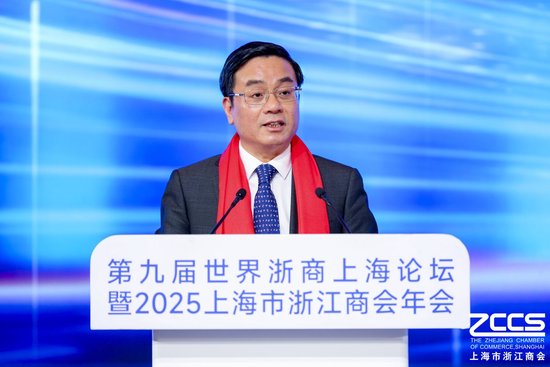
Core Viewpoint - The 9th World Zhejiang Business Forum and the 2025 Shanghai Zhejiang Chamber of Commerce Annual Meeting highlighted the positive development trajectory of Shaoxing, emphasizing high-quality growth and strategic initiatives to enhance regional advantages and innovation capabilities [3][8]. Economic Growth - Since the 14th Five-Year Plan, Shaoxing's economic growth has consistently ranked among the top three in Zhejiang Province and the Yangtze River Delta, with the GDP expected to reach approximately 900 billion yuan last year [3][8]. Regional Advantages - Shaoxing is enhancing its geographical advantages by planning the Hu-Hang-Shao Jin Railway, aiming to create a transportation network that allows for 30-minute access within the city, 30 minutes to Hangzhou, and 60 minutes to Shanghai [3][8]. Technological Innovation - The city has established itself as a national innovation hub and the first "three-in-one" high-quality development pilot zone for education and technology talent in Zhejiang, with 13 universities and a significant increase in R&D investment among industrial enterprises [3][4][8]. Industrial Transformation - Shaoxing's industrial transformation includes the recognition of the Hangzhou Bay modern textile and apparel cluster as a national advanced manufacturing cluster, with the integrated circuit industry generating around 90 billion yuan [4][9]. Business Environment - The implementation of the 5.27 "Love Enterprise Action" has led to over 820,000 market entities and 260,000 businesses, with 80 companies listed on the A-share market, ranking third among similar cities in China [4][9]. Future Directions - Looking ahead to the 15th Five-Year Plan, Shaoxing aims to cultivate new industrial formats, shape new urban forms, activate new population dynamics, and empower cultural vitality through eight major actions, striving to become a model city for integrated development [4][9].
中原证券:电子半导体领涨 A股震荡整理
Xin Lang Cai Jing· 2026-01-18 09:09
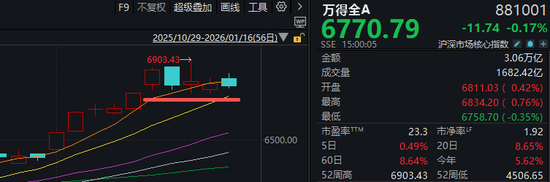
Market Overview - The A-share market experienced a slight fluctuation and consolidation on Friday, January 16, with the Shanghai Composite Index facing resistance around 4140 points after an initial rise [1][2][4][6] - Industries such as consumer electronics, semiconductors, electronic components, and photovoltaic equipment performed well, while internet services, cultural media, energy metals, and mining sectors showed weaker performance [1][2][4][6] Future Market Outlook and Investment Recommendations - The average price-to-earnings ratios for the Shanghai Composite Index and the ChiNext Index are 16.88 times and 53.38 times, respectively, indicating they are above the median levels of the past three years, suggesting suitability for medium to long-term investment [2][6] - The total trading volume on Friday was 30,568 billion yuan, above the median of the past three years, indicating increased market activity [2][6] - The trend of residents moving deposits to equity markets is providing ample liquidity, while the attractiveness of RMB assets is enhancing market risk appetite [2][6] - A slight increase in the CPI year-on-year for December 2025 indicates marginal improvement in domestic demand [2][6] - The current market environment, characterized by effective volume expansion, positive policy expectations, and continuous industrial catalysts, suggests that the ongoing market rally may continue [2][6] - It is recommended to focus on both technological innovation and the recovery of traditional industries in investment strategies, with short-term attention on opportunities in consumer electronics, semiconductors, electronic components, and photovoltaic equipment [2][6]

“大起”被防住后,下周A股怎么走?
Mei Ri Jing Ji Xin Wen· 2026-01-18 05:05
Core Viewpoint - The A-share market experienced significant fluctuations during the week of January 12-16, with an average daily trading volume exceeding 3 trillion yuan, but ultimately showed a trend of rising and then falling due to regulatory interventions [1][5]. Market Performance - The Shanghai Composite Index has shown notable volatility, having crossed the 4000 and 4100 points at the beginning of the year [2]. - The overall average stock price in the A-share market increased by 2.46% over the week, marking six consecutive weeks of gains [9]. Regulatory Actions - Regulatory measures included raising the margin requirements for financing, which was a significant action taken during the week [4]. - The China Securities Regulatory Commission (CSRC) emphasized the need for market stability and fair trading, with over 800 regulatory actions taken against abnormal trading and information disclosure issues [5][8]. Sector Trends - The commercial aerospace sector faced a continuous decline, with notable scrutiny on prominent investors like Chen Xiaoqun, indicating a targeted regulatory approach towards "pseudo-leaders" lacking fundamental support [5][8]. - Certain hot sectors, particularly in AI applications and commercial aerospace, saw significant declines, with indices related to these sectors dropping between 6.16% and 10.52% [12]. Investment Sentiment - Despite the regulatory "cooling" signals, the overall market response has been positive, with some investors interpreting the outflow of over 100 billion yuan from broad-based ETFs as a sign of "cooling" or "index suppression" [6][8]. - There is a shift in investment focus towards sectors that align better with regulatory expectations, indicating a potential reallocation of hot money [12]. Future Outlook - Analysts suggest that the commercial aerospace sector may continue to experience fluctuations similar to the new energy sector, driven by policy support and industry trends [14]. - The market is expected to remain resilient due to favorable liquidity conditions and ongoing positive policy stances, with potential for continued upward movement in the spring [15].
决胜“十四五” 擘画“十五五”·地方资本市场高质量发展之福建篇:资本聚力培育“八闽”产业 优结构强链条拓海外
Sou Hu Wang· 2026-01-18 03:10
Core Viewpoint - During the "14th Five-Year Plan" period, Fujian Province's capital market has achieved remarkable growth, with direct financing exceeding 2 trillion yuan, marking over a 50% increase compared to the "13th Five-Year Plan" period, and positioning itself as a leader in A-share IPO financing by 2025 [2][3]. Direct Financing and IPOs - Fujian's capital market has seen direct financing surpass 2 trillion yuan in the past five years, highlighting its role in supporting the real economy [3]. - In 2025, the province's direct financing reached a historical high of 500 billion yuan [4]. - A-share IPO financing amounted to 22.446 billion yuan, ranking first in the nation, with Huadian New Energy raising 18.17 billion yuan, becoming the largest IPO project of the year [5]. Company Performance and Quality - By 2024, Fujian's listed companies reported revenues of 3.1 trillion yuan and net profits of 206.1 billion yuan, reflecting increases of 31.59% and 66.41% respectively compared to the end of the "13th Five-Year Plan" [5]. - Average earnings per share reached 1.09 yuan, and average return on equity was 10.77%, significantly above national averages [5]. Market Structure and Industry Development - By the end of the "14th Five-Year Plan," Fujian had 177 listed companies, an increase of 32 from the previous period, with a total market capitalization of 5.4 trillion yuan, ranking sixth nationally [6]. - The province has seen a notable concentration of companies with market capitalizations exceeding 1 billion yuan, with 6 such companies and 75 companies exceeding 100 million yuan [6]. Mergers and Acquisitions - Fujian's regulatory bodies have promoted mergers and acquisitions to enhance resource allocation efficiency, with 69 listed companies engaging in such activities since 2025, involving a total of 35.957 billion yuan [7]. - The province has also seen significant cash dividends and buybacks, totaling 356.696 billion yuan, a 128.79% increase from the previous period [7]. Support for Innovation - Fujian has actively supported technology-driven enterprises, adding 24 new technology-oriented listed companies and facilitating over 200 billion yuan in innovative bond issuance [9]. - Private equity and venture capital funds have invested in 2,125 high-tech projects in Fujian, with a total investment of 83.358 billion yuan [9]. Regulatory Environment - Fujian's regulatory authorities have intensified risk monitoring and management, addressing high-risk areas and ensuring compliance among listed companies [10]. - The province has taken significant actions against market violations, imposing fines totaling nearly 500 million yuan and enhancing market order [10]. Future Outlook - The Fujian Securities Regulatory Bureau plans to continue implementing new policies to strengthen regulation and promote high-quality development in the capital market [11].




财经深一度|看好中国创新前景 外资对中国资产热情提升
Xin Hua She· 2026-01-18 02:17
Group 1 - International financial institutions are optimistic about the fundamentals of the Chinese economy and the performance of Chinese assets, expecting a systematic increase in the weight of Chinese assets in global investment portfolios [1] - UBS reported a significant increase in the participation of international long-term funds as cornerstone or core institutional investors in recent Hong Kong IPOs and refinancing projects, indicating a shift towards more proactive and long-term investment strategies in China [1] - The total annual amount of M&A transactions in China involving foreign capital has reached 60 billion RMB, marking a 10-year high, reflecting increased foreign engagement in the Chinese capital market [1] Group 2 - The fundamental changes in Chinese enterprises are shifting from a "scale-first" approach to focusing on profitability quality, technological barriers, long-term value, and innovation, providing a solid foundation for foreign capital inflow [2] - The weakening of the US dollar and the concentration of the US tech sector are driving global investors to diversify their asset allocations, with the Asia-Pacific market, including China, becoming a core focus [2] - HSBC's 2026 outlook report suggests that with a focus on boosting domestic demand and ongoing structural reforms, China's economy is expected to maintain steady growth, with innovation becoming a key advantage in attracting foreign investment [2]
