
能源转型

Search documents
为多家钙钛矿电池头部企业供货!金晶科技以技术硬实力引领TCO玻璃革新
Jin Rong Jie· 2025-11-03 01:12
Group 1 - The core viewpoint of the articles emphasizes the importance of material innovation in driving green transformation, particularly in the photovoltaic industry, with perovskite solar cells being identified as a key development direction [1][3] - The domestic production rate of TCO (Transparent Conductive Oxide) glass, a crucial material for perovskite solar cells, has been increased to over 95% due to breakthroughs by Jinjing Technology, addressing a long-standing bottleneck in the industry [1][2] - Jinjing Technology has established a stable supply of TCO glass to major companies in the perovskite battery sector, capturing a significant market share in China [1][2] Group 2 - Jinjing Technology has initiated a production line renovation project with an investment of 49.5 million yuan, aiming to achieve an annual production capacity of 20 million square meters of TCO conductive film glass [2] - The TCO glass produced by Jinjing Technology has been applied in several landmark projects, showcasing its versatility across various scenarios such as building-integrated photovoltaics and ground-mounted power stations [2] - The market for TCO glass in China is projected to reach 18 billion yuan by 2025, with a compound annual growth rate of approximately 16%, while the global market is expected to exceed 2 billion USD by 2032 [3]

华晨宝马地热能供热项目投入运营
Liao Ning Ri Bao· 2025-11-03 01:09
Core Insights - The geothermal energy project launched by BMW Brilliance aims to provide 100% fossil-free heating for its powertrain factory and sixth-generation battery center, marking a significant step towards low-carbon transformation and clean heating solutions in northern industrial regions [1][2] Group 1: Project Overview - The geothermal project utilizes innovative technology to harness deep geothermal energy, implementing a closed-loop system that extracts heat from 2,900 meters underground without depleting water resources [1] - The project involves drilling 28 medium-deep geothermal wells, covering a heating area of approximately 580,000 square meters, and is expected to reduce carbon emissions by 18,000 tons annually [1] Group 2: Strategic Importance - This initiative is part of BMW Group's broader strategy to build a diverse renewable energy matrix, including deep geothermal energy, wind power collaboration, and hydrogen commercialization [2] - The energy transition represented by this project aims to lower the carbon footprint of products from the source, enhancing the responsible electric mobility experience for consumers [2]


博盈特焊(301468) - 2025年11月1日投资者关系活动记录表
2025-11-03 00:54
Company Overview - Guangdong Boying Special Welding Technology Co., Ltd. was established in 2007, initially focusing on welding services for offshore drilling platforms for American clients [1][2]. - The company successfully listed on the Shenzhen Stock Exchange's Growth Enterprise Market in July 2023 [2]. Market Position and Strategy - The company aims to maintain its leading position in the domestic market while actively expanding into international markets, investing in overseas subsidiaries to seize global opportunities [2]. - The demand for waste incineration and the transformation of the coal-fired power industry present significant growth opportunities, with a broad market potential in chemical, metallurgy, and paper industries [2]. Production Capacity and Expansion - The company has established a production base in Vietnam, with Phase I already operational and Phase II under construction, expected to commence production in the second quarter of next year [3][10]. - The total area of the Vietnam production base is approximately 150,000 square meters, focusing on heat recovery steam generators (HRSG) for gas turbines [3][5]. Revenue and Market Trends - As of September 30, 2025, revenue from waste incineration power generation accounted for approximately 59% of the company's total revenue [3]. - The waste incineration market is experiencing a slowdown in new projects domestically, while overseas markets, particularly in Southeast Asia, show significant growth potential due to urbanization and government support [4]. Technological Advancements - The company employs three main welding technologies: MIG, TIG, and laser welding, each suited for different applications, including high-temperature and corrosive environments [3]. - Continuous R&D efforts have led to innovations in digital pulse high-frequency oscillation MIG technology, enhancing welding efficiency and stability [3]. Order and Financial Outlook - As of June 30, 2025, the company had approximately 377 million yuan in unfulfilled contracts, with a backlog of orders growing at over 30% [8]. - The company anticipates a sustained increase in the global gas turbine market, driven by demand from North America, the Middle East, and Europe [6][7]. Impact of Tariffs and International Strategy - The impact of U.S. tariffs on the company's business is minimal, as the revenue from U.S. orders is currently low, and future orders will primarily be produced in Vietnam, where tariffs are lower [9]. - The company is strategically expanding its international presence through investments in Vietnam and partnerships to explore oil and gas markets [10].
从博鳌样板到南方实践 新型电力系统建设迈向新阶段
中国能源报· 2025-11-02 23:33
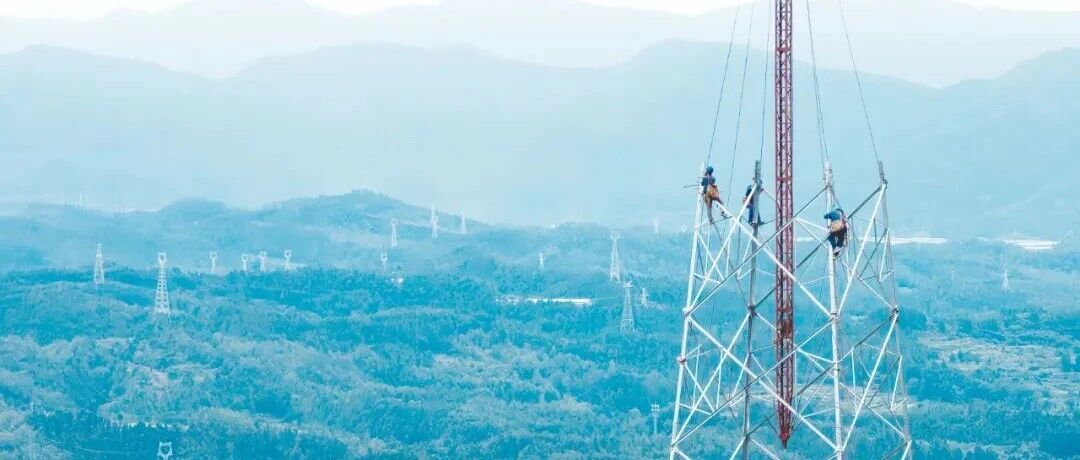
Core Viewpoint - The sixth International Forum on New Power Systems and the 21st International Technology Forum of China Southern Power Grid focuses on key technological breakthroughs, policy mechanism innovations, market model explorations, and industrial ecosystem cultivation to promote the construction of an open, collaborative, and efficient global energy governance system [1][4]. Group 1: Forum Overview - The forum, themed "Building a New Power System and Accelerating Energy Low-Carbon Transition," was held in Boao, Hainan, gathering representatives from domestic and international energy and power authorities, industry associations, and experts to discuss the blueprint for new power system construction [2][4]. - The forum aims to share innovative achievements and discuss development paths, contributing to the global energy transition [4]. Group 2: Achievements in Clean Energy - The Southern region of China, including Guangdong, Guangxi, Yunnan, Guizhou, and Hainan, is witnessing a significant transition where clean energy is steadily replacing coal as the main power supply, with non-fossil energy installed capacity nearing 70% and generating over half of the total power [8]. - The clean energy utilization rate in the Southern region has consistently remained above 98%, marking a historic shift in the power supply structure [8]. Group 3: Technological Innovations and Challenges - The construction of a new power system is essential for China's energy revolution, with significant advancements in ultra-high voltage transmission, smart grids, and renewable energy consumption achieved through technological innovation and institutional reforms [4][11]. - The integration of high proportions of renewable energy sources like wind and solar presents challenges such as random fluctuations and efficient consumption, necessitating the development of distributed smart grids and microgrids [11][12]. Group 4: Digital Transformation and Future Directions - The Southern Power Grid Company is focusing on enhancing its digital capabilities to improve energy management and grid reliability, achieving a demand response capability of 7.6% and a controllable load of 25% of peak load [13]. - The company aims to promote low-carbon development paths and replicate successful models like zero-carbon parks and smart microgrids, while also pushing for key technological innovations in digital grids and energy storage [13][18]. Group 5: Global Energy Governance - China is increasingly participating in and leading the global energy transition, with the Boao zero-carbon demonstration zone serving as a model for new power systems and showcasing China's energy governance wisdom [16][18]. - The Southern Power Grid Company is collaborating with various stakeholders to create an inclusive and mutually beneficial regulatory framework, exploring innovative market mechanisms to optimize resource allocation [17][18].
美媒:中国假期数据讲述了一个不同的故事
Huan Qiu Wang· 2025-11-02 23:18
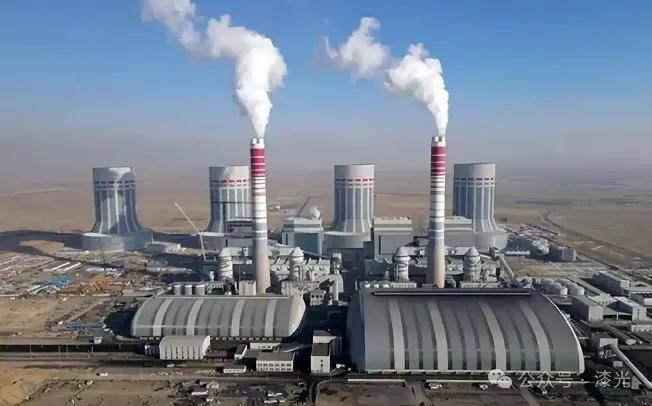
Core Insights - The article highlights the significant shift in China's transportation energy consumption during the National Day holiday, showcasing the increasing adoption of electric vehicles (EVs) and a decline in gasoline demand [1][2][3] Group 1: Electric Vehicle Adoption - During the National Day holiday, the average daily traffic on highways exceeded 62 million vehicles, with approximately 20% being new energy vehicles (NEVs) [1] - The daily charging volume for NEVs on highways increased by over 45% year-on-year, indicating a growing infrastructure and consumer acceptance [1] - Over the past decade, the number of electric vehicle charging facilities in China has surpassed 18 million, reflecting a year-on-year growth of 54.5% [2] Group 2: Impact on Energy Consumption - Gasoline consumption has decreased during the holiday period, marking a significant change in energy consumption patterns [1][2] - The shift towards electric-powered transportation is altering the logistics landscape and carbon emission calculations in the country [2] - The National Day holiday has become a reliable indicator of the effectiveness of China's energy transition, demonstrating the interaction between technology, infrastructure, and public behavior [2][3] Group 3: Infrastructure Development - The development of high-speed rail has also contributed to changing travel patterns, with over 20 million passengers transported in a single day during the peak of the holiday [2] - By the end of 2024, China's high-speed rail operating mileage is expected to reach 48,000 kilometers, further supporting the shift towards electric transportation [2]
当核电成主流,美元还能维持石油霸权吗?
Sou Hu Cai Jing· 2025-11-02 19:11
Group 1 - China's nuclear power capacity in operation and under construction has reached 113 million kilowatts, making it the largest in the world, which is a strategic move to reduce dependence on oil and weaken U.S. dollar dominance [1][3] - A single million-kilowatt nuclear power unit can produce electricity equivalent to 200,000 tons of standard coal annually, indicating significant potential for reducing oil imports if nuclear capacity is doubled [1][3] - The transition to electric vehicles powered by nuclear energy can further diminish oil demand, effectively converting oil needs into electricity needs [1][3] Group 2 - China's nuclear power development is seen as a new energy option that does not rely on U.S. influence, which has prompted the U.S. to impose sanctions on 23 Chinese nuclear-related companies [4][5] - The U.S. is struggling with its own nuclear projects, while China's nuclear supply chain has achieved 100% domestic production, making U.S. sanctions ineffective [4][5] - Saudi Arabia's announcement to end its "petrodollar" agreement with the U.S. and the potential for nuclear energy to reduce oil dependency could challenge the dollar's status [5]
从深海取火到机器人之舞:一场照见湾区科技未来的火炬传递
Nan Fang Du Shi Bao· 2025-11-02 16:05
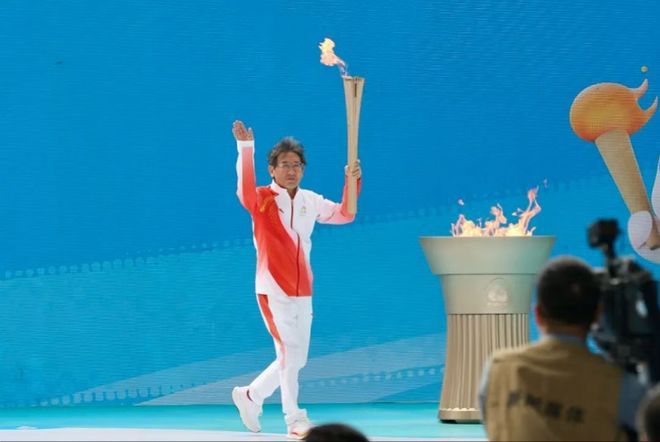
Group 1: Core Concept - The event of the torch relay symbolizes the integration of sports spirit, technology, and civilization, showcasing the strong synergy between Guangdong's industry and technology [4] Group 2: Deep Sea Energy - The flame used in the torch relay originates from combustible ice, a key resource for global energy transition, with Guangdong's research team successfully developing in-situ ignition technology [5][6] - Combustible ice has an energy density approximately 10 times that of coal and 2 to 5 times that of natural gas, producing significantly less pollution compared to traditional energy sources [6] - China's total reserves of combustible ice are estimated at 800 billion tons of oil equivalent, with the South China Sea being the core area, accounting for about 80% of the total reserves [6] Group 3: Technological Innovations - The torch relay featured the world's first 5G-A humanoid robot, "Kua Fu," which successfully completed a segment of the relay, marking a significant milestone in the application of robotics in national events [9][10] - The Guangdong region is home to over 100,000 robot-related enterprises, with industrial robot exports from the Greater Bay Area accounting for 32.3% of the national total [12] - The event also included the use of a driverless car for the torch relay, highlighting the advancements in autonomous vehicle technology in Guangdong [12] Group 4: Innovation and Development - The Guangdong-Hong Kong-Macao Greater Bay Area has emerged as a leading innovation cluster, with a research and development expenditure intensity of 3.6% and approximately 77,000 high-tech enterprises [13][15] - The Shenzhen-Hong Kong-Guangzhou innovation cluster has ranked first in the global innovation index, surpassing the Tokyo-Yokohama cluster, reflecting the region's strengths in international patent applications and research output [15]

欧盟下死令?2027年禁俄LNG,扎哈罗娃痛骂:冻自己耳朵
Sou Hu Cai Jing· 2025-11-02 11:08
Core Viewpoint - The recent comments by Russian Foreign Ministry spokesperson Maria Zakharova highlight the contradictions in the EU's sanctions against Russia, particularly regarding the planned ban on Russian LNG imports by 2027, while EU countries continue to increase their LNG imports from Russia in 2023 [1][3]. Summary by Sections EU Sanctions and Energy Dependency - The EU's 19th sanctions package includes a proposal to ban Russian LNG imports by January 2027, which is a year earlier than previously discussed [1]. - Despite the proposed ban, Russian LNG supplies to the EU increased in the first half of 2023, indicating ongoing reliance on Russian energy [3]. - Key EU countries such as France, the Netherlands, and Belgium continue to import significant amounts of Russian LNG, contradicting the EU's stated goals [3]. Internal Conflicts within the EU - There are visible fractures within the EU regarding the sanctions, as highlighted by the comments from Austria's former foreign minister, who noted that many EU countries still engage in energy trade with Russia [3][4]. - Slovakia's Prime Minister calculated that a ban on Russian energy would cost Europe an additional €40-50 billion annually for gas and €60-70 billion for electricity, burdens that would ultimately fall on consumers and businesses [4]. Challenges in Monitoring and Implementation - The EU's proposed mechanism to monitor the transit of goods among member states is seen as impractical due to the complexity of logistics and lack of data sharing [4]. - The upcoming vote on the 19th sanctions package poses a significant challenge in balancing energy security with geopolitical considerations [4]. Russia's Strategic Positioning - Russia has diversified its energy exports, increasing LNG shipments to Asia, with a projected 8.3 million tons to China in 2024, marking a 3.29% increase [7]. - The share of Russian LNG exports to Asia has risen from 35% in 2021 to 52% in 2024, indicating a shift in market focus away from Europe [9]. EU's Energy Transition Challenges - Despite progress in renewable energy, the EU's dependency on natural gas remains high, with a 19% faster consumption rate of gas inventories compared to the previous year [9][11]. - The EU's energy storage and grid infrastructure are inadequate to meet current demands, with battery storage only reaching 21.9 GWh by 2024, far below the 2030 target [11]. Future Trends and Global Energy Dynamics - The energy relationship between Russia and emerging markets like China and India is strengthening, with long-term contracts expected to provide gas at lower prices than those offered to Europe [12]. - The shift towards using the yuan in energy transactions between China and Russia could undermine the dollar's dominance in international energy trade [13]. - The EU's increasing reliance on US energy, coupled with tensions with China, may lead to higher energy costs for Europe [13][15].

中美贸易谈判成果公布,美联储鹰派发言压制金属价格
HUAXI Securities· 2025-11-02 09:54
Investment Rating - Industry Rating: Recommended [5] Core Views - The report highlights that the recent U.S.-China trade negotiations have led to significant agreements, including the cancellation of certain tariffs and a pause on export controls, which may positively impact market sentiment [3][48] - The Federal Reserve's recent hawkish stance has pressured metal prices, particularly gold, but there remains underlying support due to ongoing geopolitical tensions and economic uncertainties [4][50] - Long-term trends indicate a continued focus on gold and silver investments, driven by concerns over global debt and currency devaluation, with specific stocks recommended for investment [51][52] Summary by Sections Precious Metals - Gold prices on COMEX fell by 1.20% to $4,077.20 per ounce, while silver prices decreased by 0.33% to $48.25 per ounce [1][30] - The gold-silver ratio declined by 0.88% to 84.50, indicating a potential for silver price recovery [30] - SPDR Gold ETF holdings decreased by 248,440.78 ounces, while SLV Silver ETF holdings fell by 8,982,443.90 ounces [30] Base Metals - Copper prices on LME dropped by 0.51% to $10,891.50 per ton, while aluminum prices increased by 1.10% to $2,888.00 per ton [9] - The report notes a tightening supply for copper due to ongoing geopolitical issues and production challenges, with a projected reduction in output [11][21] - The aluminum market remains stable, with domestic production capacity holding steady and demand from sectors like electric vehicles and power generation expected to support prices [22] Minor Metals - Magnesium prices decreased by 0.90% to 17,680 yuan per ton, with stable demand but reduced purchasing activity from export traders [17] - Molybdenum and vanadium prices have shown weakness, with ongoing pressure from oversupply and reduced demand in the steel sector [18]




印度难迈能源这个“坎儿”
Jing Ji Ri Bao· 2025-11-01 22:03
Core Insights - The ongoing tension between the US and India regarding India's purchase of Russian oil has intensified, with India asserting its need for energy security despite US pressure [1][3] - India is heavily reliant on oil imports, with approximately 85% of its crude oil needs met through imports, making it the world's third-largest oil importer [1][2] - The geopolitical landscape has allowed India to capitalize on discounted Russian oil, increasing its imports from Russia from less than 1% before the Ukraine crisis to 34% currently [3] Group 1: Energy Dependency - India’s energy sector has historically struggled with self-sufficiency, facing challenges such as monopolistic management and price controls that stifle market vitality [2] - The discovery of the Mumbai offshore oil field in 1974 was initially seen as a turning point, but regulatory constraints have limited its potential [2] Group 2: Strategic Purchasing - The Ukraine crisis has created an opportunity for India to purchase Russian oil at discounted rates, allowing it to shift its import focus from the Middle East to Russia [3] - India has also engaged in reselling some of this oil to Europe, profiting from the price difference, which has led to its characterization as a "second-hand dealer" in the oil market [3] Group 3: Currency and Trade Challenges - India's attempt to use the rupee for oil transactions has failed, as global suppliers are reluctant to accept it due to its low liquidity and high exchange rate risk [4] - Despite efforts to diversify its energy sources and invest in renewable energy, India faces significant hurdles in achieving a sustainable energy framework [4][5] Group 4: Future Outlook - The urgency for India to achieve energy independence is increasing, as reliance on imported oil remains high while the avenues for low-cost Russian oil are narrowing [5] - The challenges in transitioning to a diversified energy system highlight the complexities India faces in its pursuit of becoming a major global power [5]