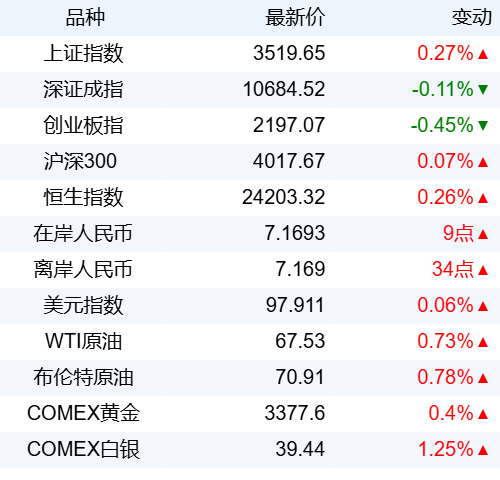
人民币汇率

Search documents
瑞银张宁:上调2025年中国GDP增速预测
news flash· 2025-07-16 04:12
Core Viewpoint - UBS has raised its GDP growth forecast for China in 2025, citing strong performance in Q2 2023 and expected government support measures [1] Economic Performance - China's GDP grew by 5.2% year-on-year in Q2 2023, indicating robust economic performance [1] - The growth was supported by improved retail sales due to "trade-in" subsidies and steady export growth [1] Government Policy Expectations - The government is expected to implement the remaining parts of the annual broad fiscal plan in the second half of the year, including planned trade-in subsidies [1] - A reduction in policy interest rates by 20 to 30 basis points is anticipated in the second half of the year, along with additional measures to promote real estate inventory reduction [1] Future Projections - Additional policy support measures may depend on economic data, with new fiscal policies potentially being introduced by the end of Q3 or in Q4 [1] - Overall, the GDP growth forecast for 2025 has been revised upward due to strong export resilience, low base effects from trade-in subsidy policies, early issuance of government bonds, and planned policy support measures [1] Inflation and Currency Outlook - CPI pressure is expected to rise slightly in the second half of the year, while the RMB may strengthen in the short term [1] - External uncertainties could lead to the RMB/USD exchange rate reaching 7.1 to 7.2 by the end of 2025 [1]

2025年上半年人民币汇率走势回顾及下半年展望
Sou Hu Cai Jing· 2025-07-16 02:49
Core Viewpoint - The article discusses the resilience of the Chinese yuan (RMB) against the backdrop of a complex international environment, highlighting the positive trends in China's economy and the implementation of proactive macroeconomic policies to maintain stability in the RMB exchange rate [1][5]. Group 1: RMB Exchange Rate Trends - In the first half of 2025, the RMB appreciated nearly 2% against the USD compared to the end of the previous year, while the USD index fell over 10%, marking its worst performance since 1973 [2]. - The RMB exchange rate showed strong resilience, with a 0.65% appreciation in the first quarter, supported by effective policy measures and a stable domestic economy [2][4]. - The second quarter saw the RMB experience fluctuations due to US-China trade tensions, with the exchange rate initially depreciating before recovering to below 7.2 [3][4]. Group 2: Economic Indicators - In the first five months of the year, fixed asset investment grew by 3.7%, retail sales increased by 5%, and exports rose by 7.2%, indicating a positive economic performance that supports the RMB [5]. - The international balance of payments remained stable, with a surplus of $101.9 billion in foreign exchange payments, reflecting foreign investors' confidence in RMB assets [9]. Group 3: Future Outlook - The RMB is expected to experience fluctuations in the second half of the year, influenced by ongoing US-China trade negotiations and the potential for US economic weakening [5][6]. - The US economic slowdown and the Federal Reserve's potential interest rate cuts are anticipated to exert downward pressure on the USD, contributing to a dual-directional fluctuation of the RMB [7][8]. - Geopolitical risks and uncertainties in international trade negotiations may lead to temporary shocks in the RMB exchange rate, necessitating close monitoring of the situation [9].


2025年7月16日银行间外汇市场人民币汇率中间价
news flash· 2025-07-16 01:20
Summary of Key Points Core Viewpoint - The interbank foreign exchange market shows a mixed performance in the RMB exchange rates against various currencies, with the USD experiencing a slight appreciation while other currencies like the Euro and the Yen have depreciated against the RMB [1]. Currency Exchange Rate Changes - USD/RMB is reported at 7.1526, an increase (RMB depreciation) of 28 points [1] - EUR/RMB is reported at 8.3157, a decrease of 377 points [1] - HKD/RMB is reported at 0.91121, an increase of 4 points [1] - GBP/RMB is reported at 9.5948, a decrease of 264 points [1] - AUD/RMB is reported at 4.6733, a decrease of 146 points [1] - CAD/RMB is reported at 5.2242, a decrease of 22 points [1] - 100 JPY/RMB is reported at 4.8134, a decrease of 334 points [1] - RMB/RUB is reported at 10.8657, a decrease of 189 points [1] - NZD/RMB is reported at 4.2721, a decrease of 87 points [1] - RMB/MYR is reported at 0.59275, a decrease of 13.5 points [1] - CHF/RMB is reported at 8.9373, a decrease of 395 points [1] - SGD/RMB is reported at 5.5757, a decrease of 81 points [1]
大陆一二线城市的生活水平已经超过台湾?
Sou Hu Cai Jing· 2025-07-16 00:55
Group 1 - The living standards in mainland China's first and second-tier cities have reportedly surpassed those of the average Taiwanese, with a narrowing income gap due to recent currency depreciation [1] - The median monthly salary for employees in Taiwan is reported to be NT$38,208, which translates to approximately RMB 9,457.4 at the current exchange rate of 4.04 [1] - If the exchange rate were at the previous level of 1:5, the median salary would only be RMB 7,641, raising questions about the classification of this income level as high [1] Group 2 - The cost of living in Taiwan is significantly higher, with prices for cars, motorcycles, and home appliances being about twice that of mainland China, alongside older infrastructure [2] - For example, the high-speed rail fare from Taipei to Kaohsiung is NT$1,490, equivalent to RMB 368.8, which is about double the cost per kilometer compared to mainland China's high-speed rail [2] - The ticket price for a second-class seat on the Shenzhen to Nanning high-speed rail is RMB 324.5 for a distance of approximately 648 kilometers, making it significantly cheaper per kilometer than the Taiwanese high-speed rail [2]
央行再定调,人民币汇率基本稳定有坚实基础!走向“7”时代是否可期
Bei Jing Shang Bao· 2025-07-15 12:02
Core Viewpoint - The Chinese yuan is showing strength against the backdrop of a weakening US dollar, with various positive factors contributing to its potential appreciation [1][4][5]. Group 1: Yuan Exchange Rate Trends - The CFETS yuan exchange rate index rose by 0.3% to 95.6 in the past week, with both onshore and offshore yuan appreciating against the dollar [1][3]. - In the first half of the year, the onshore yuan appreciated over 1.8% against the dollar, while the offshore yuan rose nearly 2.5% [3]. - As of July 15, the onshore and offshore yuan were trading at 7.1737 and 7.1760 against the dollar, showing slight daily depreciation of 0.02% and 0.05% respectively [3]. Group 2: External Influences on Yuan Strength - The US dollar index fell by 10.79% by the end of June, marking the largest decline for the same period since 1973 [4]. - China's foreign exchange reserves increased to $33,174 billion by the end of June, up $322 million from the previous month, indicating a stable foreign exchange market [4]. - The macroeconomic policy aimed at stabilizing growth is expected to be a key factor in maintaining the yuan's stability [4][8]. Group 3: Future Outlook for Yuan - Analysts predict that the trend of a weakening dollar will continue, which may enhance the attractiveness of yuan assets [5][6]. - Morgan Stanley forecasts that the dollar index could drop to 89 by the end of 2026, with the yuan potentially reaching 7.05 against the dollar [6]. - The yuan's appreciation potential is supported by ongoing progress in China-US trade negotiations and improved capital flows [6][7]. Group 4: Regulatory Perspective - The People's Bank of China emphasizes the importance of exchange rate stability over unilateral appreciation, aiming to prevent excessive fluctuations [8]. - The central bank's stance is to maintain a flexible exchange rate while reinforcing expectations to avoid risks of over-adjustment [8].

中国4~6月整体出口增6.2%,对美降24%
日经中文网· 2025-07-15 03:00
Group 1 - The overall export of China from April to June increased by 6.2% year-on-year, an expansion from 5.7% in the first quarter [1][2] - Exports to ASEAN grew by 18%, to the EU by 9%, and to Japan by 7%, indicating a shift towards markets outside the US [1][2] - Exports to the US decreased significantly, with a year-on-year decline of 24% in the same period, attributed to increased tariffs imposed by the Trump administration [1][2] Group 2 - Monthly data shows a decline in exports to the US, with April down 21%, May down 35%, and June down 16%, reflecting the impact of additional tariffs [1] - The cumulative additional tariffs imposed by the US on China reached 145% by April, with a subsequent agreement in May reducing tariffs by 115% [1] - China's strategy includes inducing a depreciation of the yuan to enhance export competitiveness, with the CFETS RMB exchange rate index reaching a new low of 95.3 [2]

2025年7月15日银行间外汇市场人民币汇率中间价
news flash· 2025-07-15 01:20
Core Viewpoint - The article provides an update on the interbank foreign exchange market's exchange rates for the Chinese Yuan against various currencies, indicating fluctuations in the value of the Yuan against these currencies as of July 15, 2025 [1] Exchange Rate Summary - The USD/CNY exchange rate is reported at 7.1498, reflecting an increase (devaluation of the Yuan) by 7 points [1] - The EUR/CNY exchange rate is reported at 8.3534, showing a decrease of 76 points [1] - The HKD/CNY exchange rate is at 0.91081, with an increase of 0.9 points [1] - The GBP/CNY exchange rate stands at 9.6212, down by 453 points [1] - The AUD/CNY exchange rate is reported at 4.6879, down by 248 points [1] - The CAD/CNY exchange rate is at 5.2264, down by 85 points [1] - The JPY/CNY exchange rate is reported at 4.8468, down by 191 points [1] - The CNY/RUB exchange rate is at 10.8846, reflecting an increase of 115 points [1] - The NZD/CNY exchange rate is reported at 4.2808, down by 239 points [1] - The CNY/MYR exchange rate is at 0.5941, with an increase of 2.2 points [1] - The CHF/CNY exchange rate is reported at 8.9768, down by 151 points [1] - The SGD/CNY exchange rate stands at 5.5838, down by 90 points [1]
7月15日电,人民币兑美元中间价报7.1498,下调7.00点。
news flash· 2025-07-15 01:18
智通财经7月15日电,人民币兑美元中间价报7.1498,下调7.00点。 ...
事关债券市场、汇率市场 人民银行回应市场热点话题
Bei Ke Cai Jing· 2025-07-14 23:27
Core Viewpoint - The People's Bank of China (PBOC) emphasizes that China does not seek to gain international competitive advantages through currency devaluation, maintaining a stable and reasonable level for the RMB exchange rate [1][3]. Exchange Rate and Economic Context - The RMB has been appreciating against the USD, with the dollar index dropping from above 109 to around 97, a decline of 11% [2]. - The 10-year US Treasury yield peaked at over 4.8% but has recently retreated to about 4.4% [2]. - China's economic fundamentals remain strong, with a GDP growth of 5.4% year-on-year in Q1, and the market is expected to stabilize with a balanced international payment situation [3]. Bond Market and Investment Policies - The PBOC acknowledges that some small and medium-sized banks are adopting aggressive bond investment strategies, which can be reasonable within regulatory limits [4]. - Bond investments constitute a significant part of banks' assets, with loans and bonds making up 60% and 25% of total assets, respectively [4]. - In the first half of 2025, the bond market issued 44.3 trillion yuan, a 16% increase year-on-year, with net financing of 8.8 trillion yuan, accounting for 38.6% of the social financing increment [5]. Risk Management and Regulatory Oversight - The PBOC stresses the need for small and medium-sized banks to maintain a reasonable balance in bond investments, considering both returns and risks [5]. - The central bank will enhance market monitoring and share information on high-risk institutions with regulatory bodies to mitigate financial market risks [5].
新华财经晚报:上半年我国货物贸易进出口同比增长2.9%
Xin Hua Cai Jing· 2025-07-14 15:03
Key Points - The People's Bank of China reported that as of the end of June, the broad money supply (M2) reached 330.29 trillion yuan, reflecting a year-on-year growth of 8.3% [1] - The narrow money supply (M1) stood at 113.95 trillion yuan, with a year-on-year increase of 4.6% [1] - The currency in circulation (M0) was 13.18 trillion yuan, showing a year-on-year growth of 12% [1] - The net cash injection in the first half of the year amounted to 363.3 billion yuan [1] - The total social financing scale increased by 22.83 trillion yuan in the first half of 2025, which is 4.74 trillion yuan more than the same period last year [1] - As of the end of June, the total social financing stock was 430.22 trillion yuan, with a year-on-year growth of 8.9% [1] - The balance of RMB loans reached 268.56 trillion yuan, reflecting a year-on-year growth of 7.1% [1] - The balance of RMB deposits was 320.17 trillion yuan, with a year-on-year increase of 8.3% [1] Trade and Economic Relations - The General Administration of Customs reported that China's total goods trade import and export value for the first half of the year was 21.79 trillion yuan, a year-on-year increase of 2.9% [2] - Exports accounted for 13 trillion yuan, growing by 7.2%, while imports were 8.79 trillion yuan, showing a decline of 2.7% [2] - In June, all categories of trade (imports, exports, and total trade) achieved positive year-on-year growth, with accelerating growth rates [2] - The Deputy Director of the General Administration of Customs emphasized the importance of dialogue and cooperation in Sino-U.S. economic relations, advocating for a fair and open global trade system [2] Corporate Actions - The State Administration for Market Regulation approved the acquisition of shares in Ansi Technology by New Thinking Technology with additional restrictive conditions due to potential competition concerns in the optical software and EDA software markets [3] - The approval includes obligations for the parties involved to divest certain business segments related to optical solutions and power analysis software [3] Healthcare Sector - The National Healthcare Security Administration released a report indicating that by the end of 2024, approximately 1.327 billion people will be covered by basic medical insurance in China, maintaining a coverage rate of over 95% [3] - The total income of the national basic medical insurance fund for 2024 is projected to be 34,913.37 billion yuan, with total expenditures of 29,764.03 billion yuan [3]