
去美元化

Search documents
中美“分手了”?美元绑定石油又绑定中国制造,如今却又反悔了?
Sou Hu Cai Jing· 2026-01-14 04:49
Core Viewpoint - The current relationship between China and the U.S. is not a separation but a reconnection, with the strength of the dollar stemming from a collective preference among global holders and the delayed effects of a rebalancing in the supply chain [3] Group 1: Dollar's Strength and Global Dynamics - The dollar's strength is not solely due to the U.S. but is supported by a global network of vested interests, with various industries and markets relying on dollar-denominated transactions [1][4] - The S&P 500 is projected to reach approximately 6845 points by 2025, reflecting a 16% increase, while the Shiller CAPE valuation approaches 39, indicating potential risks of a bubble, yet no one is willing to trigger a collapse [6] - The current economic environment shows a paradox where U.S. debt continues to rise, yet the dollar remains stable, leading to confusion among observers [7] Group 2: Historical Context and Economic Mechanisms - The dollar's endurance is attributed to its historical anchoring to oil, which has become a necessity, unlike gold, which requires extraction [8][10] - The integration of China's manufacturing capabilities into the global economy has created a symbiotic relationship where the U.S. prints money to sustain consumption while China provides goods in exchange for dollars [10][12] - The shift in industrial capabilities, with countries like China moving up the value chain, is causing anxiety in the U.S., reminiscent of past economic shifts that disrupted established industries [14] Group 3: Current Trends and Future Implications - The trend of "de-dollarization" is driven by a global instinct for risk aversion, with countries diversifying away from dollar reliance, evidenced by increased gold purchases and currency swaps [19][20] - Despite political rhetoric advocating for decoupling, practical trade relationships continue to thrive, highlighting the complexities of global interdependence [21] - The decline of dollar hegemony is not due to a deliberate overthrow but rather a fundamental shift in economic realities, emphasizing the importance of industrial capabilities and the production of irreplaceable goods [22][24]


美指窄幅震荡弱势格局未改
Jin Tou Wang· 2026-01-14 03:02
截至2026年1月14日,美元指数报99.22,较前一交易日微涨0.03%,日内呈现窄幅震荡态势。具体来 看,今日开盘99.18,盘中最高触及99.25,最低下探99.16,波动幅度相对有限。昨日美元指数表现疲 软,收于98.862,跌幅0.27%,带动欧元对美元汇率升至1.1672,英镑对美元汇率上涨至1.3466。 美国激进的关税政策、创纪录的财政赤字以及对美联储独立性的质疑,动摇了市场对美元币值稳定的信 心。2025年现货黄金价格飙升逾70%,"弃美元、购黄金"的趋势在2026年持续,进一步反映了市场对美 元资产的疑虑。 多家主流机构对2026年美元走势持看空态度,彭博社调查显示美元指数或再下跌约3%。美联储政策转 向、全球利差收窄、增长动能转移及去美元化进程,构成美元下行的核心驱动力,全年汇率中枢大概率 较2025年下移。 美元仍存在多个扰动因素可能引发短期反弹,包括美国经济超预期韧性、通胀韧性带来的政策调整、非 美经济体紧缩力度受限等。美联储对2026年美国实际GDP增速预测已从1.8%上调至2.3%,AI产业繁荣 也可能持续吸引全球资本流入。 市场对美联储2026年宽松政策的预期持续发酵,花旗、摩 ...
基金观察:黄金还有强势行情吗?
Sou Hu Cai Jing· 2026-01-14 02:39
Core Viewpoint - The strong trend in gold prices is expected to continue in the medium to long term, but significant short-term volatility should be anticipated, especially after reaching historical highs [2][4]. Group 1: Factors Influencing Gold Prices - The primary factor affecting gold investment is the U.S. real interest rates, which historically show an inverse relationship with gold prices. A downward trend in U.S. Treasury yields is likely to support gold prices [3]. - Central banks have significantly increased their gold purchases, with annual additions exceeding 1,000 tons since 2022, compared to just over 470 tons annually from 2010 to 2021. This shift reflects concerns over the uncertainty of dollar assets and aims for asset diversification [3]. - Geopolitical events can cause substantial short-term impacts on gold prices, leading to pronounced fluctuations in the market [4]. Group 2: New Pricing Logic for Gold - The trend of central banks increasing gold reserves and seeking alternatives to the dollar has become a significant driver for rising gold prices. However, the sustainability of this trend remains uncertain [5]. Group 3: Investment Strategies in Gold - Gold stocks should not be compared directly with physical gold and gold ETFs, as they are more influenced by stock market fluctuations. For pure investment purposes, gold ETFs are recommended due to their liquidity and direct correlation with gold prices [6]. - Physical gold investments, such as gold bars, are considered more suitable for those looking to invest in tangible assets, while gold jewelry may incur additional design costs [6].
西南期货早间评论-20260114
Xi Nan Qi Huo· 2026-01-14 02:19
1. Report Industry Investment Ratings No relevant content provided. 2. Core Views of the Report - The report analyzes the market conditions of various commodities, including bonds, stocks, precious metals, and industrial and agricultural products, and provides corresponding investment suggestions based on the analysis of supply - demand relationships, macro - economic factors, and technical indicators [5][7][10]. 3. Summary by Directory 3.1 Bonds - **Treasury Bonds**: The previous trading day, most treasury bond futures closed higher. The 30 - year, 10 - year, and 5 - year main contracts rose by 0.28%, 0.06%, and 0.04% respectively, while the 2 - year main contract remained flat. The central bank conducted 358.6 billion yuan of 7 - day reverse repurchase operations, with a net injection of 342.4 billion yuan. Due to the stable macro - data but weak recovery momentum, and the relatively low treasury bond yields, it is expected that treasury bond futures will face some pressure, and caution is advised [5]. 3.2 Stocks - **Stock Index Futures**: The previous trading day, stock index futures showed mixed performance. The main contracts of CSI 300, SSE 50, CSI 500, and CSI 1000 stock index futures fell by 0.44%, 0.15%, 1.20%, and 1.76% respectively. Although the domestic economic recovery momentum is weak and corporate profit growth is low, the low valuation of domestic assets and the resilience of the Chinese economy, along with the inflow of incremental funds, are expected to push the volatility center of the stock index up gradually. It is recommended to hold previous long positions [7][8]. 3.3 Precious Metals - **Precious Metals**: The previous trading day, the gold main contract rose by 0.09% and the silver main contract rose by 0.28%. The US CPI data was in line with expectations. Given the complex global trade and financial environment and central banks' gold - buying behavior, the allocation and hedging value of gold is favorable. However, due to the recent sharp rise in precious metals and the significant increase in speculative sentiment, it is expected that market volatility will increase significantly. It is recommended to exit long positions and wait and see [10]. 3.4 Industrial Products - **Steel Products**: The previous trading day, rebar and hot - rolled coil futures showed weak oscillations. In the medium term, the price of finished products is dominated by the industrial supply - demand logic. The demand for rebar is decreasing year - on - year, and the market will enter the off - season. The supply pressure has been alleviated, and the inventory is slightly higher than last year but with a fast consumption speed. It is expected that the rebar price will continue its weak oscillation, and the hot - rolled coil may have a similar trend. Technically, the rebound momentum of steel futures is insufficient. Investors can pay attention to the opportunity of buying on dips and manage their positions carefully [12]. - **Iron Ore**: The previous trading day, iron ore futures oscillated at a high level. The supply of iron ore may strengthen, with the continuous resumption of blast furnaces and the increase in port inventory. Technically, the iron ore futures have broken through the previous high and may continue to be strong in the short term. Investors can pay attention to the opportunity of buying on dips and manage their positions carefully [14]. - **Coking Coal and Coke**: The previous trading day, coking coal and coke futures fell sharply. The production of domestic coking coal is stable, and the demand from downstream coke enterprises has improved. The first - round increase in the spot purchase price of coke is expected to start. The cost support for coke has strengthened, and the demand for coke has increased due to the continuous resumption of blast furnaces. Technically, the futures form of coke and coking coal has strengthened. Investors can pay attention to the opportunity of buying at low levels and manage their positions carefully [16][17]. - **Ferroalloys**: The previous trading day, the manganese - silicon main contract fell by 0.37% and the silicon - iron main contract fell by 0.11%. The supply of manganese ore is gradually recovering, and the cost of ferroalloys fluctuates in a narrow range at a low level. The production of ferroalloys has decreased since the fourth quarter of 2025, and the overall over - supply pressure continues. It is recommended to consider long positions in the low - level range after the price decline [19]. - **Crude Oil**: The previous trading day, INE crude oil rose significantly due to the possible escalation of the Iranian situation. The US and oil companies are discussing the development strategy of Venezuelan oil, but it has been met with a cold response. The US - Iran conflict has intensified. Crude oil has stabilized around $60 and is expected to continue to rise. It is recommended to pay attention to the opportunity of going long on the main crude oil contract [20][22]. - **Fuel Oil**: The previous trading day, fuel oil rebounded after hitting the bottom. The decrease in Singapore's fuel oil inventory and the increase in the cost of crude oil are expected to drive the price of fuel oil up. It is recommended to pay attention to the opportunity of going long on the main fuel oil contract [24][25]. - **Polyolefins**: The previous trading day, the PP market in Hangzhou reported higher prices, and the LLDPE price in Yuyao increased. After the New Year's Day, the demand in traditional industries such as plastic weaving and PP pipes has decreased, while the demand in some fields such as new energy vehicles and medical protection has increased. It is recommended to pay attention to the opportunity of going long on polyolefins [27]. - **Synthetic Rubber**: The previous trading day, the synthetic rubber main contract rose by 0.29%. The market rose last week, supported by the increase in butadiene prices and high device operating rates, but the weak downstream demand limited the increase. It is expected to oscillate strongly [29][30]. - **Natural Rubber**: The previous trading day, the natural rubber main contract closed flat, and the 20 - rubber main contract fell by 0.19%. It is expected that the natural rubber market will oscillate widely in the short term. The supply is decreasing as the domestic production area enters the end of the rubber - tapping season, while the demand from the tire industry is weak, and the inventory is increasing [32]. - **PVC**: The previous trading day, the PVC main contract rose by 1.73%. Although it is in the traditional off - season, the policy expectation may lead to a strong oscillation of the futures price. In the medium term, the supply - demand situation may improve due to capacity clearance and export growth. It is necessary to be vigilant about the uncertainty of the demand side [34]. - **Urea**: The previous trading day, the urea main contract fell by 0.11%. In the short term, the urea price will maintain a strong oscillation, driven by export demand and cost support. The supply is relatively stable, and the demand from the industrial and agricultural sectors shows different trends. The inventory is lower than expected [38]. - **PX**: The previous trading day, the PX2603 main contract fell by 0.49%. The PXN spread and short - term profit are stable, and the PX operating rate is maintained. The increase in crude oil prices provides support. In the short term, PX may oscillate and adjust. It is recommended to participate in the range and pay attention to the risks of external crude oil fluctuations [40][41]. - **PTA**: The previous trading day, the PTA2605 main contract fell by 0.31%. The supply and demand situation has not changed much, and the processing fee has returned to a neutral level. The inventory is still at a low level. The increase in crude oil prices may provide support. In the short term, PTA may oscillate. It is recommended to operate cautiously on dips and pay attention to oil price changes [43]. - **Ethylene Glycol**: The previous trading day, the ethylene glycol main contract fell by 1.4%. The supply is expected to increase, and the port inventory is under pressure. It is recommended to wait and see cautiously and pay attention to changes in port inventory and supply [44][45]. - **Short - Fiber**: The previous trading day, the short - fiber 2603 main contract fell by 0.37%. The supply is at a relatively high level, and the terminal demand is weak. The short - fiber inventory is at a low level, which may provide some support. It is expected to oscillate following the raw material price. It is necessary to control risks and pay attention to cost changes and macro - policy adjustments [46]. - **Bottle - Chip**: The previous trading day, the bottle - chip 2603 main contract rose by 0.16%. The processing fee has decreased. The supply is expected to shrink during the Spring Festival, and the export growth rate has increased. It is recommended to participate cautiously on dips and pay attention to the implementation of maintenance devices [47][48]. - **Soda Ash**: The previous trading day, the main 2605 contract of soda ash closed at 1212 yuan/ton, a decrease of 1.30%. The fundamental situation is still loose, with an increase in production and inventory. The downstream demand is weak. It is recommended to operate in the range in the short term [49]. - **Glass**: The previous trading day, the main 2605 contract of glass closed at 1096 yuan/ton, a decrease of 3.09%. The fundamental situation is still loose, and the downstream procurement is rational. The industry profit is low, and the downward space is limited [50][51]. - **Caustic Soda**: The previous trading day, the main 2603 contract of caustic soda closed at 2131 yuan/ton, a decrease of 2.74%. The winter seasonal characteristics are significant, with high production, low demand, high inventory, and low profit. It is expected to continue a weak trend in the short term, but there may be price - driving factors from downstream capacity optimization or supply - side production cuts. It is recommended to operate in the range and control positions [52]. - **Paper Pulp**: The previous trading day, the main 2605 contract of paper pulp closed at 5492 yuan/ton, a decrease of 0.54%. The price has risen under the influence of macro - sentiment, but the supply - demand fundamentals have not improved. The inventory is at a relatively high level, which suppresses the market trend. It is expected to oscillate in the range [53][54]. - **Lithium Carbonate**: The previous trading day, the lithium carbonate main contract rose by 7.44%. The cancellation of the export VAT rebate for lithium - battery products may stimulate enterprises to increase exports and inventory. The supply is at a high level, and the demand in the energy - storage and power - battery sectors has improved. The inventory has decreased. It is expected to oscillate strongly [55]. - **Copper**: The previous trading day, the Shanghai copper main contract closed at 103540 yuan/ton, an increase of 0.29%. The US economic data shows a mixed situation, and there are supply - side disturbances in the copper market. The high price suppresses short - term consumption, and the inventory has increased. It is expected to oscillate at a high level [56][57]. - **Aluminum**: The previous trading day, the Shanghai aluminum main contract closed at 24780 yuan/ton, an increase of 0.69%, and the alumina main contract closed at 2790 yuan/ton, a decrease of 0.64%. The alumina surplus situation remains unchanged, and the supply of electrolytic aluminum is difficult to increase significantly. The high price suppresses demand, and the inventory has increased. It is expected to adjust at a high level [59]. - **Zinc**: The previous trading day, the Shanghai zinc main contract closed at 24490 yuan/ton, an increase of 0.57%. The supply of zinc ore is tight, and the output of refined zinc has decreased. The demand is in the off - season, and the inventory has increased. It is expected to oscillate after the upward shift of the operating center [61]. - **Lead**: The previous trading day, the Shanghai lead main contract closed at 17435 yuan/ton, an increase of 0.11%. The production of primary lead has decreased, and the supply of secondary lead is scarce. The demand is differentiated, and the inventory is at a very low level. It is expected to oscillate in the range [63]. - **Tin**: The previous trading day, the Shanghai tin main contract rose by 4.63%. The supply of tin ore is tight, and the demand shows some resilience in emerging fields. The inventory has decreased. It is expected to run strongly [65][66]. - **Nickel**: The previous trading day, the Shanghai nickel main contract fell by 0.33%. The Indonesian policy risk has increased, and the cost of nickel production is expected to rise. The downstream demand is weak, and the inventory is at a relatively high level. It is necessary to pay attention to Indonesian policies [67]. 3.5 Agricultural Products - **Soybean Oil and Soybean Meal**: The previous trading day, the soybean - meal main contract fell by 0.90%, and the soybean - oil main contract rose by 0.18%. The Brazilian soybean planting is almost completed, and the US soybean production is expected to increase while exports are expected to decrease. The domestic soybean import has slowed down, and the oil - mill crushing is in a loss. The demand for soybean meal is growing moderately, and the demand for soybean oil has improved slightly. It is recommended to pay attention to the long - position opportunity for soybean meal in the low - cost support range and the opportunity to exit long positions for soybean oil after the price rises [68][70]. - **Palm Oil**: The Malaysian palm oil has turned from rising to falling, affected by the uncertainty of the Indonesian B50 biodiesel mandatory blending policy. The export data is optimistic, and the domestic inventory is at a medium level. It is recommended to consider the opportunity of going long after the price correction [71][72]. - **Rapeseed Meal and Rapeseed Oil**: The Canadian rapeseed price has increased, following the rise of CBOT soybean - oil futures. The global and Canadian rapeseed production is expected to increase. It is necessary to pay attention to changes in the import trade policy of Canadian rapeseed. The domestic rapeseed and rapeseed - oil inventory is at a medium - high level. It is recommended to consider the opportunity of expanding the spread between soybean - rapeseed meal and soybean - rapeseed oil [73][74]. - **Cotton**: The previous trading day, domestic Zheng cotton rose and then fell slightly. The USDA supply - demand report is favorable for the market. The domestic cotton production is high, but the inventory increase is lower than expected. The future supply is expected to be tight, and the demand is resilient. It is recommended to buy on dips in batches after the price correction [75][77]. - **Sugar**: The previous trading day, Zheng sugar oscillated weakly. The domestic sugar production is increasing, and the import volume is expected to be high in January. The Indian sugar production is expected to increase. The upward space of the sugar price may be limited in the medium - long term [79][80]. - **Apple**: The previous trading day, domestic apple futures rebounded slightly. The inventory is at a low level in recent years, and the new - season apple production and quality have declined. It is expected to run strongly in the medium - long term [82][85]. - **Pig**: The previous trading day, the national average price of pigs rose slightly. The supply is expected to increase in the middle of the month, and the demand is weak. It is recommended to wait and see and pay attention to changes in market funds [87][88]. - **Egg**: The previous trading day, the main contract of eggs fell by 1.32%. The egg supply is expected to remain at a high level in January, but the supply - side improvement is emerging. It is recommended to consider the positive - spread strategy [90][91]. - **Corn and Corn Starch**: The previous trading day, the corn main contract rose by 0.35%, and the corn - starch main contract rose by 0.31%. The US corn production is expected to increase, and the domestic corn supply and demand are basically balanced. The corn - starch demand has improved slightly, but the supply is abundant, and the inventory is at a high level. It is recommended to wait for the release of supply pressure [92][93]. - **Log**: The previous trading day, the main 2603 contract of logs closed at 774.5 yuan/ton, an increase of 0.06%. The supply is abundant, and the demand is stable. The basis oscillates at a low level, and the downward space is limited. It is expected to oscillate at the bottom [94].
保本基础上博收益,黄金相关结构性存款成银行“开门红”新王牌
Xin Lang Cai Jing· 2026-01-14 02:16
除了个人投资者,不少上市公司也将黄金挂钩结构性存款纳入了资金配置范围。从近期披露的理财公告 来看,多家企业选择通过此类产品布局黄金,押注金价上行。 外资银行产品风险等级更高 在黄金市场波动,交易风险攀升的环境下,承诺保本的结构性存款仍具有相当的"吸金"优势。开年以 来,已有多家中资、外资银行推出了挂钩黄金的结构性存款。 1月1日,星展银行"星展丰盛理财"推出看涨黄金主题结构性存款,强调"持有到期100%保本",并可"捕 捉挂钩标的市场收益实现收益增厚"。该产品挂钩黄金美元即期价格,期限12个月,潜在最高年化收益 4%,起投金额1万美元,风险等级为1级。 1月5日,汇丰中国推出的结构性存款则另辟蹊径,并非直接挂钩金价,而是跟踪紫金矿业、纽蒙黄金、 巴里克黄金等金矿企业表现。产品期限3年,票息年化4.5%,触发水平103%,最低年化回报0.1%,起投 金额2万美元,风险等级2级。 渣打银行推出的结构性存款产品,挂钩标的则为SPDR黄金信托。1月7日,该行发布的产品介绍显示, 该产品收益率范围为0%—5.0%(非年化收益),最低认购金额5万元,投资期限18个月。从产品特点 看,该产品是涨跌双赢结构,风险评级3级。 ...

有色板块震荡拉升,有色金属ETF(159871)涨超1.8%,近5日累计“吸金”近1.5亿元
Sou Hu Cai Jing· 2026-01-14 02:10
Group 1 - The non-ferrous metal sector experienced significant gains, with the China Nonferrous Metals Index rising by 2.05% as of the report date, and several stocks, including Hunan Silver and Xiyang Co., seeing increases of over 7% [1] - The Nonferrous Metals ETF (159871.SZ) opened higher, increasing by 1.84% during the session, with a trading volume exceeding 60 million yuan and a real-time premium rate of 0.09% [1] - The ETF has seen net inflows for 4 out of the last 5 trading days, accumulating nearly 150 million yuan, with a latest circulation size of 640 million yuan [1] Group 2 - The tungsten market has experienced a "violent" surge in January, with tungsten powder prices exceeding 1.1 million yuan per ton and tungsten concentrate reaching 464,000 yuan per standard ton, both hitting historical highs [1] - The main contract for Shanghai tin futures surged by 7%, reaching a new historical peak [1] - Guosheng Securities predicts that by 2026, the non-ferrous metals industry will face increasing supply-demand mismatches and a rising price center [2] - CITIC Securities anticipates that non-ferrous metals will continue to perform strongly, with gold being a core safe-haven asset under the "de-dollarization" pricing logic, and copper and aluminum benefiting from energy transition and supply constraints [2]
连续14个月狂买黄金!中国央行在布什么局?答案恐让美国坐不住
Sou Hu Cai Jing· 2026-01-14 02:10
不少人纳闷,央行为啥要这么执着买黄金?这背后藏着的大棋局,说出来恐怕让美国都坐不住! 要说这增持的时机,那可是精准踩在节点上, 正好是美国大选尘埃落定,特朗普重返白宫之际。当时大家就预判,2025年美国的全球战略肯定要大改,果不其然,特朗普上台后又是逼着美联 储降息,又是在全球掀贸易战,国际金融市场瞬间变得波诡云谲。 最新数据一曝光,全网都看明白了:中国央行的黄金储备直接创下历史新高!截至去年12月,我们手里的黄金已经达到7415万盎司,折算下来差 不多2306吨,更关键的是,这已经是连续14个月疯狂增持了! 中国这14个月不停囤黄金,说白了就是提前对冲风险!万一美国的激进政策引发金融海啸,我们手里有黄金这硬通货,心里就有底,国家金融安 全也能多一层实打实的保障。 更值得关注的是,现在地缘局势越来越紧张,尤其是台海方向。台当局频频搞事情,破坏两岸关系,让局势朝着 危险的方向发展,而咱们也在加快收台准备。 大家不妨想想,真到了收台的关键时刻,美国大概率会像对付俄罗斯那样,拉着盟友对咱们搞制裁,到时候手里的美债说不定就被冻结了。所以 央行一边狂买黄金,一边悄悄减持美债,都是未雨绸缪的关键动作。手里攥着更多"非主权 ...
伦敦黄金现货突破4600美元大关,关注黄金基金ETF(518800)、黄金股票ETF(517400)
Sou Hu Cai Jing· 2026-01-14 01:12
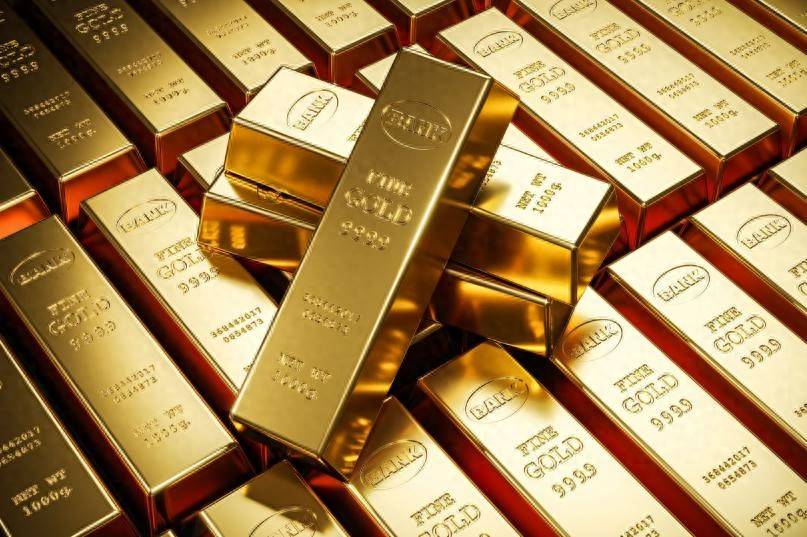
1月13日盘中,伦敦黄金现货突破4600美元/盎司大关。据报道,花旗表示在基准情形下上调0-3个月目 标价至5000美元/盎司;State Street则称金价今年有高于30%的可能冲击该点位。短期地缘政治风险上行 推升了黄金的风险溢价,而下一步值得投资者关注的是地缘政治范式的改变;同时,"去美元化"叙事也 新增了鲍威尔被调查等催化;最后,新任联储主席或将配合行政部门超预期推动降息。 近期,多个区域的地缘政治风险上升,推升了黄金的风险溢价。 海外的一些投资机构开始交易"唐罗主义"(Donroe trade,即特朗普版的"门罗主义"),认为当前美国 行政部门的国际干涉行为将不止于委内瑞拉,从而开始提前交易和这些区域相关的金融产品。若果真如 此,则新的地缘政治风险或将进一步推动金价上行。 美国司法部启动对美联储主席鲍威尔的刑事调查,引发市场对美联储独立性的担忧,料将继续推动"去 美元化"叙事,从而促进对黄金等替代性资产的整体需求。尽管美司法部称这是对美联储大楼翻修的资 金使用问题进行的调查,但鲍威尔于上周日发布的声明称调查他的真正原因在于"美联储没有按照总统 的偏好来制定利率政策"。我们认为,对鲍威尔的调查也是特 ...
生成式搜索兴起,AI应用催化密集
Mei Ri Jing Ji Xin Wen· 2026-01-14 00:26
Group 1 - The core viewpoint is that during the "14th Five-Year Plan" period, the Chinese economy will enter a transformation phase dominated by new quality productivity, with a downward shift in the growth center and intensified external geopolitical competition [1] - Industry investment will focus on four main lines: technology self-reliance driven by new quality productivity, green transformation during the carbon peak period, the silver economy driven by population aging, and strategic resource allocation under the coordination of development and security [1] - Non-ferrous metals are expected to maintain strong performance, with gold being a core safe-haven asset under the "de-dollarization" pricing logic, while copper and aluminum will benefit from energy transition and supply constraints [1] Group 2 - The asset allocation strategy suggested is a dual-peak strategy: defensive allocation in high-dividend assets (such as hydropower, telecom operators, and state-owned banks) to secure stable cash flow returns, and offensive allocation in hard technology growth assets (such as semiconductor equipment, industrial software, and humanoid robots) to capture excess returns from domestic substitution and industrial upgrading [1] Group 3 - The AI industry is experiencing continuous catalysis, with significant commercial development potential for AI applications, particularly in generative search (GEO) [2] - In addition to content generation, content interaction is becoming an important breakthrough point, enhancing user engagement significantly, especially in gaming and other content sectors [2] Group 4 - The chemical industry, characterized as a typical cyclical industry, usually follows a five-year cycle consisting of four stages: profit upturn, capacity expansion, profit bottoming, and capacity clearance/improvement in demand expectations [3] - With capital expenditure growth turning negative, anti-involution, overseas interest rate cuts, and domestic demand expansion, the chemical industry is viewed positively at the beginning of the "14th Five-Year Plan" as it enters a "dawn" phase [3] - The ongoing global technological revolution is accelerating, presenting new opportunities for material transformation [3]

中信建投:中国经济将进入以新质生产力为主导的转型期
Xin Lang Cai Jing· 2026-01-13 23:39
Core Viewpoint - During the "14th Five-Year Plan" period, China's economy is expected to enter a transformation phase dominated by new quality productivity, with a downward shift in growth center and intensified external geopolitical competition [1] Group 1: Investment Focus Areas - Industrial investment will focus on four main lines: technology self-reliance driven by new quality productivity, green transformation during the carbon peak battle, the silver economy driven by population aging, and strategic resource layout under the coordination of development and security [1] - Non-ferrous metals are expected to maintain strong performance, while gold is viewed as a core safe-haven asset under the "de-dollarization" pricing logic; copper and aluminum will benefit from energy transition and supply constraints [1] Group 2: Asset Allocation Strategy - The asset allocation strategy suggests a dual-peak approach: defensive allocation in high-dividend assets (such as hydropower, telecom operators, and state-owned banks) to secure stable cash flow returns; offensive allocation in hard technology growth assets (such as semiconductor equipment, industrial software, and humanoid robots) to capture excess returns from domestic substitution and industrial upgrading [1]