自动驾驶

Search documents
浪潮取得自动驾驶决策模型训练方法及相关专利
Jin Rong Jie· 2025-12-05 12:35
本文源自:市场资讯 天眼查资料显示,浪潮电子信息产业股份有限公司,成立于1998年,位于济南市,是一家以从事计算 机、通信和其他电子设备制造业为主的企业。企业注册资本147213.5122万人民币。通过天眼查大数据 分析,浪潮电子信息产业股份有限公司共对外投资了37家企业,参与招投标项目4218次,财产线索方面 有商标信息478条,专利信息5000条,此外企业还拥有行政许可13个。 声明:市场有风险,投资需谨慎。本文为AI基于第三方数据生成,仅供参考,不构成个人投资建议。 国家知识产权局信息显示,浪潮电子信息产业股份有限公司取得一项名为"一种自动驾驶决策模型的训 练方法、设备、介质及产品"的专利,授权公告号CN120781921B,申请日期为2025年9月。 作者:情报员 ...

通用要吃“回头草”,自动驾驶告别“大跃进”
3 6 Ke· 2025-12-05 12:16
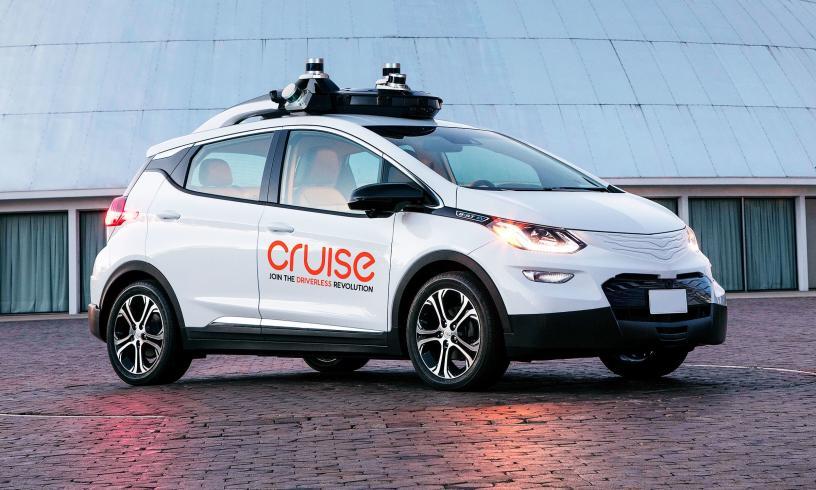
Core Insights - General Motors (GM) has re-hired Ronalee Mann, who previously held key positions at Cruise and Tesla, to lead a new autonomous driving program, reporting directly to GM's Chief Product Officer Sterling Anderson [1] - The journey of GM in autonomous driving reflects the broader challenges faced by traditional automakers in adapting to new technologies over nearly a decade, from aggressive investments to significant operational cutbacks [1] Investment and Development History - In 2016, GM acquired a majority stake in the startup Cruise for approximately $581 million, allowing it to operate independently, which was seen as a strategic move to foster innovation [2] - Cruise gained significant traction, attracting major investments, including $2.25 billion from SoftBank's Vision Fund and $750 million from Honda, with a total valuation exceeding $30 billion by 2021 [2] - GM positioned Cruise as a core engine for its future in fully autonomous driving, driven by optimistic forecasts regarding technological breakthroughs [2] Challenges and Setbacks - Discrepancies between technological aspirations and real-world performance became evident, culminating in a serious incident in October 2023 that led to the revocation of Cruise's autonomous driving permits [4] - The incident highlighted systemic issues in predicting complex urban traffic scenarios, which are critical for Level 4 (L4) technology commercialization [4] - Financial pressures mounted, with Cruise accumulating losses exceeding $8 billion since its acquisition, including approximately $1.9 billion in losses in the first three quarters of 2023 alone [4] Strategic Shift - Following the operational setbacks, GM initiated significant layoffs and restructuring within Cruise, including the departure of key executives [5] - GM's decision to fully integrate Cruise into its operations and abandon the autonomous taxi business marks a stark contrast to its earlier aggressive investment strategy, indicating a shift in understanding the timeline for disruptive technology [5] Industry-Wide Adjustments - Traditional automakers globally are recalibrating their strategies in autonomous driving, reflecting a collective realization of the complexities and long timelines involved in commercialization [6] - Ford's experience mirrors GM's, having invested heavily in Argo AI, which ultimately ceased operations after significant losses, leading to a strategic pivot towards technologies that provide immediate user benefits [6][8] - Volkswagen has adopted a more diversified approach, combining internal development with external partnerships, focusing on integrating software capabilities into its core operations [9] - Toyota's strategy emphasizes a cautious, diversified investment approach, balancing internal R&D with investments in various startups to mitigate systemic risks [10] Conclusion - The collective experiences of these automotive giants underscore a consensus that the path to commercializing autonomous driving is more complex and prolonged than previously anticipated, shifting the competitive focus towards integrated engineering capabilities and cost management [11]


特斯拉支持开车玩手机了?马斯克:要视周围交通情况而定
3 6 Ke· 2025-12-05 11:44
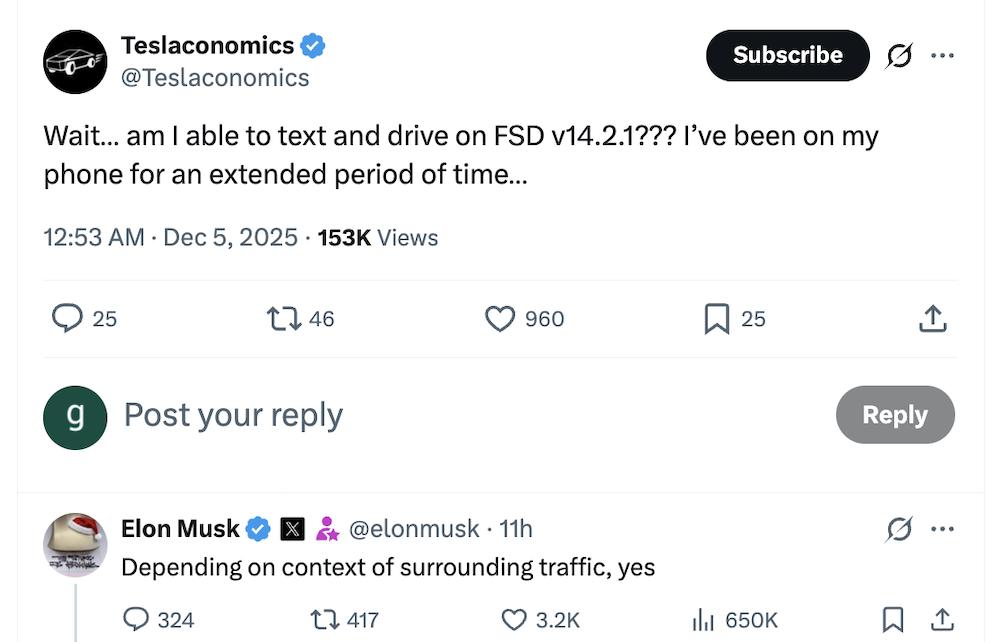
特斯拉能一边开车一边刷手机了! 车东西12月5日消息,特斯拉首席执行官埃隆·马斯克确认,特斯拉全自动驾驶系统(FSD)带来一项重大升级,允许驾驶员在自动驾驶状态下 发短信,该功能已随FSD v14.2.1版本推送,目前特斯拉正开放该软件免费试用。 但值得注意的是,马斯克并没有进一步详细说明FSD允许驾驶员边开车边发短信的具体条件,仅指出,"这一场景的实现要视周围交通情况而 定。" ▲马斯克回应称功能实现要看交通路况 经过海外媒体实测,当驾驶员在按下"开启自动驾驶"按钮后,用手机持续发消息,车辆未阻止操作,行驶全程7分钟内车辆自动完成避让、变 道、泊车等操作,在狭窄路段成功避让对向车流和障碍物,未出现失控情况。 ▲驾驶者边开车边刷手机FSD并未阻止其操作 这无疑是向无人监管的完全自动驾驶迈出的关键一步。 不过,值得注意的是,即使是特斯拉最成熟、功能最强大的FSD完全自动驾驶系统,当前也仍然属于L2级辅助驾驶,这意味着驾驶员需要集中 注意力,非但不能睡觉,开车时也不应该分心,最终,驾驶员仍然要对车辆发生的一切负全部责任。 01. 允许边开车边发消息 合法性面临争议 根据以往信息,特斯拉FSD系统在海外利用车内摄像 ...

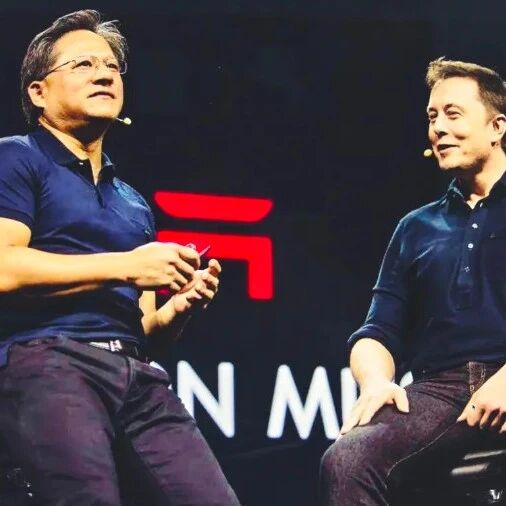
黄仁勋和马斯克,谁才是“时代的司机”
虎嗅APP· 2025-12-05 11:32
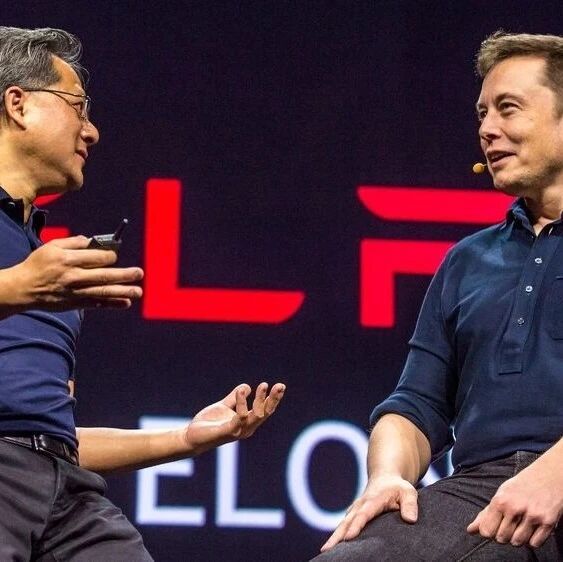
Core Viewpoint - The article discusses the challenges faced by NVIDIA and its CEO Jensen Huang in the current market environment, highlighting the high expectations from investors and the pressure to deliver consistent performance amidst concerns about sustainability and potential AI bubble risks [4][5][6]. Group 1: NVIDIA's Market Position and Challenges - Huang expressed frustration that the market does not fully recognize NVIDIA's impressive quarterly performance, indicating that the company is in a "no-win" situation where any slight underperformance could lead to significant market repercussions [4][7]. - In November, NVIDIA's stock price fell by 9%, and over the past month, it has dropped more than 13%, despite reporting a 62% year-over-year revenue growth and a 65% increase in net profit, surpassing Wall Street expectations [7][10]. - Huang's comments reflect a broader concern that the company is seen as a pillar supporting the global stock market, with any negative performance potentially being interpreted as evidence of an AI bubble [7][10]. Group 2: Historical Context and Comparisons - The article draws parallels between NVIDIA's current situation and the past experiences of Intel and Microsoft, both of which faced similar market pressures despite strong performance [10][12]. - Historical examples are provided, such as Microsoft's stock drop in 1996 despite strong earnings due to concerns about future growth, illustrating how market sentiment can impact stock prices regardless of actual performance [13][14]. - The narrative also includes Apple's experience during the mobile era, where even strong financial results did not prevent stock price declines due to market skepticism about future demand [18][19]. Group 3: Competitive Landscape in AI - The article highlights the competitive dynamics in the AI sector, with major players like Google, Meta, and Amazon also vying for leadership, indicating a fierce battle for market share and technological supremacy [23][26]. - Google's advancements with its TPU technology are noted as a significant threat to NVIDIA, as TPU offers lower costs and higher efficiency compared to NVIDIA's GPUs, potentially allowing Google to capture NVIDIA's customers [26][27]. - The ongoing "driver's seat" competition in the AI landscape is emphasized, with various companies positioning themselves to challenge NVIDIA's dominance, reflecting a rapidly evolving industry [23][34].

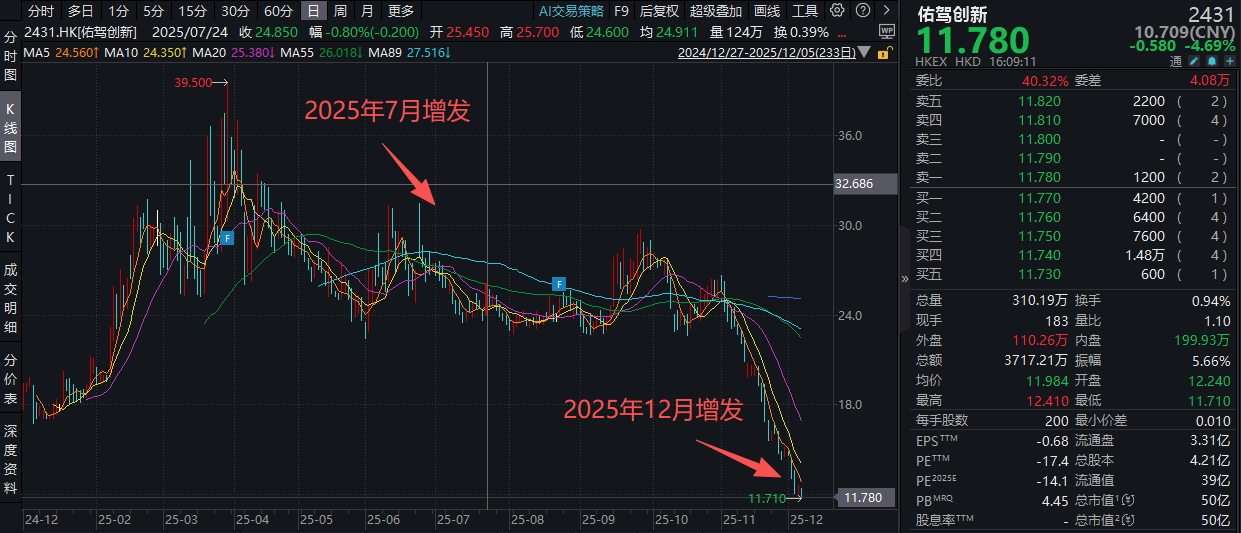
佑驾创新上市不满一年两度融资补血 业务增长乏力叠加H股股东即将解禁 或被剔除港股通
Xin Lang Cai Jing· 2025-12-05 11:11
Core Viewpoint - The company Youjia Innovation is facing significant cash flow pressures, leading to multiple rounds of refinancing to support its operations and R&D efforts in the competitive autonomous driving industry [1][2][4][18]. Financing and Cash Flow - Youjia Innovation completed a new round of financing amounting to HKD 210 million at a price of HKD 14.88 per share, reflecting a discount of approximately 9.98% from the previous closing price [1][2]. - The company had previously raised approximately HKD 680 million during its IPO at the end of 2024, which provided temporary relief from cash flow issues [2][11]. - Despite the influx of cash from the IPO, the company has continued to experience negative operating cash flows, with outflows of HKD 260 million, HKD 280 million, and HKD 220 million from 2022 to 2024 [2][11]. - As of June 2024, the company's cash reserves were only HKD 220 million, highlighting ongoing liquidity concerns [2][11]. Financial Performance - In the first half of 2025, Youjia Innovation reported a revenue of HKD 350 million, a year-on-year increase of 46.1%, but also a net loss of HKD 150 million, which is a 40.2% increase in losses compared to the previous year [3][12]. - The company's cash outflow from operating activities increased significantly by 88.4% year-on-year in the first half of 2025, amounting to HKD 160 million [3][12]. Market Position and Competition - Youjia Innovation is struggling to maintain competitiveness in the autonomous driving sector, facing challenges from established players like Huawei, NIO, and Xpeng, which have integrated self-developed technologies into their vehicles [6][16]. - The company has lagged in commercializing its autonomous vehicle services, with only limited operations in Suzhou compared to competitors who have achieved broader market penetration [6][16]. Stock Performance and Market Risks - Following the announcement of the new financing, the company's stock price fell by 10.2% on the first day of trading for the newly issued shares, indicating market skepticism about its financial health [4][13]. - The company's current market capitalization is HKD 4.96 billion, which does not meet the HKD 10 billion threshold required for inclusion in the Hong Kong Stock Connect program, posing additional liquidity risks [8][9][17]. - A significant portion of shares (51%) is set to be unlocked on December 27, 2025, which could lead to further downward pressure on the stock price if shareholders decide to sell [8][17]. Future Outlook - The company must address its ongoing cash consumption, expanding losses, and competitive disadvantages to improve its market position and restore investor confidence [18].
黄仁勋和马斯克,谁才是“时代的司机”?
美股研究社· 2025-12-05 10:52
Core Viewpoint - The article discusses the challenges faced by Nvidia and its CEO Jensen Huang in the current market environment, highlighting the high expectations from investors and the pressure to deliver consistent performance amidst concerns about sustainability and potential AI bubble risks [4][10][18]. Group 1: Nvidia's Market Position - Nvidia's stock price has dropped 9% in November and over 13% in the past month, despite reporting a 62% year-over-year revenue growth and a 65% increase in net profit, exceeding Wall Street expectations [10][12]. - Huang expressed that Nvidia is in a "no-win" situation, where delivering strong results could be seen as fueling an AI bubble, while any underperformance would be viewed as evidence of a bubble bursting [10][18]. - Huang's comments reflect a broader sentiment among industry leaders who have experienced similar pressures, such as Intel and Microsoft in their respective eras [12][14]. Group 2: Historical Context and Comparisons - The article draws parallels between Nvidia's current situation and the past experiences of Intel and Microsoft, both of which faced market skepticism despite strong performance due to concerns about future growth sustainability [14][16]. - Historical examples illustrate how even strong earnings reports can lead to stock price declines if the market perceives future risks, as seen with Microsoft in 1996 and Intel in 1995 [14][16]. - The transition from the PC era to the mobile era, led by Apple, is highlighted as a time when industry leaders also faced significant market pressures and scrutiny [17][18]. Group 3: Competitive Landscape in AI - The AI era is characterized by intense competition among tech giants like Google, Microsoft, and Meta, all vying for leadership in AI technology and applications [6][25]. - Google's recent advancements with its TPU technology and the Gemini 3 model have positioned it as a strong competitor to Nvidia, with significant implications for Nvidia's market share [26][27]. - The article notes that companies like Amazon are also developing their own AI chips, further intensifying the competition and challenging Nvidia's dominance in the AI chip market [31][32]. Group 4: Future Outlook and Challenges - Huang's acknowledgment of the competitive landscape and the need for Nvidia to maintain its pace of innovation reflects the urgency of the situation, as the company faces potential threats from emerging players [34][35]. - The article emphasizes that the "driver's seat" in the AI era is highly contested, with various companies striving to establish themselves as leaders in this rapidly evolving market [25][36]. - Nvidia's ability to navigate these challenges will be crucial in maintaining its leadership position and addressing the concerns of investors and the market at large [35][36].
谈崩的日系三巨头,搭伙闯美国
汽车商业评论· 2025-12-05 07:31
撰 文 | 杜 咏 芳 编 辑 | 黄 大 路 设 计 | 甄 尤 美 三菱汽车正认真考虑将生产重新搬回美国本土。 2025 年 12 月 3 日,三菱汽车总裁兼首席执行官加藤孝夫明确表示,三菱正积极推进与日产、本田两大日本车企的合作,计划在美国联合生产汽 车。 自 2015 年关闭与克莱斯勒在伊利诺伊州诺默尔的合资工厂后,三菱便彻底退出美国本土生产领域,该工厂曾负责生产 Eclipse 和 Galant 车型,此 后其在美销售的所有车型均依赖进口。 新汽车生态合作,报名中国版CES! 这一布局让三菱持续暴露在多重风险中:美国关税政策的波动、市场需求的起伏,再加上高昂的劳动力与原材料成本,导致其北美业务压力不断 攀升。 根据在线汽车交易平台 CarGurus 7 月份的一项调查,自关税生效以来,总部位于东京的三菱汽车在美国汽车制造商中涨价幅度最大,平均每辆车 上涨 2403 美元。 2024 财年,三菱在美国的销量仅为 11.3 万辆,约为日产或本田同期销量的十分之一,且在当年 4 月至 9 月期间出现了业务亏损。 对规模相对较小的三菱而言,独立承担在美建厂的巨额投资面临显著财务困难。加藤孝夫坦言: "仅靠我 ...

华测导航(300627.SZ):目前的业务范围暂未涉及人形机器人领域
Ge Long Hui· 2025-12-05 06:57
Group 1 - The core viewpoint of the article highlights that Huace Navigation (300627.SZ) is experiencing rapid growth in passenger vehicle shipments, which is expected to continue through the first three quarters of 2025 [1] - The company currently does not have business involvement in the humanoid robot sector [1] - In the non-passenger vehicle sector, the company's business has expanded to cover various application scenarios including mining, logistics, ports, and cleaning robots, indicating potential market opportunities as the autonomous driving industry develops [1]

剑指千亿!Robotaxi,大消息
Zhong Guo Ji Jin Bao· 2025-12-05 06:37
12月3日,曹操出行CEO龚昕在杭州宣布。这是曹操出行在Robotaxi领域的雄心壮志,也是其为未来描摹的一幅蓝图:未来十年在全球设立五大运营中 心,将Robotaxi服务推广至一百座城市,累计实现1000亿元人民币GTV(总交易价值)。 与此同时,全球首个集自动换电、调度、清洁于一体的"绿色智能通行岛"正式投用——智慧出行基础设施建设,已悄然起步。 "曹操出行不仅是吉利控股旗下的科技出行平台,更是我们探索未来出行、实现Robotaxi商业化运营最重要的载体,也是验证前沿技术和全生态协同能力 的先锋。"吉利控股集团安聪慧表示。 业内人士指出,全球Robotaxi市场正从"技术可行性验证"阶段转向"可复制的商业化扩张"阶段,自动驾驶出租车行业拐点已来。 【导读】曹操出行发布Robotaxi"十年百城千亿"战略目标 "十年百城千亿!" 国内唯一、全球少数具备Robotaxi全要素的公司 出行服务并非简单投放车辆,而是复杂的运营系统工程。行业很多公司在展示Robotaxi时,往往侧重技术或车辆本身。而曹操出行带来的则是完整的 Robotaxi解决方案。 依托吉利科技生态,曹操出行具备Robotaxi发展所需的全部关 ...

百度被曝大批裁员三季度巨亏112亿:广告主加速逃离、在线营销业务连降6季 AI仍处投入期或难挑大梁
Xin Lang Cai Jing· 2025-12-05 05:10
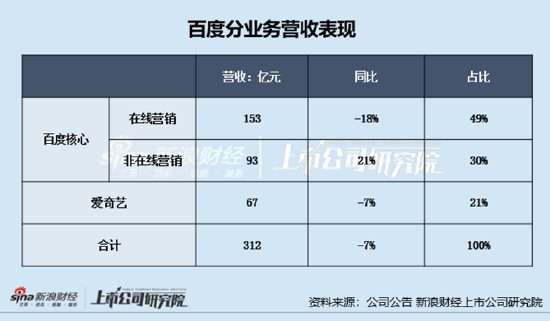
Core Viewpoint - Baidu is undergoing significant layoffs across multiple business units, which is directly linked to its declining performance and is seen as a strategic shift towards focusing on AI, smart cloud, and autonomous driving sectors [1][12]. Financial Performance - In Q3 2025, Baidu reported total revenue of 31.2 billion yuan, a year-on-year decrease of 7%, with a net loss of 11.2 billion yuan and an adjusted net profit of 3.8 billion yuan, down 36% year-on-year [1][12]. - The online marketing revenue, which constitutes a major part of Baidu's income, fell to 15.3 billion yuan, marking an 18% decline year-on-year, while non-online marketing revenue grew by 21% to 9.3 billion yuan, driven by the growth of the smart cloud business [2][13]. Business Segmentation - Baidu's core business is experiencing severe polarization, with online marketing revenue declining for six consecutive quarters, while non-online marketing revenue is on the rise [3][14]. - The online marketing revenue figures for the last six quarters are as follows: 19.2 billion yuan, 18.8 billion yuan, 17.9 billion yuan, 16.0 billion yuan, 16.2 billion yuan, and 15.3 billion yuan, with respective year-on-year changes of -2%, -4%, -7%, -6%, -15%, and -18% [3][14]. Market Dynamics - The search market in China is evolving, with users increasingly relying on super apps like Douyin, Xiaohongshu, and Weibo, which integrate search functions, leading to a decline in dependence on traditional search engines like Baidu [5][16]. - Baidu's app has reached 708 million monthly active users as of September 2025, showing only a 1% year-on-year growth, and its position among advertisers has dropped to ninth place, behind competitors like Douyin and Xiaohongshu [6][17]. AI Business Growth - Baidu's AI-related revenue is showing promising growth, with smart cloud infrastructure revenue reaching 4.2 billion yuan, up 33% year-on-year, and AI native marketing services revenue growing by 262% to 2.8 billion yuan, accounting for 18% of the core online marketing revenue [19][22]. - Despite the growth in AI, Baidu's overall performance remains under pressure due to ongoing losses in its core advertising business and the need for continued investment in AI development, which has exceeded 100 billion yuan since March 2023 [11][22].