
AI算力

Search documents
历史首次!金银铜价齐破纪录,A股有色狂飙40余股翻倍
Sou Hu Cai Jing· 2025-12-27 06:08
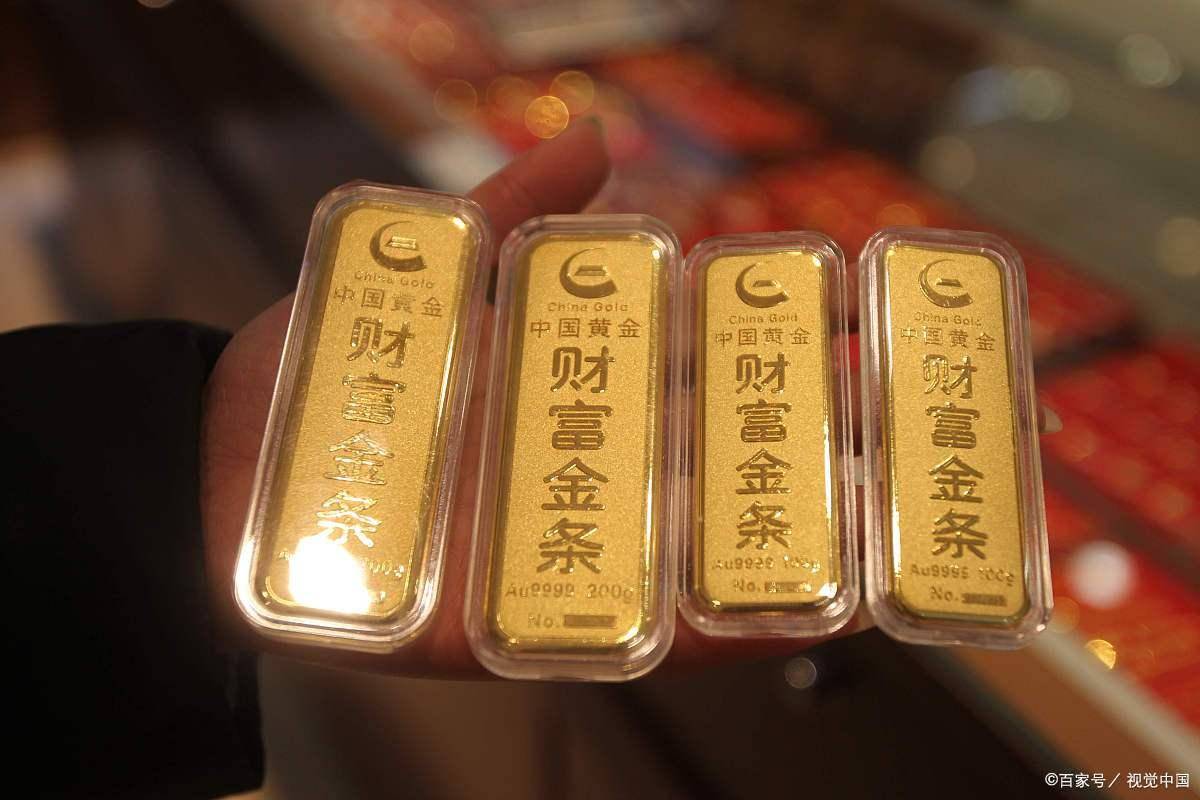
Market Performance - Precious metals and industrial metals experienced a historic rally, with gold rising over 60% and silver more than doubling in price during the year [1][3] - Copper prices surged, breaking the $12,000 per ton mark, marking a 30% increase for the year [3][10] - The performance of minor metals like tungsten and cobalt also saw significant increases, with prices rising over 130% [3] Stock Market Reflection - The A-share market reflected the commodity market's enthusiasm, with the non-ferrous metal sector leading all industries with over 70% growth [5] - The overall performance of the non-ferrous metal industry improved significantly, with a 9.3% year-on-year revenue increase to 2.82 trillion yuan and a 41.55% increase in net profit [5] Driving Factors - The surge in metal prices is attributed to multiple factors, including a weakening dollar, expectations of interest rate cuts by the Federal Reserve, inflation concerns, and geopolitical tensions [8][10] - For industrial metals like copper, supply-demand imbalances are a key driver, with increased demand from electric vehicles and renewable energy sources [10] Industry Impact - The rise in metal prices is reshaping profit distribution within the industry, with the mining sector's profit share increasing to 28.3% [12] - Copper supply challenges have led to reduced processing fees, prompting some smelters to pay miners instead of earning processing profits [12] Future Outlook - Financial institutions predict a shift from a broad rally to structural differentiation in the metal market, with optimistic forecasts for copper and precious metals [14][16] - Gold prices are expected to challenge $5,000 per ounce by 2026, while silver may outperform gold due to favorable market conditions [14][16] - The demand for copper in AI data centers, electric vehicles, and grid construction is anticipated to continue growing [14]

新一轮行情已经喷薄而出
猛兽派选股· 2025-12-27 03:58
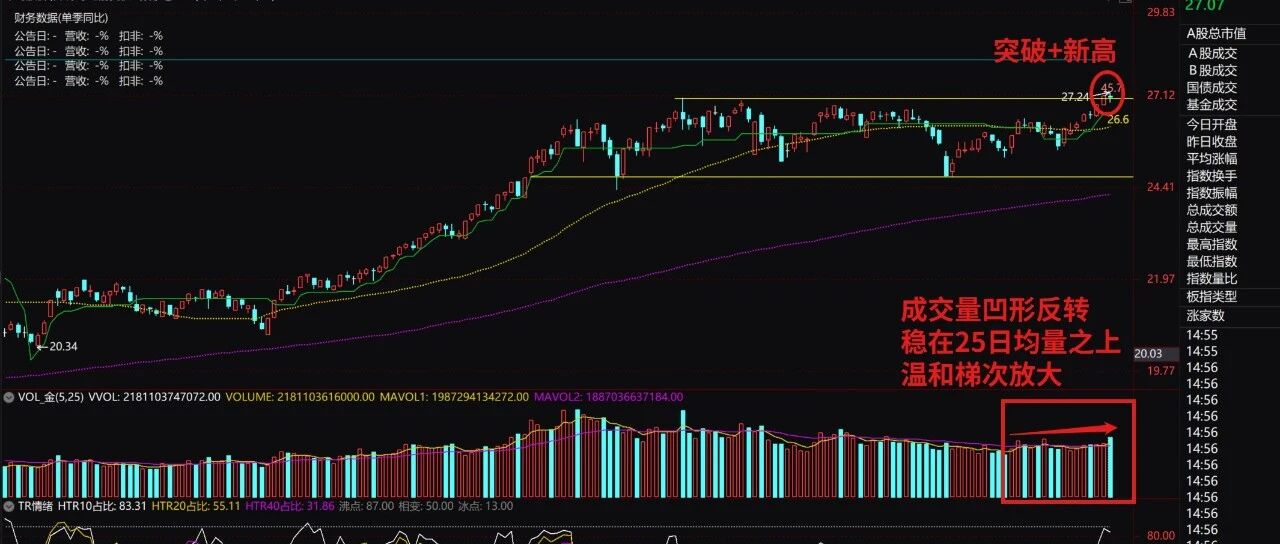
Group 1 - The article emphasizes the importance of understanding the underlying catalyst logic when selecting stocks, especially in a market where multiple stocks in the same sector are rising simultaneously [1][2] - A new trend is forming in the market, with the average stock price index breaking through the VCP consolidation structure and reaching new highs, supported by a stable increase in trading volume [1][2] - The average stock price index is preferred for analysis due to its clear structure and accurate signals, unlike the Shanghai Composite Index, which is heavily influenced by large-cap stocks [2] Group 2 - The main driving forces for the upcoming market trends are identified as AI computing power, AI electricity, and the strong cyclical recovery of non-ferrous metals, with key stocks showing signs of reversal or initial pivot points [2] - The overall market and strong stocks have shown restrained pullbacks over the past four months, indicating a healthy bull market characterized by controlled volatility [4]
2025年储能行业“低开高走” 从“政策性退潮”到“市场性抢购”
Shang Hai Zheng Quan Bao· 2025-12-27 02:15
岁末寒冬,储能行业却有点"盛夏"的味道。 产业链上游原材料供应紧张,碳酸锂等原材料价格翻倍。宁德时代等头部储能电池企业进入"满产满 销"状态,储能装机规模不断刷新纪录。回看今年初时,行业还是另一番景象:随着新能源行业重磅文 件发布,强制配储成为历史,行业一度跌入"无单可做"的谷底。 戏剧性的反转背后,是一场更加残酷的阶层重构。头部储能电池企业通过低价策略横扫千军,不断扩大 市场份额;海博思创等储能系统集成商则借着新型电力系统升级、AI算力需求爆发顺势腾飞。 多位接受上海证券报记者采访的企业人士和专家表示,对于更多储能赛道企业而言,这波"反弹"更像是 巨头们吃肉后的残局,行业洗牌仍在高速运转。2026年的储能行业发展将更分化,只能谨慎乐观。 从"政策性退潮"到"市场性抢购" 今年2月,国家发展改革委、国家能源局发布《关于深化新能源上网电价市场化改革促进新能源高质量 发展的通知》(业内简称"136号文"),明确叫停新能源强制配储。这一政策急转弯,直接导致市场需求 出现"真空期"。 据中关村储能产业技术联盟(CNESA)数据显示,今年一季度,国内新增投运新型储能项目装机规模 5.03GW/11.79GWh,同比下降 ...

港股GPU第一股近在咫尺?壁仞科技IPO最终冲刺
Sou Hu Cai Jing· 2025-12-26 17:42
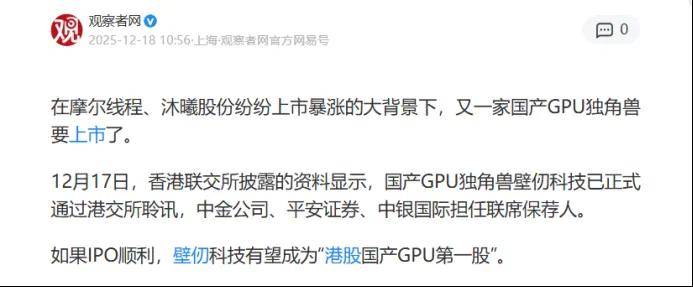
Core Viewpoint - The IPO process of Wallan Technology marks a significant milestone in the domestic GPU industry, filling a gap in the Hong Kong market and enhancing the company's position in the global computing power competition [2][11]. Group 1: Company Overview - Wallan Technology has received approval for an overseas IPO, aiming to issue up to 372.458 million shares, and has successfully passed the Hong Kong Stock Exchange hearing [2]. - The company is recognized as one of the "Four Little Dragons" in the domestic GPU sector, leveraging both technological and commercial breakthroughs to establish a strong market presence [2][11]. Group 2: Technological Strengths - Wallan Technology has built a dual moat of "hardware + software," becoming a performance benchmark in the high-end GPU field, with its flagship chip BR100 achieving over 1000T floating-point computing power [2][4]. - The company has developed the BIRENSUPA platform, which is compatible with the CUDA ecosystem and mainstream AI frameworks, addressing customer migration costs and promoting industry standards [3][4]. Group 3: Financial Performance - The company has seen explosive revenue growth, with revenues increasing from 500,000 yuan in 2022 to 62 million yuan in 2023, and projected to reach 337 million yuan in 2024, reflecting a compound annual growth rate of over 2500% [5]. - As of the first half of 2025, the company reported revenues of 58.9 million yuan, with significant product upgrades and the next-generation flagship chip expected to be commercialized by 2026 [5]. Group 4: Market Expansion - Wallan Technology has successfully penetrated key sectors such as telecommunications and fintech, deploying large-scale intelligent computing clusters with major operators [5][6]. - The company has established a diversified capital support system, raising over 5 billion yuan with backing from leading investment firms and government funds [5]. Group 5: Industry Context - The AI computing industry is projected to grow significantly, with the Chinese intelligent computing chip market expected to reach 50.4 billion USD by 2025, and the GPGPU market projected to grow to 40.9 billion USD [6]. - Policies promoting domestic GPU procurement and initiatives like the "East Data West Computing" project provide a favorable growth environment for Wallan Technology [6]. Group 6: Challenges Ahead - Despite the successful IPO process, Wallan Technology faces challenges including ongoing losses, competitive pressures, and supply chain risks, with cumulative losses exceeding 6.3 billion yuan as of the first half of 2025 [7][8]. - The company is heavily reliant on TSMC's CoWoS packaging technology, which poses a risk to its production capacity, and efforts to localize this technology are still in progress [8]. Group 7: Competitive Landscape - The competitive landscape is intensifying, with NVIDIA holding a dominant 97.6% market share in the global GPGPU market, making it difficult for Wallan Technology to compete on technology alone [8][11]. - The competition within the domestic market is also fierce, with companies like Huawei and Moer Thread rapidly expanding their market presence [8]. Group 8: Future Outlook - The competition logic in the GPU industry is shifting from purely technical parameters to a focus on software ecosystem maturity, customer retention, and scene adaptability [11]. - Wallan Technology must balance R&D investment with profitability to gain long-term recognition in the capital market, emphasizing the need for cost control and market penetration [12].
AI算力驱动下,PCB和覆铜板产业竞争和卡位格局
猛兽派选股· 2025-12-26 16:01
Core Viewpoint - AI computing power is the core growth engine for the PCB and copper-clad laminate industry, with high-end HDI/multi-layer boards and low-loss copper-clad laminates becoming key competitive factors [1][5]. Group 1: Copper-Clad Laminate (CCL) Manufacturers - The copper-clad laminate is a core substrate for PCBs, accounting for about 30% of PCB costs, with high technical barriers and long certification cycles leading to high industry concentration [1][6]. - Leading global manufacturers include: - Shengyi Technology: Mainland China's leader in copper-clad laminates, with M9 ultra-low loss products certified by NVIDIA, achieving over 90% yield [2]. - Kingboard Laminates: A global leader in scale, covering mid-to-high-end FR4 and low-loss series, with strong overseas delivery capabilities [2]. - Taiwan's Taisol and Panasonic: Key suppliers for NVIDIA, maintaining stable shares in ultra-low loss products [2]. - Domestic second-tier players like Huazheng New Materials and Jin'an Guoji are accelerating high-end breakthroughs, focusing on low-loss series for AI servers and communication equipment [3]. Group 2: PCB Manufacturers - The core competitiveness of PCB manufacturers lies in customer binding depth, high-end product technology, and overseas capacity layout [4]. - Leading North American players include: - Simmtech: A leader in high-end HDI and multi-layer boards, a core supplier for NVIDIA and other major clients [4]. - Unimicron: A benchmark for high-speed communication boards, with strong growth driven by AI and communication sectors [4]. - Domestic players like Shennan Circuits and Pegatron are positioned for long-term benefits from the rise of domestic computing power and breakthroughs in carrier boards [4]. Group 3: Industry Trends and Competitive Logic - Most PCB manufacturers do not produce their own copper-clad laminates due to high technical barriers and customer specifications [6]. - The competitive core dimensions focus on ultra-low loss product capacity, yield, and customer certification, as well as high-end HDI and multi-layer board technology breakthroughs [7]. - Short-term beneficiaries include Simmtech and Shengyi Technology, while mid-term beneficiaries are Shennan Circuits and Huazheng New Materials, with long-term potential seen in advanced packaging and carrier board manufacturers [7][8].





芯原股份(688521.SH):10月1日至12月25日,新签订单24.94亿元
Ge Long Hui A P P· 2025-12-26 15:39
Core Viewpoint - Chipone Technology (688521.SH) reported a significant increase in new orders, reaching 2.494 billion yuan from October 1 to December 25, 2025, marking a year-on-year growth of 129.94% and a quarter-on-quarter increase of 56.54% [1] Group 1 - The new orders for the fourth quarter of 2025 set a new historical high for the company, following record highs in the second and third quarters of 2025 [1] - The majority of the new orders in the fourth quarter are from one-stop chip customization services, with AI computing-related orders accounting for over 84% [1] - Orders in the data processing sector represent nearly 76% of the total new orders for the fourth quarter [1]

金属新材料2026年策略:顺时代之势,变革中掘金
材料汇· 2025-12-26 14:58
Core Viewpoint - The article emphasizes investment opportunities in upstream metal new materials driven by three key sectors: AI computing power, new energy, and humanoid robots for 2026. The demand for high-frequency, high-power, high-heat dissipation, and miniaturization is leading the material transformation [1]. Group 1: AI Materials - In the inductance field, metal soft magnetic chip inductors are highlighted for their miniaturization and high current resistance, with companies like Platinum New Materials and Dongkui Co. recommended for investment [1][2]. - In the capacitor sector, the recovery of consumer electronics and the AI engine's resonance suggest a new cycle for MLCCs, with nickel powder benefiting directly, making companies like Boqian New Materials a focus [2]. - The demand for liquid cooling materials in data centers is expected to grow significantly, with companies like Bowei Alloy recommended for their liquid cooling solutions [2]. Group 2: New Energy Materials - Copper is leading the cost revolution in photovoltaics, with companies like Boqian New Materials suggested for investment [4]. - Amorphous alloys are identified as suitable for high power density motors, with Yunlu Co. recommended [4]. - The axial flux motor is anticipated to drive the electric revolution, with Dongmu Co. highlighted for its potential [4]. Group 3: Humanoid Robot Materials - Lightweight materials, particularly magnesium, are noted as competitive, with Baowu Magnesium Industry recommended [4]. - Rare earth permanent magnets are expected to open up long-term growth in high-performance magnetic materials for humanoid robots, with companies like Jinli Permanent Magnet and Ningbo Yunsheng suggested [4]. - MIM (Metal Injection Molding) technology is emphasized for its advantages in robot structural components, with Dongmu Co. again highlighted [4]. Group 4: Capacitors - The MLCC industry is poised for recovery, with significant growth expected in 2024 driven by AI applications and consumer electronics [29]. - AI servers are projected to significantly increase MLCC demand, with estimates suggesting a rise from 603 million units in 2025 to 1.55 billion units by 2028, reflecting a CAGR of 37.2% [37]. - Companies like Boqian New Materials are positioned to benefit from the high-capacity MLCC market driven by AI [38]. Group 5: Liquid Cooling Materials - The demand for liquid cooling solutions is increasing due to the high-density requirements of AI servers, with Bowei Alloy recommended for their innovative materials [49]. - Tungsten-copper alloys are expected to meet the stringent thermal management needs of optical modules, with companies like Sui Rui New Materials suggested for investment [50].


被传为应对内存短缺进军DRAM制造 华硕已否认!
Zhong Guo Jing Ying Bao· 2025-12-26 14:20
Core Viewpoint - The global memory shortage crisis is prompting downstream brand manufacturers, including ASUS, to consider entering the DRAM manufacturing sector, although ASUS has denied any plans to invest in memory wafer production [1][2]. Group 1: ASUS's Position and Market Response - ASUS plans to deepen cooperation with memory suppliers and adjust product specifications to respond to market supply and demand, rather than investing in memory manufacturing [1]. - The company believes that building a memory factory would take at least two years to become operational, which would not address the current supply issues and carries significant risks due to market uncertainties [1][2]. - Industry analysts suggest that the likelihood of ASUS entering the DRAM manufacturing space is low due to the high capital requirements and the company's focus on its core PC business [2]. Group 2: Market Challenges and Price Implications - The memory market is facing severe challenges, with major manufacturers like Micron and SK Hynix shifting production towards higher-margin AI server markets, leading to a predicted memory shortage lasting until at least the end of 2027 [3]. - The imbalance between supply and demand is driving up memory product prices, which is expected to increase the average selling price of smartphones by 6.9% in 2026 [3]. - The PC industry is experiencing significant disruptions, with IDC reporting that the memory shortage coincides with the end of the Windows 10 lifecycle and the promotion of AI PCs, creating a "super storm" for the sector [3]. Group 3: Price Adjustments by Competitors - HP's CEO indicated that rising memory costs will force the company to raise product prices and introduce lower-spec versions [4]. - Dell plans to increase commercial computer prices by 10% to 30% starting December 17 [4]. - ASUS's co-CEO acknowledged that price increases are a trend in the current market, and the company will adjust its product offerings based on market conditions and consumer demand [4]. Group 4: ASUS's Indirect Involvement in Memory Production - ASUS has previously invested in ASint, which provides it with indirect memory module production capabilities and supply chain resources [5]. - ASint specializes in DRAM modules and flash products, emphasizing high compatibility and stability, and supplies to major brands including ASUS [5].
海南华铁被罚800万元;中国中免子公司中标免税项目丨公告精选
2 1 Shi Ji Jing Ji Bao Dao· 2025-12-26 13:41
Group 1 - China Duty Free Group's subsidiary won the bid for the duty-free project at Beijing Capital International Airport with a guaranteed operating fee of 480 million yuan for the first year and a sales commission rate of 5% [1] - The project will enhance the company's channel advantages at core domestic airports, catering to diverse shopping needs of inbound and outbound travelers, thus promoting high-quality development of airport duty-free business [1] - Successful implementation of the project is expected to positively impact the company's future operating performance [1] Group 2 - Chipone Technology reported that over 84% of new orders in Q4 2025 are related to AI computing power, with total new orders amounting to 2.494 billion yuan, marking a significant year-on-year increase of 129.94% [2] - The company also noted a 56.54% increase in new orders compared to Q3 2025, indicating strong growth momentum [2] - The majority of new orders are for one-stop chip customization services, with nearly 76% related to data processing [2] Group 3 - Jinfeng Technology announced the termination of its planned acquisition of at least 51% equity in Guangdong Lanyuan Technology due to failure to reach agreement on key transaction terms [3] Group 4 - Zhejiang Rongtai plans to establish a joint venture in Thailand with Suzhou Weichuang Electric Technology to develop and produce mechatronic components and intelligent drive systems for the robotics market, with both parties holding 50% equity [4] - The cooperation agreement is currently in the intent stage and requires further negotiation and implementation [4] Group 5 - Hainan Huatie was fined 8 million yuan by the China Securities Regulatory Commission for incomplete disclosure of a 3.69 billion yuan computing power service agreement and for failing to timely disclose significant contract developments [5] - The company and its executives are required to rectify the issues and have received warnings [5] Group 6 - Shengyuan Environmental Protection reported a cumulative net value growth rate of -81.54% for a private fund product, resulting in a loss of approximately 46.92 million yuan, which exceeds 10% of the company's most recent audited net profit [6] - The company has initiated a redemption process for the fund and has reported the situation to law enforcement and the securities regulatory authority [6] Group 7 - Huasoft Technology intends to acquire 67% of the equity in Lain Optoelectronics [7] - Longgao Co., Ltd. is set to transfer 4.37% of its controlling shareholder's equity to Zijin South Investment [7] Group 8 - Jianghe Group's subsidiary won a bid for the urban renewal project in Haikou City with a bid amount of approximately 112 million yuan [8] - Yuntian Lifelight secured a project worth 122 million yuan and established a strategic partnership with 360 Group [8] - Other companies reported various project wins and contracts, indicating active market engagement [8]


豪特节能拟港股上市 中国证监会要求补充说明股权变动等情况
Zhi Tong Cai Jing· 2025-12-26 13:23
Core Viewpoint - The China Securities Regulatory Commission (CSRC) has requested additional documentation from Guangzhou Haote Energy Conservation Technology Co., Ltd. (Haote Energy) regarding its equity changes and business operations as part of its listing application on the Hong Kong Stock Exchange [1][2]. Group 1: Regulatory Requirements - The CSRC has asked Haote Energy to provide a legal opinion on the legality and compliance of its past equity changes, including any potential shareholding arrangements and the rationale behind the pricing of new shareholders in the last 12 months [2]. - The company must clarify its business scope, including internet data services and real estate consulting, and confirm compliance with foreign investment regulations [2]. - Haote Energy is required to disclose the status of any litigation that may impact its business operations or the current listing application [2]. Group 2: Company Overview - Haote Energy is a leading provider of energy management solutions in China, focusing on the data center sector, offering a full lifecycle service system for energy management [3]. - The company's solutions are applied across various sectors, including AI computing data centers, smart industrial parks, and multi-purpose commercial complexes [3]. Group 3: Financial Performance - The company reported revenues of approximately 793 million yuan, 858 million yuan, 1.018 billion yuan, and 754 million yuan for the years 2022, 2023, 2024, and the first half of 2025, respectively [3]. - The net profit and total comprehensive income for the same periods were approximately 39.13 million yuan, 70.18 million yuan, 75.87 million yuan, and 50.50 million yuan [3].