即时零售

Search documents
叮咚买菜年货市集在京启动 连续九年“春节不打烊”守护团圆年味
Zheng Quan Ri Bao Wang· 2026-02-08 12:45
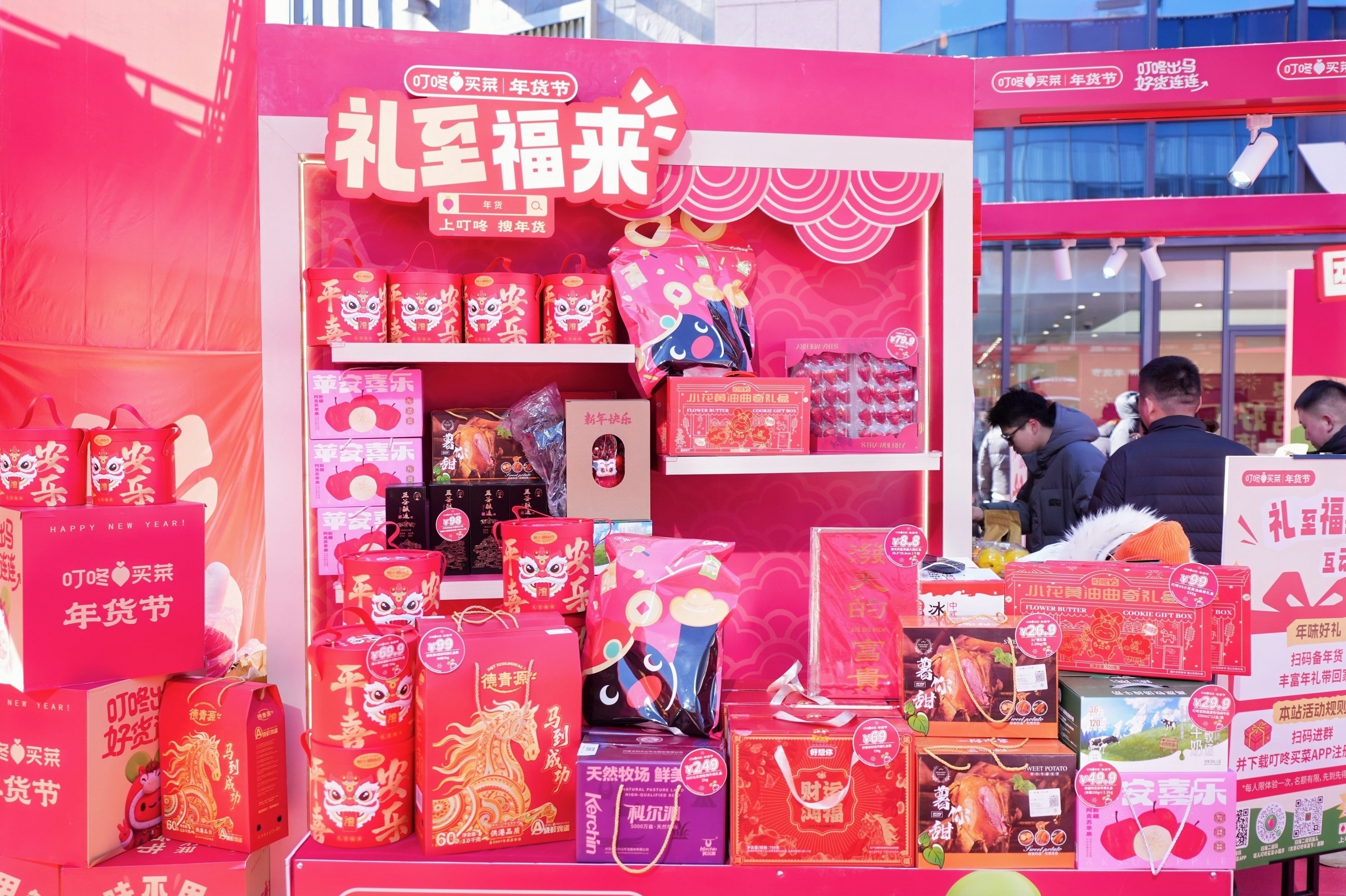
Core Insights - The article highlights the surge in pre-Spring Festival consumption, with Dingdong Maicai hosting a successful offline event showcasing over a hundred festive products, which included interactive activities that attracted many visitors [1][4]. Group 1: Sales Performance - Dingdong Maicai's sales in Beijing for the Spring Festival have seen a year-on-year increase of 48%, with significant sales in categories such as fruits, dairy, beverages, and meat products exceeding expectations [5][6]. - The company has launched over 1,000 types of festive goods, including traditional dishes and gift boxes, to meet diverse consumer needs for the holiday [4][6]. Group 2: Product Offerings - The company has introduced a "Home Flavor" series featuring over 70 types of traditional dishes for the New Year's Eve dinner, including regional specialties like Anhui stinky mandarin fish and Henan goose [5][6]. - Additionally, Dingdong Maicai has made available over 60 types of spring vegetables, emphasizing quality and quantity in their fresh produce offerings [6]. Group 3: Operational Strategy - Dingdong Maicai is implementing a comprehensive plan to ensure stable supply and timely delivery during the Spring Festival, having increased inventory levels to double the usual amount for essential goods [7][8]. - The company has also established a dual system of fixed and flexible staffing to enhance delivery capacity, with over 70% of frontline employees confirmed to work during the holiday [7]. Group 4: Employee Welfare - To support frontline employees during the holiday, Dingdong Maicai has introduced various incentive programs, including special bonuses and flexible holiday arrangements to ensure their well-being [8].


商贸零售行业周报:美团拟收购叮咚买菜,打造即时零售供应链优势
KAIYUAN SECURITIES· 2026-02-08 10:25
Investment Rating - The industry investment rating is "Positive" (maintained) [1] Core Views - The report highlights Meituan's acquisition of Dingdong Maicai for approximately $717 million, aiming to enhance its instant retail supply chain efficiency. Dingdong Maicai has achieved profitability for 12 consecutive quarters and operates over 1,000 front warehouses in China, with a monthly purchasing user base exceeding 7 million [4][24][27] - The report emphasizes the importance of supply chain efficiency and product quality in the competitive landscape of the instant retail industry, suggesting that the focus will shift towards these aspects post-acquisition [27] Summary by Sections Industry Dynamics - Meituan's acquisition of Dingdong Maicai is expected to create synergies in supply chain, regional layout, and warehouse scale, enhancing operational efficiency in the East China region [24][27] - Dingdong Maicai's established direct sourcing and self-operated production capabilities are anticipated to be preserved and amplified within Meituan's platform [27] Investment Themes - Investment Theme 1: Focus on high-end and fashionable gold jewelry brands, recommending companies like Laopuhuangjin and Chaohongji, which are expected to benefit from the emotional consumption trend [6][29] - Investment Theme 2: Emphasize retail companies adapting to trends and AI-enabled cross-border e-commerce leaders, with recommendations for Yonghui Supermarket and Aiyingshi [6][29] - Investment Theme 3: Highlight domestic beauty brands that cater to emotional value and innovative safe ingredients, recommending brands like Maogeping and Pola [6][29] - Investment Theme 4: Focus on differentiated medical beauty product manufacturers and leading chain medical beauty institutions, recommending Meilitiantian Medical Health and Aimeike [6][29] Market Performance - The retail and social service indices reported a slight decline of 0.34% and a slight increase of 0.02% respectively during the week of February 2 to February 6, 2026 [14][15] - The brand cosmetics sector showed the highest weekly increase of 4.99%, while the watch and jewelry sector led with a year-to-date increase of 16.56% [16][19] Company Highlights - Laopuhuangjin reported a significant revenue increase of 250.9% in FY2025H1, driven by brand expansion and customer base growth [31][32] - Chaohongji is expected to achieve a net profit growth of 125% to 175% in 2025, supported by differentiated product strength and multi-channel marketing [31][32] - Meilitiantian Medical Health anticipates a net profit increase of at least 34% in 2025, driven by both internal growth and acquisitions [39][40]



狠人王兴,拿下叮咚买菜
商业洞察· 2026-02-08 09:25
Core Viewpoint - Meituan's acquisition of Dingdong Maicai marks the end of an era for independent players in the fresh e-commerce sector, as the industry consolidates under major giants [5][22]. Group 1: Dingdong Maicai's Challenges - Dingdong Maicai, once a leading star in the fresh e-commerce market, faced significant challenges despite achieving a record quarterly revenue of 6.66 billion yuan in Q3 2025 and a net profit of 80 million yuan [7][8]. - The company struggled with stagnating growth, reporting a GMV year-on-year growth rate of only 0.1% in Q3 2025, indicating it had hit a growth ceiling [8]. - Dingdong's strategy of focusing on the Jiangsu, Zhejiang, and Shanghai regions limited its expansion potential, making it difficult to compete against larger players like Meituan and Pinduoduo [8][10]. Group 2: Meituan's Strategic Moves - Meituan's acquisition of Dingdong Maicai for approximately $717 million aims to enhance its position in the instant retail market, which is becoming increasingly competitive [5][20]. - The acquisition allows Meituan to quickly scale its operations, combining Dingdong's over 1,000 front warehouses with its own nearly 900, resulting in a total approaching 2,000, thus creating a significant competitive advantage [19][20]. - Meituan's strategy is to leverage Dingdong's established supply chain capabilities and product offerings, which are critical for succeeding in the instant retail battle against rivals like Alibaba and JD.com [19][20]. Group 3: Industry Implications - The acquisition signifies the end of the independent fresh e-commerce player era, with only Pinduoduo remaining as a significant independent competitor after Dingdong's sale [22][24]. - The competitive landscape is shifting towards a three-way battle among Meituan, Alibaba, and JD.com, intensifying the competition in the fresh e-commerce sector [24]. - The consolidation raises concerns about potential antitrust issues, as Meituan's market share in the front warehouse sector may exceed 50%, which could trigger regulatory scrutiny [24].

商贸零售行业周报:美团拟收购叮咚买菜,打造即时零售供应链优势-20260208
KAIYUAN SECURITIES· 2026-02-08 08:43
Investment Rating - The industry investment rating is "Positive" (maintained) [1] Core Insights - Meituan announced the acquisition of Dingdong Maicai for approximately $717 million, aiming to enhance its instant retail supply chain efficiency [4][24] - Dingdong Maicai has achieved profitability for 12 consecutive quarters and operates over 1,000 front warehouses, with a monthly purchasing user base exceeding 7 million [4][24] - The acquisition is expected to create synergies in supply chain, regional layout, and warehouse scale, enhancing Meituan's capabilities in the fresh produce sector [4][27] Industry Overview - The retail and social service indices reported a slight decline of 0.34% and a marginal increase of 0.02% respectively during the week of February 2 to February 6, 2026 [14][15] - The brand cosmetics sector showed the highest weekly growth of 4.99%, while the watch and jewelry sector led with a year-to-date increase of 16.56% [16][19] Investment Themes - Investment Theme 1: Focus on high-end and fashionable gold jewelry brands, recommending companies like Laopuhuangjin and Chaohongji, which are expected to benefit from market trends [6][29] - Investment Theme 2: Emphasize retail companies adapting to consumer trends and AI-enabled cross-border e-commerce leaders, with recommendations for Yonghui Supermarket and Aiyingshi [6][29] - Investment Theme 3: Highlight domestic beauty brands that cater to emotional value and innovative safe ingredients, recommending brands like Maogeping and Proya [6][30] - Investment Theme 4: Target differentiated medical beauty product manufacturers and leading chain medical beauty institutions, recommending Meilitiantian Medical Health and Aimeike [6][30] Company-Specific Insights - Laopuhuangjin is expected to achieve a revenue of 12.35 billion yuan in H1 2025, with a net profit increase of 285.8% [31] - Chaohongji anticipates a net profit growth of 125% to 175% in 2025, driven by differentiated product strength and brand expansion [31] - Meilitiantian Medical Health forecasts a net profit growth of at least 34% in 2025, supported by its dual growth strategy [39][40]
美团鲸吞叮咚买菜!7亿美元“捡漏”千仓网络,生鲜大战提前终局?
Jing Ji Guan Cha Wang· 2026-02-08 08:38
Core Insights - Meituan has acquired Dingdong Maicai's entire business in China for an initial price of $717 million, marking a significant shift in the fresh food e-commerce landscape and the end of its independent era [2][9] Group 1: Acquisition Details - The acquisition involves over 1,000 front warehouses and 7 million monthly purchasing users, integrating Dingdong Maicai's supply chain into Meituan's operations [2][4] - Dingdong Maicai will become a wholly-owned subsidiary of Meituan, with its financial performance incorporated into Meituan's financial statements [2] - The deal includes a dynamic pricing mechanism, allowing the final price to be adjusted based on audited financial metrics at the time of closing [6][10] Group 2: Strategic Objectives - The strategic goal of the acquisition is to enhance Meituan's infrastructure in the instant retail sector, shifting competition from user acquisition to efficiency in physical networks and supply chains [3][9] - Dingdong Maicai has established a vertically integrated supply chain with over 85% of its fresh products sourced directly, which will bolster Meituan's operational capabilities [4] Group 3: Financial Performance - Dingdong Maicai reported a pre-tax net profit of 38.882 billion yuan for 2024, with a total merchandise transaction volume growth rate of only 0.1% year-on-year, indicating a stagnation in growth [4] Group 4: Industry Impact - The acquisition is expected to reshape the competitive landscape of the instant retail industry, with a predicted market share distribution of 5:4:1 among Meituan, Alibaba, and JD [9] - The focus of competition is shifting from user subsidies and traffic acquisition to the efficiency of infrastructure, with factors like warehouse density and supply chain responsiveness becoming critical [9][10] - This acquisition signifies the end of the independent development phase for fresh food e-commerce, as major players consolidate their positions [9][10]


王兴的成全,让梁昌霖成为唯一从生鲜电商全身而退的男人
3 6 Ke· 2026-02-08 06:05
Core Insights - The article discusses the acquisition of Dingdong Maicai's China business by Meituan for approximately $717 million, marking a significant event in the fresh e-commerce sector where few companies exit gracefully [1][6] - Dingdong Maicai's survival and eventual acquisition highlight the challenges and fierce competition in the fresh e-commerce market, where many players have failed [2][10] Industry Overview - The fresh e-commerce sector has seen over 4,000 players, with a high failure rate; only 1% of companies achieved profitability by 2015 [7][10] - The market dynamics shifted as capital investment waned, revealing the importance of profitability over mere scale [3][14] Company Journey - Dingdong Maicai, founded in 2017, faced significant challenges, including a near bankruptcy experience in 2018, but managed to survive by avoiding aggressive expansion [9][11] - The company adopted a cautious approach, focusing on profitability rather than rapid growth, which became crucial for its survival [3][15] Strategic Shifts - After a successful IPO in 2021, Dingdong Maicai initially aimed for expansion but quickly shifted to prioritize efficiency amid changing market conditions [13][15] - The company began to pivot towards becoming a food company, launching its own brand products, which contributed to profitability in 2023 [21][22] Competitive Landscape - The fresh e-commerce market remains highly competitive, with major players like Hema and JD Fresh intensifying their efforts, leading to price wars and market share battles [20][24] - Dingdong Maicai's strategic retreat to core profitable regions reflects the ongoing challenges in maintaining a competitive edge in a crowded market [18][20] Acquisition Implications - The acquisition by Meituan allows for rapid scale and strategic positioning in the market, leveraging Dingdong Maicai's established network and user base [27][28] - This move underscores the trend of consolidation in the fresh e-commerce sector, where only a few players can effectively manage the complexities of the business [27][28]

美团-W(03690.HK):拟收购叮咚买菜 夯实前置仓赛道竞争力
Ge Long Hui· 2026-02-07 22:51
Group 1 - The core value of Dingdong Maicai lies in its strong customer loyalty among high-value households in the Jiangsu, Zhejiang, and Shanghai regions, a robust fulfillment network, and an efficient supply chain focused on quality fresh produce [1][2] - Meituan's acquisition of Dingdong Maicai is expected to enhance its supply chain capabilities, product offerings in fresh produce, and support the expansion of its front warehouse network in East China [2] - The acquisition is seen as a strategic move to strengthen Meituan's competitive position in the increasingly fierce instant retail market, potentially improving overall industry operational efficiency and profit margins in the long term [2] Group 2 - The initial cost of the acquisition is set at $717 million, with a potential additional withdrawal of up to $280 million, contingent on maintaining a minimum net cash balance of $150 million for Dingdong [1] - If the transaction is not completed within 12 months, the agreement may be terminated, which could incur a termination fee of $150 million or $75 million [1] - Meituan maintains its revenue and net profit forecasts for 2025, 2026, and 2027, with a target price of HKD 125, reflecting a 33% upside potential [2]
美团买下叮咚买菜中国区业务,生鲜电商“独立玩家”为何出局?
Sou Hu Cai Jing· 2026-02-07 14:51
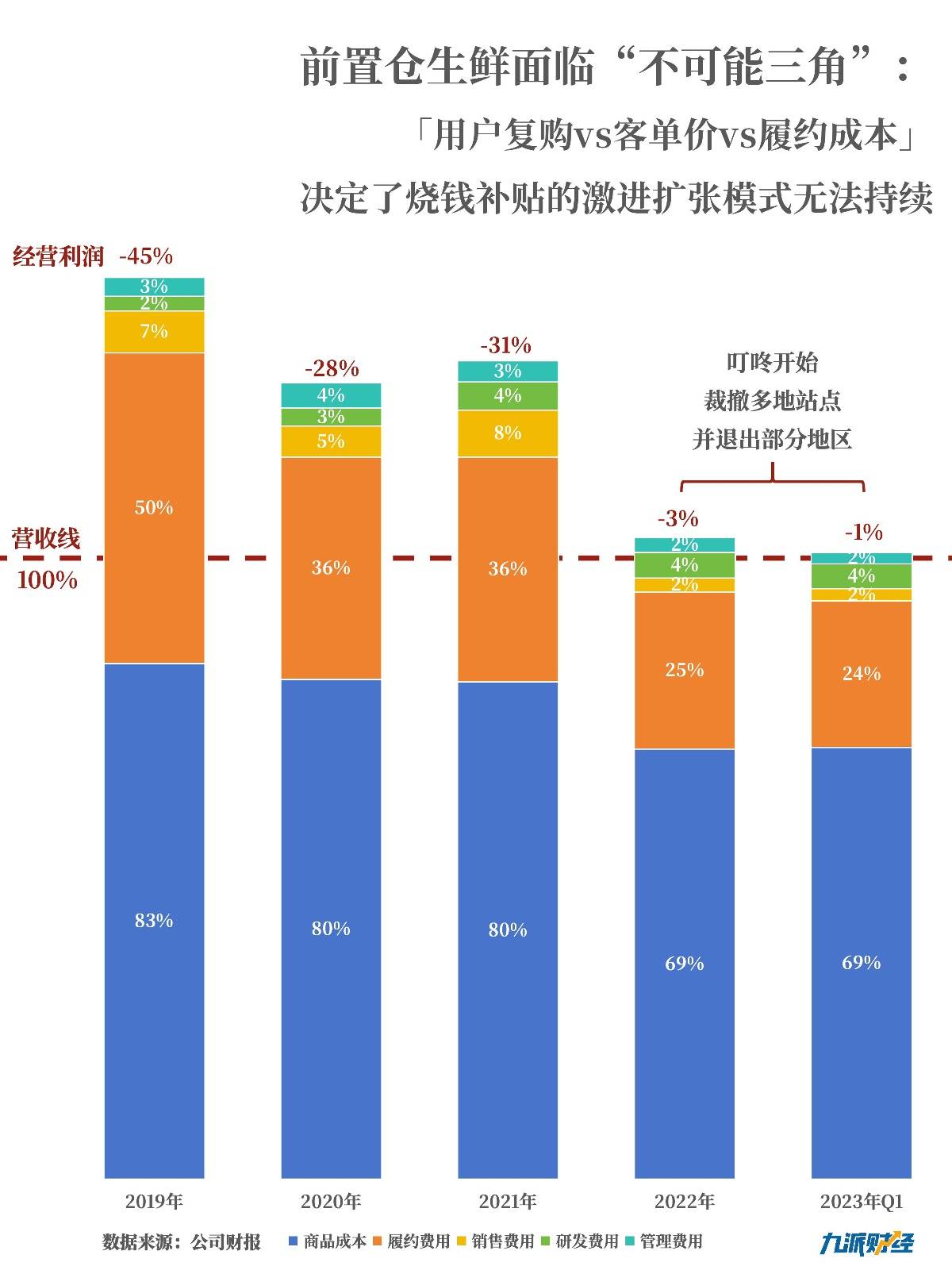
Core Viewpoint - The article discusses the challenges and strategies of fresh food e-commerce companies, particularly focusing on the contrasting business models of Dingdong Maicai and other competitors in the market, highlighting the shift from a scale-focused approach to a more efficient, localized strategy. Group 1: Business Model Challenges - The front warehouse model for fresh food was initially deemed unable to break the "impossible triangle" of balancing user scale, average order value, and fulfillment costs [1] - Daily Fresh, the pioneer of the front warehouse model, failed due to unsustainable cash-burning subsidy strategies [1] Group 2: Dingdong Maicai's Strategy - Dingdong Maicai's CEO emphasized that the key to evaluating a business model is its ability to meet user needs and adapt to consumer behavior trends [4] - The company shifted its strategy in August 2021 from "scale first, efficiency second" to "efficiency first, scale second," focusing on refined operations [4] - Dingdong Maicai has closed over 100 stations in various cities and has concentrated on expanding its network in East China, with over 60% of new warehouses located in county-level cities in the Jiangsu-Zhejiang-Shanghai region [4] Group 3: Product and Service Focus - In early 2025, Dingdong Maicai implemented a "4G strategy" focusing on "good users, good products, good services, and good mindset," aiming to enhance customer loyalty and increase average order value [5] - The company maintains a SKU count below 3,000, with 37.2% of "good product" SKUs contributing 44.7% of GMV [5] - Dingdong Maicai's operational efficiency has improved, reducing overall loss rates from 5% to 1.5%, significantly lower than the industry average of 8% [5] Group 4: Competitive Landscape - Dingdong Maicai's success in the East China market demonstrates its business model's viability, but it faces challenges from major internet platforms that dominate the instant retail space [8] - A report indicated that Dingdong's user profile differs from those of Meituan and Taobao, suggesting potential for solidifying its market position through differentiated products and services [9] - The competitive landscape intensified with the entry of Taobao Flash Purchase, which significantly increased online order volumes for competitors like Hema and Xiaoxiang Supermarket [10] Group 5: Acquisition Considerations - A source close to Meituan suggested that acquiring Dingdong Maicai would serve as a strategic defense, as Meituan's capabilities surpass those of Dingdong [12] - The integration of Dingdong's resources could provide Meituan with valuable infrastructure in East China, a region where it has been relatively weak [12]
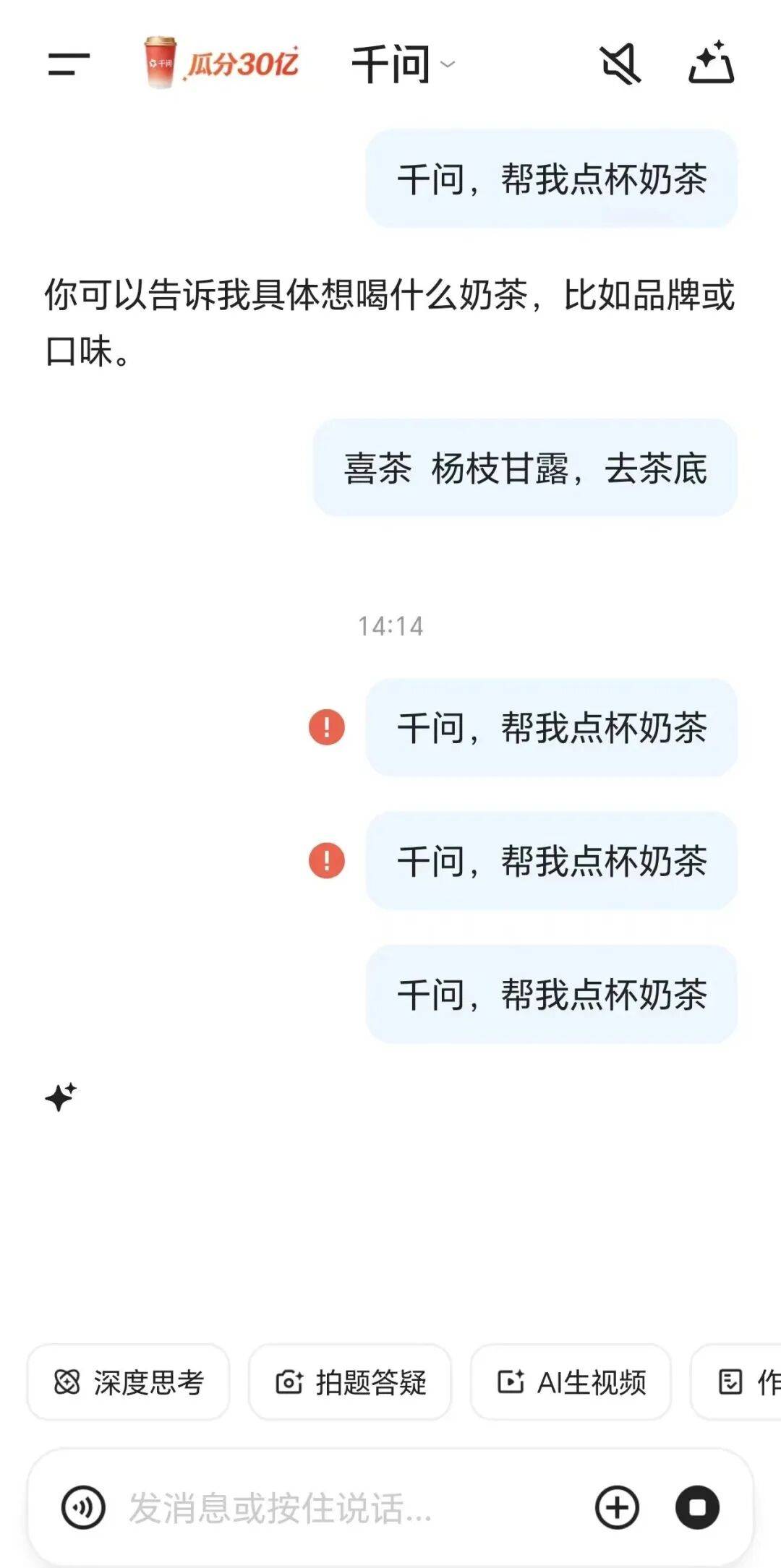
董事长卷入骗保精神病院?爱尔眼科紧急发声;请喝奶茶,阿里千问“崩了”;50亿拿下!美团赢了京东;贾跃亭进军人形机器人 || 大件事
Sou Hu Cai Jing· 2026-02-07 07:03
Group 1 - Alibaba's Qianwen APP launched a "Spring Festival 3 billion big free order" campaign, which led to a surge in demand, causing the app to crash temporarily [2][9] - Within 3 hours of the launch, over 1 million orders for free milk tea were placed through the Qianwen APP, and by 4 hours, this number reached 2 million [2][9] - The free order cards can be used at over 300,000 milk tea shops nationwide, with each user eligible to receive 21 no-threshold 25 yuan free order cards, totaling 525 yuan [2][9] Group 2 - The campaign is part of a broader "Spring Festival hospitality plan" that will also involve other Alibaba ecosystem businesses such as Taobao, Fliggy, and Hema [9] - The intensity of competition among major internet companies for AI traffic is increasing, with a total of 4.5 billion yuan in red envelopes prepared for users this Spring Festival [10] - The involvement of Jack Ma in the Qianwen Spring Festival project indicates the high priority given to this initiative by Alibaba [10] Group 3 - Dingdong Maicai's market value is reported to be 594 million USD, and it is undergoing a transaction that will separate its overseas business [14] - Dingdong Maicai achieved a record revenue of 6.66 billion yuan in Q3 2025, with a net profit of 80 million yuan, marking seven consecutive quarters of profitability [14] - The acquisition by Meituan is expected to enhance its self-operated front warehouse and instant retail business, increasing market share in the Jiangsu, Zhejiang, and Shanghai regions [15] Group 4 - FF (Faraday Future) launched its first humanoid robot products, receiving 1,211 paid pre-orders, with deliveries expected to start by the end of February [29][31] - The pricing for the robots ranges from 24,990 to 34,990 USD, indicating a strong market interest despite previous operational challenges faced by the company [31] - FF reported a revenue of 9,000 USD and an operating loss of 206.8 million USD, highlighting ongoing financial struggles [31]


31省市经济发展目标出炉,预制菜国标公开征求意见| 财经日日评
吴晓波频道· 2026-02-07 00:29
Economic Development Goals - The economic growth target for 2026 is set around 5%, a decrease from the previous year's target of "above 5%" [2] - Tibet has the highest growth target at approximately 7%, while Jiangxi is the only province to raise its target to 5%-5.5% [2] - The adjustment in targets reflects a pragmatic approach to enhance economic quality amid challenges such as local debt and real estate market adjustments [2] Pre-prepared Food Standards - The National Health Commission has released a draft national standard for pre-prepared foods, aiming to clarify definitions and management scope [4] - The standard emphasizes strict management of food additives and pollutants, aiming to rebuild consumer trust in the pre-prepared food industry [4] - The introduction of these standards is expected to promote high-quality development in the pre-prepared food sector [4] AI Applications and Market Dynamics - WeChat has restricted the use of AI application commands in its platform, reflecting competitive tensions in the tech industry [6] - The rapid influx of users to AI applications has led to server issues, indicating a need for better infrastructure to support high demand [6] - Concerns remain regarding the integration of AI applications in financial transactions, highlighting user hesitance [7] Meituan's Acquisition of Dingdong Maicai - Meituan announced a plan to acquire Dingdong Maicai for approximately 50 billion RMB, enhancing its supply chain capabilities [8] - Dingdong Maicai's business model focuses on rapid delivery through a network of small warehouses, which aligns with Meituan's operational strategy [8] - The acquisition is seen as a strategic move to strengthen market position amid increasing competition in the instant retail sector [9] Amazon's Capital Expenditure Plans - Amazon plans to increase its capital expenditure to $200 billion by 2026, reflecting aggressive investment in cloud services and AI technology [10][11] - The company's fourth-quarter sales reached $213.4 billion, with a 14% year-over-year growth, indicating strong performance [10] - Concerns arise regarding the sustainability of such high capital expenditures amid rising financing costs for tech companies [11] NIO's Quarterly Profitability - NIO announced its first quarterly profit, projecting adjusted operating profit between 700 million to 1.2 billion RMB for Q4 2025 [12][13] - The company achieved a 96.1% year-over-year increase in vehicle deliveries in January, indicating strong demand for its high-end electric models [13] - Despite achieving profitability, challenges remain due to reliance on specific models and rising costs in the supply chain [13] Bitcoin Market Volatility - Bitcoin experienced a 12% drop, reaching a 16-month low of around $63,000, with a total market cap decline from $2.48 trillion to $1.27 trillion [14][15] - The significant price drop has triggered concerns about market sentiment and potential further sell-offs if key psychological levels are breached [14] - Bitcoin's volatility is seen as a reflection of broader market risk appetite and liquidity conditions [15] Stock Market Performance - The stock market showed fluctuations with the Shanghai Composite Index closing down 0.25%, amid a trading volume of 2.15 trillion RMB [16] - Various sectors experienced mixed performance, with the chemical sector gaining while consumer stocks faced declines [16] - The market is currently in a phase of adjustment, with potential shifts in focus from growth to value stocks anticipated post-holiday [16]